
The Foundation: Separating Your Financial Worlds
One of the most fundamental, yet frequently overlooked, steps for any e-commerce entrepreneur is the complete separation of personal and business finances. This isn’t merely a suggestion; it’s a non-negotiable cornerstone for clarity, compliance, and strategic growth. Commingling funds can create a tangled mess, making it incredibly difficult to track profitability, identify deductible expenses, or even understand your true financial position. Imagine trying to analyze your business’s cash flow when it includes your grocery bills and mortgage payments; it’s an impossible task.
The first practical step is to establish dedicated bank accounts. Open a separate checking account and, ideally, a separate savings account solely for your business. All business income should flow into these accounts, and all business expenses should be paid from them. This immediate physical separation provides a clear audit trail and simplifies bookkeeping immensely. Beyond bank accounts, consider getting a dedicated business credit card. This not only keeps business expenses distinct but also helps build your business’s credit profile, which can be invaluable for securing loans or better terms with suppliers in the future. Building business credit is a distinct process from building personal credit, and a dedicated card is an excellent starting point.
Your business’s legal structure also plays a significant role in this separation. While a sole proprietorship might seem simpler initially, it offers no legal distinction between you and your business. This means your personal assets could be at risk if your business faces lawsuits or debts. Transitioning to a Limited Liability Company (LLC) or even an S-Corp or C-Corp provides a legal shield, separating your personal liability from your business’s. This legal separation reinforces the financial separation, offering peace of mind and protection for your home, savings, and other personal assets. Consult with a legal professional to determine the best structure for your specific e-commerce venture, especially as you consider tips for growing a successful business and scaling your operations.
Finally, ensure your payment processing systems are set up correctly. Whether you use Stripe, PayPal, Shopify Payments, or another gateway, link them directly to your business bank accounts. This ensures that all revenue generated from your sales goes directly into your business’s financial ecosystem, maintaining the integrity of your financial separation from day one. This meticulous separation eliminates ambiguity, streamlines tax preparation, and empowers you with accurate financial data to make informed decisions for both your personal life and your thriving e-commerce enterprise.
Budgeting for Dual Success: Strategies for Home and Business
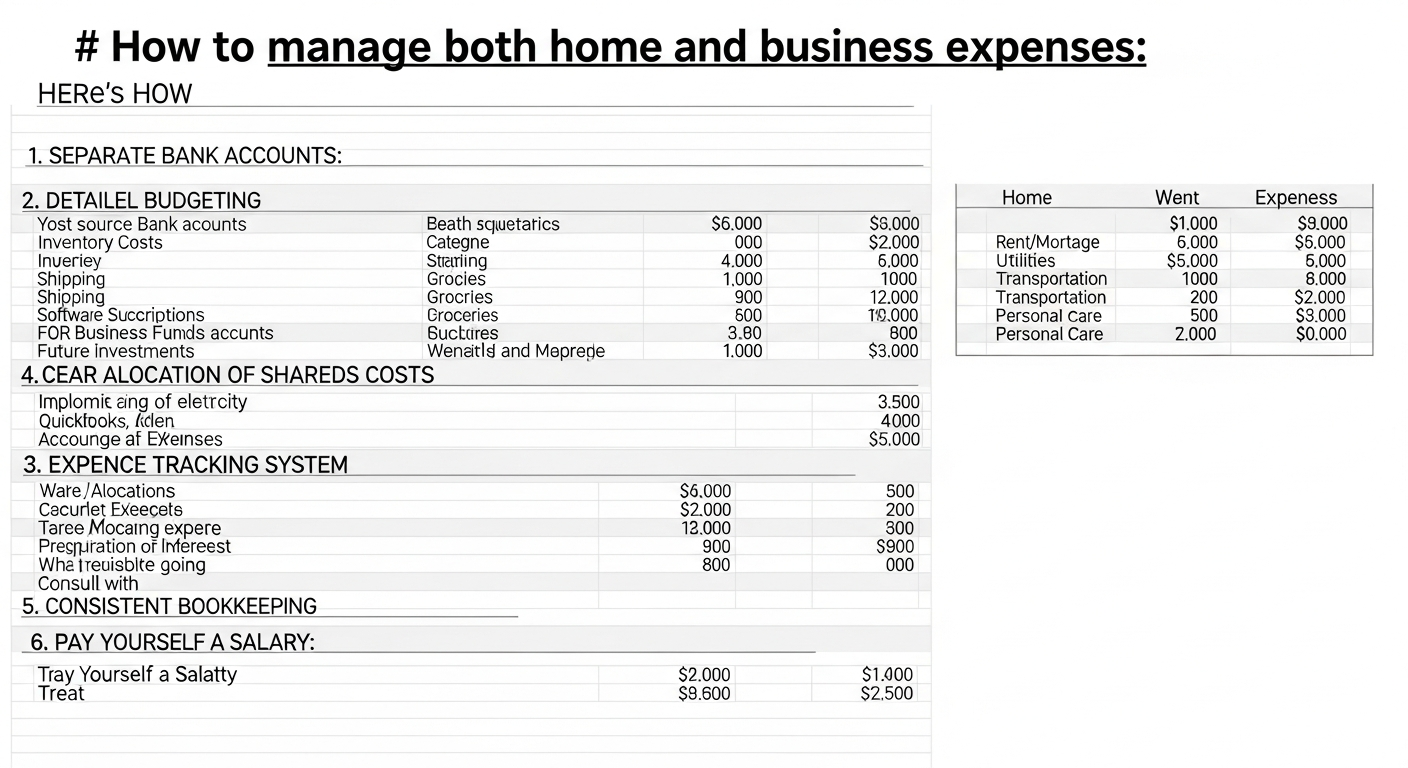
Once your financial worlds are distinct, the next crucial step is to implement robust budgeting strategies for both your home and your business. Budgeting isn’t about restriction; it’s about control, foresight, and strategic allocation of resources to achieve your goals. Without clear budgets, you risk overspending, under-saving, and constantly feeling financially stretched on both fronts.
Begin by creating two entirely separate budgets. For your personal budget, meticulously list all sources of personal income (including your owner’s draw or salary from the business) and all personal expenses. Categorize these expenses: fixed costs like mortgage/rent, utilities, insurance, loan payments, and variable costs like groceries, entertainment, personal care, and discretionary spending. Tools like Mint, YNAB (You Need A Budget), or even a simple spreadsheet can help you track and categorize these expenses effectively. The goal is to understand exactly where your personal money goes, identify areas for saving, and ensure your lifestyle is sustainable based on your anticipated income.
Similarly, develop a comprehensive business budget. This should detail all anticipated business revenue streams (sales, subscriptions, etc.) and all business expenses. Business expenses typically fall into categories such as Cost of Goods Sold (COGS), marketing and advertising, shipping and fulfillment, software subscriptions, website hosting, employee salaries (if applicable), professional services (accountant, lawyer), and office supplies. For e-commerce businesses, inventory management and marketing spend are often significant variable costs that require careful monitoring. Tools like QuickBooks, Xero, or even industry-specific e-commerce accounting software can provide detailed insights into your business’s financial performance.
A critical component of this dual budgeting strategy is determining your “owner’s draw” or salary. This is the amount you regularly pay yourself from your business. It should be a consistent, planned expense within your business budget and a consistent income source within your personal budget. This stability is vital for personal financial planning and prevents the common entrepreneurial pitfall of irregularly dipping into business funds, which can cripple your venture’s cash flow. Establish a realistic owner’s draw that covers your personal living expenses and allows for personal savings, while also ensuring your business retains enough capital for reinvestment and growth.
Finally, don’t forget emergency funds. Just as you need a personal emergency fund (typically 3-6 months of living expenses), your business also needs one. This business “buffer” can cover unexpected costs like a sudden increase in supplier prices, a major equipment breakdown, or a downturn in sales. Having these separate emergency funds provides a crucial safety net, preventing you from having to choose between personal financial stability and your business’s survival during unforeseen challenges. Regular forecasting, reviewing your budgets at least monthly, and making adjustments as needed are key to maintaining financial health for both your home and your e-commerce enterprise.
Optimizing Cash Flow and Profitability for Your E-commerce Venture
Firstly, focus intensely on revenue generation. This means continually refining your product offerings, optimizing your marketing funnels, and enhancing customer lifetime value. Are your product pages optimized for conversion? Is your SEO strategy bringing in organic traffic? Are your paid ad campaigns delivering a strong Return on Ad Spend (ROAS)? Implementing upsells, cross-sells, and loyalty programs can significantly boost average order value and repeat purchases. Consider diversifying your sales channels beyond your primary store – marketplaces like Amazon, Etsy, or even social commerce platforms can open new revenue streams, but always weigh the associated costs and effort.
Next, meticulously manage your Cost of Goods Sold (COGS). For e-commerce, this includes raw materials, manufacturing costs, and direct labor involved in creating your products. Negotiate favorable terms with suppliers, explore bulk purchasing discounts (if storage and cash flow allow), and continually seek efficiencies in your production or sourcing process. For dropshippers, this means finding reliable suppliers with competitive pricing and fast shipping times. Understanding your COGS is paramount to setting profitable pricing and accurately calculating your gross margins.
Beyond COGS, scrutinize your operational expenses. Are there software subscriptions you’re paying for but not fully utilizing? Can you consolidate shipping carriers for better rates? Are your payment processing fees optimized? Even small monthly savings across various operational categories can add up to significant annual savings. Automate tasks where possible to reduce labor costs and improve efficiency. For instance, automating email marketing sequences or customer service responses can free up valuable time and resources.
Pricing strategy is another powerful lever. Don’t just set prices based on competitor analysis; understand your true costs (COGS + operational overhead) and desired profit margins. Experiment with different pricing models – value-based pricing, psychological pricing, or bundling – to find what resonates best with your target audience while maximizing your profitability. Remember, perceived value often allows for higher price points.
Finally, intelligent cash flow management involves forecasting. Regularly project your incoming revenue and outgoing expenses for the next 3, 6, and 12 months. This allows you to anticipate lean periods, plan for major purchases (like new inventory or marketing campaigns), and ensure you always have enough liquidity. Reinvesting profits back into the business strategically – whether it’s for product development, enhanced marketing, or technology upgrades – is essential for long-term growth. However, this must be balanced with ensuring a consistent owner’s draw to cover your home expenses. A healthy e-commerce business with optimized cash flow and strong profitability provides the financial stability that underpins successful personal and professional life management.
Tax Efficiency and Legal Protection: Safeguarding Your Assets

Managing home and business expenses isn’t just about day-to-day budgeting; it’s also about strategic planning for tax season and robust legal protection. Neglecting either can lead to significant financial setbacks, impacting both your business’s viability and your personal financial security. In 2026, tax regulations continue to evolve, making proactive planning more critical than ever.
From a tax perspective, understanding deductible expenses is paramount. Many legitimate business expenses can reduce your taxable income, thereby lowering your overall tax liability. For e-commerce entrepreneurs operating from home, the home office deduction is a common example. This allows you to deduct a portion of your rent/mortgage, utilities, internet, and insurance based on the percentage of your home exclusively and regularly used for business. Other common deductions include business software subscriptions, website hosting fees, marketing and advertising costs, professional development courses, business travel, and professional service fees (accountant, lawyer). Keep meticulous records of all expenses, categorized and supported by receipts. This level of detail is invaluable during tax preparation and in the event of an audit.
For most online businesses, especially those structured as sole proprietorships or LLCs where profits pass through to your personal income, you’ll likely be responsible for paying quarterly estimated taxes. This means you’re sending payments to the IRS and potentially your state throughout the year, rather than waiting until April 15th. Failure to pay estimated taxes can result in penalties. An experienced accountant or tax professional specializing in small businesses and e-commerce can help you calculate these payments accurately, navigate complex tax codes, and identify all eligible deductions, saving you significant time and money.
Beyond taxes, legal protection is a non-negotiable aspect of safeguarding both your business and personal assets. This is where business insurance comes into play. Many entrepreneurs mistakenly believe their home insurance or personal liability policies will cover business-related incidents, but this is rarely the case. Without proper business insurance, a single lawsuit or unforeseen event could wipe out your business and potentially expose your personal savings, home, and other assets.
Consider the 4 types of business insurance you should consider for your e-commerce operation:
- General Liability Insurance: This protects your business from claims of bodily injury or property damage that occur as a result of your business operations. For example, if a customer slips and falls while picking up an order from your home office (if you allow pickups) or if one of your products causes minor damage to a customer’s property.
- Product Liability Insurance: Absolutely critical for e-commerce businesses, especially those selling physical goods. This protects you if a product you sell causes injury, illness, or property damage to a customer. If you’re a manufacturing brand, this is even more vital.
- Commercial Property Insurance: If you have a separate office, warehouse, or even significant inventory stored at home, this covers damage to your business property (inventory, equipment, furniture) from perils like fire, theft, or vandalism.
- Cyber Liability Insurance: Given the digital nature of e-commerce, this is increasingly important. It protects your business in the event of a data breach or cyberattack, covering costs like data recovery, legal fees, notification expenses, and credit monitoring for affected customers.
For why manufacturing brands need business insurance, the stakes are even higher. A manufacturing brand not only faces the risks of selling products but also the inherent risks in the production process itself. Equipment breakdowns, workplace injuries, and raw material defects can all lead to significant liabilities. Product liability insurance, in particular, becomes paramount, as the manufacturer is typically held most responsible for product defects. Workers’ compensation insurance is also crucial if you have employees involved in the manufacturing process. Comprehensive business insurance acts as a financial firewall, protecting your hard-earned business assets from unexpected catastrophic events and, by extension, preserving your personal financial security. Don’t view insurance as an expense, but rather as an essential investment in your long-term stability and growth.
Strategic Planning for Long-Term Financial Health
Managing day-to-day expenses and ensuring tax compliance are vital, but true financial mastery for the e-commerce entrepreneur involves strategic long-term planning. This holistic approach considers both your personal and business financial trajectories, ensuring that decisions made today contribute to a secure and prosperous future for both.
Start by setting clear, quantifiable financial goals for both your home and your business. Personally, this might include saving for a down payment on a house, funding your children’s education, or building a robust retirement nest egg. For your business, goals could range from achieving a specific revenue milestone, expanding into new markets, launching a new product line, or reaching a certain valuation by 2026. These goals should be SMART: Specific, Measurable, Achievable, Relevant, and Time-bound. Having these defined targets provides direction for your budgeting, investment, and operational decisions.
One of the biggest challenges for entrepreneurs is retirement planning. Unlike traditional employment, you don’t have an employer contributing to a 401(k). It’s entirely up to you. Explore options like a SEP IRA, Solo 401(k), or SIMPLE IRA, which offer significant tax advantages and allow you to contribute substantial amounts for your retirement. Integrating these contributions into your business’s financial planning – perhaps as a percentage of profits or a fixed monthly amount – ensures you’re consistently building your personal wealth alongside your business’s growth. Financial advisors specializing in small business owners can be invaluable in navigating these complex choices and setting up appropriate investment vehicles.
Succession planning, even for a relatively young e-commerce business, is another critical long-term consideration. What happens to your business if you’re suddenly unable to run it due to illness, injury, or a desire to exit? Having a clear plan – whether it’s training a key employee to take over, setting up a buy-sell agreement with a partner, or outlining steps for selling the business – protects your investment and provides peace of mind for your family. This planning ensures that the value you’ve built in your business can be realized, rather than lost, in unforeseen circumstances.
Regular financial reviews are the heartbeat of long-term financial health. Schedule dedicated time, at least quarterly, to review your personal and business financial statements. Compare actual performance against your budgets and forecasts. Ask critical questions: Where did you overspend? Where did you underspend? Are your profit margins healthy? Is your cash flow sufficient? Are you on track to meet your personal and business financial goals? These reviews are opportunities to identify problems early, adjust strategies, and capitalize on new opportunities. They allow you to proactively steer both your personal finances and your e-commerce business towards sustained prosperity.
Remember, the synergy between your home and business finances is powerful. A well-managed personal financial life reduces stress, allowing you to focus more effectively on your business. A thriving business, in turn, provides the resources to achieve your personal financial aspirations. By embracing strategic long-term planning, you’re not just managing expenses; you’re building a legacy of financial security and success.
Leveraging Technology for Seamless Financial Management
In the fast-paced world of e-commerce, time is your most valuable asset. Manually tracking every expense, reconciling accounts, and preparing financial reports can consume countless hours that could otherwise be spent on growth strategies or personal time. This is where leveraging technology becomes indispensable for seamless financial management of both your home and business expenses. The right tools can automate tedious tasks, provide real-time insights, and significantly reduce the administrative burden.
For your business, robust accounting software is a non-negotiable. Platforms like QuickBooks Online, Xero, or FreshBooks are designed specifically for small businesses and e-commerce ventures. They allow you to:
- Connect directly to your business bank accounts and credit cards, automatically importing transactions.
- Categorize expenses efficiently, making tax time significantly easier.
- Generate detailed financial reports (Profit & Loss, Balance Sheet, Cash Flow Statement) at the click of a button.
- Track inventory, manage invoices, and even process payroll if you have employees.
- Integrate with popular e-commerce platforms like Shopify, WooCommerce, and payment gateways, ensuring all sales data flows seamlessly into your accounting system.
These tools provide a clear, real-time picture of your business’s financial health, empowering you to make data-driven decisions about pricing, inventory, and marketing spend. Many of these platforms also offer features for calculating and tracking sales tax, a critical component for e-commerce businesses operating across different jurisdictions.
On the personal finance front, various budgeting and expense tracking apps can revolutionize how you manage your household money. Apps like Mint, YNAB (You Need A Budget), Personal Capital, or even specialized budgeting spreadsheets, can:
- Link to your personal bank accounts, credit cards, and investment accounts.
- Automatically categorize personal spending.
- Help you set and stick to personal budgets for various categories (groceries, entertainment, housing, etc.).
- Track your net worth over time, including assets like real estate, investments, and liabilities like mortgages and loans.
- Provide alerts for upcoming bills or unusual spending patterns.
These tools give you an immediate overview of your personal financial situation, helping you identify areas for savings, track progress towards personal financial goals, and ensure your owner’s draw is adequately covering your household needs.
Beyond core accounting and budgeting, consider other technological aids:
- Expense Tracking Apps: Tools like Expensify or Receipt Bank (now Dext Prepare) allow you to snap photos of receipts, automatically extract data, and categorize expenses, eliminating the need for shoeboxes full of paper. This is particularly useful for business travel or other on-the-go expenses.
- Payroll Services: If your business grows to include employees, services like Gusto or ADP streamline payroll, tax filings, and benefits administration, ensuring compliance and accuracy.
- Payment Gateway Analytics: Platforms like Stripe and PayPal offer robust dashboards with insights into your sales, refunds, and customer payment trends, which can be invaluable for understanding your revenue streams.
By embracing these technological solutions, e-commerce entrepreneurs can dramatically reduce the time spent on administrative financial tasks, minimize errors, and gain profound insights into both their personal and business finances. This efficiency not only saves money but, more importantly, frees up mental bandwidth and time to focus on strategic growth and enjoying the fruits of your entrepreneurial labor, rather than being bogged down by spreadsheets and receipts.
Mastering the art of managing both home and business expenses is not just a financial skill; it’s a foundational pillar for entrepreneurial longevity and personal well-being. By diligently separating your financial worlds, implementing robust budgeting strategies, optimizing your business’s cash flow and profitability, safeguarding your assets with proper tax planning and insurance, and leveraging modern technology, you create a powerful synergy. This synergy ensures that your e-commerce venture thrives, providing the financial stability and growth needed to achieve both your professional aspirations and your personal dreams. Take these steps today, and build a financially resilient future for yourself and your business in 2026 and beyond.
Frequently Asked Questions (FAQ)
Q1: How do I determine a reasonable owner’s draw or salary from my e-commerce business?
A1: A reasonable owner’s draw should cover your personal living expenses, allow for personal savings, and ideally provide a buffer, without starving your business of necessary working capital for growth and operations. Start by creating a detailed personal budget to understand your minimum monthly needs. Then, analyze your business’s profitability and cash flow. Aim for a draw that leaves sufficient funds for reinvestment, emergency reserves, and future business growth. As your business grows, you can gradually increase your draw, but always prioritize the business’s financial health. Consult with an accountant to ensure your draw is tax-efficient based on your business structure.
Q2: What’s the biggest mistake e-commerce entrepreneurs make regarding personal and business finances?
A2: The biggest mistake is commingling funds – mixing personal and business transactions in the same bank accounts or using a single credit card for everything. This makes it virtually impossible to track true business profitability, identify deductible expenses, or accurately prepare for taxes. It can also complicate audits and blur the legal distinction between you and your business, potentially exposing personal assets to business liabilities. Always maintain strict separation from day one.
Q3: How often should I review my personal and business budgets?
A3: Ideally, you should review both your personal and business budgets at least monthly. This allows you to track actual spending against your plans, identify variances, and make timely adjustments. Quarterly reviews are also essential for a broader perspective, allowing you to assess progress towards long-term goals and make strategic shifts. Annual reviews are crucial for setting new goals and comprehensive tax planning for the upcoming year, such as 2026.
Q4: Is business insurance truly necessary for a small, home-based e-commerce business?
A4: Yes, absolutely. Even small, home-based e-commerce businesses face significant risks. Your home insurance likely won’t cover business-related incidents, and without proper business insurance (like General Liability, Product Liability, and Cyber Liability), a single lawsuit, product defect claim, or data breach could lead to financial ruin, potentially impacting your personal assets. It’s an essential investment in protecting both your business and your personal financial future.
Q5: What are some good strategies to increase my e-commerce business’s profitability to better manage home expenses?
A5: To boost profitability, focus on increasing average order value (upsells/cross-sells), improving customer retention (loyalty programs, excellent service), optimizing marketing spend for higher ROI, negotiating better terms with suppliers to reduce COGS, and regularly reviewing your pricing strategy. Also, look for operational efficiencies and automate tasks to reduce overhead. A more profitable business directly translates to a more stable and potentially higher owner’s draw for your home expenses.
Q6: How can I prepare for unexpected financial challenges for both my home and business?
A6: The best preparation is to build separate emergency funds for both your personal life and your business. Aim for 3-6 months of living expenses in your personal emergency fund and a similar amount (or more, depending on your business’s volatility) in your business’s reserve fund. Diversify your personal investments, and for your business, maintain strong cash flow, avoid excessive debt, and ensure you have comprehensive business insurance, including the 4 types of business insurance you should consider, to mitigate risks from unforeseen events.
Recommended Resources
Learn more about this topic in How To Invest In Real Estate With Little Money at AssetBar.
Learn more about this topic in Marketing Automation Tools 2026 at Page Release.