
Step 1: The Foundation – Ideation, Niche Selection, and Market Validation
Every successful online business begins with a strong foundation: a well-researched idea within a defined niche. This isn’t just about picking something you’re passionate about, though passion is a powerful fuel. It’s about identifying a genuine market need or problem that your product or service can effectively solve, and then positioning yourself uniquely within that solution space.
Unearthing Your Niche and Idea
- Identify Your Passions and Expertise: What topics genuinely excite you? What skills do you possess that others might find valuable? Your intrinsic interest will sustain you through challenges.
- Pinpoint Market Gaps and Problems: Look for frustrations, inefficiencies, or underserved segments in existing markets. What are people complaining about? What tasks do they wish were easier? This problem-solving approach is critical.
- Analyze Trends for 2026: Keep an eye on emerging technologies, consumer behaviors, and societal shifts. Are there new demands for sustainable products, personalized services, or AI-driven solutions? For instance, the demand for hyper-personalized shopping experiences and ethical sourcing continues to grow.
- Competitor Analysis: Research existing players in your potential niche. What are they doing well? Where are their weaknesses? Can you offer a superior product, better service, or a more compelling brand story? Don’t be discouraged by competition; it often validates market demand. Instead, aim to differentiate.
Market Validation: Proving Your Concept
Before investing significant time and capital, you must validate your idea. This involves confirming that there’s a sufficient audience willing to pay for your solution.
- Keyword Research: Use tools like Google Keyword Planner, Ahrefs, or Semrush to identify search volume for terms related to your product or service. High search volume with manageable competition often signals a viable market.
- Audience Surveys and Interviews: Directly engage with potential customers. Ask about their pain points, what solutions they currently use, and what they would be willing to pay for an improved offering. Social media groups and online forums are excellent places to find target demographics.
- Minimum Viable Product (MVP): Create the simplest version of your product or service that delivers core value. This could be a landing page with an email signup, a prototype, or a basic service offering. The goal is to gather real-world feedback and pre-orders with minimal initial investment.
- Small-Scale Testing: Run a small ad campaign to gauge interest, or launch a limited batch of products to a select group. This provides concrete data on customer acquisition costs and conversion rates.
By diligently completing this foundational step, you ensure your online business isn’t built on assumptions but on solid market evidence, setting the stage for sustainable growth.
Step 2: Building Your Digital Storefront – Platform Selection, Product Sourcing, and User Experience
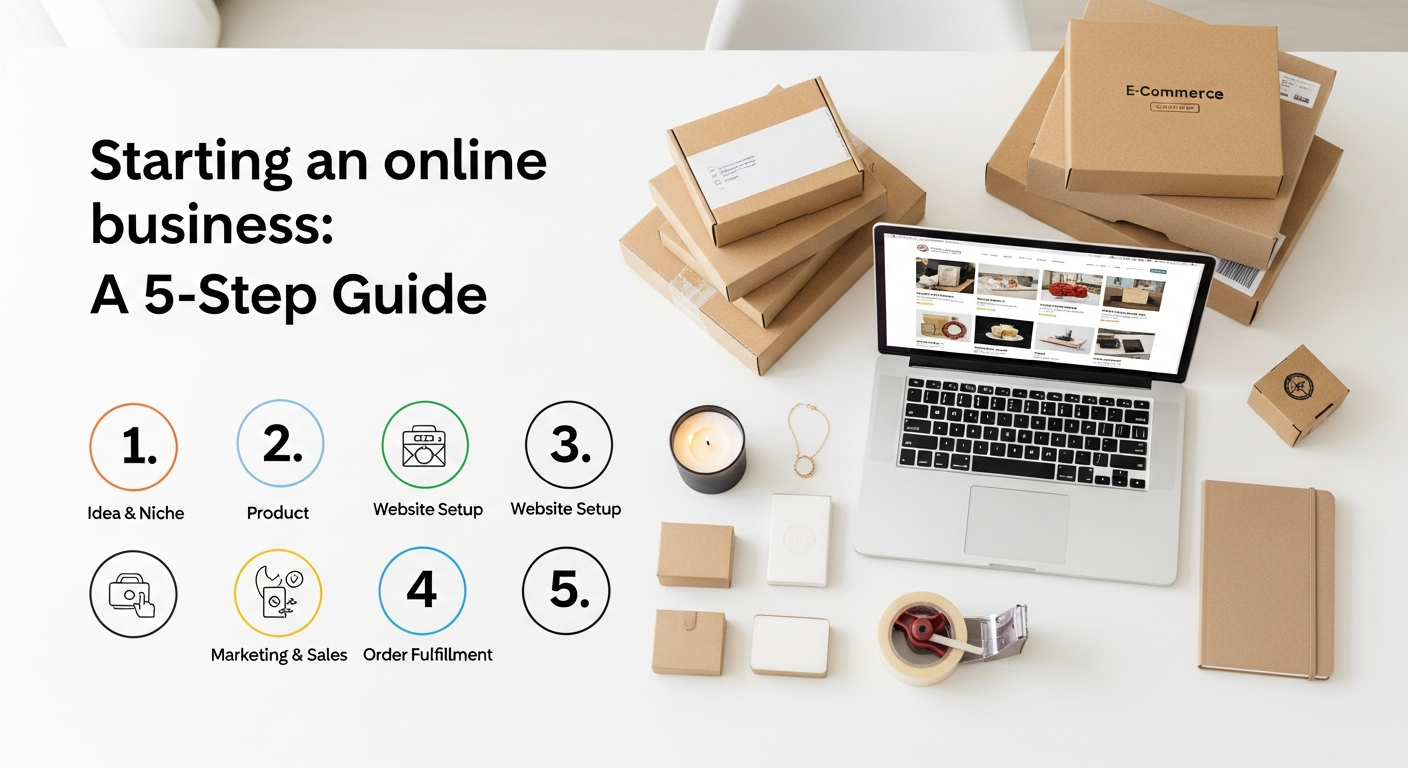
Once your idea is validated, the next critical phase involves bringing your vision to life online. This encompasses selecting the right e-commerce platform, determining your product sourcing strategy, and designing a user-friendly digital storefront that converts visitors into loyal customers.
Choosing the Right E-commerce Platform
Your e-commerce platform is the backbone of your online business. The choice depends on your budget, technical expertise, scalability needs, and specific features required.
- Shopify: Ideal for beginners and those seeking an all-in-one solution with extensive apps and themes. It offers excellent scalability and ease of use, though monthly fees can add up with premium apps.
- WooCommerce (WordPress): A powerful, flexible, and open-source option for those already familiar with WordPress. It requires more technical setup and maintenance but offers unparalleled customization and lower long-term costs.
- BigCommerce: Suited for larger businesses or those planning rapid scaling, offering robust features for enterprise-level operations, multi-channel selling, and advanced analytics.
- Etsy/Amazon/eBay: Marketplaces are excellent for starting with minimal setup, leveraging existing traffic. However, you have less brand control and higher competition. Consider these as supplementary channels rather than your sole storefront.
When selecting, consider factors like transaction fees, payment gateway integrations, mobile responsiveness, SEO capabilities, and customer support. The right platform should grow with you, allowing for seamless expansion as your business thrives.
Product Sourcing Strategies
How you acquire your products significantly impacts your overhead, inventory management, and profit margins.
- Dropshipping: You sell products without holding any inventory. When a customer places an order, you purchase the item from a third-party supplier who ships it directly to the customer. Low startup costs, minimal risk, but lower profit margins and less control over quality and shipping times.
- Wholesale: Buying products in bulk from manufacturers or distributors at a reduced price, then selling them at retail. Higher profit margins and quality control, but requires upfront inventory investment and storage.
- Private Label/White Label: Creating your own brand using generic products manufactured by a third party. This offers brand control and higher margins but demands significant upfront investment in design, branding, and inventory.
- Manufacturing Your Own Products: Ideal for creative entrepreneurs or those with unique product ideas. Offers complete control over design, quality, and branding, but requires substantial capital, time, and expertise in production.
- Print-on-Demand: Similar to dropshipping, but for custom-designed products (T-shirts, mugs, etc.). You create designs, and a third party prints and ships them only when an order is placed.
Designing for a Seamless User Experience (UX)
Your online store isn’t just a place to display products; it’s an experience. A well-designed UX is crucial for conversions.
- Intuitive Navigation: Customers should easily find what they’re looking for. Use clear categories, search bars, and logical menus.
- Mobile Responsiveness: A significant portion of online shopping occurs on mobile devices. Ensure your site looks and functions perfectly on all screen sizes.
- High-Quality Visuals: Invest in professional product photography and videography. Showcase products from multiple angles, in use, and with accurate color representation.
- Compelling Product Descriptions: Go beyond features; highlight benefits. Use storytelling, address pain points, and incorporate relevant keywords for SEO.
- Streamlined Checkout Process: Minimize steps, offer guest checkout, and display all costs upfront (shipping, taxes). Abandoned carts are often due to complex or unexpected checkout issues.
- Clear Calls-to-Action (CTAs): Guide users with prominent “Add to Cart,” “Buy Now,” or “Learn More” buttons.
A thoughtfully constructed digital storefront is your silent salesperson, working 24/7 to engage customers and drive sales.
Step 3: Mastering the Market – Digital Marketing and Sales Strategies
Search Engine Optimization (SEO)
SEO is the art and science of getting your website to rank higher in search engine results, driving organic (unpaid) traffic. This is a long-term strategy that yields significant ROI.
- Keyword Research: Identify the terms your target audience uses to find products like yours. Integrate these naturally into product titles, descriptions, category pages, and blog content.
- On-Page SEO: Optimize individual product pages with compelling descriptions, high-quality images with alt text, and structured data (schema markup) for rich snippets.
- Technical SEO: Ensure your site is fast, mobile-friendly, secure (HTTPS), and easily crawlable by search engines. Address broken links and create an XML sitemap.
- Content Marketing: Create valuable blog posts, guides, and articles that answer common questions related to your products or niche. This builds authority, attracts traffic, and provides content for social sharing.
- Backlink Building: Acquire high-quality backlinks from reputable websites. This signals to search engines that your site is trustworthy and authoritative.
Content Marketing and Social Media
Content marketing builds brand awareness, trust, and community, while social media provides direct engagement channels.
- Blog Posts & Guides: Position yourself as an expert. Share helpful information, product tutorials, industry insights, and behind-the-scenes content.
- Video Marketing: Product demos, unboxing videos, customer testimonials, and short-form content for platforms like TikTok and Instagram Reels are highly engaging.
- Social Media Engagement: Identify platforms where your target audience spends time (Instagram, Facebook, Pinterest, TikTok, X/Twitter, LinkedIn). Share valuable content, interact with followers, run contests, and use relevant hashtags.
- User-Generated Content (UGC): Encourage customers to share photos/videos of your products. UGC is highly effective for building social proof.
Paid Advertising (PPC)
Paid ads offer immediate visibility and highly targeted reach, making them crucial for quick traction and scaling.
- Google Ads: Target users actively searching for products like yours (Search Ads) or reach them across various websites and apps (Display Network). Focus on high-intent keywords.
- Social Media Ads: Platforms like Facebook, Instagram, and TikTok offer powerful targeting capabilities based on demographics, interests, and behaviors. Ideal for brand awareness, lead generation, and direct sales.
- Retargeting/Remarketing: Show ads to users who have previously visited your site but didn’t make a purchase. This is a highly effective way to recover abandoned carts and nurture leads.
Email Marketing
Email remains one of the most effective channels for building customer relationships and driving repeat purchases.
- List Building: Offer incentives (discounts, exclusive content, free guides) for email sign-ups on your website.
- Automated Sequences: Set up welcome series for new subscribers, abandoned cart recovery emails, post-purchase follow-ups, and birthday messages.
- Regular Newsletters: Share new product announcements, promotions, valuable content, and company updates.
- Segmentation: Divide your email list based on purchase history, engagement, or demographics to send highly relevant messages.
Remember that “How can tech help improve business performance” is profoundly evident in marketing. CRM systems, email automation platforms, ad management tools, and analytics dashboards (like Google Analytics 4) are indispensable for optimizing your campaigns, tracking performance, and making data-driven decisions that propel your business forward.
Step 4: Operational Excellence – Fulfillment, Customer Service, and Scaling Strategies

Once your marketing efforts start driving sales, the focus shifts to delivering on your promises efficiently and providing exceptional customer experiences. Operational excellence is not just about logistics; it’s about building trust and fostering long-term customer loyalty. This is where your business moves beyond a side hustle to a robust, scalable enterprise.
Order Fulfillment and Inventory Management
Efficient fulfillment ensures products reach customers quickly and accurately, enhancing satisfaction.
- In-House Fulfillment: You store, pick, pack, and ship orders yourself. Offers maximum control but becomes time-consuming and expensive as order volume grows.
- Third-Party Logistics (3PL): Outsourcing your warehousing, inventory management, and shipping to a specialized provider. Ideal for scaling, freeing up your time, and often reducing shipping costs due to bulk rates.
- Dropshipping Logistics: As discussed, the supplier handles fulfillment directly. Your role is order management and customer communication.
- Inventory Management Systems: Implement software to track stock levels, manage returns, and forecast demand. This prevents stockouts, reduces carrying costs, and improves efficiency. For businesses dealing with physical products, especially if you envision becoming a manufacturing brand, robust inventory management is non-negotiable.
Exceptional Customer Service
In the competitive online landscape of 2026, customer service is a key differentiator. Positive experiences lead to repeat business and powerful word-of-mouth marketing.
- Multi-Channel Support: Offer various ways for customers to reach you: email, live chat, phone, and social media direct messages.
- Prompt Responses: Aim for quick response times. Automated chatbots can handle common queries, freeing up human agents for complex issues.
- Clear Return & Refund Policies: Make your policies easy to find and understand. A hassle-free return process builds confidence.
- Proactive Communication: Keep customers informed about their order status, shipping updates, and any potential delays.
- Feedback Collection: Actively solicit customer feedback through surveys, reviews, and direct outreach. Use this input to improve products and services.
Scaling Your Operations with Technology and Team Building
As your business grows, manual processes become bottlenecks. Leveraging technology and building a strong team are paramount.
- Automation: Automate repetitive tasks such as order processing, email responses, inventory updates, and social media scheduling. This significantly improves efficiency and reduces errors.
- CRM Systems: Customer Relationship Management (CRM) software helps manage customer interactions, track sales, and personalize communication, greatly enhancing “How can tech help improve business performance.”
- Project Management Tools: For larger teams, tools like Asana, Trello, or Monday.com streamline task management, collaboration, and workflow.
- Virtual Assistants & Freelancers: Delegate non-core tasks to virtual assistants or freelancers (e.g., social media management, content writing, graphic design) to free up your time for strategic initiatives.
- Building Your Team: As your business expands, consider hiring full-time employees or specialized contractors. Define roles clearly and foster a positive, productive work environment.
By focusing on operational excellence, you not only meet customer expectations but also lay the groundwork for a robust, scalable business that can handle increased demand without sacrificing quality.
Step 5: Financial Acumen and Legal Safeguards
Beyond the excitement of sales and marketing, the pragmatic realities of finance and legal compliance are non-negotiable for a sustainable online business. Mastering these aspects protects your assets, ensures profitability, and provides a stable foundation for growth. This step is where many entrepreneurs falter, making it a critical area for diligent attention.
Establishing Your Business Legally
The legal structure of your business impacts liability, taxation, and administrative burden.
- Business Name Registration: Ensure your chosen business name and domain are available and register them.
- Legal Structure:
- Sole Proprietorship: Simple, but offers no personal liability protection. Your personal and business assets are intertwined.
- Limited Liability Company (LLC): Provides personal liability protection, separating your personal assets from business debts and lawsuits. Often the preferred choice for new online businesses.
- Corporation (S-Corp, C-Corp): More complex setup and compliance, usually for larger businesses or those seeking external investment.
- Business Licenses and Permits: Research federal, state, and local requirements. Even online businesses may need specific licenses depending on the products sold or location of operation.
- Employer Identification Number (EIN): If you plan to hire employees or establish an LLC/Corporation, you’ll need an EIN from the IRS.
Financial Management and Budgeting
Sound financial practices are the lifeblood of your online venture.
- Separate Business Finances: This is paramount. Open a dedicated business bank account and get a business credit card. This simplifies accounting, tax preparation, and helps you clearly “How to manage both home and business expenses” by creating a distinct separation. Avoid co-mingling funds at all costs.
- Budgeting and Forecasting: Create a detailed budget for startup costs, operational expenses, and marketing. Forecast revenue to understand potential cash flow. Regularly review and adjust.
- Pricing Strategy: Carefully determine your product pricing. Factor in cost of goods sold (COGS), shipping, marketing, overhead, and desired profit margins. Research competitor pricing.
- Profit & Loss (P&L) Statements: Regularly track your revenue and expenses to understand your profitability.
- Cash Flow Management: Monitor money coming in and going out. Healthy cash flow is more important than high revenue for business survival.
Taxes and Compliance
Understanding your tax obligations is crucial to avoid legal issues.
- Sales Tax: Online businesses often have nexus (a significant presence) in multiple states or countries, triggering sales tax collection obligations. This is a complex area, and using e-commerce platform integrations or specialized software can help automate calculation and remittance.
- Income Tax: Understand how your business structure affects your income tax liability.
- Record Keeping: Maintain meticulous records of all income and expenses. Use accounting software (e.g., QuickBooks, Xero) from day one.
Business Insurance: Your Financial Safety Net
Many new entrepreneurs overlook business insurance, but it’s a vital safeguard against unforeseen risks. While it’s particularly critical to understand “Why manufacturing brands need business insurance” due to product liability exposures (e.g., a faulty product causing injury), all online businesses face risks.
- General Liability Insurance: Protects against claims of bodily injury or property damage caused by your business operations, products, or services. Even an online business could face claims if a customer is injured visiting your home office or if you accidentally damage property during a delivery.
- Product Liability Insurance: Absolutely essential for any business selling physical goods, especially manufacturing brands. If a product you sell causes harm or damage, this insurance covers legal fees and settlement costs. Even if you dropship, you could still be held liable.
- Cyber Liability Insurance: With customer data and online transactions, a data breach or cyberattack is a significant risk. This insurance covers costs associated with data breaches, such as notification expenses, legal fees, and reputational damage. Highly relevant for all online businesses in 2026.
- Business Owner’s Policy (BOP): Often combines general liability, property insurance, and business interruption insurance into one package, suitable for small to medium-sized online businesses.
Consult with an insurance broker to assess your specific risks and ensure comprehensive coverage. The peace of mind and financial protection are well worth the investment.
Legal Compliance and Customer Trust
- Privacy Policy: Clearly state how you collect, use, and protect customer data, complying with regulations like GDPR and CCPA.
- Terms of Service/Use: Outline the rules for using your website, purchasing products, and engaging with your brand.
- Refund/Return Policy: Clearly communicate your policies to set customer expectations.
By diligently managing your finances and adhering to legal requirements, you build a resilient and trustworthy online business, safeguarding your personal assets and fostering long-term success.
Continuous Growth & Optimization for 2026 and Beyond
The journey of starting an online business doesn’t end with a launch; it truly begins there. The digital landscape is dynamic, and what works today might be obsolete tomorrow. Sustained success in 2026 and beyond demands a commitment to continuous learning, adaptation, and optimization. This involves leveraging advanced technology, analyzing data, and staying agile in the face of evolving market trends.
Embracing Emerging Technologies for Competitive Advantage
The rapid pace of technological innovation offers unprecedented opportunities for online businesses. “How can tech help improve business performance” is not just a question but a roadmap for future growth.
- Artificial Intelligence (AI) and Machine Learning (ML):
- Personalization: AI-driven recommendation engines can analyze customer behavior to offer highly relevant product suggestions, significantly boosting conversion rates.
- Customer Service: AI chatbots can handle a vast array of customer inquiries 24/7, improving response times and freeing human agents for complex issues.
- Marketing Automation: AI can optimize ad spend, predict optimal posting times for social media, and even generate compelling ad copy.
- Predictive Analytics: ML can forecast demand, optimize inventory levels, and identify potential market shifts before they fully materialize.
- Augmented Reality (AR) and Virtual Reality (VR): AR apps allow customers to virtually “try on” clothes or “place” furniture in their homes before purchasing, reducing returns and enhancing the shopping experience.
- Voice Commerce: Optimizing your product listings and content for voice search (e.g., “Hey Google, where can I buy sustainable coffee beans?”) will become increasingly important.
- Blockchain for Supply Chain Transparency: For brands focusing on ethical sourcing or high-value goods, blockchain can provide immutable proof of origin and supply chain integrity, building immense customer trust.
Data-Driven Decision Making
Your online business generates a wealth of data. The ability to collect, analyze, and act on this data is crucial for informed decision-making.
- Analytics Dashboards: Regularly monitor key performance indicators (KPIs) like website traffic, conversion rates, average order value (AOV), customer lifetime value (CLTV), and customer acquisition cost (CAC).
- A/B Testing: Continuously test different versions of your website elements (e.g., product descriptions, call-to-action buttons, pricing) to determine what resonates best with your audience.
- User Feedback: Beyond analytics, actively solicit and listen to customer feedback through surveys, reviews, and direct interactions. This qualitative data provides invaluable insights.
- Competitor Monitoring: Keep an eye on your competitors’ strategies, product launches, and marketing campaigns. Learn from their successes and failures.
Innovation and Adaptation
The e-commerce landscape is a marathon, not a sprint. Staying competitive means being willing to evolve.
- Market Research: Continuously research market trends, consumer preferences, and new technologies. Attend industry webinars, read trade publications, and network with other entrepreneurs.
- Product Development: Don’t rest on your laurels. Innovate existing products, introduce new lines, or expand into complementary services based on customer feedback and market demand.
- Diversification: Explore new sales channels (e.g., social commerce, live shopping events), expand into international markets, or consider subscription models to build recurring revenue.
- Build a Resilient Business Model: Focus on creating a business that can withstand economic fluctuations and unforeseen challenges. This often involves diversified revenue streams, efficient cost structures, and strong customer loyalty.
By embracing a mindset of continuous improvement and actively seeking out new opportunities and technologies, your online business will not only survive but thrive in the ever-evolving digital marketplace of 2026 and beyond, solidifying your position as a leader in your niche.
Frequently Asked Questions
Recommended Resources
You might also enjoy Video Marketing Trends 2026 from Page Release.
For more on starting an online, see Best Investment Apps 2026 on Trading Costs.