
The Evolving Landscape of Ecommerce Accounting in 2026
The ecommerce sphere in 2026 is characterized by unprecedented dynamism and complexity. From the proliferation of sales channels to the increasing sophistication of customer acquisition strategies, every aspect of an online business generates a wealth of financial data. Managing this data effectively is paramount, not just for compliance, but for strategic decision-making. The traditional methods of bookkeeping are simply inadequate for the velocity and volume of transactions that an average ecommerce business processes daily.
One of the most significant shifts is the global nature of online commerce. Businesses often sell across borders, encountering a myriad of sales tax regulations, currency conversions, and international shipping costs. This necessitates accounting software that can seamlessly handle multi-currency transactions, automate sales tax calculations for various jurisdictions (including potential new digital service taxes), and provide clear visibility into international profit margins. The rise of subscription models and recurring revenue streams further complicates revenue recognition, demanding systems that can accurately track and report these distinct revenue patterns.
Moreover, the integration of artificial intelligence and machine learning is beginning to transform accounting processes. In 2026, we’ll see accounting software leveraging AI for predictive analytics, anomaly detection in expenses, and even more sophisticated fraud prevention. Automation, already a cornerstone, will become even more pervasive, reducing manual entry errors and freeing up valuable time for strategic financial analysis. For those embarking on How To Start Ecommerce Business 2026, understanding these technological shifts is crucial for selecting a system that will not only meet current needs but also scale with future innovations.
Finally, the emphasis on data-driven decision-making has never been stronger. Ecommerce managers require real-time insights into their cash flow, profitability by product line, customer acquisition costs, and inventory turnover. Accounting software in 2026 must act as a business intelligence tool, providing dashboards and reports that translate complex financial data into actionable strategies for growth and efficiency.
Key Features to Look for in Ecommerce Accounting Software for 2026
Choosing the right accounting software for your ecommerce business in 2026 requires a discerning eye for features that specifically address the unique demands of online retail. Generic accounting solutions often fall short, lacking the specialized functionalities necessary to truly thrive. Here are the critical features to prioritize:
Automated Transaction Syncing and Reconciliation
- Direct Integrations: The software must offer robust, direct integrations with your ecommerce platforms (Shopify, WooCommerce, BigCommerce, Magento, etc.), payment gateways (Stripe, PayPal, Square), and online marketplaces (Amazon, eBay, Etsy). This ensures that sales, refunds, fees, and payouts are automatically imported and categorized.
- Bank Feeds: Automatic synchronization with bank accounts and credit cards to streamline reconciliation, ensuring all transactions are accounted for with minimal manual effort.
- Rule-Based Automation: The ability to set up rules for categorizing transactions automatically, reducing the time spent on repetitive tasks and improving data accuracy.
Comprehensive Inventory Management
- Real-time Tracking: Critical for ecommerce, real-time inventory tracking across multiple warehouses or sales channels prevents overselling and stockouts.
- Cost of Goods Sold (COGS): Accurate calculation of COGS is essential for understanding true profitability. The software should support various inventory costing methods (FIFO, LIFO, weighted average).
- Multi-location Support: If you store inventory in different locations or utilize third-party logistics (3PL) providers, the software needs to manage stock levels and movements across all points. This is particularly important when considering the financial impact of Ecommerce Return Policy Best Practices, as returns often affect inventory levels and require specific accounting treatment for returned goods.
- Bundle/Kit Assembly: For businesses that sell product bundles, the software should be able to track component inventory and costs accurately.
Advanced Sales Tax Management
- Multi-Jurisdictional Support: The ability to calculate, collect, and report sales tax for multiple states, counties, and even international jurisdictions, based on nexus rules. This feature is non-negotiable for scaling ecommerce businesses.
- Automated Filings: Integration with sales tax compliance services or built-in automation for preparing and filing sales tax returns significantly reduces compliance burden.
- Tax Exemptions: Handling tax-exempt sales for specific customers or product types.
Multi-Currency and Multi-Channel Capabilities
- Foreign Currency Support: For global sellers, the software must handle transactions in multiple currencies, including automated currency conversions and tracking gains or losses from exchange rate fluctuations.
- Consolidated Reporting: The ability to pull financial data from all sales channels (your website, Amazon, Etsy, social commerce) into a single, unified view for comprehensive reporting.
Robust Reporting and Analytics
- Customizable Dashboards: Providing a clear, at-a-glance overview of key financial metrics such as revenue, expenses, profit margins, and cash flow.
- Profitability Reports: Detailed reports by product, channel, or customer segment to identify high-performing areas and areas needing improvement.
- Cash Flow Forecasting: Essential for strategic planning, allowing businesses to anticipate future cash inflows and outflows.
- Expense Tracking: Categorization and analysis of all business expenses, from shipping costs to marketing spend (including tracking expenses related to a Referral Marketing Program Ecommerce).
Seamless Integrations and Scalability
- API Access: A robust API (Application Programming Interface) allows for custom integrations with specialized tools that your business might use.
- Ecosystem Compatibility: Ensure the software integrates well with other critical tools in your tech stack, such as CRM, ERP, shipping software, and marketing platforms.
- Cloud-Based Accessibility: Essential for remote teams and secure access from anywhere, anytime.
- Scalability: The chosen solution should be able to grow with your business, handling increased transaction volumes and additional complexities without requiring a complete overhaul.
Security and Compliance
- Data Encryption: Ensuring all financial data is protected with industry-standard encryption.
- User Permissions: Granular control over who can access and modify financial information.
- Audit Trails: Detailed records of all changes and activities within the system for accountability and compliance.
- Regulatory Compliance: Adherence to relevant financial regulations and accounting standards.
Top Accounting Software Solutions for Ecommerce in 2026
1. Comprehensive Cloud-Based Platforms
These solutions are built for modern businesses, offering extensive features and excellent integration capabilities. They are generally suitable for small to medium-sized ecommerce businesses looking for an all-in-one financial management tool.
- Strengths:
- Robust Integrations: Often boast extensive app marketplaces with pre-built connectors for popular ecommerce platforms, payment gateways, and CRMs.
- Automation: Strong emphasis on automating bank feeds, transaction categorization, and reconciliation.
- Scalability: Designed to grow with your business, offering various pricing tiers and feature sets.
- User-Friendly Interface: Typically intuitive and easy to navigate, reducing the learning curve.
- Mobile Access: Full functionality often available via mobile apps for on-the-go management.
- Considerations: While powerful, some advanced ecommerce-specific features (like highly complex inventory costing for manufacturing or deep multi-warehouse logic) might require third-party add-ons.
2. Specialized Ecommerce Accounting Integrators/Add-ons
These aren’t standalone accounting software but rather powerful middleware or connectors designed to bridge the gap between your core accounting software (like QuickBooks or Xero) and your complex ecommerce operations. They are crucial for businesses with high transaction volumes or intricate multi-channel sales.
- Strengths:
- Deep Ecommerce Integration: Specifically built to handle the nuances of ecommerce data, including product variations, marketplace fees, shipping costs, and returns.
- Data Transformation: Can consolidate and normalize data from multiple sources before pushing it to your accounting system, ensuring accuracy and consistency.
- Advanced Reporting: Often provide ecommerce-specific reports that your primary accounting software might lack.
- Sales Tax Automation: Many offer advanced sales tax calculation and remittance features tailored for online sellers.
- Considerations: These tools add an additional layer of cost and complexity to your tech stack. They require a compatible core accounting system.
3. Enterprise Resource Planning (ERP) Systems
For large-scale ecommerce operations, particularly those with complex manufacturing, global distribution, or highly integrated supply chains, an ERP system becomes indispensable. These comprehensive platforms integrate accounting with inventory, supply chain, CRM, and human resources.
- Strengths:
- Unified Operations: Provides a single source of truth for all business data, breaking down departmental silos.
- Advanced Functionality: Offers sophisticated modules for every aspect of the business, from production planning to financial forecasting.
- Customization: Highly customizable to fit unique business processes and industry-specific requirements.
- Global Reach: Excellent for multinational ecommerce businesses with complex regulatory and financial needs.
- Considerations: High implementation costs, significant setup time, and a steeper learning curve make them suitable primarily for large, established enterprises. For those just learning How To Start Ecommerce Business 2026, this is likely overkill initially.
4. Freemium or Budget-Friendly Options
For startups and very small ecommerce businesses, there are solutions that offer basic accounting features at a lower cost or even free, with options to upgrade as the business grows.
- Strengths:
- Cost-Effective: Ideal for bootstrapping businesses with limited financial resources.
- Basic Functionality: Covers essential tasks like invoicing, expense tracking, and basic reporting.
- Ease of Use: Often designed for non-accountants, with straightforward interfaces.
- Considerations: Limited integrations, less automation, and may quickly be outgrown as the business scales. Businesses might find themselves needing to migrate to a more robust solution within a year or two.
When evaluating these categories, consider your current business size, anticipated growth, complexity of operations, and budget. The best solution for your ecommerce business in 2026 will be the one that aligns most closely with these factors.
Integrating Accounting Software with Your Ecommerce Ecosystem
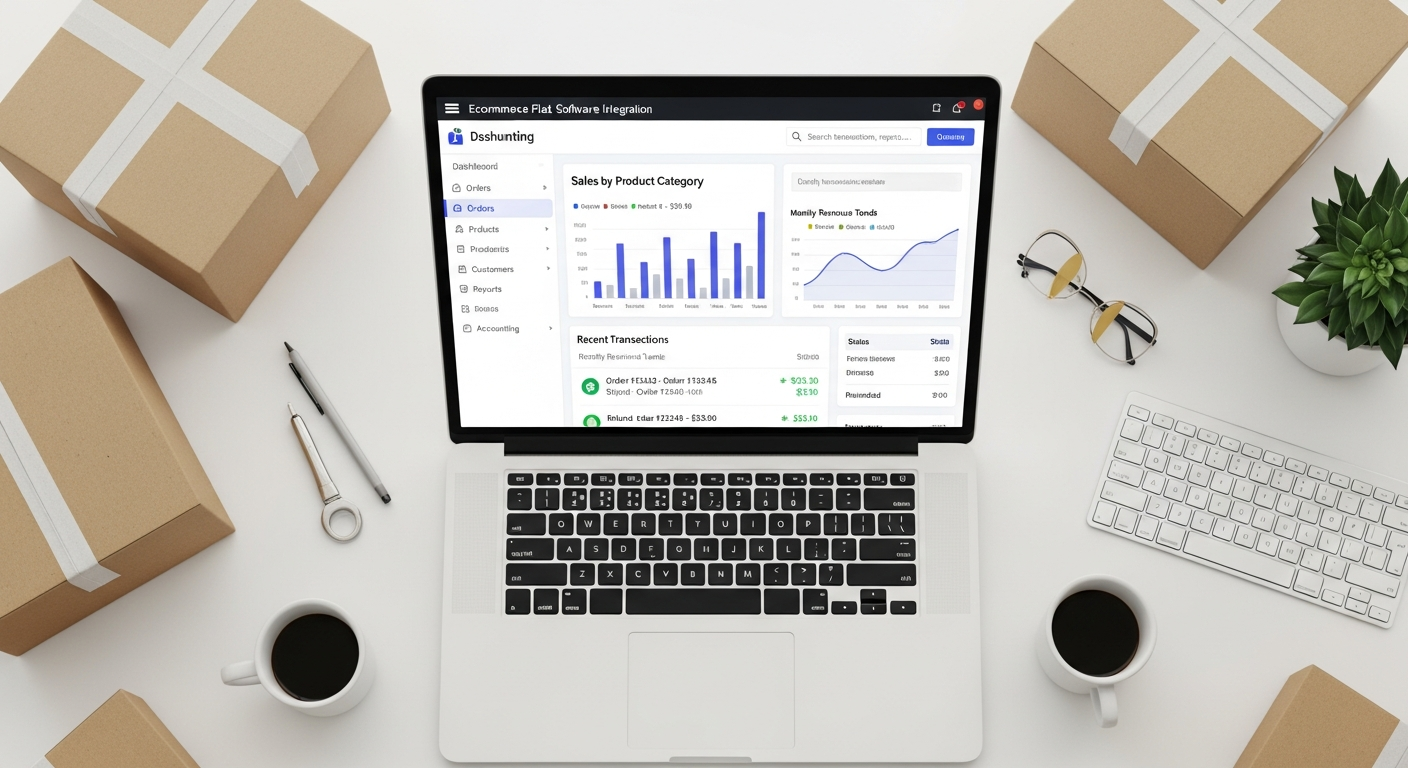
The true power of modern accounting software for ecommerce in 2026 lies in its ability to seamlessly integrate with your entire digital ecosystem. A disconnected system leads to manual data entry, errors, and delayed insights. Strategic integration ensures a smooth flow of financial data across all your operational touchpoints.
1. Ecommerce Platforms (Shopify, WooCommerce, BigCommerce, etc.)
This is the most critical integration. Your accounting software should automatically pull in sales orders, customer data, product information, and payment details directly from your chosen ecommerce platform. This automation eliminates the need for manual invoice creation and ensures revenue is recognized accurately. It also helps in tracking the impact of promotions or discount codes on overall sales figures.
2. Payment Gateways (Stripe, PayPal, Square, Klarna, etc.)
Integrating with payment processors is vital for reconciling transactions. The software should import transaction fees, processing charges, and net payouts, making it easy to match bank deposits with sales records. This granular data is crucial for understanding the true cost of each sale.
3. Online Marketplaces (Amazon, eBay, Etsy, Walmart Marketplace)
If you sell on multiple marketplaces, your accounting solution needs to consolidate data from all of them. This includes sales, marketplace fees, advertising costs, and returns. Without this, getting a holistic view of your profitability across channels becomes incredibly challenging. Many specialized ecommerce accounting integrators excel at this specific challenge.
4. Shipping and Logistics Software
Integrating with shipping carriers (UPS, FedEx, USPS) or 3PL providers can help track shipping costs accurately and tie them directly to orders. This allows for precise calculation of gross profit per order and aids in managing expenses effectively.
5. Customer Relationship Management (CRM) Systems
While not a direct financial integration, connecting your CRM can provide valuable context for financial data. Understanding customer purchasing history, lifetime value, and marketing channel attribution can inform financial forecasting and marketing budget allocation. For example, tracking the success of a Referral Marketing Program Ecommerce within your CRM can then inform your accounting software about the associated costs and attributed revenue.
6. Inventory Management Systems
For businesses with complex inventory needs, a dedicated inventory management system (IMS) often integrates with the accounting software. This ensures real-time updates on stock levels, accurate COGS calculations, and streamlined order fulfillment. This integration is also vital for managing the financial implications of Ecommerce Return Policy Best Practices, as returns directly affect stock levels and require proper accounting adjustments.
7. Referral Marketing Platforms
If you run a Referral Marketing Program Ecommerce, integrating the platform with your accounting software allows for accurate tracking of commission payouts, referred sales revenue, and the overall ROI of your referral efforts. This ensures that marketing expenses are correctly categorized and attributed.
When evaluating integrations, look for native connectors first, as they typically offer the most seamless experience. If native integrations aren’t available, assess the robustness of API access or consider third-party integration tools (middleware) that can bridge the gap. The goal is to minimize manual data entry, reduce errors, and ensure that your financial data is always current and accurate across your entire ecommerce operation.
Future-Proofing Your Financial Operations: Strategic Considerations for 2026 and Beyond
As the ecommerce landscape continues its rapid evolution, selecting accounting software for 2026 isn’t just about meeting current needs; it’s about making a strategic investment that will stand the test of time. Future-proofing your financial operations requires foresight and an understanding of emerging trends.
1. Embracing AI and Machine Learning in Accounting
By 2026, AI is moving beyond simple automation to more sophisticated applications in accounting. Look for software that offers:
- Predictive Analytics: Forecasting cash flow, sales trends, and potential financial risks based on historical data.
- Anomaly Detection: Automatically flagging unusual transactions or potential fraud, enhancing security and accuracy.
- Intelligent Categorization: AI-driven categorization of expenses and revenue, learning from user behavior to improve accuracy over time.
- Automated Compliance Checks: AI assisting with sales tax nexus identification and regulatory changes.
These capabilities will transform financial analysis from reactive to proactive, providing deeper insights and reducing the burden on human accountants.
2. Cloud-Native and API-First Architecture
The future is undeniably cloud-based. Ensure your chosen solution is truly cloud-native, offering flexibility, scalability, and accessibility from any device, anywhere. An API-first architecture is equally crucial, as it ensures that your accounting software can easily connect and communicate with new and evolving tools in your ecommerce tech stack. This adaptability is key to integrating future innovations without requiring a complete system overhaul.
3. Data Security and Privacy Compliance
With increasing cyber threats and evolving data privacy regulations (like GDPR, CCPA, and their future equivalents), the security posture of your accounting software is paramount. Prioritize solutions that offer robust encryption, multi-factor authentication, regular security audits, and clear data privacy policies. Understanding how your financial data is stored, processed, and protected is a non-negotiable aspect of future-proofing.
4. Adaptability to Emerging Payment Methods
The payment landscape is constantly changing, with new digital wallets, cryptocurrency options, and buy-now-pay-later (BNPL) services gaining traction. Your accounting software should be able to integrate with and accurately track transactions from these diverse payment methods. This flexibility ensures that your business can embrace consumer preferences without creating accounting headaches.
5. Support for Global Expansion
If your How To Start Ecommerce Business 2026 plan includes international sales, select software with strong multi-currency, multi-entity, and multi-tax jurisdiction capabilities. As global ecommerce continues to grow, navigating international financial regulations will become even more critical. A system that can easily handle different accounting standards (e.g., IFRS vs. GAAP) will be a significant advantage.
6. Focus on Real-time Insights and Business Intelligence
Future-proof accounting software will move beyond mere record-keeping to become a strategic business intelligence tool. It should provide real-time dashboards, customizable reports, and the ability to drill down into granular data. This empowers business owners and financial managers to make informed decisions quickly, adapting to market changes and optimizing profitability. For example, understanding the true cost of returns (informed by Ecommerce Return Policy Best Practices) or the ROI of a Referral Marketing Program Ecommerce in real-time can significantly impact strategic shifts.
By considering these forward-looking aspects, you can select an accounting software solution in 2026 that not only meets your operational needs today but also positions your ecommerce business for sustained growth and resilience in the years to come.
Maximizing Profitability: Beyond Basic Bookkeeping with Advanced Accounting Software
In the competitive realm of ecommerce, merely tracking income and expenses is not enough to secure long-term success. The right accounting software for 2026 empowers businesses to move beyond basic bookkeeping, transforming raw financial data into actionable insights that drive profitability and strategic growth. This strategic shift is crucial for any business, especially those figuring out How To Start Ecommerce Business 2026 with an eye on sustainable expansion.
1. Granular Profitability Analysis
Advanced accounting software allows you to dissect profitability at a much finer level. Instead of just knowing your overall profit, you can analyze:
- Profit by Product/SKU: Identify your most and least profitable products, considering COGS, marketing spend, and even return rates (a direct link to Ecommerce Return Policy Best Practices). This helps optimize product catalogs and pricing strategies.
- Profit by Sales Channel: Understand the true profitability of each marketplace (Amazon, Etsy, your own website), factoring in platform fees, advertising costs, and logistical differences. This informs where to allocate marketing budgets and inventory.
- Profit by Customer Segment: While often requiring CRM integration, understanding which customer groups are most profitable can guide targeted marketing and retention efforts.
This detailed analysis is invaluable for optimizing your product mix, pricing, and sales strategies.
2. Optimized Inventory Valuation and Management
Inventory is often an ecommerce business’s largest asset, but also a significant cost and risk. Sophisticated accounting software helps optimize this by:
- Accurate COGS Calculation: Ensures that the cost of goods sold is accurately reflected, directly impacting gross profit. This becomes particularly complex with fluctuating supplier costs or international sourcing.
- Dead Stock Identification: Highlighting slow-moving or obsolete inventory allows for timely clearance sales or write-offs, preventing capital from being tied up.
- Return Cost Analysis: By meticulously tracking returns (as per your Ecommerce Return Policy Best Practices), the software can help calculate the true cost of returns, including restocking, shipping, and potential write-downs, informing policy adjustments.
Effective inventory management directly impacts cash flow and storage costs, boosting overall profitability.
3. Strategic Expense Management and Cost Reduction
Beyond simply logging expenses, advanced software enables strategic expense management:
- Vendor Analysis: Tracking spending with different suppliers can reveal opportunities for negotiation or consolidation to reduce costs.
- Marketing ROI: By integrating with marketing platforms, you can accurately track ad spend against revenue generated, calculating the return on investment for different campaigns. This is particularly useful for assessing the effectiveness and managing payouts for a Referral Marketing Program Ecommerce.
- Automated Bill Pay: Ensuring bills are paid on time avoids late fees and can even secure early payment discounts.
Understanding where your money is going and the return you’re getting allows for informed decisions to cut unnecessary costs and reallocate funds to more productive areas.
4. Enhanced Cash Flow Forecasting
Cash flow is the lifeblood of any business, especially ecommerce, which can have fluctuating sales cycles. Advanced accounting software offers:
- Real-time Cash Position: A clear, up-to-the-minute view of funds available.
- Predictive Forecasting: Using historical data and current trends to project future cash inflows and outflows, helping businesses anticipate shortages or surpluses.
- What-if Scenarios: Modeling the impact of different business decisions (e.g., a large purchase, a new marketing campaign, a change in Ecommerce Return Policy Best Practices) on cash flow.
Proactive cash flow management allows businesses to seize opportunities, mitigate risks, and maintain financial stability.
5. Simplified Tax Compliance and Planning
While compliance is a given, advanced software transforms tax season from a dreaded chore into a streamlined process. Automated sales tax calculations and reporting, coupled with clear expense categorization, mean less time spent preparing for taxes and more confidence in filing accuracy. This also enables better tax planning throughout the year, identifying potential deductions and optimizing tax liabilities. For those just setting up their financials for How To Start Ecommerce Business 2026, establishing these systems early is a massive advantage.
By leveraging these capabilities, ecommerce businesses can move beyond transactional accounting to strategic financial management, unlocking new levels of efficiency, insight, and ultimately, profitability.
Conclusion
The journey of an ecommerce business in 2026 is paved with innovation, competition, and immense opportunity. At its core, however, sustainable success hinges on meticulous financial management. Choosing the right accounting software is not merely a technical decision; it’s a foundational strategic choice that impacts every facet of your operation, from daily transactions to long-term growth. As you navigate the complexities of multi-channel sales, global markets, and evolving tax regulations, the power of an integrated, automated, and insightful accounting solution becomes indispensable.
For entrepreneurs asking How To Start Ecommerce Business 2026, making this critical software decision early sets the stage for efficient operations, robust compliance, and informed strategic planning. The ability to seamlessly manage inventory, precisely track the costs associated with Ecommerce Return Policy Best Practices, and accurately measure the ROI of a Referral Marketing Program Ecommerce – all within a unified financial system – provides an unparalleled competitive edge. By investing in a solution that offers robust integrations, advanced automation, powerful reporting, and scalability, you’re not just buying software; you’re investing in the financial health and future prosperity of your ecommerce venture. The right accounting software in 2026 will be your most trusted partner in transforming raw data into profitable decisions, ensuring your online business is not just surviving, but thriving in the digital economy.
Frequently Asked Questions
Recommended Resources
Related reading: How To Get Out Of Credit Card Debt (Trading Costs).
You might also enjoy How To Start An Ecommerce Business from AssetBar.
