Why an Email List is Your E-Commerce Store’s Most Valuable Asset
In an era dominated by ever-changing social media algorithms and rising ad spend, the direct line of communication offered by email remains unparalleled. Unlike rented audiences on platforms like Facebook or Instagram, your email list is an owned asset, giving you unfiltered access to your most interested prospects and customers. This fundamental distinction is critical for any online store aiming for long-term viability and profitability.
Consider the volatility of relying solely on third-party channels. A platform’s algorithm can shift overnight, drastically reducing your organic reach and forcing you to pay more for visibility. An email list, however, is impervious to such external changes. You control the message, the timing, and the frequency of your communications, ensuring your brand stays top-of-mind with an audience that has explicitly granted you permission to connect.
The return on investment (ROI) for email marketing consistently outperforms most other digital marketing channels. Studies frequently show that email marketing can yield an average ROI of $40 for every $1 spent, a figure that’s hard for any other channel to match. This incredible efficiency stems from several factors:
- Direct, Personal Communication: Emails land directly in an individual’s inbox, creating a more personal and intimate connection than a general social media post. This directness fosters trust and encourages engagement.
- High Conversion Rates: Email subscribers are typically closer to a purchase decision than casual website visitors. They’ve shown a level of interest that makes them more receptive to offers, promotions, and product recommendations.
- Customer Lifetime Value (CLTV): A well-managed email list is a powerhouse for increasing CLTV. Through segmented campaigns, personalized recommendations, and exclusive offers, you can encourage repeat purchases, cross-sells, and upsells, significantly boosting the value each customer brings over their lifetime with your brand. This is a core component of any strategy to increase average order value ecommerce businesses strive for.
- Brand Building and Loyalty: Beyond immediate sales, email allows you to tell your brand’s story, share valuable content, and build a community. Regular, valuable communication nurtures a loyal customer base that not only buys from you repeatedly but also advocates for your brand. This loyalty is invaluable, especially as new businesses emerge and vie for attention, making it a critical consideration for those learning how to start an ecommerce business in 2026.
- Audience Segmentation and Personalization: Email marketing platforms offer sophisticated tools for segmenting your audience based on behavior, purchase history, demographics, and more. This enables hyper-targeted campaigns that resonate deeply with specific groups, leading to higher engagement and conversion rates.
- Analytics and Optimization: Email marketing provides a wealth of data – open rates, click-through rates, conversion rates, unsubscribe rates. This data is gold for understanding your audience, refining your messaging, and continuously optimizing your campaigns for better performance.
In essence, an email list is your brand’s direct communication lifeline, a powerful engine for sales, and a critical tool for building lasting customer relationships. It’s an investment that pays dividends far into the future, providing stability and growth that no other marketing channel can replicate with the same consistency and control.
Essential Tools and Foundations for Email List Building
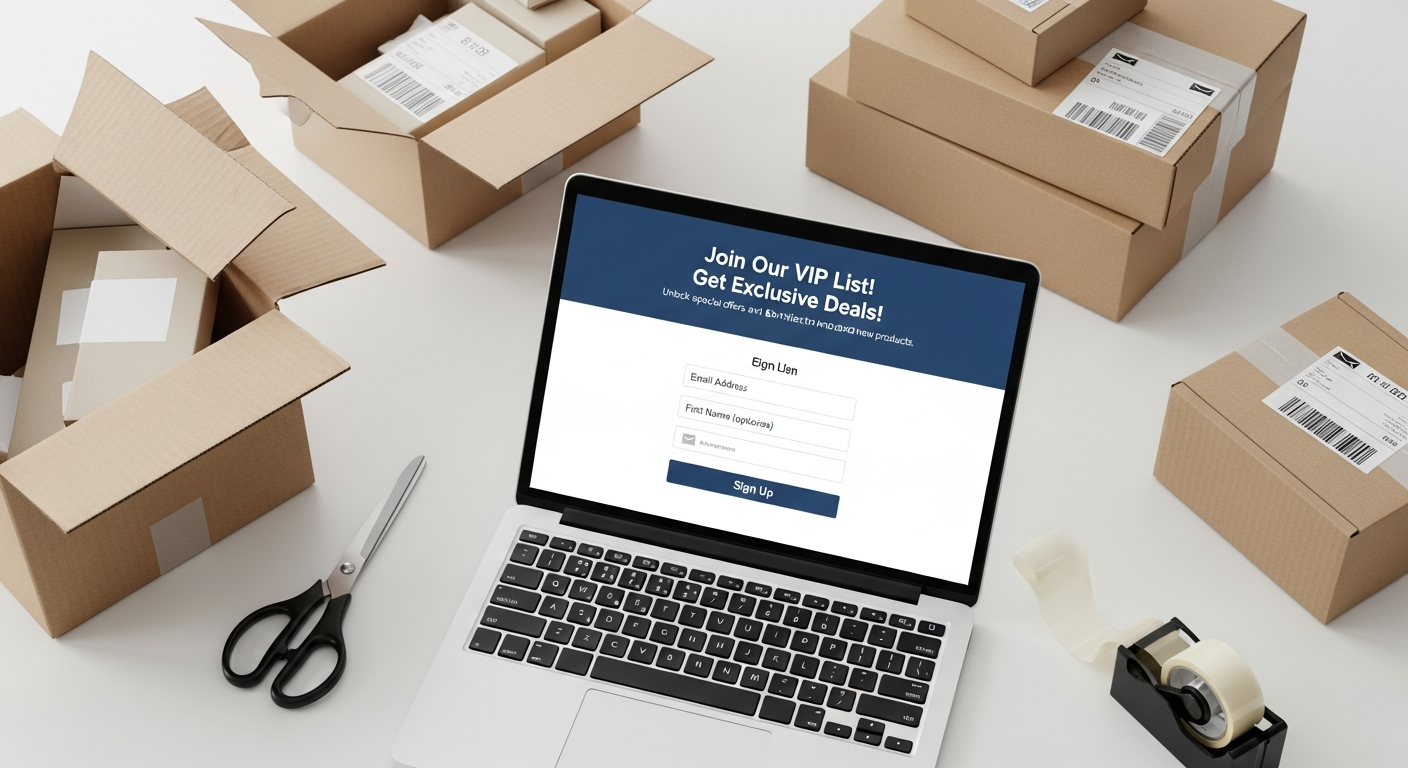
Before you can start capturing emails effectively, you need to lay a solid foundation. This involves selecting the right tools and understanding the legal and ethical responsibilities that come with collecting personal data. A well-prepared infrastructure ensures your list-building efforts are efficient, compliant, and poised for success.
Choosing Your Email Marketing Platform (ESP)
The email marketing platform is the central nervous system of your email strategy. It’s where you’ll store your subscriber data, design your emails, send campaigns, and track performance. There are many excellent options available, each with its strengths:
- Klaviyo: Highly recommended for e-commerce stores due to its deep integrations with platforms like Shopify, advanced segmentation capabilities, and robust automation features (e.g., abandoned cart sequences, post-purchase flows).
- Mailchimp: A popular choice for beginners and small businesses, offering an intuitive interface and a generous free plan to start. It provides essential features for list building, campaign management, and basic automation.
- ActiveCampaign: Known for its powerful marketing automation and CRM functionalities, making it ideal for businesses that want to build complex customer journeys and manage customer relationships comprehensively.
- ConvertKit: Favored by creators and content-driven businesses for its focus on audience growth, tagging, and simple, yet effective, automation.
- Omnisend: Another e-commerce-focused platform, offering a strong suite of features for email, SMS, and web push notifications, designed to drive sales.
When selecting an ESP, consider your budget, the size of your current customer base, your technical comfort level, and the specific features you’ll need for segmentation, automation, and integration with your e-commerce platform. A platform that seamlessly integrates with your online store (e.g., Shopify, WooCommerce, BigCommerce) is paramount for pulling in customer data and automating flows based on purchase behavior.
Website Integration and Form Placement
Your e-commerce website is the primary location for email capture. Your ESP or dedicated lead generation tools will provide various options for embedding forms:
- Pop-up Forms: These can be highly effective but must be implemented thoughtfully to avoid annoying visitors. Options include exit-intent pop-ups (appear when a user is about to leave), timed pop-ups (appear after a set duration), or scroll-triggered pop-ups.
- Embedded Forms: Place these strategically in your website’s footer, sidebar, blog posts, or dedicated “newsletter” pages. These are less intrusive and capture emails from highly interested visitors.
- Welcome Mats/Full-Screen Overlays: These appear when a visitor first lands on your site, often offering a compelling incentive.
- Checkout Opt-in: A simple checkbox during the checkout process allows customers to opt-in for marketing emails. Ensure it’s not pre-checked and clearly states what they’re signing up for.
- Post-Purchase Forms: After a customer completes a purchase, you can offer them an opportunity to join your mailing list for future updates, exclusive offers, or to receive helpful content related to their new product. This is a subtle yet effective way to deepen the relationship and potentially increase average order value ecommerce efforts.
Legal Compliance: GDPR, CCPA, and CAN-SPAM
Collecting email addresses comes with significant legal responsibilities. Ignoring these can lead to hefty fines and damage your brand’s reputation. Always ensure your practices comply with:
- GDPR (General Data Protection Regulation): Applicable if you collect data from EU citizens. Requires explicit consent, clear privacy policies, and the right for individuals to access, rectify, or erase their data.
- CCPA (California Consumer Privacy Act): Similar to GDPR but for California residents, granting consumers rights regarding their personal information.
- CAN-SPAM Act: For businesses operating in the U.S. Mandates clear identification of commercial emails, an easy opt-out mechanism, and accurate sender information.
Key takeaways for compliance:
- Obtain Explicit Consent: Never add someone to your list without their clear, affirmative consent. Pre-checked boxes are generally non-compliant.
- Provide a Clear Privacy Policy: Link to your privacy policy near every email capture form, explaining what data you collect, how you use it, and how users can manage their preferences.
- Include an Easy Unsubscribe Option: Every marketing email must have a clearly visible and easy-to-use unsubscribe link.
- Be Transparent: Clearly state what subscribers will receive when they sign up (e.g., “Sign up for 10% off and weekly deals”).
Segmentation Strategy Basics
From day one, think about how you’ll segment your list. Segmentation allows you to send highly relevant messages, which boosts engagement and conversions. Basic segments might include:
- New subscribers vs. existing customers
- Customers who have purchased vs. those who haven’t
- High-value customers vs. occasional buyers
- Customers interested in specific product categories
- Location-based segments
By establishing these foundational tools and practices, you set yourself up for efficient, ethical, and highly effective email list growth.
High-Converting Strategies to Capture Emails
1. Irresistible Lead Magnets
A lead magnet is a valuable incentive offered in exchange for an email address. The key is to make it genuinely appealing to your target audience.
- Discount Codes/First-Time Purchase Offers: The most common and often most effective lead magnet for e-commerce. A 10-15% discount, free shipping on the first order, or a small gift with purchase can be incredibly persuasive. Position this prominently on pop-ups, banners, and dedicated landing pages.
- Exclusive Content: If your brand has a strong content component (e.g., a blog or YouTube channel), offer an exclusive guide, checklist, or tutorial related to your products or niche. For a beauty store, this might be a “Skincare Routine for Glowing Skin” guide. For a fitness brand, a “7-Day Home Workout Plan.”
- Early Access/Product Previews: Offer subscribers the chance to be the first to know about new product launches, upcoming sales, or limited-edition items. This creates a sense of exclusivity and urgency.
- Contests and Giveaways: Run periodic contests where participants enter their email address for a chance to win a valuable prize (e.g., a popular product, a gift card). Ensure the prize is relevant to your niche to attract qualified leads.
- Quizzes/Assessments: Create interactive quizzes that offer personalized recommendations or insights in exchange for an email. For example, a “Find Your Perfect Coffee Blend” quiz for a coffee shop, or a “Style Persona Quiz” for a fashion brand.
2. Strategic On-Site Placement and Opt-in Forms
Where and how you present your opt-in forms significantly impacts conversion rates.
- Exit-Intent Pop-ups: These appear just as a visitor is about to leave your site. They offer a last-chance incentive (like a discount) to capture their email before they’re gone. These are highly effective because they don’t interrupt active browsing.
- Timed or Scroll-Triggered Pop-ups: Appear after a visitor has spent a certain amount of time on a page or scrolled a certain percentage down. This indicates some level of interest, making them more receptive to your offer.
- Welcome Mat/Full-Screen Overlays: These are powerful for capturing attention immediately upon arrival. While intrusive, they can be highly effective if the offer is compelling. Use them sparingly and ensure an easy way to dismiss.
- Embedded Forms (Footer, Sidebar, Blog): Less intrusive, these forms capture emails from visitors who are already engaged. Your website footer is a standard, expected place for a newsletter signup. Blog posts relevant to your products can include calls-to-action (CTAs) for related lead magnets.
- Hello Bars/Floating Banners: A thin bar fixed to the top or bottom of your website, unobtrusively promoting your email offer.
- Checkout Opt-in: Integrate a simple, unchecked box during the checkout process that allows customers to opt-in for marketing emails. Frame it as receiving order updates, special offers, or product news. This is crucial for retaining customers and is a subtle way to increase average order value ecommerce businesses can leverage through future targeted promotions.
- Post-Purchase Opt-in: On your order confirmation page or in the confirmation email, offer an additional opportunity to join your mailing list for exclusive content or future discounts. This capitalizes on the positive feeling after a successful purchase.
3. Leverage Social Media and Offline Channels
Don’t limit your list building to your website. Extend your reach to other platforms:
- Social Media CTAs: Use your social media profiles (Facebook, Instagram, Pinterest, TikTok) to promote your lead magnets. Link directly to a dedicated landing page for your signup offer in your bio or posts.
- Run Lead Generation Ads: Platforms like Facebook and Instagram offer lead generation ad formats that allow users to sign up for your email list directly within the platform, making the process frictionless.
- Physical Store (If Applicable): If you have a brick-and-mortar presence, use in-store signage, QR codes, or even tablets at the checkout to encourage customers to sign up for your email list. Offer an instant discount for signing up in-store.
4. Keep Forms Simple and Transparent
The fewer fields a visitor has to fill out, the higher your conversion rate will be. Start with just an email address. You can collect more information later through progressive profiling or preference centers. Always clearly state what subscribers will receive and link to your privacy policy to build trust and ensure compliance with regulations like GDPR.
By implementing a combination of these high-converting strategies, you’ll be well on your way to building a robust and engaged email list for your online store, a critical asset for sustained growth and profitability in any competitive market, including the one envisioned for how to start an ecommerce business in 2026.
Nurturing Your Subscribers: From Leads to Loyal Customers
Capturing an email address is just the first step. The real magic happens when you nurture those subscribers, guiding them through their customer journey and transforming them into loyal, repeat buyers. This involves strategic email sequences, thoughtful segmentation, and a focus on delivering consistent value.
1. The Indispensable Welcome Series
Your welcome series is arguably the most critical email automation you’ll set up. It’s your chance to make a strong first impression, introduce your brand, and set expectations. A typical welcome series might consist of 3-5 emails sent over a few days:
- Email 1: The Immediate Welcome & Incentive Delivery: Sent instantly. Thank them for subscribing, deliver the promised lead magnet (e.g., discount code), briefly introduce your brand’s mission or unique selling proposition, and encourage them to browse your store.
- Email 2: Brand Story & Value Proposition: Sent 1-2 days later. Share your brand’s story, values, or what makes your products unique. This builds emotional connection and trust. Feature a few of your best-selling or most representative products.
- Email 3: Highlight Key Products/Categories & Social Proof: Sent 2-3 days later. Showcase specific product categories, collections, or customer favorites. Include testimonials, reviews, or user-generated content to build social proof.
- Email 4 (Optional): Educational Content/Problem Solving: Sent 3-4 days later. Provide valuable content related to your niche that doesn’t directly sell but helps your audience. For example, a guide on how to use your product or a tip related to their interests.
- Email 5 (Optional): Gentle Reminder & Urgency: Sent 4-5 days later. If they haven’t purchased, gently remind them of their discount code (if applicable) and its expiration, creating a soft sense of urgency.
The goal of the welcome series is to onboard new subscribers, educate them about your brand, and encourage their first purchase.
2. Automating for Engagement: Abandonment & Post-Purchase Flows
Automated email flows are incredibly effective for recovering lost sales and building customer loyalty.
- Abandoned Cart Series: One of the highest ROI automations. When a user adds items to their cart but doesn’t complete the purchase, send a series of 1-3 emails (e.g., 1 hour, 24 hours, 48 hours later) reminding them of their items, addressing common objections (e.g., free shipping, easy returns), and perhaps offering a small incentive for completing the purchase. This is a powerful tool to immediately increase average order value ecommerce stores would otherwise lose.
- Abandoned Browse Series: For subscribers who view specific products multiple times but don’t add to cart, send a targeted email featuring those products, similar items, or customer reviews.
- Post-Purchase Series: These emails are crucial for building loyalty and encouraging repeat business.
- Order Confirmation & Shipping Updates: Essential transactional emails.
- Product Care/Usage Tips: Value-added content to help customers get the most out of their purchase.
- Review Request: Ask for product reviews a few days after delivery. Reviews are vital social proof.
- Related Product Recommendations: Based on their purchase history, suggest complementary products to increase average order value ecommerce over time.
- Reorder Reminders: For consumable products, remind customers when they might be running low.
- Thank You/Loyalty Building: Express gratitude and perhaps offer a discount on their next purchase to encourage repeat business.
3. Strategic Segmentation for Personalization
Sending generic emails to your entire list is a recipe for low engagement and high unsubscribe rates. Segmentation allows you to tailor your messages to specific groups, making them far more relevant and effective.
- Behavioral Segmentation: Based on actions (or inactions) on your site or in your emails. Examples:
- Customers who purchased X product.
- Subscribers who clicked on a specific link.
- Users who visited a particular product category page.
- Inactive subscribers (haven’t opened/clicked in X months).
- Demographic Segmentation: Based on age, gender, location (if collected and relevant).
- Purchase History Segmentation:
- First-time buyers vs. repeat customers.
- High-value customers (based on CLTV or AOV).
- Customers who bought specific product types.
- Engagement Segmentation: Based on how actively they interact with your emails (e.g., highly engaged, moderately engaged, disengaged).
By segmenting, you can send targeted promotions (e.g., a discount on related items for past purchasers), relevant content, and personalized recommendations, significantly boosting conversion rates and customer satisfaction. This also ties into how you communicate “Ecommerce Return Policy Best Practices” – specific segments might benefit from reminders about hassle-free returns to build trust.
4. Delivering Value Beyond Promotions
While promotions are important, your email strategy shouldn’t be solely sales-focused. Mix in valuable content that entertains, educates, or inspires:
- Behind-the-Scenes Content: Share glimpses into your product development, team culture, or sourcing process. This builds transparency and connection.
- User-Generated Content (UGC): Feature photos or reviews from satisfied customers. This acts as powerful social proof.
- Educational Content: Blog posts, tutorials, guides, or tips related to your products or industry.
- Curated Collections: Themed product selections (e.g., “Summer Essentials,” “Gift Guide for Dads”).
- Surveys and Feedback: Ask for subscriber input to better understand their needs and preferences. This also informs strategic decisions, such as refining your ecommerce return policy best practices based on customer feedback.
By consistently providing value, you build a relationship with your subscribers, turning them into loyal customers who look forward to your emails, rather than just tolerating them for the occasional discount.
Advanced Tactics for List Growth and Engagement
Once you’ve mastered the basics of list building and nurturing, it’s time to explore more sophisticated strategies to accelerate your growth and deepen subscriber engagement. These advanced tactics leverage data, personalization, and cross-channel integration to maximize your email marketing impact.
1. Hyper-Personalization and Dynamic Content
Beyond simply using a subscriber’s first name, hyper-personalization involves tailoring email content based on deep insights into their preferences, behavior, and demographics.
- Product Recommendations: Use AI-driven recommendations based on past purchases, browsing history, or items in their abandoned cart. Your ESP (especially e-commerce-focused ones like Klaviyo or Omnisend) will have features for this.
- Dynamic Content Blocks: Show different content blocks within the same email based on subscriber segments. For example, show women’s clothing to female subscribers and men’s clothing to male subscribers.
- Location-Based Offers: If you have physical stores or run local events, send targeted promotions to subscribers in specific geographic areas.
- Lifecycle Stage Personalization: Tailor messages based on where a customer is in their journey – new lead, first-time buyer, repeat customer, VIP, or at-risk of churn. Each stage warrants different messaging and offers.
The goal is to make every email feel like it was written just for the individual, significantly boosting relevance and conversion rates.
2. A/B Testing Everything
Never assume what works best. A/B testing (or split testing) allows you to compare two versions of an email element to see which performs better. This iterative process is crucial for continuous improvement.
- Subject Lines: Test different lengths, emojis, personalization, and urgency to see what drives higher open rates.
- Call-to-Action (CTA) Buttons: Experiment with different button text, colors, and placement.
- Email Content: Test different imagery, copy length, promotional offers, and product layouts.
- Send Times: Determine the optimal day and time to send emails for your specific audience.
- Segmentation Strategies: Test different ways of segmenting your audience to see which yields higher engagement and conversion.
Consistent A/B testing provides data-driven insights that refine your strategy and optimize every aspect of your email campaigns.
3. Leveraging Social Media for List Growth (Beyond Basic CTAs)
Go beyond simply linking to your signup page.
- Interactive Content: Run polls or quizzes on social media that require an email address to reveal results or enter a draw.
- Collaborations & Cross-Promotions: Partner with complementary brands or influencers to co-host giveaways or webinars where participants sign up for both lists. This exposes your brand to new, relevant audiences.
- Live Sessions & Webinars: Promote live Q&As or educational webinars on social media, requiring email registration. This not only builds your list but also positions you as an authority.
4. Integrating SMS Marketing
For urgent messages or highly engaged segments, SMS marketing can be incredibly effective, especially for increase average order value ecommerce efforts during flash sales or time-sensitive promotions.
- Consent is Key: Always obtain explicit consent for SMS marketing, separate from email consent, typically through a clear opt-in checkbox or text-to-join keyword.
- Use for High-Value Messages: Think abandoned cart reminders, flash sale announcements, shipping notifications, or exclusive VIP offers.
- Keep it Concise: SMS messages are short and to the point. Include a clear CTA and a link.
Integrate SMS into your email platform for a unified communication strategy, ensuring you’re not over-communicating on both channels.
5. Loyalty Programs and Referrals Tied to Email
Reward your most loyal customers and encourage them to spread the word, all while growing your list.
- Email-Exclusive Loyalty Tiers: Offer special perks, early access, or discounts to subscribers who reach certain spending thresholds, communicated via email.
- Referral Programs: Encourage existing customers to refer friends by offering incentives (e.g., a discount for both the referrer and the new customer). New customers join your list to claim their reward.
These programs not only boost retention but also organically expand your list with qualified leads.
6. Customer Feedback Loops and Surveys
Use email to gather valuable feedback that can inform product development, marketing messages, and even refine your operational policies.
- Post-Purchase Surveys: Ask about the buying experience, product satisfaction, and overall service. This feedback is critical for continuous improvement.
- Preference Centers: Allow subscribers to update their interests and preferred content types, leading to more personalized and engaging communication. This also allows you to gauge interest in specific policies, such as how customers perceive your ecommerce return policy best practices.
- Churn Surveys: When a subscriber unsubscribes, offer a quick, optional survey to understand why. This insight is invaluable for preventing future churn.
By actively seeking and acting on feedback, you demonstrate that you value your subscribers, fostering a stronger relationship and a more responsive business.
Implementing these advanced tactics will supercharge your email list growth and engagement, transforming your subscriber base into a powerful engine for sustained e-commerce success.
Measuring Success and Continuous Optimization
Building an email list is an ongoing process, not a one-time task. To ensure your efforts are yielding the best possible results, you must consistently monitor key metrics, analyze performance, and be prepared to adapt your strategies. Data-driven optimization is the cornerstone of effective email marketing.
Key Email Marketing Metrics to Track
Your Email Service Provider (ESP) will provide a wealth of data. Focus on these core metrics to gauge the health and effectiveness of your list and campaigns:
- List Growth Rate: How quickly is your list growing? Calculate this by (Number of new subscribers – Number of unsubscribes) / Total number of subscribers * 100. A steady positive growth rate indicates healthy list-building efforts.
- Open Rate: The percentage of subscribers who opened your email. This indicates the effectiveness of your subject lines, sender name, and preheader text. Industry averages vary by sector, but strive for above 20-25%.
- Click-Through Rate (CTR): The percentage of subscribers who clicked on a link within your email. This measures how engaging your email content and calls-to-action (CTAs) are. A good CTR is typically 2-5% or higher for e-commerce.
- Conversion Rate: The percentage of subscribers who completed a desired action (e.g., made a purchase, downloaded a guide) after clicking a link in your email. This is the ultimate measure of your email’s effectiveness in driving business goals.
- Unsubscribe Rate: The percentage of subscribers who opted out of your list. A high unsubscribe rate (typically above 0.5%) can indicate that your content isn’t relevant, you’re emailing too frequently, or your list acquisition methods are attracting unqualified leads.
- Bounce Rate: The percentage of emails that couldn’t be delivered.
- Hard Bounces: Permanent delivery failures (e.g., invalid email address). These should be removed from your list immediately.
- Soft Bounces: Temporary delivery failures (e.g., full inbox). Your ESP will usually reattempt delivery.
- Spam Complaint Rate: The percentage of recipients who marked your email as spam. Keep this as close to 0% as possible, as high rates can severely impact your sender reputation and deliverability.
- Revenue Per Subscriber: A critical metric for e-commerce. It calculates the total revenue generated from email marketing divided by the total number of subscribers. This helps quantify the monetary value of your list.
- Customer Lifetime Value (CLTV) of Email Subscribers: Track how
Recommended Resources
Learn more about this topic in Best Crm Software For Small Businesses In 2025 at Kacerr.
Related reading: E E A T Seo Guide 2026 (Page Release).
