
The Evolving Landscape of E-commerce Customer Service and the Chatbot Imperative
The digital economy is experiencing an unprecedented boom, with new e-commerce businesses emerging daily, each vying for a share of the increasingly discerning consumer base. This hyper-competitive environment, coupled with the rising expectations of digital-native shoppers, has placed immense pressure on online retailers to deliver exceptional customer service around the clock. Customers today expect immediate answers, personalized experiences, and frictionless interactions across multiple channels. They are less forgiving of slow response times, generic replies, or the frustration of navigating complex self-service menus.
For entrepreneurs contemplating
How To Start Ecommerce Business 2026
, understanding this shift is not merely advantageous; it is fundamental. Building a robust customer service framework from the ground up, one that incorporates intelligent automation, is no longer an option but a strategic necessity. The traditional model of human-only support, while invaluable for complex issues, struggles with the sheer volume of routine inquiries, especially during peak seasons or across different time zones. This often leads to long wait times, burnout for support agents, and ultimately, a dip in customer satisfaction.
This is precisely where chatbots transition from a novel technology to an imperative. By automating responses to frequently asked questions, guiding customers through purchasing decisions, and providing instantaneous updates, chatbots alleviate the strain on human agents, allowing them to focus on more intricate, high-value interactions. They ensure that your business remains accessible and responsive 24/7, irrespective of geographical boundaries or operational hours. In a world where customer loyalty is increasingly fragile, the ability to provide consistent, high-quality support at any moment can be the difference between a one-time transaction and a lifelong customer. Embracing chatbots early in your e-commerce journey sets a precedent for efficiency and customer-centricity, positioning your brand for sustainable growth and a competitive edge in the dynamic market of 2026 and beyond.
Furthermore, the data collected by chatbots provides invaluable insights into customer behavior, common pain points, and product interest. This intelligence can then be leveraged to refine product offerings, optimize website navigation, and personalize marketing campaigns, creating a virtuous cycle of continuous improvement. The imperative to adopt chatbots is thus not just about managing demand; it’s about proactively shaping a superior customer experience that drives engagement, fosters loyalty, and ultimately, boosts profitability in an ever-evolving digital landscape.
Core Benefits of Integrating Chatbots into Your E-commerce Strategy
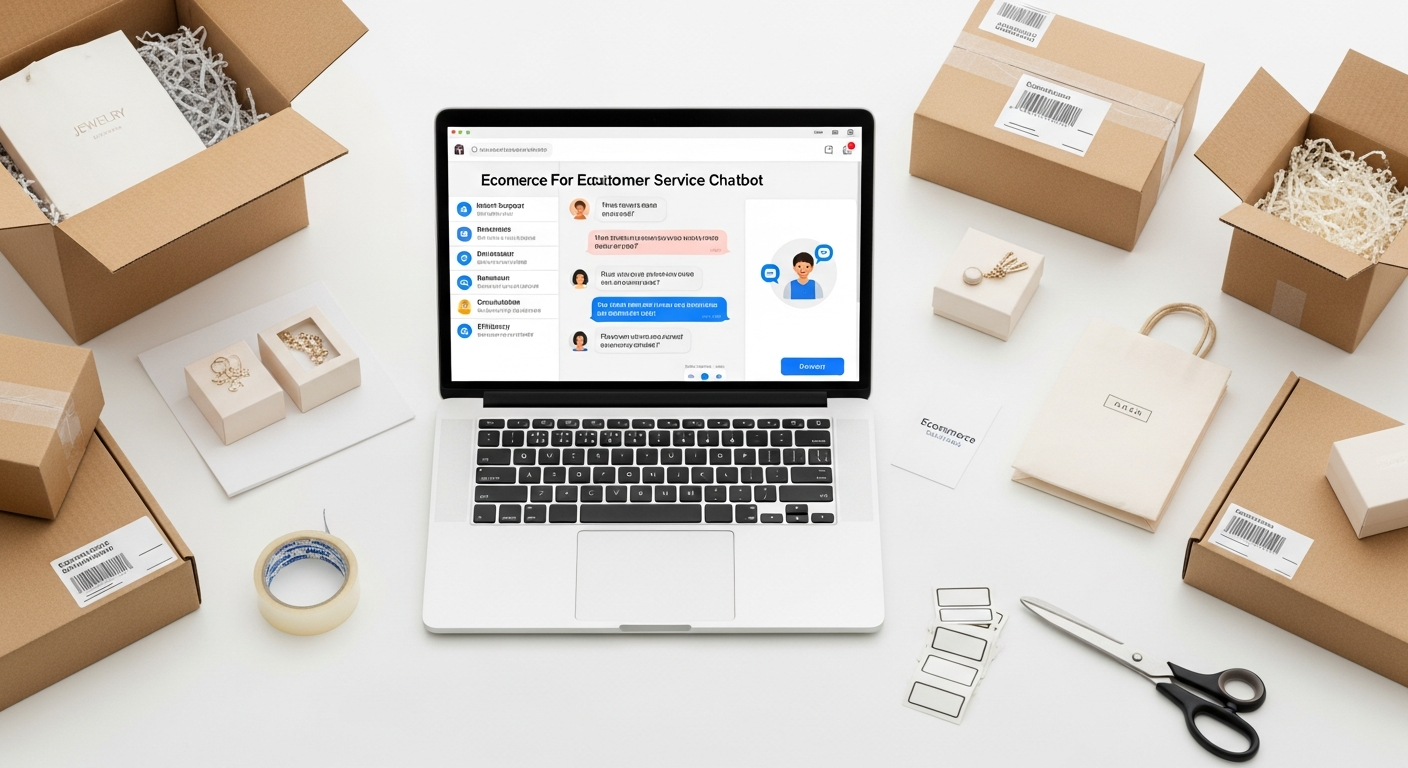
The strategic integration of chatbots into an e-commerce customer service model yields a multitude of benefits that directly impact operational efficiency, customer satisfaction, and ultimately, the bottom line. These advantages extend beyond mere convenience, offering profound improvements across various facets of your online business.
- 24/7 Availability and Instant Responses: One of the most significant advantages is the ability to provide round-the-clock support. Unlike human agents who operate within specific hours, chatbots are always on, ready to assist customers at any time, day or night, regardless of their time zone. This instant gratification is crucial for today’s impatient consumers, reducing frustration and preventing potential sales from being lost due to unanswered queries.
- Significant Cost Reduction: Deploying chatbots can lead to substantial cost savings. By automating responses to a high volume of routine inquiries, businesses can reduce the need for a large human support team, or reallocate existing staff to more complex and value-adding tasks. This optimization of human resources translates directly into lower operational overheads, making quality customer service more accessible even for smaller e-commerce operations.
- Enhanced Scalability: As your e-commerce business grows, so does the volume of customer inquiries. Chatbots are inherently scalable, capable of handling thousands of simultaneous conversations without any drop in performance or increase in wait times. This eliminates the bottleneck often associated with human-only support teams during peak seasons or promotional events, ensuring a consistent customer experience even during rapid expansion.
- Improved Customer Satisfaction and Loyalty: Swift, accurate, and consistent responses contribute significantly to higher customer satisfaction. When customers can quickly find the information they need or resolve issues without lengthy waits, their overall experience improves. This positive interaction fosters trust and loyalty, encouraging repeat purchases and positive word-of-mouth.
- Personalized Shopping Experiences: Advanced chatbots can leverage customer data and browsing history to offer personalized product recommendations, proactive assistance, and tailored promotions. By remembering past interactions and preferences, they can guide customers through the sales funnel more effectively, mimicking the personalized attention traditionally associated with in-store shopping. This level of personalization can significantly enhance conversion rates.
- Efficient Data Collection and Insights: Every interaction a chatbot has generates valuable data. This data, encompassing common questions, customer pain points, product interest, and resolution rates, provides deep insights into customer behavior and operational inefficiencies. Analyzing this information allows businesses to identify trends, improve products, refine website content, and continuously optimize their customer service strategy, leading to more informed business decisions.
- Consistent Brand Voice: Chatbots can be programmed to adhere strictly to your brand’s tone and messaging guidelines. This ensures that every customer interaction, regardless of the agent, maintains a consistent brand voice, reinforcing your identity and professionalism across all touchpoints.
By harnessing these core benefits, e-commerce businesses can not only meet but exceed customer expectations, build stronger relationships, and carve out a significant competitive advantage in the digital marketplace.
Practical Applications: Where Chatbots Shine in E-commerce Customer Service
- Pre-Sales Support and Product Information: One of the primary roles of chatbots is to assist prospective customers with product discovery and information gathering. They can instantly answer common questions about product features, specifications, availability, pricing, and compatibility. Instead of customers having to scour product pages or FAQs, a chatbot can provide direct, concise answers, guiding them towards suitable products. For instance, a customer asking, “Does this laptop come with a backlit keyboard?” or “What sizes are available for this dress?” can receive an immediate response, removing friction from the purchasing decision.
- Order Tracking and Status Updates: A frequent customer service query revolves around order status. Chatbots can seamlessly integrate with your order management system to provide real-time updates on shipping status, delivery estimates, and tracking numbers. A customer can simply type, “Where is my order?” or “Track order #12345” and receive an instant, accurate response, significantly reducing the workload on human agents.
- Post-Purchase Support and Basic Troubleshooting: After a purchase, customers may have questions about product usage, assembly, or basic troubleshooting. Chatbots can serve as a first line of defense, offering guides, videos, or step-by-step instructions to resolve common issues. For example, a customer struggling to connect a new smart device can be walked through the setup process by the chatbot.
- Handling Returns and Exchanges: Navigating returns can often be a cumbersome process for customers. Chatbots can streamline this by guiding users through your
Ecommerce Return Policy Best Practices
. They can explain eligibility criteria, initiate the return process, generate shipping labels, and provide updates on refund or exchange status. This automation ensures consistency in applying policies and reduces customer frustration during a potentially sensitive interaction. By providing clear, immediate information on return windows, conditions, and procedures, chatbots help manage expectations and facilitate a smoother process for both the customer and the business.
- Personalized Recommendations and Upselling/Cross-selling: Leveraging past purchases, browsing history, and real-time conversation data, advanced chatbots can offer personalized product recommendations. If a customer is looking at a camera, the chatbot might suggest compatible lenses, tripods, or memory cards (cross-selling). If they’re considering an entry-level model, it might highlight the benefits of an upgraded version (upselling). This not only enhances the customer experience but also drives additional revenue.
- Lead Generation and Qualification: Chatbots can engage website visitors, ask qualifying questions about their needs, and collect contact information. For complex inquiries or high-value leads, they can seamlessly hand over the conversation to a human sales representative, providing them with a pre-qualified lead and a transcript of the prior conversation.
- Gathering Customer Feedback and Surveys: Post-interaction, chatbots can be programmed to solicit customer feedback through quick surveys or ratings. This real-time feedback is invaluable for identifying areas for improvement in both customer service and product offerings.
- FAQ Automation: Perhaps the most straightforward application, chatbots excel at answering frequently asked questions. By housing a comprehensive knowledge base, they can instantly retrieve answers to common queries, freeing human agents to focus on more complex, unique problems.
By strategically deploying chatbots across these critical touchpoints, e-commerce businesses can create a more efficient, responsive, and ultimately more satisfying customer journey, distinguishing themselves in a crowded market.
Choosing the Right Chatbot Platform and Implementation Best Practices
Selecting and implementing a chatbot solution for your e-commerce business is a strategic decision that requires careful consideration. The market offers a diverse range of platforms, each with varying capabilities and pricing structures. Making the right choice and following best practices for implementation are crucial for maximizing your return on investment and ensuring a seamless customer experience.
Key Considerations When Choosing a Chatbot Platform:
- AI-Powered vs. Rule-Based:
- Rule-Based Chatbots: These follow predefined scripts and decision trees. They are simpler to set up and ideal for answering FAQs or guiding users through structured processes (e.g., order tracking). They are less flexible and can’t handle queries outside their programmed scope.
- AI-Powered (NLP/NLU) Chatbots: Utilizing Natural Language Processing (NLP) and Natural Language Understanding (NLU), these chatbots can interpret human language, understand intent, and engage in more dynamic, human-like conversations. They learn over time and can handle a wider range of queries, making them more suitable for complex interactions and personalization. For most modern e-commerce needs, an AI-powered solution offers superior flexibility and customer experience.
- Integration Capabilities: Your chatbot must seamlessly integrate with your existing e-commerce platform (e.g., Shopify, Magento, WooCommerce), CRM (e.g., Salesforce, HubSpot), inventory management system, and payment gateways. Deep integration allows the chatbot to access real-time data for order status, product availability, customer history, and to initiate actions like returns or refunds.
- Ease of Use and Customization: Look for platforms with intuitive interfaces that allow you to easily build, train, and customize your chatbot without extensive coding knowledge. The ability to tailor the chatbot’s personality, responses, and flows to match your brand voice is essential.
- Scalability and Performance: Ensure the platform can handle increasing volumes of conversations as your business grows without compromising speed or accuracy. Check for robust infrastructure and reliable uptime.
- Analytics and Reporting: A good chatbot platform will provide comprehensive analytics on conversation volume, resolution rates, common queries, user satisfaction, and areas where the chatbot struggled. These insights are critical for continuous improvement.
- Human Handover: No chatbot can handle every query. The platform must offer a smooth transition mechanism to a live human agent when the chatbot encounters a complex or sensitive issue it cannot resolve. This handover should include the full conversation history to avoid customers repeating themselves.
- Security and Compliance: Given that chatbots may handle sensitive customer data, ensure the platform adheres to data privacy regulations (e.g., GDPR, CCPA) and has robust security measures in place.
Implementation Best Practices:
- Define Clear Objectives: Before deployment, clearly define what you want your chatbot to achieve. Is it to reduce support tickets, improve conversion rates, or enhance customer satisfaction? Specific goals will guide your design and evaluation.
- Start Simple, Then Expand: Begin by automating common, repetitive tasks like answering FAQs or providing order status. Once these are running smoothly, gradually expand the chatbot’s capabilities to more complex interactions.
- Thorough Training and Knowledge Base: For AI-powered chatbots, invest significant time in training them with relevant data, including your product catalog, FAQs, return policies, and common customer phrases. A robust knowledge base is the backbone of an intelligent chatbot.
- Design for User Experience:
- Keep responses concise and clear.
- Use a friendly, approachable tone consistent with your brand.
- Provide options or quick buttons for common actions to simplify interaction.
- Be transparent: let users know they are interacting with a chatbot.
- Regular Monitoring and Optimization: Chatbots are not a “set it and forget it” solution. Continuously monitor their performance, analyze conversation logs, and identify areas where they fail or confuse users. Use these insights to refine responses, add new intents, and improve accuracy.
- Educate Your Customers: Inform your customers about the chatbot’s capabilities and how to best interact with it. Set realistic expectations about what it can and cannot do.
- Empower Human Agents: Position the chatbot as a tool that empowers human agents by handling routine tasks, allowing them to focus on more complex, empathetic, and strategic customer interactions. This enhances overall team efficiency and job satisfaction.
By diligently following these guidelines, e-commerce businesses can successfully integrate chatbots, transforming their customer service operations into a highly efficient, customer-centric powerhouse ready for the demands of 2026.
Maximizing ROI: Measuring Chatbot Success and Future Trends
Implementing a chatbot for e-commerce customer service is an investment, and like any investment, its success must be measured to demonstrate a positive return. Beyond initial deployment, understanding key performance indicators (KPIs) and staying abreast of future trends are vital for continuous optimization and long-term value generation.
Measuring Chatbot Success: Key Performance Indicators (KPIs)
To truly understand the impact of your chatbot, focus on a combination of quantitative and qualitative metrics:
- Resolution Rate: This measures the percentage of customer queries that the chatbot successfully resolves without needing human intervention. A high resolution rate indicates efficiency and effectiveness.
- Deflection Rate: Similar to resolution rate, this KPI tracks the proportion of inquiries that would have otherwise gone to a human agent but were handled by the chatbot instead. This directly correlates with cost savings.
- Customer Satisfaction (CSAT) Score: Typically gathered through a quick survey after a chatbot interaction (e.g., “Was your query resolved?” or a 1-5 star rating), CSAT provides direct feedback on the quality of the chatbot’s assistance.
- Average Response Time: While chatbots typically offer instant responses, monitoring this ensures there are no systemic delays or technical glitches.
- Conversation Volume: Tracking the total number of interactions helps gauge the chatbot’s usage and its impact on the overall customer service workload.
- Containment Rate: The percentage of conversations where the customer does not escalate to a human agent, indicating the chatbot’s ability to “contain” the interaction effectively.
- Fall-back Rate/Human Handover Rate: This measures how often the chatbot needs to transfer a conversation to a human agent. A high fall-back rate might indicate gaps in the chatbot’s knowledge base or an inability to understand complex queries.
- Cost Savings: Quantify the reduction in operational costs due to fewer human agent hours required, reduced training costs for routine queries, and increased efficiency.
- Conversion Rate Impact: For chatbots involved in pre-sales, track if customers who interact with the chatbot are more likely to convert. This can be challenging to attribute directly but provides valuable insights.
Regularly reviewing these KPIs allows you to identify strengths, pinpoint weaknesses, and make data-driven decisions to refine your chatbot’s performance. A/B testing different chatbot flows or response variations can also provide valuable insights into what resonates best with your customers.
Future Trends in E-commerce Chatbots:
The evolution of AI and conversational technology promises even more sophisticated chatbot capabilities for e-commerce in 2026 and beyond:
- Hyper-Personalization with Predictive AI: Chatbots will become even more adept at anticipating customer needs based on extensive data analysis, offering proactive support and highly tailored recommendations before the customer even asks.
- Voice Commerce Integration: With the rise of smart speakers and voice assistants, chatbots will seamlessly integrate into voice commerce platforms, allowing customers to make purchases, track orders, or get support using natural voice commands.
- Emotional Intelligence (EQ): Future chatbots will be better at detecting and responding to customer emotions through sentiment analysis, allowing for more empathetic and nuanced interactions, knowing when to escalate to a human for a truly distressed customer.
- Omnichannel Consistency: Chatbots will offer even more seamless continuity across all channels – website, social media, messaging apps, email – ensuring a consistent customer experience regardless of the touchpoint.
- Proactive Engagement: Instead of merely responding, chatbots will increasingly initiate conversations based on user behavior (e.g., a customer lingering on a product page, or abandoning a cart), offering assistance before frustration sets in.
- Advanced Self-Service Portals: Chatbots will power more intuitive self-service portals, acting as intelligent guides within comprehensive knowledge bases, making it easier for customers to find answers independently.
By leveraging these advanced capabilities and continuously monitoring your chatbot’s performance, you can not only maximize your ROI but also transform your customer service into a powerful engine for business growth. In fact, exceptional chatbot service can significantly contribute to your
Referral Marketing Program Ecommerce
efforts. When customers experience quick, efficient, and helpful support, they are far more likely to share their positive experiences with others, organically driving new business through word-of-mouth. This seamless integration of technology and customer delight strengthens loyalty and turns satisfied customers into enthusiastic brand advocates, proving the multifaceted value of a well-implemented chatbot strategy.
Overcoming Challenges and Ethical Considerations with E-commerce Chatbots
While the benefits of chatbots in e-commerce customer service are undeniable, their implementation is not without challenges and important ethical considerations. Addressing these proactively is crucial for building trust, maintaining brand reputation, and ensuring a truly effective customer experience.
Common Challenges and Solutions:
- Maintaining a Human Touch:
- Challenge: Over-reliance on chatbots can sometimes make customer interactions feel impersonal or robotic, especially for sensitive issues.
- Solution: Clearly define the scope of your chatbot. Use it for routine inquiries and information dissemination, while always offering a clear and easy path to a human agent for complex, emotional, or unique problems. Train human agents to handle these escalated cases with empathy and expertise, reinforcing the value of human connection where it matters most.
- Handling Complex and Nuanced Issues:
- Challenge: Even advanced AI chatbots can struggle with highly complex, ambiguous, or emotionally charged customer queries that require critical thinking, judgment, or empathy.
- Solution: Implement robust human handover protocols. The chatbot should be programmed to recognize when a query is beyond its capabilities and gracefully transfer the conversation, along with its full transcript, to a live agent. Continuous training and refinement of the chatbot’s knowledge base can gradually reduce these instances.
- Data Privacy and Security:
- Challenge: Chatbots collect a significant amount of customer data, from personal details to purchasing habits, raising concerns about privacy breaches and misuse.
- Solution: Prioritize data security. Choose chatbot platforms that are compliant with global data protection regulations (like GDPR and CCPA). Implement strong encryption, anonymize data where possible, and clearly communicate your data privacy policy to customers. Avoid asking for highly sensitive information through the chatbot if possible.
- Avoiding Repetitive or Frustrating Loops:
- Challenge: Poorly designed chatbots can trap customers in repetitive loops, asking the same questions or offering irrelevant solutions, leading to extreme frustration.
- Solution: Design clear conversation flows with multiple branching options. Regularly test the chatbot from a customer’s perspective. Implement “escape” phrases (e.g., “speak to a human,” “agent please”) that immediately trigger a handover. Analyze conversation logs to identify common points of customer frustration and refine the chatbot’s logic.
- Integration Headaches:
- Challenge: Integrating a chatbot with existing e-commerce platforms, CRM, and other back-end systems can be technically complex and time-consuming.
- Solution: Select platforms known for their robust integration capabilities and developer support. Plan the integration carefully, possibly starting with simpler integrations and gradually expanding. Consider professional help if internal resources are limited.
Ethical Considerations:
- Transparency with Users:
- Consideration: Customers have a right to know if they are interacting with a human or a machine.
- Best Practice: Be upfront. Clearly state that the user is interacting with a chatbot at the beginning of the conversation. Phrases like “Hi, I’m [Chatbot Name], your virtual assistant” build trust and set appropriate expectations.
- Bias in AI:
- Consideration: AI models, including those powering chatbots, can inherit biases present in their training data, leading to unfair or discriminatory responses.
- Best Practice: Regularly audit your chatbot’s responses and training data for any signs of bias. Diversify your training data to ensure fairness and inclusivity. Implement ethical AI guidelines within your development process.
- Misinformation and Accuracy:
- Consideration: A chatbot providing incorrect or misleading information can severely damage customer trust and brand reputation.
- Best Practice: Ensure your knowledge base is always up-to-date and accurate. Implement rigorous testing before deploying new features or information. For critical information, the chatbot should be programmed to confirm details or direct the user to official sources.
By thoughtfully addressing these challenges and adhering to strong ethical principles, e-commerce businesses can harness the full potential of chatbots, fostering positive customer relationships and sustaining growth in the dynamic digital landscape of 2026.
Frequently Asked Questions
Recommended Resources
Related reading: How To Create A Winning Business Proposal (Kacerr).
Related reading: How Does Peer To Peer Lending Work (Fin3go).
