
Mastering Content Marketing for eCommerce: Your Definitive Guide to D2C Growth and Profitability
Affiliate disclosure: This article may contain affiliate links. Recommendations are independent and editorially driven.
In the relentlessly evolving landscape of digital commerce, merely listing products on a website is no longer sufficient to capture attention, build loyalty, or drive sustainable profitability. For direct-to-consumer (D2C) brands, especially those leveraging platforms like Shopify, the imperative to connect with customers on a deeper, more meaningful level has never been more pronounced. This is where content marketing for ecommerce emerges not just as a strategy, but as the foundational pillar of modern D2C growth.
Content marketing for ecommerce is the strategic creation and distribution of valuable, relevant, and consistent content to attract and retain a clearly defined audience — and, ultimately, to drive profitable customer action. It’s about moving beyond transactional interactions to foster relationships, educate consumers, solve their problems, and establish your brand as an authoritative voice and trusted resource within your niche. For e-comprofits, our focus is squarely on optimizing your D2C operations, enhancing conversion rates, and securing long-term online store profitability. Content marketing is the engine that fuels all these objectives.
This comprehensive guide will unravel the intricacies of content marketing for ecommerce, providing actionable insights for D2C brands looking to dominate their market. From crafting a robust strategy to deploying diverse content formats, optimizing for search engines, measuring tangible ROI, and leveraging cutting-edge tools, we will equip you with the knowledge to transform your content efforts into a powerful growth engine. Prepare to build a content ecosystem that not only attracts but converts and retains customers, propelling your Shopify or D2C store to unprecedented success.
Why Content Marketing is Non-Negotiable for D2C Brands in 2026 and Beyond
The D2C revolution has democratized entrepreneurship, allowing brands to forge direct relationships with their customers, bypass traditional retail gatekeepers, and control their entire brand narrative. However, this accessibility has also led to an explosion of competition. In a marketplace saturated with product choices, content marketing becomes the critical differentiator. It’s no longer a nice-to-have; it’s an essential strategic investment for sustained growth and profitability.
Building Brand Authority and Trust
In an era of skepticism, consumers seek authenticity and expertise. Content marketing allows D2C brands to demonstrate their knowledge, passion, and values. By consistently publishing insightful articles, comprehensive guides, educational videos, or compelling case studies, you establish your brand as a thought leader. This authority builds trust, which is the bedrock of customer loyalty and repeat purchases. Trust translates directly into higher conversion rates as customers feel more confident in their purchasing decisions.
Driving Organic Traffic and Reducing Reliance on Paid Ads
While paid advertising offers immediate visibility, it can be an expensive and unsustainable long-term strategy. Content marketing, when optimized for search engines (SEO), acts as an inbound magnet, drawing in highly qualified organic traffic. Each piece of content you publish becomes an asset that works 24/7, attracting potential customers actively searching for information related to your products or industry. This reduces your customer acquisition cost (CAC) over time and builds a resilient traffic pipeline, contributing significantly to online store profitability.
Enhancing Customer Engagement and Loyalty
Content provides numerous touchpoints for customers to engage with your brand beyond a simple transaction. Engaging content—whether it’s an interactive quiz helping them find the perfect product, an inspirational lifestyle blog, or a behind-the-scenes video—fosters a deeper connection. This engagement translates into stronger brand affinity, increased customer lifetime value (CLTV), and a community of loyal advocates who not only purchase but also promote your brand through word-of-mouth.
Supporting the Entire Customer Journey
From initial awareness to post-purchase retention, content serves every stage of the customer journey:
- Awareness: Blog posts, social media content, and infographics introduce your brand and solve general problems.
- Consideration: Product guides, comparison articles, and explainer videos help prospects evaluate their options.
- Decision: Customer testimonials, case studies, and FAQs provide the final push towards conversion.
- Retention: Tutorial videos, user manuals, and exclusive content nurture existing customers and encourage repeat business.
A well-mapped content strategy ensures that every potential customer finds relevant information precisely when they need it, guiding them seamlessly towards a purchase and beyond.
Competitive Advantage in a Crowded Market
With thousands of D2C brands vying for consumer attention, merely having a great product is often not enough. Content marketing allows you to differentiate yourself by showcasing your unique story, values, and benefits in a way that product pages alone cannot. It enables you to carve out a distinct identity, connect with your ideal audience on an emotional level, and stand head and shoulders above competitors who rely solely on price wars or aggressive advertising.
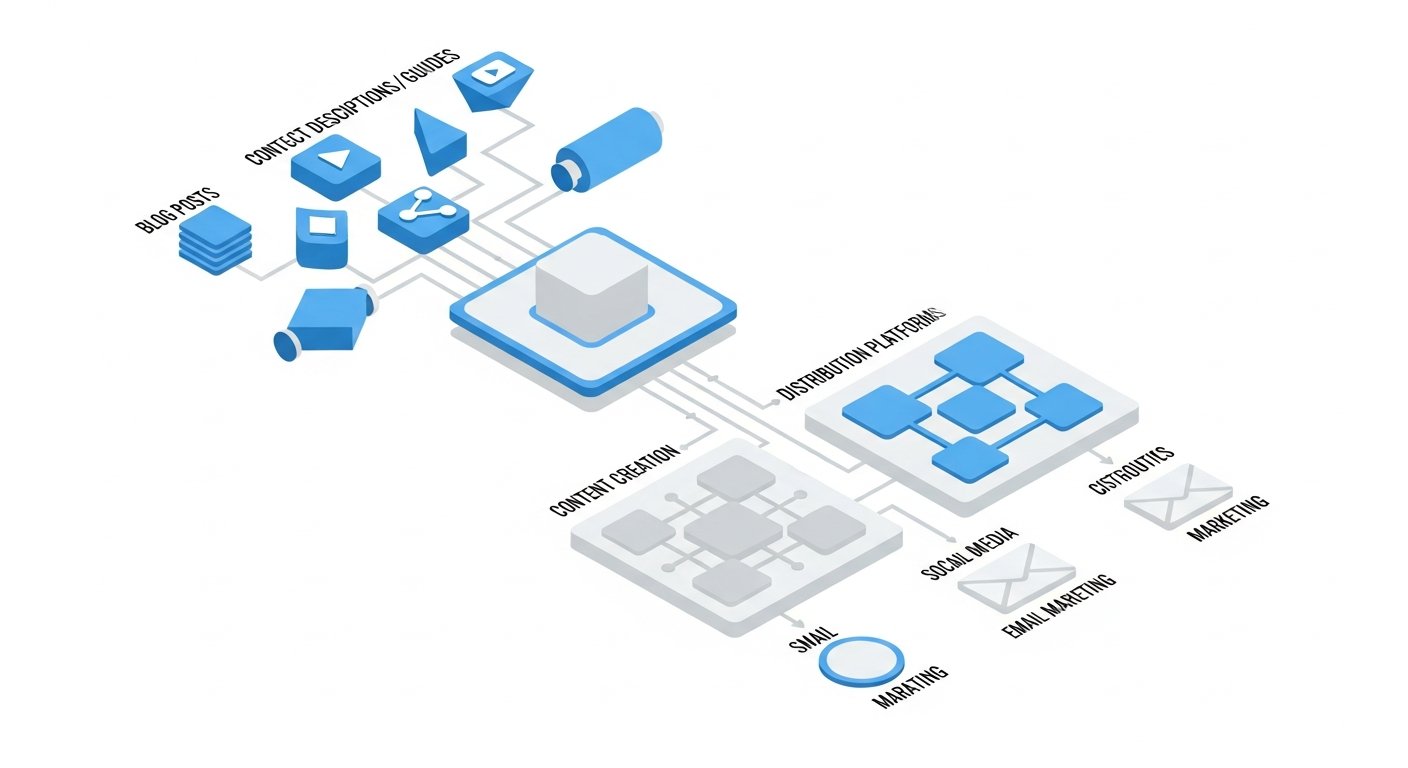
[INLINE IMAGE 1: place after second H2 | alt=”content marketing for ecommerce concept illustration”]
Crafting Your eCommerce Content Strategy: Key Pillars for Success

A haphazard approach to content rarely yields significant results. A robust, well-thought-out content strategy is the blueprint for success, ensuring every piece of content serves a specific purpose aligned with your business objectives. For e-comprofits clients, this means a strategy that directly impacts conversion rates and profitability.
Defining Your Target Audience & Buyer Personas
Before you create any content, you must understand who you are talking to. Develop detailed buyer personas—semi-fictional representations of your ideal customers—that go beyond demographics. Consider their:
- Pain Points: What problems do they face that your products solve?
- Goals & Aspirations: What do they hope to achieve?
- Interests & Hobbies: What else are they passionate about?
- Online Behavior: Where do they seek information? What social media platforms do they use?
- Purchase Triggers & Objections: What motivates them to buy? What makes them hesitate?
This deep understanding allows you to create highly relevant and engaging content that resonates directly with their needs and desires.
Setting Clear Goals & KPIs
Your content marketing efforts must be tied to measurable business objectives. Goals should be SMART (Specific, Measurable, Achievable, Relevant, Time-bound). Common goals for eCommerce include:
- Increasing organic traffic by X% within Y months.
- Improving conversion rates for specific product categories by Z%.
- Reducing customer acquisition cost (CAC) by A%.
- Boosting average order value (AOV) through complementary content.
- Enhancing brand sentiment or engagement metrics by B%.
Each goal should have associated Key Performance Indicators (KPIs) that allow you to track progress and measure success.
Competitor Analysis & Content Gaps
Analyze what your successful competitors are doing in terms of content. Identify their strengths, weaknesses, and content formats. More importantly, look for content gaps—topics they haven’t covered, questions their audience has that remain unanswered, or unique angles you can explore. This analysis helps you differentiate your content and capitalize on underserved areas of your niche.
Keyword Research for eCommerce Success
Effective content marketing for ecommerce is inextricably linked with robust SEO. Keyword research is the bedrock. Focus on:
- High-Intent Keywords: Terms customers use when they are close to making a purchase (e.g., “best ergonomic office chair for back pain,” “Dyson V11 absolute review”).
- Long-Tail Keywords: More specific phrases (3+ words) that have lower search volume but higher conversion potential (e.g., “how to clean stainless steel water bottle”).
- Informational Keywords: Queries consumers use when seeking information or solutions (e.g., “benefits of collagen for skin,” “how to choose running shoes”).
Tools like SEMrush, Ahrefs, Google Keyword Planner, and even Google’s “People Also Ask” section can reveal invaluable insights. Prioritize keywords that align with your buyer personas and the various stages of their journey.
Content Pillars & Thematic Mapping
Organize your content around core themes or “content pillars” that directly relate to your brand, products, and target audience’s interests. For example, a sustainable fashion brand might have pillars like “ethical manufacturing,” “conscious consumerism,” “styling guides,” and “eco-friendly materials.” Under each pillar, map out a variety of content ideas and formats that address different buyer persona needs and journey stages. This creates a cohesive content ecosystem.
Content Calendar & Editorial Workflow
A content calendar is your operational roadmap. It outlines:
- Specific content topics and keywords.
- Content formats (blog post, video, infographic, etc.).
- Target audience/persona for each piece.
- Due dates, publication dates, and responsible parties.
- Distribution channels for each content piece.
Establish a clear editorial workflow, detailing steps from idea generation and research to writing, editing, design, SEO optimization, approval, and publication. This ensures consistency, quality, and timely delivery, preventing content silos and maximizing efficiency.
Diverse Content Formats & Channels for Maximum Impact
The beauty of content marketing lies in its versatility. Modern D2C brands must employ a mix of content formats and distribute them across appropriate channels to reach their diverse audience effectively. The goal is to provide value in the format your audience prefers, where they prefer to consume it.
Blog Posts & Articles: The Foundation
Text-based content remains a cornerstone. Blogs are excellent for:
- SEO: Attracting organic traffic through keyword-rich articles.
- Education: Deep dives into product benefits, usage guides, industry trends, and problem-solving.
- Brand Storytelling: Sharing your brand’s mission, values, and behind-the-scenes insights.
- Thought Leadership: Establishing your expertise in your niche.
Focus on long-form, evergreen content (1,500+ words) for core topics, supplemented by shorter, timely posts. Ensure your blog is seamlessly integrated into your Shopify store for a unified brand experience.
Video Content: The Engagement Powerhouse
Video is undeniably king for engagement and capturing attention. Statistics show consumers prefer video for learning about products. Leverage video for:
- Product Demos & Tutorials: Showing products in action, highlighting features and benefits.
- Unboxings & Reviews: Authentic insights from real users or influencers.
- Brand Stories & “About Us”: Humanizing your brand.
- Livestream Shopping: Interactive selling events on platforms like Instagram, TikTok, or even directly on your site.
- Educational Content: Explaining complex concepts visually.
Distribute videos on YouTube (the second-largest search engine), Instagram Reels/Stories, TikTok, Facebook, and embed them directly on product pages and blog posts. Short-form video is especially potent for driving discovery and brand awareness.
Product-Focused Content: Beyond Descriptions
While product descriptions are crucial, content marketing allows you to enrich the product experience:
- Detailed Buying Guides: Helping customers choose the right variant (e.g., “Which coffee machine is right for you?”).
- Comparison Content: Pitting your product against competitors or different models within your own range.
- “How-To” & Troubleshooting Guides: Maximizing product utility and post-purchase satisfaction.
- Lifestyle Photography & Galleries: Showcasing products in real-world settings.
- Interactive Product Configurators: Allowing customers to customize products.
This content directly supports conversion rate optimization by addressing pre-purchase anxieties and providing comprehensive information.
User-Generated Content (UGC): Authenticity Multiplier
UGC, such as customer reviews, testimonials, photos, and videos, is gold for D2C brands. It’s authentic, trustworthy, and highly persuasive. Strategies include:
- Review Platforms: Integrating review apps (e.g., Yotpo, Loox) on your Shopify store.
- Social Media Campaigns: Encouraging customers to share content with specific hashtags.
- Contests & Giveaways: Incentivizing UGC creation.
- Featuring UGC: Showcasing customer content on your product pages, social media, and email campaigns.
UGC builds social proof, reduces buyer’s remorse, and often outperforms professionally produced content in terms of conversion impact.
Email Marketing Content: Nurturing Leads & Loyalty
Email remains one of the highest ROI channels for D2C. Your email content should be more than just promotions:
- Welcome Series: Introducing your brand and key content.
- Educational Newsletters: Sharing blog posts, videos, and tips.
- Personalized Recommendations: Based on purchase history or browsing behavior.
- Abandoned Cart Recovery: Offering value beyond just a discount.
- Loyalty Programs & Exclusive Content: Rewarding and retaining existing customers.
Segment your audience and tailor content to their interests and stage in the customer lifecycle for maximum impact on conversion and retention.
Social Media Content: Community & Discovery
Each social platform demands a unique content approach. Social media content aims to build community, drive discovery, and direct traffic to your store:
- Instagram/Pinterest: Highly visual content (product shots, lifestyle, infographics).
- TikTok/Reels: Short, engaging, trending videos, behind-the-scenes.
- Facebook: Community building, longer-form updates, live Q&As.
- X (formerly Twitter): Quick updates, customer service, industry news.
- LinkedIn: B2B content if applicable, company culture, thought leadership.
Use social media to amplify your other content efforts, engage with followers, run polls, and collect customer feedback.
Podcasts & Audio Content: On-the-Go Engagement
Audio content is growing rapidly, catering to multitasking consumers. Consider:
- Brand Podcasts: Interviewing experts, discussing industry trends, or sharing your brand story.
- Audio Articles: Repurposing blog content into audio format.
- Behind-the-Scenes Interviews: Giving a voice to your team or suppliers.
Podcasts build deep connections, offer a unique branding opportunity, and can reach audiences during commutes or workouts.
Interactive Content: Quizzes, Calculators, AR/VR
Interactive content drives higher engagement and provides valuable data:
- Product Quizzes: Guiding customers to the perfect product (e.g., “Find your perfect skincare routine”).
- Calculators: Helping customers quantify value (e.g., “Calculate your savings”).
- Augmented Reality (AR) Tools: Allowing customers to virtually try on products or place furniture in their home.
This content enhances the shopping experience, reduces returns, and can significantly boost conversion rates by solving specific customer needs.
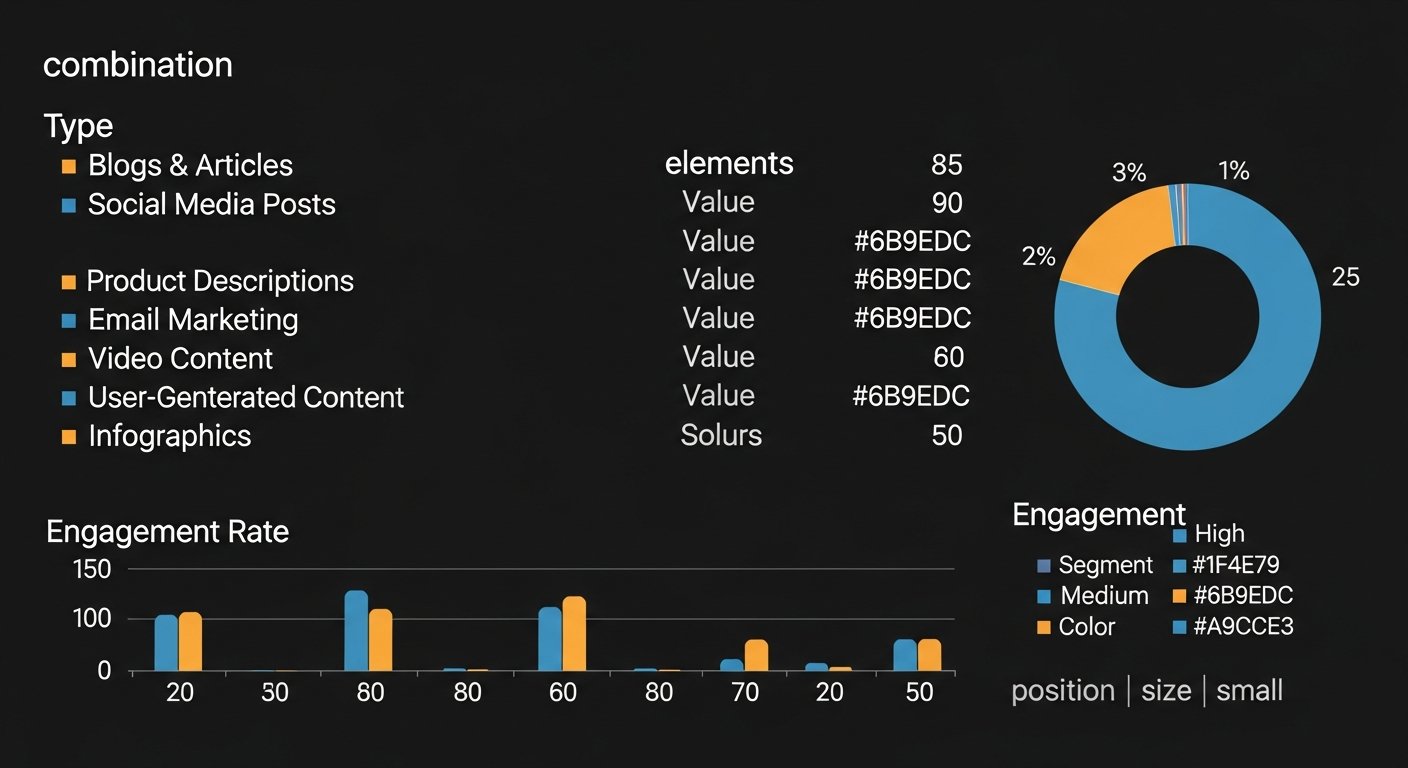
Here’s a comparison of popular content formats and their primary benefits for eCommerce:
| Content Format | Primary Benefits for eCommerce | Ideal for (Customer Journey Stage) | Example for a Coffee Brand |
|---|---|---|---|
| Blog Posts & Guides | SEO, authority, education, long-term traffic, brand storytelling. | Awareness, Consideration, Decision, Retention | “The Ultimate Guide to Brewing Perfect Pour-Over Coffee,” “Fair Trade Coffee: What You Need to Know.” |
| Video Content (Demos, Tutorials) | High engagement, product visualization, trust, conversion support. | Consideration, Decision, Retention | “How to Use Our New Espresso Machine,” “Behind the Scenes: Sourcing Our Beans.” |
| User-Generated Content (UGC) | Authenticity, social proof, trust, community building, conversion lift. | Consideration, Decision | Customer photos of them enjoying your coffee, video testimonials. |
| Email Newsletters | Lead nurturing, retention, personalized offers, direct sales, CLTV. | Consideration, Decision, Retention | Weekly newsletter with brewing tips, new product announcements, exclusive discounts. |
| Social Media Posts | Brand awareness, community engagement, traffic driving, trend participation. | Awareness, Consideration | “Meet our Barista of the Month,” “Quick Poll: French Press or Aeropress?” |
| Product Quizzes/Configurators | Personalization, reduced choice paralysis, conversion optimization, data collection. | Consideration, Decision | “Find Your Perfect Roast: A Coffee Preference Quiz.” |
[INLINE IMAGE 2: place after fourth H2 | alt=”content marketing for ecommerce comparison illustration”]
SEO Best Practices for eCommerce Content: Driving Organic Visibility
Content marketing without SEO is like opening a beautiful store in the middle of nowhere. For D2C brands, especially those on Shopify, optimizing content for search engines is paramount to driving consistent, high-quality organic traffic, reducing reliance on paid ads, and ensuring long-term profitability.
Technical SEO Foundations for Content
Before optimizing individual content pieces, ensure your overall site’s technical health is robust. This includes:
- Site Speed: Fast loading times are critical for user experience and search rankings. Optimize images, leverage caching, and ensure your Shopify theme is performant.
- Mobile Responsiveness: Google operates on a mobile-first indexing principle. Your content must look and function flawlessly on all devices.
- Site Architecture: A logical, easy-to-navigate site structure helps search engines crawl and understand your content. Use clear categories and internal linking.
- HTTPS: Ensure your site uses a secure HTTPS connection.
- XML Sitemaps & Robots.txt: Properly configured sitemaps help search engines discover your content, while robots.txt guides them on what to crawl.
Shopify generally handles much of the technical SEO basics, but regular audits are still essential.
On-Page SEO Optimization: Titles, Meta, Headers
Each piece of content needs meticulous on-page optimization:
- Title Tags: Craft compelling, keyword-rich title tags (under 60 characters) that accurately reflect your content and entice clicks. Your primary keyword should be as close to the beginning as possible.
- Meta Descriptions: Write persuasive meta descriptions (150-160 characters) that summarize the content and encourage users to click, often including a call to action. While not a direct ranking factor, they significantly impact click-through rates.
- Header Tags (H1, H2, H3): Use `
` for your main content title (only one per page). Break down your content with `
` and `
` tags for readability and to incorporate secondary keywords and semantic variations.
- URL Structure: Create clean, descriptive, and keyword-rich URLs that are easy to understand for both users and search engines.
- Image Optimization: Compress images for faster loading. Use descriptive file names and always fill out the “alt text” attribute with relevant keywords to improve accessibility and image search rankings.
- Content Quality & Depth: Write comprehensive, authoritative, and truly helpful content that fully addresses the user’s intent. Google rewards content that demonstrates E-E-A-T (Experience, Expertise, Authoritativeness, Trustworthiness).
Keyword Integration & LSI Keywords
Beyond your primary keyword, strategically integrate related terms, synonyms, and Latent Semantic Indexing (LSI) keywords throughout your content. This helps search engines understand the full context of your article and ensures it ranks for a broader range of relevant queries. Avoid keyword stuffing; instead, focus on natural language and semantic relevance.
Internal Linking Strategy for Authority & Navigation
Internal links connect your content, helping search engines understand the structure and hierarchy of your site. They also pass “link equity” and keep users engaged, reducing bounce rates. For eCommerce, link from informational blog posts to relevant product pages, category pages, or other deep-dive articles. Use descriptive anchor text that includes keywords relevant to the linked page.
For example, an article on “winter skincare routines” might internally link to your hydrating serums or “winter moisturizer” product pages.
Schema Markup for Rich Snippets
Schema markup (structured data) helps search engines understand the context of your content and can enable rich snippets in search results. For eCommerce content, consider using schema for:
- Product Schema: Essential for product pages, including price, availability, and reviews.
- Article Schema: For blog posts, providing details like author, publication date, and featured image.
- FAQ Schema: For question-and-answer sections, allowing snippets to appear directly in search results.
Rich snippets can significantly increase your content’s visibility and click-through rates.
Optimizing for Core Web Vitals & Page Experience
Google prioritizes user experience. Core Web Vitals (Largest Contentful Paint, First Input Delay, Cumulative Layout Shift) measure how quickly a page loads, becomes interactive, and maintains visual stability. Ensure your content-rich pages are optimized for these metrics. A positive page experience correlates directly with lower bounce rates and higher engagement, which Google interprets as a sign of quality content.
Mobile-First Content Strategy
Given the prevalence of mobile shopping, every piece of content marketing for ecommerce must be designed with mobile users in mind. This means:
- Responsive Design: Content adapts seamlessly to any screen size.
- Readability: Use shorter paragraphs, bullet points, and ample white space. Avoid long blocks of text.
- Image & Video Formatting: Ensure media loads quickly and is properly scaled for mobile.
- Touch-Friendly Elements: Buttons and links are easy to tap.
Prioritizing mobile-first not only improves SEO but also caters to the primary way many D2C customers interact with your brand, directly influencing conversion rates.
Measuring ROI and Key Performance Indicators (KPIs) for Content Marketing
For any D2C brand on Shopify, content marketing isn’t just about creativity; it’s a strategic investment that must yield measurable returns. Without clear KPIs and consistent measurement, it’s impossible to optimize your efforts and prove the value of content to your bottom line. E-comprofits emphasizes data-driven decision-making to boost online store profitability.
Traffic & Engagement Metrics
These metrics indicate how well your content is attracting and retaining attention:
- Page Views & Unique Page Views: How many times your content has been seen and by how many distinct individuals.
- Organic Traffic: The number of visitors reaching your content via search engines. This is a primary indicator of SEO success.
- Time on Page/Session Duration: How long users spend engaging with your content. Longer times suggest higher interest and relevance.
- Bounce Rate: The percentage of visitors who leave your site after viewing only one page. A high bounce rate might indicate irrelevant content or poor user experience.
- Social Shares & Comments: Measures content virality and community engagement.
Monitor these in Google Analytics (or your analytics platform) to understand which content resonates most with your audience.
Conversion Metrics
Ultimately, content marketing for ecommerce aims to drive profitable customer action. These metrics directly link content to your sales funnel:
- Conversion Rate: The percentage of visitors who complete a desired action (e.g., make a purchase, sign up for an email list, add to cart) after interacting with your content. This is crucial for D2C profitability.
- Leads Generated: If your content encourages email sign-ups or gated content downloads, track how many leads are generated.
- Assisted Conversions: Content often plays a supporting role. Google Analytics’ “Assisted Conversions” report shows how content touched a customer at various points before they converted, even if it wasn’t the final click.
- Revenue Attribution: Directly linking specific content pieces or categories to sales generated. This requires robust tracking and potentially advanced attribution models.
- Average Order Value (AOV): Content like buying guides or complementary product suggestions can influence AOV. Track if customers who engage with such content spend more.
SEO Performance
These metrics demonstrate your content’s effectiveness in organic search:
- Keyword Rankings: Position of your content for target keywords in search results.
- Organic Traffic Share: The percentage of your total website traffic that comes from organic search.
- Backlinks: The number and quality of other websites linking to your content, indicating authority and trust.
- Click-Through Rate (CTR): The percentage of searchers who click on your content in the search results (from Google Search Console).
- Brand Mentions: How often your brand is mentioned across the web, indicating increased awareness and authority.
Brand Awareness & Sentiment
While harder to quantify directly, these metrics contribute to long-term brand equity:
- Brand Search Volume: Increased direct searches for your brand name.
- Social Media Mentions & Sentiment: Tools can track mentions and analyze the positive/negative sentiment associated with your brand and content.
- Subscriber Growth: For newsletters or podcasts, indicates growing audience interest.
Customer Lifetime Value (CLTV) & Retention
Content marketing is excellent for nurturing existing customers. Track:
- Repeat Purchase Rate: Do customers who engage with your post-purchase content (tutorials, care guides) buy again more frequently?
- Customer Churn Rate: Does engaging content help reduce customer attrition?
- CLTV of Content-Engaged Customers: Analyze if customers who interact with specific content types have a higher CLTV than those who don’t.
Attribution Models for Content Impact
Understanding which touchpoints contributed to a conversion can be complex. Consider different attribution models:
- First-Click Attribution: Gives full credit to the first interaction.
- Last-Click Attribution: Credits the last interaction before conversion.
- Linear Attribution: Distributes credit equally across all touchpoints.
- Time Decay Attribution: Gives more credit to recent interactions.
- Position-Based Attribution: Assigns more credit to the first and last interactions, with less in the middle.
For content marketing for ecommerce, a multi-touch attribution model often provides a more realistic view of content’s impact on the entire customer journey, offering deeper insights for D2C growth.
Leveraging AI & Automation to Scale Content Production for eCommerce
The demand for high-quality, relevant content in D2C eCommerce is relentless. Modern brands, especially those aiming for optimized conversion rates and increased profitability, can no longer rely solely on manual processes. Artificial intelligence (AI) and automation are transforming how content is created, optimized, and distributed, offering unprecedented scalability and efficiency.
AI for Content Idea Generation & Outline Creation
Staring at a blank page is a common hurdle. AI tools can analyze market trends, competitor content, and search data to:
- Suggest Topics: Based on popular searches, trending keywords, and content gaps.
- Generate Headlines & Subheadings: Crafting engaging titles and logical outlines.
- Identify Content Pillars: Helping structure your overarching content strategy.
This significantly reduces the time spent on initial brainstorming, allowing your team to focus on refinement and unique insights.
Automating Content Optimization & SEO Analysis
AI-powered SEO tools can revolutionize your content’s performance:
- Keyword Gap Analysis: Automatically identifying keywords your competitors rank for but you don’t.
- On-Page SEO Audits: Instantaneously checking for keyword density, readability, internal linking opportunities, and meta tag optimization.
- Content Grading: Providing real-time feedback on how well your content addresses a topic and compares to top-ranking articles.
- Broken Link Detection: Automatically scanning your site for broken internal and external links that harm SEO and user experience.
Tools like Surfer SEO, MarketMuse, and Clearscope use AI to guide writers towards creating highly optimized content that ranks.
AI-Powered Copywriting for Product Descriptions & Ads
One of the most immediate applications of AI in eCommerce content is generating copy:
- Product Descriptions: AI can quickly generate multiple variants of compelling, SEO-friendly product descriptions based on key features and benefits, saving immense time for large catalogs.
- Ad Copy: Producing high-converting headlines and body text for social media ads (Facebook, Instagram) and search ads (Google Ads).
- Email Subject Lines: Crafting attention-grabbing subject lines that improve open rates.
- Social Media Captions: Generating engaging captions tailored to different platforms.
While AI-generated copy still requires human oversight for brand voice and accuracy, it provides an excellent starting point and accelerates content production significantly.
Personalization at Scale with AI
Delivering personalized content experiences is crucial for conversion rate optimization. AI enables this at a scale previously impossible:
- Dynamic Content Recommendations: AI algorithms can analyze user behavior (browsing history, purchase patterns) to recommend relevant blog posts, videos, or product guides on your website or in emails.
- Personalized Email Campaigns: Tailoring email content, offers, and follow-ups based on individual user data.
- Chatbot Interactions: AI-powered chatbots can answer customer questions about products or direct them to relevant content, enhancing customer service and guiding them through the sales funnel.
This level of personalization creates a highly engaging and relevant experience for each customer, driving loyalty and sales.
Workflow Automation for Content Distribution
Content creation is only half the battle; distribution is equally vital. Automation streamlines this process:
- Social Media Scheduling: Tools like Buffer or Hootsuite automatically publish your content across multiple social platforms at optimal times.
- Email Campaign Triggers: Automating welcome sequences, abandoned cart reminders, and post-purchase follow-ups with relevant content.
- RSS Feed to Social/Email: Automatically pushing new blog posts to your social channels or into an email newsletter.
- Content Repurposing: AI can help identify sections of long-form content suitable for conversion into social media snippets, video scripts, or podcast outlines.
Automating distribution ensures your valuable content reaches its audience consistently and efficiently.
Ethical Considerations & Human Oversight
While AI offers immense benefits, it’s crucial to maintain human oversight. AI tools are powerful assistants, not replacements for human creativity, empathy, and strategic thinking. Ensure that:
- Brand Voice is Maintained: AI output should always be edited to align with your brand’s unique tone.
- Accuracy & Fact-Checking: AI can sometimes “hallucinate” or provide outdated information. Human review is essential.
- Originality & Plagiarism: While AI tools generate unique content, always cross-check for unintentional similarities, especially in highly competitive niches.
- Ethical Content Creation: Ensure AI-generated content adheres to ethical guidelines and avoids bias.
The most effective strategy integrates AI as a powerful tool to augment human capabilities, allowing your content team to focus on high-level strategy, creative ideation, and building authentic connections.
Building and Managing Your eCommerce Content Team & Workflow
A thriving content marketing strategy for ecommerce doesn’t run itself. It requires a dedicated team and a streamlined workflow to ensure consistency, quality, and strategic alignment. Whether you’re a lean D2C startup or a rapidly scaling Shopify enterprise, establishing clear roles and processes is key to sustained growth and profitability.
In-House vs. Outsourcing Content Creation
One of the first decisions is how to staff your content operations:
- In-House Team:
- Pros: Deep understanding of brand voice, products, and internal processes; greater control and alignment; faster communication.
- Cons: Higher overhead costs (salaries, benefits); difficulty scaling up/down quickly; potential for skill gaps.
- Outsourcing (Freelancers, Agencies):
- Pros: Access to specialized skills (SEO writers, video editors, graphic designers); scalability (hire as needed); cost-effective for specific projects;
Mastering Content Marketing for eCommerce: Your Definitive Guide to D2C Growth and Profitability
Affiliate disclosure: This article may contain affiliate links. Recommendations are independent and editorially driven.
In the relentlessly evolving landscape of digital commerce, merely listing products on a website is no longer sufficient to capture attention, build loyalty, or drive sustainable profitability. For direct-to-consumer (D2C) brands, especially those leveraging platforms like Shopify, the imperative to connect with customers on a deeper, more meaningful level has never been more pronounced. This is where content marketing for ecommerce emerges not just as a strategy, but as the foundational pillar of modern D2C growth.
Content marketing for ecommerce is the strategic creation and distribution of valuable, relevant, and consistent content to attract and retain a clearly defined audience — and, ultimately, to drive profitable customer action. It’s about moving beyond transactional interactions to foster relationships, educate consumers, solve their problems, and establish your brand as an authoritative voice and trusted resource within your niche. For e-comprofits, our focus is squarely on optimizing your D2C operations, enhancing conversion rates, and securing long-term online store profitability. Content marketing is the engine that fuels all these objectives.
This comprehensive guide will unravel the intricacies of content marketing for ecommerce, providing actionable insights for D2C brands looking to dominate their market. From crafting a robust strategy to deploying diverse content formats, optimizing for search engines, measuring tangible ROI, and leveraging cutting-edge tools, we will equip you with the knowledge to transform your content efforts into a powerful growth engine. Prepare to build a content ecosystem that not only attracts but converts and retains customers, propelling your Shopify or D2C store to unprecedented success.
Why Content Marketing is Non-Negotiable for D2C Brands in 2026 and Beyond
The D2C revolution has democratized entrepreneurship, allowing brands to forge direct relationships with their customers, bypass traditional retail gatekeepers, and control their entire brand narrative. However, this accessibility has also led to an explosion of competition. In a marketplace saturated with product choices, content marketing becomes the critical differentiator. It’s no longer a nice-to-have; it’s an essential strategic investment for sustained growth and profitability.
Building Brand Authority and Trust
In an era of skepticism, consumers seek authenticity and expertise. Content marketing allows D2C brands to demonstrate their knowledge, passion, and values. By consistently publishing insightful articles, comprehensive guides, educational videos, or compelling case studies, you establish your brand as a thought leader. This authority builds trust, which is the bedrock of customer loyalty and repeat purchases. Trust translates directly into higher conversion rates as customers feel more confident in their purchasing decisions.
Driving Organic Traffic and Reducing Reliance on Paid Ads
While paid advertising offers immediate visibility, it can be an expensive and unsustainable long-term strategy. Content marketing, when optimized for search engines (SEO), acts as an inbound magnet, drawing in highly qualified organic traffic. Each piece of content you publish becomes an asset that works 24/7, attracting potential customers actively searching for information related to your products or industry. This reduces your customer acquisition cost (CAC) over time and builds a resilient traffic pipeline, contributing significantly to online store profitability.
Enhancing Customer Engagement and Loyalty
Content provides numerous touchpoints for customers to engage with your brand beyond a simple transaction. Engaging content—whether it’s an interactive quiz helping them find the perfect product, an inspirational lifestyle blog, or a behind-the-scenes video—fosters a deeper connection. This engagement translates into stronger brand affinity, increased customer lifetime value (CLTV), and a community of loyal advocates who not only purchase but also promote your brand through word-of-mouth.
Supporting the Entire Customer Journey
From initial awareness to post-purchase retention, content serves every stage of the customer journey:
- Awareness: Blog posts, social media content, and infographics introduce your brand and solve general problems.
- Consideration: Product guides, comparison articles, and explainer videos help prospects evaluate their options.
- Decision: Customer testimonials, case studies, and FAQs provide the final push towards conversion.
- Retention: Tutorial videos, user manuals, and exclusive content nurture existing customers and encourage repeat business.
A well-mapped content strategy ensures that every potential customer finds relevant information precisely when they need it, guiding them seamlessly towards a purchase and beyond.
Competitive Advantage in a Crowded Market
With thousands of D2C brands vying for consumer attention, merely having a great product is often not enough. Content marketing allows you to differentiate yourself by showcasing your unique story, values, and benefits in a way that product pages alone cannot. It enables you to carve out a distinct identity, connect with your ideal audience on an emotional level, and stand head and shoulders above competitors who rely solely on price wars or aggressive advertising.
[INLINE IMAGE 1: place after second H2 | alt=”content marketing for ecommerce concept illustration”]
Crafting Your eCommerce Content Strategy: Key Pillars for Success
A haphazard approach to content rarely yields significant results. A robust, well-thought-out content strategy is the blueprint for success, ensuring every piece of content serves a specific purpose aligned with your business objectives. For e-comprofits clients, this means a strategy that directly impacts conversion rates and profitability.
Defining Your Target Audience & Buyer Personas
Before you create any content, you must understand who you are talking to. Develop detailed buyer personas—semi-fictional representations of your ideal customers—that go beyond demographics. Consider their:
- Pain Points: What problems do they face that your products solve?
- Goals & Aspirations: What do they hope to achieve?
- Interests & Hobbies: What else are they passionate about?
- Online Behavior: Where do they seek information? What social media platforms do they use?
- Purchase Triggers & Objections: What motivates them to buy? What makes them hesitate?
This deep understanding allows you to create highly relevant and engaging content that resonates directly with their needs and desires.
Setting Clear Goals & KPIs
Your content marketing efforts must be tied to measurable business objectives. Goals should be SMART (Specific, Measurable, Achievable, Relevant, Time-bound). Common goals for eCommerce include:
- Increasing organic traffic by X% within Y months.
- Improving conversion rates for specific product categories by Z%.
- Reducing customer acquisition cost (CAC) by A%.
- Boosting average order value (AOV) through complementary content.
- Enhancing brand sentiment or engagement metrics by B%.
Each goal should have associated Key Performance Indicators (KPIs) that allow you to track progress and measure success.
Competitor Analysis & Content Gaps
Analyze what your successful competitors are doing in terms of content. Identify their strengths, weaknesses, and content formats. More importantly, look for content gaps—topics they haven’t covered, questions their audience has that remain unanswered, or unique angles you can explore. This analysis helps you differentiate your content and capitalize on underserved areas of your niche.
Keyword Research for eCommerce Success
Effective content marketing for ecommerce is inextricably linked with robust SEO. Keyword research is the bedrock. Focus on:
- High-Intent Keywords: Terms customers use when they are close to making a purchase (e.g., “best ergonomic office chair for back pain,” “Dyson V11 absolute review”).
- Long-Tail Keywords: More specific phrases (3+ words) that have lower search volume but higher conversion potential (e.g., “how to clean stainless steel water bottle”).
- Informational Keywords: Queries consumers use when seeking information or solutions (e.g., “benefits of collagen for skin,” “how to choose running shoes”).
Tools like SEMrush, Ahrefs, Google Keyword Planner, and even Google’s “People Also Ask” section can reveal invaluable insights. Prioritize keywords that align with your buyer personas and the various stages of their journey.
Content Pillars & Thematic Mapping
Organize your content around core themes or “content pillars” that directly relate to your brand, products, and target audience’s interests. For example, a sustainable fashion brand might have pillars like “ethical manufacturing,” “conscious consumerism,” “styling guides,” and “eco-friendly materials.” Under each pillar, map out a variety of content ideas and formats that address different buyer persona needs and journey stages. This creates a cohesive content ecosystem.
Content Calendar & Editorial Workflow
A content calendar is your operational roadmap. It outlines:
- Specific content topics and keywords.
- Content formats (blog post, video, infographic, etc.).
- Target audience/persona for each piece.
- Due dates, publication dates, and responsible parties.
- Distribution channels for each content piece.
Establish a clear editorial workflow, detailing steps from idea generation and research to writing, editing, design, SEO optimization, approval, and publication. This ensures consistency, quality, and timely delivery, preventing content silos and maximizing efficiency.
Diverse Content Formats & Channels for Maximum Impact
The beauty of content marketing lies in its versatility. Modern D2C brands must employ a mix of content formats and distribute them across appropriate channels to reach their diverse audience effectively. The goal is to provide value in the format your audience prefers, where they prefer to consume it.
Blog Posts & Articles: The Foundation
Text-based content remains a cornerstone. Blogs are excellent for:
- SEO: Attracting organic traffic through keyword-rich articles.
- Education: Deep dives into product benefits, usage guides, industry trends, and problem-solving.
- Brand Storytelling: Sharing your brand’s mission, values, and behind-the-scenes insights.
- Thought Leadership: Establishing your expertise in your niche.
Focus on long-form, evergreen content (1,500+ words) for core topics, supplemented by shorter, timely posts. Ensure your blog is seamlessly integrated into your Shopify store for a unified brand experience.
Video Content: The Engagement Powerhouse
Video is undeniably king for engagement and capturing attention. Statistics show consumers prefer video for learning about products. Leverage video for:
- Product Demos & Tutorials: Showing products in action, highlighting features and benefits.
- Unboxings & Reviews: Authentic insights from real users or influencers.
- Brand Stories & “About Us”: Humanizing your brand.
- Livestream Shopping: Interactive selling events on platforms like Instagram, TikTok, or even directly on your site.
- Educational Content: Explaining complex concepts visually.
Distribute videos on YouTube (the second-largest search engine), Instagram Reels/Stories, TikTok, Facebook, and embed them directly on product pages and blog posts. Short-form video is especially potent for driving discovery and brand awareness.
Product-Focused Content: Beyond Descriptions
While product descriptions are crucial, content marketing allows you to enrich the product experience:
- Detailed Buying Guides: Helping customers choose the right variant (e.g., “Which coffee machine is right for you?”).
- Comparison Content: Pitting your product against competitors or different models within your own range.
- “How-To” & Troubleshooting Guides: Maximizing product utility and post-purchase satisfaction.
- Lifestyle Photography & Galleries: Showcasing products in real-world settings.
- Interactive Product Configurators: Allowing customers to customize products.
This content directly supports conversion rate optimization by addressing pre-purchase anxieties and providing comprehensive information.
User-Generated Content (UGC): Authenticity Multiplier
UGC, such as customer reviews, testimonials, photos, and videos, is gold for D2C brands. It’s authentic, trustworthy, and highly persuasive. Strategies include:
- Review Platforms: Integrating review apps (e.g., Yotpo, Loox) on your Shopify store.
- Social Media Campaigns: Encouraging customers to share content with specific hashtags.
- Contests & Giveaways: Incentivizing UGC creation.
- Featuring UGC: Showcasing customer content on your product pages, social media, and email campaigns.
UGC builds social proof, reduces buyer’s remorse, and often outperforms professionally produced content in terms of conversion impact.
Email Marketing Content: Nurturing Leads & Loyalty
Email remains one of the highest ROI channels for D2C. Your email content should be more than just promotions:
- Welcome Series: Introducing your brand and key content.
- Educational Newsletters: Sharing blog posts, videos, and tips.
- Personalized Recommendations: Based on purchase history or browsing behavior.
- Abandoned Cart Recovery: Offering value beyond just a discount.
- Loyalty Programs & Exclusive Content: Rewarding and retaining existing customers.
Segment your audience and tailor content to their interests and stage in the customer lifecycle for maximum impact on conversion and retention.
Social Media Content: Community & Discovery
Each social platform demands a unique content approach. Social media content aims to build community, drive discovery, and direct traffic to your store:
- Instagram/Pinterest: Highly visual content (product shots, lifestyle, infographics).
- TikTok/Reels: Short, engaging, trending videos, behind-the-scenes.
- Facebook: Community building, longer-form updates, live Q&As.
- X (formerly Twitter): Quick updates, customer service, industry news.
- LinkedIn: B2B content if applicable, company culture, thought leadership.
Use social media to amplify your other content efforts, engage with followers, run polls, and collect customer feedback.
Podcasts & Audio Content: On-the-Go Engagement
Audio content is growing rapidly, catering to multitasking consumers. Consider:
- Brand Podcasts: Interviewing experts, discussing industry trends, or sharing your brand story.
- Audio Articles: Repurposing blog content into audio format.
- Behind-the-Scenes Interviews: Giving a voice to your team or suppliers.
Podcasts build deep connections, offer a unique branding opportunity, and can reach audiences during commutes or workouts.
Interactive Content: Quizzes, Calculators, AR/VR
Interactive content drives higher engagement and provides valuable data:
- Product Quizzes: Guiding customers to the perfect product (e.g., “Find your perfect skincare routine”).
- Calculators: Helping customers quantify value (e.g., “Calculate your savings”).
- Augmented Reality (AR) Tools: Allowing customers to virtually try on products or place furniture in their home.
This content enhances the shopping experience, reduces returns, and can significantly boost conversion rates by solving specific customer needs.
Here’s a comparison of popular content formats and their primary benefits for eCommerce:
Content Format Primary Benefits for eCommerce Ideal for (Customer Journey Stage) Example for a Coffee Brand Blog Posts & Guides SEO, authority, education, long-term traffic, brand storytelling. Awareness, Consideration, Decision, Retention “The Ultimate Guide to Brewing Perfect Pour-Over Coffee,” “Fair Trade Coffee: What You Need to Know.” Video Content (Demos, Tutorials) High engagement, product visualization, trust, conversion support. Consideration, Decision, Retention “How to Use Our New Espresso Machine,” “Behind the Scenes: Sourcing Our Beans.” User-Generated Content (UGC) Authenticity, social proof, trust, community building, conversion lift. Consideration, Decision Customer photos of them enjoying your coffee, video testimonials. Email Newsletters Lead nurturing, retention, personalized offers, direct sales, CLTV. Consideration, Decision, Retention Weekly newsletter with brewing tips, new product announcements, exclusive discounts. Social Media Posts Brand awareness, community engagement, traffic driving, trend participation. Awareness, Consideration “Meet our Barista of the Month,” “Quick Poll: French Press or Aeropress?” Product Quizzes/Configurators Personalization, reduced choice paralysis, conversion optimization, data collection. Consideration, Decision “Find Your Perfect Roast: A Coffee Preference Quiz.” [INLINE IMAGE 2: place after fourth H2 | alt=”content marketing for ecommerce comparison illustration”]
SEO Best Practices for eCommerce Content: Driving Organic Visibility
Content marketing without SEO is like opening a beautiful store in the middle of nowhere. For D2C brands, especially those on Shopify, optimizing content for search engines is paramount to driving consistent, high-quality organic traffic, reducing reliance on paid ads, and ensuring long-term profitability.
Technical SEO Foundations for Content
Before optimizing individual content pieces, ensure your overall site’s technical health is robust. This includes:
- Site Speed: Fast loading times are critical for user experience and search rankings. Optimize images, leverage caching, and ensure your Shopify theme is performant.
- Mobile Responsiveness: Google operates on a mobile-first indexing principle. Your content must look and function flawlessly on all devices.
- Site Architecture: A logical, easy-to-navigate site structure helps search engines crawl and understand your content. Use clear categories and internal linking.
- HTTPS: Ensure your site uses a secure HTTPS connection.
- XML Sitemaps & Robots.txt: Properly configured sitemaps help search engines discover your content, while robots.txt guides them on what to crawl.
Shopify generally handles much of the technical SEO basics, but regular audits are still essential.
On-Page SEO Optimization: Titles, Meta, Headers
Each piece of content needs meticulous on-page optimization:
- Title Tags: Craft compelling, keyword-rich title tags (under 60 characters) that accurately reflect your content and entice clicks. Your primary keyword should be as close to the beginning as possible.
- Meta Descriptions: Write persuasive meta descriptions (150-160 characters) that summarize the content and encourage users to click, often including a call to action. While not a direct ranking factor, they significantly impact click-through rates.
- Header Tags (H1, H2, H3): Use `
` for your main content title (only one per page). Break down your content with `
` and `
` tags for readability and to incorporate secondary keywords and semantic variations.
- URL Structure: Create clean, descriptive, and keyword-rich URLs that are easy to understand for both users and search engines.
- Image Optimization: Compress images for faster loading. Use descriptive file names and always fill out the “alt text” attribute with relevant keywords to improve accessibility and image search rankings.
- Content Quality & Depth: Write comprehensive, authoritative, and truly helpful content that fully addresses the user’s intent. Google rewards content that demonstrates E-E-A-T (Experience, Expertise, Authoritativeness, Trustworthiness).
Keyword Integration & LSI Keywords
Beyond your primary keyword, strategically integrate related terms, synonyms, and Latent Semantic Indexing (LSI) keywords throughout your content. This helps search engines understand the full context of your article and ensures it ranks for a broader range of relevant queries. Avoid keyword stuffing; instead, focus on natural language and semantic relevance.
Internal Linking Strategy for Authority & Navigation
Internal links connect your content, helping search engines understand the structure and hierarchy of your site. They also pass “link equity” and keep users engaged, reducing bounce rates. For eCommerce, link from informational blog posts to relevant product pages, category pages, or other deep-dive articles. Use descriptive anchor text that includes keywords relevant to the linked page.
For example, an article on “winter skincare routines” might internally link to your hydrating serums or “winter moisturizer” product pages.
Schema Markup for Rich Snippets
Schema markup (structured data) helps search engines understand the context of your content and can enable rich snippets in search results. For eCommerce content, consider using schema for:
- Product Schema: Essential for product pages, including price, availability, and reviews.
- Article Schema: For blog posts, providing details like author, publication date, and featured image.
- FAQ Schema: For question-and-answer sections, allowing snippets to appear directly in search results.
Rich snippets can significantly increase your content’s visibility and click-through rates.
Optimizing for Core Web Vitals & Page Experience
Google prioritizes user experience. Core Web Vitals (Largest Contentful Paint, First Input Delay, Cumulative Layout Shift) measure how quickly a page loads, becomes interactive, and maintains visual stability. Ensure your content-rich pages are optimized for these metrics. A positive page experience correlates directly with lower bounce rates and higher engagement, which Google interprets as a sign of quality content.
Mobile-First Content Strategy
Given the prevalence of mobile shopping, every piece of content marketing for ecommerce must be designed with mobile users in mind. This means:
- Responsive Design: Content adapts seamlessly to any screen size.
- Readability: Use shorter paragraphs, bullet points, and ample white space. Avoid long blocks of text.
- Image & Video Formatting: Ensure media loads quickly and is properly scaled for mobile.
- Touch-Friendly Elements: Buttons and links are easy to tap.
Prioritizing mobile-first not only improves SEO but also caters to the primary way many D2C customers interact with your brand, directly influencing conversion rates.
Measuring ROI and Key Performance Indicators (KPIs) for Content Marketing
For any D2C brand on Shopify, content marketing isn’t just about creativity; it’s a strategic investment that must yield measurable returns. Without clear KPIs and consistent measurement, it’s impossible to optimize your efforts and prove the value of content to your bottom line. E-comprofits emphasizes data-driven decision-making to boost online store profitability.
Traffic & Engagement Metrics
These metrics indicate how well your content is attracting and retaining attention:
- Page Views & Unique Page Views: How many times your content has been seen and by how many distinct individuals.
- Organic Traffic: The number of visitors reaching your content via search engines. This is a primary indicator of SEO success.
- Time on Page/Session Duration: How long users spend engaging with your content. Longer times suggest higher interest and relevance.
- Bounce Rate: The percentage of visitors who leave your site after viewing only one page. A high bounce rate might indicate irrelevant content or poor user experience.
- Social Shares & Comments: Measures content virality and community engagement.
Monitor these in Google Analytics (or your analytics platform) to understand which content resonates most with your audience.
Conversion Metrics
Ultimately, content marketing for ecommerce aims to drive profitable customer action. These metrics directly link content to your sales funnel:
- Conversion Rate: The percentage of visitors who complete a desired action (e.g., make a purchase, sign up for an email list, add to cart) after interacting with your content. This is crucial for D2C profitability.
- Leads Generated: If your content encourages email sign-ups or gated content downloads, track how many leads are generated.
- Assisted Conversions: Content often plays a supporting role. Google Analytics’ “Assisted Conversions” report shows how content touched a customer at various points before they converted, even if it wasn’t the final click.
- Revenue Attribution: Directly linking specific content pieces or categories to sales generated. This requires robust tracking and potentially advanced attribution models.
- Average Order Value (AOV): Content like buying guides or complementary product suggestions can influence AOV. Track if customers who engage with such content spend more.
SEO Performance
These metrics demonstrate your content’s effectiveness in organic search:
- Keyword Rankings: Position of your content for target keywords in search results.
- Organic Traffic Share: The percentage of your total website traffic that comes from organic search.
- Backlinks: The number and quality of other websites linking to your content, indicating authority and trust.
- Click-Through Rate (CTR): The percentage of searchers who click on your content in the search results (from Google Search Console).
- Brand Mentions: How often your brand is mentioned across the web, indicating increased awareness and authority.
Brand Awareness & Sentiment
While harder to quantify directly, these metrics contribute to long-term brand equity:
- Brand Search Volume: Increased direct searches for your brand name.
- Social Media Mentions & Sentiment: Tools can track mentions and analyze the positive/negative sentiment associated with your brand and content.
- Subscriber Growth: For newsletters or podcasts, indicates growing audience interest.
Customer Lifetime Value (CLTV) & Retention
Content marketing is excellent for nurturing existing customers. Track:
- Repeat Purchase Rate: Do customers who engage with your post-purchase content (tutorials, care guides) buy again more frequently?
- Customer Churn Rate: Does engaging content help reduce customer attrition?
- CLTV of Content-Engaged Customers: Analyze if customers who interact with specific content types have a higher CLTV than those who don’t.
Attribution Models for Content Impact
Understanding which touchpoints contributed to a conversion can be complex. Consider different attribution models:
- First-Click Attribution: Gives full credit to the first interaction.
- Last-Click Attribution: Credits the last interaction before conversion.
- Linear Attribution: Distributes credit equally across all touchpoints.
- Time Decay Attribution: Gives more credit to recent interactions.
- Position-Based Attribution: Assigns more credit to the first and last interactions, with less in the middle.
For content marketing for ecommerce, a multi-touch attribution model often provides a more realistic view of content’s impact on the entire customer journey, offering deeper insights for D2C growth.
Leveraging AI & Automation to Scale Content Production for eCommerce
The demand for high-quality, relevant content in D2C eCommerce is relentless. Modern brands, especially those aiming for optimized conversion rates and increased profitability, can no longer rely solely on manual processes. Artificial intelligence (AI) and automation are transforming how content is created, optimized, and distributed, offering unprecedented scalability and efficiency.
AI for Content Idea Generation & Outline Creation
Staring at a blank page is a common hurdle. AI tools can analyze market trends, competitor content, and search data to:
- Suggest Topics: Based on popular searches, trending keywords, and content gaps.
- Generate Headlines & Subheadings: Crafting engaging titles and logical outlines.
- Identify Content Pillars: Helping structure your overarching content strategy.
This significantly reduces the time spent on initial brainstorming, allowing your team to focus on refinement and unique insights.
Automating Content Optimization & SEO Analysis
AI-powered SEO tools can revolutionize your content’s performance:
- Keyword Gap Analysis: Automatically identifying keywords your competitors rank for but you don’t.
- On-Page SEO Audits: Instantaneously checking for keyword density, readability, internal linking opportunities, and meta tag optimization.
- Content Grading: Providing real-time feedback on how well your content addresses a topic and compares to top-ranking articles.
- Broken Link Detection: Automatically scanning your site for broken internal and external links that harm SEO and user experience.
Tools like Surfer SEO, MarketMuse, and Clearscope use AI to guide writers towards creating highly optimized content that ranks.
AI-Powered Copywriting for Product Descriptions & Ads
One of the most immediate applications of AI in eCommerce content is generating copy:
- Product Descriptions: AI can quickly generate multiple variants of compelling, SEO-friendly product descriptions based on key features and benefits, saving immense time for large catalogs.
- Ad Copy: Producing high-converting headlines and body text for social media ads (Facebook, Instagram) and search ads (Google Ads).
- Email Subject Lines: Crafting attention-grabbing subject lines that improve open rates.
- Social Media Captions: Generating engaging captions tailored to different platforms.
While AI-generated copy still requires human oversight for brand voice and accuracy, it provides an excellent starting point and accelerates content production significantly.
Personalization at Scale with AI
Delivering personalized content experiences is crucial for conversion rate optimization. AI enables this at a scale previously impossible:
- Dynamic Content Recommendations: AI algorithms can analyze user behavior (browsing history, purchase patterns) to recommend relevant blog posts, videos, or product guides on your website or in emails.
- Personalized Email Campaigns: Tailoring email content, offers, and follow-ups based on individual user data.
- Chatbot Interactions: AI-powered chatbots can answer customer questions about products or direct them to relevant content, enhancing customer service and guiding them through the sales funnel.
This level of personalization creates a highly engaging and relevant experience for each customer, driving loyalty and sales.
Workflow Automation for Content Distribution
Content creation is only half the battle; distribution is equally vital. Automation streamlines this process:
- Social Media Scheduling: Tools like Buffer or Hootsuite automatically publish your content across multiple social platforms at optimal times.
- Email Campaign Triggers: Automating welcome sequences, abandoned cart reminders, and post-purchase follow-ups with relevant content.
- RSS Feed to Social/Email: Automatically pushing new blog posts to your social channels or into an email newsletter.
- Content Repurposing: AI can help identify sections of long-form content suitable for conversion into social media snippets, video scripts, or podcast outlines.
Automating distribution ensures your valuable content reaches its audience consistently and efficiently.
Ethical Considerations & Human Oversight
While AI offers immense benefits, it’s crucial to maintain human oversight. AI tools are powerful assistants, not replacements for human creativity, empathy, and strategic thinking. Ensure that:
- Brand Voice is Maintained: AI output should always be edited to align with your brand’s unique tone.
- Accuracy & Fact-Checking: AI can sometimes “hallucinate” or provide outdated information. Human review is essential.
- Originality & Plagiarism: While AI tools generate unique content, always cross-check for unintentional similarities, especially in highly competitive niches.
- Ethical Content Creation: Ensure AI-generated content adheres to ethical guidelines and avoids bias.
The most effective strategy integrates AI as a powerful tool to augment human capabilities, allowing your content team to focus on high-level strategy, creative ideation, and building authentic connections.
Building and Managing Your eCommerce Content Team & Workflow
A thriving content marketing strategy for ecommerce doesn’t run itself. It requires a dedicated team and a streamlined workflow to ensure consistency, quality, and strategic alignment. Whether you’re a lean D2C startup or a rapidly scaling Shopify enterprise, establishing clear roles and processes is key to sustained growth and profitability.
In-House vs. Outsourcing Content Creation
One of the first decisions is how to staff your content operations:
- In-House Team:
- Pros: Deep understanding of brand voice, products, and internal processes; greater control and alignment; faster communication.
- Cons: Higher overhead costs (salaries, benefits); difficulty scaling up/down quickly; potential for skill gaps.
- Outsourcing (Freelancers, Agencies):
- Pros: Access to specialized skills (SEO writers, video editors, graphic designers); scalability (hire as needed); cost-effective for specific projects;
- Pros: Access to specialized skills (SEO writers, video editors, graphic designers); scalability (hire as needed); cost-effective for specific projects;
