
The Evolving Landscape of E-commerce and Google Shopping in 2026
The digital storefront of 2026 is a bustling, competitive arena where consumer expectations are higher than ever. To thrive, businesses must not only offer exceptional products but also ensure they are discovered by the right audience at the precise moment of purchase intent. This is where Google Shopping Ads shine, serving as a critical bridge between your products and millions of potential customers actively searching for what you offer.
In 2026, the e-commerce ecosystem is characterized by several key trends: increasing mobile reliance, the omnipresence of AI in personalization and advertising, and a heightened focus on seamless customer experiences. For those wondering How To Start Ecommerce Business 2026, integrating a robust Google Shopping strategy from day one is no longer optional; it’s fundamental. Early-stage planning should include not just product sourcing and website development, but also a clear roadmap for how your offerings will be presented to the world through Google’s expansive network.
Google Shopping Ads, displayed prominently at the top of search results, offer a distinct advantage over traditional text ads. They provide visual appeal, immediate price comparison, and critical product information upfront, significantly increasing the likelihood of a click from a genuinely interested buyer. The continued evolution of Google’s algorithms means that ads are becoming more intelligent, targeting users with unprecedented precision based on their search queries, browsing history, and inferred intent. This necessitates a proactive approach to ad management, moving beyond basic setup to sophisticated optimization techniques.
Moreover, the rise of omnichannel retail means that Google Shopping Ads don’t just drive online sales; they also influence in-store visits and brand recognition. Local inventory ads, for instance, allow brick-and-mortar stores to showcase their products to nearby online shoppers, blurring the lines between physical and digital commerce. As we look towards 2026, understanding these nuances and adapting your strategy accordingly will be paramount. Businesses that master the art of feeding accurate, compelling data into Google’s system will undoubtedly be the ones that capture market share and build lasting customer relationships.
Setting the Foundation: Your Product Feed Optimization Strategy for 2026
At the core of every successful Google Shopping Ads campaign lies a meticulously optimized product feed. Think of your product feed as the blueprint of your entire inventory, providing Google with all the essential information about your products. In 2026, the quality, accuracy, and richness of this data are more critical than ever, directly impacting how often your products appear, to whom they are shown, and ultimately, your campaign’s performance.
Here’s a detailed breakdown of how to optimize your product feed for 2026 success:
- High-Quality Images: Visuals are paramount. Ensure every product has multiple high-resolution images, showcasing different angles, in-use shots, and lifestyle imagery. Google favors clear, professional images without watermarks or excessive text overlays. Consider incorporating video snippets for certain products where applicable.
- Accurate and Keyword-Rich Titles: Your product title is arguably the most important attribute. It should be descriptive, include relevant keywords that users might search for, and follow a consistent structure (e.g., Brand + Product Type + Key Feature + Color/Size). Avoid keyword stuffing but ensure essential attributes are present. For example, instead of “Running Shoes,” use “Nike Air Zoom Pegasus 40 Men’s Running Shoes – Black/White.”
- Detailed Descriptions: While not as prominent as titles in the ad itself, descriptions are crucial for Google’s understanding of your product and for users who click through to your landing page. Provide comprehensive information about features, benefits, materials, and usage. Use bullet points and clear formatting to enhance readability.
- Correct Product Identifiers (GTINs, MPNs, Brand): These unique identifiers are critical for Google to accurately categorize your products and match them with user queries. GTINs (Global Trade Item Numbers), such as UPCs, EANs, or ISBNs, are mandatory for most new products. If a product doesn’t have a GTIN (e.g., custom-made items), ensure you provide a Manufacturer Part Number (MPN) and the brand name. Accuracy here prevents disapprovals and ensures your products are shown for relevant searches.
- Google Product Category: Accurately map your products to Google’s taxonomy. This helps Google understand your product and display it for the most relevant searches. Be as specific as possible.
- Availability and Price Accuracy: These attributes must be kept up-to-date in real-time. Discrepancies between your feed and your website can lead to disapprovals and a poor user experience. Implement automated feed updates to reflect stock changes and price adjustments promptly.
- Custom Labels for Segmentation: Leverage custom labels (up to five per product) to create granular segments within your campaigns. You can use them to categorize products by seasonality, profit margin, best-sellers, promotional items, or product age. This allows for more targeted bidding strategies and better campaign management.
- Shipping Information: Provide clear and accurate shipping costs and delivery times. Hidden costs or unexpected delays can lead to abandoned carts and negative reviews.
Maintaining an optimized product feed is an ongoing process. Regularly audit your feed for errors, update outdated information, and refine your attributes based on performance data. Tools like Google Merchant Center diagnostics are invaluable for identifying issues. By investing time and effort into your feed, you lay a strong foundation for your Google Shopping Ads to perform exceptionally well in 2026, driving efficient traffic and maximizing your return on ad spend.
Crafting Winning Campaigns: Google Shopping Ads Best Practices for 2026
Here are the best practices for crafting winning Google Shopping Ads campaigns:
- Campaign Structure: Standard Shopping vs. Performance Max:
- Standard Shopping Campaigns: Offer granular control. You can create different ad groups based on product attributes (e.g., brand, product type, custom labels) and apply specific bids. This is excellent for fine-tuning performance for specific product categories or high-margin items.
- Performance Max Campaigns: This is Google’s AI-driven, goal-based campaign type that leverages machine learning to find converting customers across all of Google’s channels (Search, Display, YouTube, Gmail, Discover). While it offers less manual control, it can be incredibly effective for maximizing conversions, especially when combined with a well-optimized product feed and strong asset groups. For 2026, Performance Max will likely be a dominant force, so understanding how to feed it quality data and assets is crucial.
Consider a hybrid approach: use Standard Shopping for your core, high-value products where granular control is vital, and Performance Max for broader reach and uncovering new conversion opportunities.
- Intelligent Bidding Strategies:
- Target ROAS (Return On Ad Spend): Ideal once you have sufficient conversion data. You tell Google the ROAS you want to achieve (e.g., $4 in revenue for every $1 spent), and the system automatically optimizes bids to hit that target.
- Maximize Conversion Value: If your primary goal is to generate the highest possible revenue within your budget, this strategy is powerful. It focuses on maximizing the total value of your conversions.
- Maximize Conversions: A good starting point for new campaigns or when you’re primarily focused on getting as many conversions as possible, regardless of individual conversion value.
In 2026, Google’s automated bidding strategies are highly sophisticated. Trust them, but monitor performance closely and adjust targets as needed.
- Audience Targeting: Beyond Keywords:
- Remarketing Lists for Search Ads (RLSA): Target previous website visitors with different bids or specific ads. These users are already familiar with your brand and are often closer to converting.
- Custom Intent Audiences: Create audiences based on specific keywords or URLs people have searched or visited, indicating their interests.
- In-Market Audiences: Google identifies users who are actively researching and planning to purchase products or services in specific categories.
- Demographics and Location: Refine your targeting based on age, gender, household income, and geographic location to reach your ideal customer segments.
- Strategic Use of Negative Keywords: This is a non-negotiable best practice. Regularly review your search terms report and add irrelevant queries as negative keywords. This prevents your ads from showing for searches that won’t lead to a conversion, saving you budget and improving your ROAS. Examples include “free,” “used,” “reviews” (if you only want purchase intent), or competitor brand names if you’re not trying to poach.
- Promotions and Merchant Promotions: Leverage special offers, discounts, and free shipping by integrating Merchant Promotions in your Google Merchant Center. These appear directly within your Shopping Ads, making your offers more enticing and improving click-through rates.
- Continuous A/B Testing: Experiment with different product titles, descriptions (on your landing pages), bidding strategies, and custom labels to identify what resonates best with your audience. Data-driven iteration is key to long-term success.
By implementing these advanced campaign strategies, you ensure your Google Shopping Ads are not just running, but are optimized to attract the most valuable customers, driving sustainable growth for your e-commerce business in 2026.
Beyond the Click: Optimizing Your E-commerce Store for Conversion in 2026
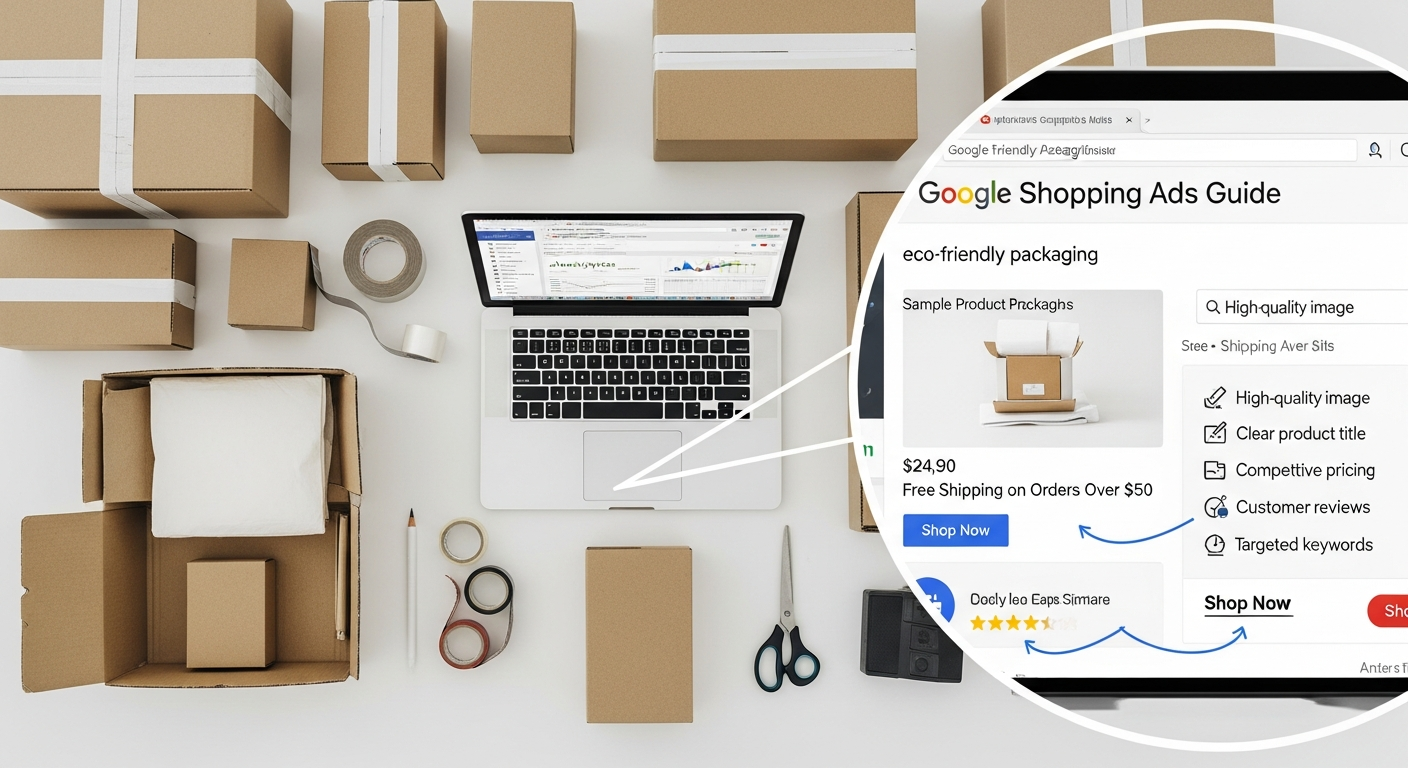
Driving traffic to your store through Google Shopping Ads is only half the battle; the true measure of success lies in converting those clicks into sales. In 2026, an optimized e-commerce store is paramount, acting as the crucial conversion engine that transforms interested shoppers into loyal customers. A perfect ad leading to a poor website experience is money wasted. Therefore, your focus must extend beyond ad performance to the entire customer journey on your site.
Key areas for optimizing your e-commerce store for conversion in 2026 include:
- Website Speed and Mobile-Friendliness: With the majority of online shopping now happening on mobile devices, your site must load quickly and be fully responsive across all screen sizes. Google prioritizes fast, mobile-friendly sites in its rankings, and users abandon slow sites rapidly. Use tools like Google PageSpeed Insights to identify and fix performance bottlenecks.
- Clear Calls to Action (CTAs): Guide your visitors with clear, compelling CTAs on every product page. Buttons like “Add to Cart,” “Buy Now,” or “Learn More” should be prominent, easy to find, and use action-oriented language.
- High-Quality Product Pages: These are your virtual sales associates.
- Exceptional Imagery and Video: Reiterate the importance of multiple high-resolution images, 360-degree views, and product videos.
- Detailed and Persuasive Descriptions: Go beyond basic features to highlight benefits, use cases, and how the product solves a customer’s problem.
- Customer Reviews and Testimonials: Social proof is incredibly powerful. Display customer ratings and reviews prominently. Consider adding user-generated content (UGC) like photos or videos.
- Clear Pricing and Availability: Avoid surprises. Show the full price, any discounts, and current stock levels clearly.
- Product Specifications: Provide technical details, sizing charts, and compatibility information where relevant.
- Trust Signals: Build confidence with your visitors. Display security badges (SSL certificates), payment options, clear contact information, and awards or certifications. Transparency fosters trust.
- Seamless Checkout Process: A clunky checkout is a leading cause of cart abandonment.
- Guest Checkout Option: Don’t force users to create an account.
- Minimal Steps: Reduce the number of fields and pages required.
- Progress Indicator: Show customers where they are in the process.
- Multiple Payment Options: Offer popular methods like credit cards, PayPal, Apple Pay, Google Pay, and increasingly, buy-now-pay-later services.
- Ecommerce Return Policy Best Practices: A clear, fair, and easily accessible return policy can significantly boost conversion rates. In 2026, consumers expect flexibility and transparency. Highlight key aspects of your policy (e.g., “30-day free returns”) on product pages and at checkout. A generous return policy signals confidence in your product and reduces perceived risk for the buyer, directly impacting their decision to purchase. Ensure your policy is easy to understand and follow, providing a hassle-free experience if a return is necessary.
- Optimized User Experience (UX): Ensure intuitive navigation, effective search functionality, and a logical site structure. A positive UX keeps visitors engaged and encourages them to explore more products.
By meticulously optimizing your e-commerce store, you create an environment where the traffic generated by your Google Shopping Ads is efficiently converted into valuable customers, solidifying your brand’s presence and profitability in 2026.
Advanced Strategies and Future Trends for Google Shopping in 2026
The world of digital advertising never stands still, and Google Shopping is no exception. To truly master the platform in 2026, businesses must look beyond the basics and embrace advanced strategies and emerging trends. These forward-thinking approaches will differentiate top performers from the rest, ensuring continued growth and market leadership.
Here’s what to focus on for advanced Google Shopping success:
- Mastering Performance Max Campaigns: As highlighted earlier, Performance Max is Google’s all-encompassing, AI-driven campaign type. For 2026, a deep understanding of how to optimize it is crucial.
- High-Quality Asset Groups: Provide diverse and compelling assets (images, videos, headlines, descriptions) for each product or product category. The more high-quality assets you provide, the better Google’s AI can create ad variations across its network.
- Audience Signals: While Performance Max is automated, you can “steer” it by providing audience signals – your existing customer lists, custom segments, and in-market audiences. This helps the AI learn faster and target more effectively.
- Strategic Use of Final URL Expansion: Decide whether to let Google automatically expand your final URLs to other relevant landing pages on your site or restrict it to only the URLs you provide.
Performance Max is designed to find conversions where you least expect them, making it a powerful tool for scaling.
- Leveraging First-Party Data: In a privacy-first world, your own customer data is gold. Upload your customer lists (purchase history, loyalty program members, email subscribers) to Google Ads. Use these lists for remarketing, exclusion lists, and as audience signals for Performance Max. This allows Google to find “lookalike” audiences and target your most valuable segments more precisely.
- Attribution Modeling in a Privacy-Centric World: Understanding which touchpoints contribute to a conversion is vital. Move beyond last-click attribution and explore data-driven attribution models in Google Analytics 4 (GA4). This provides a more holistic view of your customer journey, giving credit to all interactions, not just the final click. This insight helps you allocate budget more effectively across different channels and campaigns.
- The Role of Video in Product Listings: Video content is increasingly engaging and informative. Consider adding short, high-quality product videos to your product pages, and explore how these can be integrated into your Google Merchant Center feed (where supported) or utilized within Performance Max campaigns that leverage YouTube. A compelling video can significantly enhance product understanding and drive conversion.
- Integration with Other Google Properties: Google Shopping Ads don’t live in a vacuum. Understand how they interact with YouTube, Gmail, and the Discover feed. Performance Max campaigns naturally extend your reach across these properties, but you can also run separate campaigns to complement your Shopping efforts. For example, YouTube ads can build brand awareness and drive consideration, feeding into later Shopping ad conversions.
- Complementary Marketing Strategies: While Google Shopping Ads drive immediate purchase intent, consider how they integrate with broader marketing efforts. For example, implementing a robust Referral Marketing Program Ecommerce can significantly boost customer lifetime value after a new customer has been acquired through a Shopping ad. Once you’ve converted a shopper, empower them to become advocates, turning initial ad spend into a compounding growth engine. This creates a powerful synergy between acquisition and retention strategies, maximizing the long-term profitability of your ad investments.
- Voice Search Optimization: As smart speakers and voice assistants become more common, optimizing product data for voice search queries will grow in importance. Think about how people verbally ask for products and ensure your product titles and descriptions contain natural language that matches these queries.
By embracing these advanced strategies and staying attuned to future trends, your e-commerce business will not only maintain a competitive edge but also discover new avenues for growth and profitability through Google Shopping Ads in 2026.
Measuring Success and Iterating: Analytics for Google Shopping Ads in 2026
Launching Google Shopping Ads campaigns is just the beginning. The true art of success lies in meticulously measuring performance, understanding the data, and using those insights to continually iterate and improve. In 2026, a data-driven approach is non-negotiable for maximizing your return on ad spend (ROAS) and ensuring sustained growth.
Here’s how to effectively measure and iterate on your Google Shopping Ads in 2026:
- Key Performance Indicators (KPIs) to Monitor:
- Return On Ad Spend (ROAS): This is arguably the most critical metric for e-commerce. It tells you how much revenue you generate for every dollar spent on ads. Calculate it as (Total Revenue from Ads / Ad Spend) * 100%. Aim for a positive and growing ROAS.
- Cost Per Acquisition (CPA): The average cost of acquiring one customer. Lower CPA generally means more efficient spending.
- Conversion Rate: The percentage of clicks that result in a purchase. A high conversion rate indicates that your ads are attracting relevant traffic and your website is effective at converting them.
- Click-Through Rate (CTR): The percentage of impressions that result in a click. A good CTR suggests your ads are compelling and relevant to search queries.
- Average Order Value (AOV): While not directly an ad metric, AOV is crucial for understanding the profitability of your conversions. Optimize your product offerings and upsells/cross-sells to increase AOV.
- Impression Share: Shows the percentage of times your ads were shown compared to the total eligible impressions. A low impression share indicates opportunities to increase bids or budget.
- Google Analytics 4 (GA4) Integration: GA4 is Google’s next-generation analytics platform and will be the standard for 2026. Ensure your Google Ads and Google Merchant Center accounts are properly linked to GA4. This provides a unified view of your customer journey, from initial ad click to post-purchase behavior. GA4’s event-based data model offers deeper insights into user engagement across devices and platforms.
- Accurate Conversion Tracking: This is the backbone of measurement. Ensure your conversion tracking is set up correctly in Google Ads and GA4. Track key events like “add to cart,” “begin checkout,” and “purchase,” along with conversion values. Without accurate tracking, your optimization efforts will be blind. Use Google Tag Manager for easier implementation and management of tags.
- Attribution Reporting: As discussed in advanced strategies, move beyond last-click. Utilize GA4’s attribution reports to understand the full customer journey and assign credit to all touchpoints that contribute to a sale. This will help you make more informed decisions about budget allocation across different campaigns and channels.
- Data-Driven Decision Making: Don’t just collect data; act on it.
- Identify Underperforming Products: Use product-level performance data to pause or optimize ads for products with low ROAS or conversion rates.
- Discover High Performers: Double down on products, categories, or campaigns that consistently deliver strong results.
- Refine Bidding Strategies: Adjust your target ROAS or CPA based on historical performance and business goals.
- Optimize Product Feed: Use performance data to identify areas for improvement in your product titles, descriptions, and custom labels.
- A/B Testing: Continuously test different ad copy, landing pages, and campaign settings to find what yields the best results.
- Regular Audits and Reports: Schedule regular (weekly, monthly) audits of your campaigns and generate performance reports. Look for trends, anomalies, and opportunities for improvement. Share these insights with your team to foster a culture of continuous optimization.
By diligently measuring your Google Shopping Ads performance and using the insights to inform your strategy, you create a powerful feedback loop that drives continuous improvement. This iterative process is what separates good campaigns from truly exceptional ones, ensuring your e-commerce business remains profitable and competitive in the dynamic landscape of 2026.
Frequently Asked Questions About Google Shopping Ads in 2026
What’s the biggest change for Google Shopping Ads in 2026?
The most significant shift for Google Shopping Ads in 2026 continues to be the increasing emphasis on AI-driven campaign types, particularly Performance Max. This campaign type leverages machine learning across all of Google’s inventory to find converting customers, requiring advertisers to focus more on providing high-quality product feeds and diverse creative assets rather than granular keyword management. Understanding and optimizing for Performance Max will be crucial for maximizing reach and conversions.
How important is my product feed for Google Shopping Ads success?
Your product feed is absolutely critical – it’s the foundation of your Google Shopping Ads. In 2026, a meticulously optimized, accurate, and up-to-date product feed directly dictates how often your products appear, to whom they are shown, and the overall relevance of your ads. High-quality images, keyword-rich titles, accurate pricing, and correct product identifiers are non-negotiable for approval and strong campaign performance.
Can small businesses compete effectively with Google Shopping Ads in 2026?
Yes, small businesses can definitely compete with Google Shopping Ads in 2026, provided they adopt a smart, strategic approach. Focus on niche products, optimize your product feed meticulously, utilize targeted bidding strategies, and ensure your website offers an exceptional user experience. Starting with a clear understanding of How To Start Ecommerce Business 2026, including a focus on a strong value proposition and excellent customer service, will also differentiate smaller players.
What role does an Ecommerce Return Policy play in my Google Shopping success?
A well-defined and customer-friendly Ecommerce Return Policy Best Practices plays a significant role in Google Shopping success. It builds trust with potential buyers, reduces perceived risk, and can directly influence conversion rates. Shoppers are more likely to purchase when they feel confident they can return an item if it doesn’t meet their expectations. Highlighting a clear, transparent policy on your product pages and during checkout can improve overall ad performance by increasing the likelihood of conversion once traffic lands on your site.
How can I integrate a Referral Marketing Program with my Google Shopping strategy?
Integrating a Referral Marketing Program Ecommerce with your Google Shopping strategy is an excellent way to maximize customer lifetime value. Google Shopping Ads are primarily for acquisition. Once you’ve successfully acquired a new customer through a Shopping ad, your referral program can turn them into brand advocates. Encourage new purchasers to refer friends post-purchase, offering incentives for both the referrer and the referred. This leverages your initial ad spend to generate organic growth and reduce future customer acquisition costs.
What’s the best way to start an e-commerce business in 2026 to leverage Google Shopping?
To effectively leverage Google Shopping Ads when you How To Start Ecommerce Business 2026, begin with a solid foundation. Choose a niche with demand, develop high-quality products, and build a fast, mobile-responsive e-commerce website. Crucially, prioritize product data from day one, ensuring you can generate a clean, optimized product feed. Integrate clear conversion tracking and plan your initial Google Shopping campaigns with realistic budget allocation and performance expectations, focusing on continuous learning and iteration.
Recommended Resources
For more on google shopping ads, see How To Shop Smart And Save Money Guide on Gold Points.
Related reading: How To Do A Content Audit (Page Release).
