
Why an LLC is the Smart Choice for Your Online Business
Embarking on the journey of an online business brings immense potential, but also inherent risks. Protecting your personal assets from business liabilities is paramount, and this is where an LLC truly shines. Beyond mere protection, an LLC lends credibility and structure, essential ingredients for any aspiring e-commerce giant.
- Limited Liability Protection: This is arguably the most significant advantage. An LLC legally separates your personal assets (your home, car, savings) from your business debts and liabilities. Should your online business face a lawsuit, debt, or other financial obligation, your personal assets are generally shielded, providing immense peace of mind. For an online business, where customer interactions, data privacy, and product liability can introduce unforeseen risks, this protection is invaluable.
- Credibility and Professionalism: Operating as “Your Business Name LLC” immediately signals professionalism and legitimacy to customers, suppliers, and potential investors. In a digital world where trust is a prime currency, an LLC can enhance your brand image, making your online store appear more established and reliable than a sole proprietorship. This professional veneer can significantly impact customer confidence and conversion rates.
- Tax Flexibility: One of the most appealing aspects of an LLC is its tax flexibility. By default, an LLC is treated as a “pass-through” entity for tax purposes, meaning profits and losses are passed through to the owner’s personal income without being taxed at the business level (avoiding “double taxation” common with C-Corps). However, an LLC can also elect to be taxed as an S Corporation or even a C Corporation, offering strategic tax planning opportunities depending on your business’s growth and profitability. Understanding these options early can be a game-changer as you plan for your online business’s financial future.
- Simplicity of Formation and Maintenance: Compared to corporations, LLCs are generally simpler to form and maintain. They typically have fewer ongoing compliance requirements and less stringent reporting obligations, making them an attractive option for entrepreneurs who want to focus more on growing their online business and less on administrative overhead. This streamlined approach makes it easier to manage your legal structure as you implement strategies for How To Start Ecommerce Business 2026.
- Scalability and Growth Potential: An LLC structure is inherently scalable. As your online business grows, perhaps expanding into new markets, launching a Referral Marketing Program Ecommerce, or developing new product lines, the LLC framework can accommodate these changes without requiring a complete restructuring. It provides a robust foundation that can evolve with your ambitions, whether you’re planning a small boutique or a global e-commerce enterprise by 2026.
- Ease of Ownership Transfer: Should you decide to bring in partners, sell your business, or pass it on, the LLC structure provides a relatively straightforward mechanism for ownership transfer, especially when a well-drafted Operating Agreement is in place.
Choosing an LLC is a proactive step toward building a resilient and reputable online business. It’s about setting yourself up for long-term success, mitigating risks, and projecting an image of professionalism that resonates with your target audience.
Understanding the Pre-Registration Steps for Your Online Business LLC
Before you dive into filing paperwork, there are several crucial preliminary steps that lay the groundwork for a smooth LLC registration process. Thoughtful consideration at this stage can prevent headaches down the line and ensure your business is well-positioned for future success.
- Name Availability Check: Your business name is your brand’s identity. Before filing, you must ensure your desired LLC name is available in the state where you plan to register. Most states have an online database (often through the Secretary of State’s office) where you can perform a name search. Remember, the name must typically include “LLC” or “Limited Liability Company” (or an abbreviation like “L.L.C.”) and must not be deceptively similar to an existing entity. It’s also wise to check for domain name availability and social media handles at this stage, as your online presence will be critical.
- Choosing Your Registered Agent: Every LLC is required to have a Registered Agent (sometimes called a Statutory Agent or Resident Agent) in the state of formation. This individual or entity is responsible for receiving official legal and tax documents on behalf of your LLC. The Registered Agent must have a physical street address (not a P.O. Box) in the state and be available during normal business hours. You can serve as your own Registered Agent if you meet the requirements, but many online businesses opt for a professional Registered Agent service for privacy, reliability, and convenience, especially if you operate remotely or across state lines.
- Understanding State-Specific Requirements: While the general process for forming an LLC is similar across states, specific requirements can vary significantly. These variations might include filing fees, publication requirements (where you must announce your LLC’s formation in local newspapers, common in states like New York and Arizona), and ongoing compliance obligations. Researching your chosen state’s specific rules upfront is essential to avoid delays or rejections. This foundational knowledge is key to building a robust plan for How To Start Ecommerce Business 2026.
- Identifying Your Business Niche and Activities: Before formalizing your structure, have a clear understanding of what your online business will do. Will you sell physical products via dropshipping? Offer digital courses? Provide SaaS solutions? Your business activities can influence licensing requirements, tax considerations, and even the type of insurance you’ll need. A detailed business plan, even a simple one, outlining your products/services, target market, and operational model, will serve as a valuable compass throughout the LLC formation process and beyond.
- Defining Ownership Structure: If you’re starting the online business with partners, clearly define the ownership percentages, capital contributions, roles, and responsibilities before filing. While the formal Operating Agreement comes later, having a preliminary understanding among partners will streamline that process and prevent future disputes.
Taking these preliminary steps seriously not only simplifies the registration of your LLC but also helps you build a more robust and compliant online business from day one.
The Step-by-Step Process to Register Your LLC for Online Business
Step 1: Choose Your State of Formation
The first critical decision is deciding where to register your LLC. For most small online businesses, registering in your home state (where you physically reside and operate) is the simplest and most cost-effective option. If you register in another state, you’ll likely need to register as a “foreign LLC” in your home state anyway, incurring additional fees and compliance requirements. However, certain states, like Delaware or Wyoming, are popular for their business-friendly laws, privacy, or lack of state income tax. Weigh the pros and cons carefully based on your specific situation and future growth plans for 2026.
Step 2: Name Your LLC
As discussed in the pre-registration steps, ensure your chosen name is available in your selected state. The name must comply with state naming rules, typically requiring “LLC,” “Limited Liability Company,” or a similar designation. Perform a thorough name search through your state’s Secretary of State or equivalent business filing office. It’s also advisable to check for trademark conflicts and domain name availability simultaneously to secure your online presence.
Step 3: Appoint a Registered Agent
Select your Registered Agent. This can be you (if you meet state requirements), another member of your LLC, or a professional Registered Agent service. Provide their name and physical address in your filing documents. A professional service offers reliability, privacy, and ensures you never miss important legal correspondence, which is crucial for maintaining compliance for an online business operating across various time zones.
Step 4: File Your Articles of Organization (or Certificate of Formation)
This is the core legal document that officially creates your LLC. You’ll file it with the Secretary of State (or equivalent office) in your chosen state. The document typically includes:
- The name of your LLC.
- The name and address of your Registered Agent.
- The principal business address.
- The names and addresses of the LLC members/organizers (this varies by state; some only require the organizer’s name).
- A statement of purpose (optional in many states, but can provide clarity for your online business).
Most states allow for online filing, which is usually the fastest method. Be prepared to pay a filing fee, which varies significantly by state, ranging from under $50 to several hundred dollars.
Step 5: Create an LLC Operating Agreement
While often not required to be filed with the state, an Operating Agreement is the most critical internal document for your LLC. It’s essentially the blueprint for how your online business will be run. It outlines:
- Ownership percentages and capital contributions.
- Members’ rights and responsibilities.
- How profits and losses will be distributed.
- Voting rights and decision-making processes.
- Procedures for adding or removing members.
- Dissolution procedures.
Even if you’re a single-member LLC, an Operating Agreement is vital. It strengthens your limited liability protection by demonstrating the separation between you and your business and provides a clear framework for future operations. Without it, your LLC will be governed by the default rules of your state, which may not align with your intentions.
Step 6: Obtain an EIN (Employer Identification Number)
An EIN is a unique nine-digit tax identification number issued by the IRS, similar to a Social Security number for individuals. Almost all LLCs need an EIN, especially if you plan to:
- Hire employees (even contractors may require it for tax purposes).
- Open a business bank account.
- File business taxes as a corporation.
- Have more than one member.
You can apply for an EIN online directly through the IRS website, and it’s usually issued immediately and free of charge.
Step 7: Fulfill State and Local Licensing Requirements
After your LLC is officially registered, you’ll need to research and obtain any necessary state and local business licenses and permits. These vary widely based on your industry, location, and specific online business activities. For example, if you sell specific regulated products online, you might need unique permits. Even home-based online businesses often require a local business license. Failing to obtain the correct licenses can result in fines and legal issues, so thorough research here is non-negotiable.
Following these steps meticulously ensures your online business LLC is legally formed and ready to operate, providing the secure foundation necessary for growth and compliance.
Post-Registration Essentials for Your Online Business
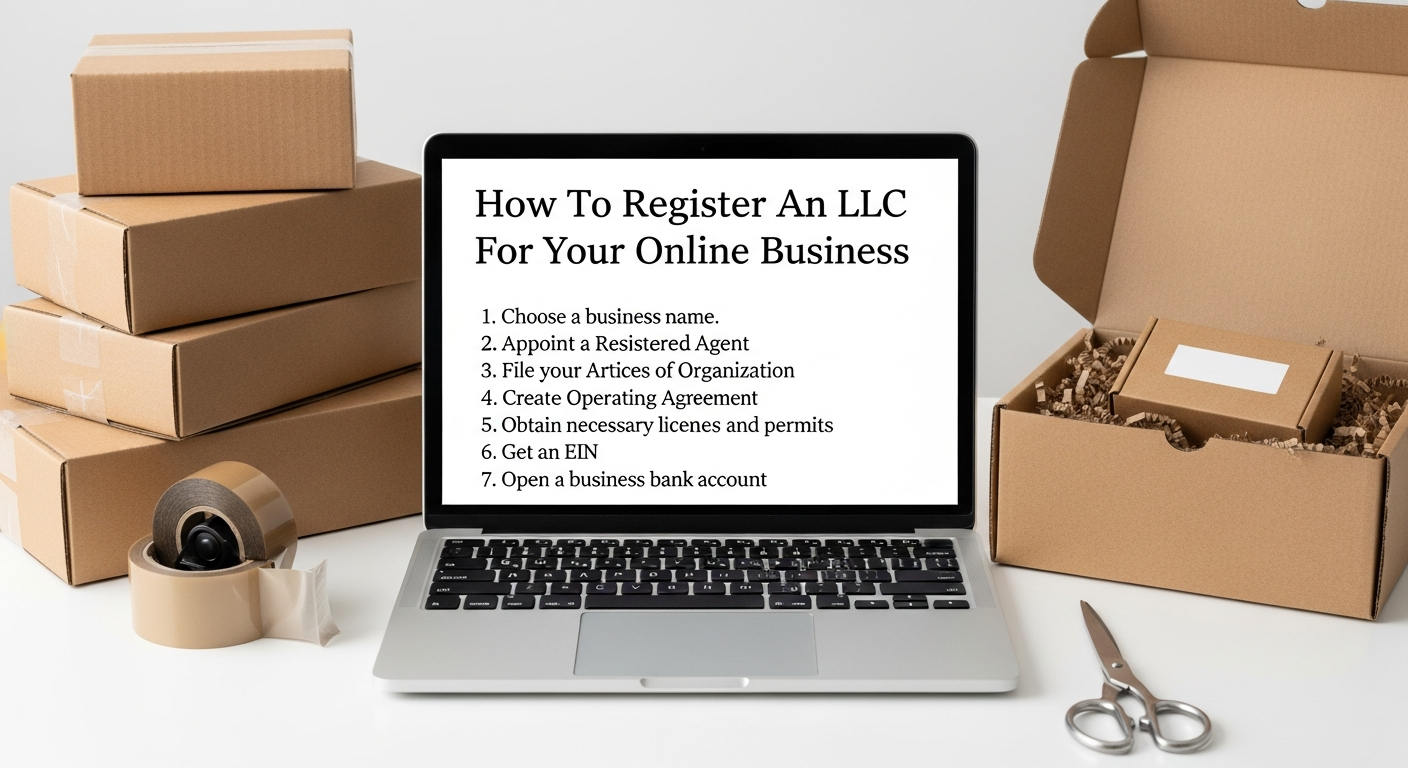
Registering your LLC is a significant milestone, but it’s just the beginning. To truly thrive and maintain compliance, there are several crucial post-registration steps specific to operating a successful online business.
Opening a Business Bank Account
This is non-negotiable for an LLC. Opening a separate business bank account for your online venture is fundamental for maintaining the “corporate veil” (the legal separation between you and your LLC). Mixing personal and business finances can lead to “piercing the corporate veil,” jeopardizing your limited liability protection. An EIN is typically required to open a business bank account, along with your Articles of Organization and Operating Agreement. This separation also simplifies bookkeeping and tax preparation, streamlining your financial management for years to come.
Understanding Tax Obligations
While an LLC offers tax flexibility, it also means you need to understand your specific obligations. Depending on how your LLC is taxed (sole proprietorship, partnership, S-Corp, C-Corp), your federal and state tax filing requirements will differ. You’ll likely be responsible for self-employment taxes (Social Security and Medicare), and potentially state income taxes, sales taxes (if you sell taxable goods online), and even property taxes if your online business owns physical assets. Consulting with a tax professional specializing in e-commerce is highly recommended to ensure compliance and optimize your tax strategy.
Compliance and Annual Filings
Maintaining your LLC’s good standing requires ongoing compliance. Most states require LLCs to file an annual report or statement of information, typically accompanied by a fee. These filings update the state with current information about your LLC, such as your Registered Agent and principal address. Missing these deadlines can lead to fines, loss of good standing, or even administrative dissolution of your LLC. Set reminders and keep accurate records to stay on top of these crucial administrative tasks.
Building Your Online Presence and Infrastructure
With your legal structure in place, focus on the operational aspects of your online business:
- Website Development: Choose an e-commerce platform (Shopify, WooCommerce, BigCommerce, etc.) and design a user-friendly, secure, and mobile-responsive website.
- Payment Gateways: Integrate reliable and secure payment processing solutions (Stripe, PayPal, Square) to accept online payments.
- Shipping and Fulfillment: Establish your shipping strategy, whether it’s self-fulfillment, dropshipping, or using a third-party logistics (3PL) provider.
- Legal Policies: Ensure your website includes essential legal pages, such as a Privacy Policy, Terms of Service, and a comprehensive Ecommerce Return Policy Best Practices. A clear return policy builds customer trust and reduces disputes, directly impacting customer satisfaction and repeat business.
Marketing and Growth Strategies
An LLC provides a stable platform for implementing robust growth strategies. Consider:
- SEO and Content Marketing: Optimize your website for search engines and create valuable content to attract organic traffic.
- Social Media Marketing: Build a strong presence on relevant platforms to engage with your audience.
- Paid Advertising: Explore platforms like Google Ads and social media ads to reach a wider audience.
- Email Marketing: Build an email list to nurture leads and drive sales.
- Referral Marketing Program Ecommerce: Implement a referral program to leverage your existing customer base. Satisfied customers become powerful advocates, and an LLC provides the legal framework to manage such programs effectively, including incentives and terms. This strategy is particularly powerful for scaling an online business by 2026.
By diligently addressing these post-registration essentials, you not only ensure your online business remains compliant but also lay a robust foundation for sustainable growth and operational excellence.
Common Pitfalls and How to Avoid Them When Registering Your Online Business LLC
While forming an LLC for your online business offers numerous advantages, there are common missteps that entrepreneurs often make. Being aware of these pitfalls can save you significant time, money, and legal trouble down the road.
- Not Creating an LLC Operating Agreement: As mentioned, this is often overlooked because it’s not always a state filing requirement. However, operating without one leaves crucial aspects of your business governance undefined. It can lead to disputes among members, difficulties in securing financing, and, most critically, can weaken your limited liability protection if a court views your business as poorly managed or not truly separate from its owners. Always create a comprehensive Operating Agreement, even for single-member LLCs.
- Mixing Personal and Business Finances (Co-mingling): This is perhaps the most dangerous pitfall for an LLC. Using your business bank account for personal expenses or vice-versa blurs the line between you and your business. If challenged in court, this co-mingling can be used to “pierce the corporate veil,” making you personally liable for business debts and obligations. Always maintain separate bank accounts, credit cards, and financial records for your LLC.
- Ignoring Compliance Deadlines: Every state has ongoing compliance requirements for LLCs, such as annual reports, franchise taxes, or renewal fees. Failing to meet these deadlines can result in late fees, loss of good standing, and in severe cases, the administrative dissolution of your LLC by the state. This means you lose your limited liability protection. Set up a robust system for tracking and meeting all state and federal compliance deadlines.
- Choosing the Wrong State for Registration: While some entrepreneurs are tempted by “business-friendly” states like Delaware or Wyoming, registering there when your primary operations and physical presence are elsewhere often means you’ll still need to register as a “foreign LLC” in your home state. This incurs double filing fees and double compliance requirements, adding unnecessary complexity and cost. For most online businesses, registering in your home state is the most practical and cost-effective solution.
- Overlooking Specific Niche or Local Regulations: An online business might seem borderless, but it’s still subject to specific regulations based on its products, services, and the locations of its customers. For instance, selling food products, health supplements, or certain digital goods might require specific federal or state licenses. Additionally, some cities or counties require local business licenses even for purely online, home-based businesses. Thoroughly research all applicable federal, state, and local licenses and permits relevant to your specific online business activities.
- Inadequate Legal Documentation for Online Operations: Beyond the LLC formation documents, online businesses need robust legal policies for their website. This includes a comprehensive Privacy Policy (especially crucial with evolving data protection laws like GDPR and CCPA), Terms of Service, and a clear Ecommerce Return Policy Best Practices. Lack of these can lead to customer disputes, legal challenges, and even regulatory fines. Ensure your website has all necessary legal disclaimers and policies clearly visible and accessible.
By proactively addressing these common pitfalls, you can ensure your online business LLC operates on a solid, legally compliant foundation, allowing you to focus on growth and profitability.
Leveraging Your LLC for Future Growth and Success in Online Business
An LLC isn’t just about legal protection; it’s a strategic asset that can significantly contribute to the long-term growth and success of your online business. By understanding how to fully leverage its capabilities, you can unlock new opportunities and build a resilient enterprise for 2026 and beyond.
- Attracting Investors and Funding: As your online business scales, you might seek external funding, whether from angel investors, venture capitalists, or traditional lenders. An LLC, with its formal structure and clear ownership outlined in the Operating Agreement, presents a more professional and organized entity than a sole proprietorship. This structure can make your business more attractive to investors who seek clarity on ownership, governance, and liability. A well-established LLC demonstrates seriousness and stability, which are key factors for funding decisions.
- Building Brand Trust and Reputation: The “LLC” designation adds an immediate layer of credibility to your online business. This professionalism translates into increased trust from customers, suppliers, and partners. In the competitive e-commerce landscape, where new businesses emerge daily, standing out with a legitimate legal structure can enhance your brand’s reputation. This trust is vital for successful customer acquisition, fostering loyalty, and encouraging participation in programs like a Referral Marketing Program Ecommerce.
- Streamlining Operations for Scalability: An LLC provides a clear framework for operational management. The defined roles, responsibilities, and decision-making processes within your Operating Agreement allow for efficient scaling. As you expand your product lines, enter new markets, or increase your team, the LLC structure helps manage these complexities without internal friction. This clarity is essential for efficiently implementing a strategy for How To Start Ecommerce Business 2026, preparing for rapid expansion and technological advancements.
- Protecting Intellectual Property: As an online business, your intellectual property (IP)—your brand name, logo, website content, unique product designs, and proprietary software—is incredibly valuable. Registering your LLC provides a clear legal entity under which you can register trademarks, copyrights, and potentially patents. This legal ownership is crucial for defending your IP against infringement, which is unfortunately common in the digital sphere. Your LLC acts as the formal owner of these assets, simplifying legal actions if necessary.
- Facilitating Strategic Partnerships and Collaborations: A formally structured LLC makes it easier to enter into strategic partnerships, joint ventures, or affiliate agreements with other businesses. Partners are more likely to engage with a legally recognized entity, as it provides a clear legal framework for contracts, liabilities, and revenue sharing. This opens doors for collaborative marketing efforts, product bundles, and cross-promotions, all of which can significantly boost your online business’s reach and revenue.
- Succession Planning: While it might seem premature, an LLC facilitates smoother succession planning. If you ever decide to sell your online business, bring in new partners, or pass it on to family members, the clear ownership structure and operational guidelines established in your Operating Agreement simplify these transitions. This foresight ensures the longevity and continued success of your online venture.
By actively leveraging the benefits of your LLC, you’re not just protecting your business; you’re actively building a robust, credible, and adaptable foundation that is poised for significant growth and enduring success in the dynamic world of online commerce.
Frequently Asked Questions About Registering an LLC for Online Business
1. How long does it take to register an LLC for an online business?
The time it takes to register an LLC varies by state. Online filings can often be processed within a few business days, or even instantly in some states. Mail-in filings typically take longer, sometimes several weeks. Expedited processing options are often available for an additional fee if you’re in a hurry. Remember, this timeline only covers the state filing; obtaining an EIN, opening a bank account, and securing local licenses will add to the overall setup time.
2. Do I need an LLC if I’m just dropshipping or selling digital products online?
Yes, absolutely. Even if you’re dropshipping or selling digital products, an LLC offers crucial limited liability protection. This shields your personal assets from potential lawsuits related to product defects, shipping issues, data breaches, or intellectual property disputes—risks that are very real for any online business, regardless of its specific model. It also adds credibility to your brand, which is vital in a competitive online marketplace.
3. Can I register an LLC in a state where I don’t live?
Yes, you can. However, if your online business has a physical presence or conducts significant business activities (like having employees or an office) in your home state, you will likely need to register your LLC as a “foreign LLC” in your home state as well. This incurs additional filing fees and ongoing compliance requirements in both states. For most online businesses, especially those just starting, registering in your home state is generally the most straightforward and cost-effective option.
4. What is the difference between an LLC and a sole proprietorship for an online business?
The key difference lies in legal separation and liability. A sole proprietorship is automatically formed when you start doing business, with no legal distinction between you and your business. This means you are personally liable for all business debts and obligations. An LLC, on the other hand, is a separate legal entity that provides limited liability protection, shielding your personal assets. An LLC also offers more credibility, tax flexibility, and scalability, making it a superior choice for professional online businesses aiming for growth by 2026.
5. Do I need a lawyer to register my LLC?
While you can register an LLC yourself by filing directly with the state, many online entrepreneurs opt to use an online legal service or a business attorney. A lawyer can provide tailored advice, draft your Operating Agreement, and ensure all state-specific requirements are met, which can be invaluable, especially if your business has complex ownership structures or specific legal needs. For straightforward formations, online services offer a cost-effective alternative.
6. How does an LLC impact my online business’s tax obligations?
By default, the IRS treats a single-member LLC as a sole proprietorship and a multi-member LLC as a partnership. This means profits and losses “pass through” to the owners’ personal tax returns. However, an LLC can elect to be taxed as an S Corporation or a C Corporation. An S-Corp election can sometimes save on self-employment taxes, while a C-Corp election might be suitable for businesses planning to seek significant investment. It’s crucial to consult with a tax professional to determine the most advantageous tax election for your specific online business.
Recommended Resources
Related reading: Risk Tolerance In Investing Explained (Fin3go).
Learn more about this topic in How To Transfer Credit Card Points To Airlines at Gold Points.
