
The Foundations: Understanding Etsy and Identifying Your Niche
Embarking on your Etsy journey requires more than just creative talent; it demands a strategic approach to market understanding and business planning. Before you even think about listing your first item, a solid foundation is crucial for sustainable success.
What is Etsy and Why Choose It?
Etsy stands out as a unique e-commerce platform, distinct from giants like Amazon or eBay. It caters specifically to a community interested in unique, handmade, vintage, and craft supply items. This niche focus means that buyers come to Etsy with a specific mindset, often seeking originality, craftsmanship, and a personal touch that mass-produced goods lack. For new entrepreneurs, Etsy offers a relatively low barrier to entry, a built-in audience, and user-friendly tools to manage your shop, making it an excellent starting point for those looking at how to start an Etsy shop and make money without the complexities of building an independent website from scratch.
Its global reach means your potential customer base is vast, and its robust infrastructure handles payment processing, security, and dispute resolution, allowing you to focus on what you do best: creating. Furthermore, Etsy’s strong brand recognition instills trust in buyers, which is invaluable for a budding online business.
Identifying Your Product Niche and Target Audience
The key to standing out on Etsy is not just having a great product, but having a great product that fulfills a specific need or desire within a defined niche. Rather than trying to appeal to everyone, focus on a particular segment of the market. Consider these factors:
- Your Passion & Skills: What do you genuinely love to create? Your enthusiasm will shine through in your products and customer interactions.
- Market Demand: Is there a demand for what you want to sell? Use Etsy’s search bar, trending reports, and third-party tools to research popular items and keywords. Look for gaps or underserved areas.
- Uniqueness & Differentiation: What makes your product different? Is it your unique design, sustainable materials, personalization options, or a specific aesthetic? Standing out is paramount.
- Target Audience: Who are you selling to? Define your ideal customer – their age, interests, income level, and what problems your product solves for them. Understanding your audience helps in product development, branding, and marketing.
For example, instead of “jewelry,” consider “minimalist sterling silver jewelry for professional women” or “bohemian handcrafted clay earrings for festival-goers.” This specificity helps you connect with the right buyers and reduces competition.
Competitor Analysis and Understanding Etsy Fees
Once you have a niche in mind, it’s crucial to study your competitors. Search for similar items on Etsy. Analyze their:
- Product Listings: What do their photos look like? How are their descriptions written? What keywords do they use?
- Pricing Strategies: How do they price their items? Are they offering discounts or bundles?
- Customer Reviews: What do customers love or dislike? This can offer invaluable insights into what buyers truly value.
- Shop Presence: How do they brand their shop? What’s their overall aesthetic?
This analysis isn’t about copying; it’s about learning best practices and identifying opportunities to differentiate your own shop. Simultaneously, you must understand Etsy’s fee structure to accurately price your products for profit. Etsy charges:
- Listing Fee: $0.20 USD per listing, renewable every four months or upon sale.
- Transaction Fee: 6.5% of the item price (including shipping cost you set).
- Payment Processing Fee: Varies by country, typically 3% + $0.25 USD for Etsy Payments.
- Offsite Ads Fee: If a sale comes from an Etsy Offsite Ad, a 12-15% fee applies (mandatory for shops earning over $10,000 in a 12-month period, optional for others).
Factor these fees, plus your material costs, time, and desired profit margin, into your pricing strategy from day one.
Setting Up Your Etsy Shop: A Step-by-Step Guide to Launch
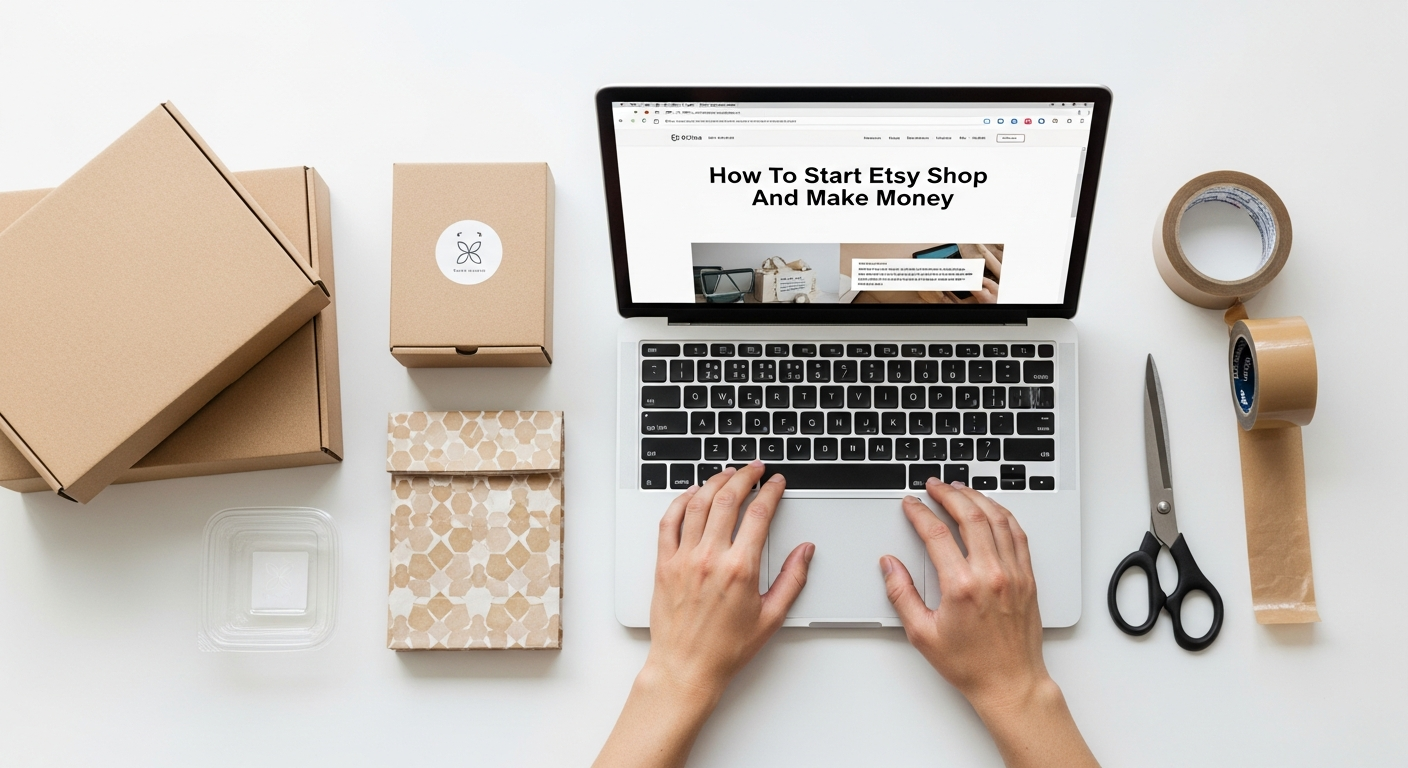
With your niche defined and market research complete, it’s time for the practical steps of setting up your shop. This phase is about establishing your digital storefront and ensuring it’s ready to welcome your first customers.
Creating Your Etsy Account and Choosing a Memorable Shop Name
The first step is to visit Etsy.com and click “Sell on Etsy.” You’ll be prompted to create an account, which is straightforward. Once your basic account is set up, you’ll begin the shop creation process. Choosing a shop name is a critical branding decision. Your shop name should be:
- Memorable: Easy to recall and spell.
- Relevant: Reflective of your products or brand identity.
- Unique: Avoid names similar to established brands to prevent confusion or legal issues.
- Available: Check if the name is available on Etsy and potentially on social media platforms for future branding consistency.
Spend time brainstorming. A strong shop name contributes significantly to your brand’s identity and helps customers remember you. Think about names that evoke the feeling or aesthetic of your products.
Setting Up Shop Preferences and Your First Listing
After your shop name, Etsy will guide you through setting up your shop preferences:
- Shop Language: The primary language you’ll use to describe your items.
- Shop Country: Your country of residence for tax and payment purposes.
- Shop Currency: The currency you’ll use to price your items.
Once these are set, you’ll move to listing your first item. This is often the most daunting part for new sellers, but Etsy’s interface makes it quite intuitive. For each listing, you’ll need:
- High-Quality Photos: At least 5-10 clear, well-lit photos from different angles, showing scale and detail. Lifestyle shots are highly effective.
- Compelling Title: Use keywords customers would search for (e.g., “Hand-Painted Ceramic Mug,” not just “Mug”).
- Detailed Description: Tell a story about your product. Include materials, dimensions, customization options, and care instructions. Embed relevant keywords naturally.
- Pricing: Based on your earlier calculations (materials + time + fees + profit margin).
- Inventory & Variations: Specify quantity, and add variations like size, color, or material if applicable.
- Shipping Profile: Set your shipping costs, delivery times, and where you ship to. Consider offering free shipping as a psychological incentive, building the cost into your product price.
- Tags & Categories: Use all 13 available tags with relevant keywords. Choose the most specific categories for your item.
Remember, your first listing sets the standard. Take your time to make it excellent. It’s a template for future listings and your initial impression on potential buyers.
Payment Options, Shipping Profiles, and Shop Policies
Setting up your payment and shipping methods correctly is crucial for a smooth customer experience. Etsy Payments is the most common option, allowing buyers to pay via credit card, PayPal, Apple Pay, Google Pay, and more. You’ll link your bank account for deposits. Ensure your bank details are accurate to avoid delays in receiving funds.
Shipping profiles allow you to define shipping costs and carriers for different destinations. You can create multiple profiles for different types of items (e.g., lightweight vs. heavy, domestic vs. international). Transparency in shipping costs and times builds customer trust.
Finally, your shop policies are vital. These cover:
- Returns & Exchanges: Clearly state your policy.
- Privacy Policy: How you handle customer data.
- Shipping Policies: Processing times, estimated delivery, and handling of lost or damaged items.
- Custom Order Policies: If you offer personalized items.
Etsy provides templates for these policies, which you can customize. Clear policies protect both you and your customers, minimizing disputes and building a professional image. This detailed setup ensures your shop is not only beautiful but also fully functional and compliant, paving the way for you to make money effectively.
Crafting Irresistible Products and Listings for Etsy Success
The Power of High-Quality Product Photography
In an online marketplace, your product photos are your most powerful selling tool. They are the first, and often only, impression a customer gets of your physical product. Poor photos can kill a listing, no matter how amazing the item is. Focus on:
- Excellent Lighting: Natural light is often best. Avoid harsh shadows or overly dark images.
- Sharp Focus: Your product should be clear and in focus, not blurry.
- Multiple Angles: Show the front, back, sides, and any unique details.
- Scale Reference: Include a hand, a common object, or a model to give buyers an idea of size.
- Lifestyle Shots: Show your product in use or in a styled setting. This helps customers visualize it in their own lives.
- Clear Backgrounds: A clean, uncluttered background keeps the focus on your product.
Invest time in learning basic product photography or consider hiring a professional. This single aspect can dramatically increase your conversion rates and is fundamental to how to start an Etsy shop and make money effectively.
Compelling Product Descriptions and Strategic Keywords
While photos grab attention, your product descriptions seal the deal. Think of them as your sales pitch. They should be:
- Informative: Detail materials, dimensions, unique features, and care instructions.
- Engaging: Tell a story about the product. What inspired it? What makes it special? Who is it for?
- Benefit-Oriented: Instead of just listing features, explain the benefits. “Durable stoneware” becomes “a mug designed to withstand daily use, perfect for your morning coffee ritual.”
- Keyword-Rich: Naturally weave in the keywords customers might use to search for your item. Don’t keyword stuff, but ensure relevant terms are present in the title, description, and tags.
Etsy’s search algorithm, much like Google’s, looks for relevance. The more your listing accurately reflects what a customer is searching for, the higher its chances of appearing in search results. Think like your customer: what would they type into the search bar?
Optimizing with Etsy Tags, Categories, and Attributes
Tags are critical for Etsy SEO. You get 13 tags per listing, so use them all strategically:
- Be Specific: Use long-tail keywords (e.g., “handmade ceramic coffee mug” instead of just “mug”).
- Use Synonyms: Think of different ways people might describe your item.
- Consider Materials & Style: “Sterling silver,” “boho chic,” “minimalist.”
- Target Occasions: “Birthday gift,” “wedding favor,” “anniversary present.”
Categories and attributes further help Etsy understand and categorize your product. Choose the most specific categories available, and fill out as many attributes as possible (color, size, material, occasion, etc.). This detailed information helps Etsy match your product to relevant buyer searches, significantly boosting your shop’s visibility and potential to make money.
Pricing for Profit and Perceived Value
Pricing your items correctly is a delicate balance. You need to cover your costs (materials, labor, Etsy fees, packaging, shipping), make a profit, and remain competitive. However, don’t underprice your work; this can devalue your brand. Consider:
- Cost of Goods Sold (COGS): All direct costs to produce one item.
- Your Time (Labor): Pay yourself a fair hourly wage.
- Etsy Fees: As discussed earlier.
- Packaging & Shipping: Include these costs.
- Desired Profit Margin: What percentage profit do you aim for?
- Market Value: What are similar items selling for?
- Perceived Value: How unique or high-quality is your item? Can you justify a premium price?
A common formula is: (Material Costs + Labor Costs + Etsy Fees + Overhead) x 2 or 3 = Retail Price. Experiment with pricing, but always ensure you are profitable. Offering occasional sales or bundles can also increase perceived value without drastically cutting into your margins.
Marketing Your Etsy Shop for Maximum Reach and Sales
Once your shop is beautifully stocked, the next challenge is getting eyes on your products. Marketing is an ongoing effort that extends beyond Etsy’s internal search and advertising capabilities. To truly make money, you need to actively promote your brand.
Leveraging Etsy Ads vs. Organic Reach
Etsy offers its own advertising platform, Etsy Ads, which can be useful for new shops or for boosting specific listings. You set a daily budget, and Etsy displays your products in prominent positions within search results and other pages. While Etsy Ads can provide immediate visibility, relying solely on them can be expensive. A balanced approach combines paid promotion with a strong focus on organic reach.
Organic reach on Etsy is primarily driven by:
- Etsy SEO: As discussed, strong titles, descriptions, and tags are paramount.
- Sales & Reviews: Shops with consistent sales and positive reviews tend to rank higher.
- Shop Activity: Regularly adding new listings, renewing old ones, and engaging with buyers signals an active shop to Etsy’s algorithm.
- Shop Sections: Organize your products into clear categories for easy navigation.
Focus on optimizing your listings for organic search first, then use Etsy Ads strategically to amplify your best sellers or new arrivals.
Social Media Marketing: Beyond the Etsy Bubble
Your marketing efforts shouldn’t be confined to Etsy. Social media platforms are powerful tools for driving external traffic to your shop and building a brand community. Consider:
- Instagram: Highly visual, perfect for showcasing handmade goods. Use high-quality photos, reels, and stories. Engage with followers, use relevant hashtags, and collaborate with other creators.
- Pinterest: A visual search engine where users look for inspiration and products. Create beautiful pins linking directly to your Etsy listings. Optimize pin descriptions with keywords.
- TikTok: Ideal for behind-the-scenes content, process videos, and showcasing the personality behind your brand. It can drive viral traffic if your content resonates.
- Facebook: Create a business page to connect with customers, share updates, run contests, and potentially use Facebook Ads for targeted campaigns.
Consistency is key across all platforms. Understand where your target audience spends their time and focus your efforts there. Each platform offers unique ways to highlight your products and brand story.
Email Marketing For Ecommerce Guide: Building Direct Relationships
One of the most valuable assets for any e-commerce business, including an Etsy shop, is an email list. While Etsy owns your customer data on its platform, you can build your own list by directing customers to sign up for your newsletter – perhaps in your shop announcement, packaging inserts, or social media bio. An effective Email Marketing For Ecommerce Guide includes:
- Lead Magnets: Offer an incentive for signing up, like a discount code for their next purchase, an exclusive sneak peek at new products, or a free printable related to your niche.
- Welcome Series: An automated sequence of emails to new subscribers, introducing your brand, sharing your story, and showcasing popular products.
- Regular Newsletters: Keep subscribers engaged with updates on new arrivals, sales, behind-the-scenes content, customer spotlights, and valuable content related to your niche.
- Abandoned Cart Recovery: If you eventually move to your own website, email marketing is powerful for recovering lost sales.
Email marketing allows you to communicate directly with your most engaged customers, fostering loyalty, encouraging repeat purchases, and significantly contributing to your long-term ability to make money outside of Etsy’s algorithm.
Collaborations and Influencer Marketing
Partnering with other Etsy sellers, complementary brands, or micro-influencers can expand your reach exponentially. Look for individuals or businesses whose audience aligns with yours. This could involve:
- Cross-Promotions: Featuring each other’s products on social media or in newsletters.
- Joint Giveaways: Pooling resources to offer an attractive prize, growing both your audiences.
- Influencer Reviews: Sending free products to influencers in exchange for an honest review or feature.
Always ensure collaborations are authentic and beneficial to both parties. This strategy can introduce your brand to new, highly targeted audiences who are already receptive to similar products.
Scaling Your Etsy Business and Increasing Profitability
Once your Etsy shop is consistently generating sales, the next phase involves optimizing operations and implementing strategies to grow your revenue and profit margins. This is where your shop transitions from a hobby to a serious business endeavor.
Streamlining Production and Fulfillment
As orders increase, efficiency becomes paramount. Developing streamlined processes for production and fulfillment will save you time, reduce errors, and improve customer satisfaction. Consider:
- Batch Production: If you make items by hand, create them in batches rather than one-by-one.
- Dedicated Workspace: A tidy, organized space improves workflow.
- Inventory Management: Keep track of raw materials and finished products to avoid stockouts.
- Pre-packaging: Prepare common packaging elements (boxes, tissue paper, labels) in advance.
- Shipping Automation: Use tools that integrate with Etsy to print labels efficiently.
Time is money, and optimizing these backend processes allows you to focus more on creation, marketing, and strategic growth. This is a critical aspect for anyone serious about how to start an Etsy shop and make money sustainably.
Customer Service Excellence and Building a Stellar Reputation
Exceptional customer service is a cornerstone of any successful e-commerce business. On Etsy, positive reviews and repeat customers are gold. To achieve this:
- Prompt Communication: Respond to messages quickly and politely.
- Transparency: Be clear about processing times, shipping delays, and any potential issues.
- Problem Resolution: Address issues calmly and professionally. A satisfied customer whose problem was resolved can become your most loyal advocate.
- Personal Touches: Include a handwritten thank you note, a small freebie, or attractive packaging. These details create a memorable unboxing experience.
Positive reviews build trust with new buyers and significantly contribute to your shop’s ranking on Etsy. They are a testament to your professionalism and product quality.
Increase Average Order Value Ecommerce: Maximizing Each Sale
Simply increasing the number of orders isn’t the only way to grow revenue. Strategies to Increase Average Order Value Ecommerce (AOV) ensure you’re getting the most out of every customer interaction. This is crucial for maximizing profitability on Etsy. Consider:
- Bundles and Kits: Offer complementary items together at a slight discount (e.g., a mug with a matching coaster, a set of art prints). This makes it easy for customers to buy more.
- Upsells: Suggest a slightly higher-priced, premium version of the item a customer is viewing (e.g., an upgraded material, a larger size, or an enhanced feature).
- Cross-sells: Recommend related items that complement the current product (e.g., “Customers who bought this necklace also liked these matching earrings”).
- Personalization Options: Charge extra for custom engraving, color choices, or unique designs.
- Free Shipping Thresholds: Offer free shipping for orders over a certain amount, incentivizing customers to add more items to their cart to qualify.
Implementing these strategies can significantly boost your overall revenue without necessarily needing more individual orders, making your marketing and customer acquisition efforts more efficient.
Analyzing Shop Data and Continuous Optimization
Etsy provides robust analytics through your Shop Manager dashboard. Regularly review this data to understand what’s working and what’s not:
- Traffic Sources: Where are your customers coming from (Etsy search, social media, direct)?
- Listing Views & Conversions: Which listings are attracting views? Which ones are converting into sales?
- Keywords: What search terms are customers using to find your shop?
- Demographics: Understand your audience better.
Use these insights to refine your product offerings, optimize your listings, adjust your pricing, and target your marketing efforts more effectively. Continuous learning and adaptation are vital for sustained growth and profitability in the dynamic e-commerce environment.
Looking Ahead: Etsy in the E-Commerce Landscape of 2026
The world of e-commerce is constantly evolving. As you master how to start an Etsy shop and make money, it’s essential to look beyond immediate sales and consider the broader trends shaping the online business environment, especially as we approach 2026.
Etsy as a Stepping Stone in How To Start Ecommerce Business 2026
For many, Etsy is an ideal incubator for an e-commerce business. It provides a relatively low-risk environment to test product ideas, learn about online selling, and build a customer base without the heavy investment required for a standalone website. However, as your business matures, you might start thinking about diversification. The landscape of How To Start Ecommerce Business 2026 will likely emphasize multi-channel selling, brand building, and direct customer relationships.
Etsy gives you a solid foundation in product photography, SEO, customer service, and marketing – skills that are directly transferable to other platforms. Consider Etsy as your initial launchpad, allowing you to refine your operations and brand identity before potentially expanding to your own Shopify store or other marketplaces. This strategic approach ensures you’re not solely dependent on one platform’s policies or algorithms.
Diversification Beyond Etsy: Building Your Brand’s Ecosystem
While Etsy offers incredible opportunities, relying solely on any single platform carries inherent risks. Platform changes, algorithm updates, or increased competition can impact your sales overnight. To future-proof your business, consider diversification:
- Your Own Website: A Shopify or WooCommerce store gives you full control over your brand, customer data, and sales funnel. It also allows for more advanced marketing and customization.
- Other Marketplaces: Explore niche-specific marketplaces that align with your products, or broader platforms if appropriate.
- Wholesale: Selling your products to brick-and-mortar stores or other online retailers can open up new revenue streams.
- Pop-up Shops & Markets: Direct-to-consumer events allow you to connect with customers in person and build local brand awareness.
Building a brand ecosystem means that even if one channel experiences a downturn, your business remains resilient. This multi-pronged strategy is a hallmark of successful e-commerce ventures in 2026 and beyond.
Adapting to Market Changes and Long-Term Growth
The e-commerce world is dynamic. Consumer preferences shift, new technologies emerge, and competition intensifies. Staying agile and adaptable is crucial for long-term success. This means:
- Continuous Learning: Stay updated on Etsy’s policies, e-commerce trends, and marketing best practices.
- Product Innovation: Regularly introduce new designs, variations, or entirely new product lines to keep your offerings fresh and exciting.
- Customer Feedback: Actively solicit and listen to customer feedback. It’s a goldmine for product improvement and new ideas.
- Sustainability & Ethics: Consumers in 2026 are increasingly conscious of ethical sourcing and sustainable practices. Highlight these aspects if they are part of your brand.
- Personalization: Continue to offer unique, customizable items that cater to individual preferences, a key differentiator for handmade goods.
Your journey with Etsy is an ongoing process of creation, learning, and adaptation. By embracing these principles, you’re not just starting an Etsy shop; you’re building a resilient, profitable online business poised for success in the ever-evolving digital marketplace.
Frequently Asked Questions About Starting an Etsy Shop
How much does it cost to start an Etsy shop?
Starting an Etsy shop is relatively inexpensive compared to other business ventures. There’s no monthly subscription fee for a basic Etsy shop. You only pay a $0.20 USD listing fee for each item you put up for sale (which lasts for four months or until the item sells). Additionally, there are transaction fees (6.5% of the item price plus shipping) and payment processing fees (typically 3% + $0.25 USD). So, you can essentially launch a shop with just a few dollars for initial listings, making it highly accessible for new entrepreneurs.
How long does it take to make money on Etsy?
The time it takes to make money on Etsy varies widely depending on several factors, including your niche, product quality, marketing efforts, and pricing. Some sellers might make their first sale within days, while for others, it could take weeks or even months. Consistent effort in optimizing listings, promoting your shop on social media, excellent customer service, and continually adding new products are key to accelerating your path to profitability. Building a significant income stream often takes sustained dedication over several months to a year or more.
What are the best-selling items on Etsy?
Etsy’s best-selling items often fall into categories like personalized gifts, handmade jewelry, unique home decor, craft supplies, digital prints and planners, and vintage clothing. Specific trends can change, but generally, items that offer customization, have a strong aesthetic appeal, or solve a specific problem (e.g., organization, unique gifting) tend to perform well. Conducting thorough market research within your chosen niche is crucial to identify evergreen demand and current trends.
Do I need a business license to sell on Etsy?
The requirement for a business license or to register your business to sell on Etsy depends on your local and federal laws. In many regions, if you are selling products with the intent to make a profit, you are operating a business and may need to register your business name, obtain specific permits, or collect sales tax. It’s highly recommended to consult with a legal or tax professional in your area to understand the specific requirements for your location and business type, ensuring you are compliant from the outset.
How do I get my first sale on Etsy?
To secure your first sale, focus on these critical steps: ensure your product photos are stunning and professional, write detailed and keyword-rich descriptions, utilize all 13 tags with relevant search terms, price your items competitively yet profitably, and set up clear shipping and shop policies. Beyond your shop, actively promote your listings on social media platforms like Instagram and Pinterest. Consider offering a small introductory discount or running a very targeted Etsy Ad campaign for your most appealing product to gain initial traction.
Can I sell digital products on Etsy and make money?
Yes, absolutely! Selling digital products is a highly popular and often very profitable way to make money on Etsy. Digital products – such as printable art, planners, templates, digital stickers, fonts, and patterns – have the advantage of having no shipping costs or inventory management. You create the product once and can sell it an infinite number of times. The key is to create high-quality, in-demand digital items, present them with attractive mock-ups, and optimize your listings for search, just as you would with physical products.
Recommended Resources
You might also enjoy Best Fintech Apps For Personal Finance from Fin3go.
Check out What Is Dollar Cost Averaging on AssetBar for a deeper dive.
