
The Silent Salesperson: Why Product Descriptions Are Your Conversion Powerhouse
Imagine walking into a physical store. You can see, touch, and even try on products. The salesperson is there to answer your questions, highlight benefits, and guide your decision. In the online world, your product description takes on all these roles, and more. It’s the bridge between a customer’s curiosity and their confidence to click ‘Add to Cart’. Without a compelling description, even the most innovative product can languish unnoticed.
For entrepreneurs planning to How To Start Ecommerce Business 2026, mastering this skill from day one is non-negotiable. A well-crafted description doesn’t just inform; it persuades, educates, and builds trust. It fills the void left by the inability to physically interact with the product, painting a vivid picture of its value and how it will enhance the customer’s life. It’s about selling the transformation, not just the item.
Understanding the Customer Journey
Every customer embarks on a journey, often starting with a problem or a desire. Your product description needs to intercept this journey at the crucial decision-making stage. It must address their pain points, articulate how your product offers a solution, and evoke the positive emotions associated with that resolution. A strong description anticipates questions, overcomes objections, and reinforces the idea that this product is exactly what they’ve been looking for. It’s a critical component in guiding them from initial interest to a confident purchase, ensuring a smoother, more satisfying path to conversion.
Deconstructing the Anatomy of a High-Converting Product Description
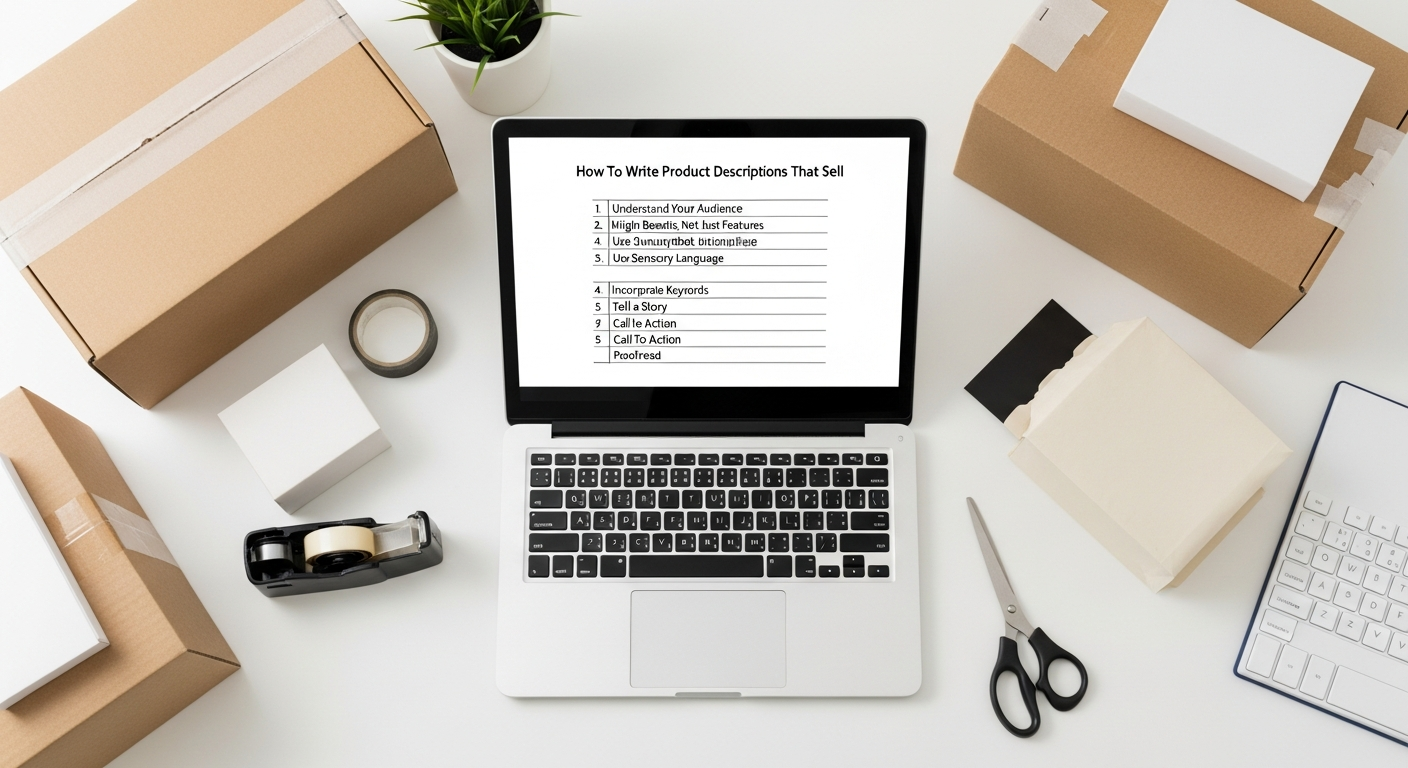
A truly effective product description is a carefully constructed piece of marketing collateral, designed with specific elements working in harmony to achieve a single goal: conversion. It’s not just a block of text; it’s a strategic narrative. Understanding these core components is the first step to writing descriptions that consistently sell.
Compelling Headline/Title
Your product’s title or headline is often the first, and sometimes only, thing a potential customer sees. It needs to be an immediate attention-grabber, clearly stating what the product is and, ideally, hinting at its primary benefit. This isn’t just for human readers; it’s also crucial for search engines. Incorporate your primary keywords naturally here to improve discoverability. A strong headline can pique curiosity and encourage further exploration, setting the stage for the rest of your description.
Engaging Opening Paragraph
Once the headline has done its job, the opening paragraph must hook the reader deeper. This is where you connect with their emotions and paint a picture. Instead of immediately listing features, start with empathy. Address a common problem or desire that your target audience experiences. How does your product solve that problem or fulfill that desire? Focus on the transformative experience, the ultimate benefit, and create an immediate, relatable vision of how the product will improve their life. This emotional connection is far more powerful than a dry recitation of facts.
Detailed Features and Specifications (Translated into Benefits)
This is where the rubber meets the road. While the opening hooked them with emotion, this section provides the logical justification for the purchase. List out the key features of your product, but don’t stop there. For every feature, immediately translate it into a benefit for the customer. For example, instead of just “100% waterproof material,” write “100% waterproof material, keeping your valuables safe and dry in any weather conditions.” Use bullet points for readability, making it easy for customers to scan and grasp the essential advantages. This approach ensures that every detail reinforces the value proposition.
Addressing Objections and Building Trust
Savvy online shoppers often have lingering questions or concerns. A great product description anticipates these objections and addresses them proactively. Is there a common worry about sizing? Provide a detailed size chart and clear return policy. Is the price point higher than competitors? Justify it by highlighting superior materials, craftsmanship, or unique benefits. Integrate elements that build trust, such as mentions of guarantees, warranties, or a strong return policy. While social proof (like customer reviews) typically lives outside the description, mentioning that “thousands of satisfied customers agree” can subtly reinforce credibility.
Strong Call to Action (CTA)
After all the persuasion and information, you need to tell the customer exactly what to do next. Your Call to Action (CTA) should be clear, concise, and compelling. Phrases like “Add to Cart,” “Buy Now,” or “Shop Today” are common, but consider adding a benefit or urgency. For example, “Add to Cart and Experience Unmatched Comfort Today!” or “Secure Yours Before They’re Gone!” Ensure your CTA stands out visually and is easy to find, guiding the customer smoothly towards the final purchase.
Crafting Irresistible Copy: Techniques for Persuasion and Engagement
Know Your Audience Inside Out
Before you write a single word, you must have a crystal-clear understanding of who you’re writing for. What are their demographics? What are their interests, values, and aspirations? What problems do they face that your product can solve? What language do they use? Crafting detailed buyer personas will inform your tone, vocabulary, and the specific benefits you choose to highlight. A description for a luxury fashion item will sound very different from one for a practical DIY tool. Tailoring your message to resonate directly with your ideal customer is fundamental to effective persuasion.
Focus on Benefits, Not Just Features
This is perhaps the most critical rule in product description writing. Features describe what a product is or has (e.g., “stainless steel construction,” “256GB storage”). Benefits describe what the product does for the customer or how it makes their life better (e.g., “durable, rust-resistant design ensures years of reliable use,” “ample storage for all your memories, allowing you to capture every moment without worry”). Customers don’t buy products; they buy solutions to their problems, improvements to their lives, and fulfillment of their desires. Always ask “So what?” after listing a feature to uncover its true benefit.
Tell a Story and Evoke Emotion
Humans are wired for stories. A narrative makes your product more memorable and relatable. Instead of just describing the item, transport the reader into a scenario where they are using and enjoying it. How does it feel? What problems does it solve? What new possibilities does it open up? Use sensory language to appeal to sight, sound, touch, taste, and smell where appropriate. Make them visualize themselves experiencing the positive outcome of owning your product. This emotional connection can be a powerful driver of purchase decisions.
Use Power Words and Sensory Language
Certain words have a stronger psychological impact, eliciting specific emotions or actions. Words like “discover,” “transform,” “effortless,” “exclusive,” “guaranteed,” “instant,” “proven,” “unleash,” and “vibrant” can significantly boost the persuasive power of your copy. Similarly, sensory language (“silky smooth,” “crisp audio,” “invigorating scent,” “rich aroma”) helps customers imagine the product more vividly, compensating for the lack of physical interaction. Be strategic in their deployment, ensuring they enhance, rather than detract from, the clarity of your message.
Maintain Brand Voice and Consistency
Your product descriptions are a direct reflection of your brand. Whether your brand voice is playful and quirky, authoritative and professional, luxurious and sophisticated, or practical and straightforward, ensure consistency across all your descriptions. This consistency builds brand identity and familiarity, which is crucial for customer loyalty. A cohesive brand voice also extends to other marketing channels, such as your website design, social media presence, and critically, your Email Marketing For Ecommerce Guide. When customers receive emails or interact with your brand elsewhere, they should feel a seamless, recognizable experience that reinforces their trust and connection with your business.
SEO and Readability: Making Your Descriptions Discoverable and Digestible

A brilliantly written product description is only effective if people can find and easily consume it. This is where the dual focus on Search Engine Optimization (SEO) and user readability comes into play. You need to satisfy both algorithms and human readers to maximize your conversion potential.
Keyword Research and Integration
Before writing, conduct thorough keyword research to understand how your target audience searches for products like yours. Identify both primary keywords (e.g., “men’s leather wallet”) and long-tail keywords (e.g., “slim leather wallet with RFID protection”). Naturally integrate these keywords into your product title, headlines, opening paragraph, and throughout the body of your description. Avoid keyword stuffing, which can harm your SEO and deter readers. The goal is to make your description rich with relevant terms so that search engines understand what your product is about, thereby improving its organic visibility.
Optimizing for Mobile Experience
A significant portion of online shopping now happens on mobile devices. Product descriptions must be optimized for smaller screens and on-the-go reading. This means using shorter paragraphs, plenty of white space, bullet points for lists, and concise sentences. Long, dense blocks of text are intimidating and will likely lead to high bounce rates on mobile. Ensure your Call to Action is prominently placed and easy to tap. A mobile-first approach to your descriptions will cater to a broader audience and improve overall user experience.
Enhancing Readability with Formatting
Even on desktop, nobody wants to read a wall of text. Good formatting is essential for readability and helps guide the reader’s eye through your content. Utilize:
- Headings and Subheadings (
<h3>): Break up your content into logical, scannable sections. - Bullet Points (
<ul><li>): Perfect for features, benefits, or specifications, making information easy to digest. - Bold Text (
<strong>): Highlight key phrases, benefits, or features that you want to stand out. - Italics (
<em>): Use sparingly for emphasis or to introduce product names. - Paragraph Breaks: Keep paragraphs short, ideally 2-4 sentences, to avoid overwhelming the reader.
These formatting elements not only improve the aesthetic appeal but also allow users to quickly scan for the information most relevant to them, enhancing their overall experience.
Leveraging User-Generated Content (UGC)
While not strictly part of the product description itself, user-generated content (UGC) like customer reviews, ratings, and Q&A sections are powerful complements. They provide authentic social proof that validates your product description’s claims. Encourage customers to leave detailed reviews and answer questions promptly. This content not only builds trust but also provides fresh, keyword-rich text that can indirectly boost your SEO and further inform potential buyers, creating a virtuous cycle of engagement and conversion.
The Iteration Imperative: Testing, Analyzing, and Optimizing for Peak Performance
Writing a product description isn’t a one-and-done task. The digital landscape is dynamic, consumer preferences evolve, and your own products may change. To maintain peak conversion rates, a continuous cycle of testing, analysis, and optimization is essential. Treat your product descriptions as living documents that can always be improved.
A/B Testing Different Elements
A/B testing, also known as split testing, involves creating two versions of a description (A and B) that differ in one key element, then showing each version to a segment of your audience to see which performs better. You can A/B test:
- Headlines/Titles: Different hooks or keyword placement.
- Opening Paragraphs: Varying emotional appeals or problem statements.
- Call to Action (CTA): Different wording, placement, or button colors.
- Length and Detail Level: Longer vs. shorter descriptions.
- Benefit Prioritization: Highlighting different core benefits.
- Formatting: Use of bullet points vs. paragraphs for features.
Small changes can lead to significant improvements in conversion rates over time. Focus on testing one element at a time to accurately attribute performance changes.
Analyzing Performance Metrics
To understand what’s working and what isn’t, you need to track relevant metrics. Key performance indicators (KPIs) for product descriptions include:
- Conversion Rate: The percentage of visitors who purchase after viewing the product page.
- Time on Page: How long users spend on the product page. Longer times often indicate engagement.
- Bounce Rate: The percentage of visitors who leave the page after viewing only one page. A high bounce rate might signal disinterest or confusion.
- Add-to-Cart Rate: The percentage of visitors who add the product to their cart.
- Exit Rate: The percentage of visitors who leave your site from that specific product page.
- Scroll Depth: How far down the page users are scrolling, indicating how much of your description they are reading.
Utilize tools like Google Analytics, your e-commerce platform’s built-in analytics, and heat mapping software to gather these insights. Data doesn’t lie, and it provides objective feedback on your description’s effectiveness.
Gathering Customer Feedback
Beyond quantitative data, qualitative feedback from your customers is invaluable.
- Surveys: Ask customers directly what they liked or disliked about product descriptions, or what information they felt was missing.
- Customer Service Inquiries: Analyze common questions asked by customers before purchase. If multiple people are asking the same thing, that information needs to be clearly stated in your description.
- Reviews and Testimonials: Pay attention to what customers praise and what they complain about in their reviews. This can reveal strengths to emphasize and weaknesses to address in your descriptions.
Direct feedback helps you understand the customer’s perspective and refine your messaging to better meet their needs and expectations.
Staying Agile and Adapting to Trends
The e-commerce world is constantly evolving. New products emerge, competitors adapt, and consumer trends shift. Regularly review your product descriptions to ensure they remain relevant, accurate, and competitive.
- Product Updates: If you introduce a new feature or version, update the description immediately.
- Market Changes: Is there a new buzzword or trend relevant to your product? Integrate it naturally.
- Competitor Analysis: Periodically review how competitors are describing similar products. Are they highlighting benefits you’ve overlooked?
By staying agile and continuously refining your descriptions, you ensure they remain powerful selling tools that drive ongoing success for your e-commerce business.
Beyond the Basics: Advanced Strategies to Increase Sales and Average Order Value
Once you’ve mastered the fundamentals of compelling and optimized product descriptions, you can explore more sophisticated techniques to supercharge your sales and, crucially, Increase Average Order Value Ecommerce. These strategies leverage the power of your descriptions to encourage customers to buy more, or to opt for higher-value items.
Cross-selling and Upselling Opportunities
Your product description isn’t an isolated island; it’s part of a larger ecosystem designed to maximize revenue.
- Upselling: Within the description of a standard product, subtly highlight the superior benefits of a premium version or bundle. For example, if describing a basic camera, you might mention, “For professional results and advanced features, consider our Pro Kit, which includes…” This guides customers towards a higher-priced item that offers more value, directly contributing to an Increase Average Order Value Ecommerce strategy.
- Cross-selling: Suggest complementary products that enhance the main item’s utility or experience. For a coffee maker, the description could mention, “Pair with our artisanal coffee beans for the ultimate brewing experience” or “Don’t forget matching mugs to complete your morning ritual.” While often handled by “related products” sections, a well-placed line in the description can pre-frame the idea, making the subsequent suggestion more effective.
These subtle nudges, embedded within the persuasive narrative of your description, can significantly boost your overall transaction value.
Leveraging Rich Media (Images, Video, 360-views)
While this guide focuses on text, it’s vital to acknowledge that product descriptions work in tandem with rich media. Great text explains; great visuals show.
- High-Quality Images: Numerous images from different angles, showing the product in use, and highlighting specific features are non-negotiable.
- Product Videos: A short, engaging video can demonstrate the product’s functionality, benefits, and emotional impact far better than text alone. The description can then elaborate on points raised in the video.
- 360-Degree Views/AR: For certain products, allowing customers to rotate and inspect the item virtually, or even see it in their own space via Augmented Reality, drastically reduces uncertainty and enhances confidence, making the description’s claims more believable.
Your description should complement these visuals, providing context and deeper insight where images or video might fall short. Together, they create a comprehensive and immersive product experience.
Personalization at Scale
Advanced e-commerce platforms allow for a degree of personalization within product descriptions, though this is often more about dynamic content tailored to user segments. For example, if you know a customer frequently buys eco-friendly products, your description might dynamically emphasize the sustainable aspects of an item for that specific visitor. While complex to implement for every description, considering how different customer segments might respond to varying highlighted benefits can inform your general writing strategy and future personalization efforts.
Harnessing Scarcity and Urgency
Ethical use of scarcity and urgency can create a powerful impetus for immediate purchase.
- Scarcity: “Only 3 left in stock!” or “Limited Edition – Don’t Miss Out!” This plays on the fear of missing out (FOMO) and encourages quicker decision-making.
- Urgency: “Offer ends tonight!” or “Order within the next 2 hours for next-day delivery!” This creates a time-sensitive pressure that can convert hesitant buyers.
Integrate these elements naturally and honestly into your descriptions or alongside your CTA. However, use them judiciously and truthfully; false scarcity or urgency can erode trust and damage your brand reputation.
By employing these advanced strategies, your product descriptions evolve from simple informational texts into sophisticated sales tools that not only attract buyers but also optimize their purchasing behavior, leading to higher revenue and a stronger bottom line for your e-commerce venture. Remember, every word is an opportunity to connect, persuade, and sell.
Frequently Asked Questions
How long should a product description be?
There’s no one-size-fits-all answer. The ideal length depends on the product’s complexity, price point, and your target audience. Simple, low-cost items might require a concise 50-150 words, focusing on key benefits. High-value, complex, or innovative products often benefit from longer descriptions (300-500+ words) that delve into details, features, and emotional benefits. The goal is to provide enough information to inform and persuade without overwhelming the reader, ensuring every word adds value.
Should I use AI to write product descriptions?
AI tools can be incredibly helpful for generating initial drafts, brainstorming ideas, overcoming writer’s block, and even optimizing for keywords. They can provide a strong foundation by quickly producing various versions. However, for truly high-converting descriptions, a human touch is essential. AI often struggles with nuanced brand voice, genuine emotional storytelling, and accurately translating complex features into compelling, unique benefits. Use AI as a powerful assistant, but always review, refine, and infuse your unique brand personality into the final copy.
How do product descriptions impact SEO?
Product descriptions are a critical component of your e-commerce SEO strategy. They provide keyword-rich content that search engines crawl to understand what your product is and who it’s for. By naturally integrating relevant primary and long-tail keywords, your descriptions help your product pages rank higher in search results for specific queries. This increased visibility drives organic traffic to your store, making your products discoverable by customers actively searching for them.
Is it better to focus on features or benefits?
Always prioritize benefits. While features describe what your product is or has (e.g., “waterproof fabric”), benefits explain what those features do for the customer (e.g., “keeps you dry and comfortable in any weather”). Customers buy solutions, experiences, and improvements to their lives. By focusing on benefits, you answer the fundamental question: “What’s in it for me?” This approach resonates much more deeply and effectively drives purchasing decisions than simply listing specifications.
How often should I update my product descriptions?
Product descriptions should not be static. It’s good practice to review and update them regularly. This includes when you introduce new product features, receive significant customer feedback, notice changes in market trends, or if your analytics show underperforming conversion rates. A/B testing different elements and refreshing your copy every 6-12 months, or as needed, ensures your descriptions remain accurate, compelling, and optimized for sales.
Can good product descriptions help increase average order value (AOV)?
Absolutely. Well-written product descriptions are a powerful tool for boosting your Average Order Value (AOV). By subtly highlighting premium versions, bundling options, or complementary products within the description itself, you can guide customers towards higher-value purchases or encourage them to add more items to their cart. Emphasizing the enhanced benefits of an upgrade or the synergy of a bundle can effectively persuade customers to invest more, making a direct contribution to your overall strategy to Increase Average Order Value Ecommerce.
Recommended Resources
Learn more about this topic in How To Track Your Spending at Fin3go.
You might also enjoy What Is A Reit And Should You Invest In One from AssetBar.
