Video Marketing Strategy for E-commerce: Boost Sales & Drive Growth
In the rapidly evolving digital marketplace, a robust video marketing strategy for e-commerce is no longer a luxury but an essential pillar for E-commerce Business Strategy & Growth. Online retailers face increasing competition, and capturing consumer attention has become paramount. Video marketing offers a dynamic, engaging, and highly persuasive medium to cut through the noise, connect with audiences on a deeper level, and ultimately drive sales and enhance brand presence.
So, what defines an effective video marketing strategy for e-commerce, and why is it crucial for E-commerce Business Strategy & Growth? An effective strategy involves the systematic planning, creation, distribution, and analysis of video content designed to achieve specific business objectives within the e-commerce landscape. It’s crucial because video content, unlike static images or text, can convey emotion, demonstrate functionality, build immediate trust, and drastically enhance the customer journey from discovery to post-purchase support. By harnessing the power of video, e-commerce businesses can significantly increase conversions, build brand trust, and enhance customer engagement, setting a robust foundation for sustainable growth. This comprehensive guide will provide a roadmap to developing and executing a potent video marketing strategy for e-commerce tailored for the unique demands of online retail, covering everything from foundational principles to advanced optimization techniques.
Why is Video Marketing Indispensable for E-commerce Success?
The digital storefront thrives on visual appeal and immersive experiences. For e-commerce businesses, video marketing has emerged as a powerhouse, transforming how products are presented and perceived. Its ability to communicate complex information quickly and emotionally makes it an indispensable tool for engaging modern consumers and achieving tangible business outcomes.

Boosting E-commerce Conversion Rates
Video content directly impacts purchasing decisions. Customers are more likely to buy a product after watching a video about it. Product demonstration videos, for instance, can clarify features and benefits far more effectively than text or static images alone, reducing uncertainty and increasing buyer confidence. This directly translates to higher conversion rates across product pages, landing pages, and even in promotional emails. An optimized video marketing strategy consistently drives higher customer lifetime value (CLTV) for e-commerce businesses by streamlining the path to purchase and fostering repeat business.
Building Brand Trust & Loyalty
Beyond transactional gains, video is a potent instrument for brand building. Through brand story videos, behind-the-scenes content, and authentic customer testimonials, e-commerce businesses can humanize their brand, convey their values, and establish a genuine connection with their audience. This emotional resonance cultivates trust and loyalty, turning first-time buyers into loyal advocates. In an era where consumers seek authenticity, video provides an unparalleled platform for transparency and genuine engagement.
Improving SEO & Organic Visibility for Products
Search engines, notably Google and YouTube (the world’s second-largest search engine for e-commerce), prioritize video content. Incorporating videos on product pages and blogs can significantly improve search engine optimization (SEO) by increasing dwell time, reducing bounce rates, and signaling content quality. Properly optimized video titles, descriptions, and tags help products rank higher in search results, driving organic traffic and enhancing product discovery. Furthermore, videos hosted on platforms like YouTube can serve as independent traffic drivers, directing potential customers directly to your e-commerce site.
What are the Core Components of an E-commerce Video Marketing Strategy?
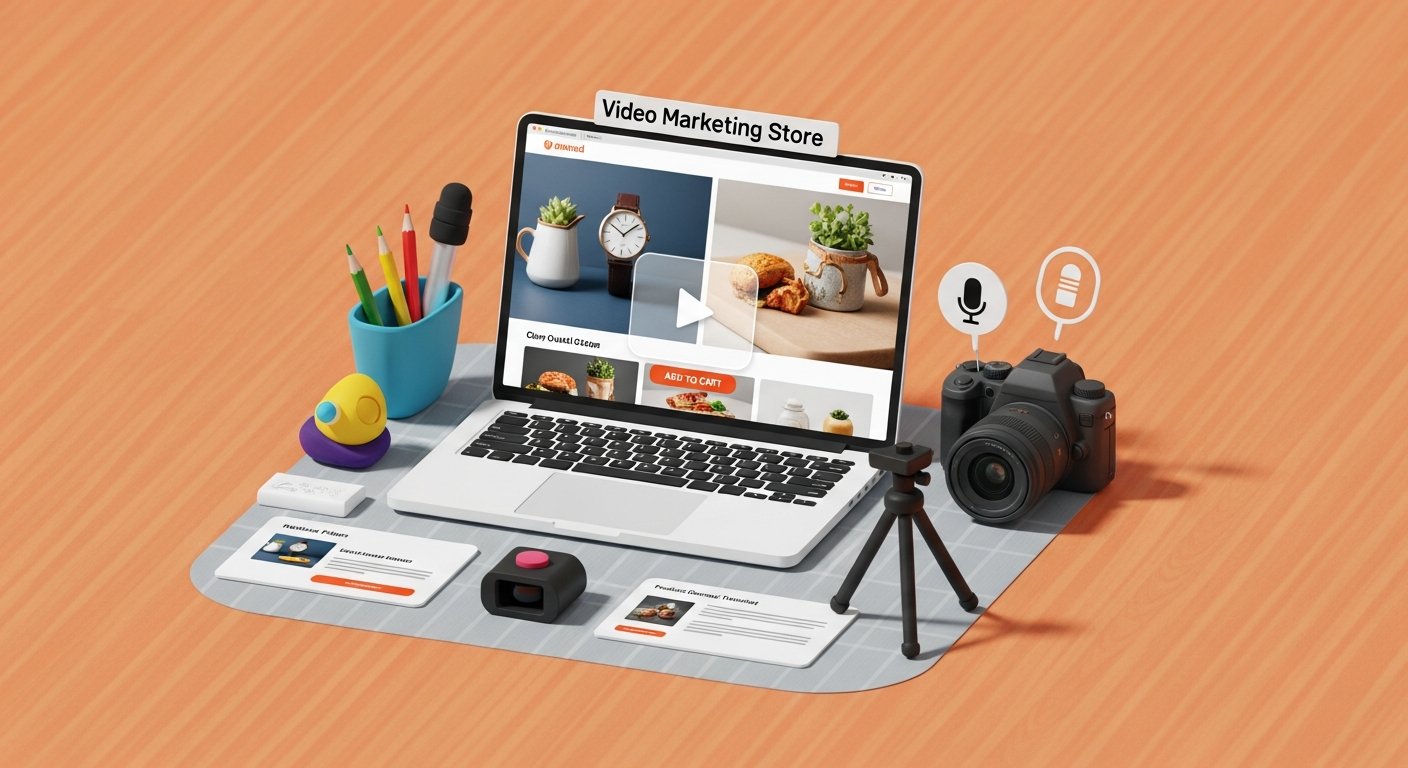
Developing a robust video marketing strategy for e-commerce requires a structured approach. It’s not merely about creating videos; it’s about creating the right videos for the right audience, distributed through the right channels, and measured against the right objectives. Here are the foundational components:
- Clear Objectives: What do you aim to achieve? (e.g., increase conversion rate by X%, boost brand awareness, reduce customer service inquiries).
- Target Audience Understanding: Who are you trying to reach? What are their pain points, preferences, and platform habits?
- Content Strategy: What types of videos will you create? (e.g., product demos, testimonials, how-tos, live shopping). This should align with audience needs and business objectives.
- Platform Selection: Where will you distribute your videos? (e.g., YouTube, Instagram, TikTok, website, email).
- Production & Optimization: How will you produce high-quality videos and optimize them for search and engagement?
- Measurement & Analysis: How will you track performance and iterate on your strategy? Define key performance indicators (KPIs) upfront.
- Budget & Resources: Allocation of financial and human resources for creation and distribution.
How to Develop Your E-commerce Video Marketing Strategy: A Step-by-Step Guide
A systematic approach to developing your video marketing strategy ensures alignment with your overarching e-commerce business objectives and maximizes your return on investment. Follow these steps to build a powerful strategy:
- Define Your E-commerce Video Marketing Goals:
Start with clarity. Are you aiming to increase product page conversions, drive traffic, improve customer service, or enhance brand recall? Your goals must be SMART (Specific, Measurable, Achievable, Relevant, Time-bound). For example, “Increase conversion rate on our top 10 product pages by 15% using product videos within the next 6 months.”
- Understand Your Target Audience:
Deep dive into your buyer personas. What content do they consume? Which platforms do they frequent? What information do they need before making a purchase? Understanding their journey will inform video content, tone, and distribution channels. Consider demographics, psychographics, and shopping behaviors.
- Conduct Competitor Analysis:
Examine what your competitors are doing well (or poorly) in video marketing. Identify gaps in the market you can fill and differentiate your content. This can spark ideas and reveal platform opportunities.
- Plan Your Video Content Strategy & Production:
Based on your goals and audience, brainstorm specific video types. Create a content calendar that maps out themes, product focuses, and publication dates. Plan for production quality, scripting, filming, and editing. Consider an optimized video marketing strategy which should drive higher customer lifetime value (CLTV) for e-commerce businesses through sustained engagement.
- Select Your Distribution Channels:
Choose platforms that align with your audience’s habits and your content type. Will it be YouTube for evergreen content, Instagram for short-form engagement, or TikTok for viral potential? Integrate videos directly on your e-commerce site for conversion optimization.
- Optimize for Search and Engagement:
Ensure videos are discoverable. Use relevant keywords in titles and descriptions, add compelling thumbnails, include captions, and implement strong calls-to-action (CTAs). Encourage comments, shares, and saves to boost engagement metrics.
- Implement and Promote:
Launch your video content. Promote it across all your marketing channels: social media, email newsletters, blog posts, and paid advertisements. Drive traffic to your video-enabled product pages.
- Measure, Analyze, and Iterate:
Crucially, track your KPIs. Use platform analytics (YouTube Analytics, Meta Business Suite, Google Analytics) to understand what’s working and what isn’t. Be prepared to refine your content, adjust your distribution, and optimize your strategy based on data-driven insights. Product demonstration videos, for example, significantly enhance customer understanding and purchase intent in e-commerce, and their performance should be rigorously tracked.
What are the Essential Video Content Types for E-commerce Businesses?

The landscape of e-commerce video is diverse, offering a multitude of formats to address different stages of the customer journey and various business objectives. Deploying a mix of these video types can create a comprehensive and engaging experience for your audience.

Product Showcase Videos
These are perhaps the most direct form of e-commerce video, designed to highlight product features, benefits, and demonstrations. Effective product videos go beyond static images by offering 360-degree views, showing the product in use through lifestyle integration, and addressing common customer queries. They are crucial for conversion rate optimization and must include a clear call-to-action (CTA).
How-To & Tutorial Videos
These videos provide value by educating customers on how to use a product, assemble it, or troubleshoot common issues. They are excellent for reducing customer support queries, improving customer satisfaction, and showcasing the practical utility of your offerings. How-to videos can also serve as valuable SEO content, attracting users searching for solutions related to your products.
Customer Testimonial & Review Videos
Nothing builds trust like seeing real customers vouch for your products. Testimonial videos offer powerful social proof, demonstrating the authenticity of your brand and the satisfaction of your users. Featuring genuine customer stories can significantly enhance your brand reputation and act as strong trust signals for prospective buyers.
Behind-the-Scenes & Brand Story Videos
These videos humanize your e-commerce business. They can showcase your company culture, the making of your products, or the values that drive your brand. This type of content builds an emotional connection with your audience, fostering loyalty and making your brand more relatable and memorable. Beyond merely showcasing products, these engaging video formats also play a crucial role in building brand loyalty and fostering community around your e-commerce business.
Live Shopping & Interactive Videos
Embracing the future of e-commerce, live shopping videos allow businesses to present products in real-time, interact with viewers, answer questions, and drive immediate sales. Interactive videos, which might include clickable hotspots or personalized pathways, offer an even more immersive and engaging experience, allowing customers to explore products on their own terms. Leading industry reports indicate a surge in the popularity of interactive and live video commerce for 2026 and beyond (Source: Digital Commerce Trends 2025-2026).
Table 1: E-commerce Video Content Matrix
| Video Type | Primary E-commerce Goal | Best Platforms | Key Metrics to Track | Example Use Case |
|---|---|---|---|---|
| Product Showcase | Increase product page conversions, reduce returns | Website (embedded), YouTube, Google Shopping Ads | Conversion rate, product page views, time on page, CTR | 360° view of a new smartphone, lifestyle shoot of apparel |
| How-To/Tutorial | Improve customer satisfaction, reduce support inquiries, boost SEO | YouTube, Blog (embedded), Help Center | Watch time, engagement rate, support ticket reduction | Assembling furniture, skincare routine demonstration |
| Customer Testimonial | Build trust, enhance brand reputation, social proof | Website (homepage, product pages), Social Media Ads, Email | Conversion rate, brand sentiment, share rate | Happy customer reviewing a beauty product or service |
| Live Shopping | Drive immediate sales, real-time engagement | Instagram Live, Facebook Live, TikTok Live, dedicated platforms | Sales during live event, viewer engagement, chat participation | Flash sale event, new product launch with Q&A |
| Behind-the-Scenes | Humanize brand, foster loyalty, build community | Instagram Stories/Reels, TikTok, YouTube Shorts | Engagement rate, brand sentiment, follower growth | Day in the life of a designer, sustainable sourcing process |
| Unboxing/Review | Generate hype, social proof, educate potential buyers | YouTube, Instagram, TikTok (often influencer-led) | Views, engagement rate, traffic to product page | Influencer unboxing a new tech gadget or subscription box |
How to Select the Best Video Platforms for E-commerce Video Distribution?
Once you’ve identified the most impactful video content types, the next critical step for your e-commerce video marketing strategy is strategically selecting the optimal platforms for distribution. Each platform offers unique advantages, audience demographics, and ad formats, making a multi-channel approach often the most effective.
YouTube for Product Discovery
As the second-largest search engine, YouTube is unparalleled for product discovery and long-form content. It’s ideal for hosting detailed product reviews, how-to guides, and evergreen content that can rank in search results for years. Utilizing YouTube involves optimizing videos with relevant keywords, compelling thumbnails, and clear calls-to-action to drive traffic back to your e-commerce site. YouTube’s robust analytics also provide deep insights into audience behavior.
Instagram Reels & Stories for Engagement
Instagram, with its highly visual nature, is perfect for short-form, engaging content. Reels and Stories are excellent for quick product showcases, behind-the-scenes glimpses, and engaging polls or Q&A sessions. Their ephemeral nature creates a sense of urgency, while shopping tags and swipe-up links make direct conversions possible. Instagram’s audience is generally younger and more visually driven, making it ideal for fashion, beauty, and lifestyle e-commerce brands.
TikTok for Viral E-commerce Trends
TikTok has become a dominant force for viral content and trend-driven marketing. Its algorithm can rapidly propel content to a massive audience, making it ideal for brands seeking rapid growth and brand awareness, especially among younger demographics. E-commerce businesses can leverage TikTok for short, creative product demonstrations, user-generated content campaigns, and collaborations with influencers to tap into trending sounds and challenges.
Facebook & Pinterest Video Ads for Targeted Reach
Facebook (and its parent company Meta) offers sophisticated targeting capabilities for video ads, allowing e-commerce businesses to reach specific demographics, interests, and behaviors across Facebook and Instagram feeds. Pinterest, on the other hand, is a visual search engine where users actively seek inspiration and products. Video ads on Pinterest can be highly effective for driving traffic and sales, especially for home decor, fashion, and DIY niches, as users are often in a shopping mindset. These platforms are excellent for reaching targeted audiences with compelling video content, enhancing specific e-commerce platform integrations (e.g., Shopify, WooCommerce) through dynamic social media ad campaigns.
Website Embedded Videos
Don’t overlook the power of embedding videos directly on your e-commerce website, particularly on product pages, landing pages, and your homepage. This is where conversion happens. High-quality embedded videos can significantly reduce bounce rates, increase time on page, and directly impact conversion rates by providing immediate product information and social proof. Ensure your website’s video player is fast, mobile-responsive, and offers clear calls-to-action.
Table 2: E-commerce Video Platform Comparison
| Platform | Primary Audience Demographics | Best for (Video Type) | Ad Formats & Targeting | Analytics Capabilities | E-commerce Integration Notes |
|---|---|---|---|---|---|
| YouTube | Broad (all ages), info-seekers, entertainment | Product Reviews, How-To’s, Brand Story, Long-form Demos | In-stream, Bumper, Discovery, sophisticated demographic & interest targeting | Excellent (watch time, audience retention, traffic sources) | Embed on site, Google Shopping Ads, direct product links |
| Younger (18-34), visually-driven, lifestyle & trends | Reels, Stories, Product Showcases, Behind-the-Scenes | Feed, Stories, Reels ads; strong visual targeting, lookalikes | Good (reach, engagement, impressions, saves) | Shopping tags, swipe-up links (Stories), Instagram Shop | |
| TikTok | Very young (13-24), trend-followers, entertainment | Short-form Demos, Viral Challenges, User-Generated Content | In-feed, Brand Takeovers, TopView; trend & interest-based targeting | Moderate (views, shares, comments, follower growth) | TikTok Shopping, product links in bio/ads |
| Broad (30+), community & news, diverse interests | Live Shopping, Testimonials, Product Demos, Educational | In-feed, In-stream, Stories; hyper-detailed demographic, interest, behavior targeting | Excellent (reach, engagement, conversions, custom audiences) | Facebook Shop, pixel tracking for retargeting, dynamic product ads | |
| Female-skewed (25-54), planners, inspiration-seekers, shoppers | Product Pins, How-To’s, Lifestyle Integration, Seasonal Content | Standard Pins, Video Pins, Collection Pins; interest & keyword targeting | Good (impressions, clicks, saves, conversions) | Buyable Pins, direct product links, shop tab | |
| Website Embedded | Existing visitors, high-intent buyers | Product Showcases, Testimonials, Explainer Videos | N/A (on-site content) | Integrated with Google Analytics (events, custom dimensions) | Directly within product pages, checkout flows, landing pages |
How to Measure the ROI of Your E-commerce Video Marketing Strategy?
Implementing an effective video marketing strategy is only half the battle; the other half is rigorously measuring its impact to ensure a positive return on investment (ROI) and guide future optimizations. Establishing key performance indicators (KPIs) upfront is critical for evaluating success and refining your approach for continuous e-commerce growth.
To truly understand the value your videos bring, it’s essential to track specific metrics that correlate directly with your business objectives. An optimized video marketing strategy relies on accurate measurement to continuously improve results.
Table 3: Key Performance Indicators for E-commerce Video Marketing
| KPI | Definition | Why it Matters for E-commerce Growth | How to Improve with Video |
|---|---|---|---|
| Conversion Rate | Percentage of viewers who complete a desired action (e.g., purchase, sign-up) after watching a video. | Directly measures sales effectiveness. A 5-10% lift in conversion rates from video is common (Source: E-commerce Conversion Report 2024). | Clear CTAs, compelling product demos, customer testimonials, A/B test video placement. |
| Click-Through Rate (CTR) | Percentage of people who click on a video ad or a link within a video. | Indicates how engaging and relevant your video’s call-to-action or thumbnail is. | Strong hook, clear value proposition, compelling thumbnail, optimized headline. |
| Engagement Rate | Measures how viewers interact with your video (views, likes, shares, comments, watch time). | Higher engagement signifies content relevance, audience interest, and brand affinity. | Interactive elements, Q&A sessions, storytelling, community building, responsive comments. |
| Return on Ad Spend (ROAS) | Revenue generated for every dollar spent on video advertising. | Directly measures profitability of paid video campaigns. Essential for budget allocation. | Targeted campaigns, high-quality ad creatives, A/B testing ad variations, optimizing landing pages. |
| Customer Acquisition Cost (CAC) | The cost of acquiring a new customer through video marketing efforts. | Indicates efficiency of customer acquisition; lower CAC means more profitable growth. | Optimizing ad spend, improving targeting, creating highly converting video funnels, retargeting. |
| Customer Lifetime Value (CLTV) | The total revenue a business can expect from a single customer account over their lifetime. | Higher CLTV indicates successful brand loyalty and repeat business driven by engaging content. | Brand story videos, loyalty program promotions, personalized video content for existing customers. |
What are Common Pitfalls in E-commerce Video Marketing to Avoid?
While video marketing holds immense potential, many e-commerce businesses stumble by making common mistakes. Avoiding these pitfalls is as crucial as implementing best practices to ensure your strategy yields desired results.
- Lack of Clear Objectives: Without specific goals, you can’t measure success. Videos become content for content’s sake, lacking strategic direction. Always tie videos back to KPIs like conversion rates or customer engagement.
- Poor Production Quality: Low-resolution, shaky footage, or bad audio can instantly undermine your brand’s credibility. While professional production isn’t always necessary for organic social content, product videos require a level of polish that reflects well on your offerings.
- Neglecting Calls-to-Action (CTAs): Every video, especially those on product pages or ads, should have a clear, compelling CTA. Tell viewers exactly what you want them to do next (e.g., “Shop Now,” “Learn More,” “Add to Cart”).
- Ignoring Audience Insights: Creating videos without understanding your target audience’s preferences, pain points, and preferred platforms leads to irrelevant content and wasted effort.
- Inconsistent Branding: Your videos should align with your brand’s overall aesthetic, tone, and messaging. Inconsistency can confuse customers and dilute your brand identity.
- Not Optimizing for Mobile: A significant portion of e-commerce traffic comes from mobile devices. Videos must be mobile-friendly, load quickly, and be easily consumable on smaller screens.
- Failing to Analyze Performance: Launching videos without tracking their performance means you miss opportunities to learn and improve. Regularly review your KPIs to refine your strategy.
- Over-Promoting, Under-Educating: While selling is the goal, purely promotional videos can be off-putting. Balance promotional content with valuable educational or entertaining content that builds trust and provides utility.
- Ignoring Accessibility: Neglecting captions or audio descriptions can exclude a segment of your audience and limit your reach. Ensure your videos are accessible to everyone.
What are the Future Trends Shaping E-commerce Video Marketing?
The digital landscape is constantly evolving, and e-commerce video marketing is at the forefront of innovation. Staying abreast of emerging trends is vital for maintaining a competitive edge and adapting your strategy for the future, particularly as we move towards 2026 and beyond.
- AI-Powered Video Creation & Personalization:
Artificial intelligence is revolutionizing video production, enabling businesses to generate personalized video content at scale. From automated scriptwriting and voiceovers to dynamic video editing based on user data, AI will allow for hyper-personalized shopping experiences, presenting products in videos tailored to individual customer preferences and past behaviors. This capability will significantly enhance the effectiveness of an optimized video marketing strategy by delivering highly relevant content to each customer.
- Immersive Experiences: AR/VR Shopping:
Augmented Reality (AR) and Virtual Reality (VR) are set to transform how consumers interact with products online. AR apps allow customers to “try on” clothes or visualize furniture in their homes, while VR offers fully immersive virtual storefronts. E-commerce businesses will increasingly integrate video content within these immersive environments, offering 360-degree product views and interactive demonstrations that bridge the gap between online and in-store shopping.
- Short-Form Video Dominance:
The continued rise of platforms like TikTok, Instagram Reels, and YouTube Shorts underscores the consumer preference for bite-sized, engaging video content. E-commerce brands will need to master the art of conveying compelling messages and showcasing products effectively within very short timeframes, leveraging fast cuts, trending sounds, and immediate hooks.
- Interactive Video & Shoppable Content:
Beyond traditional “play and watch,” interactive videos will allow viewers to click on products within the video, customize options, or navigate different scenarios. Shoppable videos, where products are seamlessly linked within the content for direct purchase, will become more sophisticated and widespread, streamlining the path from discovery to conversion.
- Live Shopping & Creator Economy Integration:
Live streaming commerce is gaining immense traction, particularly in Asia, and is rapidly expanding globally. E-commerce businesses will increasingly host live shopping events, often collaborating with influencers and content creators, to drive real-time engagement and sales. The integration of video marketing with the creator economy will continue to grow, leveraging authentic endorsements and community-driven content.
- Sustainability and Ethical Sourcing Narratives:
Consumers are increasingly concerned with ethical production and sustainability. Video marketing will play a crucial role in showcasing a brand’s commitment to these values, through behind-the-scenes footage of sustainable practices, interviews with suppliers, and transparent reporting. This content builds trust and aligns with the values of a growing segment of the e-commerce market.
Conclusion
An intelligently crafted video marketing strategy is a non-negotiable asset for any e-commerce business aiming for sustainable growth and heightened profitability. By understanding the core components, systematically developing a strategy, leveraging diverse content types, and strategically selecting distribution platforms, online retailers can unlock unprecedented levels of customer engagement, trust, and conversion. Beyond the initial setup, continuous measurement of key performance indicators and a keen eye on future trends will ensure that your video marketing efforts remain dynamic, relevant, and highly effective. As the digital marketplace continues to evolve, video will remain at the heart of how e-commerce brands connect, communicate, and convert, cementing its role as a cornerstone of E-commerce Business Strategy & Growth.