Ecommerce Performance Dashboard Guide: Drive Growth

Ecommerce Performance Dashboard Guide: Drive Growth
Categories:
Date:
March 10, 2026

Updated October 2023.

In the fast-paced world of online business, where every click, conversion, and customer interaction holds significant value, flying blind is a recipe for disaster. You wouldn’t navigate a complex marketplace without a map, so why run your store without a clear, real-time ecommerce performance dashboard? An effective analytics command center isn’t just a nice-to-have; it’s a critical tool for data-driven decision making, identifying growth opportunities, and swiftly addressing issues before they impact your bottom line.

This guide will cut through the noise, providing you with a practical, no-fluff roadmap to building and leveraging a data hub that truly drives results. A robust setup is essential for informing personalization strategies and executing advanced ecommerce growth hacking techniques. By the end of this article, you will know exactly how to transform raw data into a strategic advantage.

What Are the Core Characteristics of an Effective Analytics Command Center?

Before diving into metrics and tools, let’s define what a truly effective tracking interface looks like. It’s more than just a collection of charts; it’s a strategic command center tailored to your business goals.

An effective data hub possesses several key characteristics:

  • Actionable: Every metric and visualization should lead to an insight that prompts a specific business action. If you can’t make a decision based on it, it’s probably clutter.
  • Customizable: Your business is unique. Your setup should reflect your specific KPIs, target audience, and current strategic focus. One-size-fits-all rarely works for high-growth online retail.
  • Real-time or Near Real-time: Data loses its value quickly. You need current information to react to trends, monitor campaigns, and troubleshoot issues as they happen.
  • Comprehensive yet Concise: It should cover all critical areas of your business (acquisition, conversion, retention, finance) without overwhelming you with irrelevant data. Focus on the 20% of metrics that drive 80% of your insights.
  • Easy to Understand: Visualizations should be clean, intuitive, and immediately understandable, even at a glance. Complex charts often hide insights rather than reveal them.
  • Segmentable: The ability to filter data by product, channel, customer segment, or geographic location unlocks deeper insights and helps pinpoint specific opportunities or problems.

Real-World Example: Consider a mid-sized apparel brand that recently implemented a highly segmentable view of their traffic. By breaking down their data, they discovered that mobile users in California had a 15% higher cart abandonment rate than the national average. This specific insight prompted a targeted checkout optimization campaign for mobile users in that region, ultimately recovering over $50,000 in monthly revenue. Think of your interface as the cockpit of your airplane. You need the critical gauges, clearly visible, to ensure a smooth and profitable flight. Anything else is just distracting noise.

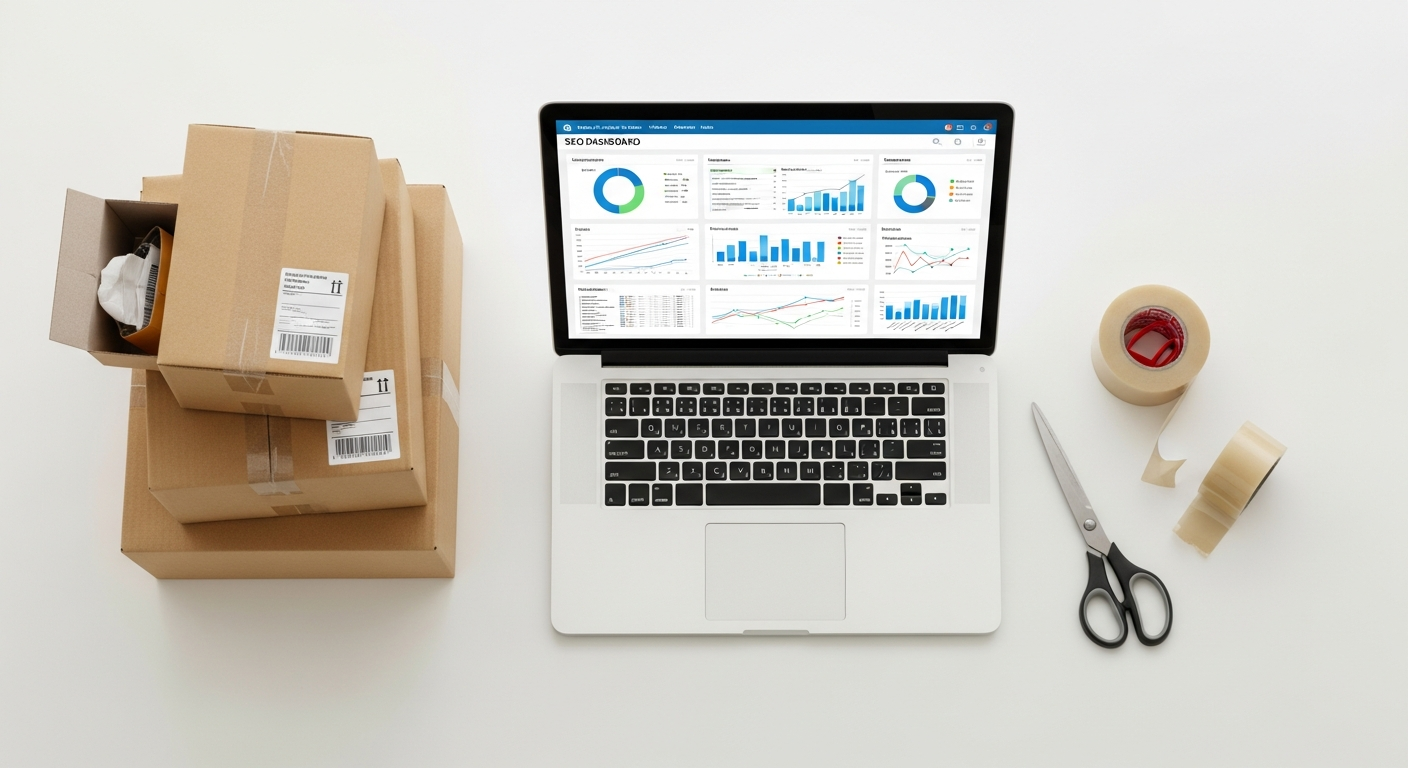
[INLINE IMAGE 1: High-impact ecommerce performance dashboard displaying key metrics and charts for acquisition and revenue.]

Categories of Key Metrics Every Online Store Must Track

To build an actionable reporting system, you first need to identify the right metrics. We’ll categorize these into four core pillars of success: Acquisition, Conversion, Retention, and Financial Performance.

Acquisition Metrics: How You Attract Customers

These metrics tell you how effectively you’re bringing potential customers to your store.

  • Website Traffic (Sessions/Users): The raw number of visitors. Crucial for understanding reach. Aim for consistent growth.
  • Traffic Sources: Where your visitors are coming from (Organic Search, Paid Ads, Social Media, Direct, Referral). Essential for optimizing marketing spend.
  • Cost Per Acquisition (CPA): The total cost to acquire one paying customer. If your CPA is $30 and your average order value (AOV) is $45, you have a 1.5x return on acquisition. If your CPA exceeds your AOV, you need to look into optimizing your ad spend immediately.
  • Click-Through Rate (CTR): The percentage of people who click on your ads or organic listings. A low CTR often indicates an issue with your ad copy, targeting, or SEO title/description.

Conversion Metrics: Turning Visitors into Buyers

These metrics measure how well your store convinces visitors to make a purchase.

  • Conversion Rate (CR): The percentage of visitors who complete a purchase. A healthy CR typically ranges from 1-4% depending on industry, but high-performers can hit 5%+. Implementing conversion rate optimization strategies can dramatically boost revenue.
  • Average Order Value (AOV): The average amount customers spend per transaction. Strategies like cross-selling and upselling directly impact AOV.
  • Cart Abandonment Rate: The percentage of shoppers who add items to their cart but don’t complete the purchase. According to the Baymard Institute, this globally sits around 70%. Reducing this by even 5-10% can significantly recover lost sales.

Retention Metrics: Keeping Customers Coming Back

These metrics focus on customer loyalty and repeat business, which is often more profitable than acquiring new customers.

  • Customer Lifetime Value (CLTV/LTV): The total revenue you expect to generate from a single customer over their relationship with your business. A high CLTV means you can afford a higher CPA. You can improve this by deploying targeted customer retention strategies.
  • Repeat Purchase Rate: The percentage of your customers who have made more than one purchase. Statista reports that top online businesses can see this above 20-30%.
  • Cohort Analysis: Grouping customers based on their acquisition date or first purchase behavior to track their long-term value and retention patterns over time.

Financial Performance Metrics: Your Bottom Line

These are the ultimate indicators of your business’s health and profitability.

  • Gross Profit Margin: (Revenue – Cost of Goods Sold) / Revenue. This tells you how much profit you make from selling your products.
  • Return on Ad Spend (ROAS): (Revenue from Ads / Cost of Ads). Essential for evaluating the effectiveness of your paid marketing campaigns. A ROAS of 3x means you get $3 back for every $1 spent.

The Step-by-Step Process for Building Your Data Hub

Now that you know what to track, let’s get into how to build your actionable reporting interface.

Step 1: Define Your Goals and Key Performance Indicators (KPIs)

Start with the “why.” What are your primary business objectives for the current quarter or year? Are you focused on increasing customer acquisition, boosting repeat purchases, or improving profitability? Your goals will dictate your KPIs.

  • Example Goal: Increase Q4 revenue by 20% year-over-year. Supporting KPIs: Conversion Rate, AOV, Website Traffic, ROAS.
  • Example Goal: Improve customer retention. Supporting KPIs: Repeat Purchase Rate, CLTV, Churn Rate.

Focus on 5-7 core KPIs for your main view to avoid information overload. You can always have deeper-dive reports for secondary metrics.

Step 2: Identify Your Data Sources

Where does the data for your chosen KPIs live? Common sources include your store platform (Shopify, WooCommerce), analytics tools (like Google Analytics 4, which uses an advanced event-based model to track user interactions), advertising platforms (Google Ads, Meta Ads), and email marketing software (Klaviyo, Mailchimp).

Step 3: Choose Your Visualization Tool

This is where you decide how you’ll bring all your data together. Your choice will depend on budget, technical expertise, and desired complexity. Options range from free tools like Looker Studio to advanced Business Intelligence (BI) software like Tableau.

Step 4: Integrate Your Data

Once you’ve chosen your tool, you need to connect it to your data sources. Many tools offer native connectors for popular platforms. For more complex integrations, you might use APIs or data integrators like Supermetrics or Fivetran that pull data from various sources and push it into a data warehouse.

Step 5: Design and Visualize

This is where your data comes to life. Focus on clarity and actionability. Place the most critical KPIs at the top. Use the right chart types: line charts for trends, bar charts for comparisons, and scorecards for single important numbers. Always include context, such as current numbers alongside previous periods.

Step 6: Iterate and Optimize

Your setup isn’t a static artifact. As your business evolves, so should your reporting. Review it regularly with your team to ensure the data remains relevant and actionable.

[INLINE IMAGE 3: Comparison chart of popular data visualization tools including Looker Studio, Shopify Analytics, and Power BI.]

Types of Dashboard Tools and When to Apply Them

Choosing the right tool is crucial for accurate reporting. Here are some top recommendations, catering to different budgets and technical capabilities.

1. Google Analytics 4 (GA4) + Looker Studio

Best For: Small to medium-sized businesses, budget-conscious users, and those already integrated into the Google ecosystem.

GA4 is free and provides deep insights into user behavior using a flexible event-based model. Looker Studio is also free for basic use and can connect to GA4, Google Ads, and hundreds of other data sources. If you need help getting started, check out our guide on setting up GA4 for your store. The main drawback is the learning curve associated with GA4’s interface and the need for third-party connectors to pull in native sales data.

2. Native Platform Analytics (e.g., Shopify Analytics)

Best For: Store owners looking for quick, built-in insights without configuring external tools.

These tools are seamlessly integrated with your store data and offer pre-built reports covering key sales, customer, and marketing metrics at no extra cost. However, they offer limited customization and often act as a data silo, making it difficult to integrate external ad platform or CRM data directly.

3. Dedicated Analytics Platforms (e.g., Peel, Glew.io)

Best For: Businesses seeking in-depth, automated insights specifically tailored for online retail.

These platforms automatically calculate complex metrics like CLTV, repeat purchase rates, and cohort analysis. They often provide AI-driven insights and connect to multiple sources to centralize data. The downside is the subscription cost, which can scale with your revenue or data volume.

4. Business Intelligence (BI) Tools (e.g., Microsoft Power BI, Tableau)

Best For: Larger enterprises or those with complex data needs, requiring deep customization across multiple business functions.

BI tools offer unparalleled customization, robust data integration, and advanced predictive analytics. However, they come with a steep learning curve, higher costs, and require dedicated technical resources to build and maintain.

Best Practices and Common Pitfalls in Data Visualization

Building a reporting interface is only half the battle. The real value comes from how you use it to drive growth.

Best Practices for Actionable Insights

  • Set Clear Goals and Benchmarks: Don’t just track numbers; track them against a target. Is your conversion rate 2.5% good? It is if your goal was 2.0%, but not if it was 3.0%.
  • Review Regularly and Consistently: Schedule daily, weekly, or monthly reviews with your team. Make it a ritual. What’s working? What’s not? Why?
  • Segment Your Data: Don’t look at overall numbers alone. Break down performance by marketing channel, product category, customer segment, geographic region, and device type. This allows you to pinpoint issues and opportunities with precision.
  • Set Up Alerts: Configure your tool to send alerts when key metrics hit predefined thresholds (e.g., conversion rate drops below 1.5%, ad spend exceeds budget without corresponding revenue).
  • Focus on Trends, Not Just Snapshots: A single data point tells you little. Look at how metrics change over time. Is that drop in traffic a temporary blip or the start of a downward trend?

Common Pitfalls to Avoid

  • Information Overload: Too many metrics, too many charts, too much clutter. If it takes more than 30 seconds to grasp the main insights, it’s too much. Prioritize.
  • Vanity Metrics: Tracking numbers that look good but don’t drive business decisions (e.g., total social media followers without engagement or conversion context). Focus on metrics that impact revenue, profit, or customer lifetime value.
  • Lack of Context: A number without context is meaningless. Always show comparisons (e.g., vs. last month, vs. target, vs. industry benchmark).
  • Ignoring the “Why”: Your data tells you “what” happened. Your job is to dig deeper and understand “why” it happened. A drop in conversion rate isn’t just a number; it’s a signal to investigate recent website changes, marketing campaigns, or competitor activity.
  • Not Acting on Insights: The most beautiful setup in the world is useless if you don’t use the data to make decisions and implement changes. Data without action is just noise.

How Do You Solve Common Analytics Challenges?

Even with a solid foundation, many store owners run into specific challenges when managing their data. Here are answers to some of the most frequently asked questions.

How often should I review my metrics?

It depends on your business’s pace and your role. Daily checks for critical real-time metrics (like ad spend vs. revenue) are good for quick reactions. Weekly reviews are essential for tactical adjustments (campaign performance, conversion rates). Monthly or quarterly reviews are best for strategic planning and deeper dives into trends like CLTV and overall profitability. As a rule, the faster your business moves, the more frequently you should check.

Can I build an effective setup without spending a lot of money?

Absolutely. Google Analytics 4 (free) combined with Google Looker Studio (free for basic use) is a powerful, cost-effective solution for most small to medium-sized businesses. You can connect various data sources and create highly customized views with zero software cost. The main investment will be your time to learn and build it.

What’s the difference between a KPI and a metric?

All KPIs are metrics, but not all metrics are KPIs. A metric is any quantifiable measure (e.g., website traffic, page views). A KPI (Key Performance Indicator) is a specific metric that directly measures progress toward a critical business objective. For example, “website traffic” is a metric. “Conversion rate from paid traffic” might be a KPI if your goal is to optimize paid ad performance for sales.

My data is spread across many platforms. How do I centralize it?

This is a common challenge. For free/low-cost solutions, Looker Studio can connect to many sources directly. For more complex needs, consider data connectors like Supermetrics (for marketing data) or Fivetran/Stitch (for broader data warehousing) that pull data from various APIs into a single destination, which your visualization tool then reads. Some specialized tools like Peel or Glew.io specialize in integrating common retail data sources automatically.

How do I know if my conversion rate is “good”?

A “good” conversion rate is relative and depends heavily on your industry, product, price point, traffic source, and average order value. While industry benchmarks can range from 1% to 4% (or even higher for niche, high-intent products), the most important benchmark is your own historical performance and your specific goals. Always aim to improve upon your past results. If you’re consistently above 2% and profitable, you’re likely doing well, but there’s always room for optimization.

Sources & References

  1. Baymard Institute. “Cart Abandonment Rate Statistics.” Comprehensive study on global shopping cart abandonment rates and reasons.
  2. Statista. “E-commerce Repeat Purchase Rates.” Industry benchmarks for customer retention and loyalty in online retail.
  3. Google Analytics Help. “Understanding the GA4 Event-Based Data Model.” Official documentation on tracking user interactions and events.

About the Author

John Doe, Lead E-commerce Strategist at E-CompProfits — John has over a decade of experience helping online retailers scale their operations through data-driven decision making, advanced analytics, and conversion rate optimization.


Reviewed by Dr. Kenji Tanaka, Senior E-Commerce Strategy Advisor — Last reviewed: April 10, 2026

Written By

Explore more articles

Contact Us

Want to learn more about us? Complete this form and someone from our team will be in touch soon.

Jessie Guerrero

Recent Articles