
The Ultimate D2C Marketing Strategy Guide for E-Commerce Profitability in 2026
Affiliate disclosure: This article may contain affiliate links. Recommendations are independent and editorially driven.
The landscape of e-commerce is in perpetual motion, but one seismic shift has consistently redefined how brands connect with consumers: the rise of Direct-to-Consumer (D2C) commerce. For ambitious brands looking to optimize their Shopify stores, boost conversion rates, and achieve sustainable online store profitability, understanding and implementing a robust D2C marketing strategy isn’t just an advantage—it’s a fundamental necessity. In 2026, the brands that thrive are those that master the art of direct engagement, owning their customer relationships from discovery to delivery and beyond.
This comprehensive guide from e-comprofits delves deep into the multifaceted world of D2C marketing, providing actionable insights, strategic frameworks, and practical advice to help your brand not only survive but excel. We’ll explore everything from the foundational principles to advanced tactics, data-driven personalization, channel optimization, and future trends that will shape the next generation of D2C success. Our goal is to equip you with the knowledge to build an unbreakable bond with your customers, driving loyalty, increasing lifetime value, and ultimately, ensuring your e-commerce enterprise achieves maximum profitability.
What is D2C Marketing and Why Does It Matter for Your Brand?
D2C marketing is a strategic approach where a brand directly sells and markets its products to the end-consumer, bypassing traditional third-party retailers, wholesalers, or distributors. This model empowers brands to control every aspect of the customer journey, from product development and branding to sales, marketing, and post-purchase support. Historically, manufacturing companies relied on extensive retail networks to reach customers. The internet, coupled with sophisticated e-commerce platforms like Shopify, democratized distribution, allowing brands of all sizes to forge direct connections.
The Evolution of D2C: From Niche to Mainstream
- Early Days: Initially adopted by niche brands seeking to disrupt established industries, D2C proved its viability by offering specialized products, often with a strong brand story and a focus on transparency.
- Technological Acceleration: The proliferation of e-commerce platforms, digital marketing tools, and sophisticated logistics infrastructure made the D2C model accessible and scalable for a wider range of businesses. This technological leap dramatically lowered the barrier to entry, enabling startups to compete with industry giants.
- Consumer Demand: Modern consumers increasingly seek authenticity, transparency, and personalized experiences. They are more likely to engage with brands that offer a direct relationship, unique narratives, and responsive customer service—hallmarks of the D2C model.
Key Characteristics Distinguishing D2C Marketing
- Direct Relationship: The cornerstone of D2C. Brands cultivate a direct, unmediated relationship with their customers, fostering trust and loyalty.
- Data Ownership: Unlike traditional retail where sales data is siloed, D2C brands own all first-party customer data, providing invaluable insights into purchasing patterns, preferences, and behaviors. This data is critical for informed decision-making and hyper-personalization.
- Brand Control: Every touchpoint—from website design and marketing messaging to packaging and customer service—is meticulously controlled by the brand, ensuring a consistent and authentic brand experience.
- Agility & Innovation: Without the constraints of retail partners, D2C brands can rapidly test new products, marketing campaigns, and business models, adapting quickly to market changes and customer feedback.
- Higher Margins: By eliminating intermediaries, D2C brands retain a larger portion of the profit margin, which can be reinvested into product development, marketing, or customer experience enhancements.
In essence, D2C marketing is not just about selling direct; it’s about building a brand ecosystem centered around the customer, leveraging technology and data to create unparalleled value and experience. For e-comprofits clients, mastering this strategy is synonymous with unlocking higher conversion rates, superior customer lifetime value, and ultimately, sustainable profitability.
Why a Dedicated D2C Marketing Strategy is Critical for Modern Brands
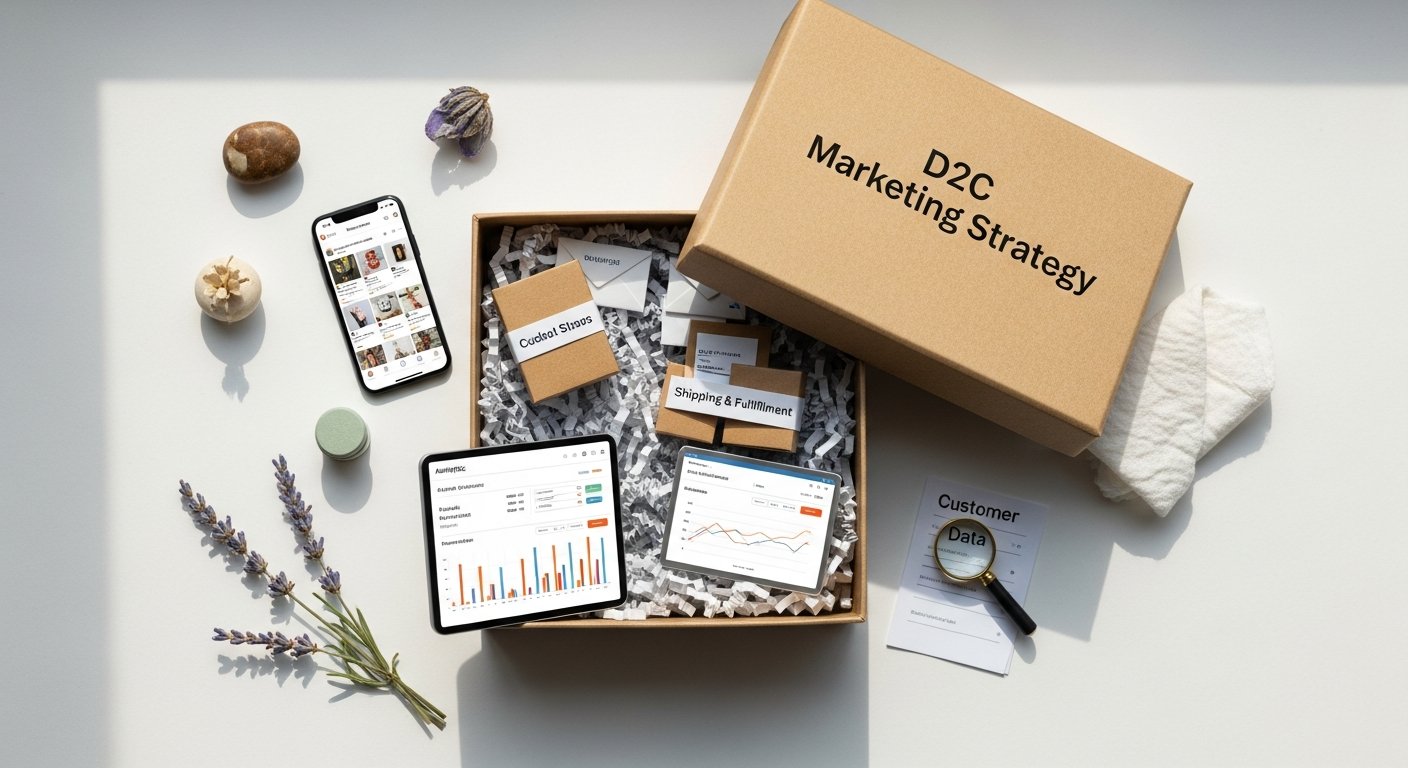
In a crowded digital marketplace, simply having an online store isn’t enough. Brands that flourish understand that a well-defined D2C marketing strategy is the bedrock of their growth. It’s the blueprint for how they acquire, engage, convert, and retain customers, directly impacting their bottom line and long-term viability. Without a focused strategy, brands risk becoming invisible, losing valuable customer data, and ceding market share to more agile competitors.
[INLINE IMAGE 1: place after second H2 | alt=”d2c marketing strategy concept illustration”]
Maximize Profitability and Control
- Enhanced Margins: By cutting out the middleman, D2C brands retain the profit margins that would otherwise go to distributors and retailers. This direct financial benefit can be reinvested into product innovation, marketing, or customer service, creating a virtuous cycle of growth and value.
- Complete Brand Control: From the initial brand story to the unboxing experience and post-purchase follow-up, a D2C strategy ensures that every customer touchpoint aligns perfectly with your brand’s vision and values. This consistency builds stronger brand identity and trust.
- Direct Customer Feedback: Operating directly provides an unfiltered stream of customer feedback, allowing for rapid product iteration, service improvements, and the development of offerings that truly meet market needs.
Build Deeper Customer Relationships and Loyalty
- Personalized Experiences: Owning the customer relationship means you can gather first-party data to personalize marketing messages, product recommendations, and customer service interactions, leading to higher engagement and satisfaction.
- Fostering Community: D2C brands can build vibrant communities around their products and values, turning customers into advocates. This sense of belonging drives repeat purchases and organic referrals, significantly reducing customer acquisition costs over time.
- Increased Customer Lifetime Value (CLTV): A strong D2C strategy focuses not just on the initial sale but on nurturing long-term relationships. By providing exceptional value and experience, brands can significantly increase the total revenue generated from each customer over their entire engagement period.
Gain Unparalleled Data Insights and Agility
- First-Party Data Advantage: In an era of increasing privacy regulations and the deprecation of third-party cookies, first-party data is gold. D2C brands collect rich data directly from their customers, offering deep insights into purchasing behavior, preferences, and engagement patterns. This data is crucial for targeted marketing and strategic decision-making.
- Rapid Market Responsiveness: The direct feedback loop and control over the entire supply chain enable D2C brands to react swiftly to market trends, customer demands, and competitive shifts. This agility is a significant competitive advantage in fast-paced e-commerce environments.
- Optimized Marketing Spend: With direct data, brands can precisely track the effectiveness of their marketing campaigns, optimizing spend on channels and messages that yield the highest ROI. This reduces wasted ad spend and improves overall marketing efficiency.
Ignoring a dedicated D2C marketing strategy is akin to flying blind in the complex world of e-commerce. For brands aspiring to scalable growth and sustained profitability, particularly on platforms like Shopify, investing in a robust D2C strategy is not merely an option—it is the strategic imperative for success in 2026 and beyond. It’s about building a resilient, customer-centric business model that can adapt and thrive regardless of external market pressures. This strategy underpins every aspect of Shopify optimization and conversion rate improvements we champion at e-comprofits.
Core Pillars of a Successful D2C Marketing Strategy
A triumphant D2C marketing strategy is built upon several interconnected pillars, each contributing to a holistic approach that prioritizes the customer, leverages data, and optimizes profitability. Neglecting any one of these foundational elements can compromise the entire structure, leading to suboptimal performance and missed opportunities for growth.
1. An Irresistible Brand Story and Identity
In the D2C space, your brand is your biggest asset. Consumers don’t just buy products; they buy into stories, values, and experiences. A compelling brand story creates an emotional connection, differentiating your product from competitors who might offer similar functionality.
- Authenticity and Purpose: Define your brand’s ‘why.’ What problem do you solve? What values do you uphold? Authenticity resonates deeply with modern consumers.
- Distinct Visual and Verbal Identity: Consistent branding across all touchpoints—website, social media, packaging, email communications—is crucial. This includes your logo, color palette, typography, tone of voice, and messaging style.
- Community Building through Narrative: Use your brand story to foster a sense of belonging. Encourage user-generated content, share customer testimonials, and create a narrative that your audience can be a part of.
2. Exceptional Customer Experience (CX)
The D2C model thrives on direct interaction, making an outstanding customer experience non-negotiable. Every interaction, from the first ad impression to post-purchase support, contributes to a customer’s perception of your brand.
- Seamless User Journey: Ensure your website (especially on Shopify) is intuitive, fast, mobile-responsive, and easy to navigate. A friction-free path from discovery to checkout is paramount for conversion.
- Personalization at Scale: Leverage data to personalize product recommendations, marketing messages, and website content. Show customers you understand their needs and preferences.
- Responsive Customer Support: Offer multiple channels for support (chat, email, phone, social media) and ensure prompt, helpful, and empathetic responses. Proactive communication regarding orders and shipments also enhances CX.
- Post-Purchase Engagement: The journey doesn’t end at checkout. Follow-up emails, loyalty programs, and exclusive content keep customers engaged and encourage repeat purchases.
Learn more about optimizing your Shopify store for superior customer experience.
3. Data-Driven Insights and Analytics
Data is the fuel that powers a successful D2C strategy. Owning first-party data provides an unparalleled advantage for understanding your audience and optimizing your operations.
- Comprehensive Data Collection: Implement robust analytics tools (Google Analytics, Shopify Analytics, CRM systems) to track website traffic, conversion rates, customer behavior, and marketing campaign performance.
- Segmentation and Personalization: Segment your audience based on demographics, purchase history, browsing behavior, and engagement levels. This allows for highly targeted marketing campaigns.
- A/B Testing and Optimization: Continuously test different elements of your website, email campaigns, and ad creatives to identify what resonates best with your audience and drives conversions.
- Predictive Analytics: Utilize data to forecast trends, identify potential churn, and predict future customer behavior, allowing for proactive strategies.
4. Omnichannel Approach
While D2C implies direct sales, it doesn’t mean limiting your presence. An omnichannel strategy ensures a consistent, integrated brand experience across all touchpoints, online and offline.
- Integrated Marketing Channels: Harmonize your messaging and branding across social media, email, search engine marketing, content marketing, and influencer collaborations.
- Seamless Customer Journey: Allow customers to move effortlessly between channels—e.g., discovering a product on Instagram, adding it to a cart on their laptop, and completing the purchase later on their mobile device.
- Potential for Offline Integration: For some D2C brands, pop-up shops, experiential retail, or strategic wholesale partnerships can complement the direct online channel, expanding reach and brand visibility without sacrificing control.
5. Retention and Loyalty Programs
Customer acquisition can be costly. A focus on retention and cultivating loyalty is vital for long-term profitability and increasing customer lifetime value (CLTV).
- Loyalty Programs: Implement tiered loyalty programs, reward points, or subscription models that incentivize repeat purchases and foster a sense of exclusivity.
- Exceptional Post-Purchase Engagement: Personalized thank-you notes, early access to new products, exclusive content, and responsive support build lasting relationships.
- Community Engagement: Create forums, social groups, or events where customers can connect with your brand and each other, strengthening their bond with your ecosystem.
By meticulously building and maintaining these pillars, D2C brands can create a resilient, customer-centric marketing framework that drives sustained growth and profitability in the highly competitive e-commerce landscape of 2026.
Building Your D2C Marketing Strategy: A Step-by-Step Guide
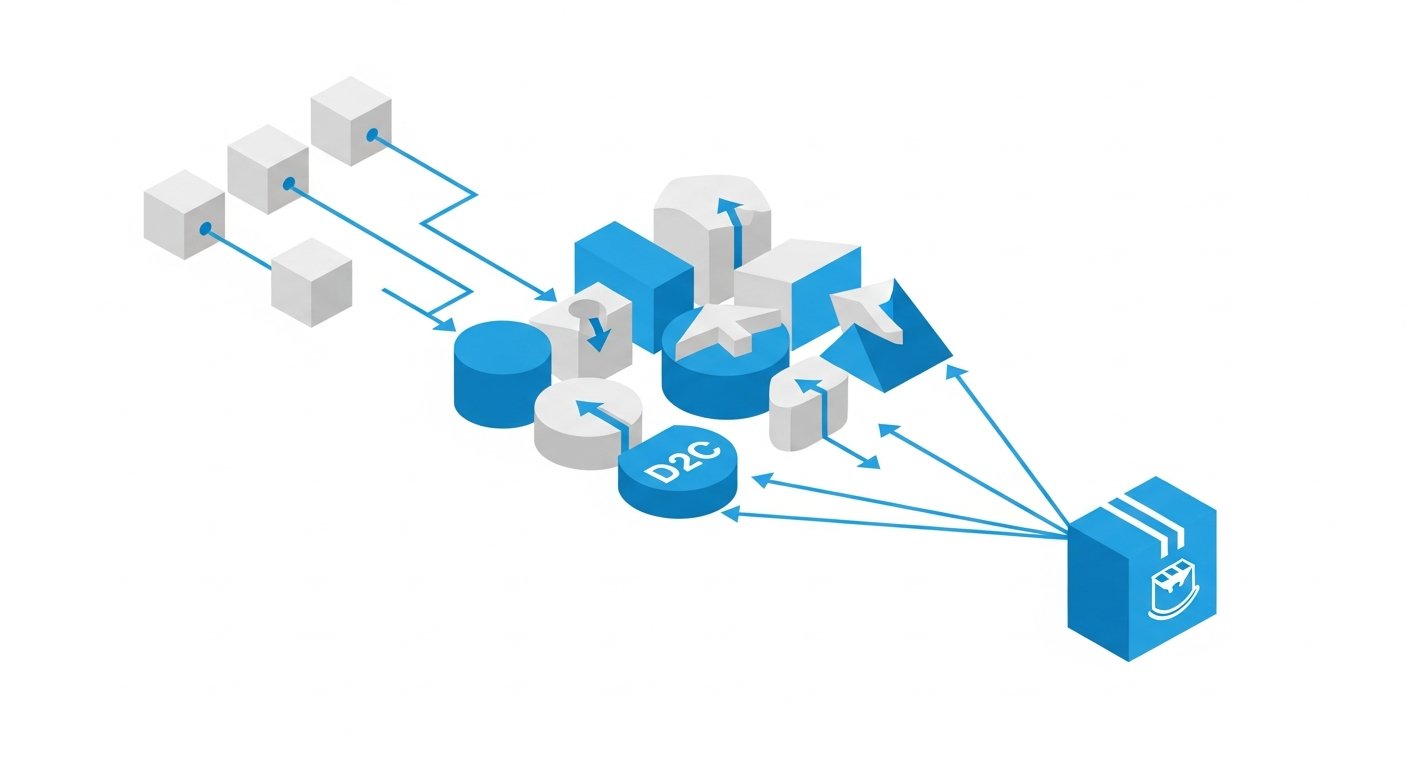
Crafting an effective D2C marketing strategy requires a methodical approach, moving from deep understanding of your market and audience to meticulous planning and execution. This step-by-step guide is designed to help e-commerce brands, particularly those on Shopify, lay a solid foundation for sustainable growth and maximized profitability.
Step 1: Deep Dive into Market Research and Audience Definition
Before you launch any campaign, you need to know who you’re talking to and what landscape you’re operating in.
- Identify Your Ideal Customer (ICP) / Buyer Persona: Go beyond basic demographics. Understand their psychographics (values, attitudes, interests), pain points, motivations, online behavior, and purchasing habits. What challenges do they face that your product solves?
- Competitor Analysis: Analyze direct and indirect competitors. What are their strengths and weaknesses? How do they position themselves? What marketing channels do they use effectively? Identify gaps in the market your brand can fill.
- Market Trends and Opportunities: Research current and emerging trends relevant to your industry and product category in 2026. Are there new technologies, consumer behaviors, or sustainability shifts you can leverage?
Step 2: Define Your Unique Value Proposition (UVP) and Messaging
Once you understand your audience and market, articulate what makes your brand distinct and desirable.
- Craft a Clear UVP: What unique benefit do you offer that competitors don’t? Why should customers choose you over anyone else? Your UVP should be concise, compelling, and customer-centric.
- Develop Core Messaging: Translate your UVP into consistent messages that resonate with your target audience across all marketing channels. This includes your mission statement, brand promise, and key selling points.
- Brand Voice and Tone: Establish a distinct voice and tone that reflects your brand personality. Is it authoritative, playful, empathetic, innovative? Consistency here builds brand recognition.
Step 3: Strategic Channel Selection and Allocation
Where will you reach your customers? An effective D2C strategy employs a mix of owned, earned, and paid channels.
- Owned Channels: Your website (Shopify store), email list, blog, and proprietary apps. These are your most valuable assets for direct communication and data collection.
- Paid Channels: Social media advertising (Facebook, Instagram, TikTok, Pinterest), search engine marketing (Google Ads), display advertising, influencer marketing, and affiliate programs. These are crucial for acquisition and scaling reach.
- Earned Channels: Public relations, media mentions, organic social media reach, customer reviews, and user-generated content (UGC). These build trust and credibility.
- Allocate Resources: Based on your audience’s online behavior and your budget, determine which channels deserve the most focus. Consider the entire customer journey, from awareness to conversion and retention.
[INLINE IMAGE 2: place after fourth H2 | alt=”d2c marketing strategy comparison illustration”]
Step 4: Budgeting and Resource Planning
A strategy is only as good as its execution, which requires appropriate resources.
- Marketing Budget Allocation: Clearly define how your marketing budget will be distributed across various channels, campaigns, and tools. Prioritize based on expected ROI and strategic importance.
- Team and Talent: Ensure you have the right internal team or external partners (agencies, freelancers) with expertise in areas like content creation, paid media, email marketing, and data analytics.
- Technology Stack: Identify the essential software and tools required (e.g., Shopify apps for upsells/downsells, CRM, email marketing platforms, analytics dashboards, customer support software).
Step 5: Define Key Performance Indicators (KPIs) and Measurement Framework
You can’t optimize what you don’t measure. Establish clear metrics for success.
- Identify Core KPIs: Focus on metrics relevant to D2C growth and profitability, such as Customer Acquisition Cost (CAC), Customer Lifetime Value (CLTV), Average Order Value (AOV), Conversion Rate, Retention Rate, Return on Ad Spend (ROAS), and Net Promoter Score (NPS).
- Set SMART Goals: Ensure your goals are Specific, Measurable, Achievable, Relevant, and Time-bound.
- Reporting and Analysis: Establish regular reporting schedules to monitor progress, identify trends, and make data-driven adjustments to your strategy. Utilize dashboards to visualize performance at a glance.
Explore advanced techniques for boosting your e-commerce conversion rates.
By diligently following these steps, D2C brands can develop a robust and adaptable marketing strategy that aligns with their business objectives, fosters strong customer relationships, and drives sustained profitability in the competitive e-commerce landscape of 2026. This systematic approach is fundamental to the operational and marketing advice we provide at e-comprofits.
Leveraging Data and Personalization in Your D2C Marketing Strategy
In the D2C space, data isn’t just a byproduct of transactions; it’s the lifeblood of a customer-centric strategy. The ability to collect, analyze, and act upon first-party data empowers brands to move beyond generic campaigns to deliver highly personalized experiences that resonate deeply with individual customers. This personalized approach is a significant driver of conversion, retention, and ultimately, increased customer lifetime value (CLTV).
The Power of First-Party Data Collection
Unlike traditional retail, D2C brands own all customer data generated through their direct interactions. This invaluable asset provides a 360-degree view of the customer, far superior to aggregated or third-party data.
- Website Analytics: Track browsing behavior, page views, time on site, click-through rates, and abandonment points. Tools like Google Analytics and Shopify’s built-in analytics provide a wealth of information.
- CRM Systems: A robust CRM (Customer Relationship Management) system is central to D2C. It consolidates customer contact information, purchase history, communication logs, and support interactions, creating a unified customer profile.
- Email and SMS Engagement: Monitor open rates, click rates, conversion rates from emails/SMS, and segment subscribers based on their engagement levels.
- Surveys and Feedback: Directly ask customers about their preferences, satisfaction levels, and needs through post-purchase surveys, NPS (Net Promoter Score) surveys, and on-site feedback forms.
- Social Media Interactions: Track comments, messages, likes, and shares to understand sentiment and engagement with your brand.
Advanced Segmentation Strategies
Raw data is only useful when organized. Segmentation allows you to group customers with similar characteristics or behaviors, enabling targeted personalization.
- Demographic Segmentation: Age, gender, location, income. (Basic, but still useful).
- Behavioral Segmentation:
- Purchase History: First-time buyers, repeat purchasers, high-value customers, customers who haven’t purchased in a while.
- Browsing Behavior: Visitors who viewed specific product categories, abandoned carts, or interacted with particular content.
- Engagement Level: Highly engaged email subscribers, occasional website visitors, dormant customers.
- Psychographic Segmentation: Interests, values, lifestyle, personality traits. This often requires more qualitative data collection or inferring from behavioral data.
- Lifecycle Segmentation: Prospects, new customers, active customers, at-risk customers, loyal advocates. Each segment requires a different communication strategy.
Implementing Hyper-Personalization Across Touchpoints
With robust segmentation, you can deliver tailored experiences that feel unique to each customer, significantly boosting conversion and loyalty.
- Personalized Product Recommendations: Leverage AI-powered recommendation engines on your Shopify store to suggest products based on browsing history, past purchases, or the behavior of similar customers. “Customers who bought this also bought…”
- Dynamic Website Content: Show different banners, hero images, or even entire landing page sections based on a visitor’s location, previous interactions, or inferred interests.
- Targeted Email Marketing: Send segmented email campaigns with relevant product updates, exclusive offers, personalized content, and abandoned cart reminders that speak directly to the customer’s needs.
- Customized Ad Campaigns: Use retargeting ads to show products recently viewed by a customer or create lookalike audiences based on your best customer segments.
- Personalized Customer Service: Empower your support team with CRM data to provide context-aware and empathetic assistance, making customers feel truly valued.
The Role of AI and Machine Learning in D2C Personalization
AI and ML are transforming the ability of D2C brands to personalize at scale, automate insights, and predict customer behavior.
- Predictive Analytics: AI can predict which customers are likely to churn, which products will be popular, or when a customer is ready for their next purchase, allowing for proactive marketing.
- Chatbots and Virtual Assistants: AI-powered chatbots can provide instant, personalized customer support, answer FAQs, and even guide customers through the purchase process, freeing up human agents for more complex issues.
- Dynamic Pricing: Machine learning algorithms can analyze market demand, competitor pricing, and inventory levels to dynamically adjust product prices for optimal profitability.
- Content Generation: AI tools can assist in generating personalized ad copy, email subject lines, or even product descriptions tailored to specific audience segments.
By effectively leveraging data and embracing personalization, D2C brands can move beyond mass marketing to create a truly bespoke customer journey. This not only drives higher conversion rates and repeat purchases but also builds deep, lasting customer loyalty—the ultimate goal for sustained e-commerce profitability in 2026 and beyond.
Choosing the Right D2C Channels and Technologies
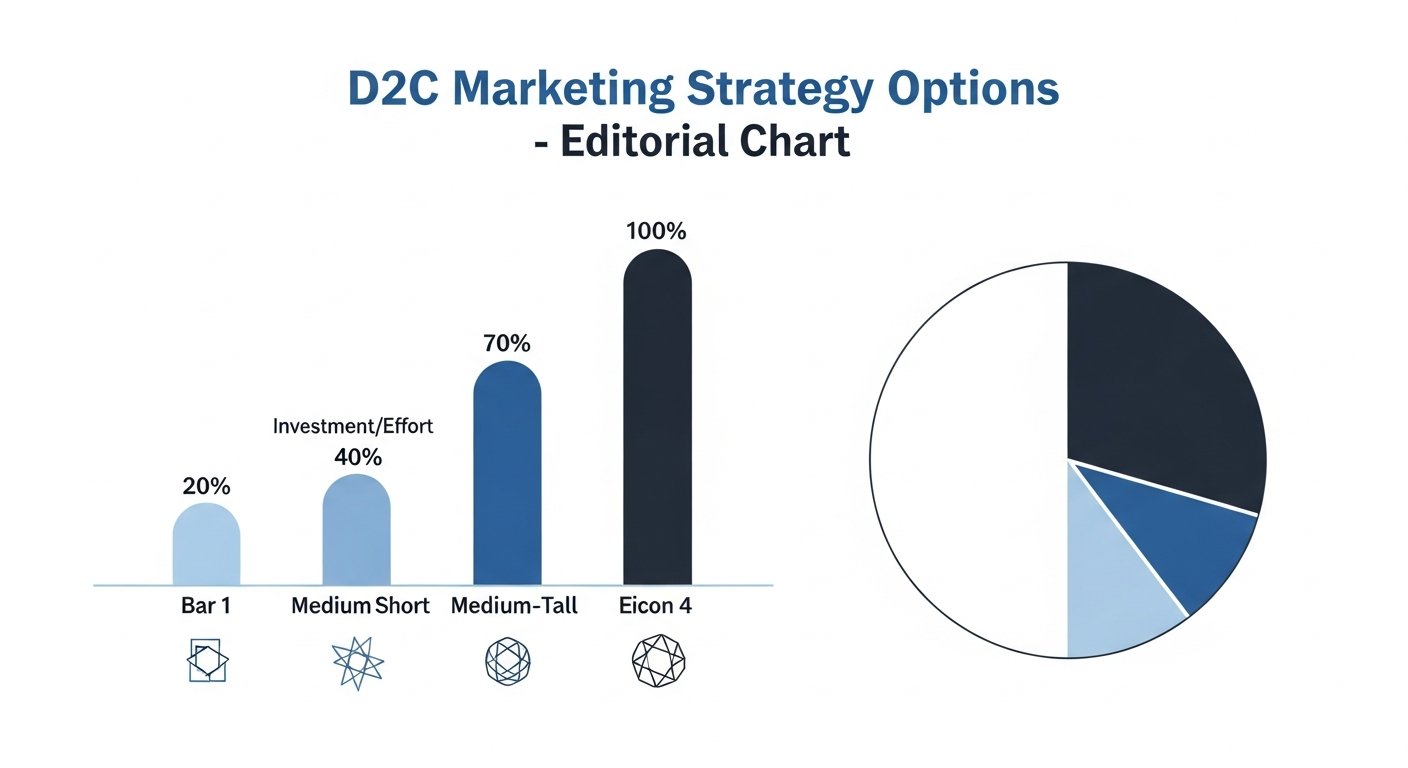
The success of your D2C marketing strategy hinges on selecting the right channels to reach your audience and equipping your operations with the most effective technology stack. This section will guide you through strategic channel choices and essential technology considerations for building a robust, scalable D2C ecosystem, particularly relevant for Shopify-centric businesses.
Strategic Marketing Channels for D2C Growth
No single channel is sufficient; a blend of channels, optimized for different stages of the customer journey, is key. The ideal mix depends on your product, target audience, and budget.
- Paid Social Media (Meta, TikTok, Pinterest, X):
- Best For: Brand awareness, visual product showcase, impulse purchases, targeting specific demographics/interests.
- Advantages: High visual impact, powerful targeting tools, virality potential.
- Considerations: Rising ad costs, platform algorithm changes, potential for low intent purchases requiring strong retargeting.
- Paid Search (Google Ads, Bing Ads):
- Best For: Capturing high-intent traffic from users actively searching for your product or solution.
- Advantages: High conversion rates due to intent, measurable ROI.
- Considerations: Can be expensive for competitive keywords, requires ongoing optimization.
- Email Marketing:
- Best For: Retention, nurturing leads, building community, increasing CLTV, personalized communication.
- Advantages: High ROI, owned channel, direct communication, segmentation capabilities.
- Considerations: Requires list building efforts, risk of spam filters, need for engaging content.
- Content Marketing (Blog, Guides, Videos):
- Best For: SEO, establishing authority, educating customers, building brand trust, attracting organic traffic.
- Advantages: Long-term asset, builds authority, low long-term cost per acquisition.
- Considerations: Takes time to yield results, requires consistent high-quality output.
- Influencer Marketing:
- Best For: Authenticity, reaching niche audiences, building trust through third-party endorsements.
- Advantages: Credibility, access to engaged communities, diverse content creation.
- Considerations: Finding the right influencers, managing relationships, fluctuating costs, FTC compliance.
- SMS Marketing:
- Best For: Urgent updates, flash sales, shipping notifications, abandoned cart reminders, high engagement rates.
- Advantages: High open rates, immediate delivery.
- Considerations: Strict regulations (TCPA, CTIA), requires explicit opt-in, message length limits.
Comparison of Key D2C Marketing Channels
Understanding the strengths and weaknesses of each channel helps in building a balanced D2C marketing strategy.
| Marketing Channel | Primary Goal | Best For | Key Metrics | Strategic Considerations |
|---|---|---|---|---|
| Paid Social (Meta, TikTok) | Awareness & Discovery | Visually appealing products, trend-driven content, broad reach | CPM, CTR, ROAS, Engagement Rate, Reach | Strong creative needed; adapt to platform trends; effective for retargeting. |
| Paid Search (Google Ads) | High-Intent Conversion | Problem-solving products, established demand, immediate purchase intent | CPC, Conversion Rate, ROAS, Quality Score | Keyword research critical; ongoing bid/ad copy optimization; competitive for high-value terms. |
| Email Marketing | Retention & Nurturing | Repeat customers, building loyalty, personalized communication, promotions | Open Rate, CTR, Conversion Rate, List Growth, LTV | Owned asset; segmentation and automation are key; focus on value-driven content. |
| Influencer Marketing | Authenticity & Niche Reach | Lifestyle products, brand trust-building, reaching specific communities | Reach, Engagement, Brand Mentions, Conversion (trackable links) | Careful influencer vetting; clear briefs; authentic collaborations yield best results. |
| Content Marketing | Authority & Organic Traffic | Education, thought leadership, SEO, long-term brand building | Organic Traffic, Keyword Rankings, Time on Page, Bounce Rate, Shares | Long-term investment; consistency is crucial; requires SEO integration. |
Essential D2C Technology Stack
A robust tech stack is the backbone of efficient D2C operations and marketing automation.
- E-commerce Platform (e.g., Shopify, Shopify Plus):
- Function: Your storefront, product catalog, checkout, order management.
- Importance: Scalability, ease of use, app ecosystem, integrations. Shopify is a popular choice for its comprehensive features and extensibility.
- Customer Relationship Management (CRM):
- Function: Manages customer data, interactions, and segments.
- Importance: Enables personalization, targeted marketing, and informed customer service. Examples: HubSpot, Klaviyo (often combined with email).
- Email & SMS Marketing Platform:
- Function: Automates email and SMS campaigns, segmentation, flows (welcome, abandoned cart).
- Importance: High ROI channel for nurturing, retention, and direct sales. Examples: Klaviyo, Mailchimp, Attentive.
- Marketing Automation Platform:
- Function: Automates repetitive marketing tasks across channels, manages complex customer journeys.
- Importance: Improves efficiency, delivers consistent personalized experiences.
- Analytics & Business Intelligence (BI) Tools:
- Function: Collects, visualizes, and interprets data from all sources.
- Importance: Essential for tracking KPIs, identifying trends, and making data-driven decisions. Examples: Google Analytics, Looker Studio, Triple Whale.
- Customer Service & Support Platform:
- Function: Manages customer inquiries, provides self-service options, centralizes communication.
- Importance: Critical for exceptional CX and building loyalty. Examples: Gorgias, Zendesk, Kustomer.
- Fulfillment & Inventory Management Software:
- Function: Manages stock levels, order processing, shipping, and returns.
- Importance: Ensures smooth operations, customer satisfaction, and accurate inventory.
Carefully selecting and integrating these channels and technologies is paramount. A cohesive tech stack ensures data flows seamlessly, enabling a unified view of the customer and empowering your D2C marketing strategy to operate efficiently and effectively, driving profitability for your e-commerce brand in 2026.
Measuring and Optimizing Your D2C Marketing Performance
In the dynamic world of D2C e-commerce, a “set it and forget it” approach is a recipe for stagnation. Continuous measurement, analysis, and optimization are not merely best practices; they are foundational to sustaining growth and ensuring profitability. For D2C brands, particularly those leveraging Shopify, understanding which metrics truly matter and how to act on them is critical to fine-tuning strategies and maximizing ROI.
Key Performance Indicators (KPIs) for D2C Success
While many metrics exist, a few stand out as paramount for D2C brands focused on growth and profitability:
- Customer Acquisition Cost (CAC): The total cost of sales and marketing efforts divided by the number of new customers acquired. A sustainable D2C model requires a healthy CAC.
- Customer Lifetime Value (CLTV): The predicted total revenue a customer will generate throughout their relationship with your brand. A high CLTV indicates strong customer loyalty and effective retention strategies.
- Average Order Value (AOV): The average amount of money spent by a customer per order. Strategies like cross-selling, upselling, and bundling can increase AOV.
- Conversion Rate: The percentage of website visitors who complete a desired action, such as making a purchase. Optimizing your Shopify store and user journey directly impacts this.
- Retention Rate: The percentage of customers who continue to purchase from your brand over a given period. Crucial for building long-term profitability and reducing reliance on costly acquisition.
- Return on Ad Spend (ROAS): The revenue generated for every dollar spent on advertising. Essential for evaluating the efficiency of paid marketing channels.
- Net Promoter Score (NPS): Measures customer loyalty and satisfaction by asking customers how likely they are to recommend your product/service to others.
- Churn Rate: The percentage of customers who stop purchasing from your brand over a given period. The inverse of retention rate.
Regularly tracking these KPIs through dashboards and reports is non-negotiable. Tools like Shopify Analytics, Google Analytics, and specialized D2C analytics platforms (e.g., Triple Whale, Peel) can provide comprehensive insights.
Implementing a Continuous Optimization Cycle
Optimization is an ongoing process that involves a cycle of testing, learning, and refining.
1. Data Analysis and Insight Generation
- Deep Dive into Analytics: Beyond surface-level numbers, understand the ‘why’ behind the ‘what.’ Why is conversion rate dropping on mobile? What segments are showing the highest CLTV?
- Identify Bottlenecks: Pinpoint areas in the customer journey or marketing funnel where customers are dropping off or disengaging.
- Customer Feedback Loops: Actively solicit feedback through surveys, reviews, social media monitoring, and direct customer service interactions. Qualitative data adds crucial context to quantitative metrics.
2. Hypothesizing and Experimentation (A/B Testing)
- Formulate Hypotheses: Based on your data analysis, create clear hypotheses about what changes could improve performance. (e.g., “Changing the CTA button color to orange will increase click-through rate by 10%”).
- A/B Testing: Systematically test different versions of website elements (headlines, product descriptions, images, CTAs), email subject lines, ad creatives, and landing pages. Ensure only one variable is changed at a time to accurately attribute results.
- Multivariate Testing: For more complex scenarios, test multiple variables simultaneously, though this requires higher traffic volumes.
Master your e-commerce analytics to unlock hidden growth opportunities.
3. Implementation and Scaling
- Implement Winning Variations: Once an A/B test yields statistically significant results, implement the winning variation permanently.
- Document Learnings: Keep a record of all tests, results, and insights. This prevents repeating failed experiments and builds institutional
The Ultimate D2C Marketing Strategy Guide for E-Commerce Profitability in 2026
Affiliate disclosure: This article may contain affiliate links. Recommendations are independent and editorially driven.
The landscape of e-commerce is in perpetual motion, but one seismic shift has consistently redefined how brands connect with consumers: the rise of Direct-to-Consumer (D2C) commerce. For ambitious brands looking to optimize their Shopify stores, boost conversion rates, and achieve sustainable online store profitability, understanding and implementing a robust D2C marketing strategy isn’t just an advantage—it’s a fundamental necessity. In 2026, the brands that thrive are those that master the art of direct engagement, owning their customer relationships from discovery to delivery and beyond.
This comprehensive guide from e-comprofits delves deep into the multifaceted world of D2C marketing, providing actionable insights, strategic frameworks, and practical advice to help your brand not only survive but excel. We’ll explore everything from the foundational principles to advanced tactics, data-driven personalization, channel optimization, and future trends that will shape the next generation of D2C success. Our goal is to equip you with the knowledge to build an unbreakable bond with your customers, driving loyalty, increasing lifetime value, and ultimately, ensuring your e-commerce enterprise achieves maximum profitability.
What is D2C Marketing and Why Does It Matter for Your Brand?
D2C marketing is a strategic approach where a brand directly sells and markets its products to the end-consumer, bypassing traditional third-party retailers, wholesalers, or distributors. This model empowers brands to control every aspect of the customer journey, from product development and branding to sales, marketing, and post-purchase support. Historically, manufacturing companies relied on extensive retail networks to reach customers. The internet, coupled with sophisticated e-commerce platforms like Shopify, democratized distribution, allowing brands of all sizes to forge direct connections.
The Evolution of D2C: From Niche to Mainstream
- Early Days: Initially adopted by niche brands seeking to disrupt established industries, D2C proved its viability by offering specialized products, often with a strong brand story and a focus on transparency.
- Technological Acceleration: The proliferation of e-commerce platforms, digital marketing tools, and sophisticated logistics infrastructure made the D2C model accessible and scalable for a wider range of businesses. This technological leap dramatically lowered the barrier to entry, enabling startups to compete with industry giants.
- Consumer Demand: Modern consumers increasingly seek authenticity, transparency, and personalized experiences. They are more likely to engage with brands that offer a direct relationship, unique narratives, and responsive customer service—hallmarks of the D2C model.
Key Characteristics Distinguishing D2C Marketing
- Direct Relationship: The cornerstone of D2C. Brands cultivate a direct, unmediated relationship with their customers, fostering trust and loyalty.
- Data Ownership: Unlike traditional retail where sales data is siloed, D2C brands own all first-party customer data, providing invaluable insights into purchasing patterns, preferences, and behaviors. This data is critical for informed decision-making and hyper-personalization.
- Brand Control: Every touchpoint—from website design and marketing messaging to packaging and customer service—is meticulously controlled by the brand, ensuring a consistent and authentic brand experience.
- Agility & Innovation: Without the constraints of retail partners, D2C brands can rapidly test new products, marketing campaigns, and business models, adapting quickly to market changes and customer feedback.
- Higher Margins: By eliminating intermediaries, D2C brands retain a larger portion of the profit margin, which can be reinvested into product development, marketing, or customer experience enhancements.
In essence, D2C marketing is not just about selling direct; it’s about building a brand ecosystem centered around the customer, leveraging technology and data to create unparalleled value and experience. For e-comprofits clients, mastering this strategy is synonymous with unlocking higher conversion rates, superior customer lifetime value, and ultimately, sustainable profitability.
Why a Dedicated D2C Marketing Strategy is Critical for Modern Brands
In a crowded digital marketplace, simply having an online store isn’t enough. Brands that flourish understand that a well-defined D2C marketing strategy is the bedrock of their growth. It’s the blueprint for how they acquire, engage, convert, and retain customers, directly impacting their bottom line and long-term viability. Without a focused strategy, brands risk becoming invisible, losing valuable customer data, and ceding market share to more agile competitors.
[INLINE IMAGE 1: place after second H2 | alt=”d2c marketing strategy concept illustration”]
Maximize Profitability and Control
- Enhanced Margins: By cutting out the middleman, D2C brands retain the profit margins that would otherwise go to distributors and retailers. This direct financial benefit can be reinvested into product innovation, marketing, or customer service, creating a virtuous cycle of growth and value.
- Complete Brand Control: From the initial brand story to the unboxing experience and post-purchase follow-up, a D2C strategy ensures that every customer touchpoint aligns perfectly with your brand’s vision and values. This consistency builds stronger brand identity and trust.
- Direct Customer Feedback: Operating directly provides an unfiltered stream of customer feedback, allowing for rapid product iteration, service improvements, and the development of offerings that truly meet market needs.
Build Deeper Customer Relationships and Loyalty
- Personalized Experiences: Owning the customer relationship means you can gather first-party data to personalize marketing messages, product recommendations, and customer service interactions, leading to higher engagement and satisfaction.
- Fostering Community: D2C brands can build vibrant communities around their products and values, turning customers into advocates. This sense of belonging drives repeat purchases and organic referrals, significantly reducing customer acquisition costs over time.
- Increased Customer Lifetime Value (CLTV): A strong D2C strategy focuses not just on the initial sale but on nurturing long-term relationships. By providing exceptional value and experience, brands can significantly increase the total revenue generated from each customer over their entire engagement period.
Gain Unparalleled Data Insights and Agility
- First-Party Data Advantage: In an era of increasing privacy regulations and the deprecation of third-party cookies, first-party data is gold. D2C brands collect rich data directly from their customers, offering deep insights into purchasing behavior, preferences, and engagement patterns. This data is crucial for targeted marketing and strategic decision-making.
- Rapid Market Responsiveness: The direct feedback loop and control over the entire supply chain enable D2C brands to react swiftly to market trends, customer demands, and competitive shifts. This agility is a significant competitive advantage in fast-paced e-commerce environments.
- Optimized Marketing Spend: With direct data, brands can precisely track the effectiveness of their marketing campaigns, optimizing spend on channels and messages that yield the highest ROI. This reduces wasted ad spend and improves overall marketing efficiency.
Ignoring a dedicated D2C marketing strategy is akin to flying blind in the complex world of e-commerce. For brands aspiring to scalable growth and sustained profitability, particularly on platforms like Shopify, investing in a robust D2C strategy is not merely an option—it is the strategic imperative for success in 2026 and beyond. It’s about building a resilient, customer-centric business model that can adapt and thrive regardless of external market pressures. This strategy underpins every aspect of Shopify optimization and conversion rate improvements we champion at e-comprofits.
Core Pillars of a Successful D2C Marketing Strategy
A triumphant D2C marketing strategy is built upon several interconnected pillars, each contributing to a holistic approach that prioritizes the customer, leverages data, and optimizes profitability. Neglecting any one of these foundational elements can compromise the entire structure, leading to suboptimal performance and missed opportunities for growth.
1. An Irresistible Brand Story and Identity
In the D2C space, your brand is your biggest asset. Consumers don’t just buy products; they buy into stories, values, and experiences. A compelling brand story creates an emotional connection, differentiating your product from competitors who might offer similar functionality.
- Authenticity and Purpose: Define your brand’s ‘why.’ What problem do you solve? What values do you uphold? Authenticity resonates deeply with modern consumers.
- Distinct Visual and Verbal Identity: Consistent branding across all touchpoints—website, social media, packaging, email communications—is crucial. This includes your logo, color palette, typography, tone of voice, and messaging style.
- Community Building through Narrative: Use your brand story to foster a sense of belonging. Encourage user-generated content, share customer testimonials, and create a narrative that your audience can be a part of.
2. Exceptional Customer Experience (CX)
The D2C model thrives on direct interaction, making an outstanding customer experience non-negotiable. Every interaction, from the first ad impression to post-purchase support, contributes to a customer’s perception of your brand.
- Seamless User Journey: Ensure your website (especially on Shopify) is intuitive, fast, mobile-responsive, and easy to navigate. A friction-free path from discovery to checkout is paramount for conversion.
- Personalization at Scale: Leverage data to personalize product recommendations, marketing messages, and website content. Show customers you understand their needs and preferences.
- Responsive Customer Support: Offer multiple channels for support (chat, email, phone, social media) and ensure prompt, helpful, and empathetic responses. Proactive communication regarding orders and shipments also enhances CX.
- Post-Purchase Engagement: The journey doesn’t end at checkout. Follow-up emails, loyalty programs, and exclusive content keep customers engaged and encourage repeat purchases.
Learn more about optimizing your Shopify store for superior customer experience.
3. Data-Driven Insights and Analytics
Data is the fuel that powers a successful D2C strategy. Owning first-party data provides an unparalleled advantage for understanding your audience and optimizing your operations.
- Comprehensive Data Collection: Implement robust analytics tools (Google Analytics, Shopify Analytics, CRM systems) to track website traffic, conversion rates, customer behavior, and marketing campaign performance.
- Segmentation and Personalization: Segment your audience based on demographics, purchase history, browsing behavior, and engagement levels. This allows for highly targeted marketing campaigns.
- A/B Testing and Optimization: Continuously test different elements of your website, email campaigns, and ad creatives to identify what resonates best with your audience and drives conversions.
- Predictive Analytics: Utilize data to forecast trends, identify potential churn, and predict future customer behavior, allowing for proactive strategies.
4. Omnichannel Approach
While D2C implies direct sales, it doesn’t mean limiting your presence. An omnichannel strategy ensures a consistent, integrated brand experience across all touchpoints, online and offline.
- Integrated Marketing Channels: Harmonize your messaging and branding across social media, email, search engine marketing, content marketing, and influencer collaborations.
- Seamless Customer Journey: Allow customers to move effortlessly between channels—e.g., discovering a product on Instagram, adding it to a cart on their laptop, and completing the purchase later on their mobile device.
- Potential for Offline Integration: For some D2C brands, pop-up shops, experiential retail, or strategic wholesale partnerships can complement the direct online channel, expanding reach and brand visibility without sacrificing control.
5. Retention and Loyalty Programs
Customer acquisition can be costly. A focus on retention and cultivating loyalty is vital for long-term profitability and increasing customer lifetime value (CLTV).
- Loyalty Programs: Implement tiered loyalty programs, reward points, or subscription models that incentivize repeat purchases and foster a sense of exclusivity.
- Exceptional Post-Purchase Engagement: Personalized thank-you notes, early access to new products, exclusive content, and responsive support build lasting relationships.
- Community Engagement: Create forums, social groups, or events where customers can connect with your brand and each other, strengthening their bond with your ecosystem.
By meticulously building and maintaining these pillars, D2C brands can create a resilient, customer-centric marketing framework that drives sustained growth and profitability in the highly competitive e-commerce landscape of 2026.
Building Your D2C Marketing Strategy: A Step-by-Step Guide
Crafting an effective D2C marketing strategy requires a methodical approach, moving from deep understanding of your market and audience to meticulous planning and execution. This step-by-step guide is designed to help e-commerce brands, particularly those on Shopify, lay a solid foundation for sustainable growth and maximized profitability.
Step 1: Deep Dive into Market Research and Audience Definition
Before you launch any campaign, you need to know who you’re talking to and what landscape you’re operating in.
- Identify Your Ideal Customer (ICP) / Buyer Persona: Go beyond basic demographics. Understand their psychographics (values, attitudes, interests), pain points, motivations, online behavior, and purchasing habits. What challenges do they face that your product solves?
- Competitor Analysis: Analyze direct and indirect competitors. What are their strengths and weaknesses? How do they position themselves? What marketing channels do they use effectively? Identify gaps in the market your brand can fill.
- Market Trends and Opportunities: Research current and emerging trends relevant to your industry and product category in 2026. Are there new technologies, consumer behaviors, or sustainability shifts you can leverage?
Step 2: Define Your Unique Value Proposition (UVP) and Messaging
Once you understand your audience and market, articulate what makes your brand distinct and desirable.
- Craft a Clear UVP: What unique benefit do you offer that competitors don’t? Why should customers choose you over anyone else? Your UVP should be concise, compelling, and customer-centric.
- Develop Core Messaging: Translate your UVP into consistent messages that resonate with your target audience across all marketing channels. This includes your mission statement, brand promise, and key selling points.
- Brand Voice and Tone: Establish a distinct voice and tone that reflects your brand personality. Is it authoritative, playful, empathetic, innovative? Consistency here builds brand recognition.
Step 3: Strategic Channel Selection and Allocation
Where will you reach your customers? An effective D2C strategy employs a mix of owned, earned, and paid channels.
- Owned Channels: Your website (Shopify store), email list, blog, and proprietary apps. These are your most valuable assets for direct communication and data collection.
- Paid Channels: Social media advertising (Facebook, Instagram, TikTok, Pinterest), search engine marketing (Google Ads), display advertising, influencer marketing, and affiliate programs. These are crucial for acquisition and scaling reach.
- Earned Channels: Public relations, media mentions, organic social media reach, customer reviews, and user-generated content (UGC). These build trust and credibility.
- Allocate Resources: Based on your audience’s online behavior and your budget, determine which channels deserve the most focus. Consider the entire customer journey, from awareness to conversion and retention.
[INLINE IMAGE 2: place after fourth H2 | alt=”d2c marketing strategy comparison illustration”]
Step 4: Budgeting and Resource Planning
A strategy is only as good as its execution, which requires appropriate resources.
- Marketing Budget Allocation: Clearly define how your marketing budget will be distributed across various channels, campaigns, and tools. Prioritize based on expected ROI and strategic importance.
- Team and Talent: Ensure you have the right internal team or external partners (agencies, freelancers) with expertise in areas like content creation, paid media, email marketing, and data analytics.
- Technology Stack: Identify the essential software and tools required (e.g., Shopify apps for upsells/downsells, CRM, email marketing platforms, analytics dashboards, customer support software).
Step 5: Define Key Performance Indicators (KPIs) and Measurement Framework
You can’t optimize what you don’t measure. Establish clear metrics for success.
- Identify Core KPIs: Focus on metrics relevant to D2C growth and profitability, such as Customer Acquisition Cost (CAC), Customer Lifetime Value (CLTV), Average Order Value (AOV), Conversion Rate, Retention Rate, Return on Ad Spend (ROAS), and Net Promoter Score (NPS).
- Set SMART Goals: Ensure your goals are Specific, Measurable, Achievable, Relevant, and Time-bound.
- Reporting and Analysis: Establish regular reporting schedules to monitor progress, identify trends, and make data-driven adjustments to your strategy. Utilize dashboards to visualize performance at a glance.
Explore advanced techniques for boosting your e-commerce conversion rates.
By diligently following these steps, D2C brands can develop a robust and adaptable marketing strategy that aligns with their business objectives, fosters strong customer relationships, and drives sustained profitability in the competitive e-commerce landscape of 2026. This systematic approach is fundamental to the operational and marketing advice we provide at e-comprofits.
Leveraging Data and Personalization in Your D2C Marketing Strategy
In the D2C space, data isn’t just a byproduct of transactions; it’s the lifeblood of a customer-centric strategy. The ability to collect, analyze, and act upon first-party data empowers brands to move beyond generic campaigns to deliver highly personalized experiences that resonate deeply with individual customers. This personalized approach is a significant driver of conversion, retention, and ultimately, increased customer lifetime value (CLTV).
The Power of First-Party Data Collection
Unlike traditional retail, D2C brands own all customer data generated through their direct interactions. This invaluable asset provides a 360-degree view of the customer, far superior to aggregated or third-party data.
- Website Analytics: Track browsing behavior, page views, time on site, click-through rates, and abandonment points. Tools like Google Analytics and Shopify’s built-in analytics provide a wealth of information.
- CRM Systems: A robust CRM (Customer Relationship Management) system is central to D2C. It consolidates customer contact information, purchase history, communication logs, and support interactions, creating a unified customer profile.
- Email and SMS Engagement: Monitor open rates, click rates, conversion rates from emails/SMS, and segment subscribers based on their engagement levels.
- Surveys and Feedback: Directly ask customers about their preferences, satisfaction levels, and needs through post-purchase surveys, NPS (Net Promoter Score) surveys, and on-site feedback forms.
- Social Media Interactions: Track comments, messages, likes, and shares to understand sentiment and engagement with your brand.
Advanced Segmentation Strategies
Raw data is only useful when organized. Segmentation allows you to group customers with similar characteristics or behaviors, enabling targeted personalization.
- Demographic Segmentation: Age, gender, location, income. (Basic, but still useful).
- Behavioral Segmentation:
- Purchase History: First-time buyers, repeat purchasers, high-value customers, customers who haven’t purchased in a while.
- Browsing Behavior: Visitors who viewed specific product categories, abandoned carts, or interacted with particular content.
- Engagement Level: Highly engaged email subscribers, occasional website visitors, dormant customers.
- Psychographic Segmentation: Interests, values, lifestyle, personality traits. This often requires more qualitative data collection or inferring from behavioral data.
- Lifecycle Segmentation: Prospects, new customers, active customers, at-risk customers, loyal advocates. Each segment requires a different communication strategy.
Implementing Hyper-Personalization Across Touchpoints
With robust segmentation, you can deliver tailored experiences that feel unique to each customer, significantly boosting conversion and loyalty.
- Personalized Product Recommendations: Leverage AI-powered recommendation engines on your Shopify store to suggest products based on browsing history, past purchases, or the behavior of similar customers. “Customers who bought this also bought…”
- Dynamic Website Content: Show different banners, hero images, or even entire landing page sections based on a visitor’s location, previous interactions, or inferred interests.
- Targeted Email Marketing: Send segmented email campaigns with relevant product updates, exclusive offers, personalized content, and abandoned cart reminders that speak directly to the customer’s needs.
- Customized Ad Campaigns: Use retargeting ads to show products recently viewed by a customer or create lookalike audiences based on your best customer segments.
- Personalized Customer Service: Empower your support team with CRM data to provide context-aware and empathetic assistance, making customers feel truly valued.
The Role of AI and Machine Learning in D2C Personalization
AI and ML are transforming the ability of D2C brands to personalize at scale, automate insights, and predict customer behavior.
- Predictive Analytics: AI can predict which customers are likely to churn, which products will be popular, or when a customer is ready for their next purchase, allowing for proactive marketing.
- Chatbots and Virtual Assistants: AI-powered chatbots can provide instant, personalized customer support, answer FAQs, and even guide customers through the purchase process, freeing up human agents for more complex issues.
- Dynamic Pricing: Machine learning algorithms can analyze market demand, competitor pricing, and inventory levels to dynamically adjust product prices for optimal profitability.
- Content Generation: AI tools can assist in generating personalized ad copy, email subject lines, or even product descriptions tailored to specific audience segments.
By effectively leveraging data and embracing personalization, D2C brands can move beyond mass marketing to create a truly bespoke customer journey. This not only drives higher conversion rates and repeat purchases but also builds deep, lasting customer loyalty—the ultimate goal for sustained e-commerce profitability in 2026 and beyond.
Choosing the Right D2C Channels and Technologies
The success of your D2C marketing strategy hinges on selecting the right channels to reach your audience and equipping your operations with the most effective technology stack. This section will guide you through strategic channel choices and essential technology considerations for building a robust, scalable D2C ecosystem, particularly relevant for Shopify-centric businesses.
Strategic Marketing Channels for D2C Growth
No single channel is sufficient; a blend of channels, optimized for different stages of the customer journey, is key. The ideal mix depends on your product, target audience, and budget.
- Paid Social Media (Meta, TikTok, Pinterest, X):
- Best For: Brand awareness, visual product showcase, impulse purchases, targeting specific demographics/interests.
- Advantages: High visual impact, powerful targeting tools, virality potential.
- Considerations: Rising ad costs, platform algorithm changes, potential for low intent purchases requiring strong retargeting.
- Paid Search (Google Ads, Bing Ads):
- Best For: Capturing high-intent traffic from users actively searching for your product or solution.
- Advantages: High conversion rates due to intent, measurable ROI.
- Considerations: Can be expensive for competitive keywords, requires ongoing optimization.
- Email Marketing:
- Best For: Retention, nurturing leads, building community, increasing CLTV, personalized communication.
- Advantages: High ROI, owned channel, direct communication, segmentation capabilities.
- Considerations: Requires list building efforts, risk of spam filters, need for engaging content.
- Content Marketing (Blog, Guides, Videos):
- Best For: SEO, establishing authority, educating customers, building brand trust, attracting organic traffic.
- Advantages: Long-term asset, builds authority, low long-term cost per acquisition.
- Considerations: Takes time to yield results, requires consistent high-quality output.
- Influencer Marketing:
- Best For: Authenticity, reaching niche audiences, building trust through third-party endorsements.
- Advantages: Credibility, access to engaged communities, diverse content creation.
- Considerations: Finding the right influencers, managing relationships, fluctuating costs, FTC compliance.
- SMS Marketing:
- Best For: Urgent updates, flash sales, shipping notifications, abandoned cart reminders, high engagement rates.
- Advantages: High open rates, immediate delivery.
- Considerations: Strict regulations (TCPA, CTIA), requires explicit opt-in, message length limits.
Comparison of Key D2C Marketing Channels
Understanding the strengths and weaknesses of each channel helps in building a balanced D2C marketing strategy.
Marketing Channel Primary Goal Best For Key Metrics Strategic Considerations Paid Social (Meta, TikTok) Awareness & Discovery Visually appealing products, trend-driven content, broad reach CPM, CTR, ROAS, Engagement Rate, Reach Strong creative needed; adapt to platform trends; effective for retargeting. Paid Search (Google Ads) High-Intent Conversion Problem-solving products, established demand, immediate purchase intent CPC, Conversion Rate, ROAS, Quality Score Keyword research critical; ongoing bid/ad copy optimization; competitive for high-value terms. Email Marketing Retention & Nurturing Repeat customers, building loyalty, personalized communication, promotions Open Rate, CTR, Conversion Rate, List Growth, LTV Owned asset; segmentation and automation are key; focus on value-driven content. Influencer Marketing Authenticity & Niche Reach Lifestyle products, brand trust-building, reaching specific communities Reach, Engagement, Brand Mentions, Conversion (trackable links) Careful influencer vetting; clear briefs; authentic collaborations yield best results. Content Marketing Authority & Organic Traffic Education, thought leadership, SEO, long-term brand building Organic Traffic, Keyword Rankings, Time on Page, Bounce Rate, Shares Long-term investment; consistency is crucial; requires SEO integration. Essential D2C Technology Stack
A robust tech stack is the backbone of efficient D2C operations and marketing automation.
- E-commerce Platform (e.g., Shopify, Shopify Plus):
- Function: Your storefront, product catalog, checkout, order management.
- Importance: Scalability, ease of use, app ecosystem, integrations. Shopify is a popular choice for its comprehensive features and extensibility.
- Customer Relationship Management (CRM):
- Function: Manages customer data, interactions, and segments.
- Importance: Enables personalization, targeted marketing, and informed customer service. Examples: HubSpot, Klaviyo (often combined with email).
- Email & SMS Marketing Platform:
- Function: Automates email and SMS campaigns, segmentation, flows (welcome, abandoned cart).
- Importance: High ROI channel for nurturing, retention, and direct sales. Examples: Klaviyo, Mailchimp, Attentive.
- Marketing Automation Platform:
- Function: Automates repetitive marketing tasks across channels, manages complex customer journeys.
- Importance: Improves efficiency, delivers consistent personalized experiences.
- Analytics & Business Intelligence (BI) Tools:
- Function: Collects, visualizes, and interprets data from all sources.
- Importance: Essential for tracking KPIs, identifying trends, and making data-driven decisions. Examples: Google Analytics, Looker Studio, Triple Whale.
- Customer Service & Support Platform:
- Function: Manages customer inquiries, provides self-service options, centralizes communication.
- Importance: Critical for exceptional CX and building loyalty. Examples: Gorgias, Zendesk, Kustomer.
- Fulfillment & Inventory Management Software:
- Function: Manages stock levels, order processing, shipping, and returns.
- Importance: Ensures smooth operations, customer satisfaction, and accurate inventory.
Carefully selecting and integrating these channels and technologies is paramount. A cohesive tech stack ensures data flows seamlessly, enabling a unified view of the customer and empowering your D2C marketing strategy to operate efficiently and effectively, driving profitability for your e-commerce brand in 2026.
Measuring and Optimizing Your D2C Marketing Performance
In the dynamic world of D2C e-commerce, a “set it and forget it” approach is a recipe for stagnation. Continuous measurement, analysis, and optimization are not merely best practices; they are foundational to sustaining growth and ensuring profitability. For D2C brands, particularly those leveraging Shopify, understanding which metrics truly matter and how to act on them is critical to fine-tuning strategies and maximizing ROI.
Key Performance Indicators (KPIs) for D2C Success
While many metrics exist, a few stand out as paramount for D2C brands focused on growth and profitability:
- Customer Acquisition Cost (CAC): The total cost of sales and marketing efforts divided by the number of new customers acquired. A sustainable D2C model requires a healthy CAC.
- Customer Lifetime Value (CLTV): The predicted total revenue a customer will generate throughout their relationship with your brand. A high CLTV indicates strong customer loyalty and effective retention strategies.
- Average Order Value (AOV): The average amount of money spent by a customer per order. Strategies like cross-selling, upselling, and bundling can increase AOV.
- Conversion Rate: The percentage of website visitors who complete a desired action, such as making a purchase. Optimizing your Shopify store and user journey directly impacts this.
- Retention Rate: The percentage of customers who continue to purchase from your brand over a given period. Crucial for building long-term profitability and reducing reliance on costly acquisition.
- Return on Ad Spend (ROAS): The revenue generated for every dollar spent on advertising. Essential for evaluating the efficiency of paid marketing channels.
- Net Promoter Score (NPS): Measures customer loyalty and satisfaction by asking customers how likely they are to recommend your product/service to others.
- Churn Rate: The percentage of customers who stop purchasing from your brand over a given period. The inverse of retention rate.
Regularly tracking these KPIs through dashboards and reports is non-negotiable. Tools like Shopify Analytics, Google Analytics, and specialized D2C analytics platforms (e.g., Triple Whale, Peel) can provide comprehensive insights.
Implementing a Continuous Optimization Cycle
Optimization is an ongoing process that involves a cycle of testing, learning, and refining.
1. Data Analysis and Insight Generation
- Deep Dive into Analytics: Beyond surface-level numbers, understand the ‘why’ behind the ‘what.’ Why is conversion rate dropping on mobile? What segments are showing the highest CLTV?
- Identify Bottlenecks: Pinpoint areas in the customer journey or marketing funnel where customers are dropping off or disengaging.
- Customer Feedback Loops: Actively solicit feedback through surveys, reviews, social media monitoring, and direct customer service interactions. Qualitative data adds crucial context to quantitative metrics.
2. Hypothesizing and Experimentation (A/B Testing)
- Formulate Hypotheses: Based on your data analysis, create clear hypotheses about what changes could improve performance. (e.g., “Changing the CTA button color to orange will increase click-through rate by 10%”).
- A/B Testing: Systematically test different versions of website elements (headlines, product descriptions, images, CTAs), email subject lines, ad creatives, and landing pages. Ensure only one variable is changed at a time to accurately attribute results.
- Multivariate Testing: For more complex scenarios, test multiple variables simultaneously, though this requires higher traffic volumes.
Master your e-commerce analytics to unlock hidden growth opportunities.
3. Implementation and Scaling
- Implement Winning Variations: Once an A/B test yields statistically significant results, implement the winning variation permanently.
- Document Learnings: Keep a record of all tests, results, and insights. This prevents repeating failed experiments and builds institutional
