
Ecommerce Fulfillment: The Ultimate Guide for D2C Profitability and Growth
Affiliate disclosure: This article may contain affiliate links. Recommendations are independent and editorially driven.
In the rapidly evolving world of direct-to-consumer (D2C) e-commerce, the journey from “add to cart” to “delivered” is more than just a logistical exercise; it’s a critical component of your brand’s promise, a direct driver of customer satisfaction, and a significant lever for profitability. This intricate dance, known as ecommerce fulfillment, encompasses every step involved in getting an online order into the customer’s hands.
For D2C brands, mastering ecommerce fulfillment isn’t merely about operational efficiency; it’s about crafting an experience. It’s about ensuring that the product quality, brand aesthetic, and customer service you meticulously build through marketing and website design are upheld—or even enhanced—by the speed, accuracy, and reliability of your delivery. In a competitive landscape where customer expectations are higher than ever, a seamless fulfillment process can be your ultimate differentiator, directly impacting conversion rates, customer lifetime value, and your bottom line.
This comprehensive guide will demystify ecommerce fulfillment for D2C businesses, covering everything from fundamental processes and strategic models to cutting-edge technologies and future trends. We’ll explore how optimized fulfillment can reduce costs, minimize returns, and transform one-time buyers into loyal brand advocates. Whether you’re just starting out or looking to scale your existing operations, understanding and strategically implementing robust ecommerce fulfillment practices is non-negotiable for sustained growth and profitability in 2026 and beyond.
What is Ecommerce Fulfillment and Why it’s a D2C Imperative?
Ecommerce fulfillment refers to the entire process of receiving, processing, and delivering customer orders placed online. It begins the moment a customer clicks “buy” and concludes when the product is successfully delivered, and potentially, when a return is processed. While often simplified to “shipping,” fulfillment is a complex ecosystem of interconnected activities, each vital to the overall customer experience and operational efficiency.
For D2C brands, the stakes are particularly high. Unlike traditional retail, where a customer might interact with a product in person before purchase, the D2C model relies heavily on building trust and delivering on promises made through digital channels. The physical delivery of the product is often the first tangible interaction a customer has with your brand after the online purchase. This moment is not just transactional; it’s experiential.
Beyond Just Shipping: A Strategic Imperative for D2C Success
Thinking of ecommerce fulfillment as merely shipping overlooks its strategic depth. For D2C brands, it’s a powerful tool for:
- Brand Building: Fast, accurate, and beautifully packaged deliveries reinforce brand quality and professionalism. Conversely, delayed, damaged, or incorrect orders can quickly erode trust and damage reputation.
- Customer Loyalty: A positive fulfillment experience leads to satisfied customers who are more likely to make repeat purchases and recommend your brand to others. Exceptional delivery can turn a casual buyer into a brand advocate.
- Conversion Rate Optimization: Transparent and reliable shipping options, including competitive speeds and costs, are key factors in reducing cart abandonment. When customers see clear, trustworthy delivery information, their confidence in completing the purchase increases.
- Profitability: Efficient fulfillment processes minimize errors, reduce shipping costs, and optimize inventory holding costs. Conversely, poor fulfillment leads to expensive returns, customer service issues, and lost sales due to stockouts.
- Scalability: A well-defined fulfillment strategy allows D2C businesses to grow without being bottlenecked by logistics. As order volumes increase, a robust system ensures continued seamless operation.
Ignoring the strategic importance of ecommerce fulfillment is akin to building a beautiful house on a weak foundation. No matter how compelling your marketing or how innovative your products, a faltering fulfillment process will inevitably compromise your D2C growth trajectory and long-term profitability.
The D2C Promise: Where Fulfillment Makes or Breaks
D2C brands promise a direct, unmediated relationship with their customers, often emphasizing unique products, personalized experiences, and strong brand values. Fulfillment is the physical manifestation of this promise. If a customer orders a premium, ethically sourced product, but it arrives late, damaged, or in generic, wasteful packaging, the entire brand narrative is undermined. Conversely, a thoughtfully packaged, swiftly delivered item reinforces the brand’s commitment to quality and customer care.
In essence, ecommerce fulfillment for D2C isn’t just an operational necessity; it’s an extension of your marketing, a cornerstone of your customer service, and a crucial determinant of your overall business success and online store profitability. Investing in and optimizing this aspect of your business is an investment in your brand’s future.
The Core Components of the Ecommerce Fulfillment Process
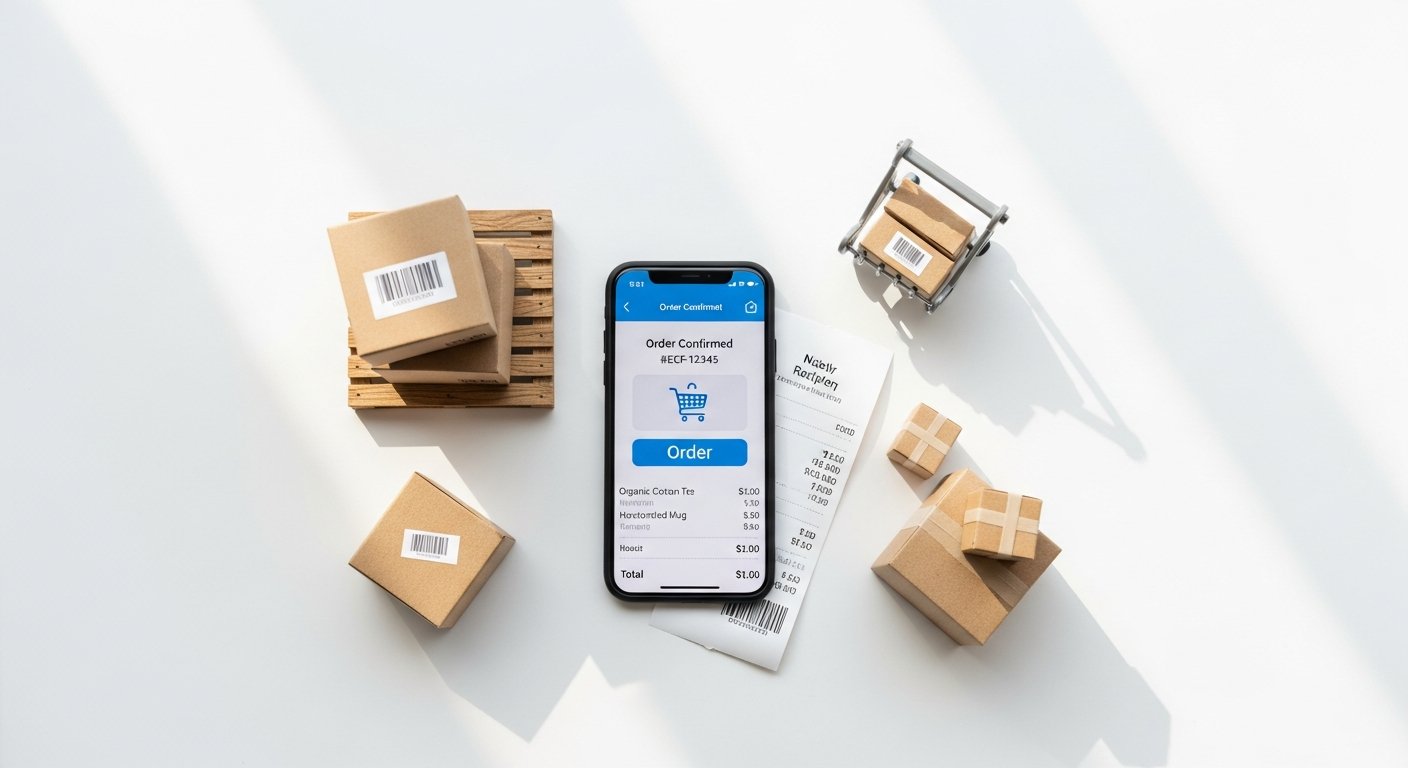
Ecommerce fulfillment is a multi-stage process, each step requiring precision, coordination, and often, specialized technology. Understanding these core components is crucial whether you manage fulfillment in-house or outsource it to a third-party logistics (3PL) provider. A breakdown of these stages reveals the complexity and the opportunities for optimization.
Inventory Management and Storage
The foundation of effective ecommerce fulfillment is robust inventory management. This stage involves receiving products from suppliers, accurately counting and logging them into a system, and storing them efficiently in a warehouse or fulfillment center. Proper inventory management ensures you know exactly what you have, where it is, and when you need to reorder.
- Receiving: Unloading incoming shipments, verifying contents against purchase orders, and checking for damage.
- Putaway: Storing items in designated locations within the warehouse. This should be optimized for quick retrieval (e.g., fast-moving items closer to packing stations).
- Stock Keeping Unit (SKU) Management: Assigning unique identifiers to each product variant to track inventory levels precisely.
- Inventory Control: Monitoring stock levels in real-time, preventing stockouts (out-of-stock items) and overstocking (excess inventory incurring holding costs).
- Warehouse Organization: Designing a logical layout for efficient movement of goods and personnel.
Accurate inventory data is paramount for D2C brands. Miscounts can lead to selling products you don’t have, causing cancellations and customer disappointment, or conversely, tying up capital in slow-moving stock.
Order Processing and Picking
Once a customer places an order, the fulfillment process truly kicks into gear. Order processing involves verifying the order, payment, and customer details, then sending it to the warehouse for picking.
- Order Retrieval: Orders are pulled from your e-commerce platform (like Shopify) and sent to the fulfillment system, often a Warehouse Management System (WMS) or Order Management System (OMS).
- Prioritization: Orders may be prioritized based on shipping speed (e.g., expedited vs. standard), customer value, or specific promotional requirements.
- Picking: Warehouse staff (or robots) locate and retrieve the specified items from their storage locations. Common picking methods include:
- Piece Picking: One picker collects items for a single order.
- Batch Picking: A picker collects items for multiple orders at once, then sorts them later.
- Zone Picking: Pickers are assigned to specific zones and only pick items within their area.
- Wave Picking: Combines elements of batch and zone picking, releasing groups of orders in waves.
Efficient picking minimizes the time and effort required, directly impacting order cycle time and labor costs. Errors at this stage, such as picking the wrong item or quantity, are costly to rectify.
Packing and Kitting
After picking, items are moved to a packing station. This stage involves selecting appropriate packaging materials, securely packing the items, and often includes value-added services like kitting or custom branding.
- Packaging Selection: Choosing the right size and type of box or mailer to protect the product while minimizing shipping costs (dimensional weight is a key factor).
- Protective Materials: Using void fill, bubble wrap, or custom inserts to prevent damage during transit.
- Kitting: Assembling multiple individual items into a single package or SKU (e.g., a beauty gift set, a subscription box). This is common for D2C brands offering bundles.
- Branding and Personalization: Adding branded tissue paper, custom stickers, thank-you notes, or other inserts that enhance the unboxing experience. This is a critical touchpoint for D2C brands.
- Labeling: Generating and attaching shipping labels, which include carrier information, tracking details, and recipient address.
Thoughtful packing protects your products and reinforces your brand. Subpar packaging can lead to damage, customer dissatisfaction, and expensive returns, whereas premium packaging can elevate the perceived value of your product.
Shipping and Last-Mile Delivery
This is arguably the most visible part of the fulfillment process to the customer. It involves handing off the packed orders to a carrier and managing their journey to the final destination.
- Carrier Selection: Choosing the right shipping carrier (e.g., UPS, FedEx, USPS, DHL, regional carriers) based on cost, speed, reliability, and destination.
- Rate Negotiation: For D2C businesses with significant volume, negotiating favorable rates with carriers is essential for cost control.
- Shipping Methods: Offering various options (standard, expedited, express) to meet different customer needs and price points.
- Tracking: Providing customers with tracking information so they can monitor their shipment’s progress. Proactive communication regarding delays is also crucial.
- Last-Mile Delivery: The final leg of the journey from a local distribution hub to the customer’s doorstep. This is often the most complex and expensive part of shipping.
Efficient shipping relies on robust integrations between your fulfillment system and carrier platforms to generate labels, calculate rates, and provide tracking seamlessly. For D2C brands, shipping costs and speed directly influence conversion rates and customer satisfaction. Optimizing shipping strategies is a key driver of retention.
[INLINE IMAGE 1: place after second H2 | alt=”ecommerce fulfillment concept illustration”]
Returns Management (Reverse Logistics)
Ecommerce fulfillment doesn’t end with delivery; it also includes managing returns. A streamlined returns process, known as reverse logistics, is crucial for customer satisfaction and managing inventory.
- Return Authorization: Allowing customers to easily initiate returns, often through an online portal.
- Return Shipping: Providing prepaid shipping labels or instructions for customers to send items back.
- Inspection and Processing: Receiving returned items, inspecting their condition, and determining if they can be restocked, refurbished, or disposed of.
- Refunds/Exchanges: Promptly processing refunds or sending out exchange items.
- Restocking/Disposal: Returning items to inventory, liquidating them, or sending them for repair/recycling.
A hassle-free returns policy can significantly boost customer confidence and loyalty. While returns represent a cost, an efficient reverse logistics process minimizes that cost and can even turn a potentially negative experience into a positive one, encouraging future purchases.
Types of Ecommerce Fulfillment Models: Choosing Your Strategy
The choice of an ecommerce fulfillment model is a strategic decision that impacts operational control, scalability, cost structure, and ultimately, your brand’s ability to grow. D2C businesses have several primary options, each with distinct advantages and disadvantages.
In-House Fulfillment: Control and Customization
In-house fulfillment, also known as self-fulfillment or merchant fulfillment, means handling every aspect of the fulfillment process yourself. This typically involves leasing warehouse space, hiring and managing staff, purchasing equipment, and integrating necessary software.
Advantages:
- Maximum Control: You have complete oversight of inventory, packaging, and the entire customer experience. This allows for highly customized branding, unique unboxing experiences, and precise quality control.
- Direct Data Access: Full access to your operational data, enabling in-depth analysis and optimization without relying on a third party.
- Flexibility: The ability to quickly adapt to changing needs, implement new processes, or respond to unexpected demand spikes with internal resources.
- Cost Savings (potentially): For very small operations or very large, highly optimized ones, in-house fulfillment can sometimes be more cost-effective as you cut out 3PL margins.
Disadvantages:
- High Overhead Costs: Significant capital investment in warehouse space, equipment (shelving, forklifts), software (WMS), and labor (salaries, benefits).
- Complexity & Time Commitment: Requires deep expertise in logistics, inventory management, and human resources. It diverts focus from core business activities like product development and marketing.
- Scalability Challenges: Scaling up during peak seasons or rapid growth can be difficult and expensive, often requiring more space, staff, and equipment. Scaling down is equally challenging.
- Geographic Limitations: Typically limited to one or a few warehouse locations, which can lead to higher shipping costs and longer delivery times for distant customers.
In-house fulfillment is often chosen by startups with low order volumes, brands requiring highly specialized handling (e.g., custom-built products), or very large enterprises with the resources and scale to optimize their own global networks.
Third-Party Logistics (3PL): Scaling Expertise
A 3PL provider is an external company that manages all or part of your ecommerce fulfillment operations. This includes warehousing, inventory management, order picking and packing, shipping, and often returns management. You typically integrate your e-commerce platform with the 3PL’s system.
Advantages:
- Scalability: 3PLs are designed to handle fluctuating order volumes. They have the infrastructure and labor force to scale up or down with your needs, making peak season management much smoother.
- Cost Savings: By aggregating volume from multiple clients, 3PLs often secure better shipping rates. They also eliminate the need for significant capital investment in infrastructure and labor on your part.
- Expertise & Technology: 3PLs specialize in logistics, bringing advanced WMS, automation, and best practices that small to medium D2C businesses might not otherwise access.
- Geographic Reach: Many 3PLs have multiple fulfillment centers across various regions, allowing you to store inventory closer to your customers, reducing shipping times and costs.
- Focus on Core Business: Outsourcing fulfillment frees up your team to concentrate on product development, marketing, and customer engagement.
Disadvantages:
- Less Control: You relinquish direct control over a critical part of the customer experience. This requires trust and clear communication with your 3PL.
- Integration Challenges: Integrating your systems with a 3PL’s can sometimes be complex, although most modern 3PLs offer robust integrations with popular e-commerce platforms like Shopify.
- Potential for Misalignment: If not properly vetted, a 3PL’s processes or values might not perfectly align with your brand, potentially impacting customer experience.
- Dependency: Your business becomes reliant on the 3PL’s performance.
3PLs are an excellent option for D2C brands experiencing growth, needing to scale, or looking to expand their geographic reach without significant capital outlay. Choosing the right 3PL is a critical decision that can dramatically impact your conversion rate and brand reputation.
Dropshipping: Asset-Light Entry
Dropshipping is a fulfillment method where the retailer doesn’t keep goods in stock. Instead, when a customer places an order, the retailer purchases the item from a third party (a manufacturer, wholesaler, or another retailer) who then ships it directly to the customer. The retailer acts as an intermediary, handling marketing and sales.
Advantages:
- Low Startup Costs: No need to purchase inventory upfront, lease warehouse space, or manage shipping.
- Wide Product Selection: Easily offer a vast array of products without inventory risk.
- Flexibility & Location Independence: Can be run from anywhere with an internet connection.
- Reduced Risk: Minimal financial risk as you only pay for products after a customer order is placed.
Disadvantages:
- Lower Profit Margins: Suppliers typically charge higher per-item costs, leading to thinner margins.
- Limited Control over Fulfillment: You have no control over inventory quality, shipping speed, packaging, or returns, which can severely impact customer experience and brand perception.
- Inventory Management Complexity: Keeping track of stock levels across multiple suppliers can be challenging, leading to unexpected stockouts.
- Supplier Dependency: Your reputation is entirely dependent on the supplier’s reliability.
Dropshipping is ideal for new entrepreneurs testing product ideas, niche markets, or those looking to start an e-commerce business with minimal upfront investment. It’s less suited for D2C brands focused on building a premium brand experience and maximizing profitability from physical goods.
Hybrid Models: The Best of Both Worlds
Many D2C brands adopt a hybrid approach, combining elements of in-house and outsourced fulfillment. This allows them to leverage the strengths of each model to suit specific needs.
- Core Products In-House, Seasonal/Niche with 3PL: Fulfill your best-selling, stable products internally, but outsource seasonal items or products with highly variable demand to a 3PL.
- Specialized Products In-House, General Products with 3PL: If you have products requiring unique assembly or personalization, keep that in-house, while standard items are handled by a 3PL.
- In-House for Local, 3PL for Geographic Expansion: Manage fulfillment for your local or core customer base yourself, but use a 3PL with multiple fulfillment centers to reach customers in distant regions more efficiently.
- FBA (Fulfillment by Amazon) for Amazon Sales, In-House/3PL for D2C: Many D2C brands sell on Amazon and use FBA for those sales, while maintaining a separate fulfillment strategy for their direct website sales.
Hybrid models offer flexibility and can be highly effective in optimizing costs and customer experience across different product lines or market segments.
Here’s a comparison of the primary ecommerce fulfillment models:
| Feature | In-House Fulfillment | 3PL Fulfillment | Dropshipping |
|---|---|---|---|
| Inventory Ownership | Retailer owns and stores inventory. | Retailer owns inventory, 3PL stores it. | Supplier owns and stores inventory. |
| Capital Investment | High (warehouse, equipment, staff). | Low (service fees, no infrastructure). | Very Low (no inventory purchase). |
| Operational Control | Highest (full control over process, packaging). | Moderate (dependent on 3PL’s processes). | Lowest (no control over fulfillment). |
| Scalability | Difficult and expensive to scale quickly. | High (3PLs designed for fluctuating demand). | High (easily add or remove products). |
| Shipping Costs & Speed | Can be optimized with volume, geographic limitations. | Often better rates, multiple locations for faster delivery. | Varies by supplier, often slower and less predictable. |
| Branding & Packaging | Full customization possible. | Can offer custom packaging, depends on 3PL. | Typically generic, limited branding options. |
| Complexity & Expertise | Requires significant logistics expertise. | Leverages 3PL’s expertise, reduces internal burden. | Simplest for retailer, transfers complexity to supplier. |
| Best Suited For | Small, niche, or very large D2C brands with resources. | Growing D2C brands seeking efficiency and scale. | New businesses, product testing, broad catalogs with low risk. |
[INLINE IMAGE 2: place after fourth H2 | alt=”ecommerce fulfillment comparison illustration”]
Key Metrics and KPIs for Fulfillment Success
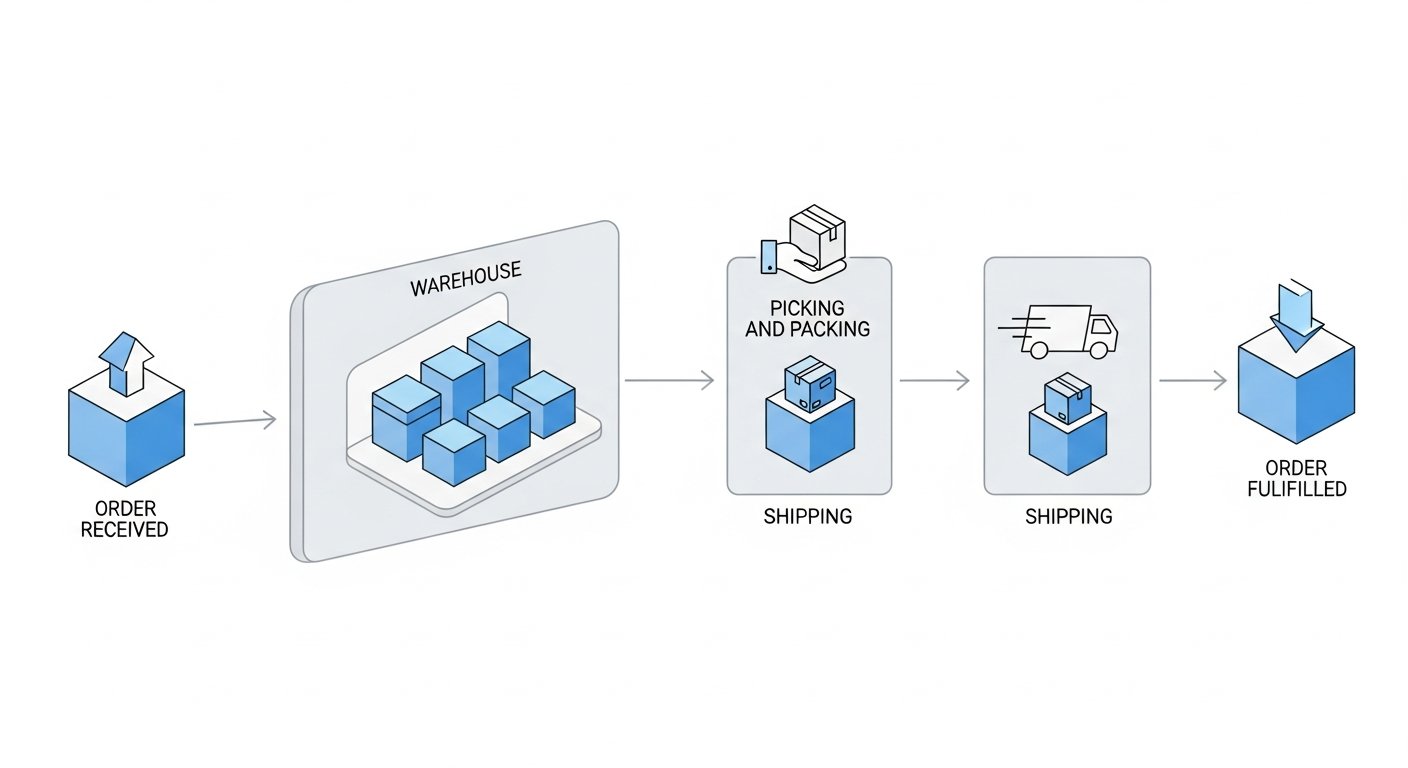
To truly optimize your ecommerce fulfillment operations, you need to measure what matters. Key Performance Indicators (KPIs) provide insights into efficiency, cost, and customer satisfaction, allowing D2C brands to identify areas for improvement and make data-driven decisions. Regularly tracking these metrics is fundamental to enhancing e-commerce operations and maintaining a competitive edge.
Order Accuracy Rate
This metric measures the percentage of orders shipped without errors (e.g., wrong item, wrong quantity, damaged product). A high accuracy rate is directly correlated with customer satisfaction and reduces costly returns and customer service inquiries.
Calculation: (Total Orders – Incorrect Orders) / Total Orders * 100%
Target: 99% or higher. Even a 1% error rate can lead to significant issues at scale.
On-Time Shipping Rate
Measures the percentage of orders that leave the warehouse within the promised timeframe. This doesn’t account for carrier delays, but rather your internal processing speed.
Calculation: (Orders Shipped On Time) / Total Orders Shipped * 100%
Target: 95% or higher. Crucial for meeting customer expectations regarding delivery speed.
Order Cycle Time (or Door-to-Door Time)
This KPI tracks the total time from when a customer places an order to when it is delivered to their doorstep. It encompasses order processing, picking, packing, and transit time. It’s a critical measure of overall fulfillment efficiency and customer experience.
Calculation: Time (Order Placed) – Time (Order Delivered)
Target: As short as possible, often ranging from 2-7 days depending on shipping options.
Inventory Turnover Rate
Indicates how many times inventory is sold and replaced over a period. A healthy turnover rate means you’re selling products efficiently without holding excessive stock, which ties up capital and incurs storage costs. Too low, and you’re holding too much; too high, and you risk stockouts.
Calculation: Cost of Goods Sold / Average Inventory Value
Target: Varies greatly by industry and product type, but generally, a higher rate is better, provided it doesn’t lead to frequent stockouts.
Customer Service Inquiries Related to Fulfillment
Monitoring the volume and nature of customer service contacts specifically related to fulfillment issues (e.g., “Where’s my order?”, “Wrong item received,” “Damaged package”) provides direct feedback on your fulfillment performance.
Calculation: Count of fulfillment-related tickets / Total orders shipped
Target: As low as possible. A decreasing trend indicates improvements.
Cost Per Order (CPO)
This comprehensive metric calculates the total cost associated with fulfilling a single order. It should include warehousing, labor (picking, packing), packaging materials, shipping fees, and a portion of overhead. This is a crucial indicator of profitability.
Calculation: Total Fulfillment Costs / Total Number of Orders
Target: Continuously optimize and reduce CPO without compromising quality or speed. Benchmarking against industry averages is useful.
Returns Rate
Measures the percentage of products returned by customers. While some returns are unavoidable, a high return rate can indicate issues with product quality, inaccurate descriptions, or a poor fulfillment experience (e.g., damaged items).
Calculation: (Number of Returned Items) / (Number of Items Sold) * 100%
Target: As low as possible, benchmarked against industry averages for your product category.
By regularly monitoring and analyzing these KPIs, D2C brands can gain actionable insights into their ecommerce fulfillment performance. This data empowers them to identify bottlenecks, streamline processes, negotiate better terms with suppliers and carriers, and ultimately drive greater profitability and customer satisfaction. Implementing robust analytics and reporting tools, whether provided by your 3PL or through internal systems, is essential for this continuous optimization.
Technology and Automation in Modern Fulfillment
The landscape of ecommerce fulfillment has been dramatically transformed by advancements in technology and automation. For D2C brands, leveraging these innovations is no longer a luxury but a necessity to maintain efficiency, accuracy, and competitiveness. From sophisticated software systems to advanced robotics, technology streamlines operations, reduces human error, and empowers faster, more cost-effective deliveries.
Warehouse Management Systems (WMS)
A WMS is the central nervous system of any modern fulfillment center. It’s software designed to control and manage all operations within a warehouse, from inventory receiving and storage to order picking, packing, and shipping.
- Real-time Inventory Tracking: Provides accurate, up-to-the-minute data on every SKU’s location and quantity, preventing stockouts and overstocking.
- Optimized Storage: Directs where to put away incoming inventory and suggests optimal picking paths for efficiency.
- Task Management: Assigns and monitors picking, packing, and shipping tasks to staff, improving workflow and reducing idle time.
- Reporting and Analytics: Generates data on warehouse performance, labor efficiency, and inventory movement, informing strategic decisions.
For D2C brands, a robust WMS, whether used in-house or by a 3PL, ensures that orders are processed quickly and accurately, minimizing errors and improving overall customer satisfaction.
Order Management Systems (OMS)
An OMS is a software application that centralizes and manages all aspects of the order lifecycle, from the moment a customer places an order until it’s delivered. While often integrated with a WMS, an OMS provides a broader view, connecting sales, inventory, and customer service.
- Order Aggregation: Consolidates orders from multiple sales channels (e.g., your D2C website, marketplaces like Amazon).
- Order Routing: Automatically routes orders to the most appropriate fulfillment location based on inventory availability, shipping costs, and customer location.
- Customer Communication: Manages order confirmations, shipping notifications, and tracking updates.
- Returns Management: Facilitates the return process, from authorization to refund.
An OMS is critical for D2C brands managing multiple sales channels or using distributed inventory, ensuring a single source of truth for all orders and a consistent customer experience.
Robotics and Automation
Robotics are increasingly being adopted in fulfillment centers to automate repetitive and physically demanding tasks, significantly boosting efficiency and accuracy.
- Automated Storage and Retrieval Systems (AS/RS): Robots move items to and from storage locations, reducing manual labor and maximizing vertical space.
- Picking Robots: Collaborative robots (cobots) work alongside humans, or fully autonomous mobile robots (AMRs) transport goods to pickers or even pick items themselves.
- Sorting Systems: Automated conveyors and sorters quickly direct packages to the correct shipping lanes.
- Packaging Automation: Machines that automatically box, bag, or label products, increasing throughput and consistency.
While the initial investment can be substantial, robotics offer D2C brands (especially those partnered with advanced 3PLs) benefits like 24/7 operation, reduced labor costs, fewer errors, and faster processing times, especially important for high-volume periods.
AI and Predictive Analytics
Artificial intelligence (AI) and machine learning are revolutionizing inventory forecasting and demand planning. By analyzing vast datasets, AI can predict future demand with greater accuracy than traditional methods.
- Demand Forecasting: AI algorithms analyze historical sales data, seasonal trends, marketing campaigns, and even external factors (like weather or news) to predict future demand.
- Inventory Optimization: Based on demand forecasts, AI recommends optimal stock levels, reorder points, and safety stock, minimizing both stockouts and excess inventory.
- Route Optimization: AI can analyze traffic patterns, delivery windows, and multiple variables to optimize delivery routes for maximum efficiency.
For D2C brands, AI-driven insights ensure that products are available when customers want them, reducing lost sales and optimizing working capital. This level of optimization directly impacts e-commerce conversion rates.
Shipping Software Integration
Integrating your e-commerce platform and fulfillment system with shipping software is crucial for streamlined label generation, rate shopping, and tracking.
- Multi-Carrier Integration: Connects to various shipping carriers, allowing for real-time rate comparison and label generation.
- Automated Labeling: Automatically creates shipping labels with the correct addresses, tracking numbers, and service types.
- Tracking & Notifications: Provides tracking information to customers and automatically sends shipping updates.
- Cost Optimization: Helps select the most cost-effective shipping method for each order based on weight, dimensions, destination, and desired speed.
These integrations save time, reduce manual errors, and ensure D2C brands can offer competitive shipping options while managing costs effectively. The combined power of these technologies allows D2C brands to execute complex ecommerce fulfillment strategies with unprecedented speed and precision, ultimately driving growth and enhancing the customer journey.
Choosing the Right Fulfillment Partner or Strategy for Your D2C Brand
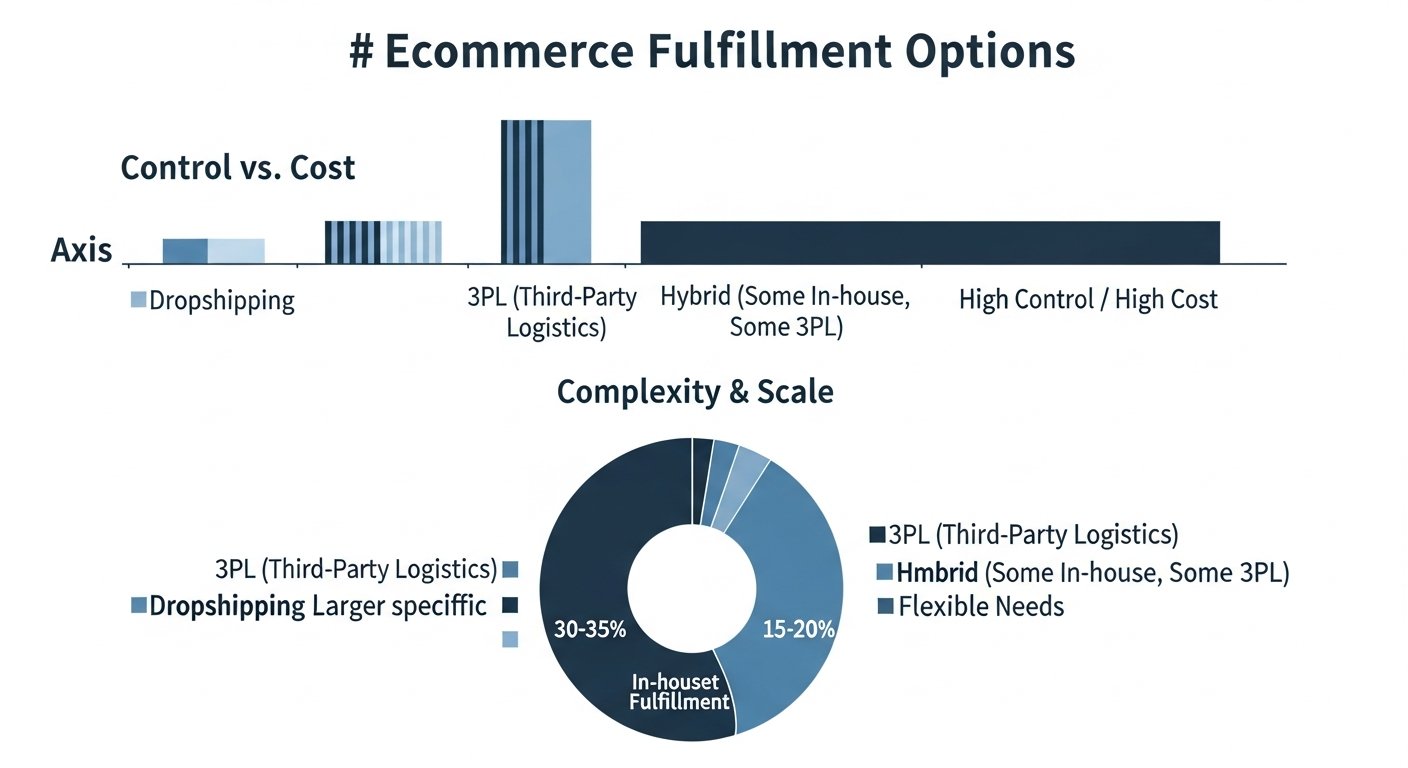
Selecting the optimal ecommerce fulfillment strategy is one of the most significant decisions a D2C brand will make. It’s not a one-size-fits-all choice, and the best approach depends on various factors unique to your business. This decision will profoundly impact your operational costs, customer satisfaction, and ability to scale.
Assessing Your Business Needs and Growth Projections
Before evaluating any specific model or partner, conduct a thorough internal assessment:
- Current Order Volume & Growth Rate: How many orders do you process daily, weekly, monthly? What are your projections for the next 1-3 years? Small volumes might justify in-house, but rapid growth quickly pushes brands towards 3PLs.
- Product Characteristics: Are your products small and lightweight, or large and bulky? Do they require special handling (e.g., fragile, temperature-sensitive, hazardous)? Do you offer kitting or personalization?
- Geographic Distribution of Customers: Are your customers concentrated in one region, or are they spread nationally/globally? Multiple fulfillment centers can significantly reduce shipping times and costs for widespread customer bases.
- Peak Season Volatility: Do you experience extreme spikes in orders during holidays or promotional periods? This can overwhelm in-house operations but is a core strength of 3PLs.
- Cash Flow and Capital Availability: How much capital are you willing or able to invest in warehouse space, equipment, and staff? 3PLs convert capital expenses into operational expenses.
- Desired Level of Control: How important is direct oversight of every detail of packaging and order processing to your brand?
Understanding these needs will help narrow down the most suitable fulfillment models and inform your requirements for a potential partner.
Evaluating Potential 3PL Partners
If outsourcing is the chosen path, selecting the right 3PL is paramount. It’s not just about cost; it’s about partnership and alignment with your brand’s values and customer experience goals.
- Experience and Specialization: Does the 3PL have experience with D2C brands, specifically in your industry (e.g., apparel, beauty, electronics, food)? Do they handle similar product types?
- Technology & Integration: Assess their WMS and OMS capabilities. Can they seamlessly integrate with your e-commerce platform (e.g., Shopify, Magento)? Do they offer real-time inventory visibility and robust reporting?
- Scalability: Can they comfortably handle your current volume and scale with your projected growth, including peak season spikes?
- Location of Fulfillment Centers: Do their facilities align with your customer base for optimal shipping times and costs? Do they offer multi-node fulfillment?
- Shipping Options & Carrier Relationships: What carriers do they work with? Can they offer competitive rates and a variety of shipping speeds (standard, expedited)?
- Value-Added Services: Do they offer services critical to your D2C brand, such as custom packaging, kitting, subscription box fulfillment, or specialized returns processing?
- Customer Service & Communication: What is their reputation for responsiveness and proactive communication? How will issues be resolved?
- Pricing Structure: Understand all fees: receiving, storage, picking/packing, shipping, kitting, returns, and any hidden charges. Compare apples to apples.
- Reputation and References: Ask for client references and check online reviews.
Treat the 3PL selection process like hiring a key employee or co-founder. A strong relationship built on trust and transparent communication is vital.
Cost Analysis and ROI
Financial analysis is a cornerstone of this decision. Calculate the Total Cost of Ownership (TCO) for both in-house and outsourced options over 3-5 years.
- In-House Costs: Include rent/mortgage, utilities, equipment purchase/lease, software licenses, labor (salaries, benefits
Ecommerce Fulfillment: The Ultimate Guide for D2C Profitability and Growth
Affiliate disclosure: This article may contain affiliate links. Recommendations are independent and editorially driven.
In the rapidly evolving world of direct-to-consumer (D2C) e-commerce, the journey from “add to cart” to “delivered” is more than just a logistical exercise; it’s a critical component of your brand’s promise, a direct driver of customer satisfaction, and a significant lever for profitability. This intricate dance, known as ecommerce fulfillment, encompasses every step involved in getting an online order into the customer’s hands.
For D2C brands, mastering ecommerce fulfillment isn’t merely about operational efficiency; it’s about crafting an experience. It’s about ensuring that the product quality, brand aesthetic, and customer service you meticulously build through marketing and website design are upheld—or even enhanced—by the speed, accuracy, and reliability of your delivery. In a competitive landscape where customer expectations are higher than ever, a seamless fulfillment process can be your ultimate differentiator, directly impacting conversion rates, customer lifetime value, and your bottom line.
This comprehensive guide will demystify ecommerce fulfillment for D2C businesses, covering everything from fundamental processes and strategic models to cutting-edge technologies and future trends. We’ll explore how optimized fulfillment can reduce costs, minimize returns, and transform one-time buyers into loyal brand advocates. Whether you’re just starting out or looking to scale your existing operations, understanding and strategically implementing robust ecommerce fulfillment practices is non-negotiable for sustained growth and profitability in 2026 and beyond.
What is Ecommerce Fulfillment and Why it’s a D2C Imperative?
Ecommerce fulfillment refers to the entire process of receiving, processing, and delivering customer orders placed online. It begins the moment a customer clicks “buy” and concludes when the product is successfully delivered, and potentially, when a return is processed. While often simplified to “shipping,” fulfillment is a complex ecosystem of interconnected activities, each vital to the overall customer experience and operational efficiency.
For D2C brands, the stakes are particularly high. Unlike traditional retail, where a customer might interact with a product in person before purchase, the D2C model relies heavily on building trust and delivering on promises made through digital channels. The physical delivery of the product is often the first tangible interaction a customer has with your brand after the online purchase. This moment is not just transactional; it’s experiential.
Beyond Just Shipping: A Strategic Imperative for D2C Success
Thinking of ecommerce fulfillment as merely shipping overlooks its strategic depth. For D2C brands, it’s a powerful tool for:
- Brand Building: Fast, accurate, and beautifully packaged deliveries reinforce brand quality and professionalism. Conversely, delayed, damaged, or incorrect orders can quickly erode trust and damage reputation.
- Customer Loyalty: A positive fulfillment experience leads to satisfied customers who are more likely to make repeat purchases and recommend your brand to others. Exceptional delivery can turn a casual buyer into a brand advocate.
- Conversion Rate Optimization: Transparent and reliable shipping options, including competitive speeds and costs, are key factors in reducing cart abandonment. When customers see clear, trustworthy delivery information, their confidence in completing the purchase increases.
- Profitability: Efficient fulfillment processes minimize errors, reduce shipping costs, and optimize inventory holding costs. Conversely, poor fulfillment leads to expensive returns, customer service issues, and lost sales due to stockouts.
- Scalability: A well-defined fulfillment strategy allows D2C businesses to grow without being bottlenecked by logistics. As order volumes increase, a robust system ensures continued seamless operation.
Ignoring the strategic importance of ecommerce fulfillment is akin to building a beautiful house on a weak foundation. No matter how compelling your marketing or how innovative your products, a faltering fulfillment process will inevitably compromise your D2C growth trajectory and long-term profitability.
The D2C Promise: Where Fulfillment Makes or Breaks
D2C brands promise a direct, unmediated relationship with their customers, often emphasizing unique products, personalized experiences, and strong brand values. Fulfillment is the physical manifestation of this promise. If a customer orders a premium, ethically sourced product, but it arrives late, damaged, or in generic, wasteful packaging, the entire brand narrative is undermined. Conversely, a thoughtfully packaged, swiftly delivered item reinforces the brand’s commitment to quality and customer care.
In essence, ecommerce fulfillment for D2C isn’t just an operational necessity; it’s an extension of your marketing, a cornerstone of your customer service, and a crucial determinant of your overall business success and online store profitability. Investing in and optimizing this aspect of your business is an investment in your brand’s future.
The Core Components of the Ecommerce Fulfillment Process
Ecommerce fulfillment is a multi-stage process, each step requiring precision, coordination, and often, specialized technology. Understanding these core components is crucial whether you manage fulfillment in-house or outsource it to a third-party logistics (3PL) provider. A breakdown of these stages reveals the complexity and the opportunities for optimization.
Inventory Management and Storage
The foundation of effective ecommerce fulfillment is robust inventory management. This stage involves receiving products from suppliers, accurately counting and logging them into a system, and storing them efficiently in a warehouse or fulfillment center. Proper inventory management ensures you know exactly what you have, where it is, and when you need to reorder.
- Receiving: Unloading incoming shipments, verifying contents against purchase orders, and checking for damage.
- Putaway: Storing items in designated locations within the warehouse. This should be optimized for quick retrieval (e.g., fast-moving items closer to packing stations).
- Stock Keeping Unit (SKU) Management: Assigning unique identifiers to each product variant to track inventory levels precisely.
- Inventory Control: Monitoring stock levels in real-time, preventing stockouts (out-of-stock items) and overstocking (excess inventory incurring holding costs).
- Warehouse Organization: Designing a logical layout for efficient movement of goods and personnel.
Accurate inventory data is paramount for D2C brands. Miscounts can lead to selling products you don’t have, causing cancellations and customer disappointment, or conversely, tying up capital in slow-moving stock.
Order Processing and Picking
Once a customer places an order, the fulfillment process truly kicks into gear. Order processing involves verifying the order, payment, and customer details, then sending it to the warehouse for picking.
- Order Retrieval: Orders are pulled from your e-commerce platform (like Shopify) and sent to the fulfillment system, often a Warehouse Management System (WMS) or Order Management System (OMS).
- Prioritization: Orders may be prioritized based on shipping speed (e.g., expedited vs. standard), customer value, or specific promotional requirements.
- Picking: Warehouse staff (or robots) locate and retrieve the specified items from their storage locations. Common picking methods include:
- Piece Picking: One picker collects items for a single order.
- Batch Picking: A picker collects items for multiple orders at once, then sorts them later.
- Zone Picking: Pickers are assigned to specific zones and only pick items within their area.
- Wave Picking: Combines elements of batch and zone picking, releasing groups of orders in waves.
Efficient picking minimizes the time and effort required, directly impacting order cycle time and labor costs. Errors at this stage, such as picking the wrong item or quantity, are costly to rectify.
Packing and Kitting
After picking, items are moved to a packing station. This stage involves selecting appropriate packaging materials, securely packing the items, and often includes value-added services like kitting or custom branding.
- Packaging Selection: Choosing the right size and type of box or mailer to protect the product while minimizing shipping costs (dimensional weight is a key factor).
- Protective Materials: Using void fill, bubble wrap, or custom inserts to prevent damage during transit.
- Kitting: Assembling multiple individual items into a single package or SKU (e.g., a beauty gift set, a subscription box). This is common for D2C brands offering bundles.
- Branding and Personalization: Adding branded tissue paper, custom stickers, thank-you notes, or other inserts that enhance the unboxing experience. This is a critical touchpoint for D2C brands.
- Labeling: Generating and attaching shipping labels, which include carrier information, tracking details, and recipient address.
Thoughtful packing protects your products and reinforces your brand. Subpar packaging can lead to damage, customer dissatisfaction, and expensive returns, whereas premium packaging can elevate the perceived value of your product.
Shipping and Last-Mile Delivery
This is arguably the most visible part of the fulfillment process to the customer. It involves handing off the packed orders to a carrier and managing their journey to the final destination.
- Carrier Selection: Choosing the right shipping carrier (e.g., UPS, FedEx, USPS, DHL, regional carriers) based on cost, speed, reliability, and destination.
- Rate Negotiation: For D2C businesses with significant volume, negotiating favorable rates with carriers is essential for cost control.
- Shipping Methods: Offering various options (standard, expedited, express) to meet different customer needs and price points.
- Tracking: Providing customers with tracking information so they can monitor their shipment’s progress. Proactive communication regarding delays is also crucial.
- Last-Mile Delivery: The final leg of the journey from a local distribution hub to the customer’s doorstep. This is often the most complex and expensive part of shipping.
Efficient shipping relies on robust integrations between your fulfillment system and carrier platforms to generate labels, calculate rates, and provide tracking seamlessly. For D2C brands, shipping costs and speed directly influence conversion rates and customer satisfaction. Optimizing shipping strategies is a key driver of retention.
[INLINE IMAGE 1: place after second H2 | alt=”ecommerce fulfillment concept illustration”]
Returns Management (Reverse Logistics)
Ecommerce fulfillment doesn’t end with delivery; it also includes managing returns. A streamlined returns process, known as reverse logistics, is crucial for customer satisfaction and managing inventory.
- Return Authorization: Allowing customers to easily initiate returns, often through an online portal.
- Return Shipping: Providing prepaid shipping labels or instructions for customers to send items back.
- Inspection and Processing: Receiving returned items, inspecting their condition, and determining if they can be restocked, refurbished, or disposed of.
- Refunds/Exchanges: Promptly processing refunds or sending out exchange items.
- Restocking/Disposal: Returning items to inventory, liquidating them, or sending them for repair/recycling.
A hassle-free returns policy can significantly boost customer confidence and loyalty. While returns represent a cost, an efficient reverse logistics process minimizes that cost and can even turn a potentially negative experience into a positive one, encouraging future purchases.
Types of Ecommerce Fulfillment Models: Choosing Your Strategy
The choice of an ecommerce fulfillment model is a strategic decision that impacts operational control, scalability, cost structure, and ultimately, your brand’s ability to grow. D2C businesses have several primary options, each with distinct advantages and disadvantages.
In-House Fulfillment: Control and Customization
In-house fulfillment, also known as self-fulfillment or merchant fulfillment, means handling every aspect of the fulfillment process yourself. This typically involves leasing warehouse space, hiring and managing staff, purchasing equipment, and integrating necessary software.
Advantages:
- Maximum Control: You have complete oversight of inventory, packaging, and the entire customer experience. This allows for highly customized branding, unique unboxing experiences, and precise quality control.
- Direct Data Access: Full access to your operational data, enabling in-depth analysis and optimization without relying on a third party.
- Flexibility: The ability to quickly adapt to changing needs, implement new processes, or respond to unexpected demand spikes with internal resources.
- Cost Savings (potentially): For very small operations or very large, highly optimized ones, in-house fulfillment can sometimes be more cost-effective as you cut out 3PL margins.
Disadvantages:
- High Overhead Costs: Significant capital investment in warehouse space, equipment (shelving, forklifts), software (WMS), and labor (salaries, benefits).
- Complexity & Time Commitment: Requires deep expertise in logistics, inventory management, and human resources. It diverts focus from core business activities like product development and marketing.
- Scalability Challenges: Scaling up during peak seasons or rapid growth can be difficult and expensive, often requiring more space, staff, and equipment. Scaling down is equally challenging.
- Geographic Limitations: Typically limited to one or a few warehouse locations, which can lead to higher shipping costs and longer delivery times for distant customers.
In-house fulfillment is often chosen by startups with low order volumes, brands requiring highly specialized handling (e.g., custom-built products), or very large enterprises with the resources and scale to optimize their own global networks.
Third-Party Logistics (3PL): Scaling Expertise
A 3PL provider is an external company that manages all or part of your ecommerce fulfillment operations. This includes warehousing, inventory management, order picking and packing, shipping, and often returns management. You typically integrate your e-commerce platform with the 3PL’s system.
Advantages:
- Scalability: 3PLs are designed to handle fluctuating order volumes. They have the infrastructure and labor force to scale up or down with your needs, making peak season management much smoother.
- Cost Savings: By aggregating volume from multiple clients, 3PLs often secure better shipping rates. They also eliminate the need for significant capital investment in infrastructure and labor on your part.
- Expertise & Technology: 3PLs specialize in logistics, bringing advanced WMS, automation, and best practices that small to medium D2C businesses might not otherwise access.
- Geographic Reach: Many 3PLs have multiple fulfillment centers across various regions, allowing you to store inventory closer to your customers, reducing shipping times and costs.
- Focus on Core Business: Outsourcing fulfillment frees up your team to concentrate on product development, marketing, and customer engagement.
Disadvantages:
- Less Control: You relinquish direct control over a critical part of the customer experience. This requires trust and clear communication with your 3PL.
- Integration Challenges: Integrating your systems with a 3PL’s can sometimes be complex, although most modern 3PLs offer robust integrations with popular e-commerce platforms like Shopify.
- Potential for Misalignment: If not properly vetted, a 3PL’s processes or values might not perfectly align with your brand, potentially impacting customer experience.
- Dependency: Your business becomes reliant on the 3PL’s performance.
3PLs are an excellent option for D2C brands experiencing growth, needing to scale, or looking to expand their geographic reach without significant capital outlay. Choosing the right 3PL is a critical decision that can dramatically impact your conversion rate and brand reputation.
Dropshipping: Asset-Light Entry
Dropshipping is a fulfillment method where the retailer doesn’t keep goods in stock. Instead, when a customer places an order, the retailer purchases the item from a third party (a manufacturer, wholesaler, or another retailer) who then ships it directly to the customer. The retailer acts as an intermediary, handling marketing and sales.
Advantages:
- Low Startup Costs: No need to purchase inventory upfront, lease warehouse space, or manage shipping.
- Wide Product Selection: Easily offer a vast array of products without inventory risk.
- Flexibility & Location Independence: Can be run from anywhere with an internet connection.
- Reduced Risk: Minimal financial risk as you only pay for products after a customer order is placed.
Disadvantages:
- Lower Profit Margins: Suppliers typically charge higher per-item costs, leading to thinner margins.
- Limited Control over Fulfillment: You have no control over inventory quality, shipping speed, packaging, or returns, which can severely impact customer experience and brand perception.
- Inventory Management Complexity: Keeping track of stock levels across multiple suppliers can be challenging, leading to unexpected stockouts.
- Supplier Dependency: Your reputation is entirely dependent on the supplier’s reliability.
Dropshipping is ideal for new entrepreneurs testing product ideas, niche markets, or those looking to start an e-commerce business with minimal upfront investment. It’s less suited for D2C brands focused on building a premium brand experience and maximizing profitability from physical goods.
Hybrid Models: The Best of Both Worlds
Many D2C brands adopt a hybrid approach, combining elements of in-house and outsourced fulfillment. This allows them to leverage the strengths of each model to suit specific needs.
- Core Products In-House, Seasonal/Niche with 3PL: Fulfill your best-selling, stable products internally, but outsource seasonal items or products with highly variable demand to a 3PL.
- Specialized Products In-House, General Products with 3PL: If you have products requiring unique assembly or personalization, keep that in-house, while standard items are handled by a 3PL.
- In-House for Local, 3PL for Geographic Expansion: Manage fulfillment for your local or core customer base yourself, but use a 3PL with multiple fulfillment centers to reach customers in distant regions more efficiently.
- FBA (Fulfillment by Amazon) for Amazon Sales, In-House/3PL for D2C: Many D2C brands sell on Amazon and use FBA for those sales, while maintaining a separate fulfillment strategy for their direct website sales.
Hybrid models offer flexibility and can be highly effective in optimizing costs and customer experience across different product lines or market segments.
Here’s a comparison of the primary ecommerce fulfillment models:
Feature In-House Fulfillment 3PL Fulfillment Dropshipping Inventory Ownership Retailer owns and stores inventory. Retailer owns inventory, 3PL stores it. Supplier owns and stores inventory. Capital Investment High (warehouse, equipment, staff). Low (service fees, no infrastructure). Very Low (no inventory purchase). Operational Control Highest (full control over process, packaging). Moderate (dependent on 3PL’s processes). Lowest (no control over fulfillment). Scalability Difficult and expensive to scale quickly. High (3PLs designed for fluctuating demand). High (easily add or remove products). Shipping Costs & Speed Can be optimized with volume, geographic limitations. Often better rates, multiple locations for faster delivery. Varies by supplier, often slower and less predictable. Branding & Packaging Full customization possible. Can offer custom packaging, depends on 3PL. Typically generic, limited branding options. Complexity & Expertise Requires significant logistics expertise. Leverages 3PL’s expertise, reduces internal burden. Simplest for retailer, transfers complexity to supplier. Best Suited For Small, niche, or very large D2C brands with resources. Growing D2C brands seeking efficiency and scale. New businesses, product testing, broad catalogs with low risk. [INLINE IMAGE 2: place after fourth H2 | alt=”ecommerce fulfillment comparison illustration”]
Key Metrics and KPIs for Fulfillment Success
To truly optimize your ecommerce fulfillment operations, you need to measure what matters. Key Performance Indicators (KPIs) provide insights into efficiency, cost, and customer satisfaction, allowing D2C brands to identify areas for improvement and make data-driven decisions. Regularly tracking these metrics is fundamental to enhancing e-commerce operations and maintaining a competitive edge.
Order Accuracy Rate
This metric measures the percentage of orders shipped without errors (e.g., wrong item, wrong quantity, damaged product). A high accuracy rate is directly correlated with customer satisfaction and reduces costly returns and customer service inquiries.
Calculation: (Total Orders – Incorrect Orders) / Total Orders * 100%
Target: 99% or higher. Even a 1% error rate can lead to significant issues at scale.On-Time Shipping Rate
Measures the percentage of orders that leave the warehouse within the promised timeframe. This doesn’t account for carrier delays, but rather your internal processing speed.
Calculation: (Orders Shipped On Time) / Total Orders Shipped * 100%
Target: 95% or higher. Crucial for meeting customer expectations regarding delivery speed.Order Cycle Time (or Door-to-Door Time)
This KPI tracks the total time from when a customer places an order to when it is delivered to their doorstep. It encompasses order processing, picking, packing, and transit time. It’s a critical measure of overall fulfillment efficiency and customer experience.
Calculation: Time (Order Placed) – Time (Order Delivered)
Target: As short as possible, often ranging from 2-7 days depending on shipping options.Inventory Turnover Rate
Indicates how many times inventory is sold and replaced over a period. A healthy turnover rate means you’re selling products efficiently without holding excessive stock, which ties up capital and incurs storage costs. Too low, and you’re holding too much; too high, and you risk stockouts.
Calculation: Cost of Goods Sold / Average Inventory Value
Target: Varies greatly by industry and product type, but generally, a higher rate is better, provided it doesn’t lead to frequent stockouts.Customer Service Inquiries Related to Fulfillment
Monitoring the volume and nature of customer service contacts specifically related to fulfillment issues (e.g., “Where’s my order?”, “Wrong item received,” “Damaged package”) provides direct feedback on your fulfillment performance.
Calculation: Count of fulfillment-related tickets / Total orders shipped
Target: As low as possible. A decreasing trend indicates improvements.Cost Per Order (CPO)
This comprehensive metric calculates the total cost associated with fulfilling a single order. It should include warehousing, labor (picking, packing), packaging materials, shipping fees, and a portion of overhead. This is a crucial indicator of profitability.
Calculation: Total Fulfillment Costs / Total Number of Orders
Target: Continuously optimize and reduce CPO without compromising quality or speed. Benchmarking against industry averages is useful.Returns Rate
Measures the percentage of products returned by customers. While some returns are unavoidable, a high return rate can indicate issues with product quality, inaccurate descriptions, or a poor fulfillment experience (e.g., damaged items).
Calculation: (Number of Returned Items) / (Number of Items Sold) * 100%
Target: As low as possible, benchmarked against industry averages for your product category.By regularly monitoring and analyzing these KPIs, D2C brands can gain actionable insights into their ecommerce fulfillment performance. This data empowers them to identify bottlenecks, streamline processes, negotiate better terms with suppliers and carriers, and ultimately drive greater profitability and customer satisfaction. Implementing robust analytics and reporting tools, whether provided by your 3PL or through internal systems, is essential for this continuous optimization.
Technology and Automation in Modern Fulfillment
The landscape of ecommerce fulfillment has been dramatically transformed by advancements in technology and automation. For D2C brands, leveraging these innovations is no longer a luxury but a necessity to maintain efficiency, accuracy, and competitiveness. From sophisticated software systems to advanced robotics, technology streamlines operations, reduces human error, and empowers faster, more cost-effective deliveries.
Warehouse Management Systems (WMS)
A WMS is the central nervous system of any modern fulfillment center. It’s software designed to control and manage all operations within a warehouse, from inventory receiving and storage to order picking, packing, and shipping.
- Real-time Inventory Tracking: Provides accurate, up-to-the-minute data on every SKU’s location and quantity, preventing stockouts and overstocking.
- Optimized Storage: Directs where to put away incoming inventory and suggests optimal picking paths for efficiency.
- Task Management: Assigns and monitors picking, packing, and shipping tasks to staff, improving workflow and reducing idle time.
- Reporting and Analytics: Generates data on warehouse performance, labor efficiency, and inventory movement, informing strategic decisions.
For D2C brands, a robust WMS, whether used in-house or by a 3PL, ensures that orders are processed quickly and accurately, minimizing errors and improving overall customer satisfaction.
Order Management Systems (OMS)
An OMS is a software application that centralizes and manages all aspects of the order lifecycle, from the moment a customer places an order until it’s delivered. While often integrated with a WMS, an OMS provides a broader view, connecting sales, inventory, and customer service.
- Order Aggregation: Consolidates orders from multiple sales channels (e.g., your D2C website, marketplaces like Amazon).
- Order Routing: Automatically routes orders to the most appropriate fulfillment location based on inventory availability, shipping costs, and customer location.
- Customer Communication: Manages order confirmations, shipping notifications, and tracking updates.
- Returns Management: Facilitates the return process, from authorization to refund.
An OMS is critical for D2C brands managing multiple sales channels or using distributed inventory, ensuring a single source of truth for all orders and a consistent customer experience.
Robotics and Automation
Robotics are increasingly being adopted in fulfillment centers to automate repetitive and physically demanding tasks, significantly boosting efficiency and accuracy.
- Automated Storage and Retrieval Systems (AS/RS): Robots move items to and from storage locations, reducing manual labor and maximizing vertical space.
- Picking Robots: Collaborative robots (cobots) work alongside humans, or fully autonomous mobile robots (AMRs) transport goods to pickers or even pick items themselves.
- Sorting Systems: Automated conveyors and sorters quickly direct packages to the correct shipping lanes.
- Packaging Automation: Machines that automatically box, bag, or label products, increasing throughput and consistency.
While the initial investment can be substantial, robotics offer D2C brands (especially those partnered with advanced 3PLs) benefits like 24/7 operation, reduced labor costs, fewer errors, and faster processing times, especially important for high-volume periods.
AI and Predictive Analytics
Artificial intelligence (AI) and machine learning are revolutionizing inventory forecasting and demand planning. By analyzing vast datasets, AI can predict future demand with greater accuracy than traditional methods.
- Demand Forecasting: AI algorithms analyze historical sales data, seasonal trends, marketing campaigns, and even external factors (like weather or news) to predict future demand.
- Inventory Optimization: Based on demand forecasts, AI recommends optimal stock levels, reorder points, and safety stock, minimizing both stockouts and excess inventory.
- Route Optimization: AI can analyze traffic patterns, delivery windows, and multiple variables to optimize delivery routes for maximum efficiency.
For D2C brands, AI-driven insights ensure that products are available when customers want them, reducing lost sales and optimizing working capital. This level of optimization directly impacts e-commerce conversion rates.
Shipping Software Integration
Integrating your e-commerce platform and fulfillment system with shipping software is crucial for streamlined label generation, rate shopping, and tracking.
- Multi-Carrier Integration: Connects to various shipping carriers, allowing for real-time rate comparison and label generation.
- Automated Labeling: Automatically creates shipping labels with the correct addresses, tracking numbers, and service types.
- Tracking & Notifications: Provides tracking information to customers and automatically sends shipping updates.
- Cost Optimization: Helps select the most cost-effective shipping method for each order based on weight, dimensions, destination, and desired speed.
These integrations save time, reduce manual errors, and ensure D2C brands can offer competitive shipping options while managing costs effectively. The combined power of these technologies allows D2C brands to execute complex ecommerce fulfillment strategies with unprecedented speed and precision, ultimately driving growth and enhancing the customer journey.
Choosing the Right Fulfillment Partner or Strategy for Your D2C Brand
Selecting the optimal ecommerce fulfillment strategy is one of the most significant decisions a D2C brand will make. It’s not a one-size-fits-all choice, and the best approach depends on various factors unique to your business. This decision will profoundly impact your operational costs, customer satisfaction, and ability to scale.
Assessing Your Business Needs and Growth Projections
Before evaluating any specific model or partner, conduct a thorough internal assessment:
- Current Order Volume & Growth Rate: How many orders do you process daily, weekly, monthly? What are your projections for the next 1-3 years? Small volumes might justify in-house, but rapid growth quickly pushes brands towards 3PLs.
- Product Characteristics: Are your products small and lightweight, or large and bulky? Do they require special handling (e.g., fragile, temperature-sensitive, hazardous)? Do you offer kitting or personalization?
- Geographic Distribution of Customers: Are your customers concentrated in one region, or are they spread nationally/globally? Multiple fulfillment centers can significantly reduce shipping times and costs for widespread customer bases.
- Peak Season Volatility: Do you experience extreme spikes in orders during holidays or promotional periods? This can overwhelm in-house operations but is a core strength of 3PLs.
- Cash Flow and Capital Availability: How much capital are you willing or able to invest in warehouse space, equipment, and staff? 3PLs convert capital expenses into operational expenses.
- Desired Level of Control: How important is direct oversight of every detail of packaging and order processing to your brand?
Understanding these needs will help narrow down the most suitable fulfillment models and inform your requirements for a potential partner.
Evaluating Potential 3PL Partners
If outsourcing is the chosen path, selecting the right 3PL is paramount. It’s not just about cost; it’s about partnership and alignment with your brand’s values and customer experience goals.
- Experience and Specialization: Does the 3PL have experience with D2C brands, specifically in your industry (e.g., apparel, beauty, electronics, food)? Do they handle similar product types?
- Technology & Integration: Assess their WMS and OMS capabilities. Can they seamlessly integrate with your e-commerce platform (e.g., Shopify, Magento)? Do they offer real-time inventory visibility and robust reporting?
- Scalability: Can they comfortably handle your current volume and scale with your projected growth, including peak season spikes?
- Location of Fulfillment Centers: Do their facilities align with your customer base for optimal shipping times and costs? Do they offer multi-node fulfillment?
- Shipping Options & Carrier Relationships: What carriers do they work with? Can they offer competitive rates and a variety of shipping speeds (standard, expedited)?
- Value-Added Services: Do they offer services critical to your D2C brand, such as custom packaging, kitting, subscription box fulfillment, or specialized returns processing?
- Customer Service & Communication: What is their reputation for responsiveness and proactive communication? How will issues be resolved?
- Pricing Structure: Understand all fees: receiving, storage, picking/packing, shipping, kitting, returns, and any hidden charges. Compare apples to apples.
- Reputation and References: Ask for client references and check online reviews.
Treat the 3PL selection process like hiring a key employee or co-founder. A strong relationship built on trust and transparent communication is vital.
Cost Analysis and ROI
Financial analysis is a cornerstone of this decision. Calculate the Total Cost of Ownership (TCO) for both in-house and outsourced options over 3-5 years.
- In-House Costs: Include rent/mortgage, utilities, equipment purchase/lease, software licenses, labor (salaries, benefits
