
Mastering Paid Social for Ecommerce in 2026: Your Ultimate Guide to Profitability and Growth
Affiliate disclosure: This article may contain affiliate links. Recommendations are independent and editorially driven.
In the dynamic world of e-commerce, where consumer attention is a prized commodity and organic reach an increasingly elusive dream, mastering paid social for ecommerce has become not just an advantage, but a foundational necessity. For D2C brands and Shopify store owners striving for optimal conversion rates, enhanced profitability, and sustainable growth, paid social channels offer an unparalleled opportunity to connect with target audiences, drive high-intent traffic, and ultimately, convert browsers into loyal customers.
The landscape of digital advertising is constantly evolving, with new platforms, algorithms, and privacy regulations reshaping how brands engage with their prospects. In 2026, a sophisticated understanding of paid social strategies is more critical than ever. This comprehensive guide from e-comprofits delves deep into the strategies, platforms, and best practices required to build, execute, and optimize winning paid social campaigns specifically tailored for e-commerce success. Whether you’re looking to scale your existing operations, launch a new product line, or simply improve your return on ad spend (ROAS), this article will equip you with the insights and actionable steps to thrive.
We’ll explore everything from selecting the right platforms and crafting compelling ad creatives to implementing advanced targeting techniques and meticulously measuring performance. Our goal is to empower you with the knowledge to navigate the complexities of paid social, transforming it from a mere marketing expense into a powerful engine for predictable and profitable e-commerce growth.
The Indispensable Role of Paid Social in Modern Ecommerce
The digital storefronts of today operate in an ecosystem far removed from the early days of the internet. Competition is fierce, attention spans are fleeting, and consumers are bombarded with choices. In this environment, paid social media advertising has emerged as a critical lifeline for e-commerce businesses, offering precision, scale, and measurability that few other channels can match.
Beyond Organic Reach: Why Paid is Non-Negotiable
Gone are the days when a robust organic social media strategy alone could guarantee significant visibility or drive substantial sales for most e-commerce businesses. Algorithm changes across major platforms (Meta, TikTok, Pinterest, etc.) have drastically reduced organic reach for business pages. While organic content remains vital for community building and brand identity, relying solely on it to acquire new customers is no longer a viable growth strategy for the vast majority of D2C brands.
Paid social, conversely, allows you to bypass these algorithmic limitations, ensuring your meticulously crafted messages reach your precise target audience. It provides a level playing field, enabling even nascent brands to compete with established giants, provided they have a sound strategy and compelling offer. It’s an investment that, when managed correctly, yields returns far beyond the initial outlay, driving direct sales and contributing significantly to overall profitability.
Connecting with Your Audience Where They Live
Social media platforms are where billions of people spend a significant portion of their online lives. They are spaces for discovery, entertainment, connection, and increasingly, shopping. Paid social allows e-commerce brands to seamlessly integrate their products and brand messaging into these native environments. Instead of waiting for customers to seek out your website, you can proactively present your offerings to them in a non-intrusive, contextually relevant manner as they scroll through their feeds.
This omnipresence is crucial for D2C growth. By placing your brand directly in the path of potential customers during their leisure time, you foster brand awareness, build recall, and ultimately shorten the path to purchase. It’s about being where your customers are, engaging them on their terms, and guiding them towards a desirable outcome – a purchase.
Data-Driven Decisions for Superior ROI
Perhaps one of the most compelling aspects of paid social for e-commerce is the wealth of data it provides. Every click, impression, conversion, and interaction is meticulously tracked and reported. This granular data empowers marketers to make informed, data-driven decisions that continuously optimize campaigns for superior return on investment (ROI).
From understanding which creatives resonate most effectively to identifying your most profitable audience segments, paid social platforms offer robust analytics tools. This allows for rapid iteration, A/B testing of different variables (audiences, creatives, ad copy, landing pages), and dynamic budget allocation towards what’s working best. The ability to pivot quickly based on performance metrics means less wasted ad spend and a more efficient path to achieving your e-commerce goals, whether that’s boosting conversion rates, increasing average order value (AOV), or expanding customer lifetime value (CLTV).
Understanding the Core Platforms for Paid Social Ecommerce

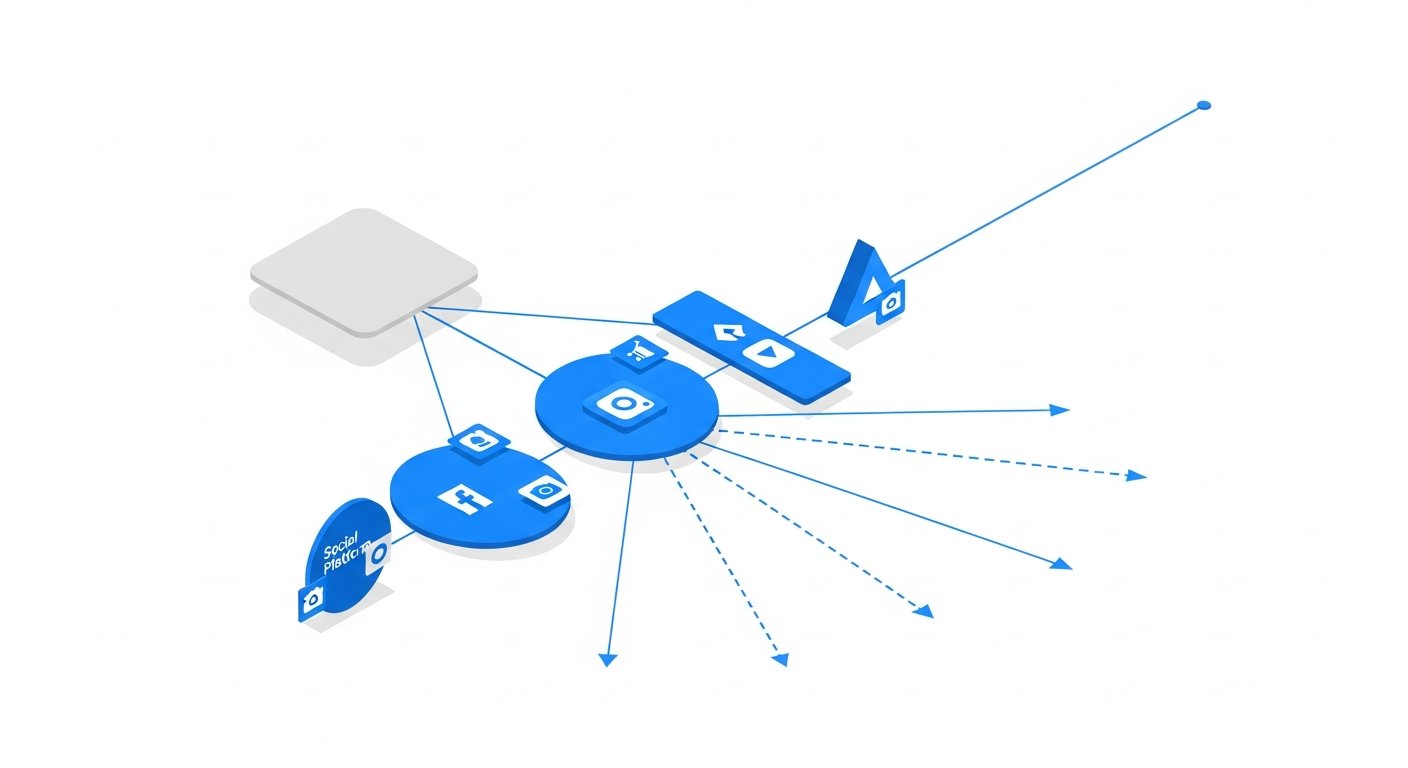
The paid social landscape is diverse, with each platform offering unique advantages for e-commerce brands. Selecting the right channels depends heavily on your target audience, product type, marketing objectives, and budget. Here’s a breakdown of the key players in 2026:
[INLINE IMAGE 1: place after second H2 | alt=”paid social for ecommerce concept illustration”]
Meta (Facebook & Instagram) for Direct Response
Meta, encompassing Facebook and Instagram, remains the undisputed powerhouse for e-commerce paid social. With billions of users worldwide, sophisticated targeting capabilities, and a mature advertising infrastructure, Meta ads are often the first port of call for D2C brands. They excel in direct response marketing, driving immediate purchases and lead generation.
- Audience Size and Targeting: Unparalleled reach and incredibly granular targeting options based on demographics, interests, behaviors, custom audiences (from your CRM), and lookalike audiences.
- Ad Formats: A vast array of formats including image, video, carousel, collection, instant experience, and dynamic product ads (DPAs) that automatically showcase products from your catalog to relevant users.
- Conversion Focus: Highly optimized for conversions, making it ideal for driving sales, adding to cart, and generating leads directly to your e-commerce store.
- Shop Integrations: Deep integrations with Facebook and Instagram Shops facilitate in-app purchasing and product discovery.
TikTok: Capturing the Attention Economy
TikTok has rapidly ascended to become a critical platform for e-commerce, especially for brands targeting younger demographics (Gen Z and younger millennials). Its short-form video content format fosters high engagement and virality, creating unique opportunities for product discovery and trend-driven sales.
- Algorithmic Discovery: TikTok’s “For You Page” algorithm is incredibly effective at matching content with user interests, allowing even small brands to go viral and reach massive audiences organically and through paid promotion.
- Authenticity and UGC: Brands thrive on TikTok by embracing authentic, user-generated content (UGC) styles, often collaborating with creators. Paid ads that mimic organic content perform exceptionally well.
- Ad Formats: In-Feed Ads, TopView Ads (full-screen, first impression), Brand Takeovers, Branded Hashtag Challenges, and Collection Ads, with increasing e-commerce-focused features like TikTok Shop.
- Rapid Trend Adoption: Ideal for brands that can quickly adapt to and leverage trending sounds, challenges, and content styles to showcase their products.
Pinterest: Visual Discovery and Purchase Intent
Pinterest functions more as a visual search engine and discovery platform than a traditional social network, making it inherently powerful for e-commerce. Users come to Pinterest with high purchase intent, actively seeking inspiration for purchases, projects, and life events.
- High Purchase Intent: Pinners are planners. They’re looking for ideas, products, and solutions, often at the beginning of their purchase journey. This makes them highly receptive to product-focused ads.
- Visual Appeal: Ideal for visually appealing products (fashion, home decor, beauty, food, crafts). High-quality images and videos are paramount.
- Evergreen Content: Pins have a longer shelf life than content on other platforms, continuing to drive traffic and sales long after initial posting.
- Ad Formats: Standard Pins, Video Pins, Idea Pins, Collection Pins, and Shopping Ads directly integrate with product catalogs, showing real-time price and stock information.
YouTube: Video Commerce and Brand Building
As the world’s second-largest search engine and primary video platform, YouTube offers immense potential for e-commerce, especially for brands looking to tell a deeper story, provide product demonstrations, or leverage influencer marketing.
- Rich Content: Long-form video allows for comprehensive product reviews, tutorials, unboxings, and brand storytelling that builds trust and demonstrates value.
- Powerful Targeting: Leverages Google’s vast data for precise audience targeting based on demographics, interests, search history, and viewing behavior.
- Ad Formats: Skippable In-Stream Ads, Non-Skippable In-Stream Ads, Bumper Ads (short, impactful), In-Feed Video Ads, and Outstream Ads. Shoppable features are also expanding.
- Influencer Marketing: Highly effective for collaborations with creators whose audiences align with your brand, often driving significant awareness and conversions.
LinkedIn: Niche B2B Ecommerce and High-Value Leads
While often associated with B2B services, LinkedIn can be a surprisingly effective platform for B2B e-commerce brands selling specialized products or services to businesses, or for D2C brands targeting professionals with higher disposable income or specific interests.
- Professional Targeting: Unrivaled targeting by job title, industry, company size, skills, and professional interests.
- High-Value Leads: Ideal for e-commerce brands selling premium B2B products (e.g., specialized software, industrial equipment, corporate gifting, professional development tools) or luxury D2C items where the target audience has specific professional affiliations.
- Ad Formats: Sponsored Content (image, video, carousel), Message Ads (formerly Sponsored InMail), Conversation Ads, and Text Ads.
X (formerly Twitter): Real-Time Engagement and Trend Leveraging
X is characterized by its real-time nature, making it excellent for news, trending topics, and immediate engagement. For e-commerce, it can be effective for driving traffic during flash sales, product launches, or engaging with specific communities.
- Event-Driven Marketing: Great for capitalizing on trending hashtags, real-time events, or limited-time offers.
- Direct Engagement: Facilitates direct conversations with customers and immediate customer service, building brand loyalty.
- Ad Formats: Promoted Tweets (image, video, carousel), Follower Ads, Website Cards, App Cards. Shopping features are being continuously explored and integrated.
- Niche Communities: Excellent for targeting specific interest groups and communities that are active on the platform.
Crafting a Winning Paid Social Strategy for Your Ecommerce Business
A successful paid social strategy for e-commerce is not merely about launching ads; it’s about a holistic approach that aligns with your business objectives, understands your audience, and continuously optimizes for performance. Here’s how to build one.
Defining Your Goals and KPIs
Before spending a single dollar, clearly define what you want to achieve. Vague goals lead to wasted ad spend. For e-commerce, common goals include:
- Increase Sales/Revenue: The most direct goal, measured by ROAS (Return on Ad Spend) and total revenue generated.
- Improve Conversion Rate: Focusing on optimizing the percentage of visitors who complete a purchase.
- Boost Average Order Value (AOV): Encouraging customers to buy more per transaction through strategic product bundling or upsells.
- Acquire New Customers: Measured by Cost Per Acquisition (CPA) and customer lifetime value (CLTV).
- Increase Brand Awareness: Measured by reach, impressions, and brand mentions, typically for newer brands or product launches.
- Drive Website Traffic: Measured by click-through rate (CTR) and landing page views, often a precursor to sales.
Establish specific, measurable, achievable, relevant, and time-bound (SMART) KPIs for each goal. For example: “Achieve a 3x ROAS for new customer acquisition campaigns on Meta within Q3 2026.”
Knowing Your Audience Inside Out
Effective targeting is the bedrock of profitable paid social. This requires a deep understanding of your ideal customer, beyond basic demographics. Create detailed buyer personas that encompass:
- Demographics: Age, gender, location, income, education.
- Psychographics: Interests, hobbies, values, lifestyle, personality traits.
- Behaviors: Online shopping habits, preferred social media platforms, purchase history, content consumption.
- Pain Points and Desires: What problems does your product solve? What aspirations does it fulfill?
Leverage existing customer data (CRM, past purchases), website analytics, and competitor analysis to refine these personas. This knowledge will guide your platform selection, creative development, and targeting parameters.
Budget Allocation and Bid Strategies
Your budget needs to be allocated strategically across platforms, campaigns, and audience segments. Start with a test budget to gather data, then scale what works. Consider:
- Total Budget: How much can you afford to spend monthly or quarterly?
- Platform Allocation: Which platforms are most likely to reach your audience and achieve your goals? Don’t spread yourself too thin initially.
- Campaign Structure: Allocate budget across different campaign types (e.g., prospecting, retargeting, brand awareness).
- Bid Strategies:
- Lowest Cost/Automatic Bidding: Let the platform optimize for the lowest cost per result. Good for beginners.
- Cost Cap/Bid Cap: Set a maximum cost per result or bid amount, giving you more control but potentially limiting reach.
- Target ROAS: Tell the platform your desired return on ad spend, and it will optimize to achieve that. Advanced strategy for scaling.
Regularly review and adjust your budget and bid strategies based on performance data.
Creative Development: The Hook That Converts
In a scroll-heavy environment, your ad creative is your first, and often only, chance to grab attention. For e-commerce, compelling visuals and concise copy are paramount.
- High-Quality Visuals: Professional product photography, engaging videos, and appealing graphics are non-negotiable. Showcase your product in use, highlight its benefits, and tell a story.
- Clear Value Proposition: Immediately communicate why your product is relevant and valuable to the viewer. What problem does it solve? What benefit does it offer?
- Strong Call-to-Action (CTA): Make it unambiguous. “Shop Now,” “Learn More,” “Get Yours,” “Discover Collection” – guide the user to the next step.
- Platform-Specific Adaptation: Tailor creatives for each platform. TikTok demands authenticity, Instagram focuses on aesthetics, Pinterest on inspiration.
- A/B Testing: Continuously test different headlines, ad copy, images, videos, and CTAs to identify what resonates best with your audience.
Landing Page Optimization: Sealing the Deal
Your ad might grab attention, but your landing page converts. A seamless user experience from ad click to purchase is crucial. Ensure your landing pages are:
- Relevant: The content and offer on the landing page must directly match the ad that brought the user there. Consistency builds trust.
- Mobile-Optimized: The vast majority of social media traffic is mobile. Pages must load quickly and display perfectly on all devices.
- Clear and Concise: Easy to read, clear product descriptions, high-quality images/videos, transparent pricing.
- User-Friendly: Intuitive navigation, clear add-to-cart buttons, minimal distractions.
- Fast Loading: Page speed is a ranking factor and critical for user experience. Slow pages lead to high bounce rates.
Optimizing your landing pages is just as important as optimizing your ads for maximizing your conversion rate and overall e-commerce profitability.
Advanced Targeting Techniques to Maximize Ecommerce Conversions
While basic demographic and interest targeting are a good starting point, the true power of paid social for e-commerce lies in its advanced targeting capabilities. These techniques allow you to reach highly qualified prospects and re-engage those who have shown interest, driving down your CPA and boosting your ROAS.
[INLINE IMAGE 2: place after fourth H2 | alt=”paid social for ecommerce comparison illustration”]
Lookalike Audiences: Expanding Your Reach Smartly
Lookalike Audiences (or Similar Audiences on some platforms) are one of the most powerful tools for scaling successful campaigns. Once you have a strong customer base or a highly engaged segment, you can create a lookalike audience based on their characteristics. The platform then finds new users who share similar attributes, behaviors, and interests as your existing valuable customers.
- Source Audiences: Use high-quality sources like website visitors (who viewed a product page), purchasers, email subscribers, or even your highest-value customers from your CRM.
- Percentage Match: Platforms typically allow you to specify the “similarity” percentage (e.g., 1% lookalike is most similar but smaller, 10% is broader but less precise). Start with smaller percentages for prospecting.
- Scaling: Once a 1-2% lookalike performs well, test broader lookalikes (e.g., 5-10%) to expand your reach.
Retargeting and Dynamic Product Ads (DPAs): Capturing Abandoned Carts
Retargeting (or remarketing) is essential for e-commerce. It allows you to re-engage users who have interacted with your brand but haven’t yet converted. These users have already shown some level of interest, making them much more likely to convert than cold prospects.
- Website Visitors: Target users who visited specific product pages, category pages, or spent a certain amount of time on your site.
- Abandoned Cart Recovery: Crucially, retarget users who added items to their cart but did not complete the purchase. DPAs are particularly effective here.
- Dynamic Product Ads (DPAs): These automatically show specific products to users who have viewed them on your website or added them to their cart. DPAs are highly personalized, featuring the exact products the user showed interest in, often with compelling calls to action like “Complete Your Purchase” or “Don’t Miss Out.” They are a cornerstone of D2C growth strategies.
- Engagement Retargeting: Target users who engaged with your social media content (liked, commented, watched a video) but didn’t visit your website.
Customer List Uploads and CRM Integration
Leverage your existing customer data by uploading lists directly to advertising platforms. This allows for hyper-targeted campaigns.
- Existing Customer Exclusions: Exclude current customers from prospecting campaigns to avoid wasting ad spend on those who have already purchased.
- Customer Retention & Upselling: Create specific campaigns to cross-sell new products, promote loyalty programs, or announce exclusive offers to your existing customer base.
- Win-Back Campaigns: Target inactive customers with special incentives to encourage repeat purchases.
- CRM Integration: Many e-commerce platforms and CRMs integrate directly with ad platforms, allowing for automated syncing of customer lists and more sophisticated segmentation.
Geotargeting and Event-Based Targeting
For businesses with physical locations or those targeting specific regions, geotargeting is invaluable. Event-based targeting allows you to capitalize on real-world occurrences.
- Local Promotions: Target customers within a specific radius of your physical store or pop-up event.
- Seasonal/Holiday Campaigns: Tailor ads to specific holiday shopping periods or cultural events relevant to your product (e.g., Valentine’s Day, Black Friday, Mother’s Day).
- Weather-Based Targeting: Some advanced tools allow targeting based on local weather conditions, useful for products like apparel, outdoor gear, or beverages.
Essential Ad Formats and Creative Best Practices for Ecommerce
The success of your paid social campaigns hinges significantly on the ad formats you choose and the quality of your creatives. Different formats serve different purposes and appeal to various stages of the customer journey. Understanding these distinctions and applying best practices will significantly boost your conversion rates.
Image Ads: Simplicity and Impact
Still image ads are the most common and often the simplest to create. They are highly effective for showcasing individual products, announcing sales, or reinforcing brand identity.
- Best Practices: Use high-resolution, visually appealing product photography. Showcase the product in a lifestyle context. Keep text overlay minimal and impactful. Ensure a clear CTA.
- Use Cases: New product launches, seasonal promotions, brand awareness, direct product sales.
Video Ads: Storytelling and Engagement
Video is king across most social platforms, offering a dynamic way to capture attention, demonstrate product features, and tell your brand story. From short, snappy clips to longer narratives, video can drive significant engagement.
- Best Practices: Hook viewers in the first 3 seconds. Keep videos concise and to the point (especially for platforms like TikTok). Add captions, as many users watch without sound. Demonstrate product benefits and features clearly. Include a strong CTA.
- Use Cases: Product demonstrations, unboxing videos, behind-the-scenes content, brand storytelling, customer testimonials.
Carousel Ads: Showcasing Multiple Products
Carousel ads allow you to display multiple images or videos within a single ad unit, each with its own link. This format is incredibly versatile for e-commerce.
- Best Practices: Use to showcase different angles of a single product, multiple products in a collection, or different features of a complex product. Maintain a consistent visual theme. Ensure each card tells part of a story or highlights a specific benefit.
- Use Cases: Product collections, step-by-step guides, demonstrating product versatility, telling a brand story visually.
Collection Ads: Immersive Shopping Experiences
Collection ads (prominent on Meta) offer an immersive, full-screen mobile experience. They feature a main video or image with several smaller product images below it. Tapping the ad opens an instant experience storefront within the social platform.
- Best Practices: Use a captivating main visual. Curate relevant products that complement the main creative. Optimize the instant experience for quick loading and easy navigation.
- Use Cases: Highlighting a new collection, seasonal drops, “shop the look” campaigns, themed product assortments.
Shoppable Ads: Direct Path to Purchase
Many platforms are integrating direct shopping capabilities, allowing users to discover and purchase products without leaving the app. These “shoppable” formats often include product tags or dedicated shopping sections.
- Best Practices: Ensure your product catalog is accurately synced. Use clear product tags. Optimize product pages for mobile. Provide seamless checkout experiences.
- Use Cases: Impulse purchases, direct sales from influencers, streamlining the purchase journey.
User-Generated Content (UGC): Authenticity Drives Sales
UGC, created by customers rather than the brand, lends unparalleled authenticity and trustworthiness to your ads. It often performs exceptionally well because it feels genuine and relatable.
- Best Practices: Encourage customers to share their experiences. Repurpose compelling UGC (with permission). Feature real customers using your products in everyday scenarios.
- Use Cases: Building social proof, increasing trust, highly effective for testimonials and product reviews.
Here’s a comparison of popular paid social ad formats for e-commerce:
| Ad Format | Platform Suitability | Primary Benefit for Ecommerce | Best Use Case | Creative Considerations |
|---|---|---|---|---|
| Single Image Ad | Meta, Pinterest, X, LinkedIn | Quick brand/product awareness, direct promotion | New product announcement, sale promotions, simple product display | High-res image, clear CTA, concise copy |
| Video Ad | Meta, TikTok, YouTube, X | Engaging storytelling, product demonstrations, brand building | Product launch, how-to guides, customer testimonials, brand narrative | Hook in 3s, captions, clear message, mobile-first video |
| Carousel Ad | Meta, Pinterest, LinkedIn | Showcasing multiple products or product features | Product collections, “shop the look,” feature highlights of one product | Consistent visual style, each card tells a story, strong individual CTAs |
| Collection Ad | Meta (Facebook/Instagram) | Immersive shopping experience, driving discovery and purchase | New seasonal collection, themed product bundles, showcasing lifestyle | Captivating hero visual, curated product selection, optimized instant experience |
| Dynamic Product Ad (DPA) | Meta, Pinterest, TikTok (via catalog) | Personalized retargeting, abandoned cart recovery | Reminding users of viewed/abandoned products, cross-selling | Automated, requires robust product catalog, clear offer (e.g., “Complete Purchase”) |
| Shoppable Ad | Instagram, TikTok, Pinterest (increasingly) | Direct in-app purchase, reduced friction | Impulse purchases, direct sales from content, influencer partnerships | Seamless product tagging, optimized in-app checkout, clear product info |
Measuring Success: Analytics and Optimization for Paid Social Campaigns
Running paid social campaigns without robust measurement is like flying blind. For e-commerce businesses, understanding performance metrics, setting up proper tracking, and continuously optimizing is paramount to achieving profitability and scaling growth. This iterative process of analysis and adjustment is what transforms ad spend into profit.
Key Metrics to Track (ROAS, CPA, CTR, CVR)
While many metrics are available, these are critical for e-commerce success:
- Return on Ad Spend (ROAS): This is arguably the most important metric for e-commerce. It measures the revenue generated for every dollar spent on advertising.
ROAS = (Revenue from Ads / Ad Spend)A ROAS of 3x means you made $3 for every $1 spent. Your target ROAS will depend on your profit margins and business goals.
- Cost Per Acquisition (CPA) / Cost Per Purchase: This tells you how much it costs to acquire a single customer or sale.
CPA = (Total Ad Spend / Number of Purchases)Understanding your CPA relative to your Average Order Value (AOV) and Customer Lifetime Value (CLTV) is crucial for long-term profitability.
- Click-Through Rate (CTR): The percentage of people who clicked on your ad after seeing it. A higher CTR indicates your ad creative and copy are engaging and relevant.
CTR = (Clicks / Impressions) * 100 - Conversion Rate (CVR): The percentage of people who clicked your ad and then completed a desired action (e.g., made a purchase, added to cart) on your website. This reflects the effectiveness of your landing page and overall user journey.
CVR = (Conversions / Clicks) * 100 - Average Order Value (AOV): The average amount customers spend per purchase. While not a direct ad metric, it’s vital for understanding the profitability of your CPA.
- Customer Lifetime Value (CLTV): The total revenue you expect to generate from a customer over their entire relationship with your brand. High CLTV allows for higher initial CPA.
Setting Up Conversion Tracking and Pixels
Accurate tracking is the backbone of effective optimization. Every major social platform offers a pixel (e.g., Meta Pixel, TikTok Pixel, Pinterest Tag) or conversion tracking code that you install on your e-commerce website.
- Pixel Installation: Ensure the pixel is correctly installed across all relevant pages of your Shopify or D2C store. Many platforms have direct integrations or offer plugins.
- Event Tracking: Configure standard events (Page View, Add to Cart, Initiate Checkout, Purchase) and custom events relevant to your business. This allows you to track specific actions and build targeted audiences.
- Server-Side Tracking (Conversions API): In response to increasing privacy restrictions, implementing server-side tracking (like Meta’s Conversions API or Google Tag Manager’s server-side container) is becoming essential. This provides more reliable data by sending conversion data directly from your server to the ad platform, circumventing browser-based blockers. This is critical for e-commerce marketing efficiency in a privacy-first world.
A/B Testing: Iterative Improvement
A/B testing (or split testing) is a systematic approach to optimize campaign performance by comparing two versions of an ad, audience, or landing page to see which performs better. It’s a continuous process.
- Isolate Variables: Test one element at a time (e.g., headline, image, CTA, audience segment, bid strategy).
- Run Simultaneously: Ensure tests run concurrently to minimize external factors influencing results.
- Statistical Significance: Wait until you have enough data for statistically significant results before declaring a winner.
- Implement and Iterate: Implement the winning variant and then test another element. This continuous optimization leads to significant improvements over time.
Attribution Models: Understanding the Customer Journey
Attribution models help you understand which touchpoints (ads, organic posts, email, etc.) contributed to a conversion. The customer journey is rarely linear, and different models provide different insights.
- Last-Click Attribution: Assigns 100% of the credit to the last touchpoint before conversion. Simple but often incomplete.
- First-Click Attribution: Assigns 100% of the credit to the first touchpoint. Good for understanding initial discovery.
- Linear Attribution: Distributes credit equally across all touchpoints in the conversion path.
- Time Decay Attribution: Gives more credit to touchpoints closer in time to the conversion.
- Position-Based (U-shaped) Attribution: Assigns more credit to the first and last touchpoints, with the remainder distributed among middle interactions.
- Data-Driven Attribution: (Recommended if available) Uses machine learning to assign credit based on your specific historical conversion data. This is the most accurate as it understands the true impact of each touchpoint.
Choose an attribution model that aligns with your business philosophy and helps you accurately assess the value of your paid social efforts, especially for understanding conversion rate optimization across channels.
Reporting and Dashboards: Actionable Insights
Regularly review your campaign performance through intuitive dashboards and reports. Don’t just look at raw numbers; seek actionable insights.
- Custom Dashboards: Create dashboards that display your most critical KPIs in an easy-to-digest format.
- Regular Reviews: Schedule daily, weekly, and monthly reviews to track trends, identify anomalies, and make timely adjustments.
- Cohort Analysis: Analyze the behavior of customer groups acquired through specific campaigns or during particular periods to understand long-term value.
- Holistic View: Integrate data from various sources (ad platforms, Google Analytics, CRM) to get a complete picture of your marketing performance and profitability.
Overcoming Common Challenges in Paid Social for Ecommerce
While paid social offers immense opportunities, it also comes with its share of challenges. Proactive strategies to address these hurdles are essential for sustained e-commerce profitability and growth.
Ad Fatigue and Creative Refresh
Even the best ad creative will eventually suffer from ad fatigue, where your target audience becomes desensitized to your message, leading to declining CTRs and rising CPAs. This is a perpetual challenge in paid social.
- Monitoring Frequency: Keep an eye on your ad frequency (how many times a user sees your ad). High frequency can be a sign of fatigue.
- Creative Rotation: Implement a strict schedule for refreshing your ad creatives. Aim to introduce new variations weekly or bi-weekly, especially for broad prospecting campaigns.
- Content Variety: Don’t just change the image; experiment with different ad formats (video, carousel, UGC), copy angles (problem/solution, benefit-driven, scarcity), and calls to action.
- Audience Segmentation: Break down large audiences into smaller segments, allowing you to tailor creatives more specifically and reduce frequency for individual users.
Navigating Privacy Changes and Data Restrictions
The digital advertising landscape is increasingly privacy-centric. Changes like Apple’s App Tracking Transparency (ATT) framework and Google’s move away from third-party cookies significantly impact data collection and targeting capabilities.
- First-Party Data Reliance: Increase your reliance on first-party data (data collected directly from your customers, like email lists, website purchases). Use this data for custom audiences and lookalikes.
- Server-Side Tracking: Implement server-side tracking (e.g., Meta’s Conversions API, Google Tag Manager server-side) to improve the reliability and accuracy of your conversion tracking, circumventing some browser-level restrictions.
- Consent Management: Ensure your website has a robust consent management platform (CMP) that adheres to privacy regulations like GDPR and CCPA.
- Embrace New Measurement Solutions: Keep abreast of privacy-preserving measurement solutions offered by ad platforms, such as aggregated event measurement and modeled conversions.
- Diversify Channels: Don’t put all your eggs in one basket. Diversify your marketing channels to reduce dependence on any single platform’s data policies.
Budget Optimization and Scaling Challenges
Scaling successful campaigns while maintaining ROAS is a common struggle. As you increase ad spend, efficiency can decrease due to audience saturation, increased competition, or creative fatigue.
- Gradual Scaling: Increase budgets incrementally (e.g., 10-20% every few days) rather than sudden, large jumps. This allows the algorithms to adapt.
- Audience Expansion: When scaling, expand your audience by creating new lookalikes (e.g., 3-5% from 1-2%), testing broader interests, or diversifying into new demographics.
- Diversify Creatives: Continually introduce new creatives to prevent ad fatigue as you scale reach.
- Automated Rules: Use automated rules within ad platforms to manage budgets, turn off underperforming ads, or scale up successful ones based on predefined KPIs.
- Full-Funnel Strategy: Ensure you have campaigns targeting all stages of the customer journey (awareness, consideration, conversion, retention) to create a sustainable scaling strategy.
Combatting Ad Fraud
Ad fraud, where bots or fraudulent traffic inflate impressions and clicks without genuine user engagement, can eat into your ad budget and skew your data. While social platforms have built-in protections, it remains a concern.
- Monitor Anomalies: Keep an eye on unusual spikes in impressions or clicks that don’t translate into on-site activity or conversions.
- Use Fraud Detection Tools: Consider third-party ad fraud detection and prevention tools for larger budgets.
- Traffic Quality Checks: Monitor metrics like bounce rate, time on site, and pages per session for traffic coming from your paid social campaigns. High bounce rates or very low engagement could indicate fraudulent clicks.
- IP Exclusion: If you identify suspicious IP addresses or ranges, you can often exclude them from your targeting.
The Future of Paid Social in Ecommerce: Trends to Watch
The landscape of paid social for e-commerce is in constant flux, driven by technological advancements, evolving consumer behaviors, and changing privacy regulations. Staying ahead of these trends is crucial for
Mastering Paid Social for Ecommerce in 2026: Your Ultimate Guide to Profitability and Growth
Affiliate disclosure: This article may contain affiliate links. Recommendations are independent and editorially driven.
In the dynamic world of e-commerce, where consumer attention is a prized commodity and organic reach an increasingly elusive dream, mastering paid social for ecommerce has become not just an advantage, but a foundational necessity. For D2C brands and Shopify store owners striving for optimal conversion rates, enhanced profitability, and sustainable growth, paid social channels offer an unparalleled opportunity to connect with target audiences, drive high-intent traffic, and ultimately, convert browsers into loyal customers.
The landscape of digital advertising is constantly evolving, with new platforms, algorithms, and privacy regulations reshaping how brands engage with their prospects. In 2026, a sophisticated understanding of paid social strategies is more critical than ever. This comprehensive guide from e-comprofits delves deep into the strategies, platforms, and best practices required to build, execute, and optimize winning paid social campaigns specifically tailored for e-commerce success. Whether you’re looking to scale your existing operations, launch a new product line, or simply improve your return on ad spend (ROAS), this article will equip you with the insights and actionable steps to thrive.
We’ll explore everything from selecting the right platforms and crafting compelling ad creatives to implementing advanced targeting techniques and meticulously measuring performance. Our goal is to empower you with the knowledge to navigate the complexities of paid social, transforming it from a mere marketing expense into a powerful engine for predictable and profitable e-commerce growth.
The Indispensable Role of Paid Social in Modern Ecommerce
The digital storefronts of today operate in an ecosystem far removed from the early days of the internet. Competition is fierce, attention spans are fleeting, and consumers are bombarded with choices. In this environment, paid social media advertising has emerged as a critical lifeline for e-commerce businesses, offering precision, scale, and measurability that few other channels can match.
Beyond Organic Reach: Why Paid is Non-Negotiable
Gone are the days when a robust organic social media strategy alone could guarantee significant visibility or drive substantial sales for most e-commerce businesses. Algorithm changes across major platforms (Meta, TikTok, Pinterest, etc.) have drastically reduced organic reach for business pages. While organic content remains vital for community building and brand identity, relying solely on it to acquire new customers is no longer a viable growth strategy for the vast majority of D2C brands.
Paid social, conversely, allows you to bypass these algorithmic limitations, ensuring your meticulously crafted messages reach your precise target audience. It provides a level playing field, enabling even nascent brands to compete with established giants, provided they have a sound strategy and compelling offer. It’s an investment that, when managed correctly, yields returns far beyond the initial outlay, driving direct sales and contributing significantly to overall profitability.
Connecting with Your Audience Where They Live
Social media platforms are where billions of people spend a significant portion of their online lives. They are spaces for discovery, entertainment, connection, and increasingly, shopping. Paid social allows e-commerce brands to seamlessly integrate their products and brand messaging into these native environments. Instead of waiting for customers to seek out your website, you can proactively present your offerings to them in a non-intrusive, contextually relevant manner as they scroll through their feeds.
This omnipresence is crucial for D2C growth. By placing your brand directly in the path of potential customers during their leisure time, you foster brand awareness, build recall, and ultimately shorten the path to purchase. It’s about being where your customers are, engaging them on their terms, and guiding them towards a desirable outcome – a purchase.
Data-Driven Decisions for Superior ROI
Perhaps one of the most compelling aspects of paid social for e-commerce is the wealth of data it provides. Every click, impression, conversion, and interaction is meticulously tracked and reported. This granular data empowers marketers to make informed, data-driven decisions that continuously optimize campaigns for superior return on investment (ROI).
From understanding which creatives resonate most effectively to identifying your most profitable audience segments, paid social platforms offer robust analytics tools. This allows for rapid iteration, A/B testing of different variables (audiences, creatives, ad copy, landing pages), and dynamic budget allocation towards what’s working best. The ability to pivot quickly based on performance metrics means less wasted ad spend and a more efficient path to achieving your e-commerce goals, whether that’s boosting conversion rates, increasing average order value (AOV), or expanding customer lifetime value (CLTV).
Understanding the Core Platforms for Paid Social Ecommerce
The paid social landscape is diverse, with each platform offering unique advantages for e-commerce brands. Selecting the right channels depends heavily on your target audience, product type, marketing objectives, and budget. Here’s a breakdown of the key players in 2026:
[INLINE IMAGE 1: place after second H2 | alt=”paid social for ecommerce concept illustration”]
Meta (Facebook & Instagram) for Direct Response
Meta, encompassing Facebook and Instagram, remains the undisputed powerhouse for e-commerce paid social. With billions of users worldwide, sophisticated targeting capabilities, and a mature advertising infrastructure, Meta ads are often the first port of call for D2C brands. They excel in direct response marketing, driving immediate purchases and lead generation.
- Audience Size and Targeting: Unparalleled reach and incredibly granular targeting options based on demographics, interests, behaviors, custom audiences (from your CRM), and lookalike audiences.
- Ad Formats: A vast array of formats including image, video, carousel, collection, instant experience, and dynamic product ads (DPAs) that automatically showcase products from your catalog to relevant users.
- Conversion Focus: Highly optimized for conversions, making it ideal for driving sales, adding to cart, and generating leads directly to your e-commerce store.
- Shop Integrations: Deep integrations with Facebook and Instagram Shops facilitate in-app purchasing and product discovery.
TikTok: Capturing the Attention Economy
TikTok has rapidly ascended to become a critical platform for e-commerce, especially for brands targeting younger demographics (Gen Z and younger millennials). Its short-form video content format fosters high engagement and virality, creating unique opportunities for product discovery and trend-driven sales.
- Algorithmic Discovery: TikTok’s “For You Page” algorithm is incredibly effective at matching content with user interests, allowing even small brands to go viral and reach massive audiences organically and through paid promotion.
- Authenticity and UGC: Brands thrive on TikTok by embracing authentic, user-generated content (UGC) styles, often collaborating with creators. Paid ads that mimic organic content perform exceptionally well.
- Ad Formats: In-Feed Ads, TopView Ads (full-screen, first impression), Brand Takeovers, Branded Hashtag Challenges, and Collection Ads, with increasing e-commerce-focused features like TikTok Shop.
- Rapid Trend Adoption: Ideal for brands that can quickly adapt to and leverage trending sounds, challenges, and content styles to showcase their products.
Pinterest: Visual Discovery and Purchase Intent
Pinterest functions more as a visual search engine and discovery platform than a traditional social network, making it inherently powerful for e-commerce. Users come to Pinterest with high purchase intent, actively seeking inspiration for purchases, projects, and life events.
- High Purchase Intent: Pinners are planners. They’re looking for ideas, products, and solutions, often at the beginning of their purchase journey. This makes them highly receptive to product-focused ads.
- Visual Appeal: Ideal for visually appealing products (fashion, home decor, beauty, food, crafts). High-quality images and videos are paramount.
- Evergreen Content: Pins have a longer shelf life than content on other platforms, continuing to drive traffic and sales long after initial posting.
- Ad Formats: Standard Pins, Video Pins, Idea Pins, Collection Pins, and Shopping Ads directly integrate with product catalogs, showing real-time price and stock information.
YouTube: Video Commerce and Brand Building
As the world’s second-largest search engine and primary video platform, YouTube offers immense potential for e-commerce, especially for brands looking to tell a deeper story, provide product demonstrations, or leverage influencer marketing.
- Rich Content: Long-form video allows for comprehensive product reviews, tutorials, unboxings, and brand storytelling that builds trust and demonstrates value.
- Powerful Targeting: Leverages Google’s vast data for precise audience targeting based on demographics, interests, search history, and viewing behavior.
- Ad Formats: Skippable In-Stream Ads, Non-Skippable In-Stream Ads, Bumper Ads (short, impactful), In-Feed Video Ads, and Outstream Ads. Shoppable features are also expanding.
- Influencer Marketing: Highly effective for collaborations with creators whose audiences align with your brand, often driving significant awareness and conversions.
LinkedIn: Niche B2B Ecommerce and High-Value Leads
While often associated with B2B services, LinkedIn can be a surprisingly effective platform for B2B e-commerce brands selling specialized products or services to businesses, or for D2C brands targeting professionals with higher disposable income or specific interests.
- Professional Targeting: Unrivaled targeting by job title, industry, company size, skills, and professional interests.
- High-Value Leads: Ideal for e-commerce brands selling premium B2B products (e.g., specialized software, industrial equipment, corporate gifting, professional development tools) or luxury D2C items where the target audience has specific professional affiliations.
- Ad Formats: Sponsored Content (image, video, carousel), Message Ads (formerly Sponsored InMail), Conversation Ads, and Text Ads.
X (formerly Twitter): Real-Time Engagement and Trend Leveraging
X is characterized by its real-time nature, making it excellent for news, trending topics, and immediate engagement. For e-commerce, it can be effective for driving traffic during flash sales, product launches, or engaging with specific communities.
- Event-Driven Marketing: Great for capitalizing on trending hashtags, real-time events, or limited-time offers.
- Direct Engagement: Facilitates direct conversations with customers and immediate customer service, building brand loyalty.
- Ad Formats: Promoted Tweets (image, video, carousel), Follower Ads, Website Cards, App Cards. Shopping features are being continuously explored and integrated.
- Niche Communities: Excellent for targeting specific interest groups and communities that are active on the platform.
Crafting a Winning Paid Social Strategy for Your Ecommerce Business
A successful paid social strategy for e-commerce is not merely about launching ads; it’s about a holistic approach that aligns with your business objectives, understands your audience, and continuously optimizes for performance. Here’s how to build one.
Defining Your Goals and KPIs
Before spending a single dollar, clearly define what you want to achieve. Vague goals lead to wasted ad spend. For e-commerce, common goals include:
- Increase Sales/Revenue: The most direct goal, measured by ROAS (Return on Ad Spend) and total revenue generated.
- Improve Conversion Rate: Focusing on optimizing the percentage of visitors who complete a purchase.
- Boost Average Order Value (AOV): Encouraging customers to buy more per transaction through strategic product bundling or upsells.
- Acquire New Customers: Measured by Cost Per Acquisition (CPA) and customer lifetime value (CLTV).
- Increase Brand Awareness: Measured by reach, impressions, and brand mentions, typically for newer brands or product launches.
- Drive Website Traffic: Measured by click-through rate (CTR) and landing page views, often a precursor to sales.
Establish specific, measurable, achievable, relevant, and time-bound (SMART) KPIs for each goal. For example: “Achieve a 3x ROAS for new customer acquisition campaigns on Meta within Q3 2026.”
Knowing Your Audience Inside Out
Effective targeting is the bedrock of profitable paid social. This requires a deep understanding of your ideal customer, beyond basic demographics. Create detailed buyer personas that encompass:
- Demographics: Age, gender, location, income, education.
- Psychographics: Interests, hobbies, values, lifestyle, personality traits.
- Behaviors: Online shopping habits, preferred social media platforms, purchase history, content consumption.
- Pain Points and Desires: What problems does your product solve? What aspirations does it fulfill?
Leverage existing customer data (CRM, past purchases), website analytics, and competitor analysis to refine these personas. This knowledge will guide your platform selection, creative development, and targeting parameters.
Budget Allocation and Bid Strategies
Your budget needs to be allocated strategically across platforms, campaigns, and audience segments. Start with a test budget to gather data, then scale what works. Consider:
- Total Budget: How much can you afford to spend monthly or quarterly?
- Platform Allocation: Which platforms are most likely to reach your audience and achieve your goals? Don’t spread yourself too thin initially.
- Campaign Structure: Allocate budget across different campaign types (e.g., prospecting, retargeting, brand awareness).
- Bid Strategies:
- Lowest Cost/Automatic Bidding: Let the platform optimize for the lowest cost per result. Good for beginners.
- Cost Cap/Bid Cap: Set a maximum cost per result or bid amount, giving you more control but potentially limiting reach.
- Target ROAS: Tell the platform your desired return on ad spend, and it will optimize to achieve that. Advanced strategy for scaling.
Regularly review and adjust your budget and bid strategies based on performance data.
Creative Development: The Hook That Converts
In a scroll-heavy environment, your ad creative is your first, and often only, chance to grab attention. For e-commerce, compelling visuals and concise copy are paramount.
- High-Quality Visuals: Professional product photography, engaging videos, and appealing graphics are non-negotiable. Showcase your product in use, highlight its benefits, and tell a story.
- Clear Value Proposition: Immediately communicate why your product is relevant and valuable to the viewer. What problem does it solve? What benefit does it offer?
- Strong Call-to-Action (CTA): Make it unambiguous. “Shop Now,” “Learn More,” “Get Yours,” “Discover Collection” – guide the user to the next step.
- Platform-Specific Adaptation: Tailor creatives for each platform. TikTok demands authenticity, Instagram focuses on aesthetics, Pinterest on inspiration.
- A/B Testing: Continuously test different headlines, ad copy, images, videos, and CTAs to identify what resonates best with your audience.
Landing Page Optimization: Sealing the Deal
Your ad might grab attention, but your landing page converts. A seamless user experience from ad click to purchase is crucial. Ensure your landing pages are:
- Relevant: The content and offer on the landing page must directly match the ad that brought the user there. Consistency builds trust.
- Mobile-Optimized: The vast majority of social media traffic is mobile. Pages must load quickly and display perfectly on all devices.
- Clear and Concise: Easy to read, clear product descriptions, high-quality images/videos, transparent pricing.
- User-Friendly: Intuitive navigation, clear add-to-cart buttons, minimal distractions.
- Fast Loading: Page speed is a ranking factor and critical for user experience. Slow pages lead to high bounce rates.
Optimizing your landing pages is just as important as optimizing your ads for maximizing your conversion rate and overall e-commerce profitability.
Advanced Targeting Techniques to Maximize Ecommerce Conversions
While basic demographic and interest targeting are a good starting point, the true power of paid social for e-commerce lies in its advanced targeting capabilities. These techniques allow you to reach highly qualified prospects and re-engage those who have shown interest, driving down your CPA and boosting your ROAS.
[INLINE IMAGE 2: place after fourth H2 | alt=”paid social for ecommerce comparison illustration”]
Lookalike Audiences: Expanding Your Reach Smartly
Lookalike Audiences (or Similar Audiences on some platforms) are one of the most powerful tools for scaling successful campaigns. Once you have a strong customer base or a highly engaged segment, you can create a lookalike audience based on their characteristics. The platform then finds new users who share similar attributes, behaviors, and interests as your existing valuable customers.
- Source Audiences: Use high-quality sources like website visitors (who viewed a product page), purchasers, email subscribers, or even your highest-value customers from your CRM.
- Percentage Match: Platforms typically allow you to specify the “similarity” percentage (e.g., 1% lookalike is most similar but smaller, 10% is broader but less precise). Start with smaller percentages for prospecting.
- Scaling: Once a 1-2% lookalike performs well, test broader lookalikes (e.g., 5-10%) to expand your reach.
Retargeting and Dynamic Product Ads (DPAs): Capturing Abandoned Carts
Retargeting (or remarketing) is essential for e-commerce. It allows you to re-engage users who have interacted with your brand but haven’t yet converted. These users have already shown some level of interest, making them much more likely to convert than cold prospects.
- Website Visitors: Target users who visited specific product pages, category pages, or spent a certain amount of time on your site.
- Abandoned Cart Recovery: Crucially, retarget users who added items to their cart but did not complete the purchase. DPAs are particularly effective here.
- Dynamic Product Ads (DPAs): These automatically show specific products to users who have viewed them on your website or added them to their cart. DPAs are highly personalized, featuring the exact products the user showed interest in, often with compelling calls to action like “Complete Your Purchase” or “Don’t Miss Out.” They are a cornerstone of D2C growth strategies.
- Engagement Retargeting: Target users who engaged with your social media content (liked, commented, watched a video) but didn’t visit your website.
Customer List Uploads and CRM Integration
Leverage your existing customer data by uploading lists directly to advertising platforms. This allows for hyper-targeted campaigns.
- Existing Customer Exclusions: Exclude current customers from prospecting campaigns to avoid wasting ad spend on those who have already purchased.
- Customer Retention & Upselling: Create specific campaigns to cross-sell new products, promote loyalty programs, or announce exclusive offers to your existing customer base.
- Win-Back Campaigns: Target inactive customers with special incentives to encourage repeat purchases.
- CRM Integration: Many e-commerce platforms and CRMs integrate directly with ad platforms, allowing for automated syncing of customer lists and more sophisticated segmentation.
Geotargeting and Event-Based Targeting
For businesses with physical locations or those targeting specific regions, geotargeting is invaluable. Event-based targeting allows you to capitalize on real-world occurrences.
- Local Promotions: Target customers within a specific radius of your physical store or pop-up event.
- Seasonal/Holiday Campaigns: Tailor ads to specific holiday shopping periods or cultural events relevant to your product (e.g., Valentine’s Day, Black Friday, Mother’s Day).
- Weather-Based Targeting: Some advanced tools allow targeting based on local weather conditions, useful for products like apparel, outdoor gear, or beverages.
Essential Ad Formats and Creative Best Practices for Ecommerce
The success of your paid social campaigns hinges significantly on the ad formats you choose and the quality of your creatives. Different formats serve different purposes and appeal to various stages of the customer journey. Understanding these distinctions and applying best practices will significantly boost your conversion rates.
Image Ads: Simplicity and Impact
Still image ads are the most common and often the simplest to create. They are highly effective for showcasing individual products, announcing sales, or reinforcing brand identity.
- Best Practices: Use high-resolution, visually appealing product photography. Showcase the product in a lifestyle context. Keep text overlay minimal and impactful. Ensure a clear CTA.
- Use Cases: New product launches, seasonal promotions, brand awareness, direct product sales.
Video Ads: Storytelling and Engagement
Video is king across most social platforms, offering a dynamic way to capture attention, demonstrate product features, and tell your brand story. From short, snappy clips to longer narratives, video can drive significant engagement.
- Best Practices: Hook viewers in the first 3 seconds. Keep videos concise and to the point (especially for platforms like TikTok). Add captions, as many users watch without sound. Demonstrate product benefits and features clearly. Include a strong CTA.
- Use Cases: Product demonstrations, unboxing videos, behind-the-scenes content, brand storytelling, customer testimonials.
Carousel Ads: Showcasing Multiple Products
Carousel ads allow you to display multiple images or videos within a single ad unit, each with its own link. This format is incredibly versatile for e-commerce.
- Best Practices: Use to showcase different angles of a single product, multiple products in a collection, or different features of a complex product. Maintain a consistent visual theme. Ensure each card tells part of a story or highlights a specific benefit.
- Use Cases: Product collections, step-by-step guides, demonstrating product versatility, telling a brand story visually.
Collection Ads: Immersive Shopping Experiences
Collection ads (prominent on Meta) offer an immersive, full-screen mobile experience. They feature a main video or image with several smaller product images below it. Tapping the ad opens an instant experience storefront within the social platform.
- Best Practices: Use a captivating main visual. Curate relevant products that complement the main creative. Optimize the instant experience for quick loading and easy navigation.
- Use Cases: Highlighting a new collection, seasonal drops, “shop the look” campaigns, themed product assortments.
Shoppable Ads: Direct Path to Purchase
Many platforms are integrating direct shopping capabilities, allowing users to discover and purchase products without leaving the app. These “shoppable” formats often include product tags or dedicated shopping sections.
- Best Practices: Ensure your product catalog is accurately synced. Use clear product tags. Optimize product pages for mobile. Provide seamless checkout experiences.
- Use Cases: Impulse purchases, direct sales from influencers, streamlining the purchase journey.
User-Generated Content (UGC): Authenticity Drives Sales
UGC, created by customers rather than the brand, lends unparalleled authenticity and trustworthiness to your ads. It often performs exceptionally well because it feels genuine and relatable.
- Best Practices: Encourage customers to share their experiences. Repurpose compelling UGC (with permission). Feature real customers using your products in everyday scenarios.
- Use Cases: Building social proof, increasing trust, highly effective for testimonials and product reviews.
Here’s a comparison of popular paid social ad formats for e-commerce:
| Ad Format | Platform Suitability | Primary Benefit for Ecommerce | Best Use Case | Creative Considerations |
|---|---|---|---|---|
| Single Image Ad | Meta, Pinterest, X, LinkedIn | Quick brand/product awareness, direct promotion | New product announcement, sale promotions, simple product display | High-res image, clear CTA, concise copy |
| Video Ad | Meta, TikTok, YouTube, X | Engaging storytelling, product demonstrations, brand building | Product launch, how-to guides, customer testimonials, brand narrative | Hook in 3s, captions, clear message, mobile-first video |
| Carousel Ad | Meta, Pinterest, LinkedIn | Showcasing multiple products or product features | Product collections, “shop the look,” feature highlights of one product | Consistent visual style, each card tells a story, strong individual CTAs |
| Collection Ad | Meta (Facebook/Instagram) | Immersive shopping experience, driving discovery and purchase | New seasonal collection, themed product bundles, showcasing lifestyle | Captivating hero visual, curated product selection, optimized instant experience |
| Dynamic Product Ad (DPA) | Meta, Pinterest, TikTok (via catalog) | Personalized retargeting, abandoned cart recovery | Reminding users of viewed/abandoned products, cross-selling | Automated, requires robust product catalog, clear offer (e.g., “Complete Purchase”) |
| Shoppable Ad | Instagram, TikTok, Pinterest (increasingly) | Direct in-app purchase, reduced friction | Impulse purchases, direct sales from content, influencer partnerships | Seamless product tagging, optimized in-app checkout, clear product info |
Measuring Success: Analytics and Optimization for Paid Social Campaigns
Running paid social campaigns without robust measurement is like flying blind. For e-commerce businesses, understanding performance metrics, setting up proper tracking, and continuously optimizing is paramount to achieving profitability and scaling growth. This iterative process of analysis and adjustment is what transforms ad spend into profit.
Key Metrics to Track (ROAS, CPA, CTR, CVR)
While many metrics are available, these are critical for e-commerce success:
- Return on Ad Spend (ROAS): This is arguably the most important metric for e-commerce. It measures the revenue generated for every dollar spent on advertising.
ROAS = (Revenue from Ads / Ad Spend)A ROAS of 3x means you made $3 for every $1 spent. Your target ROAS will depend on your profit margins and business goals.
- Cost Per Acquisition (CPA) / Cost Per Purchase: This tells you how much it costs to acquire a single customer or sale.
CPA = (Total Ad Spend / Number of Purchases)Understanding your CPA relative to your Average Order Value (AOV) and Customer Lifetime Value (CLTV) is crucial for long-term profitability.
- Click-Through Rate (CTR): The percentage of people who clicked on your ad after seeing it. A higher CTR indicates your ad creative and copy are engaging and relevant.
CTR = (Clicks / Impressions) * 100 - Conversion Rate (CVR): The percentage of people who clicked your ad and then completed a desired action (e.g., made a purchase, added to cart) on your website. This reflects the effectiveness of your landing page and overall user journey.
CVR = (Conversions / Clicks) * 100 - Average Order Value (AOV): The average amount customers spend per purchase. While not a direct ad metric, it’s vital for understanding the profitability of your CPA.
- Customer Lifetime Value (CLTV): The total revenue you expect to generate from a customer over their entire relationship with your brand. High CLTV allows for higher initial CPA.
Setting Up Conversion Tracking and Pixels
Accurate tracking is the backbone of effective optimization. Every major social platform offers a pixel (e.g., Meta Pixel, TikTok Pixel, Pinterest Tag) or conversion tracking code that you install on your e-commerce website.
- Pixel Installation: Ensure the pixel is correctly installed across all relevant pages of your Shopify or D2C store. Many platforms have direct integrations or offer plugins.
- Event Tracking: Configure standard events (Page View, Add to Cart, Initiate Checkout, Purchase) and custom events relevant to your business. This allows you to track specific actions and build targeted audiences.
- Server-Side Tracking (Conversions API): In response to increasing privacy restrictions, implementing server-side tracking (like Meta’s Conversions API or Google Tag Manager’s server-side container) is becoming essential. This provides more reliable data by sending conversion data directly from your server to the ad platform, circumventing browser-based blockers. This is critical for e-commerce marketing efficiency in a privacy-first world.
A/B Testing: Iterative Improvement
A/B testing (or split testing) is a systematic approach to optimize campaign performance by comparing two versions of an ad, audience, or landing page to see which performs better. It’s a continuous process.
- Isolate Variables: Test one element at a time (e.g., headline, image, CTA, audience segment, bid strategy).
- Run Simultaneously: Ensure tests run concurrently to minimize external factors influencing results.
- Statistical Significance: Wait until you have enough data for statistically significant results before declaring a winner.
- Implement and Iterate: Implement the winning variant and then test another element. This continuous optimization leads to significant improvements over time.
Attribution Models: Understanding the Customer Journey
Attribution models help you understand which touchpoints (ads, organic posts, email, etc.) contributed to a conversion. The customer journey is rarely linear, and different models provide different insights.
- Last-Click Attribution: Assigns 100% of the credit to the last touchpoint before conversion. Simple but often incomplete.
- First-Click Attribution: Assigns 100% of the credit to the first touchpoint. Good for understanding initial discovery.
- Linear Attribution: Distributes credit equally across all touchpoints in the conversion path.
- Time Decay Attribution: Gives more credit to touchpoints closer in time to the conversion.
- Position-Based (U-shaped) Attribution: Assigns more credit to the first and last touchpoints, with the remainder distributed among middle interactions.
- Data-Driven Attribution: (Recommended if available) Uses machine learning to assign credit based on your specific historical conversion data. This is the most accurate as it understands the true impact of each touchpoint.
Choose an attribution model that aligns with your business philosophy and helps you accurately assess the value of your paid social efforts, especially for understanding conversion rate optimization across channels.
Reporting and Dashboards: Actionable Insights
Regularly review your campaign performance through intuitive dashboards and reports. Don’t just look at raw numbers; seek actionable insights.
- Custom Dashboards: Create dashboards that display your most critical KPIs in an easy-to-digest format.
- Regular Reviews: Schedule daily, weekly, and monthly reviews to track trends, identify anomalies, and make timely adjustments.
- Cohort Analysis: Analyze the behavior of customer groups acquired through specific campaigns or during particular periods to understand long-term value.
- Holistic View: Integrate data from various sources (ad platforms, Google Analytics, CRM) to get a complete picture of your marketing performance and profitability.
Overcoming Common Challenges in Paid Social for Ecommerce
While paid social offers immense opportunities, it also comes with its share of challenges. Proactive strategies to address these hurdles are essential for sustained e-commerce profitability and growth.
Ad Fatigue and Creative Refresh
Even the best ad creative will eventually suffer from ad fatigue, where your target audience becomes desensitized to your message, leading to declining CTRs and rising CPAs. This is a perpetual challenge in paid social.
- Monitoring Frequency: Keep an eye on your ad frequency (how many times a user sees your ad). High frequency can be a sign of fatigue.
- Creative Rotation: Implement a strict schedule for refreshing your ad creatives. Aim to introduce new variations weekly or bi-weekly, especially for broad prospecting campaigns.
- Content Variety: Don’t just change the image; experiment with different ad formats (video, carousel, UGC), copy angles (problem/solution, benefit-driven, scarcity), and calls to action.
- Audience Segmentation: Break down large audiences into smaller segments, allowing you to tailor creatives more specifically and reduce frequency for individual users.
Navigating Privacy Changes and Data Restrictions
The digital advertising landscape is increasingly privacy-centric. Changes like Apple’s App Tracking Transparency (ATT) framework and Google’s move away from third-party cookies significantly impact data collection and targeting capabilities.
- First-Party Data Reliance: Increase your reliance on first-party data (data collected directly from your customers, like email lists, website purchases). Use this data for custom audiences and lookalikes.
- Server-Side Tracking: Implement server-side tracking (e.g., Meta’s Conversions API, Google Tag Manager server-side) to improve the reliability and accuracy of your conversion tracking, circumventing some browser-level restrictions.
- Consent Management: Ensure your website has a robust consent management platform (CMP) that adheres to privacy regulations like GDPR and CCPA.
- Embrace New Measurement Solutions: Keep abreast of privacy-preserving measurement solutions offered by ad platforms, such as aggregated event measurement and modeled conversions.
- Diversify Channels: Don’t put all your eggs in one basket. Diversify your marketing channels to reduce dependence on any single platform’s data policies.
Budget Optimization and Scaling Challenges
Scaling successful campaigns while maintaining ROAS is a common struggle. As you increase ad spend, efficiency can decrease due to audience saturation, increased competition, or creative fatigue.
- Gradual Scaling: Increase budgets incrementally (e.g., 10-20% every few days) rather than sudden, large jumps. This allows the algorithms to adapt.
- Audience Expansion: When scaling, expand your audience by creating new lookalikes (e.g., 3-5% from 1-2%), testing broader interests, or diversifying into new demographics.
- Diversify Creatives: Continually introduce new creatives to prevent ad fatigue as you scale reach.
- Automated Rules: Use automated rules within ad platforms to manage budgets, turn off underperforming ads, or scale up successful ones based on predefined KPIs.
- Full-Funnel Strategy: Ensure you have campaigns targeting all stages of the customer journey (awareness, consideration, conversion, retention) to create a sustainable scaling strategy.
Combatting Ad Fraud
Ad fraud, where bots or fraudulent traffic inflate impressions and clicks without genuine user engagement, can eat into your ad budget and skew your data. While social platforms have built-in protections, it remains a concern.
- Monitor Anomalies: Keep an eye on unusual spikes in impressions or clicks that don’t translate into on-site activity or conversions.
- Use Fraud Detection Tools: Consider third-party ad fraud detection and prevention tools for larger budgets.
- Traffic Quality Checks: Monitor metrics like bounce rate, time on site, and pages per session for traffic coming from your paid social campaigns. High bounce rates or very low engagement could indicate fraudulent clicks.
- IP Exclusion: If you identify suspicious IP addresses or ranges, you can often exclude them from your targeting.
The Future of Paid Social in Ecommerce: Trends to Watch
The landscape of paid social for e-commerce is in constant flux, driven by technological advancements, evolving consumer behaviors, and changing privacy regulations. Staying ahead of these trends is crucial for
