
Mastering the Psychology of Persuasion in E-commerce: Unlock Unprecedented Growth
Affiliate disclosure: This article may contain affiliate links. Recommendations are independent and editorially driven.
In the fiercely competitive landscape of online retail, simply having a great product is no longer enough. To truly thrive, e-commerce businesses must delve deeper into the human psyche, understanding the subtle yet powerful forces that drive decision-making. This is where the psychology of persuasion in e-commerce becomes your most potent weapon. It’s not about manipulation; it’s about ethical influence, understanding customer needs, and presenting solutions in a way that resonates deeply and motivates action.
At e-comprofits, we believe that sustainable growth stems from a profound understanding of your customer. By strategically applying psychological principles, you can optimize every aspect of your online store, from product presentation to checkout, leading to significantly higher conversion rates, increased average order value (AOV), and robust customer loyalty. This comprehensive guide will equip Shopify and D2C brands with the insights and actionable strategies needed to harness the power of persuasion, transforming browsers into loyal buyers and maximizing profitability in 2026 and beyond.
The Foundational Pillars: Understanding Human Decision-Making in E-commerce
Before diving into specific tactics, it’s crucial to grasp the fundamental cognitive biases and mental shortcuts that govern how people interact with online stores. Our brains are wired for efficiency, constantly seeking patterns and making rapid judgments. E-commerce success hinges on aligning your store’s experience with these innate human tendencies, making the path to purchase feel natural, intuitive, and desirable.
Cognitive Biases and Heuristics: The Brain’s Shortcuts
Humans are not purely rational beings. We rely heavily on cognitive biases and mental shortcuts (heuristics) to navigate the complexities of daily life, including online shopping. Recognizing these allows you to design experiences that gently guide users towards desired actions.
- Anchoring Bias: The tendency to rely too heavily on the first piece of information offered (the “anchor”) when making decisions. In e-commerce, this can be seen in price comparisons, where an original, higher price anchors the perception of a discounted price.
- Framing Effect: How information is presented (framed) significantly influences choices. Presenting a product as “95% fat-free” is more appealing than “5% fat.”
- Loss Aversion: The psychological phenomenon where the pain of losing something is psychologically more powerful than the pleasure of gaining an equivalent item. This drives urgency and highlights benefits of acting now to avoid missing out.
- Confirmation Bias: The tendency to seek out and interpret information in a way that confirms one’s existing beliefs or hypotheses. Customers often look for reasons to justify a purchase they already feel inclined to make.
- Choice Overload: While variety is good, too many options can lead to decision paralysis and abandonment. Simplifying choices can actually increase conversions.
The Emotional Brain vs. The Rational Brain: Driving Purchases
While we often like to believe our purchases are purely rational, emotions play a dominant role. Neuroscientific research continually demonstrates that emotional responses often precede logical justifications. Great e-commerce experiences tap into emotions first, then provide the rational arguments to seal the deal.
- Problem-Solution Framing: People buy solutions to problems or desires. Frame your product as the answer to a core emotional need – convenience, security, happiness, belonging, self-expression.
- Storytelling: Humans are wired for stories. A compelling brand narrative or product story creates an emotional connection, making your offering more memorable and desirable than a simple feature list.
- Aspiration & Identity: Many purchases are driven by who we aspire to be or how we want to be perceived. Position your products as tools for achieving those aspirational identities.
[INLINE IMAGE 1: place after second H2 | alt=”psychology of persuasion ecommerce concept illustration”]
Cialdini’s Principles Revisited: Classic Persuasion for Modern E-commerce
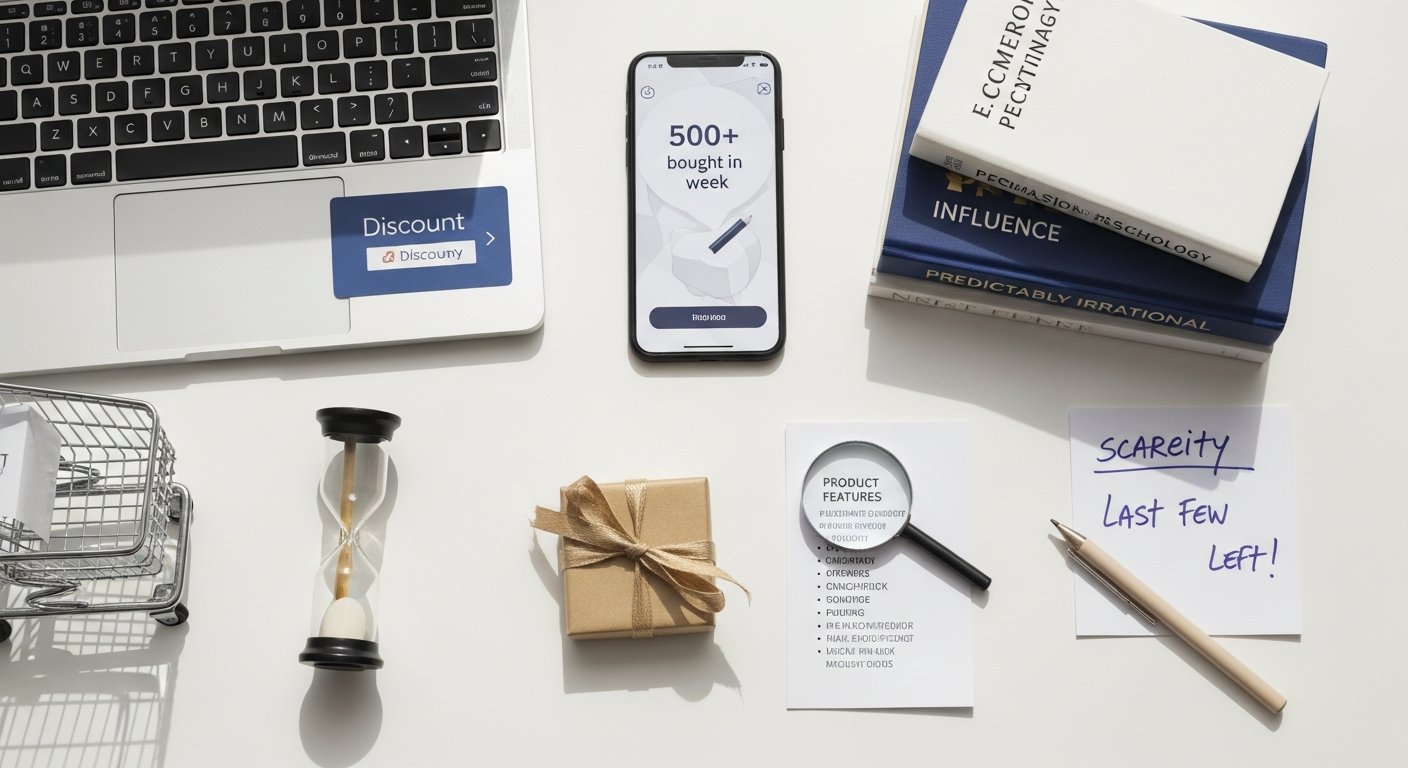
Robert Cialdini’s six (now seven) principles of persuasion remain a cornerstone of effective marketing and sales. These universal truths about human behavior are incredibly powerful when adapted for the digital realm. Implementing these principles effectively can significantly enhance your conversion rate optimization (CRO) efforts.
Reciprocity: The Power of Giving
The principle of reciprocity states that people feel indebted and are more likely to comply with a request if they have first received something. In e-commerce, this translates to offering value upfront.
- Free Content & Resources: Offer valuable blog posts, guides, templates, or webinars. This establishes goodwill and positions your brand as an authority.
- Personalized Recommendations: Proactively suggesting relevant products shows you understand their needs and are providing a service, not just selling.
- Exclusive Discounts & Free Samples: A small gift or a special discount code given without immediate expectation of return can significantly increase the likelihood of a future purchase.
- Exceptional Customer Service: Going above and beyond in support fosters immense loyalty and a desire to reciprocate by continuing to shop with you.
Commitment and Consistency: Aligning Actions with Beliefs
Once people commit to something, even a small act, they are more likely to follow through with larger, consistent actions to align with their initial commitment. This desire for consistency can be leveraged throughout the customer journey.
- Micro-Commitments: Encourage small actions like signing up for a newsletter, adding an item to a wishlist, or completing a quiz. Each small commitment builds momentum towards a purchase.
- Product Customization: Allowing customers to configure a product makes them feel ownership and commitment before the actual purchase.
- Wishlists & Saved Carts: These features encourage low-friction commitment, making it easier for users to return and complete a purchase.
- “Thank You” Pages: Reinforce their smart decision immediately after purchase, solidifying their commitment and reducing buyer’s remorse.
Social Proof: The Wisdom of the Crowd
People are more likely to do something if they see others doing it. This herd mentality is incredibly potent online, where trust is often a major hurdle. Showing that others endorse your products builds credibility and reduces perceived risk.
- Customer Reviews & Ratings: Displaying star ratings, detailed reviews, and user-generated content (UGC) prominently on product pages and category pages is non-negotiable. Authenticity is key.
- Testimonials & Case Studies: Feature glowing endorsements from satisfied customers, especially those who align with your target audience. Video testimonials are particularly impactful.
- “Bestsellers” & “Trending” Labels: Highlight popular products to leverage the psychological effect that if many people are buying it, it must be good.
- Social Media Mentions & Influencer Marketing: Showcase how your products are being used and praised on social platforms.
- User Counts: “X customers bought this in the last 24 hours” or “Y people are currently viewing this item.”
Authority: Trust in Expertise
People tend to obey figures of authority or those perceived as experts. In e-commerce, this means establishing your brand’s credibility and expertise within its niche.
- Expert Endorsements: Partner with industry leaders, professionals, or organizations who can vouch for your products.
- Certifications & Awards: Display relevant industry certifications, quality awards, or seals of approval.
- “As Seen On/Featured In”: Showcase logos of reputable media outlets where your brand or products have been featured.
- Detailed “About Us” Page: Share your brand story, team expertise, and mission to build trust and demonstrate your knowledge.
- Educational Content: Provide in-depth guides, research, and data that position your brand as a thought leader.
Liking: The Appeal of Connection
We are more likely to be persuaded by people (or brands) we like. Building a likable brand personality fosters connection and trust, making customers more receptive to your messaging.
- Brand Personality & Voice: Develop a consistent and relatable brand voice that resonates with your target audience. Be authentic, transparent, and human.
- Personalized Communication: Address customers by name, send relevant emails, and offer personalized recommendations.
- Behind-the-Scenes Content: Showcasing your team, production process, or brand values helps humanize your brand.
- Shared Values: Highlight your brand’s commitment to social causes, sustainability, or ethical practices if they align with your audience’s values.
- Excellent Customer Service: Friendly, helpful, and empathetic customer service agents can significantly boost brand likability.
Scarcity: The Fear of Missing Out (FOMO)
Items or opportunities become more desirable when they are perceived as scarce or limited in availability. This principle taps into our fear of missing out (FOMO) and prompts immediate action.
- Limited Stock Warnings: “Only 3 left in stock!” or “Selling fast!” creates urgency.
- Time-Limited Offers: Flash sales, daily deals, or countdown timers (“Offer ends in X hours!”) encourage immediate purchase.
- Exclusive Editions/Bundles: Offering limited-edition products or bundles creates a sense of uniqueness and urgency.
- Early Bird Discounts: Reward early adopters with special pricing for a limited time.
- Event-Based Scarcity: “Holiday sale ends tomorrow!” or “Black Friday prices valid until midnight.”
Unity: Shared Identity and Belonging
Cialdini’s seventh principle, Unity, suggests that we are most influenced by those who we perceive as sharing a fundamental identity with us. This is about “us” versus “them” – a sense of belonging to a tribe or community.
- Community Building: Foster online communities (e.g., Facebook groups, forums) around your brand or product niche.
- User-Generated Content (UGC) Campaigns: Encourage customers to share their experiences with your products, creating a visual testament to your community.
- Exclusive Memberships/Loyalty Programs: Create a sense of belonging with special perks for “members” or “insiders.”
- Shared Values & Mission: Clearly articulate your brand’s mission and values, attracting customers who resonate with them and feel part of your movement.
- Referral Programs: When customers refer friends, it leverages their existing social ties and reinforces shared identity.
Beyond Cialdini: Advanced Psychological Triggers for Conversion
While Cialdini’s principles provide a robust framework, the field of behavioral psychology offers even more nuanced insights into driving e-commerce conversions. These advanced triggers delve into deeper cognitive processes and emotional states, allowing for more sophisticated optimization strategies.
Framing and Anchoring: Shaping Perception
The way you present information and establish reference points profoundly impacts how customers perceive value and make decisions.
- Price Anchoring: Always show the original, higher price alongside the discounted price. The higher price acts as an anchor, making the current price seem like a better deal. Present premium options first to anchor expectations for value.
- Value Framing: Instead of just listing features, frame them in terms of benefits and positive outcomes for the customer. “This laptop has a 12-hour battery life” vs. “Work uninterrupted all day without searching for a charger.”
- Loss Aversion Framing: Highlight what customers stand to lose by not purchasing (e.g., missing out on a limited-time offer, sacrificing convenience, or continuing to struggle with a problem your product solves).
- Comparison Framing: If you sell multiple tiers of a product, strategically frame the middle option as the “best value” by comparing it to both the cheaper (less features) and more expensive (diminishing returns) options.
Cognitive Fluency: Making It Easy to Understand
The easier information is to process and understand, the more favorably we perceive it. Reduce cognitive load to smooth the path to purchase.
- Clear & Concise Copy: Use simple language, short sentences, and scannable paragraphs. Avoid jargon.
- Intuitive Navigation: A logical site structure, clear menus, and effective search functionality reduce effort.
- Visual Hierarchy: Use size, color, and placement to guide the eye to the most important information and calls to action.
- Predictable User Flows: Design a checkout process that feels familiar and predictable, minimizing surprises.
- High-Quality Imagery & Video: Visuals are processed faster than text and can convey complex information instantly.
Instant Gratification & Delayed Gratification
In the digital age, customers expect immediate rewards. However, understanding when to offer instant gratification and when to leverage delayed gratification can be a powerful psychological tool.
- Instant Gratification:
- Fast Shipping: Highlight express shipping options.
- Digital Products: Immediate download access.
- Quick Wins: Show how quickly your product can solve a problem or provide a benefit.
- Delayed Gratification (for higher perceived value):
- Pre-Orders: Build anticipation for exclusive products.
- Subscription Boxes: The surprise and delight of receiving a curated box each month.
- Long-Term Benefits: Emphasize the lasting value, durability, or long-term savings of your product.
[INLINE IMAGE 2: place after fourth H2 | alt=”psychology of persuasion ecommerce comparison illustration”]
Crafting Persuasive Content: Copywriting & Visual Psychology
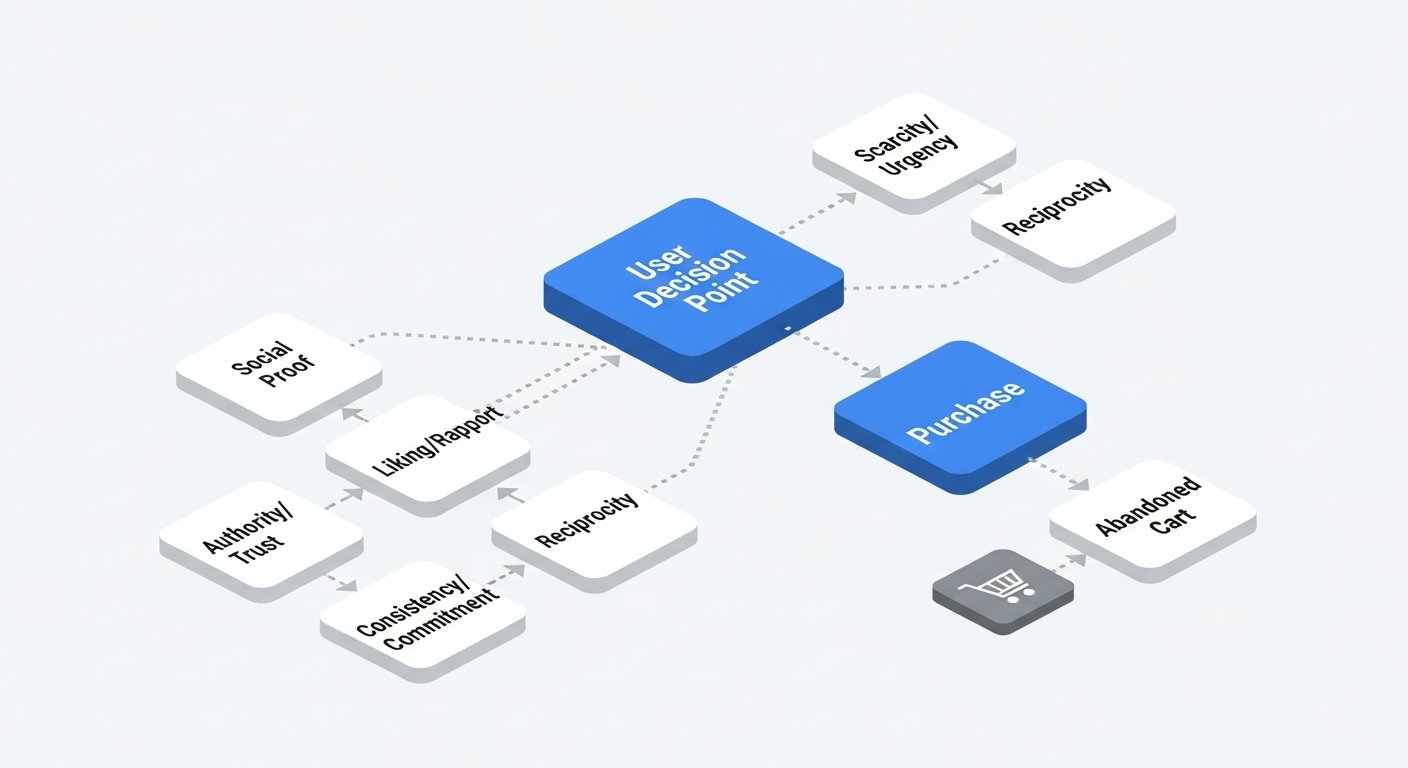
The words you choose and the images you display are your primary tools for persuasion in e-commerce. Every headline, product description, and image should be meticulously crafted to leverage psychological triggers and move customers closer to conversion.
The Art of Persuasive Copywriting
Effective e-commerce copywriting goes beyond simply describing products; it sells dreams, solves problems, and creates connections. It taps into desires and addresses objections proactively.
- Benefit-Oriented Language: Focus on what the product *does for* the customer, not just what it *is*. (e.g., “Experience unparalleled comfort” vs. “Made with soft cotton”).
- AIDA Framework: Use Attention, Interest, Desire, Action to structure your copy.
- Attention: Catchy headlines, compelling visuals.
- Interest: Engage with relevant problems/solutions.
- Desire: Evoke emotions, paint a picture of transformation.
- Action: Clear, compelling calls to action (CTAs).
- Power Words & Emotional Triggers: Words like “exclusive,” “limited,” “instant,” “proven,” “guaranteed,” “imagine,” “discover” can significantly boost engagement and urgency.
- Address Objections Proactively: Anticipate common concerns (price, quality, fit) and address them directly in your copy, often through guarantees, detailed FAQs, or social proof.
- Call to Action (CTA) Optimization: Make CTAs clear, benefit-driven, and prominent. Use action-oriented verbs. A/B test different CTA texts and colors.
Learn more about optimizing your e-commerce copywriting for higher conversions.
Visual Psychology: Images, Videos, and Layouts
Visuals are often the first point of contact and play a critical role in shaping perceptions and influencing decisions. They can convey emotion, build trust, and demonstrate value far more quickly than text.
- High-Quality Product Photography: Professional, clear, multi-angle shots are essential. Include lifestyle shots showing products in use, close-ups of details, and scale references.
- Video Content: Product videos, explainer videos, unboxing videos, and customer testimonials in video format are incredibly persuasive. Videos build trust and demonstrate functionality effectively.
- Color Psychology: Understand how different colors evoke emotions and associations. Use brand colors strategically to convey trustworthiness, excitement, calm, or luxury.
- Blue: Trust, stability
- Green: Growth, nature, wealth
- Red: Urgency, passion, energy
- Yellow: Optimism, warmth
- Black: Sophistication, luxury
- Visual Hierarchy & Layout: Use whitespace effectively. Arrange elements on a page to guide the user’s eye towards key information and CTAs. F-patterns and Z-patterns are common eye-tracking behaviors.
- Consistency in Branding: Maintain a consistent visual identity across all platforms to build brand recognition and professionalism.
Optimizing the Customer Journey: Persuasion at Every Touchpoint
The customer journey is a series of interactions, and psychological principles can be applied at each stage to guide users seamlessly from awareness to conversion and beyond. A holistic approach ensures that every touchpoint reinforces positive decision-making.
Homepage & Category Pages: First Impressions and Discovery
These pages are critical for capturing attention, establishing credibility, and guiding users towards relevant products.
- Clear Value Proposition: Immediately communicate what your brand offers and why it’s valuable.
- Visual Appeal & Brand Story: Use stunning visuals and a concise narrative to convey your brand identity and connect emotionally.
- Social Proof Placement: Prominently display trust badges, “bestseller” labels, or aggregate review scores.
- Intuitive Navigation & Search: Ensure users can easily find what they’re looking for, reducing cognitive load and frustration.
- Personalized Content: Dynamically display recommendations based on browsing history or popular items.
Product Pages: The Point of Decision
Product pages are where the rubber meets the road. They must provide all necessary information, address concerns, and create a strong desire to purchase.
- High-Quality Visuals: Multiple angles, lifestyle shots, video.
- Benefit-Driven Descriptions: Clearly articulate the “why” behind the purchase.
- Comprehensive Social Proof: Reviews, ratings, Q&A sections, user-generated photos.
- Scarcity & Urgency Cues: “Low stock,” “Limited time offer,” countdown timers.
- Clear Call-to-Action: Prominent “Add to Cart” button, ideally above the fold.
- Bundling & Cross-Selling: Suggest complementary products to increase AOV (Reciprocity: “Others also bought…”).
- Risk Reversal: Clearly state return policies, guarantees, and customer support options to alleviate purchase anxiety.
Discover advanced strategies for optimizing your Shopify product pages.
Cart & Checkout Process: Eliminating Friction
This is often the most fragile stage. Any friction can lead to abandonment. The goal is to make the process as smooth, transparent, and reassuring as possible.
- Progress Indicators: Visually show customers where they are in the checkout process (e.g., “Step 1 of 3”).
- Guest Checkout Option: Don’t force registration. Offer it as an option after purchase.
- Trust Signals: Display security badges (SSL certificates), payment provider logos, and testimonials near the checkout button.
- Transparency in Pricing: Show all costs (shipping, taxes) upfront. No hidden fees.
- Simplified Forms: Only ask for essential information. Use auto-fill whenever possible.
- Order Summary: Clearly display items, quantities, and total cost to reinforce commitment.
- Exit-Intent Pop-ups: Offer a small discount or free shipping to prevent abandonment (Reciprocity/Loss Aversion).
Post-Purchase Experience: Building Loyalty and Advocacy
The persuasion journey doesn’t end at checkout. The post-purchase experience is vital for transforming one-time buyers into repeat customers and brand advocates.
- Confirmation & Tracking: Provide immediate order confirmation and clear tracking information to reduce anxiety (Consistency).
- Personalized Follow-ups: Send thank-you emails, solicit reviews, and offer relevant future product recommendations.
- Exceptional Support: Be responsive and helpful with any post-purchase inquiries or issues.
- Loyalty Programs: Reward repeat purchases with points, exclusive discounts, or early access to new products (Reciprocity, Unity).
- Encourage User-Generated Content: Ask customers to share photos or videos of their purchases on social media, amplifying social proof and unity.
Ethical Persuasion: Building Trust and Long-Term Relationships
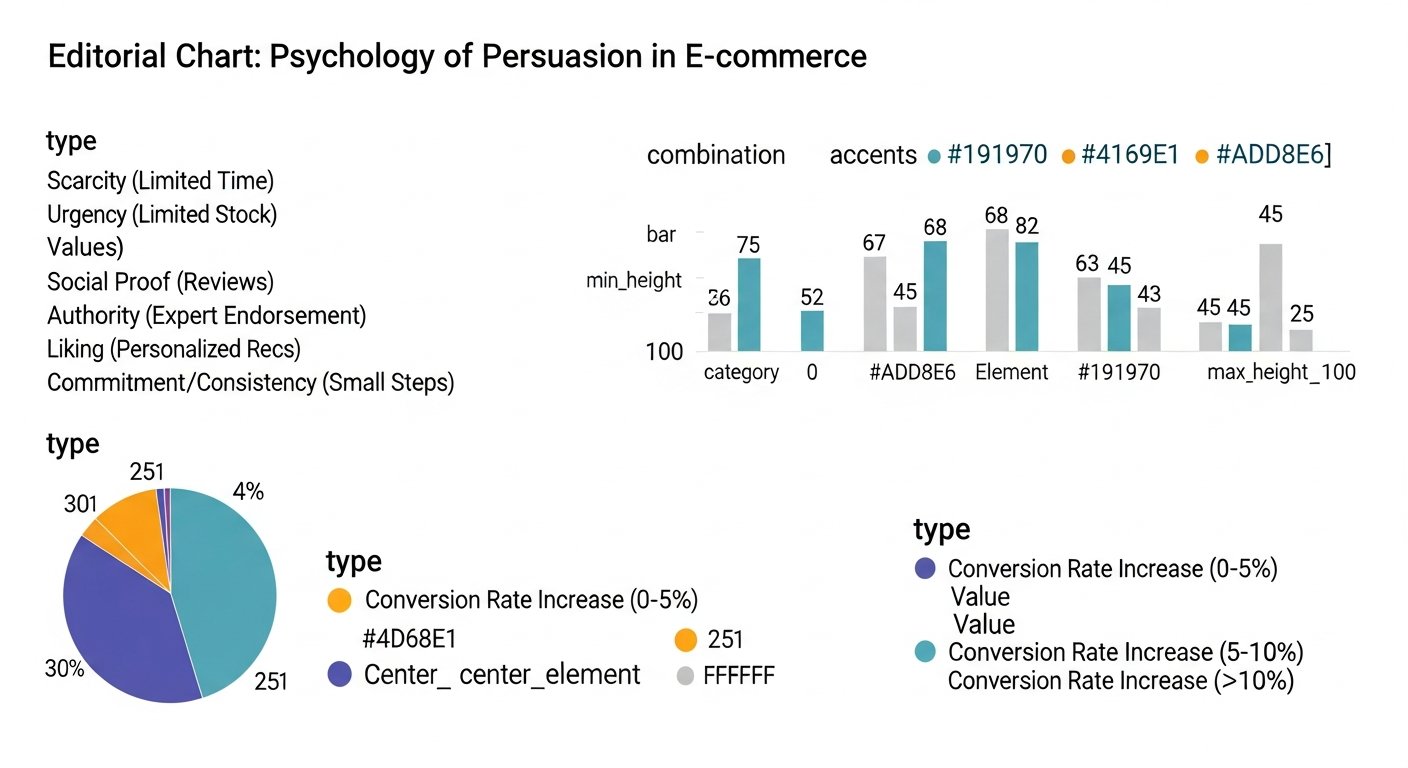
The power of psychological persuasion comes with a responsibility. While these techniques are highly effective, their ethical application is paramount. True success in e-commerce isn’t about short-term manipulation but about building genuine trust, fostering positive customer experiences, and cultivating long-term relationships.
Transparency and Honesty: The Foundation of Trust
Customers are savvy. Any attempt at deception, even subtle, can erode trust instantly and permanently. Always prioritize transparency in your communications.
- Clear Pricing: No hidden fees.
- Accurate Product Descriptions: Ensure images and descriptions truly represent the product.
- Honest Reviews: Do not fabricate or heavily curate reviews. Authenticity builds credibility.
- Data Privacy: Be transparent about how customer data is collected and used.
Focus on Value Proposition: Solving Real Problems
Ethical persuasion means genuinely believing in the value your product offers. Your persuasive efforts should highlight how your product improves the customer’s life, solves a problem, or fulfills a genuine need.
- Empathy-Driven Marketing: Understand your customer’s pain points and desires, then show how your product is the solution.
- Educate, Don’t Just Sell: Provide helpful content that genuinely informs and guides customers, even if it doesn’t lead to an immediate sale. This builds authority and reciprocity.
Long-Term Relationship Building vs. Short-Term Gains
While urgency and scarcity can drive immediate sales, overuse or misuse can damage your brand’s reputation. Balance these tactics with strategies that foster loyalty and repeat business.
- Exceptional Customer Service: A positive experience post-purchase reinforces good decisions and builds loyalty.
- Community Engagement: Invest in building a community around your brand where customers feel valued and connected.
- Personalization: Show customers you know and appreciate them through relevant, timely communications and offers.
Explore strategies for building strong customer loyalty in D2C e-commerce.
Measuring & Iterating: Data-Driven Psychological Optimization
Applying psychological principles in e-commerce is not a one-time setup; it’s an ongoing process of testing, learning, and refinement. Data is your compass, guiding you to understand which persuasive tactics resonate most with your specific audience.
A/B Testing and Multivariate Testing
The only way to truly know if a psychological tactic is effective is to test it. A/B testing allows you to compare two versions of a webpage element (e.g., CTA button color, headline, image) to see which performs better in terms of conversion rates.
- Hypothesis Generation: Based on psychological principles (e.g., “Changing the CTA to a scarcity message will increase clicks”).
- Testing Elements:
- Headlines and body copy (framing, benefit orientation)
- Call-to-action buttons (text, color, placement, urgency)
- Product images and videos (liking, authority)
- Social proof elements (review placement, type of testimonial)
- Scarcity/Urgency timers or banners
- Pricing presentation (anchoring, comparison)
- Checkout flow variations (commitment, fluency)
- Statistical Significance: Ensure your test results are statistically significant before making permanent changes.
Analytics and Heatmapping
Beyond A/B testing, utilizing analytics tools provides invaluable insights into user behavior and identifies areas for psychological optimization.
- Google Analytics (or similar): Track conversion rates, bounce rates, time on page, traffic sources, and user flow to identify drop-off points.
- Heatmaps and Session Recordings: Visual tools like Hotjar or Crazy Egg show where users click, scroll, and spend their time. This can reveal if key persuasive elements are being seen and interacted with.
- Form Analytics: Identify friction points in forms (e.g., checkout fields) where users hesitate or abandon.
Customer Feedback: Surveys and User Testing
Don’t underestimate the power of direct customer feedback. Qualitative data complements quantitative data beautifully.
- On-Site Surveys: Ask users directly about their experience, what they found confusing, or what prevented them from buying.
- User Testing: Recruit actual users to navigate your site while providing verbal feedback. This uncovers usability issues and emotional responses to your persuasive elements.
- Post-Purchase Surveys: Gather feedback on satisfaction, product quality, and the overall shopping experience to inform future improvements and build loyalty.
Comparative Analysis of Psychological Persuasion Techniques in E-commerce
To further clarify the application and impact of various psychological principles, let’s look at a comparative table. This helps illustrate when and where certain techniques are most effectively deployed, considering their primary goal and potential challenges.
| Psychological Principle | Primary E-commerce Goal | Common Application Examples | Key Considerations / Challenges |
|---|---|---|---|
| Scarcity & Urgency | Immediate Conversion, Reduce Procrastination | “Limited stock,” Countdown timers, Flash sales, “Only X left!” | Overuse can desensitize or appear manipulative. Must be genuine. |
| Social Proof | Build Trust, Reduce Risk, Encourage Purchase | Customer reviews, Bestseller badges, Testimonials, “X bought this recently” | Requires genuine, numerous, and diverse proofs. Lack of proof can be detrimental. |
| Reciprocity | Build Goodwill, Initiate Relationship, Drive Opt-ins | Free content (guides), Exclusive first-time discounts, Free samples, Exceptional service | Offer must be genuinely valuable to the recipient. Expectation of return should be subtle. |
| Authority | Establish Credibility, Build Trust, Justify Premium Pricing | Expert endorsements, Certifications, Media mentions, Detailed “About Us” page | Requires genuine expertise/credentials. Misrepresenting authority is unethical. |
| Commitment & Consistency | Guide User Through Funnel, Encourage Follow-Through | Wishlists, Micro-commitments (newsletter sign-up), Product customization, Progress bars | Initial commitments must be low-friction and easy. Consistency can be broken by friction. |
| Liking | Foster Connection, Brand Loyalty, Word-of-Mouth | Brand storytelling, Relatable brand voice, Personalized interactions, Community engagement | Requires authenticity and aligning brand personality with target audience values. |
| Framing & Anchoring | Influence Perception of Value & Price | Showing original price, Benefit-focused copy, Comparison tables (good/better/best) | Can be perceived as manipulative if not done ethically. Must anchor fairly. |
| Loss Aversion | Drive Action by Highlighting Missed Opportunities | “Don’t miss out,” Free shipping thresholds, Limited-time offers for existing customers | Focus on benefits gained by acting, rather than fear-mongering. |
The Future of Persuasion: AI, Personalization, and Neuro-E-commerce
The field of psychological persuasion in e-commerce is continuously evolving. As technology advances, new opportunities emerge to apply these principles with greater precision and impact. The next frontier involves sophisticated personalization, leveraging artificial intelligence, and even venturing into neuro-e-commerce.
AI-Powered Personalization and Dynamic Content
Artificial intelligence is transforming how e-commerce businesses understand and respond to individual customer behavior. AI can analyze vast amounts of data to deliver hyper-personalized experiences that are inherently persuasive.
- Predictive Analytics: AI can predict what a customer is likely to buy next based on past behavior, browsing patterns, and even external factors, allowing for highly relevant product recommendations (Reciprocity, Liking).
- Dynamic Pricing: AI can adjust prices in real-time based on demand, inventory levels, and individual customer segments, leveraging anchoring and scarcity.
- Personalized Messaging: AI-driven chatbots and email campaigns can deliver messages tailored to an individual’s stage in the buyer’s journey, addressing specific needs and objections.
- Adaptive UI/UX: E-commerce platforms can dynamically alter the layout, highlight different products, or change calls to action based on an individual user’s profile and behavior.
Voice Commerce and Conversational AI
As voice assistants become more prevalent, understanding how to persuade in a conversational interface will be crucial. The principles of clarity, trust (Authority), and helpfulness (Reciprocity) become even more central.
- Natural Language Processing (NLP): AI allows for more natural, human-like conversations, building rapport and trust.
- Proactive Suggestions: Voice assistants can offer recommendations or reminders in a highly personalized and non-intrusive way.
- Streamlined Ordering: Reducing friction in the ordering process through voice commands leverages cognitive fluency and commitment.
Neuro-E-commerce and Biometric Data
While still in its nascent stages, neuro-e-commerce promises the ability to understand customer responses at a neurological level. By analyzing eye-tracking, facial expressions, and even brainwave data (with ethical considerations), businesses could gain unprecedented insights into emotional responses and decision-making.
- Optimizing Visuals: Eye-tracking can reveal what visual elements capture attention and evoke emotional responses.
- Real-time Feedback: Biometric data could potentially offer real-time feedback on the effectiveness of persuasive elements, allowing for instantaneous optimization.
- Ethical Implications: The use of such intrusive data requires stringent ethical guidelines, transparency, and explicit customer consent. The focus must always remain on enhancing customer experience rather than manipulation.
The journey to mastering the psychology of persuasion in e-commerce is continuous. By staying informed about emerging technologies and consistently applying ethical, data-driven strategies, Shopify and D2C brands can not only boost their conversion rates and profitability but also build stronger, more meaningful relationships with their customers. The future of e-commerce belongs to those who truly understand the human element behind every click, every cart addition, and every successful purchase.
Frequently Asked Questions
Q1: What are the core psychological principles most relevant to e-commerce?
A1: The most relevant psychological principles for e-commerce, popularized by Robert Cialdini, include Reciprocity (giving value first), Commitment & Consistency (encouraging small steps), Social Proof (showing what others do), Authority (establishing expertise), Liking (building rapport), and Scarcity (creating urgency). Beyond these, Loss Aversion, Framing, Anchoring, and Cognitive Fluency are also incredibly impactful.
Q2: How can I ethically apply psychological persuasion in my online store?
A2: Ethical application centers on transparency, honesty, and genuinely enhancing the customer experience. Focus on solving real customer problems, providing true value, and building long-term trust. Avoid manipulative tactics, ensure any scarcity or urgency claims are genuine, and always prioritize customer well-being over short-term gains. Your aim should be to guide, not trick, customers.
Q3: What role does social proof play in increasing e-commerce conversions?
A3: Social proof is crucial for building trust and reducing perceived risk. In e-commerce, where customers can’t physically interact with products, seeing that others have purchased, enjoyed, and endorsed a product provides strong reassurance. This can take the form of customer reviews, ratings, testimonials, user-generated content, “bestseller” labels, and displaying real-time purchase data (“X people bought this in the last hour”).
Q4: How can AI enhance psychological persuasion strategies in e-commerce?
A4: AI significantly enhances persuasion by enabling hyper-personalization. It can analyze vast amounts of data to predict customer preferences, deliver dynamic content, offer highly relevant product recommendations, and tailor messaging in real-time. This allows e-commerce stores to apply principles like Reciprocity, Liking, and Scarcity with unprecedented precision, making interactions more relevant and persuasive for individual users.
Q5: What are some immediate actions I can take to implement these psychological principles?
A5: Start by optimizing your product pages: prominently display genuine customer reviews (Social Proof), add “low stock” alerts (Scarcity), show original vs. sale prices (Anchoring), and write benefit-driven product descriptions (Framing). Enhance your checkout by simplifying forms (Cognitive Fluency) and displaying trust badges (Authority). Offer a free valuable resource like a guide or discount for newsletter sign-ups (Reciprocity).
Mastering the Psychology of Persuasion in E-commerce: Unlock Unprecedented Growth
Affiliate disclosure: This article may contain affiliate links. Recommendations are independent and editorially driven.
In the fiercely competitive landscape of online retail, simply having a great product is no longer enough. To truly thrive, e-commerce businesses must delve deeper into the human psyche, understanding the subtle yet powerful forces that drive decision-making. This is where the psychology of persuasion in e-commerce becomes your most potent weapon. It’s not about manipulation; it’s about ethical influence, understanding customer needs, and presenting solutions in a way that resonates deeply and motivates action.
At e-comprofits, we believe that sustainable growth stems from a profound understanding of your customer. By strategically applying psychological principles, you can optimize every aspect of your online store, from product presentation to checkout, leading to significantly higher conversion rates, increased average order value (AOV), and robust customer loyalty. This comprehensive guide will equip Shopify and D2C brands with the insights and actionable strategies needed to harness the power of persuasion, transforming browsers into loyal buyers and maximizing profitability in 2026 and beyond.
The Foundational Pillars: Understanding Human Decision-Making in E-commerce
Before diving into specific tactics, it’s crucial to grasp the fundamental cognitive biases and mental shortcuts that govern how people interact with online stores. Our brains are wired for efficiency, constantly seeking patterns and making rapid judgments. E-commerce success hinges on aligning your store’s experience with these innate human tendencies, making the path to purchase feel natural, intuitive, and desirable.
Cognitive Biases and Heuristics: The Brain’s Shortcuts
Humans are not purely rational beings. We rely heavily on cognitive biases and mental shortcuts (heuristics) to navigate the complexities of daily life, including online shopping. Recognizing these allows you to design experiences that gently guide users towards desired actions.
- Anchoring Bias: The tendency to rely too heavily on the first piece of information offered (the “anchor”) when making decisions. In e-commerce, this can be seen in price comparisons, where an original, higher price anchors the perception of a discounted price.
- Framing Effect: How information is presented (framed) significantly influences choices. Presenting a product as “95% fat-free” is more appealing than “5% fat.”
- Loss Aversion: The psychological phenomenon where the pain of losing something is psychologically more powerful than the pleasure of gaining an equivalent item. This drives urgency and highlights benefits of acting now to avoid missing out.
- Confirmation Bias: The tendency to seek out and interpret information in a way that confirms one’s existing beliefs or hypotheses. Customers often look for reasons to justify a purchase they already feel inclined to make.
- Choice Overload: While variety is good, too many options can lead to decision paralysis and abandonment. Simplifying choices can actually increase conversions.
The Emotional Brain vs. The Rational Brain: Driving Purchases
While we often like to believe our purchases are purely rational, emotions play a dominant role. Neuroscientific research continually demonstrates that emotional responses often precede logical justifications. Great e-commerce experiences tap into emotions first, then provide the rational arguments to seal the deal.
- Problem-Solution Framing: People buy solutions to problems or desires. Frame your product as the answer to a core emotional need – convenience, security, happiness, belonging, self-expression.
- Storytelling: Humans are wired for stories. A compelling brand narrative or product story creates an emotional connection, making your offering more memorable and desirable than a simple feature list.
- Aspiration & Identity: Many purchases are driven by who we aspire to be or how we want to be perceived. Position your products as tools for achieving those aspirational identities.
[INLINE IMAGE 1: place after second H2 | alt=”psychology of persuasion ecommerce concept illustration”]
Cialdini’s Principles Revisited: Classic Persuasion for Modern E-commerce
Robert Cialdini’s six (now seven) principles of persuasion remain a cornerstone of effective marketing and sales. These universal truths about human behavior are incredibly powerful when adapted for the digital realm. Implementing these principles effectively can significantly enhance your conversion rate optimization (CRO) efforts.
Reciprocity: The Power of Giving
The principle of reciprocity states that people feel indebted and are more likely to comply with a request if they have first received something. In e-commerce, this translates to offering value upfront.
- Free Content & Resources: Offer valuable blog posts, guides, templates, or webinars. This establishes goodwill and positions your brand as an authority.
- Personalized Recommendations: Proactively suggesting relevant products shows you understand their needs and are providing a service, not just selling.
- Exclusive Discounts & Free Samples: A small gift or a special discount code given without immediate expectation of return can significantly increase the likelihood of a future purchase.
- Exceptional Customer Service: Going above and beyond in support fosters immense loyalty and a desire to reciprocate by continuing to shop with you.
Commitment and Consistency: Aligning Actions with Beliefs
Once people commit to something, even a small act, they are more likely to follow through with larger, consistent actions to align with their initial commitment. This desire for consistency can be leveraged throughout the customer journey.
- Micro-Commitments: Encourage small actions like signing up for a newsletter, adding an item to a wishlist, or completing a quiz. Each small commitment builds momentum towards a purchase.
- Product Customization: Allowing customers to configure a product makes them feel ownership and commitment before the actual purchase.
- Wishlists & Saved Carts: These features encourage low-friction commitment, making it easier for users to return and complete a purchase.
- “Thank You” Pages: Reinforce their smart decision immediately after purchase, solidifying their commitment and reducing buyer’s remorse.
Social Proof: The Wisdom of the Crowd
People are more likely to do something if they see others doing it. This herd mentality is incredibly potent online, where trust is often a major hurdle. Showing that others endorse your products builds credibility and reduces perceived risk.
- Customer Reviews & Ratings: Displaying star ratings, detailed reviews, and user-generated content (UGC) prominently on product pages and category pages is non-negotiable. Authenticity is key.
- Testimonials & Case Studies: Feature glowing endorsements from satisfied customers, especially those who align with your target audience. Video testimonials are particularly impactful.
- “Bestsellers” & “Trending” Labels: Highlight popular products to leverage the psychological effect that if many people are buying it, it must be good.
- Social Media Mentions & Influencer Marketing: Showcase how your products are being used and praised on social platforms.
- User Counts: “X customers bought this in the last 24 hours” or “Y people are currently viewing this item.”
Authority: Trust in Expertise
People tend to obey figures of authority or those perceived as experts. In e-commerce, this means establishing your brand’s credibility and expertise within its niche.
- Expert Endorsements: Partner with industry leaders, professionals, or organizations who can vouch for your products.
- Certifications & Awards: Display relevant industry certifications, quality awards, or seals of approval.
- “As Seen On/Featured In”: Showcase logos of reputable media outlets where your brand or products have been featured.
- Detailed “About Us” Page: Share your brand story, team expertise, and mission to build trust and demonstrate your knowledge.
- Educational Content: Provide in-depth guides, research, and data that position your brand as a thought leader.
Liking: The Appeal of Connection
We are more likely to be persuaded by people (or brands) we like. Building a likable brand personality fosters connection and trust, making customers more receptive to your messaging.
- Brand Personality & Voice: Develop a consistent and relatable brand voice that resonates with your target audience. Be authentic, transparent, and human.
- Personalized Communication: Address customers by name, send relevant emails, and offer personalized recommendations.
- Behind-the-Scenes Content: Showcasing your team, production process, or brand values helps humanize your brand.
- Shared Values: Highlight your brand’s commitment to social causes, sustainability, or ethical practices if they align with your audience’s values.
- Excellent Customer Service: Friendly, helpful, and empathetic customer service agents can significantly boost brand likability.
Scarcity: The Fear of Missing Out (FOMO)
Items or opportunities become more desirable when they are perceived as scarce or limited in availability. This principle taps into our fear of missing out (FOMO) and prompts immediate action.
- Limited Stock Warnings: “Only 3 left in stock!” or “Selling fast!” creates urgency.
- Time-Limited Offers: Flash sales, daily deals, or countdown timers (“Offer ends in X hours!”) encourage immediate purchase.
- Exclusive Editions/Bundles: Offering limited-edition products or bundles creates a sense of uniqueness and urgency.
- Early Bird Discounts: Reward early adopters with special pricing for a limited time.
- Event-Based Scarcity: “Holiday sale ends tomorrow!” or “Black Friday prices valid until midnight.”
Unity: Shared Identity and Belonging
Cialdini’s seventh principle, Unity, suggests that we are most influenced by those who we perceive as sharing a fundamental identity with us. This is about “us” versus “them” – a sense of belonging to a tribe or community.
- Community Building: Foster online communities (e.g., Facebook groups, forums) around your brand or product niche.
- User-Generated Content (UGC) Campaigns: Encourage customers to share their experiences with your products, creating a visual testament to your community.
- Exclusive Memberships/Loyalty Programs: Create a sense of belonging with special perks for “members” or “insiders.”
- Shared Values & Mission: Clearly articulate your brand’s mission and values, attracting customers who resonate with them and feel part of your movement.
- Referral Programs: When customers refer friends, it leverages their existing social ties and reinforces shared identity.
Beyond Cialdini: Advanced Psychological Triggers for Conversion
While Cialdini’s principles provide a robust framework, the field of behavioral psychology offers even more nuanced insights into driving e-commerce conversions. These advanced triggers delve into deeper cognitive processes and emotional states, allowing for more sophisticated optimization strategies.
Framing and Anchoring: Shaping Perception
The way you present information and establish reference points profoundly impacts how customers perceive value and make decisions.
- Price Anchoring: Always show the original, higher price alongside the discounted price. The higher price acts as an anchor, making the current price seem like a better deal. Present premium options first to anchor expectations for value.
- Value Framing: Instead of just listing features, frame them in terms of benefits and positive outcomes for the customer. “This laptop has a 12-hour battery life” vs. “Work uninterrupted all day without searching for a charger.”
- Loss Aversion Framing: Highlight what customers stand to lose by not purchasing (e.g., missing out on a limited-time offer, sacrificing convenience, or continuing to struggle with a problem your product solves).
- Comparison Framing: If you sell multiple tiers of a product, strategically frame the middle option as the “best value” by comparing it to both the cheaper (less features) and more expensive (diminishing returns) options.
Cognitive Fluency: Making It Easy to Understand
The easier information is to process and understand, the more favorably we perceive it. Reduce cognitive load to smooth the path to purchase.
- Clear & Concise Copy: Use simple language, short sentences, and scannable paragraphs. Avoid jargon.
- Intuitive Navigation: A logical site structure, clear menus, and effective search functionality reduce effort.
- Visual Hierarchy: Use size, color, and placement to guide the eye to the most important information and calls to action.
- Predictable User Flows: Design a checkout process that feels familiar and predictable, minimizing surprises.
- High-Quality Imagery & Video: Visuals are processed faster than text and can convey complex information instantly.
Instant Gratification & Delayed Gratification
In the digital age, customers expect immediate rewards. However, understanding when to offer instant gratification and when to leverage delayed gratification can be a powerful psychological tool.
- Instant Gratification:
- Fast Shipping: Highlight express shipping options.
- Digital Products: Immediate download access.
- Quick Wins: Show how quickly your product can solve a problem or provide a benefit.
- Delayed Gratification (for higher perceived value):
- Pre-Orders: Build anticipation for exclusive products.
- Subscription Boxes: The surprise and delight of receiving a curated box each month.
- Long-Term Benefits: Emphasize the lasting value, durability, or long-term savings of your product.
[INLINE IMAGE 2: place after fourth H2 | alt=”psychology of persuasion ecommerce comparison illustration”]
Crafting Persuasive Content: Copywriting & Visual Psychology
The words you choose and the images you display are your primary tools for persuasion in e-commerce. Every headline, product description, and image should be meticulously crafted to leverage psychological triggers and move customers closer to conversion.
The Art of Persuasive Copywriting
Effective e-commerce copywriting goes beyond simply describing products; it sells dreams, solves problems, and creates connections. It taps into desires and addresses objections proactively.
- Benefit-Oriented Language: Focus on what the product *does for* the customer, not just what it *is*. (e.g., “Experience unparalleled comfort” vs. “Made with soft cotton”).
- AIDA Framework: Use Attention, Interest, Desire, Action to structure your copy.
- Attention: Catchy headlines, compelling visuals.
- Interest: Engage with relevant problems/solutions.
- Desire: Evoke emotions, paint a picture of transformation.
- Action: Clear, compelling calls to action (CTAs).
- Power Words & Emotional Triggers: Words like “exclusive,” “limited,” “instant,” “proven,” “guaranteed,” “imagine,” “discover” can significantly boost engagement and urgency.
- Address Objections Proactively: Anticipate common concerns (price, quality, fit) and address them directly in your copy, often through guarantees, detailed FAQs, or social proof.
- Call to Action (CTA) Optimization: Make CTAs clear, benefit-driven, and prominent. Use action-oriented verbs. A/B test different CTA texts and colors.
Learn more about optimizing your e-commerce copywriting for higher conversions.
Visual Psychology: Images, Videos, and Layouts
Visuals are often the first point of contact and play a critical role in shaping perceptions and influencing decisions. They can convey emotion, build trust, and demonstrate value far more quickly than text.
- High-Quality Product Photography: Professional, clear, multi-angle shots are essential. Include lifestyle shots showing products in use, close-ups of details, and scale references.
- Video Content: Product videos, explainer videos, unboxing videos, and customer testimonials in video format are incredibly persuasive. Videos build trust and demonstrate functionality effectively.
- Color Psychology: Understand how different colors evoke emotions and associations. Use brand colors strategically to convey trustworthiness, excitement, calm, or luxury.
- Blue: Trust, stability
- Green: Growth, nature, wealth
- Red: Urgency, passion, energy
- Yellow: Optimism, warmth
- Black: Sophistication, luxury
- Visual Hierarchy & Layout: Use whitespace effectively. Arrange elements on a page to guide the user’s eye towards key information and CTAs. F-patterns and Z-patterns are common eye-tracking behaviors.
- Consistency in Branding: Maintain a consistent visual identity across all platforms to build brand recognition and professionalism.
Optimizing the Customer Journey: Persuasion at Every Touchpoint
The customer journey is a series of interactions, and psychological principles can be applied at each stage to guide users seamlessly from awareness to conversion and beyond. A holistic approach ensures that every touchpoint reinforces positive decision-making.
Homepage & Category Pages: First Impressions and Discovery
These pages are critical for capturing attention, establishing credibility, and guiding users towards relevant products.
- Clear Value Proposition: Immediately communicate what your brand offers and why it’s valuable.
- Visual Appeal & Brand Story: Use stunning visuals and a concise narrative to convey your brand identity and connect emotionally.
- Social Proof Placement: Prominently display trust badges, “bestseller” labels, or aggregate review scores.
- Intuitive Navigation & Search: Ensure users can easily find what they’re looking for, reducing cognitive load and frustration.
- Personalized Content: Dynamically display recommendations based on browsing history or popular items.
Product Pages: The Point of Decision
Product pages are where the rubber meets the road. They must provide all necessary information, address concerns, and create a strong desire to purchase.
- High-Quality Visuals: Multiple angles, lifestyle shots, video.
- Benefit-Driven Descriptions: Clearly articulate the “why” behind the purchase.
- Comprehensive Social Proof: Reviews, ratings, Q&A sections, user-generated photos.
- Scarcity & Urgency Cues: “Low stock,” “Limited time offer,” countdown timers.
- Clear Call-to-Action: Prominent “Add to Cart” button, ideally above the fold.
- Bundling & Cross-Selling: Suggest complementary products to increase AOV (Reciprocity: “Others also bought…”).
- Risk Reversal: Clearly state return policies, guarantees, and customer support options to alleviate purchase anxiety.
Discover advanced strategies for optimizing your Shopify product pages.
Cart & Checkout Process: Eliminating Friction
This is often the most fragile stage. Any friction can lead to abandonment. The goal is to make the process as smooth, transparent, and reassuring as possible.
- Progress Indicators: Visually show customers where they are in the checkout process (e.g., “Step 1 of 3”).
- Guest Checkout Option: Don’t force registration. Offer it as an option after purchase.
- Trust Signals: Display security badges (SSL certificates), payment provider logos, and testimonials near the checkout button.
- Transparency in Pricing: Show all costs (shipping, taxes) upfront. No hidden fees.
- Simplified Forms: Only ask for essential information. Use auto-fill whenever possible.
- Order Summary: Clearly display items, quantities, and total cost to reinforce commitment.
- Exit-Intent Pop-ups: Offer a small discount or free shipping to prevent abandonment (Reciprocity/Loss Aversion).
Post-Purchase Experience: Building Loyalty and Advocacy
The persuasion journey doesn’t end at checkout. The post-purchase experience is vital for transforming one-time buyers into repeat customers and brand advocates.
- Confirmation & Tracking: Provide immediate order confirmation and clear tracking information to reduce anxiety (Consistency).
- Personalized Follow-ups: Send thank-you emails, solicit reviews, and offer relevant future product recommendations.
- Exceptional Support: Be responsive and helpful with any post-purchase inquiries or issues.
- Loyalty Programs: Reward repeat purchases with points, exclusive discounts, or early access to new products (Reciprocity, Unity).
- Encourage User-Generated Content: Ask customers to share photos or videos of their purchases on social media, amplifying social proof and unity.
Ethical Persuasion: Building Trust and Long-Term Relationships
The power of psychological persuasion comes with a responsibility. While these techniques are highly effective, their ethical application is paramount. True success in e-commerce isn’t about short-term manipulation but about building genuine trust, fostering positive customer experiences, and cultivating long-term relationships.
Transparency and Honesty: The Foundation of Trust
Customers are savvy. Any attempt at deception, even subtle, can erode trust instantly and permanently. Always prioritize transparency in your communications.
- Clear Pricing: No hidden fees.
- Accurate Product Descriptions: Ensure images and descriptions truly represent the product.
- Honest Reviews: Do not fabricate or heavily curate reviews. Authenticity builds credibility.
- Data Privacy: Be transparent about how customer data is collected and used.
Focus on Value Proposition: Solving Real Problems
Ethical persuasion means genuinely believing in the value your product offers. Your persuasive efforts should highlight how your product improves the customer’s life, solves a problem, or fulfills a genuine need.
- Empathy-Driven Marketing: Understand your customer’s pain points and desires, then show how your product is the solution.
- Educate, Don’t Just Sell: Provide helpful content that genuinely informs and guides customers, even if it doesn’t lead to an immediate sale. This builds authority and reciprocity.
Long-Term Relationship Building vs. Short-Term Gains
While urgency and scarcity can drive immediate sales, overuse or misuse can damage your brand’s reputation. Balance these tactics with strategies that foster loyalty and repeat business.
- Exceptional Customer Service: A positive experience post-purchase reinforces good decisions and builds loyalty.
- Community Engagement: Invest in building a community around your brand where customers feel valued and connected.
- Personalization: Show customers you know and appreciate them through relevant, timely communications and offers.
Explore strategies for building strong customer loyalty in D2C e-commerce.
Measuring & Iterating: Data-Driven Psychological Optimization
Applying psychological principles in e-commerce is not a one-time setup; it’s an ongoing process of testing, learning, and refinement. Data is your compass, guiding you to understand which persuasive tactics resonate most with your specific audience.
A/B Testing and Multivariate Testing
The only way to truly know if a psychological tactic is effective is to test it. A/B testing allows you to compare two versions of a webpage element (e.g., CTA button color, headline, image) to see which performs better in terms of conversion rates.
- Hypothesis Generation: Based on psychological principles (e.g., “Changing the CTA to a scarcity message will increase clicks”).
- Testing Elements:
- Headlines and body copy (framing, benefit orientation)
- Call-to-action buttons (text, color, placement, urgency)
- Product images and videos (liking, authority)
- Social proof elements (review placement, type of testimonial)
- Scarcity/Urgency timers or banners
- Pricing presentation (anchoring, comparison)
- Checkout flow variations (commitment, fluency)
- Statistical Significance: Ensure your test results are statistically significant before making permanent changes.
Analytics and Heatmapping
Beyond A/B testing, utilizing analytics tools provides invaluable insights into user behavior and identifies areas for psychological optimization.
- Google Analytics (or similar): Track conversion rates, bounce rates, time on page, traffic sources, and user flow to identify drop-off points.
- Heatmaps and Session Recordings: Visual tools like Hotjar or Crazy Egg show where users click, scroll, and spend their time. This can reveal if key persuasive elements are being seen and interacted with.
- Form Analytics: Identify friction points in forms (e.g., checkout fields) where users hesitate or abandon.
Customer Feedback: Surveys and User Testing
Don’t underestimate the power of direct customer feedback. Qualitative data complements quantitative data beautifully.
- On-Site Surveys: Ask users directly about their experience, what they found confusing, or what prevented them from buying.
- User Testing: Recruit actual users to navigate your site while providing verbal feedback. This uncovers usability issues and emotional responses to your persuasive elements.
- Post-Purchase Surveys: Gather feedback on satisfaction, product quality, and the overall shopping experience to inform future improvements and build loyalty.
Comparative Analysis of Psychological Persuasion Techniques in E-commerce
To further clarify the application and impact of various psychological principles, let’s look at a comparative table. This helps illustrate when and where certain techniques are most effectively deployed, considering their primary goal and potential challenges.
| Psychological Principle | Primary E-commerce Goal | Common Application Examples | Key Considerations / Challenges |
|---|---|---|---|
| Scarcity & Urgency | Immediate Conversion, Reduce Procrastination | “Limited stock,” Countdown timers, Flash sales, “Only X left!” | Overuse can desensitize or appear manipulative. Must be genuine. |
| Social Proof | Build Trust, Reduce Risk, Encourage Purchase | Customer reviews, Bestseller badges, Testimonials, “X bought this recently” | Requires genuine, numerous, and diverse proofs. Lack of proof can be detrimental. |
| Reciprocity | Build Goodwill, Initiate Relationship, Drive Opt-ins | Free content (guides), Exclusive first-time discounts, Free samples, Exceptional service | Offer must be genuinely valuable to the recipient. Expectation of return should be subtle. |
| Authority | Establish Credibility, Build Trust, Justify Premium Pricing | Expert endorsements, Certifications, Media mentions, Detailed “About Us” page | Requires genuine expertise/credentials. Misrepresenting authority is unethical. |
| Commitment & Consistency | Guide User Through Funnel, Encourage Follow-Through | Wishlists, Micro-commitments (newsletter sign-up), Product customization, Progress bars | Initial commitments must be low-friction and easy. Consistency can be broken by friction. |
| Liking | Foster Connection, Brand Loyalty, Word-of-Mouth | Brand storytelling, Relatable brand voice, Personalized interactions, Community engagement | Requires authenticity and aligning brand personality with target audience values. |
| Framing & Anchoring | Influence Perception of Value & Price | Showing original price, Benefit-focused copy, Comparison tables (good/better/best) | Can be perceived as manipulative if not done ethically. Must anchor fairly. |
| Loss Aversion | Drive Action by Highlighting Missed Opportunities | “Don’t miss out,” Free shipping thresholds, Limited-time offers for existing customers | Focus on benefits gained by acting, rather than fear-mongering. |
The Future of Persuasion: AI, Personalization, and Neuro-E-commerce
The field of psychological persuasion in e-commerce is continuously evolving. As technology advances, new opportunities emerge to apply these principles with greater precision and impact. The next frontier involves sophisticated personalization, leveraging artificial intelligence, and even venturing into neuro-e-commerce.
AI-Powered Personalization and Dynamic Content
Artificial intelligence is transforming how e-commerce businesses understand and respond to individual customer behavior. AI can analyze vast amounts of data to deliver hyper-personalized experiences that are inherently persuasive.
- Predictive Analytics: AI can predict what a customer is likely to buy next based on past behavior, browsing patterns, and even external factors, allowing for highly relevant product recommendations (Reciprocity, Liking).
- Dynamic Pricing: AI can adjust prices in real-time based on demand, inventory levels, and individual customer segments, leveraging anchoring and scarcity.
- Personalized Messaging: AI-driven chatbots and email campaigns can deliver messages tailored to an individual’s stage in the buyer’s journey, addressing specific needs and objections.
- Adaptive UI/UX: E-commerce platforms can dynamically alter the layout, highlight different products, or change calls to action based on an individual user’s profile and behavior.
Voice Commerce and Conversational AI
As voice assistants become more prevalent, understanding how to persuade in a conversational interface will be crucial. The principles of clarity, trust (Authority), and helpfulness (Reciprocity) become even more central.
- Natural Language Processing (NLP): AI allows for more natural, human-like conversations, building rapport and trust.
- Proactive Suggestions: Voice assistants can offer recommendations or reminders in a highly personalized and non-intrusive way.
- Streamlined Ordering: Reducing friction in the ordering process through voice commands leverages cognitive fluency and commitment.
Neuro-E-commerce and Biometric Data
While still in its nascent stages, neuro-e-commerce promises the ability to understand customer responses at a neurological level. By analyzing eye-tracking, facial expressions, and even brainwave data (with ethical considerations), businesses could gain unprecedented insights into emotional responses and decision-making.
- Optimizing Visuals: Eye-tracking can reveal what visual elements capture attention and evoke emotional responses.
- Real-time Feedback: Biometric data could potentially offer real-time feedback on the effectiveness of persuasive elements, allowing for instantaneous optimization.
- Ethical Implications: The use of such intrusive data requires stringent ethical guidelines, transparency, and explicit customer consent. The focus must always remain on enhancing customer experience rather than manipulation.
The journey to mastering the psychology of persuasion in e-commerce is continuous. By staying informed about emerging technologies and consistently applying ethical, data-driven strategies, Shopify and D2C brands can not only boost their conversion rates and profitability but also build stronger, more meaningful relationships with their customers. The future of e-commerce belongs to those who truly understand the human element behind every click, every cart addition, and every successful purchase.
Frequently Asked Questions
Q1: What are the core psychological principles most relevant to e-commerce?
A1: The most relevant psychological principles for e-commerce, popularized by Robert Cialdini, include Reciprocity (giving value first), Commitment & Consistency (encouraging small steps), Social Proof (showing what others do), Authority (establishing expertise), Liking (building rapport), and Scarcity (creating urgency). Beyond these, Loss Aversion, Framing, Anchoring, and Cognitive Fluency are also incredibly impactful.
Q2: How can I ethically apply psychological persuasion in my online store?
A2: Ethical application centers on transparency, honesty, and genuinely enhancing the customer experience. Focus on solving real customer problems, providing true value, and building long-term trust. Avoid manipulative tactics, ensure any scarcity or urgency claims are genuine, and always prioritize customer well-being over short-term gains. Your aim should be to guide, not trick, customers.
Q3: What role does social proof play in increasing e-commerce conversions?
A3: Social proof is crucial for building trust and reducing perceived risk. In e-commerce, where customers can’t physically interact with products, seeing that others have purchased, enjoyed, and endorsed a product provides strong reassurance. This can take the form of customer reviews, ratings, testimonials, user-generated content, “bestseller” labels, and displaying real-time purchase data (“X people bought this in the last hour”).
Q4: How can AI enhance psychological persuasion strategies in e-commerce?
A4: AI significantly enhances persuasion by enabling hyper-personalization. It can analyze vast amounts of data to predict customer preferences, deliver dynamic content, offer highly relevant product recommendations, and tailor messaging in real-time. This allows e-commerce stores to apply principles like Reciprocity, Liking, and Scarcity with unprecedented precision, making interactions more relevant and persuasive for individual users.
Q5: What are some immediate actions I can take to implement these psychological principles?
A5: Start by optimizing your product pages: prominently display genuine customer reviews (Social Proof), add “low stock” alerts (Scarcity), show original vs. sale prices (Anchoring), and write benefit-driven product descriptions (Framing). Enhance your checkout by simplifying forms (Cognitive Fluency) and displaying trust badges (Authority). Offer a free valuable resource like a guide or discount for newsletter sign-ups (Reciprocity).
