
Influencer Marketing for D2C: The Ultimate Guide to Unlocking Growth & Profitability
Affiliate disclosure: This article may contain affiliate links. Recommendations are independent and editorially driven.
In the fiercely competitive landscape of modern e-commerce, Direct-to-Consumer (D2C) brands face the dual challenge of cutting through the noise and building authentic connections with their audience. Traditional advertising methods, while still relevant, often struggle to deliver the nuanced, trustworthy messaging that today’s discerning consumers demand. This is where influencer marketing for D2C emerges not just as a trend, but as a critical pillar of a robust growth strategy. For D2C businesses, the ability to directly engage with customers and control the brand narrative is paramount, and carefully selected influencers can amplify this narrative in ways that resonate deeply.
Influencer marketing, when executed strategically, offers D2C brands an unparalleled opportunity to scale brand awareness, drive highly qualified traffic, and significantly boost conversion rates. By leveraging the trust and authority that influencers have cultivated with their dedicated followers, D2C companies can bypass traditional gatekeepers and speak directly to potential customers through credible, relatable voices. This comprehensive guide from e-comprofits will delve into every facet of influencer marketing for D2C, providing actionable insights, strategic frameworks, and practical tools to help your brand thrive in the evolving digital marketplace. Whether you’re a nascent startup or an established D2C powerhouse, understanding and mastering this channel is essential for sustained profitability and growth.
Key Takeaways for Influencer Marketing for D2C Success
- Strategic Alignment is Crucial: Don’t just chase follower counts. Focus on influencers whose audience, values, and aesthetic genuinely align with your D2C brand to ensure authentic messaging and maximum impact.
- Micro and Nano-Influencers Offer High ROI: While macro-influencers have reach, micro and nano-influencers often deliver higher engagement rates, stronger trust, and more cost-effective campaigns due to their niche focus and dedicated communities.
- Clear KPIs Drive Measurable Results: Define specific, measurable, achievable, relevant, and time-bound (SMART) goals for your D2C influencer campaigns, whether it’s brand awareness, website traffic, conversion, or customer acquisition cost (CAC).
- Legal Compliance is Non-Negotiable: Always ensure clear contracts and strict adherence to FTC guidelines (or equivalent international regulations) for disclosure of sponsored content to maintain transparency and trust.
- Repurpose Influencer-Generated Content (IGC): Maximize your investment by repurposing high-performing IGC across your owned social channels, website, email marketing, and even paid ad campaigns to extend its reach and credibility.
Table of Contents

- The D2C Imperative: Why Influencer Marketing is Non-Negotiable
- Understanding Influencer Marketing for D2C Brands
- Crafting Your D2C Influencer Strategy: Goals, Audience, & Brand Fit
- Influencer Marketing for D2C: A Step-by-Step Blueprint for Success
- Tools and Platforms for D2C Influencer Marketing Management
- Measuring ROI and Optimizing D2C Influencer Campaigns
- Advanced Strategies and Future Trends for D2C Influencer Marketing
- Overcoming Challenges in D2C Influencer Marketing
- Final Thoughts: Sustaining D2C Growth with Influencer Marketing
- Frequently Asked Questions
The D2C Imperative: Why Influencer Marketing is Non-Negotiable
In an era dominated by digital natives and highly personalized experiences, D2C brands have carved out a significant niche by offering direct access, transparent pricing, and a strong brand narrative. However, this direct connection also comes with intense competition. Every day, new D2C brands emerge, vying for consumer attention and loyalty. For these brands, traditional, broad-brush advertising often falls short, both in cost-effectiveness and in its ability to foster genuine connection. This is precisely where influencer marketing for D2C becomes not just an option, but a strategic imperative.
The Evolving Landscape of D2C Customer Acquisition
The cost of customer acquisition (CAC) has steadily risen across many digital channels, making efficiency and effectiveness more critical than ever for D2C brands. Consumers are increasingly skeptical of overt advertising and instead turn to trusted sources – often, their favorite influencers – for product recommendations. This shift means that D2C brands can no longer rely solely on paid social or search; they need channels that deliver authentic endorsements and build social proof. Influencer marketing provides a powerful antidote to rising CACs by delivering highly targeted reach and conversions at a potentially lower cost per acquisition.
Building Trust and Authenticity at Scale
D2C brands thrive on authenticity. They often tell a story, champion a cause, or offer a unique value proposition that resonates with specific consumer segments. Influencers, by their very nature, are authenticity engines. They’re real people sharing real experiences, and their followers trust their opinions. By partnering with the right influencers, D2C brands can translate their authentic brand story into relatable content that feels less like an advertisement and more like a genuine recommendation from a friend. This allows D2C brands to build trust and credibility at a scale that traditional marketing struggles to achieve, fostering a loyal community around their products.
Differentiating in a Crowded Market
The D2C space is a vibrant ecosystem, but it’s also incredibly crowded. From sustainable fashion to artisanal coffee, countless brands are competing for the same consumer dollar. Differentiation is key, and authentic storytelling through influencers can be a powerful differentiator. When an influencer creates compelling content that showcases your product in a unique context, highlights its benefits, and reflects your brand’s personality, it helps your D2C brand stand out. It moves your product from being just another item to a lifestyle choice, a solution, or an aspirational experience, directly communicated by someone your target audience admires.
Understanding Influencer Marketing for D2C Brands
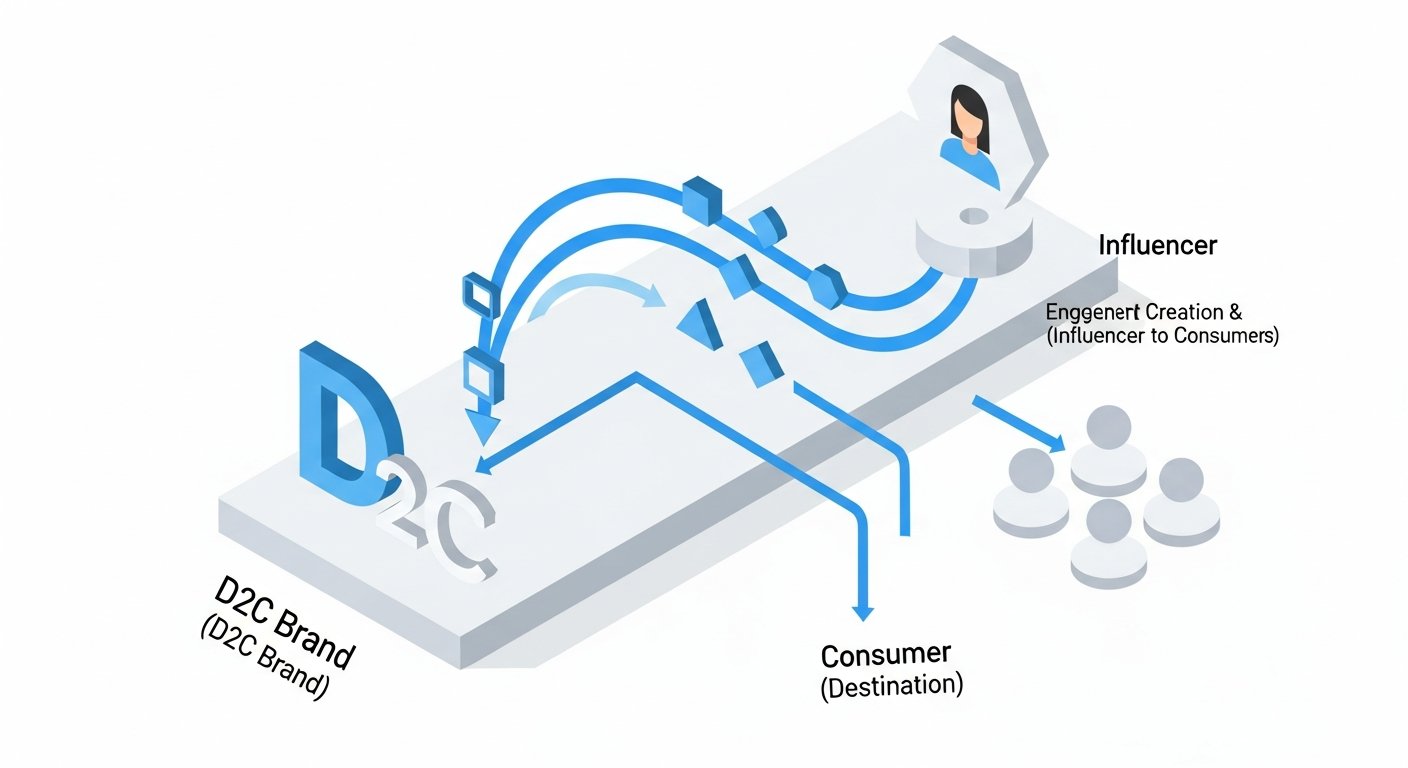
To truly harness its power, D2C brands must grasp the nuances of influencer marketing. It’s more than just sending free products; it’s about strategic partnerships that align with your brand’s mission, audience, and growth objectives. Properly implemented influencer marketing for D2C can become a cornerstone of your overall marketing mix, delivering sustainable returns.
Defining Influencer Marketing in the D2C Context
For D2C brands, influencer marketing involves collaborating with individuals who have an established audience and credibility within a niche relevant to your product. These collaborations aim to promote your products or services, driving brand awareness, engagement, website traffic, and ultimately, direct sales. Unlike traditional retail where brand exposure might be indirect (through retailers), D2C influencer marketing creates a direct line between the influencer’s audience and your online store, facilitating a seamless customer journey from discovery to purchase.
Key Benefits for D2C Businesses
- Increased Brand Awareness: Get your product in front of a relevant and engaged audience you might not otherwise reach.
- Enhanced Trust & Credibility: Leverage the influencer’s existing relationship with their followers for authentic product endorsements.
- Targeted Audience Reach: Select influencers whose demographics and psychographics perfectly match your ideal D2C customer.
- High-Quality Content Generation: Influencers create engaging, user-generated content (UGC) that you can often repurpose across your own channels.
- Improved SEO & Traffic: Influencer mentions and links can drive direct traffic and improve search engine visibility.
- Measurable ROI: With proper tracking, D2C brands can directly attribute sales and conversions to specific influencer campaigns, allowing for clear ROI calculation.
- Faster Customer Acquisition: Influencers can accelerate the customer journey by presenting products as solutions to audience needs, driving immediate interest and purchases.
Types of Influencers and Their Role in D2C
The influencer landscape is diverse, and understanding the different tiers is crucial for effective D2C influencer strategy. Each type offers unique advantages, and the optimal strategy often involves a mix.
- Nano-Influencers (1,000 – 10,000 followers): These are everyday consumers with highly engaged, niche communities. They often have the highest trust factor and engagement rates, making them ideal for hyper-targeted campaigns and authentic, grassroots buzz for D2C brands. They are often more affordable and willing to work on product exchange.
- Micro-Influencers (10,000 – 100,000 followers): Possessing substantial expertise in a particular niche (e.g., sustainable skincare, minimalist home decor), micro-influencers offer a sweet spot of reach and engagement. They are highly effective for building brand credibility and driving conversions within specific D2C segments.
- Macro-Influencers (100,000 – 1 Million followers): These influencers have a broader reach and a more polished content style. They are excellent for increasing widespread brand awareness and reaching a larger segment of your D2C target market, though their engagement rates might be slightly lower than micro-influencers.
- Celebrity/Mega-Influencers (1 Million+ followers): High-profile individuals who offer massive reach and significant media attention. While expensive, they can provide immense brand visibility and prestige, often used for major product launches or brand-building initiatives for larger D2C entities.
For most D2C brands, focusing on nano and micro-influencers often yields the best influencer ROI for D2C, delivering authentic engagement at a more manageable cost.

Crafting Your D2C Influencer Strategy: Goals, Audience, & Brand Fit
A haphazard approach to influencer marketing is a recipe for wasted budget. A successful D2C influencer strategy requires meticulous planning, clear objectives, and a deep understanding of your brand’s identity and target consumer. Without a solid strategy, even the most appealing products can fail to gain traction through influencer collaborations.
Setting Clear Objectives and KPIs for D2C Influencer Campaigns
Before reaching out to a single influencer, define what success looks like for your campaign. Your objectives should align with your overall D2C business goals. Common KPIs for D2C influencer campaigns include:
- Brand Awareness: Impressions, reach, brand mentions, follower growth.
- Engagement: Likes, comments, shares, saves, video views, engagement rate.
- Website Traffic: Clicks to your D2C store, unique visitors, time on site.
- Lead Generation: Email sign-ups, form submissions (if applicable).
- Conversions/Sales: Number of sales, revenue generated, conversion rate from influencer links.
- Customer Acquisition Cost (CAC): Total campaign cost divided by new customers acquired.
- Return on Ad Spend (ROAS) or Return on Investment (ROI): Revenue generated compared to investment.
For example, a new D2C skincare brand might prioritize brand awareness and engagement for its initial campaigns, while an established D2C apparel brand might focus more on direct sales and ROAS.
Identifying Your Target D2C Audience and Their Influencer Preferences
Who is your ideal customer? What are their demographics, psychographics, interests, and pain points? A precise understanding of your D2C audience is foundational. Once you know your audience, research which influencers they follow and trust. What type of content do they consume? What platforms are they most active on? Are they swayed by aspirational content, educational tutorials, or honest product reviews? Tools for audience analysis and social listening can provide invaluable insights here. This step is critical for ensuring your influencer choices truly resonate with your potential buyers.
Aligning Influencers with Your D2C Brand Values and Aesthetic
Authenticity is king for D2C brands. Your chosen influencers must genuinely align with your brand’s values, mission, and visual aesthetic. A mismatch can feel forced and erode trust. If your D2C brand champions sustainability, partnering with an influencer known for fast fashion hauls would be counterproductive. Look for influencers whose personal brand, content style, and audience demographics are a natural extension of your own. Review their past collaborations, read comments on their posts, and ensure their values don’t contradict yours. This deep alignment ensures that the sponsored content feels organic and credible to their followers, boosting the effectiveness of your influencer marketing for D2C efforts.
Budgeting for D2C Influencer Marketing: Costs and ROI Considerations
Influencer campaign costs can vary wildly based on the influencer’s tier, platform, content type, and duration of the partnership. It’s crucial for D2C brands to allocate a realistic budget.
Understanding your maximum allowable Customer Acquisition Cost (CAC) can help guide your spending. Compensation models can include:
- Product Gifting: Common for nano and micro-influencers, especially for initial collaborations.
- Flat Fee: A set payment for specific deliverables (e.g., one Instagram post, one YouTube video).
- Performance-Based (Affiliate Marketing): Influencers earn a commission on sales generated through unique tracking links or discount codes. This is highly appealing for D2C brands focused on direct conversions.
- Hybrid Models: A combination of a small flat fee and a performance bonus.
When budgeting, consider not just the influencer’s fee, but also content creation costs (if you’re providing assets), agency fees (if applicable), and any associated platform subscriptions. Always prioritize influencer ROI for D2C, ensuring your investment is directly contributing to your bottom line.
Influencer Marketing for D2C: A Step-by-Step Blueprint for Success
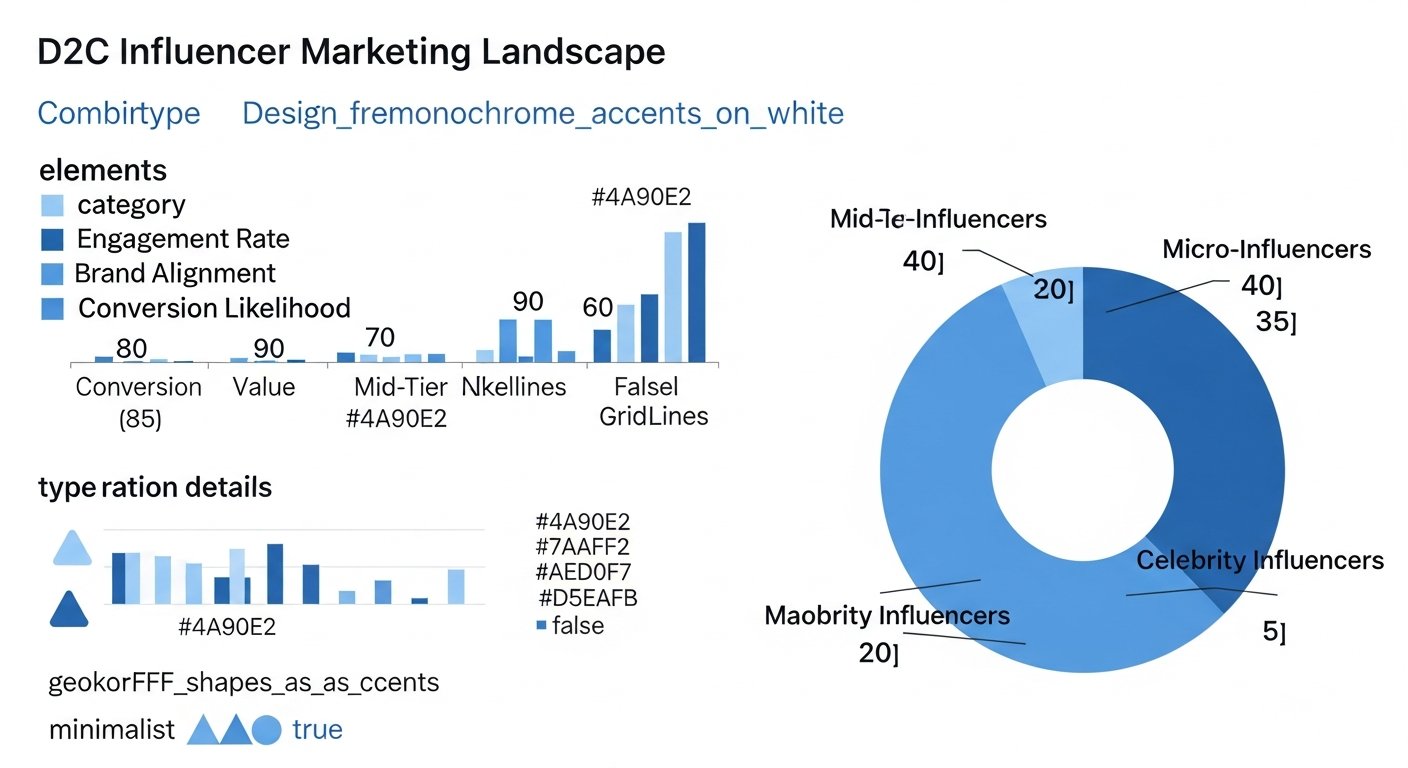
Executing an influencer campaign requires a structured approach to maximize efficiency and impact. This blueprint outlines the critical steps involved in launching and managing successful influencer marketing for D2C campaigns, from initial discovery to final content distribution.
Step 1: Influencer Discovery and Vetting for D2C
Finding the right influencers is the cornerstone of any successful campaign. Beyond basic follower counts, look for:
- Audience Demographics & Psychographics: Do their followers match your target D2C customer?
- Engagement Rate: A high number of likes and comments relative to follower count indicates an active and engaged audience.
- Content Quality & Style: Does their aesthetic align with your brand? Is their content authentic and professional?
- Brand Safety & Reputation: Avoid influencers with controversial histories or inauthentic engagement (bot followers).
- Previous Brand Partnerships: Evaluate how they’ve promoted other brands.
Discovery methods include manual search on social platforms, hashtag research, competitor analysis, and utilizing dedicated influencer marketing platforms (discussed in a later section).
Step 2: Outreach and Relationship Building
Once you’ve identified potential partners, craft a personalized outreach message. Avoid generic templates. Highlight why you specifically want to collaborate with them, what you admire about their content, and how your D2C product aligns with their audience. Clearly state your proposed collaboration type (e.g., gifted product, sponsored post, affiliate partnership). Focus on building a genuine relationship, not just a transactional exchange. Influencers are more likely to create compelling content for brands they genuinely connect with.
Step 3: Campaign Structuring and Content Briefs
A clear, concise content brief is essential. This document should outline:
- Campaign Objectives: What do you want to achieve?
- Key Message Points: What aspects of your D2C product should be highlighted?
- Call-to-Action (CTA): What should their audience do (e.g., “Shop now at [your D2C store URL] with code [discount code]”)?
- Deliverables: Specific content formats (e.g., 1 Instagram Reel, 3 Instagram Stories, 1 TikTok video).
- Platform & Posting Guidelines: Which platforms, optimal posting times, tagging requirements.
- Creative Direction: Desired tone, visual style, examples of successful content.
- Prohibited Content: What not to do or say.
- Important Dates: Content submission, approval, and live dates.
Provide creative freedom within these guidelines to ensure the content feels authentic to the influencer’s style. This balance is key for effective D2C influencer campaigns.
Step 4: Legal & Compliance: Contracts and Disclosure
Formalize every collaboration with a clear contract. This protects both your D2C brand and the influencer. Key elements to include:
- Deliverables and compensation.
- Content usage rights (e.g., can you repurpose their content for your paid ads?).
- Exclusivity clauses (preventing them from promoting competitors during the campaign).
- Performance expectations and reporting requirements.
- Crucially: Disclosure Requirements. In the US, the FTC mandates clear and conspicuous disclosure of sponsored content. Influencers must clearly state that a post is an ad or sponsored. Use hashtags like #ad, #sponsored, #partner, or platform-specific tools. Similar regulations exist globally (e.g., ASA in the UK). Educate your influencers and ensure compliance to maintain consumer trust and avoid legal repercussions.
Learn more about FTC endorsement guidelines.
Step 5: Content Creation and Distribution
Once the brief and contract are finalized, the influencer creates the content. Establish an approval process where you can review drafts and provide feedback. Once approved, the content goes live on the agreed-upon platforms. Ensure tracking links and discount codes are correctly implemented. Monitor the content’s performance and engage with comments, especially on your own D2C brand’s channels if the influencer tags you.

Tools and Platforms for D2C Influencer Marketing Management
Managing an effective influencer marketing for D2C strategy, especially at scale, often requires dedicated tools. These platforms streamline various aspects of the workflow, from discovery to payment and analytics.
Discovery Platforms
These tools help you find influencers by filtering based on demographics, engagement rates, niche, keywords, and audience insights. They save immense time compared to manual searching.
- Upfluence: Offers robust discovery, campaign management, and content amplification features. Strong in data-driven influencer matching.
- Aspire (formerly AspireIQ): A comprehensive platform for influencer discovery, relationship management, campaign analytics, and even affiliate payouts. Particularly good for D2C brands valuing long-term relationships.
- CreatorIQ: Enterprise-grade solution for large D2C brands, focusing on data science to identify top-performing influencers and manage complex campaigns.
Campaign Management Suites
Once you’ve found your influencers, these platforms help you manage the entire lifecycle of a campaign.
- Grin: Focuses on building authentic relationships, with features for outreach, communication, product seeding, content approvals, and tracking. Excellent for D2C brands prioritizing community building.
- Meltwater/Klear: Offers influencer discovery and robust campaign management, including content review, performance tracking, and payment processing. Integrates with broader PR and social listening tools.
- Tribe: A self-serve platform where D2C brands post a brief, and influencers apply. Great for quickly finding creators for specific campaigns, often micro-influencers.
Affiliate and Partnership Software
Many D2C brands combine influencer marketing with affiliate programs to create performance-based collaborations. These platforms help manage commissions, tracking, and payouts.
- Impact.com: A leading partnership management platform that handles affiliate marketing, influencer programs, and strategic brand partnerships. Robust tracking and payment processing.
- Refersion: Specifically designed for e-commerce, making it easy for D2C brands to set up and manage an affiliate program, track sales, and pay commissions. Integrates well with Shopify.
- Shopify Collabs (formerly Dovetale): A native Shopify app that helps D2C merchants find creators, send gifts, manage affiliate codes, and track sales directly within their Shopify ecosystem.
Comparison Table: Top Influencer Marketing Platforms for D2C
| Platform | Primary Focus | Key D2C Benefit | Best For | Pricing Model |
|---|---|---|---|---|
| Aspire | Full-suite Campaign Management & Discovery | Relationship building, robust analytics, diverse influencer network. | D2C brands seeking long-term partnerships & detailed insights. | Subscription (tiered) |
| Grin | Relationship Management & Product Seeding | Authentic influencer connections, content collection & rights management. | D2C brands focused on brand advocacy & owned content. | Subscription (tiered) |
| Upfluence | Data-Driven Discovery & Analytics | Precise influencer matching, strong ROI tracking capabilities. | D2C brands prioritizing data-backed decisions & scale. | Subscription (tiered) |
| Impact.com | Comprehensive Partnership Management | Integrated affiliate & influencer tracking, global payouts. | D2C brands scaling diverse partnership programs. | Commission + Subscription |
| Shopify Collabs | Shopify-Native Influencer/Affiliate Tool | Seamless integration with Shopify store, easy creator payments. | Shopify D2C merchants starting or scaling influencer programs. | Free for discovery, commission-based for sales tracking. |
Leveraging Social Media’s Native Tools
Don’t underestimate the power of native platform features for your D2C influencer strategy. Instagram’s Branded Content tools, TikTok Creator Marketplace, and YouTube BrandConnect offer direct ways to find and collaborate with creators, manage disclosures, and access performance insights. These are often excellent starting points for D2C brands with smaller budgets or those just exploring influencer marketing.
Measuring ROI and Optimizing D2C Influencer Campaigns
The true power of influencer marketing for D2C lies in its measurability. Unlike traditional brand advertising, digital influencer campaigns offer granular data that allows D2C brands to track performance, calculate ROI, and continually optimize their strategies for maximum profitability.
Key Performance Indicators (KPIs) for D2C
As mentioned earlier, selecting the right KPIs is crucial. Here’s a deeper dive into how to apply them for D2C:
- Brand Awareness: Monitor reach, impressions, unique views, and organic brand searches. Are more people talking about your brand?
- Engagement: Track average engagement rate (total engagement/followers), comment sentiment, shares, and saves. High engagement indicates strong audience resonance.
- Website Traffic & Conversions: Use unique UTM parameters for each influencer link to track clicks, unique visitors, time on site, and specific conversion events (e.g., product page views, add-to-carts, purchases).
- Cost Per Engagement (CPE): Total campaign cost / total engagements.
- Cost Per Click (CPC): Total campaign cost / total clicks to your D2C store.
- Customer Acquisition Cost (CAC): (Total campaign cost + product costs) / number of new customers acquired. This is vital for D2C profitability.
- Return on Ad Spend (ROAS): (Revenue from influencer campaign / Campaign cost) x 100%. A positive ROAS indicates a profitable campaign. This is arguably the most important metric for many D2C brands.
- Sales Attribution: Did the influencer campaign directly lead to sales? Utilize unique discount codes, tracking links, and pixel tracking to attribute sales accurately.
Tracking and Attribution Models
Accurate attribution is challenging but essential for D2C influencer marketing. Implement a robust tracking system:
- UTM Parameters: Add unique UTM tags to every link provided to an influencer. This allows Google Analytics (or your analytics platform) to identify the source, medium, and campaign that drove traffic.
- Unique Discount Codes: Assign a unique discount code to each influencer. This offers a direct, quantifiable way to track sales attributed to them, even if a user doesn’t click a link.
- Affiliate Links: Use affiliate tracking software (like Refersion or Impact.com) that automatically tracks clicks and sales through unique affiliate links.
- Pixel Tracking: Ensure your D2C website has robust pixel tracking (e.g., Facebook Pixel, Google Ads conversion tracking) installed to capture user journeys and conversions.
- Post-View Conversions: Don’t forget that some conversions might not be direct clicks. A user might see an influencer post, remember your brand, and then search for it later. Tools that track brand mentions and assist conversions can provide a fuller picture.
Access our guide on setting up advanced e-commerce analytics.
Analyzing Campaign Performance and Data Insights
Once data starts flowing in, conduct regular analyses:
- Compare against KPIs: Did you hit your targets for awareness, engagement, traffic, and sales?
- Influencer vs. Influencer: Identify which influencers or tiers are delivering the best influencer ROI for D2C. Are nano-influencers outperforming macro?
- Content Type Analysis: Which content formats (Reels, Stories, static posts, long-form videos) resonated most effectively with your audience?
- Audience Deep Dive: Analyze the demographic and psychographic data of the converting audience segments. Does this confirm or challenge your initial target audience assumptions?
- Sentiment Analysis:
Influencer Marketing for D2C: The Ultimate Guide to Unlocking Growth & Profitability
Affiliate disclosure: This article may contain affiliate links. Recommendations are independent and editorially driven.
In the fiercely competitive landscape of modern e-commerce, Direct-to-Consumer (D2C) brands face the dual challenge of cutting through the noise and building authentic connections with their audience. Traditional advertising methods, while still relevant, often struggle to deliver the nuanced, trustworthy messaging that today’s discerning consumers demand. This is where influencer marketing for D2C emerges not just as a trend, but as a critical pillar of a robust growth strategy. For D2C businesses, the ability to directly engage with customers and control the brand narrative is paramount, and carefully selected influencers can amplify this narrative in ways that resonate deeply.
Influencer marketing, when executed strategically, offers D2C brands an unparalleled opportunity to scale brand awareness, drive highly qualified traffic, and significantly boost conversion rates. By leveraging the trust and authority that influencers have cultivated with their dedicated followers, D2C companies can bypass traditional gatekeepers and speak directly to potential customers through credible, relatable voices. This comprehensive guide from e-comprofits will delve into every facet of influencer marketing for D2C, providing actionable insights, strategic frameworks, and practical tools to help your brand thrive in the evolving digital marketplace. Whether you’re a nascent startup or an established D2C powerhouse, understanding and mastering this channel is essential for sustained profitability and growth.
Key Takeaways for Influencer Marketing for D2C Success
- Strategic Alignment is Crucial: Don’t just chase follower counts. Focus on influencers whose audience, values, and aesthetic genuinely align with your D2C brand to ensure authentic messaging and maximum impact.
- Micro and Nano-Influencers Offer High ROI: While macro-influencers have reach, micro and nano-influencers often deliver higher engagement rates, stronger trust, and more cost-effective campaigns due to their niche focus and dedicated communities.
- Clear KPIs Drive Measurable Results: Define specific, measurable, achievable, relevant, and time-bound (SMART) goals for your D2C influencer campaigns, whether it’s brand awareness, website traffic, conversion, or customer acquisition cost (CAC).
- Legal Compliance is Non-Negotiable: Always ensure clear contracts and strict adherence to FTC guidelines (or equivalent international regulations) for disclosure of sponsored content to maintain transparency and trust.
- Repurpose Influencer-Generated Content (IGC): Maximize your investment by repurposing high-performing IGC across your owned social channels, website, email marketing, and even paid ad campaigns to extend its reach and credibility.
Table of Contents
- The D2C Imperative: Why Influencer Marketing is Non-Negotiable
- Understanding Influencer Marketing for D2C Brands
- Crafting Your D2C Influencer Strategy: Goals, Audience, & Brand Fit
- Influencer Marketing for D2C: A Step-by-Step Blueprint for Success
- Tools and Platforms for D2C Influencer Marketing Management
- Measuring ROI and Optimizing D2C Influencer Campaigns
- Advanced Strategies and Future Trends for D2C Influencer Marketing
- Overcoming Challenges in D2C Influencer Marketing
- Final Thoughts: Sustaining D2C Growth with Influencer Marketing
- Frequently Asked Questions
The D2C Imperative: Why Influencer Marketing is Non-Negotiable
In an era dominated by digital natives and highly personalized experiences, D2C brands have carved out a significant niche by offering direct access, transparent pricing, and a strong brand narrative. However, this direct connection also comes with intense competition. Every day, new D2C brands emerge, vying for consumer attention and loyalty. For these brands, traditional, broad-brush advertising often falls short, both in cost-effectiveness and in its ability to foster genuine connection. This is precisely where influencer marketing for D2C becomes not just an option, but a strategic imperative.
The Evolving Landscape of D2C Customer Acquisition
The cost of customer acquisition (CAC) has steadily risen across many digital channels, making efficiency and effectiveness more critical than ever for D2C brands. Consumers are increasingly skeptical of overt advertising and instead turn to trusted sources – often, their favorite influencers – for product recommendations. This shift means that D2C brands can no longer rely solely on paid social or search; they need channels that deliver authentic endorsements and build social proof. Influencer marketing provides a powerful antidote to rising CACs by delivering highly targeted reach and conversions at a potentially lower cost per acquisition.
Building Trust and Authenticity at Scale
D2C brands thrive on authenticity. They often tell a story, champion a cause, or offer a unique value proposition that resonates with specific consumer segments. Influencers, by their very nature, are authenticity engines. They’re real people sharing real experiences, and their followers trust their opinions. By partnering with the right influencers, D2C brands can translate their authentic brand story into relatable content that feels less like an advertisement and more like a genuine recommendation from a friend. This allows D2C brands to build trust and credibility at a scale that traditional marketing struggles to achieve, fostering a loyal community around their products.
Differentiating in a Crowded Market
The D2C space is a vibrant ecosystem, but it’s also incredibly crowded. From sustainable fashion to artisanal coffee, countless brands are competing for the same consumer dollar. Differentiation is key, and authentic storytelling through influencers can be a powerful differentiator. When an influencer creates compelling content that showcases your product in a unique context, highlights its benefits, and reflects your brand’s personality, it helps your D2C brand stand out. It moves your product from being just another item to a lifestyle choice, a solution, or an aspirational experience, directly communicated by someone your target audience admires.
Understanding Influencer Marketing for D2C Brands
To truly harness its power, D2C brands must grasp the nuances of influencer marketing. It’s more than just sending free products; it’s about strategic partnerships that align with your brand’s mission, audience, and growth objectives. Properly implemented influencer marketing for D2C can become a cornerstone of your overall marketing mix, delivering sustainable returns.
Defining Influencer Marketing in the D2C Context
For D2C brands, influencer marketing involves collaborating with individuals who have an established audience and credibility within a niche relevant to your product. These collaborations aim to promote your products or services, driving brand awareness, engagement, website traffic, and ultimately, direct sales. Unlike traditional retail where brand exposure might be indirect (through retailers), D2C influencer marketing creates a direct line between the influencer’s audience and your online store, facilitating a seamless customer journey from discovery to purchase.
Key Benefits for D2C Businesses
- Increased Brand Awareness: Get your product in front of a relevant and engaged audience you might not otherwise reach.
- Enhanced Trust & Credibility: Leverage the influencer’s existing relationship with their followers for authentic product endorsements.
- Targeted Audience Reach: Select influencers whose demographics and psychographics perfectly match your ideal D2C customer.
- High-Quality Content Generation: Influencers create engaging, user-generated content (UGC) that you can often repurpose across your own channels.
- Improved SEO & Traffic: Influencer mentions and links can drive direct traffic and improve search engine visibility.
- Measurable ROI: With proper tracking, D2C brands can directly attribute sales and conversions to specific influencer campaigns, allowing for clear ROI calculation.
- Faster Customer Acquisition: Influencers can accelerate the customer journey by presenting products as solutions to audience needs, driving immediate interest and purchases.
Types of Influencers and Their Role in D2C
The influencer landscape is diverse, and understanding the different tiers is crucial for effective D2C influencer strategy. Each type offers unique advantages, and the optimal strategy often involves a mix.
- Nano-Influencers (1,000 – 10,000 followers): These are everyday consumers with highly engaged, niche communities. They often have the highest trust factor and engagement rates, making them ideal for hyper-targeted campaigns and authentic, grassroots buzz for D2C brands. They are often more affordable and willing to work on product exchange.
- Micro-Influencers (10,000 – 100,000 followers): Possessing substantial expertise in a particular niche (e.g., sustainable skincare, minimalist home decor), micro-influencers offer a sweet spot of reach and engagement. They are highly effective for building brand credibility and driving conversions within specific D2C segments.
- Macro-Influencers (100,000 – 1 Million followers): These influencers have a broader reach and a more polished content style. They are excellent for increasing widespread brand awareness and reaching a larger segment of your D2C target market, though their engagement rates might be slightly lower than micro-influencers.
- Celebrity/Mega-Influencers (1 Million+ followers): High-profile individuals who offer massive reach and significant media attention. While expensive, they can provide immense brand visibility and prestige, often used for major product launches or brand-building initiatives for larger D2C entities.
For most D2C brands, focusing on nano and micro-influencers often yields the best influencer ROI for D2C, delivering authentic engagement at a more manageable cost.
Crafting Your D2C Influencer Strategy: Goals, Audience, & Brand Fit
A haphazard approach to influencer marketing is a recipe for wasted budget. A successful D2C influencer strategy requires meticulous planning, clear objectives, and a deep understanding of your brand’s identity and target consumer. Without a solid strategy, even the most appealing products can fail to gain traction through influencer collaborations.
Setting Clear Objectives and KPIs for D2C Influencer Campaigns
Before reaching out to a single influencer, define what success looks like for your campaign. Your objectives should align with your overall D2C business goals. Common KPIs for D2C influencer campaigns include:
- Brand Awareness: Impressions, reach, brand mentions, follower growth.
- Engagement: Likes, comments, shares, saves, video views, engagement rate.
- Website Traffic: Clicks to your D2C store, unique visitors, time on site.
- Lead Generation: Email sign-ups, form submissions (if applicable).
- Conversions/Sales: Number of sales, revenue generated, conversion rate from influencer links.
- Customer Acquisition Cost (CAC): Total campaign cost divided by new customers acquired.
- Return on Ad Spend (ROAS) or Return on Investment (ROI): Revenue generated compared to investment.
For example, a new D2C skincare brand might prioritize brand awareness and engagement for its initial campaigns, while an established D2C apparel brand might focus more on direct sales and ROAS.
Identifying Your Target D2C Audience and Their Influencer Preferences
Who is your ideal customer? What are their demographics, psychographics, interests, and pain points? A precise understanding of your D2C audience is foundational. Once you know your audience, research which influencers they follow and trust. What type of content do they consume? What platforms are they most active on? Are they swayed by aspirational content, educational tutorials, or honest product reviews? Tools for audience analysis and social listening can provide invaluable insights here. This step is critical for ensuring your influencer choices truly resonate with your potential buyers.
Aligning Influencers with Your D2C Brand Values and Aesthetic
Authenticity is king for D2C brands. Your chosen influencers must genuinely align with your brand’s values, mission, and visual aesthetic. A mismatch can feel forced and erode trust. If your D2C brand champions sustainability, partnering with an influencer known for fast fashion hauls would be counterproductive. Look for influencers whose personal brand, content style, and audience demographics are a natural extension of your own. Review their past collaborations, read comments on their posts, and ensure their values don’t contradict yours. This deep alignment ensures that the sponsored content feels organic and credible to their followers, boosting the effectiveness of your influencer marketing for D2C efforts.
Budgeting for D2C Influencer Marketing: Costs and ROI Considerations
Influencer campaign costs can vary wildly based on the influencer’s tier, platform, content type, and duration of the partnership. It’s crucial for D2C brands to allocate a realistic budget.
Understanding your maximum allowable Customer Acquisition Cost (CAC) can help guide your spending. Compensation models can include:- Product Gifting: Common for nano and micro-influencers, especially for initial collaborations.
- Flat Fee: A set payment for specific deliverables (e.g., one Instagram post, one YouTube video).
- Performance-Based (Affiliate Marketing): Influencers earn a commission on sales generated through unique tracking links or discount codes. This is highly appealing for D2C brands focused on direct conversions.
- Hybrid Models: A combination of a small flat fee and a performance bonus.
When budgeting, consider not just the influencer’s fee, but also content creation costs (if you’re providing assets), agency fees (if applicable), and any associated platform subscriptions. Always prioritize influencer ROI for D2C, ensuring your investment is directly contributing to your bottom line.
Influencer Marketing for D2C: A Step-by-Step Blueprint for Success
Executing an influencer campaign requires a structured approach to maximize efficiency and impact. This blueprint outlines the critical steps involved in launching and managing successful influencer marketing for D2C campaigns, from initial discovery to final content distribution.
Step 1: Influencer Discovery and Vetting for D2C
Finding the right influencers is the cornerstone of any successful campaign. Beyond basic follower counts, look for:
- Audience Demographics & Psychographics: Do their followers match your target D2C customer?
- Engagement Rate: A high number of likes and comments relative to follower count indicates an active and engaged audience.
- Content Quality & Style: Does their aesthetic align with your brand? Is their content authentic and professional?
- Brand Safety & Reputation: Avoid influencers with controversial histories or inauthentic engagement (bot followers).
- Previous Brand Partnerships: Evaluate how they’ve promoted other brands.
Discovery methods include manual search on social platforms, hashtag research, competitor analysis, and utilizing dedicated influencer marketing platforms (discussed in a later section).
Step 2: Outreach and Relationship Building
Once you’ve identified potential partners, craft a personalized outreach message. Avoid generic templates. Highlight why you specifically want to collaborate with them, what you admire about their content, and how your D2C product aligns with their audience. Clearly state your proposed collaboration type (e.g., gifted product, sponsored post, affiliate partnership). Focus on building a genuine relationship, not just a transactional exchange. Influencers are more likely to create compelling content for brands they genuinely connect with.
Step 3: Campaign Structuring and Content Briefs
A clear, concise content brief is essential. This document should outline:
- Campaign Objectives: What do you want to achieve?
- Key Message Points: What aspects of your D2C product should be highlighted?
- Call-to-Action (CTA): What should their audience do (e.g., “Shop now at [your D2C store URL] with code [discount code]”)?
- Deliverables: Specific content formats (e.g., 1 Instagram Reel, 3 Instagram Stories, 1 TikTok video).
- Platform & Posting Guidelines: Which platforms, optimal posting times, tagging requirements.
- Creative Direction: Desired tone, visual style, examples of successful content.
- Prohibited Content: What not to do or say.
- Important Dates: Content submission, approval, and live dates.
Provide creative freedom within these guidelines to ensure the content feels authentic to the influencer’s style. This balance is key for effective D2C influencer campaigns.
Step 4: Legal & Compliance: Contracts and Disclosure
Formalize every collaboration with a clear contract. This protects both your D2C brand and the influencer. Key elements to include:
- Deliverables and compensation.
- Content usage rights (e.g., can you repurpose their content for your paid ads?).
- Exclusivity clauses (preventing them from promoting competitors during the campaign).
- Performance expectations and reporting requirements.
- Crucially: Disclosure Requirements. In the US, the FTC mandates clear and conspicuous disclosure of sponsored content. Influencers must clearly state that a post is an ad or sponsored. Use hashtags like #ad, #sponsored, #partner, or platform-specific tools. Similar regulations exist globally (e.g., ASA in the UK). Educate your influencers and ensure compliance to maintain consumer trust and avoid legal repercussions.
Learn more about FTC endorsement guidelines.
Step 5: Content Creation and Distribution
Once the brief and contract are finalized, the influencer creates the content. Establish an approval process where you can review drafts and provide feedback. Once approved, the content goes live on the agreed-upon platforms. Ensure tracking links and discount codes are correctly implemented. Monitor the content’s performance and engage with comments, especially on your own D2C brand’s channels if the influencer tags you.
Tools and Platforms for D2C Influencer Marketing Management
Managing an effective influencer marketing for D2C strategy, especially at scale, often requires dedicated tools. These platforms streamline various aspects of the workflow, from discovery to payment and analytics.
Discovery Platforms
These tools help you find influencers by filtering based on demographics, engagement rates, niche, keywords, and audience insights. They save immense time compared to manual searching.
- Upfluence: Offers robust discovery, campaign management, and content amplification features. Strong in data-driven influencer matching.
- Aspire (formerly AspireIQ): A comprehensive platform for influencer discovery, relationship management, campaign analytics, and even affiliate payouts. Particularly good for D2C brands valuing long-term relationships.
- CreatorIQ: Enterprise-grade solution for large D2C brands, focusing on data science to identify top-performing influencers and manage complex campaigns.
Campaign Management Suites
Once you’ve found your influencers, these platforms help you manage the entire lifecycle of a campaign.
- Grin: Focuses on building authentic relationships, with features for outreach, communication, product seeding, content approvals, and tracking. Excellent for D2C brands prioritizing community building.
- Meltwater/Klear: Offers influencer discovery and robust campaign management, including content review, performance tracking, and payment processing. Integrates with broader PR and social listening tools.
- Tribe: A self-serve platform where D2C brands post a brief, and influencers apply. Great for quickly finding creators for specific campaigns, often micro-influencers.
Affiliate and Partnership Software
Many D2C brands combine influencer marketing with affiliate programs to create performance-based collaborations. These platforms help manage commissions, tracking, and payouts.
- Impact.com: A leading partnership management platform that handles affiliate marketing, influencer programs, and strategic brand partnerships. Robust tracking and payment processing.
- Refersion: Specifically designed for e-commerce, making it easy for D2C brands to set up and manage an affiliate program, track sales, and pay commissions. Integrates well with Shopify.
- Shopify Collabs (formerly Dovetale): A native Shopify app that helps D2C merchants find creators, send gifts, manage affiliate codes, and track sales directly within their Shopify ecosystem.
Comparison Table: Top Influencer Marketing Platforms for D2C
Platform Primary Focus Key D2C Benefit Best For Pricing Model Aspire Full-suite Campaign Management & Discovery Relationship building, robust analytics, diverse influencer network. D2C brands seeking long-term partnerships & detailed insights. Subscription (tiered) Grin Relationship Management & Product Seeding Authentic influencer connections, content collection & rights management. D2C brands focused on brand advocacy & owned content. Subscription (tiered) Upfluence Data-Driven Discovery & Analytics Precise influencer matching, strong ROI tracking capabilities. D2C brands prioritizing data-backed decisions & scale. Subscription (tiered) Impact.com Comprehensive Partnership Management Integrated affiliate & influencer tracking, global payouts. D2C brands scaling diverse partnership programs. Commission + Subscription Shopify Collabs Shopify-Native Influencer/Affiliate Tool Seamless integration with Shopify store, easy creator payments. Shopify D2C merchants starting or scaling influencer programs. Free for discovery, commission-based for sales tracking. Leveraging Social Media’s Native Tools
Don’t underestimate the power of native platform features for your D2C influencer strategy. Instagram’s Branded Content tools, TikTok Creator Marketplace, and YouTube BrandConnect offer direct ways to find and collaborate with creators, manage disclosures, and access performance insights. These are often excellent starting points for D2C brands with smaller budgets or those just exploring influencer marketing.
Measuring ROI and Optimizing D2C Influencer Campaigns
The true power of influencer marketing for D2C lies in its measurability. Unlike traditional brand advertising, digital influencer campaigns offer granular data that allows D2C brands to track performance, calculate ROI, and continually optimize their strategies for maximum profitability.
Key Performance Indicators (KPIs) for D2C
As mentioned earlier, selecting the right KPIs is crucial. Here’s a deeper dive into how to apply them for D2C:
- Brand Awareness: Monitor reach, impressions, unique views, and organic brand searches. Are more people talking about your brand?
- Engagement: Track average engagement rate (total engagement/followers), comment sentiment, shares, and saves. High engagement indicates strong audience resonance.
- Website Traffic & Conversions: Use unique UTM parameters for each influencer link to track clicks, unique visitors, time on site, and specific conversion events (e.g., product page views, add-to-carts, purchases).
- Cost Per Engagement (CPE): Total campaign cost / total engagements.
- Cost Per Click (CPC): Total campaign cost / total clicks to your D2C store.
- Customer Acquisition Cost (CAC): (Total campaign cost + product costs) / number of new customers acquired. This is vital for D2C profitability.
- Return on Ad Spend (ROAS): (Revenue from influencer campaign / Campaign cost) x 100%. A positive ROAS indicates a profitable campaign. This is arguably the most important metric for many D2C brands.
- Sales Attribution: Did the influencer campaign directly lead to sales? Utilize unique discount codes, tracking links, and pixel tracking to attribute sales accurately.
Tracking and Attribution Models
Accurate attribution is challenging but essential for D2C influencer marketing. Implement a robust tracking system:
- UTM Parameters: Add unique UTM tags to every link provided to an influencer. This allows Google Analytics (or your analytics platform) to identify the source, medium, and campaign that drove traffic.
- Unique Discount Codes: Assign a unique discount code to each influencer. This offers a direct, quantifiable way to track sales attributed to them, even if a user doesn’t click a link.
- Affiliate Links: Use affiliate tracking software (like Refersion or Impact.com) that automatically tracks clicks and sales through unique affiliate links.
- Pixel Tracking: Ensure your D2C website has robust pixel tracking (e.g., Facebook Pixel, Google Ads conversion tracking) installed to capture user journeys and conversions.
- Post-View Conversions: Don’t forget that some conversions might not be direct clicks. A user might see an influencer post, remember your brand, and then search for it later. Tools that track brand mentions and assist conversions can provide a fuller picture.
Access our guide on setting up advanced e-commerce analytics.
Analyzing Campaign Performance and Data Insights
Once data starts flowing in, conduct regular analyses:
- Compare against KPIs: Did you hit your targets for awareness, engagement, traffic, and sales?
- Influencer vs. Influencer: Identify which influencers or tiers are delivering the best influencer ROI for D2C. Are nano-influencers outperforming macro?
- Content Type Analysis: Which content formats (Reels, Stories, static posts, long-form videos) resonated most effectively with your audience?
- Audience Deep Dive: Analyze the demographic and psychographic data of the converting audience segments. Does this confirm or challenge your initial target audience assumptions?
- Sentiment Analysis:
