
The Best Shopify Apps to Increase Sales in 2026: Your Ultimate Growth Toolkit
Affiliate disclosure: This article may contain affiliate links. Recommendations are independent and editorially driven.
In the dynamic world of e-commerce, merely having a Shopify store is no longer enough to guarantee success. To truly thrive and stand out in 2026, online businesses must continuously optimize every facet of their operations, from attracting visitors to converting them into loyal customers. The secret weapon for many high-growth direct-to-consumer (D2C) brands lies in leveraging the vast ecosystem of Shopify apps. These powerful tools extend your store’s native capabilities, enabling you to automate tasks, personalize experiences, enhance marketing efforts, and ultimately, significantly increase sales.
But with thousands of apps available in the Shopify App Store, how do you navigate the sea of options to find the ones that will genuinely move the needle for your business? This comprehensive guide cuts through the noise, revealing the best Shopify apps specifically designed to increase sales across various critical areas. We’ll explore solutions that boost conversion rates, elevate average order value, build customer loyalty, streamline operations, and provide crucial insights, all aimed at supercharging your online store’s profitability.
Whether you’re a budding entrepreneur or an established e-commerce giant, understanding and implementing the right app strategy is paramount. Join us as we uncover the essential tools that will empower your Shopify store to achieve unprecedented growth in 2026.
Why Shopify Apps Are Essential for Boosting Your Sales in 2026
The core Shopify platform provides a robust foundation for online selling, but its strength truly lies in its extensibility. The Shopify App Store acts as a marketplace for third-party developers to create specialized tools that integrate seamlessly with your store. These apps serve as virtual employees, performing a wide range of tasks that would otherwise require significant manual effort, dedicated staff, or custom coding – resources often beyond the reach of most businesses.
Filling Feature Gaps and Enhancing Core Functionality
No single e-commerce platform can be everything to everyone. Shopify, by design, focuses on providing a solid core. Apps fill the gaps by introducing advanced features for specific business needs. Want to offer subscription boxes? There’s an app for that. Need sophisticated email automation sequences? An app has you covered. By adding these specialized capabilities, you can offer a richer, more engaging shopping experience that directly correlates with increased sales.
Automation and Efficiency Gains
Time is money, especially in e-commerce. Many of the best Shopify apps to increase sales do so indirectly by automating repetitive tasks. This includes everything from sending abandoned cart reminders to managing inventory, generating detailed reports, or personalizing product recommendations. By automating these processes, you free up valuable time and resources, allowing you to focus on strategic growth initiatives rather than day-to-day operational minutiae. This efficiency gain often translates directly into higher sales volume and better profit margins.
Personalization and Customer Experience
Today’s online shopper expects a personalized journey. Generic experiences lead to high bounce rates and low conversions. Shopify apps enable deep personalization, from dynamic product recommendations based on browsing history to targeted pop-ups and loyalty programs. By creating a more tailored and delightful experience, you build stronger customer relationships, encourage repeat purchases, and significantly increase the likelihood of conversion.
Data-Driven Decisions
Many powerful apps come equipped with advanced analytics and reporting features that go beyond Shopify’s native dashboards. These insights allow you to understand customer behavior, identify trends, measure campaign performance, and pinpoint areas for improvement. Making data-driven decisions about your marketing, product offerings, and customer interactions is crucial for optimizing your sales strategy and achieving consistent growth.
Competitive Advantage
In a crowded market, differentiation is key. Leveraging the right mix of Shopify apps can give you a significant edge over competitors. Whether it’s through superior customer service tools, innovative marketing tactics, or a seamless checkout process, apps help you build a more robust and appealing online store. Staying abreast of the latest app innovations ensures your store remains agile and competitive, positioning you for sustained sales increases.
Conversion Rate Optimization (CRO) Apps: Turning Browsers into Buyers
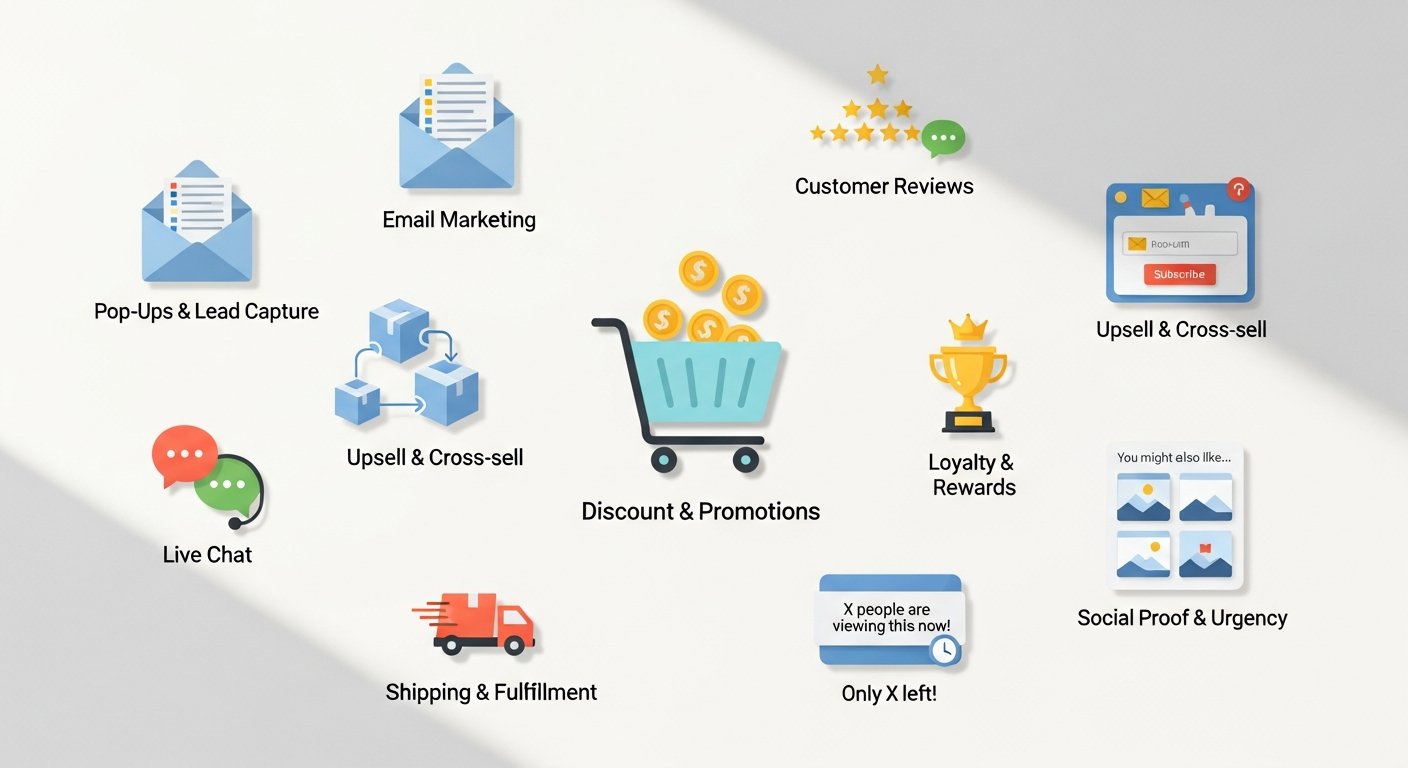
Perhaps the most direct way to increase sales without necessarily increasing traffic is to improve your conversion rate. CRO apps are designed to optimize various touchpoints on your site, gently nudging visitors towards making a purchase. They combat cart abandonment, capture leads, and create a sense of urgency and trust.
[INLINE IMAGE 1: place after second H2 | alt=”best shopify apps to increase sales concept illustration”]
Pop-ups & Exit-Intent Apps
Pop-ups, when used strategically, are incredibly effective. Exit-intent pop-ups, which appear just as a visitor is about to leave your site, are particularly powerful. They offer a last-ditch effort to capture an email address (for future marketing) or present a compelling discount to prevent abandonment. Other pop-ups can announce promotions, collect feedback, or promote specific products. The key is intelligent targeting and timing.
- Key Features: Customizable templates, A/B testing, targeting rules (page, time on site, exit intent), email integration, analytics.
- Impact on Sales: Reduces cart abandonment, grows email lists, drives immediate purchases with discounts, promotes special offers.
Urgency & Scarcity Apps
Creating a sense of urgency or scarcity can significantly accelerate purchasing decisions. These apps display countdown timers for sales, show low stock warnings, or indicate how many other people are viewing a product. This psychological trigger encourages customers to act quickly rather than deferring their purchase, directly translating to more immediate sales.
- Key Features: Countdown timers, stock quantity displays, “X people are viewing this product” notifications, customizability for product pages and carts.
- Impact on Sales: Encourages impulse buys, prevents procrastination, boosts conversion rates during promotions.
Live Chat & Customer Support Apps
Instant answers can mean the difference between a conversion and a lost sale. Live chat apps allow customers to get real-time support for their questions, concerns, or technical issues directly on your site. This proactive approach builds trust, clarifies doubts, and helps guide customers through the purchasing process, significantly improving their confidence in buying from you.
- Key Features: Real-time chat, chatbots for FAQs, offline messaging, canned responses, integration with CRM/helpdesk tools.
- Impact on Sales: Reduces customer friction, improves customer satisfaction, directly addresses pre-purchase queries, increases conversion rates.
Trust Badges & Security Seals
In an age of online scams and data breaches, customers are increasingly wary. Displaying trust badges (e.g., secure payment logos, money-back guarantees, free shipping, customer service contact info) prominently throughout your site, especially on product and checkout pages, reassures shoppers. These visual cues build credibility and alleviate security concerns, making customers more comfortable proceeding with a purchase.
- Key Features: Customizable badge designs, placement options (footer, product page, checkout), wide range of trust symbols.
- Impact on Sales: Increases customer confidence, reduces bounce rates at critical checkout stages, enhances brand perception.
Upselling & Cross-Selling Apps: Maximizing Average Order Value (AOV)
Once a customer is ready to buy, the goal shifts to maximizing the value of that transaction. Upselling (offering a higher-priced, upgraded version of the chosen product) and cross-selling (suggesting complementary products) are incredibly effective strategies for increasing your Average Order Value (AOV), which directly translates to higher overall sales.
Post-Purchase Upsell Offers
The moment a customer completes a purchase is a prime opportunity for a post-purchase upsell. They’ve just committed to buying from you, indicating a high level of trust and intent. An app can present a one-click upsell offer (e.g., an accessory, an extended warranty, a related product) immediately after checkout, often without requiring them to re-enter payment details. This frictionless process has a high conversion rate.
- Key Features: One-click upsell flows, customizable offer pages, dynamic product recommendations based on initial purchase, A/B testing.
- Impact on Sales: Significantly increases AOV with minimal customer effort, capitalizes on high buyer intent.
Pre-Purchase & In-Cart Upsell/Cross-Sell
These apps work their magic before the customer even reaches checkout. They intelligently suggest “frequently bought together” items on product pages, offer bundling options, or display “customers who bought this also bought…” recommendations. In the cart, they might suggest a small, complementary item to reach a free shipping threshold or a personalized add-on.
- Key Features: AI-powered recommendations, bundle creation, “buy X get Y” offers, “add to cart” pop-ups with related products, smart logic for suggestions.
- Impact on Sales: Boosts AOV by encouraging additional purchases, improves product discovery, enhances the perceived value of the offer.
Quantity Breaks & Tiered Pricing Apps
Encouraging customers to buy more units of a single product is a straightforward way to increase sales. Quantity break apps allow you to offer discounts when customers purchase 2, 3, or more items. This strategy is particularly effective for consumable goods, apparel, or products where buying multiples makes sense. Tiered pricing can also be used for B2B or wholesale customers.
- Key Features: Automatic discount application, customizable quantity tiers, dynamic pricing display on product pages, integration with cart.
- Impact on Sales: Drives higher unit sales per order, increases AOV, can move slower-selling inventory.
Learn more about effective pricing strategies for Shopify stores.
Email Marketing & SMS Automation Apps: Nurturing Leads and Driving Repeat Purchases
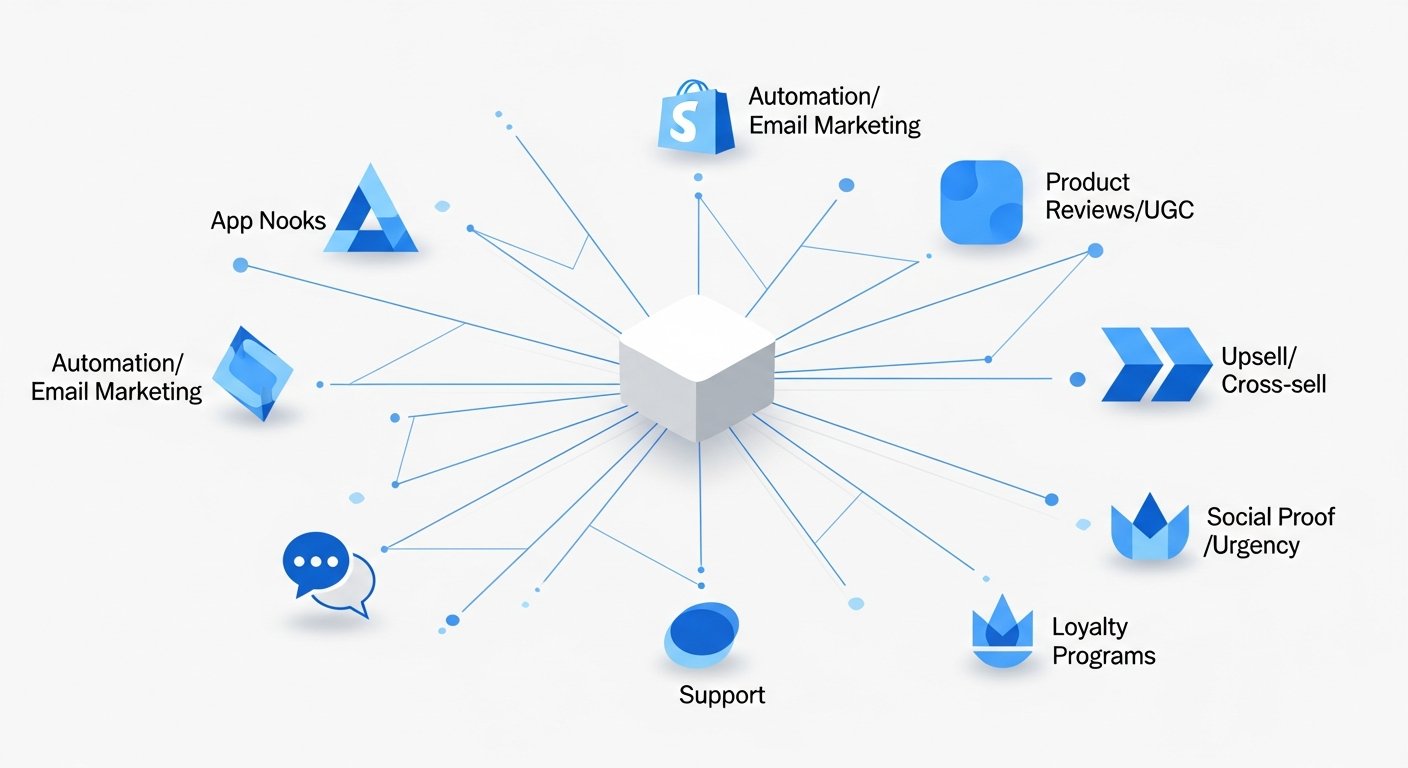
Email and SMS marketing remain two of the most powerful and cost-effective channels for driving sales, both for new customers and repeat business. Automation is key here, allowing you to send timely, relevant messages without manual intervention.
[INLINE IMAGE 2: place after fourth H2 | alt=”best shopify apps to increase sales comparison illustration”]
Abandoned Cart Recovery
A staggering percentage of online shopping carts are abandoned before purchase. Abandoned cart recovery apps are specifically designed to bring those customers back. They automatically send a series of personalized emails or SMS messages reminding the customer about their cart, often including an incentive like a small discount or free shipping to encourage completion.
- Key Features: Multi-step email/SMS sequences, customizable templates, personalized content, timing controls, A/B testing for offers, analytics.
- Impact on Sales: Directly recovers lost sales, significantly improves conversion rates from abandoned carts.
Welcome Series & Customer Nurturing
Once a customer makes their first purchase or signs up for your newsletter, a well-crafted welcome series can introduce them to your brand, highlight popular products, and offer a special discount on their next order. Beyond welcome, nurturing flows can educate customers, announce new products, or re-engage inactive subscribers, fostering loyalty and driving future sales.
- Key Features: Automated email/SMS flows based on triggers (sign-up, first purchase), segmentation capabilities, drag-and-drop builders, performance tracking.
- Impact on Sales: Builds brand affinity, encourages repeat purchases, drives new product adoption, increases customer lifetime value (CLTV).
Segmentation & Personalized Campaigns
Generic email blasts are a relic of the past. Modern email marketing apps allow for advanced segmentation based on purchase history, browsing behavior, demographics, and more. This means you can send highly targeted campaigns—e.g., a specific product recommendation to customers who viewed similar items but didn’t buy, or a special offer to high-value customers. Personalization significantly boosts open rates, click-through rates, and ultimately, sales.
- Key Features: Advanced segmentation rules, dynamic content insertion, A/B testing, comprehensive campaign analytics.
- Impact on Sales: Drives higher engagement and conversion rates, optimizes marketing spend, increases relevance for each customer.
Comparison of Leading Email & SMS Marketing Apps for Shopify
| App Name | Primary Focus | Key Features for Sales Growth | Pricing Model (Est.) | Best For |
|---|---|---|---|---|
| Klaviyo | Advanced Email & SMS Marketing Automation | Deep segmentation, extensive automation flows (abandoned cart, welcome, win-back), predictive analytics, strong integration with Shopify data. | Free up to 250 contacts/500 emails, then usage-based (starts ~$20/month). | Stores focused on advanced segmentation, personalized journeys, and scaling email/SMS efforts. |
| Omnisend | Omnichannel Marketing Automation (Email, SMS, Push) | Pre-built automation workflows, email/SMS/push notifications in one platform, robust segmentation, pop-ups & forms. | Free for basic email (up to 500 emails/month), then usage-based (starts ~$16/month). | SMBs looking for an all-in-one omnichannel marketing solution with ease of use. |
| SMSBump (Yotpo SMSBump) | SMS Marketing & Automation | Dedicated SMS marketing, abandoned cart SMS, segmentation, MMS, automation for various triggers, compliance tools. | Free to install, pay-as-you-go SMS credits (starts ~$19/month for credits). | Businesses prioritizing SMS as a primary communication channel for rapid sales and re-engagement. |
| Mailchimp for Shopify | Email Marketing & Basic Automation | Easy-to-use email builder, basic automation (welcome, abandoned cart), audience segmentation, reporting. | Free for up to 500 contacts, then tiered pricing based on contacts (starts ~$15/month). | Startups and small businesses needing a user-friendly email solution, familiar interface. |
Customer Reviews & User-Generated Content (UGC) Apps: Building Trust and Social Proof
In today’s skeptical marketplace, customers trust fellow customers more than they trust brands. User-Generated Content (UGC), primarily in the form of product reviews, photos, and videos, is an incredibly powerful sales driver. It provides social proof, builds trust, and helps overcome purchase hesitations.
Product Review Collection & Display
These apps automate the process of requesting and collecting reviews from customers after they’ve received their products. They then allow you to display these reviews prominently on product pages, category pages, and even dedicated review pages. Visual reviews (photos/videos) are particularly impactful, showing real customers using your products.
- Key Features: Automated review request emails, photo/video review collection, star ratings, Q&A features, rich snippets for SEO, review moderation.
- Impact on Sales: Increases conversion rates by building trust, reduces returns by setting clear expectations, improves SEO with UGC.
Q&A and Community Features
Beyond reviews, allowing customers to ask questions about products directly on the product page and letting other customers (or your team) answer them creates a dynamic, supportive community. This peer-to-peer interaction further builds trust and addresses specific concerns that might prevent a purchase.
- Key Features: On-page Q&A widgets, email notifications for new questions/answers, moderation tools.
- Impact on Sales: Clarifies product details, builds community, reduces customer support load, increases confidence in purchase.
Integration with Marketing Channels
The best review apps integrate seamlessly with your marketing efforts. They allow you to pull positive reviews into email campaigns, display them on social media ads, or even feature them in retargeting campaigns. This amplifies the social proof across all your customer touchpoints, driving more traffic and conversions.
- Key Features: API integrations, widgets for various platforms, easy sharing of review content.
- Impact on Sales: Extends the reach of social proof, enhances credibility of marketing messages, improves ad performance.
Loyalty & Referral Programs: Cultivating Lifelong Customers
Acquiring new customers is expensive. Retaining existing ones and turning them into brand advocates is far more cost-effective and leads to sustainable sales growth. Loyalty and referral apps are designed precisely for this purpose.
Points-Based Loyalty Programs
A points-based system rewards customers for every purchase they make, encouraging repeat business. Customers accumulate points that can then be redeemed for discounts, exclusive products, or special perks. This gamified approach incentivizes continued engagement with your brand.
- Key Features: Customizable points earning rules (e.g., points per dollar spent), tiered loyalty levels, redemption options, customer portal for point tracking.
- Impact on Sales: Increases customer retention, encourages repeat purchases, boosts customer lifetime value (CLTV).
Referral Programs
Word-of-mouth marketing is incredibly powerful. Referral apps allow you to incentivize existing customers to spread the word about your brand. Typically, both the referrer and the referred friend receive a reward (e.g., a discount, store credit) when the friend makes their first purchase. This taps into trusted networks and brings in highly qualified leads.
- Key Features: Unique referral links, customizable rewards for both parties, tracking of referrals, integration with email and social media.
- Impact on Sales: Drives new customer acquisition at a lower cost, increases trust through personal recommendations, builds a community of advocates.
VIP Programs & Gifting
For your most valuable customers, VIP programs offer exclusive benefits, early access to sales, or personalized gifts. These apps help you identify and segment your VIPs, then automate the delivery of these special experiences. This fosters a sense of exclusivity and further strengthens loyalty, making these customers even more likely to make future purchases and refer others.
- Key Features: Tiered VIP levels, automatic enrollment based on spending, exclusive discount codes, integration with gifting services.
- Impact on Sales: Increases CLTV of top customers, reinforces brand loyalty, creates positive brand sentiment.
Discover strategies for calculating and improving Customer Lifetime Value (CLTV).
Personalization & AI-Powered Recommendation Apps: Tailoring the Shopping Experience
The days of one-size-fits-all e-commerce are over. Customers expect a highly personalized shopping journey, one that anticipates their needs and suggests relevant products. AI-powered recommendation apps are at the forefront of this evolution, directly increasing sales by making shopping more relevant and enjoyable.
Dynamic Product Recommendations
These sophisticated apps use artificial intelligence and machine learning to analyze customer behavior (browsing history, purchase history, items in cart, popular products) and real-time trends to suggest products that are most likely to appeal to an individual shopper. These recommendations can appear on product pages (“Customers also viewed”), cart pages (“Complete the look”), or even in post-purchase emails.
- Key Features: AI algorithms for “customers who bought X also bought Y,” “frequently bought together,” personalized recommendations, dynamic placement options, A/B testing.
- Impact on Sales: Significantly increases AOV and conversion rates by presenting highly relevant products, improving product discovery.
Personalized Content & Merchandising
Beyond just products, some apps can personalize the entire store experience. This might include dynamic banners, personalized homepage sections, or unique promotions displayed only to specific customer segments. Imagine a returning customer seeing a banner for a category they frequently browse, or a first-time visitor being greeted with a welcome discount. This level of tailoring makes the store feel built just for them.
- Key Features: Audience segmentation for content, dynamic page content, A/B testing of personalized experiences, integration with marketing tools.
- Impact on Sales: Enhances user experience, increases engagement, drives higher conversion rates through relevant messaging.
Search & Filtering Optimization
When customers use your store’s search bar, they are often high-intent buyers. Apps that optimize search functionality provide instant, accurate results, intelligent auto-suggestions, and robust filtering options. This ensures customers quickly find what they’re looking for, reducing frustration and preventing them from abandoning their search.
- Key Features: Instant search results, spell correction, synonym recognition, rich filtering options (price, brand, size, color), personalized search results.
- Impact on Sales: Improves findability of products, reduces abandonment during search, converts high-intent searchers more effectively.
SEO & Speed Optimization Apps: Attracting More High-Intent Traffic
While many apps directly impact conversion, attracting qualified traffic is the first step to increasing sales. Search Engine Optimization (SEO) and website speed are critical components of bringing potential customers to your store. Apps in this category ensure your Shopify store is discoverable and provides a seamless browsing experience.
On-Page SEO Optimization
For your products and collections to rank high in search results, they need proper SEO. These apps help you optimize meta titles, descriptions, image alt text, and product descriptions with relevant keywords. They can also identify broken links, suggest internal linking opportunities, and provide insights into your store’s overall SEO health.
- Key Features: SEO audits, meta tag generators, image alt text automation, broken link detection, keyword suggestions, rich snippet integration.
- Impact on Sales: Increases organic traffic from search engines, improves visibility for high-intent keywords, leads to more qualified visitors.
Page Speed & Image Optimization
Website loading speed isn’t just a ranking factor for search engines; it’s also crucial for user experience. Slow sites lead to high bounce rates and lost sales. Speed optimization apps compress images, minify code, and leverage caching mechanisms to ensure your store loads quickly on all devices, especially mobile.
- Key Features: Automatic image compression (WebP conversion), lazy loading, code minification, browser caching, CDN integration, speed analysis tools.
- Impact on Sales: Reduces bounce rates, improves conversion rates, enhances user experience, positively impacts SEO rankings.
Broken Link Management & Redirects
As your store grows and products change, broken links (404 errors) can accumulate. These frustrate users and harm your SEO. Apps help identify these broken links and set up automatic 301 redirects, ensuring that visitors and search engine crawlers are always directed to the correct page. This maintains a smooth user journey and preserves link equity.
- Key Features: Automated 404 monitoring, easy 301 redirect creation, bulk redirect management, wild card redirects.
- Impact on Sales: Prevents loss of traffic and sales due to dead ends, maintains SEO authority, improves user experience.
Inventory & Order Management Apps: Seamless Operations for Sales Growth
While not directly customer-facing, efficient back-end operations are foundational to increasing sales. Inventory and order management apps prevent stockouts that lose sales, streamline fulfillment to ensure customer satisfaction, and provide clear visibility into your product pipeline.
Advanced Inventory Management
Running out of stock on popular items means lost sales and frustrated customers. These apps offer robust inventory tracking beyond Shopify’s native capabilities, including multi-location inventory, low stock alerts, forecasting tools, and integration with suppliers. Accurate inventory prevents overselling and ensures you always have products ready to ship.
- Key Features: Real-time inventory sync, low stock alerts, purchase order management, supplier integration, inventory forecasting, variant management.
- Impact on Sales: Prevents lost sales from stockouts, reduces overselling issues, optimizes purchasing decisions, improves cash flow.
Order Fulfillment & Shipping Optimization
Fast, reliable, and affordable shipping is a major conversion factor. Apps in this category automate various aspects of order fulfillment, from generating shipping labels and tracking numbers to selecting the best shipping rates and integrating with third-party logistics (3PL) providers. Streamlined fulfillment means happier customers and fewer abandoned carts at checkout due to high shipping costs or slow delivery times.
- Key Features: Automated label printing, real-time shipping rates, multi-carrier support, order tracking automation, dropshipping integrations, partial fulfillment.
- Impact on Sales: Improves customer satisfaction, reduces shipping costs for customers (increasing conversions), streamlines operations, allows for faster delivery.
Returns & Exchanges Management
A smooth returns process can turn a potentially negative experience into a positive one, encouraging future purchases. Returns apps automate the process of creating return labels, managing exchanges, and issuing refunds or store credit. This transparency and ease of use build customer trust and can even encourage customers to make a new purchase with their store credit.
- Key Features: Self-service return portals, automated return label generation, exchange options, refund/store credit processing, return reason analytics.
- Impact on Sales: Enhances customer trust and loyalty, reduces friction for future purchases, can turn returns into exchanges/new sales.
Explore best practices for efficient e-commerce fulfillment.
Analytics & Reporting Apps: Data-Driven Sales Strategies
You can’t improve what you don’t measure. Analytics and reporting apps provide the deep insights needed to understand your customers, optimize your campaigns, and make informed decisions that directly lead to increased sales and profitability.
Advanced Sales & Revenue Reporting
While Shopify provides basic sales reports, specialized analytics apps offer more granular data. This includes detailed breakdowns by product, variant, channel, customer segment, and more. They can help you identify your most profitable products, understand sales trends, and measure the true impact of your marketing efforts.
- Key Features: Customizable dashboards, historical data analysis, trend identification, cohort analysis, profitability reports, LTV calculations.
- Impact on Sales: Enables data-driven product development, optimizes marketing spend, identifies growth opportunities, improves overall business strategy.
Customer Behavior & Heatmap Tracking
Understanding how visitors interact with your store is crucial for conversion optimization. Apps offering heatmaps, session recordings, and click-tracking show you exactly where users click, scroll, and get stuck. This visual data reveals friction points in the user journey, allowing you to make targeted improvements to page layouts, calls to action, and overall navigation.
- Key Features: Heatmaps (click, scroll, move), session recordings, conversion funnels, A/B testing insights, form analysis.
- Impact on Sales: Identifies conversion blockers, optimizes user experience, improves clarity of product information, increases conversion rates.
Marketing Attribution & ROI Tracking
Knowing which marketing channels are actually driving sales is vital for allocating your budget effectively. Attribution apps help you understand the customer journey across multiple touchpoints, attributing sales credit to the correct channels (e.g., social media, email, paid ads, organic search). This ensures you invest in the most profitable marketing activities.
- Key Features: Multi-channel attribution models, ROI calculation per campaign/channel, integration with ad platforms and analytics tools.
- Impact on Sales: Optimizes marketing budget, improves campaign performance, identifies most profitable customer acquisition channels.
Choosing the Best Shopify Apps for YOUR Store
With such a vast array of options, selecting the right Shopify apps can feel overwhelming. Here’s a strategic approach to ensure you pick tools that genuinely increase your sales and profitability:
1. Identify Your Core Business Needs & Bottlenecks
Before you start browsing, pinpoint your specific challenges. Are your conversion rates low? Is your AOV stagnant? Are you struggling with customer retention? Do you need more traffic? Defining your primary pain points will narrow down the relevant app categories.
2. Prioritize Based on Impact and Cost
Not all apps are created equal, and neither are their impacts. Focus on apps that address your most critical bottlenecks first. Consider the potential ROI of each app. A monthly subscription might be negligible if the app significantly increases your sales or saves you dozens of hours of manual work.
3. Read Reviews and Check App Developer Support
The Shopify App Store reviews are invaluable. Look for apps with consistently high ratings and positive comments about functionality and, crucially, customer support. Good support is essential when you encounter issues or need help with setup.
4. Check for Integrations
Ensure the app integrates well with your existing Shopify theme and any other critical apps you use. Conflicts between apps can lead to bugs and a poor user experience, undermining your sales efforts.
5. Start with Free Trials or Free Tiers
Many reputable apps offer free trials or free basic plans. Take advantage of these to test the app’s functionality, ease of use, and compatibility with your store before committing to a paid subscription. Don’t overload your store with too many apps at once during testing, as this can make it hard to isolate the impact of each one.
6. Don’t Overwhelm Your Store (or Your Budget)
While powerful, too many apps can slow down your store, create technical conflicts, and quickly drain your budget. Be selective. Choose apps that offer comprehensive solutions rather than many single-feature apps. Regularly review your app stack and remove any that are no longer providing value.
7. Monitor Performance and Adjust
Once an app is installed, don’t just set it and forget it. Use the app’s analytics (and your overall Shopify analytics) to monitor its performance. Is it actually increasing sales? Is it improving conversions? Be prepared to adjust settings, try different strategies, or even swap out an app if it’s not delivering the expected results.
Conclusion: Powering Your Shopify Sales in 2026 and Beyond
The journey to maximizing sales on Shopify is ongoing, requiring continuous optimization and adaptation. In 2026, the competitive landscape demands more than just a functional online store; it requires an optimized, personalized, and efficient sales machine. The best Shopify apps are not just add-ons; they are strategic investments that empower you to achieve this.
By strategically implementing apps for conversion rate optimization, average order value enhancement, robust email and SMS marketing, trusted social proof, customer loyalty, advanced personalization, critical SEO, streamlined operations, and insightful analytics, you can build a formidable e-commerce engine. These tools allow you to attract more high-intent visitors, convert a higher percentage of them into buyers, encourage larger and more frequent purchases, and cultivate a loyal customer base that champions your brand.
Remember, the goal isn’t to install the most apps, but the right apps – those that address your unique business challenges and align with your growth objectives. Regularly audit your app stack, leverage free trials, and always prioritize tools that offer clear value and measurable returns. With a thoughtful and strategic approach, your Shopify store will not only increase sales but also build a sustainable, profitable future in the ever-evolving world of e-commerce.
Frequently Asked Questions
Q1: How many Shopify apps should I install?
A1: There’s no magic number, but quality trumps quantity. Focus on installing only the apps that directly address your business needs, solve specific problems, or provide clear value. Too many apps can slow down your store, lead to conflicts, and increase your monthly expenses. Start with essential apps for core functions (like email marketing, reviews, and basic CRO), then expand as your needs evolve and you can measure their impact.
Q2: Are free Shopify apps effective, or should I always pay?
A2: Many free Shopify apps, or apps with generous free tiers, are highly effective, especially for new or small businesses. They often provide core functionality that can significantly boost sales. However, paid apps typically offer more advanced features, better support, and greater scalability, which become crucial as your business grows. Always evaluate an app’s features, reviews, and support, regardless of its pricing model, and utilize free trials to test paid apps before committing.
Q3: How do I know if a Shopify app is actually increasing my sales?
A3: To measure an app’s impact, you need to track key performance indicators (KPIs). Before installing an app, note your current conversion rate, average order value (AOV), customer lifetime value (CLTV), or specific campaign metrics. After installation, monitor these KPIs. Many apps also come with built-in analytics. For direct sales impacts, compare sales during periods with and without the app, or use A/B testing features if available. Isolate the app’s effect by only changing one variable at a time.
Q4: Can Shopify apps slow down my store’s loading speed?
A4: Yes, poorly coded or resource-intensive apps can significantly impact your store’s loading speed. This is why it’s crucial to be selective and regularly audit your app stack. Prioritize apps from reputable developers, read reviews regarding performance, and use tools to test your store’s speed before and after installing new apps. Apps that claim to optimize speed (like image compressors or caching tools) can help mitigate this, but too many external scripts can still cause issues.
Q5: What are the most crucial categories of Shopify apps for a new store focused on increasing sales?
A5: For a new store, focus on apps that lay the groundwork for growth:
- Email Marketing: To capture leads and drive repeat purchases (e.g., welcome series, abandoned cart recovery).
- Customer Reviews: To build trust and social proof from day one.
- Conversion Rate Optimization (CRO): Such as pop-ups to capture emails or urgency timers to encourage action.
- Upselling/Cross-selling: To maximize the value of each customer immediately.
- Basic SEO: To ensure discoverability.
Start lean and scale your app usage as your needs become clearer and your business grows.
The Best Shopify Apps to Increase Sales in 2026: Your Ultimate Growth Toolkit
Affiliate disclosure: This article may contain affiliate links. Recommendations are independent and editorially driven.
In the dynamic world of e-commerce, merely having a Shopify store is no longer enough to guarantee success. To truly thrive and stand out in 2026, online businesses must continuously optimize every facet of their operations, from attracting visitors to converting them into loyal customers. The secret weapon for many high-growth direct-to-consumer (D2C) brands lies in leveraging the vast ecosystem of Shopify apps. These powerful tools extend your store’s native capabilities, enabling you to automate tasks, personalize experiences, enhance marketing efforts, and ultimately, significantly increase sales.
But with thousands of apps available in the Shopify App Store, how do you navigate the sea of options to find the ones that will genuinely move the needle for your business? This comprehensive guide cuts through the noise, revealing the best Shopify apps specifically designed to increase sales across various critical areas. We’ll explore solutions that boost conversion rates, elevate average order value, build customer loyalty, streamline operations, and provide crucial insights, all aimed at supercharging your online store’s profitability.
Whether you’re a budding entrepreneur or an established e-commerce giant, understanding and implementing the right app strategy is paramount. Join us as we uncover the essential tools that will empower your Shopify store to achieve unprecedented growth in 2026.
Why Shopify Apps Are Essential for Boosting Your Sales in 2026
The core Shopify platform provides a robust foundation for online selling, but its strength truly lies in its extensibility. The Shopify App Store acts as a marketplace for third-party developers to create specialized tools that integrate seamlessly with your store. These apps serve as virtual employees, performing a wide range of tasks that would otherwise require significant manual effort, dedicated staff, or custom coding – resources often beyond the reach of most businesses.
Filling Feature Gaps and Enhancing Core Functionality
No single e-commerce platform can be everything to everyone. Shopify, by design, focuses on providing a solid core. Apps fill the gaps by introducing advanced features for specific business needs. Want to offer subscription boxes? There’s an app for that. Need sophisticated email automation sequences? An app has you covered. By adding these specialized capabilities, you can offer a richer, more engaging shopping experience that directly correlates with increased sales.
Automation and Efficiency Gains
Time is money, especially in e-commerce. Many of the best Shopify apps to increase sales do so indirectly by automating repetitive tasks. This includes everything from sending abandoned cart reminders to managing inventory, generating detailed reports, or personalizing product recommendations. By automating these processes, you free up valuable time and resources, allowing you to focus on strategic growth initiatives rather than day-to-day operational minutiae. This efficiency gain often translates directly into higher sales volume and better profit margins.
Personalization and Customer Experience
Today’s online shopper expects a personalized journey. Generic experiences lead to high bounce rates and low conversions. Shopify apps enable deep personalization, from dynamic product recommendations based on browsing history to targeted pop-ups and loyalty programs. By creating a more tailored and delightful experience, you build stronger customer relationships, encourage repeat purchases, and significantly increase the likelihood of conversion.
Data-Driven Decisions
Many powerful apps come equipped with advanced analytics and reporting features that go beyond Shopify’s native dashboards. These insights allow you to understand customer behavior, identify trends, measure campaign performance, and pinpoint areas for improvement. Making data-driven decisions about your marketing, product offerings, and customer interactions is crucial for optimizing your sales strategy and achieving consistent growth.
Competitive Advantage
In a crowded market, differentiation is key. Leveraging the right mix of Shopify apps can give you a significant edge over competitors. Whether it’s through superior customer service tools, innovative marketing tactics, or a seamless checkout process, apps help you build a more robust and appealing online store. Staying abreast of the latest app innovations ensures your store remains agile and competitive, positioning you for sustained sales increases.
Conversion Rate Optimization (CRO) Apps: Turning Browsers into Buyers
Perhaps the most direct way to increase sales without necessarily increasing traffic is to improve your conversion rate. CRO apps are designed to optimize various touchpoints on your site, gently nudging visitors towards making a purchase. They combat cart abandonment, capture leads, and create a sense of urgency and trust.
[INLINE IMAGE 1: place after second H2 | alt=”best shopify apps to increase sales concept illustration”]
Pop-ups & Exit-Intent Apps
Pop-ups, when used strategically, are incredibly effective. Exit-intent pop-ups, which appear just as a visitor is about to leave your site, are particularly powerful. They offer a last-ditch effort to capture an email address (for future marketing) or present a compelling discount to prevent abandonment. Other pop-ups can announce promotions, collect feedback, or promote specific products. The key is intelligent targeting and timing.
- Key Features: Customizable templates, A/B testing, targeting rules (page, time on site, exit intent), email integration, analytics.
- Impact on Sales: Reduces cart abandonment, grows email lists, drives immediate purchases with discounts, promotes special offers.
Urgency & Scarcity Apps
Creating a sense of urgency or scarcity can significantly accelerate purchasing decisions. These apps display countdown timers for sales, show low stock warnings, or indicate how many other people are viewing a product. This psychological trigger encourages customers to act quickly rather than deferring their purchase, directly translating to more immediate sales.
- Key Features: Countdown timers, stock quantity displays, “X people are viewing this product” notifications, customizability for product pages and carts.
- Impact on Sales: Encourages impulse buys, prevents procrastination, boosts conversion rates during promotions.
Live Chat & Customer Support Apps
Instant answers can mean the difference between a conversion and a lost sale. Live chat apps allow customers to get real-time support for their questions, concerns, or technical issues directly on your site. This proactive approach builds trust, clarifies doubts, and helps guide customers through the purchasing process, significantly improving their confidence in buying from you.
- Key Features: Real-time chat, chatbots for FAQs, offline messaging, canned responses, integration with CRM/helpdesk tools.
- Impact on Sales: Reduces customer friction, improves customer satisfaction, directly addresses pre-purchase queries, increases conversion rates.
Trust Badges & Security Seals
In an age of online scams and data breaches, customers are increasingly wary. Displaying trust badges (e.g., secure payment logos, money-back guarantees, free shipping, customer service contact info) prominently throughout your site, especially on product and checkout pages, reassures shoppers. These visual cues build credibility and alleviate security concerns, making customers more comfortable proceeding with a purchase.
- Key Features: Customizable badge designs, placement options (footer, product page, checkout), wide range of trust symbols.
- Impact on Sales: Increases customer confidence, reduces bounce rates at critical checkout stages, enhances brand perception.
Upselling & Cross-Selling Apps: Maximizing Average Order Value (AOV)
Once a customer is ready to buy, the goal shifts to maximizing the value of that transaction. Upselling (offering a higher-priced, upgraded version of the chosen product) and cross-selling (suggesting complementary products) are incredibly effective strategies for increasing your Average Order Value (AOV), which directly translates to higher overall sales.
Post-Purchase Upsell Offers
The moment a customer completes a purchase is a prime opportunity for a post-purchase upsell. They’ve just committed to buying from you, indicating a high level of trust and intent. An app can present a one-click upsell offer (e.g., an accessory, an extended warranty, a related product) immediately after checkout, often without requiring them to re-enter payment details. This frictionless process has a high conversion rate.
- Key Features: One-click upsell flows, customizable offer pages, dynamic product recommendations based on initial purchase, A/B testing.
- Impact on Sales: Significantly increases AOV with minimal customer effort, capitalizes on high buyer intent.
Pre-Purchase & In-Cart Upsell/Cross-Sell
These apps work their magic before the customer even reaches checkout. They intelligently suggest “frequently bought together” items on product pages, offer bundling options, or display “customers who bought this also bought…” recommendations. In the cart, they might suggest a small, complementary item to reach a free shipping threshold or a personalized add-on.
- Key Features: AI-powered recommendations, bundle creation, “buy X get Y” offers, “add to cart” pop-ups with related products, smart logic for suggestions.
- Impact on Sales: Boosts AOV by encouraging additional purchases, improves product discovery, enhances the perceived value of the offer.
Quantity Breaks & Tiered Pricing Apps
Encouraging customers to buy more units of a single product is a straightforward way to increase sales. Quantity break apps allow you to offer discounts when customers purchase 2, 3, or more items. This strategy is particularly effective for consumable goods, apparel, or products where buying multiples makes sense. Tiered pricing can also be used for B2B or wholesale customers.
- Key Features: Automatic discount application, customizable quantity tiers, dynamic pricing display on product pages, integration with cart.
- Impact on Sales: Drives higher unit sales per order, increases AOV, can move slower-selling inventory.
Learn more about effective pricing strategies for Shopify stores.
Email Marketing & SMS Automation Apps: Nurturing Leads and Driving Repeat Purchases
Email and SMS marketing remain two of the most powerful and cost-effective channels for driving sales, both for new customers and repeat business. Automation is key here, allowing you to send timely, relevant messages without manual intervention.
[INLINE IMAGE 2: place after fourth H2 | alt=”best shopify apps to increase sales comparison illustration”]
Abandoned Cart Recovery
A staggering percentage of online shopping carts are abandoned before purchase. Abandoned cart recovery apps are specifically designed to bring those customers back. They automatically send a series of personalized emails or SMS messages reminding the customer about their cart, often including an incentive like a small discount or free shipping to encourage completion.
- Key Features: Multi-step email/SMS sequences, customizable templates, personalized content, timing controls, A/B testing for offers, analytics.
- Impact on Sales: Directly recovers lost sales, significantly improves conversion rates from abandoned carts.
Welcome Series & Customer Nurturing
Once a customer makes their first purchase or signs up for your newsletter, a well-crafted welcome series can introduce them to your brand, highlight popular products, and offer a special discount on their next order. Beyond welcome, nurturing flows can educate customers, announce new products, or re-engage inactive subscribers, fostering loyalty and driving future sales.
- Key Features: Automated email/SMS flows based on triggers (sign-up, first purchase), segmentation capabilities, drag-and-drop builders, performance tracking.
- Impact on Sales: Builds brand affinity, encourages repeat purchases, drives new product adoption, increases customer lifetime value (CLTV).
Segmentation & Personalized Campaigns
Generic email blasts are a relic of the past. Modern email marketing apps allow for advanced segmentation based on purchase history, browsing behavior, demographics, and more. This means you can send highly targeted campaigns—e.g., a specific product recommendation to customers who viewed similar items but didn’t buy, or a special offer to high-value customers. Personalization significantly boosts open rates, click-through rates, and ultimately, sales.
- Key Features: Advanced segmentation rules, dynamic content insertion, A/B testing, comprehensive campaign analytics.
- Impact on Sales: Drives higher engagement and conversion rates, optimizes marketing spend, increases relevance for each customer.
Comparison of Leading Email & SMS Marketing Apps for Shopify
| App Name | Primary Focus | Key Features for Sales Growth | Pricing Model (Est.) | Best For |
|---|---|---|---|---|
| Klaviyo | Advanced Email & SMS Marketing Automation | Deep segmentation, extensive automation flows (abandoned cart, welcome, win-back), predictive analytics, strong integration with Shopify data. | Free up to 250 contacts/500 emails, then usage-based (starts ~$20/month). | Stores focused on advanced segmentation, personalized journeys, and scaling email/SMS efforts. |
| Omnisend | Omnichannel Marketing Automation (Email, SMS, Push) | Pre-built automation workflows, email/SMS/push notifications in one platform, robust segmentation, pop-ups & forms. | Free for basic email (up to 500 emails/month), then usage-based (starts ~$16/month). | SMBs looking for an all-in-one omnichannel marketing solution with ease of use. |
| SMSBump (Yotpo SMSBump) | SMS Marketing & Automation | Dedicated SMS marketing, abandoned cart SMS, segmentation, MMS, automation for various triggers, compliance tools. | Free to install, pay-as-you-go SMS credits (starts ~$19/month for credits). | Businesses prioritizing SMS as a primary communication channel for rapid sales and re-engagement. |
| Mailchimp for Shopify | Email Marketing & Basic Automation | Easy-to-use email builder, basic automation (welcome, abandoned cart), audience segmentation, reporting. | Free for up to 500 contacts, then tiered pricing based on contacts (starts ~$15/month). | Startups and small businesses needing a user-friendly email solution, familiar interface. |
Customer Reviews & User-Generated Content (UGC) Apps: Building Trust and Social Proof
In today’s skeptical marketplace, customers trust fellow customers more than they trust brands. User-Generated Content (UGC), primarily in the form of product reviews, photos, and videos, is an incredibly powerful sales driver. It provides social proof, builds trust, and helps overcome purchase hesitations.
Product Review Collection & Display
These apps automate the process of requesting and collecting reviews from customers after they’ve received their products. They then allow you to display these reviews prominently on product pages, category pages, and even dedicated review pages. Visual reviews (photos/videos) are particularly impactful, showing real customers using your products.
- Key Features: Automated review request emails, photo/video review collection, star ratings, Q&A features, rich snippets for SEO, review moderation.
- Impact on Sales: Increases conversion rates by building trust, reduces returns by setting clear expectations, improves SEO with UGC.
Q&A and Community Features
Beyond reviews, allowing customers to ask questions about products directly on the product page and letting other customers (or your team) answer them creates a dynamic, supportive community. This peer-to-peer interaction further builds trust and addresses specific concerns that might prevent a purchase.
- Key Features: On-page Q&A widgets, email notifications for new questions/answers, moderation tools.
- Impact on Sales: Clarifies product details, builds community, reduces customer support load, increases confidence in purchase.
Integration with Marketing Channels
The best review apps integrate seamlessly with your marketing efforts. They allow you to pull positive reviews into email campaigns, display them on social media ads, or even feature them in retargeting campaigns. This amplifies the social proof across all your customer touchpoints, driving more traffic and conversions.
- Key Features: API integrations, widgets for various platforms, easy sharing of review content.
- Impact on Sales: Extends the reach of social proof, enhances credibility of marketing messages, improves ad performance.
Loyalty & Referral Programs: Cultivating Lifelong Customers
Acquiring new customers is expensive. Retaining existing ones and turning them into brand advocates is far more cost-effective and leads to sustainable sales growth. Loyalty and referral apps are designed precisely for this purpose.
Points-Based Loyalty Programs
A points-based system rewards customers for every purchase they make, encouraging repeat business. Customers accumulate points that can then be redeemed for discounts, exclusive products, or special perks. This gamified approach incentivizes continued engagement with your brand.
- Key Features: Customizable points earning rules (e.g., points per dollar spent), tiered loyalty levels, redemption options, customer portal for point tracking.
- Impact on Sales: Increases customer retention, encourages repeat purchases, boosts customer lifetime value (CLTV).
Referral Programs
Word-of-mouth marketing is incredibly powerful. Referral apps allow you to incentivize existing customers to spread the word about your brand. Typically, both the referrer and the referred friend receive a reward (e.g., a discount, store credit) when the friend makes their first purchase. This taps into trusted networks and brings in highly qualified leads.
- Key Features: Unique referral links, customizable rewards for both parties, tracking of referrals, integration with email and social media.
- Impact on Sales: Drives new customer acquisition at a lower cost, increases trust through personal recommendations, builds a community of advocates.
VIP Programs & Gifting
For your most valuable customers, VIP programs offer exclusive benefits, early access to sales, or personalized gifts. These apps help you identify and segment your VIPs, then automate the delivery of these special experiences. This fosters a sense of exclusivity and further strengthens loyalty, making these customers even more likely to make future purchases and refer others.
- Key Features: Tiered VIP levels, automatic enrollment based on spending, exclusive discount codes, integration with gifting services.
- Impact on Sales: Increases CLTV of top customers, reinforces brand loyalty, creates positive brand sentiment.
Discover strategies for calculating and improving Customer Lifetime Value (CLTV).
Personalization & AI-Powered Recommendation Apps: Tailoring the Shopping Experience
The days of one-size-fits-all e-commerce are over. Customers expect a highly personalized shopping journey, one that anticipates their needs and suggests relevant products. AI-powered recommendation apps are at the forefront of this evolution, directly increasing sales by making shopping more relevant and enjoyable.
Dynamic Product Recommendations
These sophisticated apps use artificial intelligence and machine learning to analyze customer behavior (browsing history, purchase history, items in cart, popular products) and real-time trends to suggest products that are most likely to appeal to an individual shopper. These recommendations can appear on product pages (“Customers also viewed”), cart pages (“Complete the look”), or even in post-purchase emails.
- Key Features: AI algorithms for “customers who bought X also bought Y,” “frequently bought together,” personalized recommendations, dynamic placement options, A/B testing.
- Impact on Sales: Significantly increases AOV and conversion rates by presenting highly relevant products, improving product discovery.
Personalized Content & Merchandising
Beyond just products, some apps can personalize the entire store experience. This might include dynamic banners, personalized homepage sections, or unique promotions displayed only to specific customer segments. Imagine a returning customer seeing a banner for a category they frequently browse, or a first-time visitor being greeted with a welcome discount. This level of tailoring makes the store feel built just for them.
- Key Features: Audience segmentation for content, dynamic page content, A/B testing of personalized experiences, integration with marketing tools.
- Impact on Sales: Enhances user experience, increases engagement, drives higher conversion rates through relevant messaging.
Search & Filtering Optimization
When customers use your store’s search bar, they are often high-intent buyers. Apps that optimize search functionality provide instant, accurate results, intelligent auto-suggestions, and robust filtering options. This ensures customers quickly find what they’re looking for, reducing frustration and preventing them from abandoning their search.
- Key Features: Instant search results, spell correction, synonym recognition, rich filtering options (price, brand, size, color), personalized search results.
- Impact on Sales: Improves findability of products, reduces abandonment during search, converts high-intent searchers more effectively.
SEO & Speed Optimization Apps: Attracting More High-Intent Traffic
While many apps directly impact conversion, attracting qualified traffic is the first step to increasing sales. Search Engine Optimization (SEO) and website speed are critical components of bringing potential customers to your store. Apps in this category ensure your Shopify store is discoverable and provides a seamless browsing experience.
On-Page SEO Optimization
For your products and collections to rank high in search results, they need proper SEO. These apps help you optimize meta titles, descriptions, image alt text, and product descriptions with relevant keywords. They can also identify broken links, suggest internal linking opportunities, and provide insights into your store’s overall SEO health.
- Key Features: SEO audits, meta tag generators, image alt text automation, broken link detection, keyword suggestions, rich snippet integration.
- Impact on Sales: Increases organic traffic from search engines, improves visibility for high-intent keywords, leads to more qualified visitors.
Page Speed & Image Optimization
Website loading speed isn’t just a ranking factor for search engines; it’s also crucial for user experience. Slow sites lead to high bounce rates and lost sales. Speed optimization apps compress images, minify code, and leverage caching mechanisms to ensure your store loads quickly on all devices, especially mobile.
- Key Features: Automatic image compression (WebP conversion), lazy loading, code minification, browser caching, CDN integration, speed analysis tools.
- Impact on Sales: Reduces bounce rates, improves conversion rates, enhances user experience, positively impacts SEO rankings.
Broken Link Management & Redirects
As your store grows and products change, broken links (404 errors) can accumulate. These frustrate users and harm your SEO. Apps help identify these broken links and set up automatic 301 redirects, ensuring that visitors and search engine crawlers are always directed to the correct page. This maintains a smooth user journey and preserves link equity.
- Key Features: Automated 404 monitoring, easy 301 redirect creation, bulk redirect management, wild card redirects.
- Impact on Sales: Prevents loss of traffic and sales due to dead ends, maintains SEO authority, improves user experience.
Inventory & Order Management Apps: Seamless Operations for Sales Growth
While not directly customer-facing, efficient back-end operations are foundational to increasing sales. Inventory and order management apps prevent stockouts that lose sales, streamline fulfillment to ensure customer satisfaction, and provide clear visibility into your product pipeline.
Advanced Inventory Management
Running out of stock on popular items means lost sales and frustrated customers. These apps offer robust inventory tracking beyond Shopify’s native capabilities, including multi-location inventory, low stock alerts, forecasting tools, and integration with suppliers. Accurate inventory prevents overselling and ensures you always have products ready to ship.
- Key Features: Real-time inventory sync, low stock alerts, purchase order management, supplier integration, inventory forecasting, variant management.
- Impact on Sales: Prevents lost sales from stockouts, reduces overselling issues, optimizes purchasing decisions, improves cash flow.
Order Fulfillment & Shipping Optimization
Fast, reliable, and affordable shipping is a major conversion factor. Apps in this category automate various aspects of order fulfillment, from generating shipping labels and tracking numbers to selecting the best shipping rates and integrating with third-party logistics (3PL) providers. Streamlined fulfillment means happier customers and fewer abandoned carts at checkout due to high shipping costs or slow delivery times.
- Key Features: Automated label printing, real-time shipping rates, multi-carrier support, order tracking automation, dropshipping integrations, partial fulfillment.
- Impact on Sales: Improves customer satisfaction, reduces shipping costs for customers (increasing conversions), streamlines operations, allows for faster delivery.
Returns & Exchanges Management
A smooth returns process can turn a potentially negative experience into a positive one, encouraging future purchases. Returns apps automate the process of creating return labels, managing exchanges, and issuing refunds or store credit. This transparency and ease of use build customer trust and can even encourage customers to make a new purchase with their store credit.
- Key Features: Self-service return portals, automated return label generation, exchange options, refund/store credit processing, return reason analytics.
- Impact on Sales: Enhances customer trust and loyalty, reduces friction for future purchases, can turn returns into exchanges/new sales.
Explore best practices for efficient e-commerce fulfillment.
Analytics & Reporting Apps: Data-Driven Sales Strategies
You can’t improve what you don’t measure. Analytics and reporting apps provide the deep insights needed to understand your customers, optimize your campaigns, and make informed decisions that directly lead to increased sales and profitability.
Advanced Sales & Revenue Reporting
While Shopify provides basic sales reports, specialized analytics apps offer more granular data. This includes detailed breakdowns by product, variant, channel, customer segment, and more. They can help you identify your most profitable products, understand sales trends, and measure the true impact of your marketing efforts.
- Key Features: Customizable dashboards, historical data analysis, trend identification, cohort analysis, profitability reports, LTV calculations.
- Impact on Sales: Enables data-driven product development, optimizes marketing spend, identifies growth opportunities, improves overall business strategy.
Customer Behavior & Heatmap Tracking
Understanding how visitors interact with your store is crucial for conversion optimization. Apps offering heatmaps, session recordings, and click-tracking show you exactly where users click, scroll, and get stuck. This visual data reveals friction points in the user journey, allowing you to make targeted improvements to page layouts, calls to action, and overall navigation.
- Key Features: Heatmaps (click, scroll, move), session recordings, conversion funnels, A/B testing insights, form analysis.
- Impact on Sales: Identifies conversion blockers, optimizes user experience, improves clarity of product information, increases conversion rates.
Marketing Attribution & ROI Tracking
Knowing which marketing channels are actually driving sales is vital for allocating your budget effectively. Attribution apps help you understand the customer journey across multiple touchpoints, attributing sales credit to the correct channels (e.g., social media, email, paid ads, organic search). This ensures you invest in the most profitable marketing activities.
- Key Features: Multi-channel attribution models, ROI calculation per campaign/channel, integration with ad platforms and analytics tools.
- Impact on Sales: Optimizes marketing budget, improves campaign performance, identifies most profitable customer acquisition channels.
Choosing the Best Shopify Apps for YOUR Store
With such a vast array of options, selecting the right Shopify apps can feel overwhelming. Here’s a strategic approach to ensure you pick tools that genuinely increase your sales and profitability:
1. Identify Your Core Business Needs & Bottlenecks
Before you start browsing, pinpoint your specific challenges. Are your conversion rates low? Is your AOV stagnant? Are you struggling with customer retention? Do you need more traffic? Defining your primary pain points will narrow down the relevant app categories.
2. Prioritize Based on Impact and Cost
Not all apps are created equal, and neither are their impacts. Focus on apps that address your most critical bottlenecks first. Consider the potential ROI of each app. A monthly subscription might be negligible if the app significantly increases your sales or saves you dozens of hours of manual work.
3. Read Reviews and Check App Developer Support
The Shopify App Store reviews are invaluable. Look for apps with consistently high ratings and positive comments about functionality and, crucially, customer support. Good support is essential when you encounter issues or need help with setup.
4. Check for Integrations
Ensure the app integrates well with your existing Shopify theme and any other critical apps you use. Conflicts between apps can lead to bugs and a poor user experience, undermining your sales efforts.
5. Start with Free Trials or Free Tiers
Many reputable apps offer free trials or free basic plans. Take advantage of these to test the app’s functionality, ease of use, and compatibility with your store before committing to a paid subscription. Don’t overload your store with too many apps at once during testing, as this can make it hard to isolate the impact of each one.
6. Don’t Overwhelm Your Store (or Your Budget)
While powerful, too many apps can slow down your store, create technical conflicts, and quickly drain your budget. Be selective. Choose apps that offer comprehensive solutions rather than many single-feature apps. Regularly review your app stack and remove any that are no longer providing value.
7. Monitor Performance and Adjust
Once an app is installed, don’t just set it and forget it. Use the app’s analytics (and your overall Shopify analytics) to monitor its performance. Is it actually increasing sales? Is it improving conversions? Be prepared to adjust settings, try different strategies, or even swap out an app if it’s not delivering the expected results.
Conclusion: Powering Your Shopify Sales in 2026 and Beyond
The journey to maximizing sales on Shopify is ongoing, requiring continuous optimization and adaptation. In 2026, the competitive landscape demands more than just a functional online store; it requires an optimized, personalized, and efficient sales machine. The best Shopify apps are not just add-ons; they are strategic investments that empower you to achieve this.
By strategically implementing apps for conversion rate optimization, average order value enhancement, robust email and SMS marketing, trusted social proof, customer loyalty, advanced personalization, critical SEO, streamlined operations, and insightful analytics, you can build a formidable e-commerce engine. These tools allow you to attract more high-intent visitors, convert a higher percentage of them into buyers, encourage larger and more frequent purchases, and cultivate a loyal customer base that champions your brand.
Remember, the goal isn’t to install the most apps, but the right apps – those that address your unique business challenges and align with your growth objectives. Regularly audit your app stack, leverage free trials, and always prioritize tools that offer clear value and measurable returns. With a thoughtful and strategic approach, your Shopify store will not only increase sales but also build a sustainable, profitable future in the ever-evolving world of e-commerce.
Frequently Asked Questions
Q1: How many Shopify apps should I install?
A1: There’s no magic number, but quality trumps quantity. Focus on installing only the apps that directly address your business needs, solve specific problems, or provide clear value. Too many apps can slow down your store, lead to conflicts, and increase your monthly expenses. Start with essential apps for core functions (like email marketing, reviews, and basic CRO), then expand as your needs evolve and you can measure their impact.
Q2: Are free Shopify apps effective, or should I always pay?
A2: Many free Shopify apps, or apps with generous free tiers, are highly effective, especially for new or small businesses. They often provide core functionality that can significantly boost sales. However, paid apps typically offer more advanced features, better support, and greater scalability, which become crucial as your business grows. Always evaluate an app’s features, reviews, and support, regardless of its pricing model, and utilize free trials to test paid apps before committing.
Q3: How do I know if a Shopify app is actually increasing my sales?
A3: To measure an app’s impact, you need to track key performance indicators (KPIs). Before installing an app, note your current conversion rate, average order value (AOV), customer lifetime value (CLTV), or specific campaign metrics. After installation, monitor these KPIs. Many apps also come with built-in analytics. For direct sales impacts, compare sales during periods with and without the app, or use A/B testing features if available. Isolate the app’s effect by only changing one variable at a time.
Q4: Can Shopify apps slow down my store’s loading speed?
A4: Yes, poorly coded or resource-intensive apps can significantly impact your store’s loading speed. This is why it’s crucial to be selective and regularly audit your app stack. Prioritize apps from reputable developers, read reviews regarding performance, and use tools to test your store’s speed before and after installing new apps. Apps that claim to optimize speed (like image compressors or caching tools) can help mitigate this, but too many external scripts can still cause issues.
Q5: What are the most crucial categories of Shopify apps for a new store focused on increasing sales?
A5: For a new store, focus on apps that lay the groundwork for growth:
- Email Marketing: To capture leads and drive repeat purchases (e.g., welcome series, abandoned cart recovery).
- Customer Reviews: To build trust and social proof from day one.
- Conversion Rate Optimization (CRO): Such as pop-ups to capture emails or urgency timers to encourage action.
- Upselling/Cross-selling: To maximize the value of each customer immediately.
- Basic SEO: To ensure discoverability.
Start lean and scale your app usage as your needs become clearer and your business grows.
