
Inventory Management for Shopify: The Ultimate Guide to E-commerce Profitability and Growth in 2026
Affiliate disclosure: This article may contain affiliate links. Recommendations are independent and editorially driven.
In the dynamic world of e-commerce, where competition is fierce and customer expectations are constantly rising, effective inventory management for Shopify stores is no longer a luxury—it’s an absolute necessity. For direct-to-consumer (D2C) brands striving for sustainable growth and maximized profitability, the ability to accurately track, forecast, and manage stock levels can be the defining factor between soaring success and frustrating stagnation. In 2026, with supply chains becoming increasingly complex and consumer buying habits evolving at an unprecedented pace, a robust inventory strategy is the bedrock upon which profitable e-commerce operations are built.
This comprehensive guide from e-comprofits delves deep into the intricacies of inventory management tailored specifically for Shopify merchants. We’ll explore why optimizing your inventory is critical for every aspect of your business, from reducing carrying costs and preventing stockouts to enhancing customer satisfaction and streamlining fulfillment. Whether you’re a burgeoning startup or an established enterprise, understanding and implementing the right inventory management practices and tools can unlock significant efficiencies, boost your bottom line, and position your Shopify store for unparalleled success in the coming years.
Understanding Inventory Management for Shopify: Why It’s Critical for E-commerce Success
At its core, inventory management for Shopify involves overseeing the entire lifecycle of your products, from procurement to sale. This includes tracking goods as they enter your warehouse, monitoring their movement, managing stock levels across various channels, and ultimately fulfilling customer orders. For a Shopify store, this process is intricately linked to every facet of its operation, directly impacting financial health, operational efficiency, and customer loyalty.
Many merchants, especially those just starting, underestimate the complexity and importance of this function. They might view it as a mere logistical task rather than a strategic pillar. However, a closer look reveals that poor inventory management can lead to a cascade of costly problems, while exemplary practices can yield immense competitive advantages.
The Core Challenges Shopify Merchants Face
Shopify merchants, regardless of size, frequently encounter a unique set of inventory challenges:
- Balancing Supply and Demand: Predicting exactly what customers will want, and how much, is an art and a science. Overstocking ties up capital and risks obsolescence, while understocking leads to lost sales and disappointed customers.
- Multi-Channel Complexity: Many Shopify stores sell across multiple platforms—their Shopify site, social media, marketplaces like Amazon, and sometimes even brick-and-mortar locations. Keeping inventory in sync across all these channels manually is a recipe for disaster.
- Data Silos: Without integrated systems, inventory data often lives in disparate spreadsheets or basic Shopify reports, making it difficult to get a holistic view of stock, sales trends, and profit margins.
- Supply Chain Volatility: Global events, shipping delays, and supplier issues can disrupt the flow of goods, making it harder to maintain optimal stock levels and fulfill orders on time.
- Seasonal Fluctuations and Trends: E-commerce is heavily influenced by seasons, holidays, and fleeting trends. Rapidly adjusting inventory to these shifts is crucial but challenging.
- Returns and Exchanges: Managing returned inventory, inspecting it, restocking it if viable, or liquidating it adds another layer of complexity to inventory operations.
The Direct Impact on Profitability and Customer Satisfaction
The stakes are high. Effective inventory management directly translates to your Shopify store’s bottom line and reputation:
- Increased Profitability:
- Reduced Carrying Costs: Less excess inventory means lower warehousing fees, insurance, and the risk of spoilage or obsolescence.
- Optimized Cash Flow: Capital isn’t tied up in unsold goods, freeing it for marketing, product development, or other growth initiatives.
- Minimized Stockouts: Prevents lost sales and customers from turning to competitors. Every “out of stock” message is a potential missed revenue opportunity.
- Better Purchase Decisions: Data-driven insights lead to smarter buying, negotiating better terms with suppliers, and avoiding costly rush orders.
- Enhanced Customer Satisfaction:
- Reliable Fulfillment: Customers expect their orders quickly and accurately. Knowing you have the stock ensures you can deliver.
- Improved Product Availability: Shoppers are less likely to abandon carts or leave for a competitor if their desired items are consistently in stock.
- Accurate Information: Providing real-time stock levels on product pages builds trust and reduces customer service inquiries about availability.
- Faster Shipping: Well-organized inventory facilitates quicker picking, packing, and shipping processes.
- Operational Efficiency: Streamlined inventory processes reduce manual errors, save time, and free up resources to focus on growth strategies rather than firefighting.
Simply put, for any Shopify merchant aiming to scale and maintain a competitive edge in 2026, mastering inventory management is not optional—it’s foundational.
Key Principles of Effective Inventory Management on Shopify
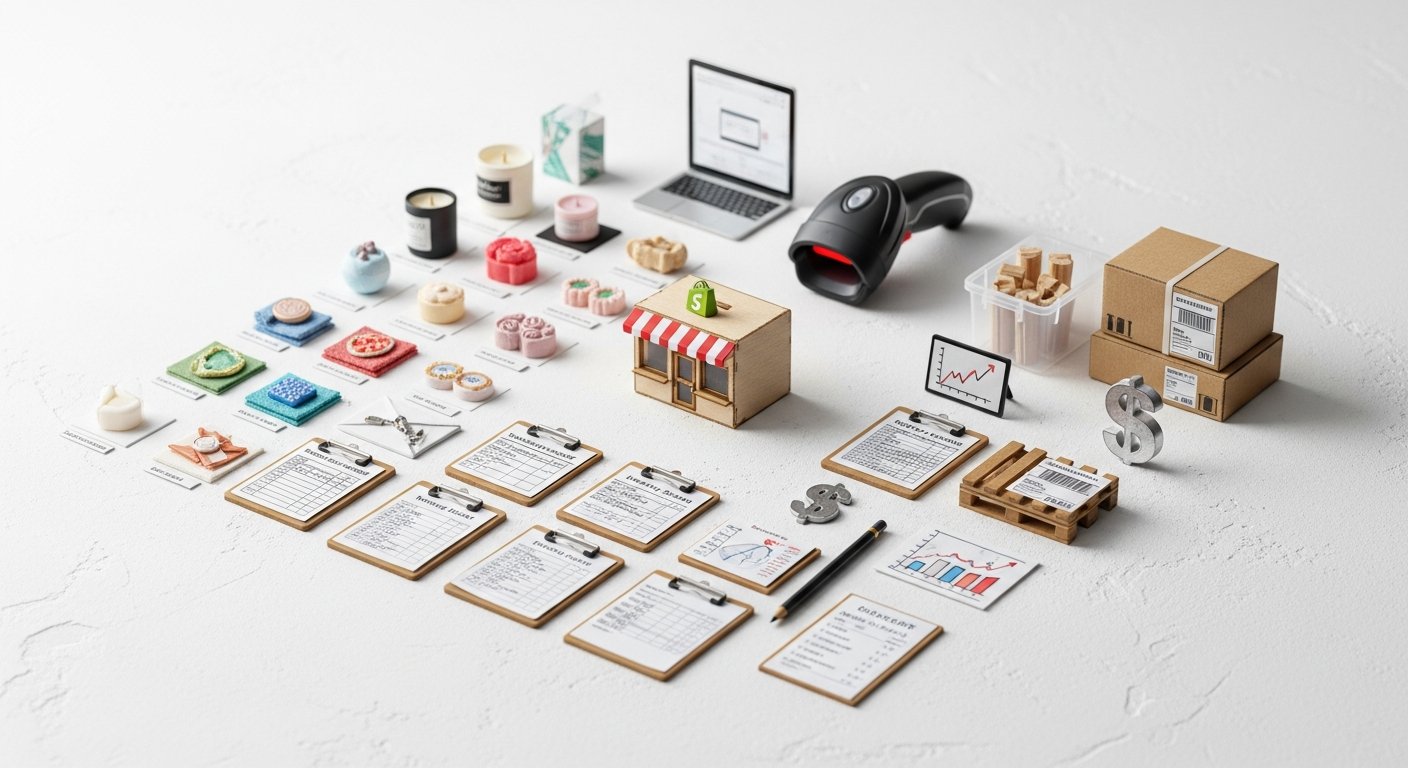
Building a robust inventory management system for your Shopify store isn’t about simply tracking numbers; it’s about embedding strategic principles into your daily operations. These core tenets ensure that your stock levels are optimized, your cash flow is healthy, and your customers are consistently satisfied.
[INLINE IMAGE 1: place after second H2 | alt=”inventory management for shopify concept illustration”]
Demand Forecasting and Predictive Analytics
The ability to accurately predict what customers will buy, and when, is the cornerstone of effective inventory management. Demand forecasting involves analyzing historical sales data, market trends, seasonality, promotional activities, and even external factors like economic indicators to anticipate future demand. For Shopify stores, this means:
- Historical Data Analysis: Looking at past sales, identifying peaks and troughs, and understanding the impact of specific events (e.g., Black Friday, holiday sales).
- Trend Identification: Recognizing emerging product trends and anticipating their lifecycle.
- Seasonality: Accounting for predictable fluctuations in demand based on time of year, holidays, or weather patterns.
- Promotional Impact: Estimating the uplift in sales that specific marketing campaigns or discounts will generate.
- External Factors: Considering broader economic shifts, competitor actions, and even social media buzz that could influence demand.
Advanced inventory management solutions leverage AI and machine learning to analyze these complex datasets, providing more accurate forecasts than manual methods, significantly reducing the risk of overstocking or stockouts. This precision allows Shopify merchants to make informed purchasing decisions, optimize supplier relationships, and fine-tune their marketing efforts.
Stock Level Optimization (Safety Stock, Reorder Points)
Once you have a forecast, the next step is to translate that into actionable stock levels. This involves several critical concepts:
- Safety Stock: This is the extra quantity of an item held in inventory to reduce the risk of stockouts due to variations in demand or lead time. It acts as a buffer against unforeseen circumstances. Calculating appropriate safety stock levels is crucial for maintaining customer satisfaction without tying up excessive capital.
- Reorder Point (ROP): The inventory level at which a new order should be placed with a supplier to replenish stock. The ROP typically considers the lead time (time it takes for new stock to arrive) and the daily demand during that lead time, plus any safety stock.
Reorder Point = (Average Daily Sales × Lead Time in Days) + Safety Stock - Economic Order Quantity (EOQ): A formula that determines the ideal order quantity a company should purchase to minimize inventory costs such as holding costs, shortage costs, and order costs. While more complex, it can be valuable for high-volume items.
- Minimum and Maximum Stock Levels: Setting clear thresholds helps prevent both over-ordering and under-ordering, ensuring a balanced inventory at all times.
By effectively managing these parameters, Shopify stores can minimize inventory holding costs while maximizing product availability.
Inventory Accuracy and Cycle Counting
Even the most sophisticated forecasting and optimization models are useless without accurate inventory data. Inventory accuracy refers to how closely your recorded inventory quantities match your physical inventory. Discrepancies can arise from theft, damage, administrative errors, or improper receiving processes.
- Cycle Counting: Instead of annual physical inventories, which are disruptive and prone to errors, cycle counting involves regularly counting a small, specific section of your inventory. This continuous auditing process helps identify and correct discrepancies more frequently, improving overall accuracy and reducing the need for full shutdowns.
- Barcode Scanning: Implementing barcode systems for receiving, picking, packing, and shipping significantly reduces manual data entry errors and speeds up inventory movement, contributing to higher accuracy.
- Real-time Updates: Ensuring that every sale, return, or stock movement is immediately reflected in your inventory system is paramount, especially for multi-channel selling.
High inventory accuracy means you can trust the data informing your business decisions, leading to better stock management and fewer customer service issues.
Supplier Relationship Management
Your suppliers are an extension of your inventory management system. Strong relationships with reliable vendors are critical for ensuring timely deliveries, quality products, and favorable terms. For Shopify merchants, this involves:
- Clear Communication: Providing accurate forecasts to suppliers helps them plan their production and delivery schedules, reducing lead times and improving reliability.
- Performance Monitoring: Tracking supplier performance on metrics like on-time delivery, order accuracy, and product quality.
- Negotiation: Establishing favorable pricing, payment terms, and minimum order quantities (MOQs) that align with your inventory strategy.
- Diversification: Where possible, having multiple suppliers for critical products can mitigate risks associated with single-source reliance.
A collaborative approach with suppliers can lead to a more resilient and efficient supply chain, directly benefiting your Shopify store’s inventory flow.
Manual vs. Automated Inventory Management: Choosing Your Path
One of the most crucial decisions for any Shopify merchant is determining the level of automation in their inventory management processes. While manual tracking might seem appealing for its simplicity or low initial cost, especially for nascent businesses, its limitations quickly become apparent as a store grows. Automation, conversely, offers unparalleled efficiency, accuracy, and scalability.
The Pitfalls of Manual Inventory Tracking
Many small Shopify stores begin with manual inventory tracking, often relying on spreadsheets, paper logs, or Shopify’s basic built-in tools. While functional for very low volumes, this approach comes with significant drawbacks:
- High Risk of Human Error: Manual data entry is inherently prone to mistakes. A single typo can lead to incorrect stock counts, missed reorders, or overselling.
- Time-Consuming: Updating spreadsheets, physically counting stock, and cross-referencing information across multiple platforms demands a significant amount of time that could be better spent on growth-oriented activities like marketing or product development.
- Lack of Real-time Visibility: Manual systems struggle to provide up-to-the-minute stock levels, especially when selling across multiple channels. This can lead to overselling (selling an item you don’t have) or underselling (not making an item available when it is in stock elsewhere).
- Poor Scalability: As your product catalog expands, sales volume increases, or you add new sales channels, manual tracking becomes unmanageable, leading to bottlenecks and operational chaos.
- Limited Data Analytics: Spreadsheets offer basic reporting, but they lack the sophisticated analytical capabilities of automated systems. It’s difficult to identify trends, forecast demand accurately, or calculate optimal reorder points.
- Inefficient Order Fulfillment: Without a centralized, accurate view of inventory, picking and packing orders can be slower and more error-prone.
- Cash Flow Drain: Inaccurate manual tracking often results in either excessive safety stock (tying up capital) or frequent stockouts (losing sales), both detrimental to cash flow.
Ultimately, manual inventory management becomes a significant bottleneck that stifles growth and eats into profitability as a Shopify store scales.
The Power of Automation for Shopify Stores
Automated inventory management leverages software and integrated systems to streamline and optimize every aspect of stock control. For Shopify merchants, this transition can be transformative, offering numerous advantages:
- Enhanced Accuracy: Automated systems reduce human error by syncing data across all sales channels and warehouses in real-time. Every sale, return, or stock adjustment is immediately reflected in the central system.
- Real-time Visibility: Get an accurate, up-to-the-minute view of your stock levels across all locations and sales channels from a single dashboard. This prevents overselling and ensures accurate information for customers.
- Time Savings: Automate repetitive tasks like stock level updates, reorder point calculations, and purchase order generation, freeing up valuable time for strategic planning.
- Improved Demand Forecasting: Advanced software uses algorithms and historical data to provide more precise demand forecasts, helping you make smarter purchasing decisions.
- Optimized Stock Levels: Automatically calculate optimal safety stock, reorder points, and even Economic Order Quantity (EOQ), minimizing carrying costs while preventing stockouts.
- Streamlined Order Fulfillment: Integrate with warehousing and shipping tools to optimize picking routes, reduce packing errors, and accelerate order processing.
- Better Reporting and Analytics: Gain deep insights into product performance, sales trends, inventory turnover, and profitability margins through comprehensive, customizable reports.
- Multi-Channel Synchronization: Seamlessly manage inventory across your Shopify store, Amazon, eBay, social media shops, and any other sales channels, preventing double-selling.
- Scalability: Automated systems are designed to grow with your business, handling increased product volume, new locations, and expanded sales channels without breaking down.
- Cost Reduction: By reducing carrying costs, preventing lost sales from stockouts, and improving operational efficiency, automation directly contributes to higher profitability.
Investing in an automated inventory management solution is an investment in your Shopify store’s future, ensuring it can operate efficiently, scale effectively, and remain profitable in an increasingly competitive market.
Discover how automation can revolutionize your e-commerce operations.
Essential Features to Look for in Shopify Inventory Management Apps
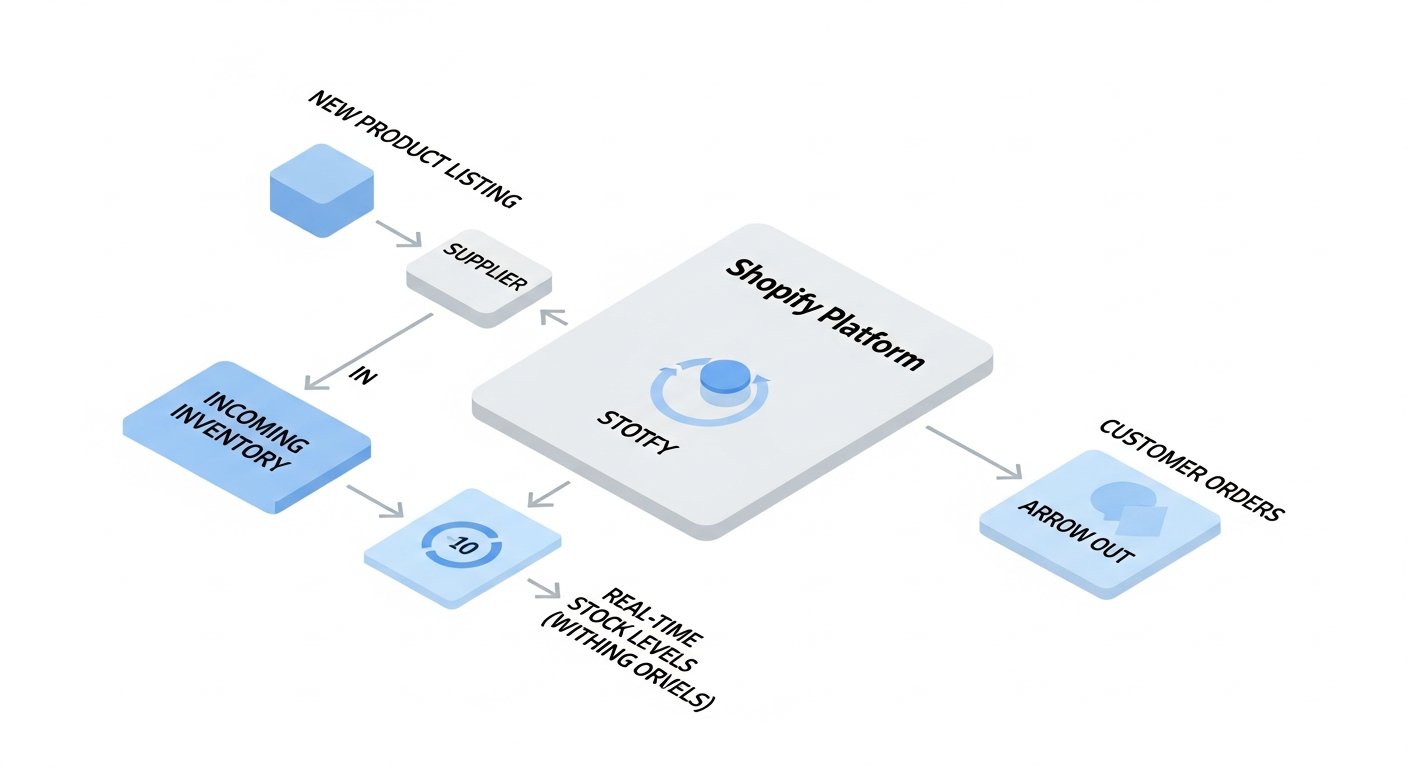
The Shopify App Store is teeming with inventory management solutions, each promising to streamline your operations. Choosing the right one requires a clear understanding of your specific needs and a keen eye for features that genuinely add value. Here are the essential capabilities every Shopify merchant should prioritize when evaluating inventory management apps:
Real-time Sync Across Sales Channels
This is arguably the most critical feature for any modern Shopify store. If you sell beyond your primary Shopify storefront—whether on Amazon, eBay, Etsy, Facebook/Instagram Shops, or even a physical retail location—your inventory needs to be synchronized in real-time. Without it, you face the embarrassing and costly problem of overselling (selling a product that’s already out of stock elsewhere) or underselling. A good app will:
- Automatically adjust stock levels across all connected channels as soon as a sale occurs on any platform.
- Reflect returns and manual adjustments instantly.
- Provide a centralized, unified view of inventory across your entire ecosystem.
Multi-location and Warehouse Management
As your Shopify store grows, you might expand beyond a single storage location. This could mean multiple warehouses, third-party logistics (3PL) providers, or even separate areas within a single facility for different product types. A robust inventory management app should:
- Track inventory quantities independently for each location.
- Allow for easy transfer of stock between locations.
- Enable you to fulfill orders from the closest or most cost-effective location.
- Integrate with 3PLs to provide visibility into their stock and fulfillment processes.
Purchase Order Management and Vendor Integration
Efficiently managing your relationship with suppliers is key to maintaining healthy stock levels. A comprehensive inventory solution should facilitate this process:
- Automated Purchase Order (PO) Creation: Generate POs based on sales forecasts, current stock levels, and reorder points.
- Vendor Management: Store supplier information, pricing, lead times, and contact details.
- Receiving & Reconciliation: Accurately record incoming inventory, cross-reference it with POs, and automatically update stock levels.
- Landed Cost Calculation: Factor in shipping, customs, and other costs to get a true cost of goods sold (COGS) for each item.
Reporting and Analytics
Data-driven decisions are the hallmark of profitable e-commerce. Your inventory management app should provide deep insights into your inventory health and performance:
- Sales Performance by Product/SKU: Identify bestsellers and slow-moving items.
- Inventory Turnover Rate: Understand how quickly you sell through your stock.
- Days of Supply: Know how many days of stock you have left for each product.
- Profitability Reports: Analyze profit margins per product, accounting for COGS and carrying costs.
- Dead Stock & Excess Inventory Reports: Identify items that are tying up capital and need to be liquidated.
- Forecast Accuracy: Evaluate the effectiveness of your demand predictions.
Barcoding and Scanning Capabilities
For businesses with physical inventory handling, barcoding significantly enhances accuracy and speed:
- Barcode Generation: Create and print unique barcodes for products and locations.
- Mobile Scanning: Use mobile devices or dedicated scanners for receiving, picking, packing, and conducting cycle counts.
- Error Reduction: Minimize manual data entry errors during inventory movements.
- Faster Operations: Speed up warehouse operations and fulfillment processes.
Other valuable features might include batch tracking, serial number tracking, kitting and bundling, returns management, and integration with accounting software. The ideal app will strike a balance between powerful features and ease of use, aligning perfectly with your Shopify store’s current needs and future growth trajectory.
[INLINE IMAGE 2: place after fourth H2 | alt=”inventory management for shopify comparison illustration”]
Top Inventory Management Solutions for Shopify Merchants
Navigating the landscape of inventory management solutions can be daunting. From Shopify’s native capabilities to powerful third-party apps and complex ERP systems, the options are varied. The best choice for your Shopify store depends on its size, complexity, budget, and specific operational needs.
Native Shopify Inventory Tools (Limitations and Uses)
Shopify provides basic inventory management features built directly into its platform, which are suitable for very small businesses or those just starting out:
- Basic Stock Tracking: You can set quantities for each product and variant. Shopify automatically adjusts these quantities upon sale.
- Low Stock Alerts: Set thresholds to receive notifications when stock levels drop below a certain point.
- Manual Adjustments: Easily adjust stock levels for damages, returns, or manual counts.
- Multi-Location Tracking: Shopify supports tracking inventory across multiple locations (e.g., a primary warehouse, a retail store), allowing you to fulfill from different places.
- Basic Reports: Access reports on sales by product and inventory valuation.
Limitations: While a good starting point, Shopify’s native tools quickly hit their limits for growing businesses. They lack:
- Advanced Forecasting: No built-in demand forecasting or predictive analytics.
- Purchase Order Management: No direct functionality to create, track, or manage purchase orders with suppliers.
- Multi-Channel Sync (Beyond Shopify): Does not automatically sync inventory with external marketplaces like Amazon or eBay.
- Kitting/Bundling: Limited support for combining multiple SKUs into a single sellable unit.
- Complex Reporting: Lacks detailed reports on inventory turnover, dead stock, or profitability by SKU.
- Warehouse Optimization: No tools for barcode scanning, location management within a warehouse, or advanced picking.
For most Shopify merchants looking to scale, these native tools will eventually necessitate an upgrade to a more robust solution.
Third-Party Apps: Overview and Key Differentiators
This is where the majority of Shopify merchants find their ideal inventory management solution. The Shopify App Store offers a plethora of apps designed to extend and enhance inventory capabilities. These apps typically integrate seamlessly with Shopify and offer a range of features, from basic extensions to comprehensive enterprise-grade systems. Key differentiators often include:
- Price Point: Ranging from free (limited features) to hundreds or thousands of dollars per month.
- Feature Set: Basic stock sync vs. advanced forecasting, PO management, multi-warehouse, kitting, lot tracking, etc.
- Scalability: How well the app can handle increasing product catalogs, sales volumes, and additional sales channels.
- Integration Ecosystem: Compatibility with other tools (accounting, shipping, CRM) you use.
- User Interface and Ease of Use: A user-friendly interface is crucial for adoption and efficiency.
- Customer Support: Availability and quality of support.
Here’s a comparison of some popular inventory management apps for Shopify:
| Feature/App | Stocky (Shopify’s own) | TradeGecko (now QuickBooks Commerce) | Katana MRP | Veeqo |
|---|---|---|---|---|
| Target Business Size | Small to Medium | Small to Enterprise | Small to Medium (Manufacturing focus) | Medium to Large |
| Key Strengths | Basic insights, POs, discounts. Good for single-channel. | Robust multi-channel sync, B2B portal, advanced reporting. | Manufacturing, raw material tracking, production scheduling. | Warehouse management, shipping integration, advanced reporting. |
| Real-time Multi-Channel Sync | Yes (within Shopify eco-system) | Excellent (Shopify, Amazon, eBay, etc.) | Limited (more focused on production) | Excellent (Shopify, Amazon, eBay, etc.) |
| Demand Forecasting | Basic suggestions | Advanced tools, AI-powered | Material resource planning based | Advanced, data-driven |
| Purchase Order Management | Yes, built-in | Comprehensive POs, supplier portal | Material procurement, supplier details | Full PO lifecycle, vendor management |
| Multi-Location/Warehouse | Yes | Yes, robust | Yes, production and stock locations | Yes, very strong |
| Kitting/Bundling | Limited | Yes | Yes, Bill of Materials (BOM) | Yes |
| Pricing Model | Free (with Shopify POS Pro) | Subscription (tiered) | Subscription (tiered) | Subscription (tiered) |
Explore more top-rated Shopify apps for growth.
Enterprise-Level ERP Integrations
For large Shopify merchants, especially those with complex operations, high transaction volumes, or existing legacy systems, a dedicated Enterprise Resource Planning (ERP) system integrated with Shopify may be the ultimate solution. ERPs like NetSuite, SAP, Microsoft Dynamics 365, or Acumatica offer:
- Holistic Business Management: Integrate inventory with finance, accounting, CRM, HR, manufacturing, and supply chain management.
- Unmatched Scalability: Designed to handle massive data volumes and complex organizational structures.
- Customization: Highly configurable to specific business processes and industry requirements.
- Advanced Analytics: Deep reporting and business intelligence across the entire organization.
However, ERPs come with significant costs, extensive implementation times, and require specialized expertise. They are typically reserved for businesses that have outgrown dedicated inventory apps and need a unified system for their entire enterprise.
The right choice hinges on a thorough assessment of your current operational pains, your growth projections, and the resources you are willing to invest. Start by identifying your non-negotiable features and gradually evaluate solutions that match your budget and complexity requirements.
Strategies for Optimizing Inventory on Your Shopify Store
Simply having an inventory management system isn’t enough; you need to employ strategic approaches to truly optimize your stock. These strategies help minimize costs, reduce waste, and ensure products are available when customers want them.
Implementing Just-In-Time (JIT) Inventory
The Just-In-Time (JIT) strategy aims to minimize inventory holding costs and increase efficiency by receiving goods only as they are needed for production or sale, rather than maintaining large stock levels. While a pure JIT model can be challenging for e-commerce due to unpredictable demand and supplier lead times, Shopify merchants can adapt its principles:
- Strong Supplier Relationships: Requires reliable suppliers with short and consistent lead times.
- Accurate Demand Forecasting: Essential to predict needs precisely and avoid stockouts.
- Automated Reordering: Use software to automatically trigger purchase orders when stock hits reorder points.
- Reduced Buffer Stock: Aim to keep safety stock at a minimum, relying on quick replenishment.
Benefits: Significant reduction in carrying costs, improved cash flow, minimized risk of obsolescence.
Risks: Highly susceptible to supply chain disruptions, forecasting errors can lead to stockouts.
For Shopify, JIT principles are often applied to high-turnover items or goods with predictable demand, while maintaining a slight buffer for popular, unpredictable products.
ABC Analysis for Prioritization
ABC analysis is an inventory categorization technique that divides items into three categories based on their value and importance to the business:
- A-Items (High Value, Low Quantity): These are your top 10-20% of products that account for 70-80% of your sales revenue. They require tight control, accurate forecasting, and frequent review. For example, your flagship product.
- B-Items (Medium Value, Medium Quantity): These are the next 30% of products, accounting for 15-25% of revenue. They require moderate control.
- C-Items (Low Value, High Quantity): These are the remaining 50-60% of products, accounting for only 5-10% of revenue. They can be managed with simpler controls, and bulk orders might be acceptable.
By applying ABC analysis, Shopify merchants can focus their inventory management efforts where they matter most, optimizing stock levels for high-impact items and preventing costly stockouts while not over-managing lower-value items.
Dealing with Dead Stock and Returns
Dead stock (also known as obsolete or stagnant inventory) and returns are inevitable in e-commerce, but effective management is crucial to minimize their financial drain.
- Identifying Dead Stock: Use inventory reports to pinpoint items that haven’t sold in a significant period (e.g., 90-180 days).
- Liquidation Strategies:
- Discounts/Clearance Sales: Aggressively price to move items.
- Bundling: Pair dead stock with popular items.
- Donation/Charity: Remove from inventory and potentially gain tax benefits.
- Liquidation Companies: Sell in bulk to specialists.
- Repurposing: If possible, break down components or repurpose the product.
- Returns Management:
- Streamlined Process: Make returns easy for customers while ensuring efficient internal handling.
- Inspection: Quickly assess if returned items are sellable, repairable, or need to be discarded.
- Restocking: Efficiently return sellable items to inventory.
- Analysis: Track return reasons to identify product quality issues or inaccurate descriptions.
Proactive management of dead stock and returns prevents them from tying up capital and valuable warehouse space.
Bundle Management and Kitting
Bundling involves grouping several individual products (SKUs) together and selling them as a single package at a combined price. Kitting is similar, often referring to the process of assembling these bundles physically. This strategy offers several benefits for Shopify stores:
- Increased Average Order Value (AOV): Encourages customers to buy more items.
- Move Slow-Moving Inventory: Bundle less popular items with bestsellers.
- Simplified Purchasing: Offers customers a convenient, curated package.
- Reduced Shipping Costs: Often more cost-effective to ship one bundle than multiple individual items.
Effective bundle management requires an inventory system that can accurately track the components within each bundle, deducting individual SKUs from stock when a bundle is sold, and preventing overselling. This feature is often a hallmark of more advanced inventory management apps.
Advanced Inventory Tactics for Scaling Shopify Businesses
As your Shopify store expands and its operations become more complex, rudimentary inventory practices will no longer suffice. Scaling businesses require sophisticated tactics that leverage technology and strategic partnerships to maintain efficiency and profitability.
Leveraging AI and Machine Learning for Forecasting
Gone are the days when simple moving averages were enough for demand forecasting. Modern e-commerce, with its vast datasets and volatile market conditions, benefits immensely from Artificial Intelligence (AI) and Machine Learning (ML) algorithms. These advanced systems can:
- Process Massive Data: Analyze historical sales, seasonal trends, promotions, website traffic, external economic indicators, weather patterns, and even social media sentiment.
- Identify Complex Patterns: Detect nuanced correlations and non-linear relationships in data that human analysts might miss.
- Improve Accuracy Over Time: ML models learn and refine their predictions with every new piece of data, continuously improving forecasting accuracy.
- Scenario Planning: Run simulations for various marketing campaigns, economic shifts, or supply chain disruptions to understand their potential impact on demand.
- Automate Reorder Points: Dynamically adjust reorder points and safety stock levels based on predicted demand and lead time variations.
For scaling Shopify stores, integrating with inventory management platforms that offer AI-powered forecasting capabilities can significantly reduce capital tied up in excess inventory and minimize lost sales due to stockouts, leading to substantial gains in efficiency and profitability.
Dropshipping and Print-on-Demand Integration
While traditional inventory management focuses on owned stock, many scaling Shopify businesses diversify their product offerings through dropshipping or print-on-demand (POD) models. Seamless integration is key to managing these hybrid approaches:
- Dropshipping: Products are sourced directly from a third-party supplier and shipped directly to the customer. Your inventory system needs to:
- Track virtual stock levels from multiple dropshipping suppliers.
- Route orders automatically to the correct supplier.
- Monitor supplier performance and shipping times.
- Distinguish dropshipped items from owned inventory for accurate reporting.
- Print-on-Demand (POD): Products (like custom apparel, mugs) are only created once an order is placed. Your system should:
- Manage product variations and designs efficiently.
- Integrate with POD platforms (e.g., Printful, Printify) to automate order fulfillment.
- Track the status of POD orders.
Integrating these models effectively ensures a consistent customer experience and accurate product availability information across all your offerings, without adding complexity to your core inventory operations.
Cross-Channel Inventory Synchronization
Beyond basic multi-channel selling, cross-channel synchronization refers to a highly sophisticated level of inventory control across an entire ecosystem. This includes:
- Centralized Database: A single source of truth for all inventory data, accessible by all systems.
- Bidirectional Sync: Not just updating stock from Shopify to marketplaces, but also reflecting returns, damaged goods, or sales from physical stores back into the central system.
- Automated Rules: Setting up complex rules for inventory allocation across channels based on profitability, priority, or geographical demand.
- Inventory Buffers: Strategically holding back a small portion of inventory from online channels to ensure availability for high-value customers or last-minute demand spikes.
Achieving true cross-channel synchronization minimizes overselling, optimizes product placement, and provides a unified customer experience, regardless of where they interact with your brand. This level of integration often requires advanced third-party apps or ERP systems.
Disaster Recovery and Contingency Planning
No matter how optimized your inventory system, external factors can always disrupt your supply chain. Scaling businesses must have robust plans in place to mitigate these risks:
- Supplier Diversification: Don’t rely on a single supplier for critical products. Have backup vendors.
- Buffer Stock Strategy: Maintain strategic safety stock for high-value or long-lead-time items.
- 3PL Partnerships: Partnering with multiple 3PLs in different regions can offer geographic redundancy.
- Data Backups: Ensure all inventory data is regularly backed up and recoverable.
- Emergency Communication Protocols: Establish clear communication plans with suppliers and customers in case of delays or stockouts.
- Insurance: Adequate coverage for inventory damage, loss, or theft.
Proactive contingency planning minimizes the impact of unforeseen events, safeguarding your inventory and ensuring business continuity for your Shopify store.
Integrating Inventory Management with Your Overall E-commerce Strategy
Inventory management, when viewed in isolation, is merely a logistical function. However, its true power for Shopify merchants is unlocked when it’s tightly integrated with every other aspect of the e-commerce strategy. This holistic approach ensures that inventory decisions support broader business goals, from marketing and sales to customer service and financial planning.
Connecting Inventory to Marketing and Sales Promotions
Your inventory levels should dictate, or at least heavily influence, your marketing and sales strategies. A truly integrated approach leverages inventory data to drive promotional efforts:
- Targeted Promotions:
- Boosting Slow Movers: Identify products with high stock levels and low sales velocity. Design targeted email campaigns, flash sales, or bundle offers to move this inventory.
- Maximizing Best Sellers: Ensure ample stock of popular items before launching major campaigns. Leverage real-time inventory data to prevent overselling during high-traffic periods (e.g., holiday sales).
- Scarcity and Urgency Marketing:
- Low Stock Alerts: Use accurate inventory numbers to display “Only X left!” messages on product pages, creating urgency and encouraging immediate purchase.
- Last Chance Sales: Promote items that are nearing end-of-life or being discontinued, using inventory data to validate the scarcity.
- Pre-Orders and Backorders:
- Gauge Demand: Offer pre-orders for highly anticipated products to gauge demand and secure sales before stock even arrives, informing future purchasing decisions.
- Manage Expectations: Accurately communicate estimated shipping dates for backordered items, powered by integrated PO and lead time data, maintaining customer trust.
- Personalized Recommendations: Understanding what customers bought (and what you have in stock) can fuel more effective cross-sell and upsell recommendations.
By aligning inventory data with your marketing calendar, Shopify stores can create more impactful campaigns, reduce dead stock, and maximize sales opportunities.
The Role of Inventory in Customer Service and Fulfillment
Excellent customer service and efficient fulfillment are direct reflections of sound inventory management. Discrepancies in stock lead to frustrated customers and increased support costs.
- Accurate Product Availability: Real-time inventory synchronization ensures that product pages display correct stock levels, preventing customers from ordering out-of-stock items and avoiding disappointment.
- Faster, More Accurate Fulfillment: Well-organized inventory, driven by an integrated system, allows warehouse staff to quickly locate, pick, and pack items, leading to faster shipping times and fewer order errors.
- Proactive Communication: If a stockout or delay does occur (despite best efforts), an integrated system allows customer service teams to immediately see the status of an order and communicate transparently with the customer, offering solutions like alternatives or estimated arrival times.
- Efficient Returns and Exchanges: A seamless returns process, from initial request to restocking or refund, relies on accurate inventory updates to ensure correct financial adjustments and product re-entry into saleable stock.
- Reduced Customer Service Load: Fewer stock-related issues (overselling, delayed shipments)
Inventory Management for Shopify: The Ultimate Guide to E-commerce Profitability and Growth in 2026
Affiliate disclosure: This article may contain affiliate links. Recommendations are independent and editorially driven.
In the dynamic world of e-commerce, where competition is fierce and customer expectations are constantly rising, effective inventory management for Shopify stores is no longer a luxury—it’s an absolute necessity. For direct-to-consumer (D2C) brands striving for sustainable growth and maximized profitability, the ability to accurately track, forecast, and manage stock levels can be the defining factor between soaring success and frustrating stagnation. In 2026, with supply chains becoming increasingly complex and consumer buying habits evolving at an unprecedented pace, a robust inventory strategy is the bedrock upon which profitable e-commerce operations are built.
This comprehensive guide from e-comprofits delves deep into the intricacies of inventory management tailored specifically for Shopify merchants. We’ll explore why optimizing your inventory is critical for every aspect of your business, from reducing carrying costs and preventing stockouts to enhancing customer satisfaction and streamlining fulfillment. Whether you’re a burgeoning startup or an established enterprise, understanding and implementing the right inventory management practices and tools can unlock significant efficiencies, boost your bottom line, and position your Shopify store for unparalleled success in the coming years.
Understanding Inventory Management for Shopify: Why It’s Critical for E-commerce Success
At its core, inventory management for Shopify involves overseeing the entire lifecycle of your products, from procurement to sale. This includes tracking goods as they enter your warehouse, monitoring their movement, managing stock levels across various channels, and ultimately fulfilling customer orders. For a Shopify store, this process is intricately linked to every facet of its operation, directly impacting financial health, operational efficiency, and customer loyalty.
Many merchants, especially those just starting, underestimate the complexity and importance of this function. They might view it as a mere logistical task rather than a strategic pillar. However, a closer look reveals that poor inventory management can lead to a cascade of costly problems, while exemplary practices can yield immense competitive advantages.
The Core Challenges Shopify Merchants Face
Shopify merchants, regardless of size, frequently encounter a unique set of inventory challenges:
- Balancing Supply and Demand: Predicting exactly what customers will want, and how much, is an art and a science. Overstocking ties up capital and risks obsolescence, while understocking leads to lost sales and disappointed customers.
- Multi-Channel Complexity: Many Shopify stores sell across multiple platforms—their Shopify site, social media, marketplaces like Amazon, and sometimes even brick-and-mortar locations. Keeping inventory in sync across all these channels manually is a recipe for disaster.
- Data Silos: Without integrated systems, inventory data often lives in disparate spreadsheets or basic Shopify reports, making it difficult to get a holistic view of stock, sales trends, and profit margins.
- Supply Chain Volatility: Global events, shipping delays, and supplier issues can disrupt the flow of goods, making it harder to maintain optimal stock levels and fulfill orders on time.
- Seasonal Fluctuations and Trends: E-commerce is heavily influenced by seasons, holidays, and fleeting trends. Rapidly adjusting inventory to these shifts is crucial but challenging.
- Returns and Exchanges: Managing returned inventory, inspecting it, restocking it if viable, or liquidating it adds another layer of complexity to inventory operations.
The Direct Impact on Profitability and Customer Satisfaction
The stakes are high. Effective inventory management directly translates to your Shopify store’s bottom line and reputation:
- Increased Profitability:
- Reduced Carrying Costs: Less excess inventory means lower warehousing fees, insurance, and the risk of spoilage or obsolescence.
- Optimized Cash Flow: Capital isn’t tied up in unsold goods, freeing it for marketing, product development, or other growth initiatives.
- Minimized Stockouts: Prevents lost sales and customers from turning to competitors. Every “out of stock” message is a potential missed revenue opportunity.
- Better Purchase Decisions: Data-driven insights lead to smarter buying, negotiating better terms with suppliers, and avoiding costly rush orders.
- Enhanced Customer Satisfaction:
- Reliable Fulfillment: Customers expect their orders quickly and accurately. Knowing you have the stock ensures you can deliver.
- Improved Product Availability: Shoppers are less likely to abandon carts or leave for a competitor if their desired items are consistently in stock.
- Accurate Information: Providing real-time stock levels on product pages builds trust and reduces customer service inquiries about availability.
- Faster Shipping: Well-organized inventory facilitates quicker picking, packing, and shipping processes.
- Operational Efficiency: Streamlined inventory processes reduce manual errors, save time, and free up resources to focus on growth strategies rather than firefighting.
Simply put, for any Shopify merchant aiming to scale and maintain a competitive edge in 2026, mastering inventory management is not optional—it’s foundational.
Key Principles of Effective Inventory Management on Shopify
Building a robust inventory management system for your Shopify store isn’t about simply tracking numbers; it’s about embedding strategic principles into your daily operations. These core tenets ensure that your stock levels are optimized, your cash flow is healthy, and your customers are consistently satisfied.
[INLINE IMAGE 1: place after second H2 | alt=”inventory management for shopify concept illustration”]
Demand Forecasting and Predictive Analytics
The ability to accurately predict what customers will buy, and when, is the cornerstone of effective inventory management. Demand forecasting involves analyzing historical sales data, market trends, seasonality, promotional activities, and even external factors like economic indicators to anticipate future demand. For Shopify stores, this means:
- Historical Data Analysis: Looking at past sales, identifying peaks and troughs, and understanding the impact of specific events (e.g., Black Friday, holiday sales).
- Trend Identification: Recognizing emerging product trends and anticipating their lifecycle.
- Seasonality: Accounting for predictable fluctuations in demand based on time of year, holidays, or weather patterns.
- Promotional Impact: Estimating the uplift in sales that specific marketing campaigns or discounts will generate.
- External Factors: Considering broader economic shifts, competitor actions, and even social media buzz that could influence demand.
Advanced inventory management solutions leverage AI and machine learning to analyze these complex datasets, providing more accurate forecasts than manual methods, significantly reducing the risk of overstocking or stockouts. This precision allows Shopify merchants to make informed purchasing decisions, optimize supplier relationships, and fine-tune their marketing efforts.
Stock Level Optimization (Safety Stock, Reorder Points)
Once you have a forecast, the next step is to translate that into actionable stock levels. This involves several critical concepts:
- Safety Stock: This is the extra quantity of an item held in inventory to reduce the risk of stockouts due to variations in demand or lead time. It acts as a buffer against unforeseen circumstances. Calculating appropriate safety stock levels is crucial for maintaining customer satisfaction without tying up excessive capital.
- Reorder Point (ROP): The inventory level at which a new order should be placed with a supplier to replenish stock. The ROP typically considers the lead time (time it takes for new stock to arrive) and the daily demand during that lead time, plus any safety stock.
Reorder Point = (Average Daily Sales × Lead Time in Days) + Safety Stock - Economic Order Quantity (EOQ): A formula that determines the ideal order quantity a company should purchase to minimize inventory costs such as holding costs, shortage costs, and order costs. While more complex, it can be valuable for high-volume items.
- Minimum and Maximum Stock Levels: Setting clear thresholds helps prevent both over-ordering and under-ordering, ensuring a balanced inventory at all times.
By effectively managing these parameters, Shopify stores can minimize inventory holding costs while maximizing product availability.
Inventory Accuracy and Cycle Counting
Even the most sophisticated forecasting and optimization models are useless without accurate inventory data. Inventory accuracy refers to how closely your recorded inventory quantities match your physical inventory. Discrepancies can arise from theft, damage, administrative errors, or improper receiving processes.
- Cycle Counting: Instead of annual physical inventories, which are disruptive and prone to errors, cycle counting involves regularly counting a small, specific section of your inventory. This continuous auditing process helps identify and correct discrepancies more frequently, improving overall accuracy and reducing the need for full shutdowns.
- Barcode Scanning: Implementing barcode systems for receiving, picking, packing, and shipping significantly reduces manual data entry errors and speeds up inventory movement, contributing to higher accuracy.
- Real-time Updates: Ensuring that every sale, return, or stock movement is immediately reflected in your inventory system is paramount, especially for multi-channel selling.
High inventory accuracy means you can trust the data informing your business decisions, leading to better stock management and fewer customer service issues.
Supplier Relationship Management
Your suppliers are an extension of your inventory management system. Strong relationships with reliable vendors are critical for ensuring timely deliveries, quality products, and favorable terms. For Shopify merchants, this involves:
- Clear Communication: Providing accurate forecasts to suppliers helps them plan their production and delivery schedules, reducing lead times and improving reliability.
- Performance Monitoring: Tracking supplier performance on metrics like on-time delivery, order accuracy, and product quality.
- Negotiation: Establishing favorable pricing, payment terms, and minimum order quantities (MOQs) that align with your inventory strategy.
- Diversification: Where possible, having multiple suppliers for critical products can mitigate risks associated with single-source reliance.
A collaborative approach with suppliers can lead to a more resilient and efficient supply chain, directly benefiting your Shopify store’s inventory flow.
Manual vs. Automated Inventory Management: Choosing Your Path
One of the most crucial decisions for any Shopify merchant is determining the level of automation in their inventory management processes. While manual tracking might seem appealing for its simplicity or low initial cost, especially for nascent businesses, its limitations quickly become apparent as a store grows. Automation, conversely, offers unparalleled efficiency, accuracy, and scalability.
The Pitfalls of Manual Inventory Tracking
Many small Shopify stores begin with manual inventory tracking, often relying on spreadsheets, paper logs, or Shopify’s basic built-in tools. While functional for very low volumes, this approach comes with significant drawbacks:
- High Risk of Human Error: Manual data entry is inherently prone to mistakes. A single typo can lead to incorrect stock counts, missed reorders, or overselling.
- Time-Consuming: Updating spreadsheets, physically counting stock, and cross-referencing information across multiple platforms demands a significant amount of time that could be better spent on growth-oriented activities like marketing or product development.
- Lack of Real-time Visibility: Manual systems struggle to provide up-to-the-minute stock levels, especially when selling across multiple channels. This can lead to overselling (selling an item you don’t have) or underselling (not making an item available when it is in stock elsewhere).
- Poor Scalability: As your product catalog expands, sales volume increases, or you add new sales channels, manual tracking becomes unmanageable, leading to bottlenecks and operational chaos.
- Limited Data Analytics: Spreadsheets offer basic reporting, but they lack the sophisticated analytical capabilities of automated systems. It’s difficult to identify trends, forecast demand accurately, or calculate optimal reorder points.
- Inefficient Order Fulfillment: Without a centralized, accurate view of inventory, picking and packing orders can be slower and more error-prone.
- Cash Flow Drain: Inaccurate manual tracking often results in either excessive safety stock (tying up capital) or frequent stockouts (losing sales), both detrimental to cash flow.
Ultimately, manual inventory management becomes a significant bottleneck that stifles growth and eats into profitability as a Shopify store scales.
The Power of Automation for Shopify Stores
Automated inventory management leverages software and integrated systems to streamline and optimize every aspect of stock control. For Shopify merchants, this transition can be transformative, offering numerous advantages:
- Enhanced Accuracy: Automated systems reduce human error by syncing data across all sales channels and warehouses in real-time. Every sale, return, or stock adjustment is immediately reflected in the central system.
- Real-time Visibility: Get an accurate, up-to-the-minute view of your stock levels across all locations and sales channels from a single dashboard. This prevents overselling and ensures accurate information for customers.
- Time Savings: Automate repetitive tasks like stock level updates, reorder point calculations, and purchase order generation, freeing up valuable time for strategic planning.
- Improved Demand Forecasting: Advanced software uses algorithms and historical data to provide more precise demand forecasts, helping you make smarter purchasing decisions.
- Optimized Stock Levels: Automatically calculate optimal safety stock, reorder points, and even Economic Order Quantity (EOQ), minimizing carrying costs while preventing stockouts.
- Streamlined Order Fulfillment: Integrate with warehousing and shipping tools to optimize picking routes, reduce packing errors, and accelerate order processing.
- Better Reporting and Analytics: Gain deep insights into product performance, sales trends, inventory turnover, and profitability margins through comprehensive, customizable reports.
- Multi-Channel Synchronization: Seamlessly manage inventory across your Shopify store, Amazon, eBay, social media shops, and any other sales channels, preventing double-selling.
- Scalability: Automated systems are designed to grow with your business, handling increased product volume, new locations, and expanded sales channels without breaking down.
- Cost Reduction: By reducing carrying costs, preventing lost sales from stockouts, and improving operational efficiency, automation directly contributes to higher profitability.
Investing in an automated inventory management solution is an investment in your Shopify store’s future, ensuring it can operate efficiently, scale effectively, and remain profitable in an increasingly competitive market.
Discover how automation can revolutionize your e-commerce operations.
Essential Features to Look for in Shopify Inventory Management Apps
The Shopify App Store is teeming with inventory management solutions, each promising to streamline your operations. Choosing the right one requires a clear understanding of your specific needs and a keen eye for features that genuinely add value. Here are the essential capabilities every Shopify merchant should prioritize when evaluating inventory management apps:
Real-time Sync Across Sales Channels
This is arguably the most critical feature for any modern Shopify store. If you sell beyond your primary Shopify storefront—whether on Amazon, eBay, Etsy, Facebook/Instagram Shops, or even a physical retail location—your inventory needs to be synchronized in real-time. Without it, you face the embarrassing and costly problem of overselling (selling a product that’s already out of stock elsewhere) or underselling. A good app will:
- Automatically adjust stock levels across all connected channels as soon as a sale occurs on any platform.
- Reflect returns and manual adjustments instantly.
- Provide a centralized, unified view of inventory across your entire ecosystem.
Multi-location and Warehouse Management
As your Shopify store grows, you might expand beyond a single storage location. This could mean multiple warehouses, third-party logistics (3PL) providers, or even separate areas within a single facility for different product types. A robust inventory management app should:
- Track inventory quantities independently for each location.
- Allow for easy transfer of stock between locations.
- Enable you to fulfill orders from the closest or most cost-effective location.
- Integrate with 3PLs to provide visibility into their stock and fulfillment processes.
Purchase Order Management and Vendor Integration
Efficiently managing your relationship with suppliers is key to maintaining healthy stock levels. A comprehensive inventory solution should facilitate this process:
- Automated Purchase Order (PO) Creation: Generate POs based on sales forecasts, current stock levels, and reorder points.
- Vendor Management: Store supplier information, pricing, lead times, and contact details.
- Receiving & Reconciliation: Accurately record incoming inventory, cross-reference it with POs, and automatically update stock levels.
- Landed Cost Calculation: Factor in shipping, customs, and other costs to get a true cost of goods sold (COGS) for each item.
Reporting and Analytics
Data-driven decisions are the hallmark of profitable e-commerce. Your inventory management app should provide deep insights into your inventory health and performance:
- Sales Performance by Product/SKU: Identify bestsellers and slow-moving items.
- Inventory Turnover Rate: Understand how quickly you sell through your stock.
- Days of Supply: Know how many days of stock you have left for each product.
- Profitability Reports: Analyze profit margins per product, accounting for COGS and carrying costs.
- Dead Stock & Excess Inventory Reports: Identify items that are tying up capital and need to be liquidated.
- Forecast Accuracy: Evaluate the effectiveness of your demand predictions.
Barcoding and Scanning Capabilities
For businesses with physical inventory handling, barcoding significantly enhances accuracy and speed:
- Barcode Generation: Create and print unique barcodes for products and locations.
- Mobile Scanning: Use mobile devices or dedicated scanners for receiving, picking, packing, and conducting cycle counts.
- Error Reduction: Minimize manual data entry errors during inventory movements.
- Faster Operations: Speed up warehouse operations and fulfillment processes.
Other valuable features might include batch tracking, serial number tracking, kitting and bundling, returns management, and integration with accounting software. The ideal app will strike a balance between powerful features and ease of use, aligning perfectly with your Shopify store’s current needs and future growth trajectory.
[INLINE IMAGE 2: place after fourth H2 | alt=”inventory management for shopify comparison illustration”]
Top Inventory Management Solutions for Shopify Merchants
Navigating the landscape of inventory management solutions can be daunting. From Shopify’s native capabilities to powerful third-party apps and complex ERP systems, the options are varied. The best choice for your Shopify store depends on its size, complexity, budget, and specific operational needs.
Native Shopify Inventory Tools (Limitations and Uses)
Shopify provides basic inventory management features built directly into its platform, which are suitable for very small businesses or those just starting out:
- Basic Stock Tracking: You can set quantities for each product and variant. Shopify automatically adjusts these quantities upon sale.
- Low Stock Alerts: Set thresholds to receive notifications when stock levels drop below a certain point.
- Manual Adjustments: Easily adjust stock levels for damages, returns, or manual counts.
- Multi-Location Tracking: Shopify supports tracking inventory across multiple locations (e.g., a primary warehouse, a retail store), allowing you to fulfill from different places.
- Basic Reports: Access reports on sales by product and inventory valuation.
Limitations: While a good starting point, Shopify’s native tools quickly hit their limits for growing businesses. They lack:
- Advanced Forecasting: No built-in demand forecasting or predictive analytics.
- Purchase Order Management: No direct functionality to create, track, or manage purchase orders with suppliers.
- Multi-Channel Sync (Beyond Shopify): Does not automatically sync inventory with external marketplaces like Amazon or eBay.
- Kitting/Bundling: Limited support for combining multiple SKUs into a single sellable unit.
- Complex Reporting: Lacks detailed reports on inventory turnover, dead stock, or profitability by SKU.
- Warehouse Optimization: No tools for barcode scanning, location management within a warehouse, or advanced picking.
For most Shopify merchants looking to scale, these native tools will eventually necessitate an upgrade to a more robust solution.
Third-Party Apps: Overview and Key Differentiators
This is where the majority of Shopify merchants find their ideal inventory management solution. The Shopify App Store offers a plethora of apps designed to extend and enhance inventory capabilities. These apps typically integrate seamlessly with Shopify and offer a range of features, from basic extensions to comprehensive enterprise-grade systems. Key differentiators often include:
- Price Point: Ranging from free (limited features) to hundreds or thousands of dollars per month.
- Feature Set: Basic stock sync vs. advanced forecasting, PO management, multi-warehouse, kitting, lot tracking, etc.
- Scalability: How well the app can handle increasing product catalogs, sales volumes, and additional sales channels.
- Integration Ecosystem: Compatibility with other tools (accounting, shipping, CRM) you use.
- User Interface and Ease of Use: A user-friendly interface is crucial for adoption and efficiency.
- Customer Support: Availability and quality of support.
Here’s a comparison of some popular inventory management apps for Shopify:
Feature/App Stocky (Shopify’s own) TradeGecko (now QuickBooks Commerce) Katana MRP Veeqo Target Business Size Small to Medium Small to Enterprise Small to Medium (Manufacturing focus) Medium to Large Key Strengths Basic insights, POs, discounts. Good for single-channel. Robust multi-channel sync, B2B portal, advanced reporting. Manufacturing, raw material tracking, production scheduling. Warehouse management, shipping integration, advanced reporting. Real-time Multi-Channel Sync Yes (within Shopify eco-system) Excellent (Shopify, Amazon, eBay, etc.) Limited (more focused on production) Excellent (Shopify, Amazon, eBay, etc.) Demand Forecasting Basic suggestions Advanced tools, AI-powered Material resource planning based Advanced, data-driven Purchase Order Management Yes, built-in Comprehensive POs, supplier portal Material procurement, supplier details Full PO lifecycle, vendor management Multi-Location/Warehouse Yes Yes, robust Yes, production and stock locations Yes, very strong Kitting/Bundling Limited Yes Yes, Bill of Materials (BOM) Yes Pricing Model Free (with Shopify POS Pro) Subscription (tiered) Subscription (tiered) Subscription (tiered) Explore more top-rated Shopify apps for growth.
Enterprise-Level ERP Integrations
For large Shopify merchants, especially those with complex operations, high transaction volumes, or existing legacy systems, a dedicated Enterprise Resource Planning (ERP) system integrated with Shopify may be the ultimate solution. ERPs like NetSuite, SAP, Microsoft Dynamics 365, or Acumatica offer:
- Holistic Business Management: Integrate inventory with finance, accounting, CRM, HR, manufacturing, and supply chain management.
- Unmatched Scalability: Designed to handle massive data volumes and complex organizational structures.
- Customization: Highly configurable to specific business processes and industry requirements.
- Advanced Analytics: Deep reporting and business intelligence across the entire organization.
However, ERPs come with significant costs, extensive implementation times, and require specialized expertise. They are typically reserved for businesses that have outgrown dedicated inventory apps and need a unified system for their entire enterprise.
The right choice hinges on a thorough assessment of your current operational pains, your growth projections, and the resources you are willing to invest. Start by identifying your non-negotiable features and gradually evaluate solutions that match your budget and complexity requirements.
Strategies for Optimizing Inventory on Your Shopify Store
Simply having an inventory management system isn’t enough; you need to employ strategic approaches to truly optimize your stock. These strategies help minimize costs, reduce waste, and ensure products are available when customers want them.
Implementing Just-In-Time (JIT) Inventory
The Just-In-Time (JIT) strategy aims to minimize inventory holding costs and increase efficiency by receiving goods only as they are needed for production or sale, rather than maintaining large stock levels. While a pure JIT model can be challenging for e-commerce due to unpredictable demand and supplier lead times, Shopify merchants can adapt its principles:
- Strong Supplier Relationships: Requires reliable suppliers with short and consistent lead times.
- Accurate Demand Forecasting: Essential to predict needs precisely and avoid stockouts.
- Automated Reordering: Use software to automatically trigger purchase orders when stock hits reorder points.
- Reduced Buffer Stock: Aim to keep safety stock at a minimum, relying on quick replenishment.
Benefits: Significant reduction in carrying costs, improved cash flow, minimized risk of obsolescence.
Risks: Highly susceptible to supply chain disruptions, forecasting errors can lead to stockouts.
For Shopify, JIT principles are often applied to high-turnover items or goods with predictable demand, while maintaining a slight buffer for popular, unpredictable products.ABC Analysis for Prioritization
ABC analysis is an inventory categorization technique that divides items into three categories based on their value and importance to the business:
- A-Items (High Value, Low Quantity): These are your top 10-20% of products that account for 70-80% of your sales revenue. They require tight control, accurate forecasting, and frequent review. For example, your flagship product.
- B-Items (Medium Value, Medium Quantity): These are the next 30% of products, accounting for 15-25% of revenue. They require moderate control.
- C-Items (Low Value, High Quantity): These are the remaining 50-60% of products, accounting for only 5-10% of revenue. They can be managed with simpler controls, and bulk orders might be acceptable.
By applying ABC analysis, Shopify merchants can focus their inventory management efforts where they matter most, optimizing stock levels for high-impact items and preventing costly stockouts while not over-managing lower-value items.
Dealing with Dead Stock and Returns
Dead stock (also known as obsolete or stagnant inventory) and returns are inevitable in e-commerce, but effective management is crucial to minimize their financial drain.
- Identifying Dead Stock: Use inventory reports to pinpoint items that haven’t sold in a significant period (e.g., 90-180 days).
- Liquidation Strategies:
- Discounts/Clearance Sales: Aggressively price to move items.
- Bundling: Pair dead stock with popular items.
- Donation/Charity: Remove from inventory and potentially gain tax benefits.
- Liquidation Companies: Sell in bulk to specialists.
- Repurposing: If possible, break down components or repurpose the product.
- Returns Management:
- Streamlined Process: Make returns easy for customers while ensuring efficient internal handling.
- Inspection: Quickly assess if returned items are sellable, repairable, or need to be discarded.
- Restocking: Efficiently return sellable items to inventory.
- Analysis: Track return reasons to identify product quality issues or inaccurate descriptions.
Proactive management of dead stock and returns prevents them from tying up capital and valuable warehouse space.
Bundle Management and Kitting
Bundling involves grouping several individual products (SKUs) together and selling them as a single package at a combined price. Kitting is similar, often referring to the process of assembling these bundles physically. This strategy offers several benefits for Shopify stores:
- Increased Average Order Value (AOV): Encourages customers to buy more items.
- Move Slow-Moving Inventory: Bundle less popular items with bestsellers.
- Simplified Purchasing: Offers customers a convenient, curated package.
- Reduced Shipping Costs: Often more cost-effective to ship one bundle than multiple individual items.
Effective bundle management requires an inventory system that can accurately track the components within each bundle, deducting individual SKUs from stock when a bundle is sold, and preventing overselling. This feature is often a hallmark of more advanced inventory management apps.
Advanced Inventory Tactics for Scaling Shopify Businesses
As your Shopify store expands and its operations become more complex, rudimentary inventory practices will no longer suffice. Scaling businesses require sophisticated tactics that leverage technology and strategic partnerships to maintain efficiency and profitability.
Leveraging AI and Machine Learning for Forecasting
Gone are the days when simple moving averages were enough for demand forecasting. Modern e-commerce, with its vast datasets and volatile market conditions, benefits immensely from Artificial Intelligence (AI) and Machine Learning (ML) algorithms. These advanced systems can:
- Process Massive Data: Analyze historical sales, seasonal trends, promotions, website traffic, external economic indicators, weather patterns, and even social media sentiment.
- Identify Complex Patterns: Detect nuanced correlations and non-linear relationships in data that human analysts might miss.
- Improve Accuracy Over Time: ML models learn and refine their predictions with every new piece of data, continuously improving forecasting accuracy.
- Scenario Planning: Run simulations for various marketing campaigns, economic shifts, or supply chain disruptions to understand their potential impact on demand.
- Automate Reorder Points: Dynamically adjust reorder points and safety stock levels based on predicted demand and lead time variations.
For scaling Shopify stores, integrating with inventory management platforms that offer AI-powered forecasting capabilities can significantly reduce capital tied up in excess inventory and minimize lost sales due to stockouts, leading to substantial gains in efficiency and profitability.
Dropshipping and Print-on-Demand Integration
While traditional inventory management focuses on owned stock, many scaling Shopify businesses diversify their product offerings through dropshipping or print-on-demand (POD) models. Seamless integration is key to managing these hybrid approaches:
- Dropshipping: Products are sourced directly from a third-party supplier and shipped directly to the customer. Your inventory system needs to:
- Track virtual stock levels from multiple dropshipping suppliers.
- Route orders automatically to the correct supplier.
- Monitor supplier performance and shipping times.
- Distinguish dropshipped items from owned inventory for accurate reporting.
- Print-on-Demand (POD): Products (like custom apparel, mugs) are only created once an order is placed. Your system should:
- Manage product variations and designs efficiently.
- Integrate with POD platforms (e.g., Printful, Printify) to automate order fulfillment.
- Track the status of POD orders.
Integrating these models effectively ensures a consistent customer experience and accurate product availability information across all your offerings, without adding complexity to your core inventory operations.
Cross-Channel Inventory Synchronization
Beyond basic multi-channel selling, cross-channel synchronization refers to a highly sophisticated level of inventory control across an entire ecosystem. This includes:
- Centralized Database: A single source of truth for all inventory data, accessible by all systems.
- Bidirectional Sync: Not just updating stock from Shopify to marketplaces, but also reflecting returns, damaged goods, or sales from physical stores back into the central system.
- Automated Rules: Setting up complex rules for inventory allocation across channels based on profitability, priority, or geographical demand.
- Inventory Buffers: Strategically holding back a small portion of inventory from online channels to ensure availability for high-value customers or last-minute demand spikes.
Achieving true cross-channel synchronization minimizes overselling, optimizes product placement, and provides a unified customer experience, regardless of where they interact with your brand. This level of integration often requires advanced third-party apps or ERP systems.
Disaster Recovery and Contingency Planning
No matter how optimized your inventory system, external factors can always disrupt your supply chain. Scaling businesses must have robust plans in place to mitigate these risks:
- Supplier Diversification: Don’t rely on a single supplier for critical products. Have backup vendors.
- Buffer Stock Strategy: Maintain strategic safety stock for high-value or long-lead-time items.
- 3PL Partnerships: Partnering with multiple 3PLs in different regions can offer geographic redundancy.
- Data Backups: Ensure all inventory data is regularly backed up and recoverable.
- Emergency Communication Protocols: Establish clear communication plans with suppliers and customers in case of delays or stockouts.
- Insurance: Adequate coverage for inventory damage, loss, or theft.
Proactive contingency planning minimizes the impact of unforeseen events, safeguarding your inventory and ensuring business continuity for your Shopify store.
Integrating Inventory Management with Your Overall E-commerce Strategy
Inventory management, when viewed in isolation, is merely a logistical function. However, its true power for Shopify merchants is unlocked when it’s tightly integrated with every other aspect of the e-commerce strategy. This holistic approach ensures that inventory decisions support broader business goals, from marketing and sales to customer service and financial planning.
Connecting Inventory to Marketing and Sales Promotions
Your inventory levels should dictate, or at least heavily influence, your marketing and sales strategies. A truly integrated approach leverages inventory data to drive promotional efforts:
- Targeted Promotions:
- Boosting Slow Movers: Identify products with high stock levels and low sales velocity. Design targeted email campaigns, flash sales, or bundle offers to move this inventory.
- Maximizing Best Sellers: Ensure ample stock of popular items before launching major campaigns. Leverage real-time inventory data to prevent overselling during high-traffic periods (e.g., holiday sales).
- Scarcity and Urgency Marketing:
- Low Stock Alerts: Use accurate inventory numbers to display “Only X left!” messages on product pages, creating urgency and encouraging immediate purchase.
- Last Chance Sales: Promote items that are nearing end-of-life or being discontinued, using inventory data to validate the scarcity.
- Pre-Orders and Backorders:
- Gauge Demand: Offer pre-orders for highly anticipated products to gauge demand and secure sales before stock even arrives, informing future purchasing decisions.
- Manage Expectations: Accurately communicate estimated shipping dates for backordered items, powered by integrated PO and lead time data, maintaining customer trust.
- Personalized Recommendations: Understanding what customers bought (and what you have in stock) can fuel more effective cross-sell and upsell recommendations.
By aligning inventory data with your marketing calendar, Shopify stores can create more impactful campaigns, reduce dead stock, and maximize sales opportunities.
The Role of Inventory in Customer Service and Fulfillment
Excellent customer service and efficient fulfillment are direct reflections of sound inventory management. Discrepancies in stock lead to frustrated customers and increased support costs.
- Accurate Product Availability: Real-time inventory synchronization ensures that product pages display correct stock levels, preventing customers from ordering out-of-stock items and avoiding disappointment.
- Faster, More Accurate Fulfillment: Well-organized inventory, driven by an integrated system, allows warehouse staff to quickly locate, pick, and pack items, leading to faster shipping times and fewer order errors.
- Proactive Communication: If a stockout or delay does occur (despite best efforts), an integrated system allows customer service teams to immediately see the status of an order and communicate transparently with the customer, offering solutions like alternatives or estimated arrival times.
- Efficient Returns and Exchanges: A seamless returns process, from initial request to restocking or refund, relies on accurate inventory updates to ensure correct financial adjustments and product re-entry into saleable stock.
- Reduced Customer Service Load: Fewer stock-related issues (overselling, delayed shipments)
