
Master the Future of E-Commerce: Unlocking Growth with Headless Commerce Platforms
Affiliate disclosure: This article may contain affiliate links. Recommendations are independent and editorially driven.
In the relentlessly evolving landscape of online retail, where customer expectations are higher than ever and competition is fierce, standing still is simply not an option. E-commerce businesses, particularly D2C brands, are constantly seeking an edge – a way to deliver faster, more personalized, and more engaging shopping experiences that translate directly into increased conversion rates and sustained profitability. This quest for competitive advantage has propelled a revolutionary architectural approach to the forefront: headless commerce platforms.
For years, traditional e-commerce platforms offered a monolithic, all-in-one solution, bundling the frontend (what customers see) and the backend (where products, orders, and data reside) into a single, tightly coupled system. While convenient for initial setup, this approach often became a straitjacket for innovation, limiting design flexibility, hindering performance, and slowing down the ability to adapt to new channels or customer demands. Enter headless commerce: a paradigm shift that decouples these layers, granting businesses unprecedented freedom and agility.
At e-comprofits, our mission is to empower D2C brands and e-commerce operations with the strategies and insights needed to optimize their online stores, boost conversion rates, and maximize profitability. In this comprehensive guide, we’ll dive deep into the world of headless commerce platforms, exploring what they are, the transformative benefits they offer for growth and efficiency, crucial considerations for adoption, leading platforms in the market, and a strategic roadmap for successful implementation. If you’re looking to future-proof your e-commerce business, deliver exceptional customer experiences, and unlock new levels of marketing and operational agility, understanding headless commerce is no longer optional – it’s imperative.
What Exactly Are Headless Commerce Platforms? Decoupling for Digital Agility
To truly grasp the power of headless commerce platforms, it’s essential to understand the fundamental shift they represent from conventional e-commerce architectures. Imagine your online store as a human body. In a traditional setup, the head (the customer-facing interface, or frontend) and the body (the operational logic, data, and functionalities, or backend) are inextricably linked. Any change to the head often requires significant alterations to the body, and vice-versa, leading to rigidity and slow innovation.
The Traditional Monolith vs. Headless Architecture
Traditional, or monolithic, e-commerce platforms like early versions of Magento, Shopify (without advanced APIs), or WooCommerce, are built as a single, unified application. This means the presentation layer (the website, mobile app, etc.) is directly tied to the underlying commerce engine that handles product information, inventory, pricing, checkout, and order management. While this integration simplifies initial deployment, it creates a dependency. Customizing the user experience often means wrestling with the platform’s predefined templates and functionalities, limiting creativity and agility. Updates to the backend can unexpectedly affect the frontend, and vice-versa, making scaling and multi-channel expansion complex and costly.
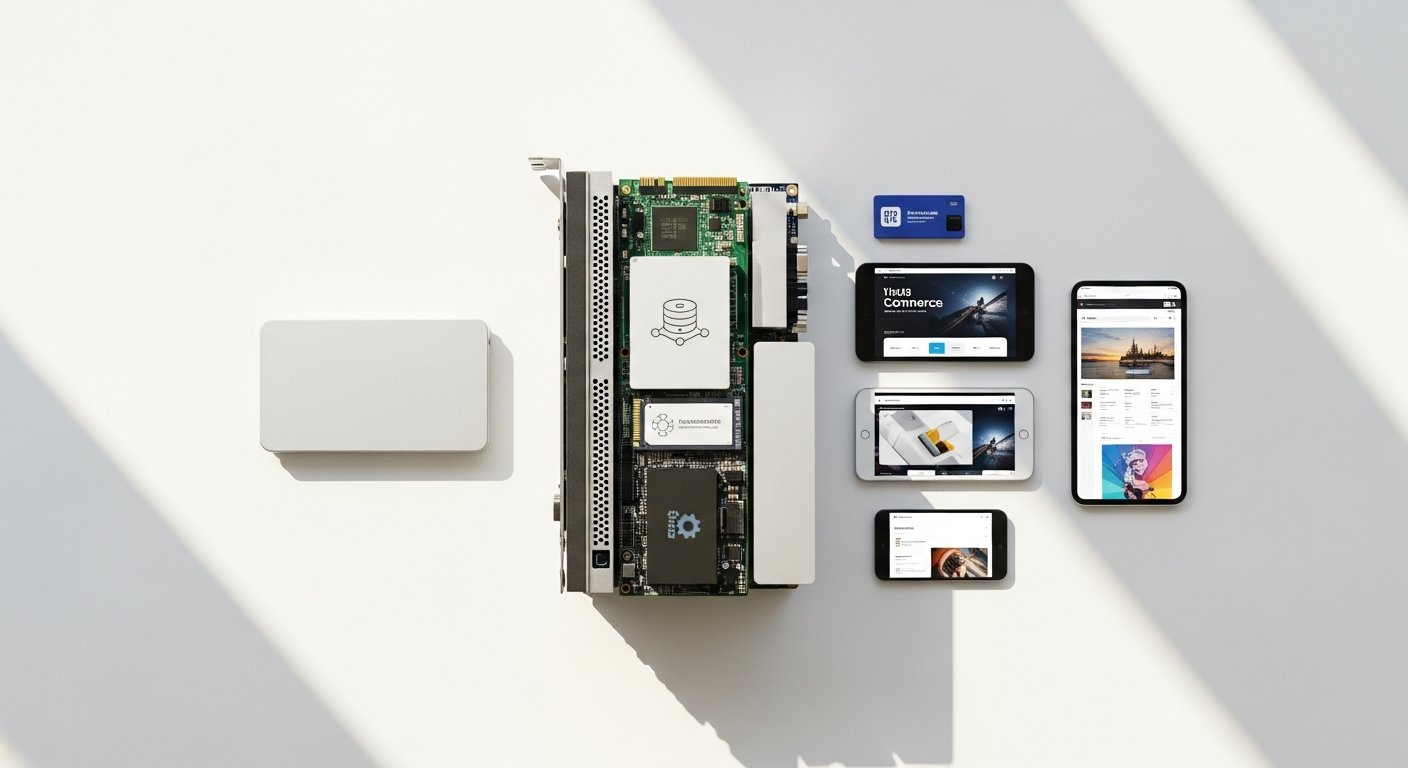
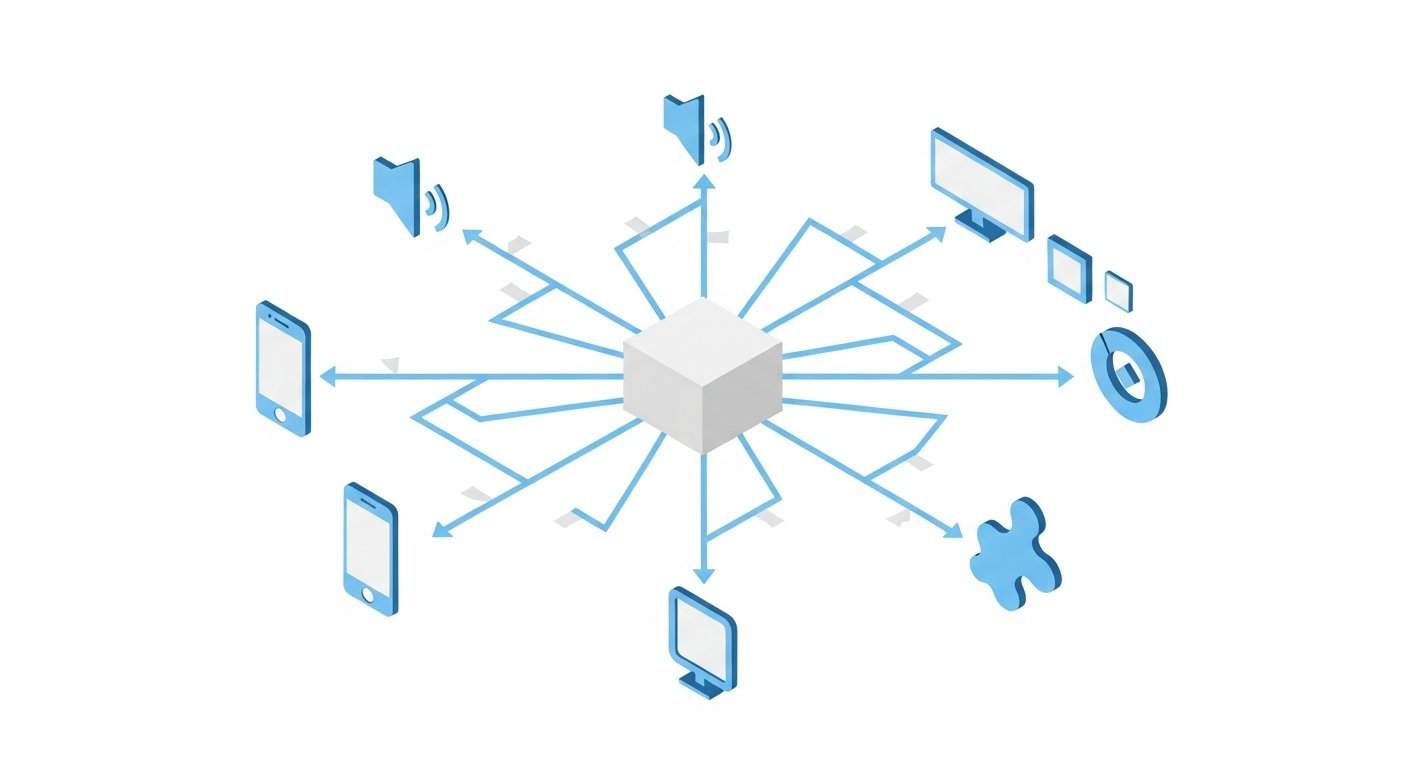
Headless commerce, by contrast, is an architectural approach where the frontend (the “head” – your website, mobile app, IoT device, smartwatch app, voice assistant, etc.) is completely separated, or “decoupled,” from the backend (the “body” – the e-commerce platform’s core functionalities). The backend provides its services and data through APIs (Application Programming Interfaces) to any number of frontend experiences. This means developers can build entirely custom, unique user interfaces using their preferred programming languages and frameworks, without being constrained by the backend’s presentation layer.
How Headless Separates Frontend from Backend
The core of headless commerce lies in this strategic separation. The commerce platform’s backend acts purely as a data and logic provider. It houses the product catalog, manages inventory, processes payments, handles customer accounts, and orchestrates order fulfillment – all through a robust set of APIs. These APIs are the communication bridge, allowing any frontend application to request and display data, or send commands (like “add to cart” or “place order”) to the backend.
This decoupling empowers businesses to craft bespoke user experiences. A D2C brand could use one frontend to power its main website, another for a progressive web app (PWA), a third for an in-store kiosk, and a fourth for a smart mirror – all drawing from the same central commerce backend. This flexibility is a game-changer for omnichannel strategies and delivering consistent brand experiences across diverse touchpoints.
Key Components of a Headless Setup
A typical headless commerce ecosystem involves several interconnected components:
- The Headless Commerce Platform (Backend): This is the core engine that provides essential commerce functionalities via APIs. Examples include Shopify Plus’s Storefront API, Commercetools, BigCommerce’s Open SaaS, and headless instances of Adobe Commerce.
- Content Management System (CMS) or Digital Experience Platform (DXP): Often, a separate headless CMS (like Contentful, Strapi, or Sanity) is used to manage marketing content, blogs, landing pages, and other non-commerce-related content. This allows content creators to publish easily without developer intervention, while still delivering content to the decoupled frontend.
- Frontend Frameworks/Libraries: This is where the magic of the user interface is built. Developers can choose from modern JavaScript frameworks like React, Vue.js, Angular, or Next.js to create highly performant, custom, and interactive shopping experiences.
- APIs: These are the communication glue. RESTful APIs, GraphQL APIs, and webhooks allow the frontend, CMS, and other services (e.g., payment gateways, shipping providers, CRM) to exchange data and instructions with the headless commerce backend.
- CDN (Content Delivery Network): Essential for speed, CDNs deliver static assets (images, videos, CSS, JS) quickly to users worldwide, further enhancing frontend performance.
Understanding these components reveals how headless commerce platforms provide the foundation for unparalleled digital agility and innovation in the e-commerce space. This architectural freedom is precisely why an increasing number of brands are making the switch, eager to harness the profound benefits for their operations and bottom line.
The Unrivaled Benefits for E-commerce Operations and D2C Growth
[INLINE IMAGE 1: place after second H2 | alt=”headless commerce platforms concept illustration”]
The decision to adopt headless commerce platforms is not merely a technical one; it’s a strategic move that profoundly impacts every facet of an e-commerce business, from customer experience to operational efficiency and, ultimately, D2C growth and profitability. The benefits extend far beyond just a faster website, touching upon flexibility, scalability, and the ability to truly differentiate your brand in a crowded digital marketplace.
Enhanced Customer Experience (CX) and Personalization
In today’s competitive landscape, CX is king. Headless commerce empowers brands to deliver hyper-personalized and highly engaging experiences that are simply not possible with monolithic platforms. By decoupling the frontend, developers have complete control over every pixel and interaction. This allows for:
- Tailored Journeys: Create unique shopping paths for different customer segments based on their browsing history, demographics, or purchase behavior.
- Rich Content Integration: Seamlessly blend commerce data with dynamic marketing content, video, and interactive elements from a headless CMS, creating immersive brand stories.
- Advanced Personalization Engines: Easily integrate AI-driven recommendation engines, dynamic pricing, and personalized promotions directly into the custom frontend, leading to higher engagement and conversion rates.
- Real-time Updates: Leverage real-time data from various sources to provide up-to-the-minute inventory information, dynamic pricing, or shipping estimates, reducing friction and enhancing trust.
The ability to craft these bespoke experiences is a direct driver of customer loyalty and repeat purchases, a cornerstone of sustainable D2C growth.
Superior Performance and Speed (Conversion Rate Impact)
Speed sells. Studies consistently show that even a one-second delay in page load time can lead to a significant drop in conversion rates and customer satisfaction. Headless commerce platforms are inherently designed for speed:
- Lightweight Frontends: Developers can build highly optimized, lightweight frontends using modern frameworks that only load essential components, resulting in blazing-fast page loads.
- Server-Side Rendering (SSR) & Static Site Generation (SSG): Frontend frameworks like Next.js or Gatsby allow for pages to be rendered on the server or generated as static HTML files at build time, significantly reducing load times for the end-user.
- API Optimization: APIs are designed for efficient data transfer, fetching only what’s needed, which minimizes bandwidth usage and speeds up data retrieval.
- Dedicated Resources: By separating frontend and backend, each layer can be optimized and scaled independently, ensuring that a surge in traffic on the frontend doesn’t bog down the commerce engine, and vice-versa.
This superior performance directly translates into lower bounce rates, longer session durations, and, critically, higher conversion rates – a key metric for e-commerce profitability.
Unlimited Design and User Interface Flexibility
One of the most compelling advantages of headless commerce platforms for brands that prioritize unique aesthetics and user experience is the absolute freedom in design. Monolithic platforms often come with template limitations, making it difficult to achieve truly distinctive branding or innovative UI/UX without complex workarounds. With headless:
- Creative Freedom: Designers and developers are no longer constrained by rigid themes or predefined structures. They can build any design, layout, or interaction they envision, bringing unique brand visions to life.
- Modern Tech Stacks: Utilize the latest frontend technologies and design patterns, ensuring your store looks and feels modern, responsive, and intuitive on any device.
- Experimentation: Easily test and implement new design concepts or UI elements without impacting the backend, fostering a culture of continuous improvement and innovation.
This design flexibility allows brands to create truly memorable digital storefronts that stand out from competitors and reinforce brand identity, enhancing the overall marketing efforts.
Agility and Faster Time-to-Market for New Features
The digital marketplace demands rapid adaptation. Headless commerce significantly boosts an organization’s agility:
- Independent Development: Frontend and backend teams can work in parallel, accelerating development cycles. New features on the customer-facing side can be deployed without affecting the core commerce logic.
- Reduced Risk: Updates or changes to one layer are less likely to break the other, making deployments safer and more frequent.
- Faster Innovation: Brands can quickly respond to market trends, implement new technologies (like AR/VR shopping experiences), or launch new promotional campaigns with unprecedented speed, gaining a crucial competitive advantage.
- A/B Testing Power: Easily implement sophisticated A/B testing frameworks on the frontend to continuously optimize elements like product pages, checkout flows, and calls-to-action, directly impacting conversion rates.
This agility ensures that businesses can stay ahead of customer expectations and competitive pressures, translating directly into sustained D2C growth.
Future-Proofing Your E-commerce Stack
Technology evolves at lightning speed. A headless architecture helps future-proof your investment:
- Technology Agnostic: If a newer, better frontend technology emerges, you can swap out your current frontend without having to rebuild your entire commerce backend.
- Easier Integrations: The API-first approach makes it simpler to integrate with new third-party services (payment gateways, CRMs, marketing automation, AI tools) as they become available.
- Scalability: Independent scaling of frontend and backend means your infrastructure can efficiently handle growth, sudden traffic spikes, or expansion into new markets without performance bottlenecks.
This long-term flexibility protects your technological investment and ensures your e-commerce operations can adapt to future innovations without costly, disruptive overhauls.
Learn more about optimizing your Shopify store for peak performance.
Omnichannel Consistency and Expansion
Modern consumers interact with brands across a multitude of channels. Headless commerce platforms are the ideal foundation for a true omnichannel strategy:
- Single Source of Truth: All customer data, product information, and inventory are managed in a single backend, ensuring consistency across all touchpoints.
- Unified Brand Experience: Deliver a cohesive brand message and user experience whether a customer is browsing on your website, a mobile app, an in-store kiosk, or interacting with a voice assistant.
- New Channel Opportunities: Easily extend your commerce capabilities to emerging channels like IoT devices, smartwatches, social commerce platforms, or metaverse experiences, leveraging the same backend data.
- Global Reach: Simplify international expansion by building localized frontend experiences for different regions, all powered by the same scalable backend.
This omnichannel capability is crucial for D2C brands looking to build deep relationships with customers and expand their market reach effectively, driving significant e-commerce profitability gains.
Driving Profitability: How Headless Impacts Your Bottom Line
Ultimately, every strategic technology decision in e-commerce must be evaluated on its potential to enhance profitability. Headless commerce platforms, while often requiring a more significant initial investment in development, offer a compelling return on investment through various direct and indirect impacts on an organization’s bottom line. The gains are realized through increased conversion, operational efficiencies, expanded market opportunities, and the ability to make data-driven decisions that refine your profitability levers.
Boosting Conversion Rates Through Optimization
The most direct path to increased revenue from headless commerce lies in its ability to significantly improve conversion rates. As discussed, superior performance and an optimized user experience are hallmarks of a headless setup. How does this translate to dollars?
- Faster Page Loads: Reduced waiting times mean fewer abandoned carts and lower bounce rates. Every millisecond saved can incrementally improve conversion, which scales significantly with traffic volume.
- Intuitive UX: Custom-built frontends can eliminate friction points in the user journey, simplify checkout processes, and guide customers more effectively towards purchase decisions.
- Hyper-Personalization: Delivering tailored product recommendations, dynamic content, and personalized offers makes the shopping experience more relevant and compelling, directly encouraging higher average order values (AOV) and conversion.
- Seamless Mobile Experience: With a focus on mobile-first design, headless ensures that the increasingly dominant mobile shopper has an excellent experience, converting at higher rates than on poorly optimized sites.
Even a modest increase in conversion rate, say from 2% to 2.5%, can represent a substantial boost in revenue without needing to increase marketing spend. This makes headless a powerful tool for maximizing return on ad spend (ROAS) and improving overall e-commerce marketing effectiveness.
Reducing Development and Maintenance Costs (Long-Term View)
While the initial build of a headless system can be more resource-intensive, the long-term cost benefits are significant:
- Reduced Technical Debt: Modern, clean codebases built with current frontend frameworks are often easier to maintain and update than heavily customized monolithic systems prone to spaghetti code.
- Independent Scaling: You only scale the components that need it. If your frontend experiences a traffic surge, you scale the frontend infrastructure without over-provisioning your entire backend, leading to more efficient resource utilization.
- Faster Feature Development: The decoupled nature means frontend developers can iterate and deploy new features rapidly without needing extensive backend expertise, reducing development hours per feature.
- Future-Proofing: The ability to swap out frontend technologies or integrate new services with less friction avoids costly, complete platform migrations every few years, protecting your investment.
- Optimized Team Structures: Dedicated frontend and backend teams can specialize, improving efficiency and output.
These efficiencies lead to lower operational expenditures over the lifespan of the platform, directly impacting the bottom line.
Expanding Market Reach with Multichannel Capabilities
Profitability often comes from expanding your addressable market. Headless commerce platforms are inherently designed for multichannel expansion:
- New Geographies: Easily launch country-specific storefronts with localized content, currencies, and payment options, all powered by the same backend.
- Emerging Channels: Tap into new revenue streams by extending your commerce capabilities to voice assistants, smart displays, social media buy buttons, or even metaverse experiences – channels where traditional platforms often struggle.
- B2B and B2C from One Platform: Some headless solutions allow you to run distinct B2B and B2C experiences from a single backend, simplifying inventory and order management while serving different customer segments.
Each new channel or market successfully entered represents an opportunity for increased sales and broader brand recognition, directly contributing to profitability and D2C growth.
Data-Driven Decision Making and A/B Testing
Profitable e-commerce relies on informed decisions. Headless architectures, particularly when integrated with robust analytics and experimentation tools, offer a superior environment for data-driven optimization:
- Granular Control Over Analytics: Developers have full control over implementing precise tracking and analytics events, allowing for deeper insights into user behavior and conversion funnels.
- Seamless A/B and Multivariate Testing: The flexibility of the frontend makes it easier to implement sophisticated A/B tests on design elements, calls-to-action, product descriptions, and even entire checkout flows, allowing you to optimize for conversion and revenue continually.
- Faster Iteration: Insights from A/B tests can be acted upon quickly, with changes deployed to the frontend without needing backend intervention, accelerating the optimization loop.
By constantly testing and optimizing, brands can identify what truly resonates with their audience, leading to improved conversion rates, reduced customer acquisition costs, and higher customer lifetime value (CLTV).
Scaling Efficiency for Peak Performance
E-commerce operations often face seasonal peaks or sudden marketing-driven traffic surges. The ability to scale efficiently without downtime or performance degradation is critical for capturing revenue during these periods:
- Independent Scaling: The decoupled nature means the frontend and backend can be scaled independently. You can allocate more resources to your frontend during peak traffic without over-provisioning your less volatile backend commerce engine.
- Cloud-Native Architectures: Many headless solutions are designed to leverage cloud infrastructure, offering elastic scalability that automatically adjusts resources based on demand.
- Global Reach with CDNs: Content delivery networks are easier to implement and optimize with headless frontends, ensuring fast load times for customers worldwide, even during high-traffic events.
Maintaining peak performance during crucial sales periods (like Black Friday/Cyber Monday) directly translates into higher sales volume and customer satisfaction, safeguarding profitability during your most important revenue windows.
Explore advanced e-commerce marketing strategies to amplify your reach.
Key Considerations When Choosing Headless Commerce Platforms
[INLINE IMAGE 2: place after fourth H2 | alt=”headless commerce platforms comparison illustration”]
While the benefits of headless commerce platforms are compelling, the decision to adopt this architecture is a significant strategic undertaking. It requires careful consideration of various factors to ensure the chosen platform aligns with your business goals, technical capabilities, and long-term vision. Rushing into a decision without a thorough assessment can lead to costly mistakes, missed opportunities, or an overly complex system that doesn’t deliver on its promises.
Assessing Your Current E-commerce Infrastructure
Before looking outwards, it’s crucial to look inwards. Understand your existing technology stack, its limitations, and its strengths:
- Current Platform Constraints: What are the specific pain points with your current monolithic platform? Is it slow? Difficult to customize? Lacking API access for new channels? These issues will help define the “why” for going headless.
- Integration Ecosystem: What third-party tools are you currently reliant on (CRM, ERP, marketing automation, payment gateways, shipping providers)? How easily can these be integrated with a new headless backend via APIs? Are there pre-built connectors or will custom development be required?
- Data Migration: How will you migrate existing customer data, product catalogs, order history, and content to a new headless platform? This can be a complex and time-consuming process that requires careful planning.
- Existing Investments: Are there parts of your current stack that you want to preserve or that are performing well? A headless approach allows you to replace only specific components, rather than starting from scratch, if desired (e.g., keeping your existing CRM but changing the commerce engine).
A clear understanding of your current state is the foundation for defining your requirements for a headless future.
Technical Expertise and Team Capabilities
Headless commerce is not a “plug-and-play” solution; it demands a higher level of technical sophistication than traditional platforms. This is a critical consideration for D2C brands:
- Developer Resources: Do you have an in-house team with expertise in modern frontend frameworks (React, Vue, Next.js), API integrations, and cloud infrastructure? If not, are you prepared to hire or engage a specialized agency?
- Skills Gap: The talent required for headless development differs from that needed for traditional platform customization. Assess if your current team can be upskilled or if external talent is necessary.
- Ongoing Maintenance: A headless setup often means managing multiple distinct services (backend, CMS, frontend, integrations). This requires a more robust DevOps capability and a team skilled in monitoring and maintaining these interconnected systems.
- Ownership of the Frontend: With headless, you own the frontend experience entirely, which means you’re responsible for its development, performance, and security. This is a significant shift from relying on a platform’s built-in themes.
The success of your headless implementation hinges heavily on having the right technical talent and a clear understanding of the ongoing development and maintenance commitment.
Budget and Total Cost of Ownership (TCO)
The financial implications of headless commerce platforms are multifaceted and extend beyond just licensing fees:
- Platform Licensing: Headless commerce platforms often have usage-based pricing models (based on API calls, GMV, transactions, etc.) which can differ significantly from traditional subscription fees.
- Development Costs: This is typically the largest initial investment, covering the custom build of your frontend, integration with the backend and other services, and data migration.
- Hosting and Infrastructure: You’ll need to host your custom frontend, and potentially your headless CMS, which incurs cloud hosting costs (AWS, Google Cloud, Azure, Vercel, Netlify).
- Ongoing Maintenance and Updates: Budget for continuous development, security patches, performance optimization, and API maintenance.
- Third-Party Integrations: Costs associated with licensing and integrating essential tools like payment gateways, shipping APIs, marketing automation platforms, and ERP systems.
It’s crucial to calculate the Total Cost of Ownership (TCO) over a 3-5 year period, comparing it to your current setup or other alternatives. While initial costs can be higher, the long-term ROI from increased conversions, agility, and reduced technical debt can be substantial.
Integration Ecosystem and API Capabilities
The strength of a headless commerce platform often lies in the robustness and flexibility of its APIs and its broader integration ecosystem:
- API Documentation: Look for comprehensive, clear, and up-to-date API documentation that makes it easy for developers to understand and work with the platform.
- API Coverage: Does the API cover all the core commerce functionalities you need (products, orders, customers, carts, promotions, payments)? Are there gaps that would require custom workarounds?
- GraphQL vs. REST: Understand the API types offered. GraphQL can offer more efficient data fetching, reducing over-fetching, while REST is widely understood and adopted.
- Webhooks: Does the platform offer webhooks for real-time notifications of events (e.g., new order, inventory change)? This is crucial for seamless integrations and automation.
- Marketplace/App Store: Does the platform have a marketplace of pre-built integrations or apps that can reduce custom development effort for common services?
A rich and well-documented API is the lifeblood of a headless system, enabling seamless connections to your entire e-commerce tech stack and maximizing operational efficiency.
Vendor Support and Community
Even with an expert team, strong vendor support and an active community can be invaluable, particularly for complex headless deployments:
- Support Tiers: Understand the different levels of support offered (standard, premium, enterprise) and their associated costs and response times.
- Documentation and Resources: Beyond API docs, look for tutorials, best practices, and developer guides.
- Community Engagement: An active developer community (forums, GitHub, Stack Overflow) can be a rich source of solutions, examples, and peer support.
- Roadmap and Innovation: Research the vendor’s roadmap. Is the platform continuously evolving, adding new features, and keeping up with industry trends? This indicates long-term viability.
- Partnership Ecosystem: Does the vendor have a strong network of implementation partners, agencies, and technology partners that can assist with your project?
Choosing a platform with robust support and a vibrant ecosystem reduces risks and helps ensure that you can leverage the platform’s full potential to drive e-commerce growth and profitability.
Leading Headless Commerce Platforms for D2C Brands
The market for headless commerce platforms has matured significantly, with a range of robust solutions catering to different business sizes, technical capabilities, and feature requirements. For D2C brands focused on optimization, conversion, and growth, selecting the right platform is pivotal. Here, we’ll explore some of the leading contenders, highlighting their unique strengths and ideal use cases. This section includes our required comparison table to summarize key differences.
Shopify Plus with Headless (Hydrogen/Storefront API)
Shopify, long known for its ease of use for traditional e-commerce, has made significant strides in the headless space, particularly for its enterprise-level offering, Shopify Plus. It leverages its powerful Storefront API, which allows developers to pull product data, manage carts, and handle checkouts from a custom frontend. The introduction of Hydrogen, a React-based framework, and Oxygen, a global hosting solution, simplifies the development and deployment of custom Shopify frontends. This approach allows brands to retain Shopify’s robust backend (inventory, orders, payments, apps) while gaining complete control over the frontend experience.
- Best For: Established D2C brands on Shopify Plus seeking ultimate frontend flexibility, developers familiar with React, and those who want to leverage Shopify’s extensive app ecosystem and backend simplicity while customizing their CX.
- Strengths: Familiarity with Shopify backend, vast app store, robust and well-documented APIs, Hydrogen framework streamlines development, global hosting with Oxygen.
- Considerations: Still relies on Shopify’s checkout for maximum compatibility (though checkout extensibility is evolving), potentially higher development costs compared to theme-based Shopify, requires strong frontend development skills.
Commercetools
Commercetools is a pure-play, API-first headless commerce platform built on a microservices architecture. It offers a comprehensive set of modular commerce services (product information, cart, checkout, order management, customer accounts) that can be individually consumed and integrated via its powerful APIs. This “composable commerce” approach gives businesses maximum flexibility to pick and choose the best-of-breed services for their entire digital stack, rather than being locked into a single vendor’s ecosystem.
- Best For: Enterprise-level D2C brands, large B2B operations, and businesses with complex requirements, multiple brands, or global footprints looking for ultimate flexibility, scalability, and composability. Ideal for highly technical teams.
- Strengths: True microservices architecture, highly scalable, extensive API coverage, cloud-native, supports complex business models, excellent for multi-brand/multi-region.
- Considerations: Higher complexity and cost of implementation, requires significant technical expertise and integration work, no built-in frontend (must be built entirely custom).
BigCommerce Open SaaS
BigCommerce positions itself as an “Open SaaS” platform, offering a hybrid approach that provides the benefits of SaaS (managed hosting, security, upgrades) with the flexibility of open APIs. While it can function as a traditional monolithic platform, its robust API ecosystem allows businesses to leverage BigCommerce purely as a headless commerce engine, powering custom frontends built with frameworks like Next.js or Gatsby. Its comprehensive feature set out-of-the-box (multi-currency, multi-storefront, B2B functionality) makes it attractive for growing D2C brands looking for a balance of power and flexibility.
- Best For: Mid-market to enterprise D2C and B2B brands seeking a powerful, feature-rich backend with flexible frontend options, without the full complexity of a pure microservices platform.
- Strengths: Strong core commerce features, excellent APIs, SaaS reliability and security, good for international sales, growing app marketplace, lower TCO than pure-play headless for some.
- Considerations: While open, still a SaaS platform with some inherent limitations compared to fully custom microservices, not as granular control as Commercetools.
Adobe Commerce (Magento Open Source) Headless
Adobe Commerce (formerly Magento Enterprise) and Magento Open Source both support headless implementations, leveraging their extensive APIs to power custom frontends. Magento has a long history of flexibility and a vast ecosystem of developers and extensions. Going headless with Magento allows businesses to utilize its powerful product catalog, order management, and customer segmentation features while delivering highly customized and performant customer experiences. It often pairs with PWA Studio, Adobe’s set of tools for building Progressive Web Apps with React, to streamline frontend development.
- Best For: Large D2C and B2B enterprises with complex product catalogs, unique business logic, and a strong existing investment in the Magento ecosystem. Brands needing deep customization and control.
- Strengths: Immense flexibility and customization, vast community and extension marketplace, powerful core features, robust for complex business rules.
- Considerations: High initial setup and ongoing maintenance costs, requires significant developer expertise (PHP for backend, JavaScript for frontend), performance optimization can be challenging.
Fabric
Fabric is a relatively newer entrant to the composable commerce space, specifically designed for enterprise D2C and B2B brands looking for a modern, modular, and API-first platform. It offers a suite of microservices including PIM, OMS, CDN, and a commerce engine, allowing businesses to pick and choose components or use the full stack. Fabric emphasizes speed, scalability, and an intuitive user experience for merchants, aiming to simplify the complexities of headless while delivering powerful capabilities.
- Best For: Enterprise-level D2C and B2B brands that need a modern, cloud-native, and modular commerce stack. Suitable for businesses looking for a balance between composability and a more integrated suite of tools.
- Strengths: Cloud-native, microservices-based, strong focus on merchant tools, includes PIM/OMS, good for large-scale operations and global reach.
- Considerations: Newer platform compared to others, may have a smaller community, TCO can be significant for full implementation.
Other Notable Platforms (e.g., Crystallize, Nacelle, Shogun Frontend)
- Crystallize: A headless PIM (Product Information Management) and commerce platform combined, excelling in handling rich content and complex product data, ideal for content-heavy D2C brands.
- Nacelle: A commerce accelerator that sits between your headless backend (e.g., Shopify, BigCommerce) and your custom frontend, providing performance optimization, data orchestration, and PWA capabilities.
- Shogun Frontend: A platform specifically designed to build and host custom frontends (PWAs) on top of existing e-commerce backends, offering a visual builder for merchants and advanced features for developers.
The choice among these leading headless commerce platforms depends heavily on your specific business requirements, budget, internal technical capabilities, and long-term strategic vision. It’s crucial to perform a detailed technical and business assessment before committing to a platform.
| Platform | Target User/Ideal Fit | Key Features & Strengths | Considerations |
|---|---|---|---|
| Shopify Plus (Headless) | Established D2C brands, Shopify Plus users, React developers | Leverages Shopify’s robust backend & app ecosystem; Hydrogen framework for custom frontends; Oxygen hosting; ease of backend management. | Relies on Shopify checkout for compliance; requires strong frontend dev; not a pure microservices platform. |
| Commercetools | Enterprise D2C/B2B, complex multi-brand/global operations, highly technical teams | Pure microservices, composable, highly scalable, cloud-native, extensive API coverage for ultimate flexibility. | High complexity, significant dev resources required, no built-in frontend, higher TCO. |
| BigCommerce Open SaaS | Mid-market to enterprise D2C/B2B, seeking powerful features with SaaS benefits | Strong core commerce features (multi-currency, B2B), robust APIs, SaaS reliability, good international support. | Still a SaaS platform with some inherent limitations, less granular control than pure microservices. |
| Adobe Commerce (Headless) | Large enterprises, complex catalogs, existing Magento investment, deep customization needs | Immense flexibility & customization, vast community/extensions, powerful for complex business rules; PWA Studio. | High TCO, requires significant developer expertise, performance optimization can be challenging without expertise. |
| Fabric | Enterprise D2C/B2B, modern modular stack, balance of composability & integrated tools | Cloud-native, microservices, includes PIM/OMS, focus on merchant tools, designed for large-scale. | Newer platform (less community), TCO can be significant for full suite. |
Implementing Headless: A Strategic Roadmap for Success
Embarking on a headless commerce journey is a significant strategic move that demands meticulous planning, expert execution, and continuous optimization. It’s not just a technological upgrade; it’s a fundamental shift in how your e-commerce operations function and how your digital team collaborates. A well-defined roadmap is essential to navigate the complexities, mitigate risks, and ensure that your investment in headless commerce platforms yields the desired returns in D2C growth and profitability.
Defining Your Business Objectives and Use Cases
Before writing a single line of code or evaluating platforms, clearly articulate why you’re going headless. What specific business problems are you trying to solve? What are your measurable goals?
- Identify Key Pain Points: Are you struggling with slow performance, limited design flexibility, inability to personalize, or difficulty expanding to new channels? Prioritize these.
- Set Measurable KPIs: Define specific targets related to conversion rate improvement, page load speed, AOV, customer retention, or time-to-market for new features.
- Map Customer Journeys: Understand your target customers’ existing and desired interactions. How will headless enable superior experiences across all touchpoints (web, mobile, app, social, in-store)?
- Future Vision: Consider your long-term strategic goals. Are you planning global expansion, advanced AR/VR experiences, or integration with IoT? Headless should be a foundation for this future.
A clear vision ensures that technical decisions align with business outcomes and that all stakeholders are on the same page.
Building Your Headless Team and Tech Stack
The success of a headless implementation hinges
Master the Future of E-Commerce: Unlocking Growth with Headless Commerce Platforms
Affiliate disclosure: This article may contain affiliate links. Recommendations are independent and editorially driven.
In the relentlessly evolving landscape of online retail, where customer expectations are higher than ever and competition is fierce, standing still is simply not an option. E-commerce businesses, particularly D2C brands, are constantly seeking an edge – a way to deliver faster, more personalized, and more engaging shopping experiences that translate directly into increased conversion rates and sustained profitability. This quest for competitive advantage has propelled a revolutionary architectural approach to the forefront: headless commerce platforms.
For years, traditional e-commerce platforms offered a monolithic, all-in-one solution, bundling the frontend (what customers see) and the backend (where products, orders, and data reside) into a single, tightly coupled system. While convenient for initial setup, this approach often became a straitjacket for innovation, limiting design flexibility, hindering performance, and slowing down the ability to adapt to new channels or customer demands. Enter headless commerce: a paradigm shift that decouples these layers, granting businesses unprecedented freedom and agility.
At e-comprofits, our mission is to empower D2C brands and e-commerce operations with the strategies and insights needed to optimize their online stores, boost conversion rates, and maximize profitability. In this comprehensive guide, we’ll dive deep into the world of headless commerce platforms, exploring what they are, the transformative benefits they offer for growth and efficiency, crucial considerations for adoption, leading platforms in the market, and a strategic roadmap for successful implementation. If you’re looking to future-proof your e-commerce business, deliver exceptional customer experiences, and unlock new levels of marketing and operational agility, understanding headless commerce is no longer optional – it’s imperative.
What Exactly Are Headless Commerce Platforms? Decoupling for Digital Agility
To truly grasp the power of headless commerce platforms, it’s essential to understand the fundamental shift they represent from conventional e-commerce architectures. Imagine your online store as a human body. In a traditional setup, the head (the customer-facing interface, or frontend) and the body (the operational logic, data, and functionalities, or backend) are inextricably linked. Any change to the head often requires significant alterations to the body, and vice-versa, leading to rigidity and slow innovation.
The Traditional Monolith vs. Headless Architecture
Traditional, or monolithic, e-commerce platforms like early versions of Magento, Shopify (without advanced APIs), or WooCommerce, are built as a single, unified application. This means the presentation layer (the website, mobile app, etc.) is directly tied to the underlying commerce engine that handles product information, inventory, pricing, checkout, and order management. While this integration simplifies initial deployment, it creates a dependency. Customizing the user experience often means wrestling with the platform’s predefined templates and functionalities, limiting creativity and agility. Updates to the backend can unexpectedly affect the frontend, and vice-versa, making scaling and multi-channel expansion complex and costly.
Headless commerce, by contrast, is an architectural approach where the frontend (the “head” – your website, mobile app, IoT device, smartwatch app, voice assistant, etc.) is completely separated, or “decoupled,” from the backend (the “body” – the e-commerce platform’s core functionalities). The backend provides its services and data through APIs (Application Programming Interfaces) to any number of frontend experiences. This means developers can build entirely custom, unique user interfaces using their preferred programming languages and frameworks, without being constrained by the backend’s presentation layer.
How Headless Separates Frontend from Backend
The core of headless commerce lies in this strategic separation. The commerce platform’s backend acts purely as a data and logic provider. It houses the product catalog, manages inventory, processes payments, handles customer accounts, and orchestrates order fulfillment – all through a robust set of APIs. These APIs are the communication bridge, allowing any frontend application to request and display data, or send commands (like “add to cart” or “place order”) to the backend.
This decoupling empowers businesses to craft bespoke user experiences. A D2C brand could use one frontend to power its main website, another for a progressive web app (PWA), a third for an in-store kiosk, and a fourth for a smart mirror – all drawing from the same central commerce backend. This flexibility is a game-changer for omnichannel strategies and delivering consistent brand experiences across diverse touchpoints.
Key Components of a Headless Setup
A typical headless commerce ecosystem involves several interconnected components:
- The Headless Commerce Platform (Backend): This is the core engine that provides essential commerce functionalities via APIs. Examples include Shopify Plus’s Storefront API, Commercetools, BigCommerce’s Open SaaS, and headless instances of Adobe Commerce.
- Content Management System (CMS) or Digital Experience Platform (DXP): Often, a separate headless CMS (like Contentful, Strapi, or Sanity) is used to manage marketing content, blogs, landing pages, and other non-commerce-related content. This allows content creators to publish easily without developer intervention, while still delivering content to the decoupled frontend.
- Frontend Frameworks/Libraries: This is where the magic of the user interface is built. Developers can choose from modern JavaScript frameworks like React, Vue.js, Angular, or Next.js to create highly performant, custom, and interactive shopping experiences.
- APIs: These are the communication glue. RESTful APIs, GraphQL APIs, and webhooks allow the frontend, CMS, and other services (e.g., payment gateways, shipping providers, CRM) to exchange data and instructions with the headless commerce backend.
- CDN (Content Delivery Network): Essential for speed, CDNs deliver static assets (images, videos, CSS, JS) quickly to users worldwide, further enhancing frontend performance.
Understanding these components reveals how headless commerce platforms provide the foundation for unparalleled digital agility and innovation in the e-commerce space. This architectural freedom is precisely why an increasing number of brands are making the switch, eager to harness the profound benefits for their operations and bottom line.
The Unrivaled Benefits for E-commerce Operations and D2C Growth
[INLINE IMAGE 1: place after second H2 | alt=”headless commerce platforms concept illustration”]
The decision to adopt headless commerce platforms is not merely a technical one; it’s a strategic move that profoundly impacts every facet of an e-commerce business, from customer experience to operational efficiency and, ultimately, D2C growth and profitability. The benefits extend far beyond just a faster website, touching upon flexibility, scalability, and the ability to truly differentiate your brand in a crowded digital marketplace.
Enhanced Customer Experience (CX) and Personalization
In today’s competitive landscape, CX is king. Headless commerce empowers brands to deliver hyper-personalized and highly engaging experiences that are simply not possible with monolithic platforms. By decoupling the frontend, developers have complete control over every pixel and interaction. This allows for:
- Tailored Journeys: Create unique shopping paths for different customer segments based on their browsing history, demographics, or purchase behavior.
- Rich Content Integration: Seamlessly blend commerce data with dynamic marketing content, video, and interactive elements from a headless CMS, creating immersive brand stories.
- Advanced Personalization Engines: Easily integrate AI-driven recommendation engines, dynamic pricing, and personalized promotions directly into the custom frontend, leading to higher engagement and conversion rates.
- Real-time Updates: Leverage real-time data from various sources to provide up-to-the-minute inventory information, dynamic pricing, or shipping estimates, reducing friction and enhancing trust.
The ability to craft these bespoke experiences is a direct driver of customer loyalty and repeat purchases, a cornerstone of sustainable D2C growth.
Superior Performance and Speed (Conversion Rate Impact)
Speed sells. Studies consistently show that even a one-second delay in page load time can lead to a significant drop in conversion rates and customer satisfaction. Headless commerce platforms are inherently designed for speed:
- Lightweight Frontends: Developers can build highly optimized, lightweight frontends using modern frameworks that only load essential components, resulting in blazing-fast page loads.
- Server-Side Rendering (SSR) & Static Site Generation (SSG): Frontend frameworks like Next.js or Gatsby allow for pages to be rendered on the server or generated as static HTML files at build time, significantly reducing load times for the end-user.
- API Optimization: APIs are designed for efficient data transfer, fetching only what’s needed, which minimizes bandwidth usage and speeds up data retrieval.
- Dedicated Resources: By separating frontend and backend, each layer can be optimized and scaled independently, ensuring that a surge in traffic on the frontend doesn’t bog down the commerce engine, and vice-versa.
This superior performance directly translates into lower bounce rates, longer session durations, and, critically, higher conversion rates – a key metric for e-commerce profitability.
Unlimited Design and User Interface Flexibility
One of the most compelling advantages of headless commerce platforms for brands that prioritize unique aesthetics and user experience is the absolute freedom in design. Monolithic platforms often come with template limitations, making it difficult to achieve truly distinctive branding or innovative UI/UX without complex workarounds. With headless:
- Creative Freedom: Designers and developers are no longer constrained by rigid themes or predefined structures. They can build any design, layout, or interaction they envision, bringing unique brand visions to life.
- Modern Tech Stacks: Utilize the latest frontend technologies and design patterns, ensuring your store looks and feels modern, responsive, and intuitive on any device.
- Experimentation: Easily test and implement new design concepts or UI elements without impacting the backend, fostering a culture of continuous improvement and innovation.
This design flexibility allows brands to create truly memorable digital storefronts that stand out from competitors and reinforce brand identity, enhancing the overall marketing efforts.
Agility and Faster Time-to-Market for New Features
The digital marketplace demands rapid adaptation. Headless commerce significantly boosts an organization’s agility:
- Independent Development: Frontend and backend teams can work in parallel, accelerating development cycles. New features on the customer-facing side can be deployed without affecting the core commerce logic.
- Reduced Risk: Updates or changes to one layer are less likely to break the other, making deployments safer and more frequent.
- Faster Innovation: Brands can quickly respond to market trends, implement new technologies (like AR/VR shopping experiences), or launch new promotional campaigns with unprecedented speed, gaining a crucial competitive advantage.
- A/B Testing Power: Easily implement sophisticated A/B testing frameworks on the frontend to continuously optimize elements like product pages, checkout flows, and calls-to-action, directly impacting conversion rates.
This agility ensures that businesses can stay ahead of customer expectations and competitive pressures, translating directly into sustained D2C growth.
Future-Proofing Your E-commerce Stack
Technology evolves at lightning speed. A headless architecture helps future-proof your investment:
- Technology Agnostic: If a newer, better frontend technology emerges, you can swap out your current frontend without having to rebuild your entire commerce backend.
- Easier Integrations: The API-first approach makes it simpler to integrate with new third-party services (payment gateways, CRMs, marketing automation, AI tools) as they become available.
- Scalability: Independent scaling of frontend and backend means your infrastructure can efficiently handle growth, sudden traffic spikes, or expansion into new markets without performance bottlenecks.
This long-term flexibility protects your technological investment and ensures your e-commerce operations can adapt to future innovations without costly, disruptive overhauls.
Learn more about optimizing your Shopify store for peak performance.
Omnichannel Consistency and Expansion
Modern consumers interact with brands across a multitude of channels. Headless commerce platforms are the ideal foundation for a true omnichannel strategy:
- Single Source of Truth: All customer data, product information, and inventory are managed in a single backend, ensuring consistency across all touchpoints.
- Unified Brand Experience: Deliver a cohesive brand message and user experience whether a customer is browsing on your website, a mobile app, an in-store kiosk, or interacting with a voice assistant.
- New Channel Opportunities: Easily extend your commerce capabilities to emerging channels like IoT devices, smartwatches, social commerce platforms, or metaverse experiences, leveraging the same backend data.
- Global Reach: Simplify international expansion by building localized frontend experiences for different regions, all powered by the same scalable backend.
This omnichannel capability is crucial for D2C brands looking to build deep relationships with customers and expand their market reach effectively, driving significant e-commerce profitability gains.
Driving Profitability: How Headless Impacts Your Bottom Line
Ultimately, every strategic technology decision in e-commerce must be evaluated on its potential to enhance profitability. Headless commerce platforms, while often requiring a more significant initial investment in development, offer a compelling return on investment through various direct and indirect impacts on an organization’s bottom line. The gains are realized through increased conversion, operational efficiencies, expanded market opportunities, and the ability to make data-driven decisions that refine your profitability levers.
Boosting Conversion Rates Through Optimization
The most direct path to increased revenue from headless commerce lies in its ability to significantly improve conversion rates. As discussed, superior performance and an optimized user experience are hallmarks of a headless setup. How does this translate to dollars?
- Faster Page Loads: Reduced waiting times mean fewer abandoned carts and lower bounce rates. Every millisecond saved can incrementally improve conversion, which scales significantly with traffic volume.
- Intuitive UX: Custom-built frontends can eliminate friction points in the user journey, simplify checkout processes, and guide customers more effectively towards purchase decisions.
- Hyper-Personalization: Delivering tailored product recommendations, dynamic content, and personalized offers makes the shopping experience more relevant and compelling, directly encouraging higher average order values (AOV) and conversion.
- Seamless Mobile Experience: With a focus on mobile-first design, headless ensures that the increasingly dominant mobile shopper has an excellent experience, converting at higher rates than on poorly optimized sites.
Even a modest increase in conversion rate, say from 2% to 2.5%, can represent a substantial boost in revenue without needing to increase marketing spend. This makes headless a powerful tool for maximizing return on ad spend (ROAS) and improving overall e-commerce marketing effectiveness.
Reducing Development and Maintenance Costs (Long-Term View)
While the initial build of a headless system can be more resource-intensive, the long-term cost benefits are significant:
- Reduced Technical Debt: Modern, clean codebases built with current frontend frameworks are often easier to maintain and update than heavily customized monolithic systems prone to spaghetti code.
- Independent Scaling: You only scale the components that need it. If your frontend experiences a traffic surge, you scale the frontend infrastructure without over-provisioning your entire backend, leading to more efficient resource utilization.
- Faster Feature Development: The decoupled nature means frontend developers can iterate and deploy new features rapidly without needing extensive backend expertise, reducing development hours per feature.
- Future-Proofing: The ability to swap out frontend technologies or integrate new services with less friction avoids costly, complete platform migrations every few years, protecting your investment.
- Optimized Team Structures: Dedicated frontend and backend teams can specialize, improving efficiency and output.
These efficiencies lead to lower operational expenditures over the lifespan of the platform, directly impacting the bottom line.
Expanding Market Reach with Multichannel Capabilities
Profitability often comes from expanding your addressable market. Headless commerce platforms are inherently designed for multichannel expansion:
- New Geographies: Easily launch country-specific storefronts with localized content, currencies, and payment options, all powered by the same backend.
- Emerging Channels: Tap into new revenue streams by extending your commerce capabilities to voice assistants, smart displays, social media buy buttons, or even metaverse experiences – channels where traditional platforms often struggle.
- B2B and B2C from One Platform: Some headless solutions allow you to run distinct B2B and B2C experiences from a single backend, simplifying inventory and order management while serving different customer segments.
Each new channel or market successfully entered represents an opportunity for increased sales and broader brand recognition, directly contributing to profitability and D2C growth.
Data-Driven Decision Making and A/B Testing
Profitable e-commerce relies on informed decisions. Headless architectures, particularly when integrated with robust analytics and experimentation tools, offer a superior environment for data-driven optimization:
- Granular Control Over Analytics: Developers have full control over implementing precise tracking and analytics events, allowing for deeper insights into user behavior and conversion funnels.
- Seamless A/B and Multivariate Testing: The flexibility of the frontend makes it easier to implement sophisticated A/B tests on design elements, calls-to-action, product descriptions, and even entire checkout flows, allowing you to optimize for conversion and revenue continually.
- Faster Iteration: Insights from A/B tests can be acted upon quickly, with changes deployed to the frontend without needing backend intervention, accelerating the optimization loop.
By constantly testing and optimizing, brands can identify what truly resonates with their audience, leading to improved conversion rates, reduced customer acquisition costs, and higher customer lifetime value (CLTV).
Scaling Efficiency for Peak Performance
E-commerce operations often face seasonal peaks or sudden marketing-driven traffic surges. The ability to scale efficiently without downtime or performance degradation is critical for capturing revenue during these periods:
- Independent Scaling: The decoupled nature means the frontend and backend can be scaled independently. You can allocate more resources to your frontend during peak traffic without over-provisioning your less volatile backend commerce engine.
- Cloud-Native Architectures: Many headless solutions are designed to leverage cloud infrastructure, offering elastic scalability that automatically adjusts resources based on demand.
- Global Reach with CDNs: Content delivery networks are easier to implement and optimize with headless frontends, ensuring fast load times for customers worldwide, even during high-traffic events.
Maintaining peak performance during crucial sales periods (like Black Friday/Cyber Monday) directly translates into higher sales volume and customer satisfaction, safeguarding profitability during your most important revenue windows.
Explore advanced e-commerce marketing strategies to amplify your reach.
Key Considerations When Choosing Headless Commerce Platforms
[INLINE IMAGE 2: place after fourth H2 | alt=”headless commerce platforms comparison illustration”]
While the benefits of headless commerce platforms are compelling, the decision to adopt this architecture is a significant strategic undertaking. It requires careful consideration of various factors to ensure the chosen platform aligns with your business goals, technical capabilities, and long-term vision. Rushing into a decision without a thorough assessment can lead to costly mistakes, missed opportunities, or an overly complex system that doesn’t deliver on its promises.
Assessing Your Current E-commerce Infrastructure
Before looking outwards, it’s crucial to look inwards. Understand your existing technology stack, its limitations, and its strengths:
- Current Platform Constraints: What are the specific pain points with your current monolithic platform? Is it slow? Difficult to customize? Lacking API access for new channels? These issues will help define the “why” for going headless.
- Integration Ecosystem: What third-party tools are you currently reliant on (CRM, ERP, marketing automation, payment gateways, shipping providers)? How easily can these be integrated with a new headless backend via APIs? Are there pre-built connectors or will custom development be required?
- Data Migration: How will you migrate existing customer data, product catalogs, order history, and content to a new headless platform? This can be a complex and time-consuming process that requires careful planning.
- Existing Investments: Are there parts of your current stack that you want to preserve or that are performing well? A headless approach allows you to replace only specific components, rather than starting from scratch, if desired (e.g., keeping your existing CRM but changing the commerce engine).
A clear understanding of your current state is the foundation for defining your requirements for a headless future.
Technical Expertise and Team Capabilities
Headless commerce is not a “plug-and-play” solution; it demands a higher level of technical sophistication than traditional platforms. This is a critical consideration for D2C brands:
- Developer Resources: Do you have an in-house team with expertise in modern frontend frameworks (React, Vue, Next.js), API integrations, and cloud infrastructure? If not, are you prepared to hire or engage a specialized agency?
- Skills Gap: The talent required for headless development differs from that needed for traditional platform customization. Assess if your current team can be upskilled or if external talent is necessary.
- Ongoing Maintenance: A headless setup often means managing multiple distinct services (backend, CMS, frontend, integrations). This requires a more robust DevOps capability and a team skilled in monitoring and maintaining these interconnected systems.
- Ownership of the Frontend: With headless, you own the frontend experience entirely, which means you’re responsible for its development, performance, and security. This is a significant shift from relying on a platform’s built-in themes.
The success of your headless implementation hinges heavily on having the right technical talent and a clear understanding of the ongoing development and maintenance commitment.
Budget and Total Cost of Ownership (TCO)
The financial implications of headless commerce platforms are multifaceted and extend beyond just licensing fees:
- Platform Licensing: Headless commerce platforms often have usage-based pricing models (based on API calls, GMV, transactions, etc.) which can differ significantly from traditional subscription fees.
- Development Costs: This is typically the largest initial investment, covering the custom build of your frontend, integration with the backend and other services, and data migration.
- Hosting and Infrastructure: You’ll need to host your custom frontend, and potentially your headless CMS, which incurs cloud hosting costs (AWS, Google Cloud, Azure, Vercel, Netlify).
- Ongoing Maintenance and Updates: Budget for continuous development, security patches, performance optimization, and API maintenance.
- Third-Party Integrations: Costs associated with licensing and integrating essential tools like payment gateways, shipping APIs, marketing automation platforms, and ERP systems.
It’s crucial to calculate the Total Cost of Ownership (TCO) over a 3-5 year period, comparing it to your current setup or other alternatives. While initial costs can be higher, the long-term ROI from increased conversions, agility, and reduced technical debt can be substantial.
Integration Ecosystem and API Capabilities
The strength of a headless commerce platform often lies in the robustness and flexibility of its APIs and its broader integration ecosystem:
- API Documentation: Look for comprehensive, clear, and up-to-date API documentation that makes it easy for developers to understand and work with the platform.
- API Coverage: Does the API cover all the core commerce functionalities you need (products, orders, customers, carts, promotions, payments)? Are there gaps that would require custom workarounds?
- GraphQL vs. REST: Understand the API types offered. GraphQL can offer more efficient data fetching, reducing over-fetching, while REST is widely understood and adopted.
- Webhooks: Does the platform offer webhooks for real-time notifications of events (e.g., new order, inventory change)? This is crucial for seamless integrations and automation.
- Marketplace/App Store: Does the platform have a marketplace of pre-built integrations or apps that can reduce custom development effort for common services?
A rich and well-documented API is the lifeblood of a headless system, enabling seamless connections to your entire e-commerce tech stack and maximizing operational efficiency.
Vendor Support and Community
Even with an expert team, strong vendor support and an active community can be invaluable, particularly for complex headless deployments:
- Support Tiers: Understand the different levels of support offered (standard, premium, enterprise) and their associated costs and response times.
- Documentation and Resources: Beyond API docs, look for tutorials, best practices, and developer guides.
- Community Engagement: An active developer community (forums, GitHub, Stack Overflow) can be a rich source of solutions, examples, and peer support.
- Roadmap and Innovation: Research the vendor’s roadmap. Is the platform continuously evolving, adding new features, and keeping up with industry trends? This indicates long-term viability.
- Partnership Ecosystem: Does the vendor have a strong network of implementation partners, agencies, and technology partners that can assist with your project?
Choosing a platform with robust support and a vibrant ecosystem reduces risks and helps ensure that you can leverage the platform’s full potential to drive e-commerce growth and profitability.
Leading Headless Commerce Platforms for D2C Brands
The market for headless commerce platforms has matured significantly, with a range of robust solutions catering to different business sizes, technical capabilities, and feature requirements. For D2C brands focused on optimization, conversion, and growth, selecting the right platform is pivotal. Here, we’ll explore some of the leading contenders, highlighting their unique strengths and ideal use cases. This section includes our required comparison table to summarize key differences.
Shopify Plus with Headless (Hydrogen/Storefront API)
Shopify, long known for its ease of use for traditional e-commerce, has made significant strides in the headless space, particularly for its enterprise-level offering, Shopify Plus. It leverages its powerful Storefront API, which allows developers to pull product data, manage carts, and handle checkouts from a custom frontend. The introduction of Hydrogen, a React-based framework, and Oxygen, a global hosting solution, simplifies the development and deployment of custom Shopify frontends. This approach allows brands to retain Shopify’s robust backend (inventory, orders, payments, apps) while gaining complete control over the frontend experience.
- Best For: Established D2C brands on Shopify Plus seeking ultimate frontend flexibility, developers familiar with React, and those who want to leverage Shopify’s extensive app ecosystem and backend simplicity while customizing their CX.
- Strengths: Familiarity with Shopify backend, vast app store, robust and well-documented APIs, Hydrogen framework streamlines development, global hosting with Oxygen.
- Considerations: Still relies on Shopify’s checkout for maximum compatibility (though checkout extensibility is evolving), potentially higher development costs compared to theme-based Shopify, requires strong frontend development skills.
Commercetools
Commercetools is a pure-play, API-first headless commerce platform built on a microservices architecture. It offers a comprehensive set of modular commerce services (product information, cart, checkout, order management, customer accounts) that can be individually consumed and integrated via its powerful APIs. This “composable commerce” approach gives businesses maximum flexibility to pick and choose the best-of-breed services for their entire digital stack, rather than being locked into a single vendor’s ecosystem.
- Best For: Enterprise-level D2C brands, large B2B operations, and businesses with complex requirements, multiple brands, or global footprints looking for ultimate flexibility, scalability, and composability. Ideal for highly technical teams.
- Strengths: True microservices architecture, highly scalable, extensive API coverage, cloud-native, supports complex business models, excellent for multi-brand/multi-region.
- Considerations: Higher complexity and cost of implementation, requires significant technical expertise and integration work, no built-in frontend (must be built entirely custom).
BigCommerce Open SaaS
BigCommerce positions itself as an “Open SaaS” platform, offering a hybrid approach that provides the benefits of SaaS (managed hosting, security, upgrades) with the flexibility of open APIs. While it can function as a traditional monolithic platform, its robust API ecosystem allows businesses to leverage BigCommerce purely as a headless commerce engine, powering custom frontends built with frameworks like Next.js or Gatsby. Its comprehensive feature set out-of-the-box (multi-currency, multi-storefront, B2B functionality) makes it attractive for growing D2C brands looking for a balance of power and flexibility.
- Best For: Mid-market to enterprise D2C and B2B brands seeking a powerful, feature-rich backend with flexible frontend options, without the full complexity of a pure microservices platform.
- Strengths: Strong core commerce features, excellent APIs, SaaS reliability and security, good for international sales, growing app marketplace, lower TCO than pure-play headless for some.
- Considerations: While open, still a SaaS platform with some inherent limitations compared to fully custom microservices, not as granular control as Commercetools.
Adobe Commerce (Magento Open Source) Headless
Adobe Commerce (formerly Magento Enterprise) and Magento Open Source both support headless implementations, leveraging their extensive APIs to power custom frontends. Magento has a long history of flexibility and a vast ecosystem of developers and extensions. Going headless with Magento allows businesses to utilize its powerful product catalog, order management, and customer segmentation features while delivering highly customized and performant customer experiences. It often pairs with PWA Studio, Adobe’s set of tools for building Progressive Web Apps with React, to streamline frontend development.
- Best For: Large D2C and B2B enterprises with complex product catalogs, unique business logic, and a strong existing investment in the Magento ecosystem. Brands needing deep customization and control.
- Strengths: Immense flexibility and customization, vast community and extension marketplace, powerful core features, robust for complex business rules.
- Considerations: High initial setup and ongoing maintenance costs, requires significant developer expertise (PHP for backend, JavaScript for frontend), performance optimization can be challenging.
Fabric
Fabric is a relatively newer entrant to the composable commerce space, specifically designed for enterprise D2C and B2B brands looking for a modern, modular, and API-first platform. It offers a suite of microservices including PIM, OMS, CDN, and a commerce engine, allowing businesses to pick and choose components or use the full stack. Fabric emphasizes speed, scalability, and an intuitive user experience for merchants, aiming to simplify the complexities of headless while delivering powerful capabilities.
- Best For: Enterprise-level D2C and B2B brands that need a modern, cloud-native, and modular commerce stack. Suitable for businesses looking for a balance between composability and a more integrated suite of tools.
- Strengths: Cloud-native, microservices-based, strong focus on merchant tools, includes PIM/OMS, good for large-scale operations and global reach.
- Considerations: Newer platform compared to others, may have a smaller community, TCO can be significant for full implementation.
Other Notable Platforms (e.g., Crystallize, Nacelle, Shogun Frontend)
- Crystallize: A headless PIM (Product Information Management) and commerce platform combined, excelling in handling rich content and complex product data, ideal for content-heavy D2C brands.
- Nacelle: A commerce accelerator that sits between your headless backend (e.g., Shopify, BigCommerce) and your custom frontend, providing performance optimization, data orchestration, and PWA capabilities.
- Shogun Frontend: A platform specifically designed to build and host custom frontends (PWAs) on top of existing e-commerce backends, offering a visual builder for merchants and advanced features for developers.
The choice among these leading headless commerce platforms depends heavily on your specific business requirements, budget, internal technical capabilities, and long-term strategic vision. It’s crucial to perform a detailed technical and business assessment before committing to a platform.
| Platform | Target User/Ideal Fit | Key Features & Strengths | Considerations |
|---|---|---|---|
| Shopify Plus (Headless) | Established D2C brands, Shopify Plus users, React developers | Leverages Shopify’s robust backend & app ecosystem; Hydrogen framework for custom frontends; Oxygen hosting; ease of backend management. | Relies on Shopify checkout for compliance; requires strong frontend dev; not a pure microservices platform. |
| Commercetools | Enterprise D2C/B2B, complex multi-brand/global operations, highly technical teams | Pure microservices, composable, highly scalable, cloud-native, extensive API coverage for ultimate flexibility. | High complexity, significant dev resources required, no built-in frontend, higher TCO. |
| BigCommerce Open SaaS | Mid-market to enterprise D2C/B2B, seeking powerful features with SaaS benefits | Strong core commerce features (multi-currency, B2B), robust APIs, SaaS reliability, good international support. | Still a SaaS platform with some inherent limitations, less granular control than pure microservices. |
| Adobe Commerce (Headless) | Large enterprises, complex catalogs, existing Magento investment, deep customization needs | Immense flexibility & customization, vast community/extensions, powerful for complex business rules; PWA Studio. | High TCO, requires significant developer expertise, performance optimization can be challenging without expertise. |
| Fabric | Enterprise D2C/B2B, modern modular stack, balance of composability & integrated tools | Cloud-native, microservices, includes PIM/OMS, focus on merchant tools, designed for large-scale. | Newer platform (less community), TCO can be significant for full suite. |
Implementing Headless: A Strategic Roadmap for Success
Embarking on a headless commerce journey is a significant strategic move that demands meticulous planning, expert execution, and continuous optimization. It’s not just a technological upgrade; it’s a fundamental shift in how your e-commerce operations function and how your digital team collaborates. A well-defined roadmap is essential to navigate the complexities, mitigate risks, and ensure that your investment in headless commerce platforms yields the desired returns in D2C growth and profitability.
Defining Your Business Objectives and Use Cases
Before writing a single line of code or evaluating platforms, clearly articulate why you’re going headless. What specific business problems are you trying to solve? What are your measurable goals?
- Identify Key Pain Points: Are you struggling with slow performance, limited design flexibility, inability to personalize, or difficulty expanding to new channels? Prioritize these.
- Set Measurable KPIs: Define specific targets related to conversion rate improvement, page load speed, AOV, customer retention, or time-to-market for new features.
- Map Customer Journeys: Understand your target customers’ existing and desired interactions. How will headless enable superior experiences across all touchpoints (web, mobile, app, social, in-store)?
- Future Vision: Consider your long-term strategic goals. Are you planning global expansion, advanced AR/VR experiences, or integration with IoT? Headless should be a foundation for this future.
A clear vision ensures that technical decisions align with business outcomes and that all stakeholders are on the same page.
Building Your Headless Team and Tech Stack
The success of a headless implementation hinges
