
Mastering the D2C Business Model for Unprecedented E-commerce Growth
Affiliate disclosure: This article may contain affiliate links. Recommendations are independent and editorially driven.
The landscape of commerce has undergone a radical transformation, with the Direct-to-Consumer (D2C) business model emerging as a dominant force. For brands of all sizes, understanding and effectively implementing a D2C strategy is no longer optional; it’s a prerequisite for sustainable growth and heightened profitability. This comprehensive guide from e-comprofits delves deep into the intricacies of the D2C business model, offering actionable insights for optimizing your e-commerce operations, supercharging conversion rates, and ultimately, ensuring the longevity and success of your online store.
In a world where traditional retail channels are increasingly challenged, D2C offers an unparalleled opportunity to forge direct relationships with customers, gain invaluable insights, and control every aspect of the brand experience. From product development to marketing, sales, and post-purchase support, the D2C model empowers businesses to dictate their own narrative and build a loyal community. We’ll explore the fundamental pillars of this model, dissect its advantages and challenges, and provide a roadmap for maximizing its potential within your e-commerce ecosystem, particularly for those leveraging platforms like Shopify.
Understanding the Core Principles of the D2C Business Model
At its heart, the D2C business model represents a paradigm shift from traditional distribution channels. Instead of relying on intermediaries like wholesalers, retailers, or marketplaces, D2C brands sell their products directly to the end consumer. This direct connection eliminates layers of costs, enhances control over brand messaging, and fosters a more intimate customer relationship. The rapid rise of e-commerce platforms and robust logistics networks has significantly lowered the barriers to entry for D2C brands, democratizing access to global markets.
What Defines a D2C Brand?
Several key characteristics define a D2C brand:
- Direct Sales Channel: The primary sales channel is owned and operated by the brand itself, typically an e-commerce website (e.g., built on Shopify), but can also include proprietary physical stores or pop-ups.
- Full Control Over Customer Experience: From product discovery to final delivery and customer service, the brand manages every touchpoint. This allows for a consistent brand message and a highly personalized experience.
- Data-Driven Decisions: Direct access to customer data (purchasing habits, website behavior, feedback) allows D2C brands to make informed decisions about product development, marketing, and inventory management.
- Brand Building & Storytelling: Without the constraints of third-party retailers, D2C brands can fully express their unique identity, values, and story, resonating more deeply with their target audience.
- Agility and Iteration: The direct feedback loop enables D2C brands to rapidly
innovate, test new products, and adapt to market demands with greater speed than traditional models.
Evolution of D2C: From Niche to Mainstream
The D2C movement gained significant traction in the early 2010s with digitally native brands disrupting established industries (think Warby Parker for eyewear or Casper for mattresses). These pioneers demonstrated the power of bypassing traditional gatekeepers and leveraging digital marketing to build passionate communities. Today, the D2C business model is no longer confined to startups; even established CPG (Consumer Packaged Goods) giants are launching their own D2C ventures to gain direct consumer insights and diversify their revenue streams. This widespread adoption underscores its effectiveness and future relevance in the e-commerce landscape.
Advantages of Embracing the D2C Business Model
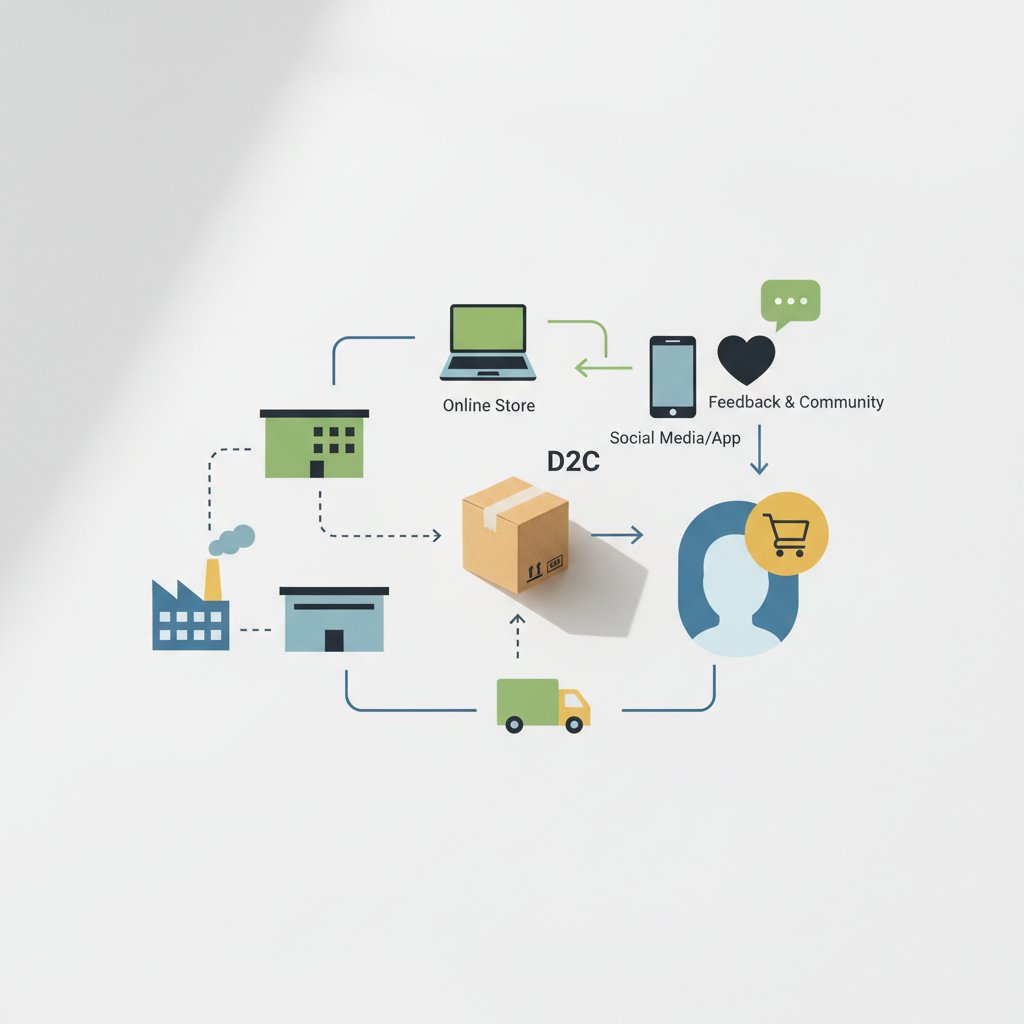
The allure of the D2C business model extends far beyond simply cutting out the middleman. It offers a suite of strategic advantages that can significantly impact a brand’s profitability, market position, and long-term sustainability. Understanding these benefits is crucial for any business considering or currently operating within this framework.
[INLINE IMAGE 1: place after second H2 | alt=”d2c business model concept illustration”]
Enhanced Profit Margins and Cost Control
One of the most immediate and tangible benefits of the D2C model is the potential for higher profit margins. By removing wholesalers and retailers, brands retain a larger share of the revenue that would otherwise go to intermediaries. This direct sales approach eliminates distributor markups, reduces complex pricing structures, and gives brands more control over their cost of goods sold (COGS) and selling expenses. This means more capital can be reinvested into product development, marketing, or further enhancing the customer experience.
Unparalleled Customer Relationships and Data Insights
The D2C business model fosters direct engagement with the customer, leading to invaluable insights. Every interaction, from website visits to purchases, customer service inquiries, and product reviews, provides data that traditional models simply cannot capture with the same granularity. This first-party data empowers brands to:
- Personalize Marketing: Tailor campaigns, offers, and communications based on individual preferences and purchase history.
- Improve Product Development: Use direct feedback and behavioral data to refine existing products and inform the creation of new ones.
- Enhance Customer Lifetime Value (CLTV): Build loyalty through personalized experiences, proactive support, and community engagement, leading to repeat purchases and higher CLTV.
- Optimize Inventory: Forecast demand more accurately, reducing waste and stockouts by understanding direct consumer trends.
This direct line of communication also allows brands to build genuine relationships, fostering a sense of community and trust that is difficult to achieve through third-party channels. Improving customer retention is a core tenet of D2C success.
Complete Brand Control and Messaging Consistency
When selling through retailers, brands often have limited control over how their products are displayed, priced, or marketed. The D2C model grants brands complete autonomy over their identity, allowing them to craft a consistent and compelling narrative across all touchpoints. This includes:
- Website Design & User Experience: Total control over the look, feel, and functionality of their e-commerce store.
- Product Presentation: Curate high-quality imagery, detailed descriptions, and engaging content that accurately represents the brand’s vision.
- Marketing & Storytelling: Craft authentic narratives that resonate with the target audience, building emotional connections.
- Pricing Strategy: Implement flexible pricing, promotional offers, and subscription models directly.
- Customer Service: Define service standards and directly manage responses, ensuring alignment with brand values.
This holistic control ensures that every interaction reinforces the brand’s core values and unique selling proposition, strengthening brand equity over time.
Agility in Product Development and Market Entry
The direct feedback loop inherent in the D2C model significantly enhances a brand’s agility. Without the lengthy lead times and negotiations often associated with retail partnerships, D2C brands can:
- Rapidly Prototype and Launch: Test new product ideas, designs, or features with real customers much faster.
- Iterate Based on Feedback: Quickly gather consumer insights and make real-time adjustments to products or services.
- Respond to Market Trends: Adapt to changing consumer preferences or emerging trends with greater speed and flexibility.
- Enter New Markets: Leverage global e-commerce and logistics to reach customers in new geographical areas without the need for physical retail presence.
This responsiveness is a critical competitive advantage in today’s fast-paced market, allowing D2C brands to stay ahead of the curve.
Navigating the Challenges of the D2C Business Model
While the D2C business model offers compelling advantages, it’s not without its complexities. Brands transitioning to or operating within a D2C framework must be prepared to tackle several significant challenges. Overlooking these potential hurdles can jeopardize even the most promising D2C venture.
Increased Operational Complexity
Shifting from a wholesale model to D2C means taking on responsibilities previously handled by intermediaries. This increases operational complexity across several key areas:
- Fulfillment & Logistics: Brands are responsible for warehousing, inventory management, order processing, shipping, and returns. This requires robust infrastructure or reliable third-party logistics (3PL) partners.
- Customer Service: Managing customer inquiries, complaints, and support across various channels (email, chat, phone, social media) becomes a direct responsibility. This demands dedicated teams and efficient systems.
- Payment Processing: Implementing secure and diverse payment gateways, managing chargebacks, and ensuring PCI compliance are new considerations.
- Technology & E-commerce Platform Management: Maintaining and optimizing the e-commerce website (e.g., Shopify store), integrating various apps, and ensuring a seamless user experience requires ongoing technical expertise.
These operational demands can be resource-intensive, requiring significant investment in technology, personnel, and process optimization.
Customer Acquisition Costs (CAC)
One of the most persistent challenges for D2C brands is the rising cost of acquiring new customers, often referred to as Customer Acquisition Cost (CAC). In a crowded digital marketplace, standing out and reaching the target audience requires significant investment in:
- Digital Advertising: Paid ads on platforms like Google, Facebook, Instagram, and TikTok are often essential but can be expensive and competitive.
- Content Marketing: Creating high-quality blog posts, videos, and social media content to attract organic traffic requires consistent effort.
- Influencer Marketing: Collaborating with influencers can be effective but requires careful management and budget allocation.
- SEO: Optimizing the website for search engines is a long-term strategy but crucial for organic visibility.
Effectively managing and optimizing CAC is paramount for D2C profitability. Brands must focus on channel diversification, conversion rate optimization, and strategies that foster customer loyalty to reduce the over-reliance on paid acquisition.
Building Trust and Brand Recognition from Scratch
Unlike established brands sold in traditional retail, many D2C brands start with little to no existing brand recognition. Building trust and legitimacy online can be a slow and challenging process. Consumers are often wary of new brands, particularly when purchasing sight unseen. Strategies to overcome this include:
- Authentic Storytelling: Clearly communicating brand values and mission.
- Social Proof: Leveraging customer reviews, testimonials, and user-generated content.
- Exceptional Customer Service: Providing outstanding support to build word-of-mouth referrals.
- Transparent Policies: Clear return policies, shipping information, and terms of service.
- Quality Products: Delivering on product promises is fundamental for long-term trust.
It takes time, consistency, and a relentless focus on customer satisfaction to carve out a reputable space in the digital marketplace.
Scalability Challenges
While D2C offers agility, scaling operations can present its own set of hurdles. As order volumes increase, brands must ensure their infrastructure can keep pace. This includes:
- Supply Chain Management: Secure reliable suppliers, manage inventory levels, and negotiate favorable terms.
- Logistics Expansion: Potentially expanding to multiple warehouses or 3PL partners to reduce shipping times and costs in different regions.
- Team Expansion: Growing customer service, marketing, operations, and technical teams to support increased demand.
- Funding: Securing additional capital for inventory, marketing, and infrastructure investments.
Failure to plan for scalability can lead to bottlenecks, customer dissatisfaction, and missed growth opportunities.
Essential Technology Stack for a Successful D2C Business Model
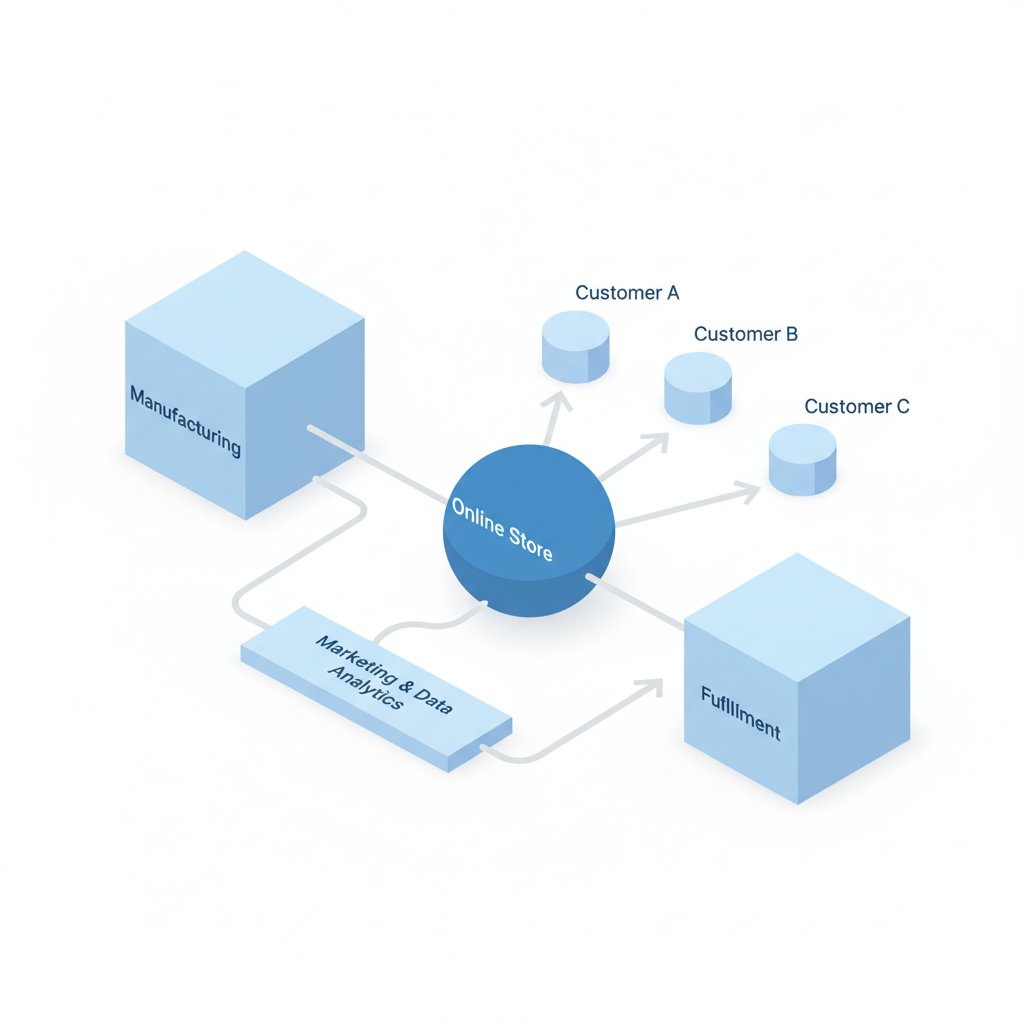
The success of any modern D2C business model hinges significantly on its underlying technology. A robust and integrated tech stack empowers brands to streamline operations, personalize customer experiences, and make data-driven decisions. For many D2C brands, especially SMBs, Shopify serves as the cornerstone, but it’s the ecosystem of tools built around it that truly unlocks potential.
[INLINE IMAGE 2: place after fourth H2 | alt=”d2c business model comparison illustration”]
E-commerce Platform: The Foundation
The choice of e-commerce platform is paramount. It serves as the digital storefront and the central hub for all sales activities.
- Shopify: Often the preferred choice for D2C brands due to its user-friendliness, extensive app store, scalability, and robust feature set. It simplifies website design, product management, order processing, and payment integration. Shopify Plus offers enhanced capabilities for larger, rapidly scaling D2C enterprises.
- Other Platforms: Options like BigCommerce, Magento (now Adobe Commerce), or Salesforce Commerce Cloud exist, each with varying levels of customization, cost, and complexity. The best choice depends on the brand’s specific needs, technical capabilities, and growth projections.
Regardless of the platform, it must be mobile-responsive, secure, and capable of handling anticipated traffic and transaction volumes.
Marketing Automation & CRM
Automating marketing efforts and managing customer relationships are critical for D2C growth and retention.
- Email Marketing Platforms (e.g., Klaviyo, Mailchimp): Essential for sending automated welcome series, abandoned cart reminders, promotional campaigns, and personalized newsletters. Klaviyo is particularly popular in the D2C space for its deep Shopify integration and advanced segmentation capabilities.
- CRM (Customer Relationship Management) Systems: Tools like HubSpot or Salesforce help manage customer interactions, track purchase history, and unify customer data, enabling personalized communication and support. For many smaller D2C brands, advanced email platforms can often serve as a pseudo-CRM.
- SMS Marketing (e.g., Attentive, Postscript): Leveraging text messages for time-sensitive promotions, order updates, and personalized offers provides a high engagement channel.
These tools allow brands to nurture leads, convert prospects, and retain existing customers efficiently.
Analytics & Business Intelligence
Data is the lifeblood of a D2C business model. Powerful analytics tools provide insights into customer behavior, marketing performance, and operational efficiency.
- Google Analytics 4: Indispensable for tracking website traffic, user behavior, conversion funnels, and marketing campaign effectiveness.
- Platform-Specific Analytics (e.g., Shopify Analytics): Offers direct insights into sales, orders, customer segments, and product performance.
- Heatmapping & Session Recording (e.g., Hotjar, Crazy Egg): Visualize how users interact with your site, identify friction points, and optimize user experience.
- Business Intelligence (BI) Tools (e.g., Looker, Tableau): For larger D2C brands, these tools aggregate data from multiple sources to provide a holistic view of business performance, enabling advanced reporting and predictive analysis.
Consistently monitoring and interpreting this data is crucial for continuous optimization and strategic decision-making.
Operations & Fulfillment Software
Efficient management of inventory, orders, and shipping is vital to customer satisfaction and operational efficiency.
- Inventory Management Systems (IMS): Tools like Stitch Labs, Skubana, or Brightpearl integrate with e-commerce platforms to track stock levels, manage warehouses, and prevent overselling. For smaller brands, integrated Shopify features are often sufficient.
- Order Management Systems (OMS): Essential for processing, routing, and tracking orders across multiple channels (if applicable), ensuring timely fulfillment.
- Shipping & Logistics Software (e.g., ShipStation, Shippo): Automates shipping label creation, tracks packages, and compares carrier rates, streamlining the shipping process and improving delivery times.
- 3PL Integration: For brands outsourcing fulfillment, seamless integration with a third-party logistics provider’s systems is critical for real-time inventory and order updates.
Effective operational tech ensures that promises made during the sales process are effectively delivered.
Strategies for D2C Growth and Conversion Optimization
Once the foundational D2C business model is established, the focus shifts to scaling growth and continually optimizing the conversion funnel. This requires a multifaceted approach that combines strategic marketing, user experience enhancements, and a deep understanding of customer psychology. Conversion rate optimization is a continuous journey for D2C brands.
Building a Powerful Brand Story and Community
In the D2C space, your brand is not just a logo; it’s a narrative, a set of values, and an experience. People connect with stories, not just products.
Key strategies include:
- Define Your “Why”: Clearly articulate your mission, values, and what makes your brand unique. This forms the core of your brand story.
- Authentic Content Marketing: Create engaging content (blog posts, videos, social media, podcasts) that tells your story, educates your audience, and showcases your products in relatable contexts.
- User-Generated Content (UGC): Encourage customers to share their experiences with your products. UGC acts as powerful social proof and builds community.
- Community Building: Create spaces for customers to interact with each other and your brand (e.g., Facebook groups, forums, loyalty programs). Foster a sense of belonging.
- Influencer Marketing: Partner with influencers whose values align with your brand to reach new, engaged audiences authentically.
A compelling brand story differentiates you in a crowded market and cultivates customer loyalty that transcends price.
Optimizing the E-commerce Experience for Conversions
Your online store is your primary sales channel, making its optimization critical for conversion. Focus on a seamless, intuitive, and trustworthy user experience.
- Fast Loading Speeds: Website speed is a major factor in bounce rates and SEO. Optimize images, code, and hosting.
- Mobile Responsiveness: Ensure your entire site is perfectly optimized for mobile devices, as a significant portion of D2C traffic comes from smartphones.
- Intuitive Navigation: Make it easy for customers to find what they’re looking for with clear categories, search functionality, and filtering options.
- High-Quality Product Pages: Feature stunning product photography (including lifestyle shots), detailed descriptions, customer reviews, clear pricing, and compelling calls-to-action (CTAs).
- Streamlined Checkout Process: Minimize steps, offer guest checkout, clearly display shipping costs, and provide multiple payment options. Reduce friction at every stage.
- Personalization: Use customer data to recommend products, personalize landing pages, and tailor offers.
- Social Proof Integration: Display customer reviews, ratings, testimonials, and trust badges prominently.
Regular A/B testing of different elements (CTAs, layouts, pricing displays) can yield significant conversion improvements.
Leveraging Data for Personalized Marketing and Retention
The D2C business model provides a wealth of first-party data. Use it strategically to drive growth.
- Customer Segmentation: Divide your audience into segments based on demographics, purchase history, behavior, and engagement.
- Personalized Email/SMS Flows: Create automated sequences for welcome, abandoned cart, post-purchase, and win-back campaigns, tailored to each segment.
- Dynamic Ads: Use data to serve personalized ads on social media and other platforms, showcasing products users have viewed or similar items.
- Loyalty Programs: Reward repeat customers with points, exclusive access, or discounts to encourage continued purchases and foster community.
- Feedback Loops: Actively solicit customer feedback through surveys, reviews, and direct outreach. Use this to improve products and services.
Focusing on retention through personalized experiences often proves more cost-effective than continuous customer acquisition.
Diversifying Traffic Channels and Acquisition Strategies
Relying too heavily on a single acquisition channel can be risky. A diversified strategy builds resilience.
- SEO (Search Engine Optimization): Invest in strong keyword research, on-page optimization, technical SEO, and link building to drive organic traffic.
- Paid Advertising: Utilize Google Ads (Search & Shopping), social media ads (Facebook, Instagram, TikTok), and display ads, constantly optimizing for ROI.
- Content Marketing: Develop a content strategy that attracts your target audience through educational, entertaining, or inspiring content.
- Affiliate Marketing: Partner with other websites or content creators to promote your products for a commission.
- Partnerships & Collaborations: Team up with complementary brands for cross-promotion, bundle offers, or co-created products.
- Offline Marketing (Selective): For some D2C brands, strategic pop-up shops, events, or print ads can complement online efforts and create an omni-channel experience.
Continuously testing and evaluating the performance of different channels is key to optimizing your overall acquisition strategy and managing CAC effectively.
D2C vs. Traditional Retail: A Comparative Analysis
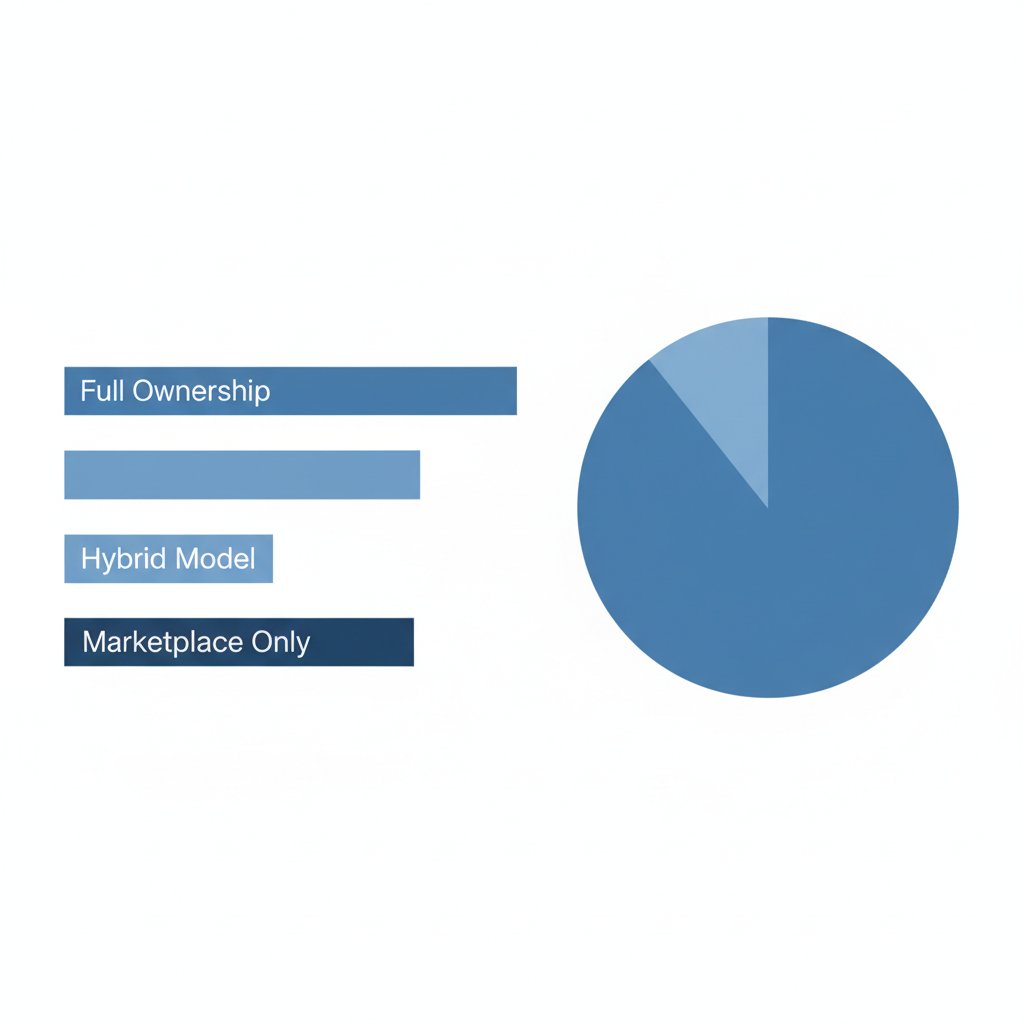
Understanding the D2C business model often requires contrasting it with traditional retail approaches. While both aim to sell products, their fundamental structures, advantages, and challenges differ significantly. For businesses considering their go-to-market strategy, a clear comparison is invaluable.
| Feature/Aspect | D2C Business Model | Traditional Retail Model |
|---|---|---|
| Distribution Channel | Directly to consumer (online store, own-brand physical stores) | Via intermediaries (wholesalers, distributors, brick-and-mortar retailers) |
| Customer Relationship | Direct, personalized, data-rich. Brand owns interaction. | Indirect, often mediated by retailer. Limited direct customer data for brand. |
| Profit Margins | Potentially higher (no wholesaler/retailer markup). | Lower due to intermediary markups. |
| Brand Control | Complete control over messaging, pricing, customer experience. | Limited control; subject to retailer’s policies, display, and pricing strategies. |
| Data Access | First-party data on customer behavior, preferences, and purchase history. | Limited to sales data from retailers; often aggregated and less granular. |
| Operational Complexity | High (brand handles fulfillment, customer service, marketing, tech). | Lower (retailers handle sales, marketing, customer-facing aspects). |
| Customer Acquisition Cost (CAC) | Often high initially, requires significant digital marketing investment. | Retailer’s foot traffic and marketing efforts contribute; brand’s CAC is indirect. |
| Market Agility | High; rapid product iteration, quick market entry, responsive to feedback. | Lower; longer lead times for new product launches, slower feedback loop. |
| Initial Investment Barrier | Lower to get started (e-commerce platform, inventory). | Often higher (manufacturing scale, securing retail partnerships, marketing support for retailers). |
Synergy: The Rise of Hybrid Models
It’s important to note that the distinction between D2C and traditional retail isn’t always black and white anymore. Many brands are adopting hybrid models, often referred to as “Clicks-and-Mortar.”
- Traditional Brands Going D2C: Established brands are launching their own D2C websites to gain direct customer insights, test new products, and boost their margins. This allows them to complement their existing retail presence.
- D2C Brands Entering Retail: Successful D2C brands are strategically opening their own flagship stores or partnering with select retailers (e.g., Target, Sephora) to increase brand exposure, offer an offline experience, and reach customers who prefer physical shopping.
The key is to leverage the strengths of each model. D2C provides the direct relationship and data, while strategic retail placements can offer massive reach and brand validation. The optimal strategy often involves a careful balance designed to maximize profitability and customer touchpoints.
Future Trends Shaping the D2C Business Model
The D2C space is dynamic, constantly evolving with technological advancements and shifting consumer expectations. Staying ahead of these trends is crucial for brands looking to maintain a competitive edge and ensure long-term success of their D2C business model.
Hyper-Personalization and AI Integration
Moving beyond basic personalization, hyper-personalization will become the norm. Brands will leverage AI and machine learning to analyze vast amounts of customer data (browsing history, purchase patterns, social media activity, even biometric data where privacy allows) to:
- Predict Needs: Anticipate what a customer might want before they even know it.
- Dynamic Website Experiences: Tailor website layouts, product recommendations, and content in real-time for each individual visitor.
- AI-Powered Customer Service: Advanced chatbots and virtual assistants will handle more complex queries, freeing up human agents for high-touch interactions.
- Personalized Product Development: AI can identify gaps in the market or suggest product modifications based on aggregate customer preferences.
The goal is to create a one-to-one shopping experience that feels incredibly intuitive and responsive to individual desires.
Sustainability and Ethical Sourcing
Consumers, particularly younger demographics, are increasingly prioritizing sustainability, ethical practices, and transparency. D2C brands that authentically integrate these values into their business model will thrive.
- Circular Economy Models: Brands offering repair services, take-back programs for recycling, or subscription services that emphasize reuse.
- Transparent Supply Chains: Clearly communicating the origin of materials, manufacturing processes, and labor practices.
- Eco-Friendly Packaging: Moving away from plastics towards biodegradable or recyclable packaging materials.
- Carbon Neutral Initiatives: Offsetting shipping emissions and investing in sustainable energy.
Authenticity here is key; brands must walk the talk, as consumers are quick to identify “greenwashing.”
Experiential D2C and Immersive Shopping
As online shopping becomes ubiquitous, D2C brands will seek new ways to create engaging and memorable experiences, blurring the lines between digital and physical.
- Augmented Reality (AR) & Virtual Reality (VR): Enabling customers to “try on” clothes, visualize furniture in their homes, or interact with products in virtual environments.
- Livestream Shopping: Interactive live video broadcasts where hosts demonstrate products, answer questions, and drive real-time sales.
- Pop-up Experiences & Flagship Stores: Strategic physical spaces that serve as brand showcases, community hubs, or showrooms rather than just transactional points.
- Gamification: Integrating game-like elements into the shopping journey to increase engagement and loyalty.
These immersive experiences aim to replicate or even surpass the engagement of traditional retail.
Subscription Models and Recurring Revenue
The subscription box phenomenon has matured, and the underlying principle of recurring revenue is being applied more broadly across the D2C landscape. Brands are increasingly offering products and services on a subscription basis, from consumables to software and curated experiences.
- Convenience: Auto-replenishment of essential items.
- Discovery: Curated boxes introducing new products.
- Value: Exclusive offers, early access, or discounts for subscribers.
- Predictable Revenue for Brands: Easier forecasting and improved customer lifetime value.
The focus will be on delivering genuine value and flexibility to subscribers to prevent churn.
Understanding subscription models is becoming increasingly vital for D2C success.
The Rise of Voice Commerce and Conversational AI
With the proliferation of smart speakers and voice assistants, voice commerce is set to become a significant channel. D2C brands will need to optimize their product listings and buying processes for voice search and conversational AI interactions.
- Voice Search Optimization: Thinking about how customers verbally ask for products.
- Seamless Voice Checkout: Enabling purchases entirely through voice commands.
- Conversational Interfaces: AI-powered assistants that guide customers through product discovery and purchasing.
This trend emphasizes convenience and hands-free shopping, presenting new opportunities for D2C brands to connect with consumers.
Building a Sustainable D2C Business: Key Principles for Longevity
Establishing a D2C business model is one thing; ensuring its long-term viability and growth is another. Sustainability in the D2C realm extends beyond environmental concerns to encompass financial resilience, operational robustness, and enduring customer relationships. For aspiring and existing D2C entrepreneurs, anchoring decisions in these core principles will pave the way for lasting success.
Prioritize Customer Lifetime Value (CLTV) Over One-Off Sales
The true power of the D2C model lies in its ability to foster direct, lasting customer relationships. Obsessing over individual transactional sales, especially through costly acquisition channels, can lead to unsustainability. Instead, focus relentlessly on increasing Customer Lifetime Value (CLTV).
- Exceptional Post-Purchase Experience: Beyond the product, ensure smooth delivery, easy returns, proactive communication, and responsive customer service. A positive post-purchase experience converts one-time buyers into repeat customers.
- Loyalty Programs: Implement tiered loyalty programs, reward points, exclusive access, or VIP perks that incentivize repeat purchases and community engagement.
- Personalized Communication: Utilize CRM and marketing automation to send targeted re-engagement campaigns, product recommendations, and exclusive offers based on past behavior and preferences.
- Feedback Integration: Actively solicit and act on customer feedback. Showing customers that you listen and adapt builds immense goodwill and trust, encouraging them to stay.
A high CLTV allows brands to absorb higher upfront acquisition costs and generates predictable, less expensive revenue over time.
Master Your Supply Chain and Fulfillment
The D2C business model puts the onus of logistics squarely on the brand. A well-oiled supply chain and efficient fulfillment are non-negotiable for customer satisfaction and profitability. Weaknesses here can quickly erode brand trust and financial stability.
- Supplier Relationships: Develop strong, transparent relationships with manufacturers and suppliers. Diversify where possible to mitigate risks.
- Inventory Management: Implement robust inventory tracking systems to avoid stockouts and overstocking. Leverage data to forecast demand accurately.
- Scalable Fulfillment: Whether in-house or outsourced (3PL), ensure your fulfillment strategy can seamlessly scale with growth. Optimize warehouse layout, picking processes, and packing efficiency.
- Shipping Optimization: Negotiate favorable rates with carriers, offer transparent shipping options, and consider strategies like free shipping thresholds or local pick-up points. Provide clear tracking information.
- Returns Management: Make returns easy and hassle-free. A smooth returns process can actually build trust and encourage future purchases.
Invest in the right technology and partnerships to ensure your operational backbone is strong and adaptable.
Diversify Revenue Streams and Market Channels Strategically
While the core D2C business model centers on your owned e-commerce site, diversification can significantly enhance resilience and reach.
- Product Line Expansion: Continuously innovate and expand your product offerings based on customer feedback and market trends. Complementary products increase average order value (AOV) and CLTV.
- Subscription Services: Where applicable, introduce subscription options for recurring products or curated experiences to create predictable revenue.
- Strategic Retail Partnerships: Don’t dismiss brick-and-mortar entirely. Carefully chosen partnerships with specialty retailers or major chains can provide brand validation and access to new customer segments.
- International Expansion: Once established locally, explore opportunities to expand into international markets, carefully considering logistics, payment, and cultural nuances.
- Marketplace Presence: While not purely D2C, a strategic presence on platforms like Amazon (especially with Brand Registry) or Etsy can be an acquisition channel, provided you maintain brand control and leverage data effectively back to your D2C site.
The goal is to broaden your reach without diluting your core D2C brand equity or overextending resources.
Continuous Innovation and Adaptation
The e-commerce landscape is in a state of perpetual flux. Stagnation is the enemy of sustainable growth in the D2C business model. Brands must foster a culture of continuous innovation and adaptation.
- Stay Customer-Centric: Continuously listen to your customers, monitor feedback, and understand evolving preferences.
- Monitor Market Trends: Keep an eye on emerging technologies, new marketing channels, and shifts in consumer behavior.
- A/B Testing & Optimization: Regularly test website elements, marketing messages, pricing, and product features to identify what resonates best with your audience.
- Technology Adoption: Be open to adopting new e-commerce tools and platforms that can enhance efficiency, improve customer experience, or unlock new capabilities.
A willingness to experiment, learn from failures, and pivot when necessary is crucial for navigating the evolving D2C ecosystem and securing a sustainable future.
Conclusion: The Enduring Power of the D2C Business Model
The D2C business model is more than just a trend; it’s a fundamental reimagining of how brands connect with their customers. By empowering businesses to take direct control of their product, brand, and customer relationships, it unlocks unparalleled opportunities for higher profit margins, deeper customer insights, and ultimately, more resonant brand experiences. While the path to D2C success is lined with operational complexities and the challenges of customer acquisition, the rewards for those who navigate it skillfully are immense.
For any modern enterprise, especially those leveraging platforms and strategies akin to e-comprofits’ expertise in Shopify optimization and conversion rate enhancements, embracing the D2C model is a strategic imperative. It demands a commitment to understanding your customer intimately, a dedication to operational excellence, and a relentless pursuit of innovation. By building strong brand narratives, optimizing every facet of the online journey, leveraging data intelligently, and planning for sustainable growth, D2C brands can not only compete but truly thrive in the competitive digital era of 2026 and beyond. The future of commerce is direct, personal, and profoundly powerful when executed with precision and vision.
Frequently Asked Questions
Q1: What does D2C stand for in business?
A1: D2C stands for “Direct-to-Consumer.” It’s a business model where a manufacturer or brand sells its products directly to the end consumer, bypassing traditional third-party retailers, wholesalers, or distributors. This direct approach typically involves selling through an owned e-commerce website, proprietary physical stores, or other direct channels.
Q2: Why is the D2C business model becoming so popular?
A2: The D2C business model has surged in popularity due to several factors: increased control over brand messaging and customer experience, higher potential profit margins by cutting out intermediaries, direct access to valuable customer data for personalization and product development, greater agility in market entry and product iteration, and the lower barriers to entry provided by modern e-commerce platforms like Shopify.
Q3: What are the main challenges for a D2C brand?
A3: Key challenges for D2C brands include increased operational complexity (managing fulfillment, logistics, and customer service), often high customer acquisition costs (CAC) due to reliance on digital advertising, the need to build brand recognition and trust from scratch, and scalability issues as the business grows. Managing these aspects effectively requires significant investment in technology, personnel, and strategic planning.
Q4: How does a D2C business typically handle shipping and fulfillment?
A4: A D2C business takes direct responsibility for shipping and fulfillment. This can involve setting up an in-house warehousing and shipping operation, or more commonly for many brands, partnering with a Third-Party Logistics (3PL) provider. 3PLs handle storage, inventory management, order picking, packing, and shipping, allowing the D2C brand to focus on product development and marketing.
Q5: Is Shopify a good platform for a D2C business?
A5: Yes, Shopify is widely considered an excellent platform for D2C businesses. Its user-friendly interface, comprehensive features, extensive app store for integrations (CRM, marketing automation, shipping tools), scalability (from startups to Shopify Plus for enterprises), and robust support make it a leading choice for brands wanting to establish and grow their direct-to-consumer operations efficiently.
Mastering the D2C Business Model for Unprecedented E-commerce Growth
Affiliate disclosure: This article may contain affiliate links. Recommendations are independent and editorially driven.
The landscape of commerce has undergone a radical transformation, with the Direct-to-Consumer (D2C) business model emerging as a dominant force. For brands of all sizes, understanding and effectively implementing a D2C strategy is no longer optional; it’s a prerequisite for sustainable growth and heightened profitability. This comprehensive guide from e-comprofits delves deep into the intricacies of the D2C business model, offering actionable insights for optimizing your e-commerce operations, supercharging conversion rates, and ultimately, ensuring the longevity and success of your online store.
In a world where traditional retail channels are increasingly challenged, D2C offers an unparalleled opportunity to forge direct relationships with customers, gain invaluable insights, and control every aspect of the brand experience. From product development to marketing, sales, and post-purchase support, the D2C model empowers businesses to dictate their own narrative and build a loyal community. We’ll explore the fundamental pillars of this model, dissect its advantages and challenges, and provide a roadmap for maximizing its potential within your e-commerce ecosystem, particularly for those leveraging platforms like Shopify.
Understanding the Core Principles of the D2C Business Model
At its heart, the D2C business model represents a paradigm shift from traditional distribution channels. Instead of relying on intermediaries like wholesalers, retailers, or marketplaces, D2C brands sell their products directly to the end consumer. This direct connection eliminates layers of costs, enhances control over brand messaging, and fosters a more intimate customer relationship. The rapid rise of e-commerce platforms and robust logistics networks has significantly lowered the barriers to entry for D2C brands, democratizing access to global markets.
What Defines a D2C Brand?
Several key characteristics define a D2C brand:
- Direct Sales Channel: The primary sales channel is owned and operated by the brand itself, typically an e-commerce website (e.g., built on Shopify), but can also include proprietary physical stores or pop-ups.
- Full Control Over Customer Experience: From product discovery to final delivery and customer service, the brand manages every touchpoint. This allows for a consistent brand message and a highly personalized experience.
- Data-Driven Decisions: Direct access to customer data (purchasing habits, website behavior, feedback) allows D2C brands to make informed decisions about product development, marketing, and inventory management.
- Brand Building & Storytelling: Without the constraints of third-party retailers, D2C brands can fully express their unique identity, values, and story, resonating more deeply with their target audience.
- Agility and Iteration: The direct feedback loop enables D2C brands to rapidly
innovate, test new products, and adapt to market demands with greater speed than traditional models.
Evolution of D2C: From Niche to Mainstream
The D2C movement gained significant traction in the early 2010s with digitally native brands disrupting established industries (think Warby Parker for eyewear or Casper for mattresses). These pioneers demonstrated the power of bypassing traditional gatekeepers and leveraging digital marketing to build passionate communities. Today, the D2C business model is no longer confined to startups; even established CPG (Consumer Packaged Goods) giants are launching their own D2C ventures to gain direct consumer insights and diversify their revenue streams. This widespread adoption underscores its effectiveness and future relevance in the e-commerce landscape.
Advantages of Embracing the D2C Business Model
The allure of the D2C business model extends far beyond simply cutting out the middleman. It offers a suite of strategic advantages that can significantly impact a brand’s profitability, market position, and long-term sustainability. Understanding these benefits is crucial for any business considering or currently operating within this framework.
[INLINE IMAGE 1: place after second H2 | alt=”d2c business model concept illustration”]
Enhanced Profit Margins and Cost Control
One of the most immediate and tangible benefits of the D2C model is the potential for higher profit margins. By removing wholesalers and retailers, brands retain a larger share of the revenue that would otherwise go to intermediaries. This direct sales approach eliminates distributor markups, reduces complex pricing structures, and gives brands more control over their cost of goods sold (COGS) and selling expenses. This means more capital can be reinvested into product development, marketing, or further enhancing the customer experience.
Unparalleled Customer Relationships and Data Insights
The D2C business model fosters direct engagement with the customer, leading to invaluable insights. Every interaction, from website visits to purchases, customer service inquiries, and product reviews, provides data that traditional models simply cannot capture with the same granularity. This first-party data empowers brands to:
- Personalize Marketing: Tailor campaigns, offers, and communications based on individual preferences and purchase history.
- Improve Product Development: Use direct feedback and behavioral data to refine existing products and inform the creation of new ones.
- Enhance Customer Lifetime Value (CLTV): Build loyalty through personalized experiences, proactive support, and community engagement, leading to repeat purchases and higher CLTV.
- Optimize Inventory: Forecast demand more accurately, reducing waste and stockouts by understanding direct consumer trends.
This direct line of communication also allows brands to build genuine relationships, fostering a sense of community and trust that is difficult to achieve through third-party channels. Improving customer retention is a core tenet of D2C success.
Complete Brand Control and Messaging Consistency
When selling through retailers, brands often have limited control over how their products are displayed, priced, or marketed. The D2C model grants brands complete autonomy over their identity, allowing them to craft a consistent and compelling narrative across all touchpoints. This includes:
- Website Design & User Experience: Total control over the look, feel, and functionality of their e-commerce store.
- Product Presentation: Curate high-quality imagery, detailed descriptions, and engaging content that accurately represents the brand’s vision.
- Marketing & Storytelling: Craft authentic narratives that resonate with the target audience, building emotional connections.
- Pricing Strategy: Implement flexible pricing, promotional offers, and subscription models directly.
- Customer Service: Define service standards and directly manage responses, ensuring alignment with brand values.
This holistic control ensures that every interaction reinforces the brand’s core values and unique selling proposition, strengthening brand equity over time.
Agility in Product Development and Market Entry
The direct feedback loop inherent in the D2C model significantly enhances a brand’s agility. Without the lengthy lead times and negotiations often associated with retail partnerships, D2C brands can:
- Rapidly Prototype and Launch: Test new product ideas, designs, or features with real customers much faster.
- Iterate Based on Feedback: Quickly gather consumer insights and make real-time adjustments to products or services.
- Respond to Market Trends: Adapt to changing consumer preferences or emerging trends with greater speed and flexibility.
- Enter New Markets: Leverage global e-commerce and logistics to reach customers in new geographical areas without the need for physical retail presence.
This responsiveness is a critical competitive advantage in today’s fast-paced market, allowing D2C brands to stay ahead of the curve.
Navigating the Challenges of the D2C Business Model
While the D2C business model offers compelling advantages, it’s not without its complexities. Brands transitioning to or operating within a D2C framework must be prepared to tackle several significant challenges. Overlooking these potential hurdles can jeopardize even the most promising D2C venture.
Increased Operational Complexity
Shifting from a wholesale model to D2C means taking on responsibilities previously handled by intermediaries. This increases operational complexity across several key areas:
- Fulfillment & Logistics: Brands are responsible for warehousing, inventory management, order processing, shipping, and returns. This requires robust infrastructure or reliable third-party logistics (3PL) partners.
- Customer Service: Managing customer inquiries, complaints, and support across various channels (email, chat, phone, social media) becomes a direct responsibility. This demands dedicated teams and efficient systems.
- Payment Processing: Implementing secure and diverse payment gateways, managing chargebacks, and ensuring PCI compliance are new considerations.
- Technology & E-commerce Platform Management: Maintaining and optimizing the e-commerce website (e.g., Shopify store), integrating various apps, and ensuring a seamless user experience requires ongoing technical expertise.
These operational demands can be resource-intensive, requiring significant investment in technology, personnel, and process optimization.
Customer Acquisition Costs (CAC)
One of the most persistent challenges for D2C brands is the rising cost of acquiring new customers, often referred to as Customer Acquisition Cost (CAC). In a crowded digital marketplace, standing out and reaching the target audience requires significant investment in:
- Digital Advertising: Paid ads on platforms like Google, Facebook, Instagram, and TikTok are often essential but can be expensive and competitive.
- Content Marketing: Creating high-quality blog posts, videos, and social media content to attract organic traffic requires consistent effort.
- Influencer Marketing: Collaborating with influencers can be effective but requires careful management and budget allocation.
- SEO: Optimizing the website for search engines is a long-term strategy but crucial for organic visibility.
Effectively managing and optimizing CAC is paramount for D2C profitability. Brands must focus on channel diversification, conversion rate optimization, and strategies that foster customer loyalty to reduce the over-reliance on paid acquisition.
Building Trust and Brand Recognition from Scratch
Unlike established brands sold in traditional retail, many D2C brands start with little to no existing brand recognition. Building trust and legitimacy online can be a slow and challenging process. Consumers are often wary of new brands, particularly when purchasing sight unseen. Strategies to overcome this include:
- Authentic Storytelling: Clearly communicating brand values and mission.
- Social Proof: Leveraging customer reviews, testimonials, and user-generated content.
- Exceptional Customer Service: Providing outstanding support to build word-of-mouth referrals.
- Transparent Policies: Clear return policies, shipping information, and terms of service.
- Quality Products: Delivering on product promises is fundamental for long-term trust.
It takes time, consistency, and a relentless focus on customer satisfaction to carve out a reputable space in the digital marketplace.
Scalability Challenges
While D2C offers agility, scaling operations can present its own set of hurdles. As order volumes increase, brands must ensure their infrastructure can keep pace. This includes:
- Supply Chain Management: Secure reliable suppliers, manage inventory levels, and negotiate favorable terms.
- Logistics Expansion: Potentially expanding to multiple warehouses or 3PL partners to reduce shipping times and costs in different regions.
- Team Expansion: Growing customer service, marketing, operations, and technical teams to support increased demand.
- Funding: Securing additional capital for inventory, marketing, and infrastructure investments.
Failure to plan for scalability can lead to bottlenecks, customer dissatisfaction, and missed growth opportunities.
Essential Technology Stack for a Successful D2C Business Model
The success of any modern D2C business model hinges significantly on its underlying technology. A robust and integrated tech stack empowers brands to streamline operations, personalize customer experiences, and make data-driven decisions. For many D2C brands, especially SMBs, Shopify serves as the cornerstone, but it’s the ecosystem of tools built around it that truly unlocks potential.
[INLINE IMAGE 2: place after fourth H2 | alt=”d2c business model comparison illustration”]
E-commerce Platform: The Foundation
The choice of e-commerce platform is paramount. It serves as the digital storefront and the central hub for all sales activities.
- Shopify: Often the preferred choice for D2C brands due to its user-friendliness, extensive app store, scalability, and robust feature set. It simplifies website design, product management, order processing, and payment integration. Shopify Plus offers enhanced capabilities for larger, rapidly scaling D2C enterprises.
- Other Platforms: Options like BigCommerce, Magento (now Adobe Commerce), or Salesforce Commerce Cloud exist, each with varying levels of customization, cost, and complexity. The best choice depends on the brand’s specific needs, technical capabilities, and growth projections.
Regardless of the platform, it must be mobile-responsive, secure, and capable of handling anticipated traffic and transaction volumes.
Marketing Automation & CRM
Automating marketing efforts and managing customer relationships are critical for D2C growth and retention.
- Email Marketing Platforms (e.g., Klaviyo, Mailchimp): Essential for sending automated welcome series, abandoned cart reminders, promotional campaigns, and personalized newsletters. Klaviyo is particularly popular in the D2C space for its deep Shopify integration and advanced segmentation capabilities.
- CRM (Customer Relationship Management) Systems: Tools like HubSpot or Salesforce help manage customer interactions, track purchase history, and unify customer data, enabling personalized communication and support. For many smaller D2C brands, advanced email platforms can often serve as a pseudo-CRM.
- SMS Marketing (e.g., Attentive, Postscript): Leveraging text messages for time-sensitive promotions, order updates, and personalized offers provides a high engagement channel.
These tools allow brands to nurture leads, convert prospects, and retain existing customers efficiently.
Analytics & Business Intelligence
Data is the lifeblood of a D2C business model. Powerful analytics tools provide insights into customer behavior, marketing performance, and operational efficiency.
- Google Analytics 4: Indispensable for tracking website traffic, user behavior, conversion funnels, and marketing campaign effectiveness.
- Platform-Specific Analytics (e.g., Shopify Analytics): Offers direct insights into sales, orders, customer segments, and product performance.
- Heatmapping & Session Recording (e.g., Hotjar, Crazy Egg): Visualize how users interact with your site, identify friction points, and optimize user experience.
- Business Intelligence (BI) Tools (e.g., Looker, Tableau): For larger D2C brands, these tools aggregate data from multiple sources to provide a holistic view of business performance, enabling advanced reporting and predictive analysis.
Consistently monitoring and interpreting this data is crucial for continuous optimization and strategic decision-making.
Operations & Fulfillment Software
Efficient management of inventory, orders, and shipping is vital to customer satisfaction and operational efficiency.
- Inventory Management Systems (IMS): Tools like Stitch Labs, Skubana, or Brightpearl integrate with e-commerce platforms to track stock levels, manage warehouses, and prevent overselling. For smaller brands, integrated Shopify features are often sufficient.
- Order Management Systems (OMS): Essential for processing, routing, and tracking orders across multiple channels (if applicable), ensuring timely fulfillment.
- Shipping & Logistics Software (e.g., ShipStation, Shippo): Automates shipping label creation, tracks packages, and compares carrier rates, streamlining the shipping process and improving delivery times.
- 3PL Integration: For brands outsourcing fulfillment, seamless integration with a third-party logistics provider’s systems is critical for real-time inventory and order updates.
Effective operational tech ensures that promises made during the sales process are effectively delivered.
Strategies for D2C Growth and Conversion Optimization
Once the foundational D2C business model is established, the focus shifts to scaling growth and continually optimizing the conversion funnel. This requires a multifaceted approach that combines strategic marketing, user experience enhancements, and a deep understanding of customer psychology. Conversion rate optimization is a continuous journey for D2C brands.
Building a Powerful Brand Story and Community
In the D2C space, your brand is not just a logo; it’s a narrative, a set of values, and an experience. People connect with stories, not just products.
Key strategies include:
- Define Your “Why”: Clearly articulate your mission, values, and what makes your brand unique. This forms the core of your brand story.
- Authentic Content Marketing: Create engaging content (blog posts, videos, social media, podcasts) that tells your story, educates your audience, and showcases your products in relatable contexts.
- User-Generated Content (UGC): Encourage customers to share their experiences with your products. UGC acts as powerful social proof and builds community.
- Community Building: Create spaces for customers to interact with each other and your brand (e.g., Facebook groups, forums, loyalty programs). Foster a sense of belonging.
- Influencer Marketing: Partner with influencers whose values align with your brand to reach new, engaged audiences authentically.
A compelling brand story differentiates you in a crowded market and cultivates customer loyalty that transcends price.
Optimizing the E-commerce Experience for Conversions
Your online store is your primary sales channel, making its optimization critical for conversion. Focus on a seamless, intuitive, and trustworthy user experience.
- Fast Loading Speeds: Website speed is a major factor in bounce rates and SEO. Optimize images, code, and hosting.
- Mobile Responsiveness: Ensure your entire site is perfectly optimized for mobile devices, as a significant portion of D2C traffic comes from smartphones.
- Intuitive Navigation: Make it easy for customers to find what they’re looking for with clear categories, search functionality, and filtering options.
- High-Quality Product Pages: Feature stunning product photography (including lifestyle shots), detailed descriptions, customer reviews, clear pricing, and compelling calls-to-action (CTAs).
- Streamlined Checkout Process: Minimize steps, offer guest checkout, clearly display shipping costs, and provide multiple payment options. Reduce friction at every stage.
- Personalization: Use customer data to recommend products, personalize landing pages, and tailor offers.
- Social Proof Integration: Display customer reviews, ratings, testimonials, and trust badges prominently.
Regular A/B testing of different elements (CTAs, layouts, pricing displays) can yield significant conversion improvements.
Leveraging Data for Personalized Marketing and Retention
The D2C business model provides a wealth of first-party data. Use it strategically to drive growth.
- Customer Segmentation: Divide your audience into segments based on demographics, purchase history, behavior, and engagement.
- Personalized Email/SMS Flows: Create automated sequences for welcome, abandoned cart, post-purchase, and win-back campaigns, tailored to each segment.
- Dynamic Ads: Use data to serve personalized ads on social media and other platforms, showcasing products users have viewed or similar items.
- Loyalty Programs: Reward repeat customers with points, exclusive access, or discounts to encourage continued purchases and foster community.
- Feedback Loops: Actively solicit customer feedback through surveys, reviews, and direct outreach. Use this to improve products and services.
Focusing on retention through personalized experiences often proves more cost-effective than continuous customer acquisition.
Diversifying Traffic Channels and Acquisition Strategies
Relying too heavily on a single acquisition channel can be risky. A diversified strategy builds resilience.
- SEO (Search Engine Optimization): Invest in strong keyword research, on-page optimization, technical SEO, and link building to drive organic traffic.
- Paid Advertising: Utilize Google Ads (Search & Shopping), social media ads (Facebook, Instagram, TikTok), and display ads, constantly optimizing for ROI.
- Content Marketing: Develop a content strategy that attracts your target audience through educational, entertaining, or inspiring content.
- Affiliate Marketing: Partner with other websites or content creators to promote your products for a commission.
- Partnerships & Collaborations: Team up with complementary brands for cross-promotion, bundle offers, or co-created products.
- Offline Marketing (Selective): For some D2C brands, strategic pop-up shops, events, or print ads can complement online efforts and create an omni-channel experience.
Continuously testing and evaluating the performance of different channels is key to optimizing your overall acquisition strategy and managing CAC effectively.
D2C vs. Traditional Retail: A Comparative Analysis
Understanding the D2C business model often requires contrasting it with traditional retail approaches. While both aim to sell products, their fundamental structures, advantages, and challenges differ significantly. For businesses considering their go-to-market strategy, a clear comparison is invaluable.
| Feature/Aspect | D2C Business Model | Traditional Retail Model |
|---|---|---|
| Distribution Channel | Directly to consumer (online store, own-brand physical stores) | Via intermediaries (wholesalers, distributors, brick-and-mortar retailers) |
| Customer Relationship | Direct, personalized, data-rich. Brand owns interaction. | Indirect, often mediated by retailer. Limited direct customer data for brand. |
| Profit Margins | Potentially higher (no wholesaler/retailer markup). | Lower due to intermediary markups. |
| Brand Control | Complete control over messaging, pricing, customer experience. | Limited control; subject to retailer’s policies, display, and pricing strategies. |
| Data Access | First-party data on customer behavior, preferences, and purchase history. | Limited to sales data from retailers; often aggregated and less granular. |
| Operational Complexity | High (brand handles fulfillment, customer service, marketing, tech). | Lower (retailers handle sales, marketing, customer-facing aspects). |
| Customer Acquisition Cost (CAC) | Often high initially, requires significant digital marketing investment. | Retailer’s foot traffic and marketing efforts contribute; brand’s CAC is indirect. |
| Market Agility | High; rapid product iteration, quick market entry, responsive to feedback. | Lower; longer lead times for new product launches, slower feedback loop. |
| Initial Investment Barrier | Lower to get started (e-commerce platform, inventory). | Often higher (manufacturing scale, securing retail partnerships, marketing support for retailers). |
Synergy: The Rise of Hybrid Models
It’s important to note that the distinction between D2C and traditional retail isn’t always black and white anymore. Many brands are adopting hybrid models, often referred to as “Clicks-and-Mortar.”
- Traditional Brands Going D2C: Established brands are launching their own D2C websites to gain direct customer insights, test new products, and boost their margins. This allows them to complement their existing retail presence.
- D2C Brands Entering Retail: Successful D2C brands are strategically opening their own flagship stores or partnering with select retailers (e.g., Target, Sephora) to increase brand exposure, offer an offline experience, and reach customers who prefer physical shopping.
The key is to leverage the strengths of each model. D2C provides the direct relationship and data, while strategic retail placements can offer massive reach and brand validation. The optimal strategy often involves a careful balance designed to maximize profitability and customer touchpoints.
Future Trends Shaping the D2C Business Model
The D2C space is dynamic, constantly evolving with technological advancements and shifting consumer expectations. Staying ahead of these trends is crucial for brands looking to maintain a competitive edge and ensure long-term success of their D2C business model.
Hyper-Personalization and AI Integration
Moving beyond basic personalization, hyper-personalization will become the norm. Brands will leverage AI and machine learning to analyze vast amounts of customer data (browsing history, purchase patterns, social media activity, even biometric data where privacy allows) to:
- Predict Needs: Anticipate what a customer might want before they even know it.
- Dynamic Website Experiences: Tailor website layouts, product recommendations, and content in real-time for each individual visitor.
- AI-Powered Customer Service: Advanced chatbots and virtual assistants will handle more complex queries, freeing up human agents for high-touch interactions.
- Personalized Product Development: AI can identify gaps in the market or suggest product modifications based on aggregate customer preferences.
The goal is to create a one-to-one shopping experience that feels incredibly intuitive and responsive to individual desires.
Sustainability and Ethical Sourcing
Consumers, particularly younger demographics, are increasingly prioritizing sustainability, ethical practices, and transparency. D2C brands that authentically integrate these values into their business model will thrive.
- Circular Economy Models: Brands offering repair services, take-back programs for recycling, or subscription services that emphasize reuse.
- Transparent Supply Chains: Clearly communicating the origin of materials, manufacturing processes, and labor practices.
- Eco-Friendly Packaging: Moving away from plastics towards biodegradable or recyclable packaging materials.
- Carbon Neutral Initiatives: Offsetting shipping emissions and investing in sustainable energy.
Authenticity here is key; brands must walk the talk, as consumers are quick to identify “greenwashing.”
Experiential D2C and Immersive Shopping
As online shopping becomes ubiquitous, D2C brands will seek new ways to create engaging and memorable experiences, blurring the lines between digital and physical.
- Augmented Reality (AR) & Virtual Reality (VR): Enabling customers to “try on” clothes, visualize furniture in their homes, or interact with products in virtual environments.
- Livestream Shopping: Interactive live video broadcasts where hosts demonstrate products, answer questions, and drive real-time sales.
- Pop-up Experiences & Flagship Stores: Strategic physical spaces that serve as brand showcases, community hubs, or showrooms rather than just transactional points.
- Gamification: Integrating game-like elements into the shopping journey to increase engagement and loyalty.
These immersive experiences aim to replicate or even surpass the engagement of traditional retail.
Subscription Models and Recurring Revenue
The subscription box phenomenon has matured, and the underlying principle of recurring revenue is being applied more broadly across the D2C landscape. Brands are increasingly offering products and services on a subscription basis, from consumables to software and curated experiences.
- Convenience: Auto-replenishment of essential items.
- Discovery: Curated boxes introducing new products.
- Value: Exclusive offers, early access, or discounts for subscribers.
- Predictable Revenue for Brands: Easier forecasting and improved customer lifetime value.
The focus will be on delivering genuine value and flexibility to subscribers to prevent churn.
Understanding subscription models is becoming increasingly vital for D2C success.
The Rise of Voice Commerce and Conversational AI
With the proliferation of smart speakers and voice assistants, voice commerce is set to become a significant channel. D2C brands will need to optimize their product listings and buying processes for voice search and conversational AI interactions.
- Voice Search Optimization: Thinking about how customers verbally ask for products.
- Seamless Voice Checkout: Enabling purchases entirely through voice commands.
- Conversational Interfaces: AI-powered assistants that guide customers through product discovery and purchasing.
This trend emphasizes convenience and hands-free shopping, presenting new opportunities for D2C brands to connect with consumers.
Building a Sustainable D2C Business: Key Principles for Longevity
Establishing a D2C business model is one thing; ensuring its long-term viability and growth is another. Sustainability in the D2C realm extends beyond environmental concerns to encompass financial resilience, operational robustness, and enduring customer relationships. For aspiring and existing D2C entrepreneurs, anchoring decisions in these core principles will pave the way for lasting success.
Prioritize Customer Lifetime Value (CLTV) Over One-Off Sales
The true power of the D2C model lies in its ability to foster direct, lasting customer relationships. Obsessing over individual transactional sales, especially through costly acquisition channels, can lead to unsustainability. Instead, focus relentlessly on increasing Customer Lifetime Value (CLTV).
- Exceptional Post-Purchase Experience: Beyond the product, ensure smooth delivery, easy returns, proactive communication, and responsive customer service. A positive post-purchase experience converts one-time buyers into repeat customers.
- Loyalty Programs: Implement tiered loyalty programs, reward points, exclusive access, or VIP perks that incentivize repeat purchases and community engagement.
- Personalized Communication: Utilize CRM and marketing automation to send targeted re-engagement campaigns, product recommendations, and exclusive offers based on past behavior and preferences.
- Feedback Integration: Actively solicit and act on customer feedback. Showing customers that you listen and adapt builds immense goodwill and trust, encouraging them to stay.
A high CLTV allows brands to absorb higher upfront acquisition costs and generates predictable, less expensive revenue over time.
Master Your Supply Chain and Fulfillment
The D2C business model puts the onus of logistics squarely on the brand. A well-oiled supply chain and efficient fulfillment are non-negotiable for customer satisfaction and profitability. Weaknesses here can quickly erode brand trust and financial stability.
- Supplier Relationships: Develop strong, transparent relationships with manufacturers and suppliers. Diversify where possible to mitigate risks.
- Inventory Management: Implement robust inventory tracking systems to avoid stockouts and overstocking. Leverage data to forecast demand accurately.
- Scalable Fulfillment: Whether in-house or outsourced (3PL), ensure your fulfillment strategy can seamlessly scale with growth. Optimize warehouse layout, picking processes, and packing efficiency.
- Shipping Optimization: Negotiate favorable rates with carriers, offer transparent shipping options, and consider strategies like free shipping thresholds or local pick-up points. Provide clear tracking information.
- Returns Management: Make returns easy and hassle-free. A smooth returns process can actually build trust and encourage future purchases.
Invest in the right technology and partnerships to ensure your operational backbone is strong and adaptable.
Diversify Revenue Streams and Market Channels Strategically
While the core D2C business model centers on your owned e-commerce site, diversification can significantly enhance resilience and reach.
- Product Line Expansion: Continuously innovate and expand your product offerings based on customer feedback and market trends. Complementary products increase average order value (AOV) and CLTV.
- Subscription Services: Where applicable, introduce subscription options for recurring products or curated experiences to create predictable revenue.
- Strategic Retail Partnerships: Don’t dismiss brick-and-mortar entirely. Carefully chosen partnerships with specialty retailers or major chains can provide brand validation and access to new customer segments.
- International Expansion: Once established locally, explore opportunities to expand into international markets, carefully considering logistics, payment, and cultural nuances.
- Marketplace Presence: While not purely D2C, a strategic presence on platforms like Amazon (especially with Brand Registry) or Etsy can be an acquisition channel, provided you maintain brand control and leverage data effectively back to your D2C site.
The goal is to broaden your reach without diluting your core D2C brand equity or overextending resources.
Continuous Innovation and Adaptation
The e-commerce landscape is in a state of perpetual flux. Stagnation is the enemy of sustainable growth in the D2C business model. Brands must foster a culture of continuous innovation and adaptation.
- Stay Customer-Centric: Continuously listen to your customers, monitor feedback, and understand evolving preferences.
- Monitor Market Trends: Keep an eye on emerging technologies, new marketing channels, and shifts in consumer behavior.
- A/B Testing & Optimization: Regularly test website elements, marketing messages, pricing, and product features to identify what resonates best with your audience.
- Technology Adoption: Be open to adopting new e-commerce tools and platforms that can enhance efficiency, improve customer experience, or unlock new capabilities.
A willingness to experiment, learn from failures, and pivot when necessary is crucial for navigating the evolving D2C ecosystem and securing a sustainable future.
Conclusion: The Enduring Power of the D2C Business Model
The D2C business model is more than just a trend; it’s a fundamental reimagining of how brands connect with their customers. By empowering businesses to take direct control of their product, brand, and customer relationships, it unlocks unparalleled opportunities for higher profit margins, deeper customer insights, and ultimately, more resonant brand experiences. While the path to D2C success is lined with operational complexities and the challenges of customer acquisition, the rewards for those who navigate it skillfully are immense.
For any modern enterprise, especially those leveraging platforms and strategies akin to e-comprofits’ expertise in Shopify optimization and conversion rate enhancements, embracing the D2C model is a strategic imperative. It demands a commitment to understanding your customer intimately, a dedication to operational excellence, and a relentless pursuit of innovation. By building strong brand narratives, optimizing every facet of the online journey, leveraging data intelligently, and planning for sustainable growth, D2C brands can not only compete but truly thrive in the competitive digital era of 2026 and beyond. The future of commerce is direct, personal, and profoundly powerful when executed with precision and vision.
Frequently Asked Questions
Q1: What does D2C stand for in business?
A1: D2C stands for “Direct-to-Consumer.” It’s a business model where a manufacturer or brand sells its products directly to the end consumer, bypassing traditional third-party retailers, wholesalers, or distributors. This direct approach typically involves selling through an owned e-commerce website, proprietary physical stores, or other direct channels.
Q2: Why is the D2C business model becoming so popular?
A2: The D2C business model has surged in popularity due to several factors: increased control over brand messaging and customer experience, higher potential profit margins by cutting out intermediaries, direct access to valuable customer data for personalization and product development, greater agility in market entry and product iteration, and the lower barriers to entry provided by modern e-commerce platforms like Shopify.
Q3: What are the main challenges for a D2C brand?
A3: Key challenges for D2C brands include increased operational complexity (managing fulfillment, logistics, and customer service), often high customer acquisition costs (CAC) due to reliance on digital advertising, the need to build brand recognition and trust from scratch, and scalability issues as the business grows. Managing these aspects effectively requires significant investment in technology, personnel, and strategic planning.
Q4: How does a D2C business typically handle shipping and fulfillment?
A4: A D2C business takes direct responsibility for shipping and fulfillment. This can involve setting up an in-house warehousing and shipping operation, or more commonly for many brands, partnering with a Third-Party Logistics (3PL) provider. 3PLs handle storage, inventory management, order picking, packing, and shipping, allowing the D2C brand to focus on product development and marketing.
Q5: Is Shopify a good platform for a D2C business?
A5: Yes, Shopify is widely considered an excellent platform for D2C businesses. Its user-friendly interface, comprehensive features, extensive app store for integrations (CRM, marketing automation, shipping tools), scalability (from startups to Shopify Plus for enterprises), and robust support make it a leading choice for brands wanting to establish and grow their direct-to-consumer operations efficiently.
