
What is Conversion Rate Optimization (CRO)? Your Definitive Guide to E-commerce Profitability and D2C Growth in 2026
Affiliate disclosure: This article may contain affiliate links. Recommendations are independent and editorially driven.
In the fiercely competitive landscape of e-commerce, merely driving traffic to your online store is no longer enough. Businesses, especially D2C brands utilizing platforms like Shopify, are constantly searching for ways to convert that traffic into paying customers more efficiently. This critical pursuit leads us to a fundamental concept: Conversion Rate Optimization (CRO). But exactly what is conversion rate optimization, and why is it the silent powerhouse behind sustainable e-commerce growth and profitability?
At its core, CRO is the systematic process of increasing the percentage of website visitors who complete a desired action – a “conversion.” For an e-commerce business, this most often means making a purchase, but it can also include signing up for an email list, adding an item to a cart, filling out a form, or engaging with customer service. Unlike strategies that focus on bringing more people to your site, CRO zeroes in on making the most of the visitors you already have. It’s about refining the user experience, streamlining the sales funnel, and removing friction points to make conversion an effortless journey.
For D2C brands and Shopify store owners, understanding and implementing CRO is paramount. It represents a direct path to higher revenue without necessarily increasing marketing spend. Imagine doubling your conversion rate from 1% to 2% – that’s a 100% increase in sales from the same amount of traffic! This article will serve as your comprehensive guide to what is conversion rate optimization, diving deep into its principles, methodologies, tools, and the actionable strategies you can employ to unlock unparalleled profitability for your online store.
The Fundamental Principles: Deconstructing What is Conversion Rate Optimization
Conversion Rate Optimization isn’t just a tactic; it’s a strategic philosophy centered around understanding your customer and optimizing their journey. It’s about asking “why” a visitor didn’t convert and then systematically testing solutions to improve that outcome.
Defining Conversion: More Than Just a Sale
While a completed purchase is the ultimate conversion for most e-commerce businesses, CRO encompasses a broader spectrum of actions. These can be categorized into:
- Macro Conversions: The primary goals of your website, such as completing a purchase, requesting a quote, or subscribing to a paid service.
- Micro Conversions: Smaller actions that indicate user engagement and often precede a macro conversion. Examples include adding an item to a cart, viewing product details, signing up for a newsletter, downloading a catalog, or clicking on a specific call-to-action (CTA). Optimizing for micro conversions can significantly improve the likelihood of macro conversions downstream.
The “Why” Behind CRO: Why It Matters for E-commerce
In an environment where customer acquisition costs (CAC) are constantly rising, CRO offers a powerful counter-strategy. Its importance for e-commerce, particularly D2C and Shopify stores, cannot be overstated:
- Increased Revenue and Profitability: The most direct benefit. A higher conversion rate means more sales from the same traffic, leading to higher revenue without an equivalent increase in marketing spend. This directly impacts your bottom line.
- Lower Customer Acquisition Cost (CAC): By converting more existing traffic, you reduce the reliance on costly paid advertising to hit revenue targets. Your marketing efforts become more efficient.
- Better Understanding of Your Customers: The CRO process inherently involves deep dives into user behavior, preferences, and pain points. This insight is invaluable for product development, marketing messaging, and overall business strategy.
- Enhanced User Experience (UX): CRO efforts often lead to a more intuitive, user-friendly, and enjoyable website experience. This fosters customer loyalty and positive brand perception.
- Scalability and Sustainability: Once effective optimization strategies are identified, they can be scaled across different products, pages, or campaigns, providing a sustainable model for continuous growth.
- Competitive Advantage: Stores that convert better naturally outperform competitors who focus solely on traffic generation without optimizing the experience once visitors arrive.
The Core Pillars of CRO: Data-Driven Methodology

Effective CRO is not about guessing; it’s about structured experimentation and data-backed decisions. The methodology revolves around a continuous cycle of observation, hypothesis, experimentation, and analysis.
1. Data Collection and Analysis: The Foundation of Insight
Before you can optimize, you must understand. Data collection provides the raw material for identifying problem areas and opportunities.
- Quantitative Data (What is happening?): This involves numerical data from tools like Google Analytics, Shopify Analytics, or other web analytics platforms.
- Traffic Sources: Where do your visitors come from? Are certain sources converting better or worse?
- Bounce Rate: The percentage of visitors who leave your site after viewing only one page. High bounce rates can indicate poor landing page experience.
- Exit Rate: The percentage of visitors who leave from a specific page, even if they’ve viewed others. Important for identifying funnel leaks.
- Time on Page: How long do visitors spend on key pages?
- Conversion Funnel Analysis: Mapping the user journey from entry to conversion and identifying drop-off points.
- Device Performance: How do mobile users convert compared to desktop users?
- Page Speed: Slow loading times are notorious conversion killers.
- Qualitative Data (Why is it happening?): This delves into understanding user motivation, intent, and perceived barriers through non-numerical means.
- Heatmaps: Visual representations of where users click, move their mouse, and scroll on a page. Reveals areas of interest and neglect.
- Session Recordings: Video playback of individual user sessions, showing their exact interaction with your site. Offers invaluable context.
- User Surveys and Feedback Forms: Directly asking visitors about their experience, pain points, and suggestions.
- Usability Testing: Observing real users attempting to complete tasks on your site. Identifies hidden frustrations.
- Customer Support Logs: Analyzing common questions, complaints, or issues reported by customers can highlight significant friction points on your site.
[INLINE IMAGE 1: place after second H2 | alt=”what is conversion rate optimization concept illustration”]
2. Hypothesis Generation: Crafting Testable Theories
Once you’ve collected and analyzed your data, you’ll start to form educated guesses about why users aren’t converting and how specific changes might improve the situation. A good hypothesis should be:
- Specific: Clearly state what you will change.
- Measurable: Define the metric you expect to influence.
- Actionable: Describe the specific action you will take.
- Relevant: Based on your data analysis.
- Time-bound: Have a defined period for the test.
Example: “We believe that changing the primary CTA button color from blue to orange on product pages will increase add-to-cart clicks by 15% because orange creates higher visual contrast and urgency for our target demographic.”
3. Experimentation: A/B Testing and Beyond
This is where you put your hypotheses to the test. The goal is to isolate variables and measure the impact of changes.
- A/B Testing (Split Testing): The most common form of experimentation. You create two versions of a webpage or element (A and B), show them to different segments of your audience simultaneously, and measure which one performs better against your chosen metric.
- Multivariate Testing (MVT): More complex than A/B testing, MVT allows you to test multiple variations of multiple elements on a single page simultaneously (e.g., different headlines, images, and CTAs). It helps understand how different elements interact.
- Split URL Testing: Similar to A/B testing, but instead of altering elements on the same URL, you test two completely different URLs (e.g., a completely redesigned page vs. the original).
Proper experimentation requires careful planning, statistical significance calculation, and a commitment to letting tests run long enough to gather meaningful data.
4. Analysis and Iteration: Learning and Scaling
After an experiment concludes, you analyze the results. Did your change have the hypothesized effect? Was it statistically significant?
- Statistical Significance: Ensure your results aren’t due to random chance. Tools and calculators can help determine if your test reached significance.
- Implement Winning Variations: If a variation significantly outperforms the original, implement it permanently.
- Learn from Losing Variations: Even failed tests provide valuable insights into user behavior and what doesn’t work.
- Document Findings: Maintain a record of all tests, hypotheses, results, and learnings. This prevents re-testing the same ideas and builds an institutional knowledge base.
- Iterate: CRO is a continuous process. Every test, whether a win or a loss, generates new insights that can lead to new hypotheses and further testing.
Key Metrics and How to Calculate Your Conversion Rate
Understanding your current performance is the first step towards improving it. For CRO, this means getting a firm grasp on your conversion rate and other related metrics.
Calculating Your E-commerce Conversion Rate
The basic formula for calculating your conversion rate is straightforward:
Conversion Rate = (Number of Conversions / Number of Visitors) x 100For example, if your Shopify store receives 10,000 visitors in a month and generates 200 sales, your e-commerce conversion rate is (200 / 10,000) * 100 = 2%.
- Total Site Conversion Rate: This gives you a holistic view of your entire website’s performance.
- Page-Specific Conversion Rate: Calculate the conversion rate for specific landing pages, product pages, or category pages to identify underperforming assets.
- Campaign-Specific Conversion Rate: Evaluate the effectiveness of different marketing campaigns by seeing how traffic from each campaign converts.
- Segmented Conversion Rates: Analyze conversion rates by device (mobile vs. desktop), traffic source (organic, paid, social), new vs. returning visitors, geographic location, or demographic data. This granular view often reveals specific optimization opportunities.
Beyond Conversion Rate: Other Vital E-commerce Metrics
While the conversion rate is central, a holistic CRO strategy considers several other key performance indicators (KPIs) that impact overall profitability and customer lifetime value (CLV).
- Average Order Value (AOV): The average amount spent per customer order. Increasing AOV through upselling, cross-selling, or minimum spend for free shipping is a powerful CRO tactic.
AOV = Total Revenue / Number of Orders - Revenue Per Visitor (RPV): This metric provides a crucial link between traffic and revenue, indicating how much revenue each visitor generates on average.
RPV = Total Revenue / Total Visitors - Customer Lifetime Value (CLV): The total revenue a business can reasonably expect from a single customer account over their relationship with the business. CRO can extend CLV by improving customer satisfaction and encouraging repeat purchases.
- Cart Abandonment Rate: The percentage of users who add items to their cart but do not complete the purchase. A critical metric for checkout optimization.
- Bounce Rate: A high bounce rate on key landing pages can indicate a disconnect between what visitors expect and what they find, or poor page design.
- Engagement Metrics: Pages per session, session duration, scroll depth – these indicate how engaged users are with your content and offerings.
Identifying Conversion Leaks: A Deep Dive into Your User Journey

Before you can fix problems, you need to find them. Identifying “conversion leaks” – points in your customer journey where potential customers drop off – is crucial for effective CRO. This requires a systematic approach to understanding user behavior.
Mapping the Customer Journey
Visualize the typical path a customer takes from initial awareness to purchase and beyond. This helps pinpoint potential friction points.
- Awareness: How do customers first discover your brand (social media, search engines, ads)?
- Consideration: What pages do they visit? How do they compare products?
- Decision (Conversion): The process of adding to cart, checkout, payment.
- Retention: Post-purchase experience, email follow-ups, repeat purchases.
For each stage, identify what actions are desired and where users might be dropping off.
Leveraging Analytics for Leak Detection
Your web analytics platform (e.g., Google Analytics 4, Shopify Analytics) is your first line of defense in identifying problem areas.
- Funnel Visualization: Most analytics platforms offer a funnel report that shows the progression of users through key steps (e.g., product page > add to cart > checkout > purchase). This is an immediate visual indicator of where significant drop-offs occur.
- Behavior Flow Reports: These reports illustrate the paths users take through your website, highlighting common entry and exit points and unusual navigation patterns.
- Landing Page Performance: Analyze which landing pages have high bounce rates or low conversion rates. Is the content relevant to the traffic source? Is the offer clear?
- Device & Browser Performance: Are mobile users struggling more than desktop users? Are there compatibility issues with certain browsers?
- Demographic & Geo-location Data: Do conversion rates vary significantly by location or demographic? This could point to messaging issues or regional preferences.
[INLINE IMAGE 2: place after fourth H2 | alt=”what is conversion rate optimization comparison illustration”]
Qualitative Tools for Deeper Understanding
While quantitative data tells you “what” is happening, qualitative tools reveal “why.”
- Heatmaps and Click Maps: Visualize where users click, move their mouse, and how far they scroll. Are they missing key CTAs? Are they clicking on non-clickable elements, indicating confusion?
- Session Recordings (Replays): Watch anonymized recordings of actual user sessions. This can reveal unexpected behaviors, frustrations (e.g., repeatedly trying to click a non-functional element, getting stuck in a loop), or overlooked friction points.
- On-site Surveys and Feedback Widgets: Directly ask visitors about their experience. “What stopped you from completing your purchase today?” or “Was there anything confusing on this page?” These open-ended questions can uncover powerful insights.
- User Testing: Recruit individuals from your target audience to perform specific tasks on your website while providing real-time feedback. This uncovers usability issues that internal teams might be blind to.
- Customer Service Logs & Reviews: Analyze common questions, complaints, and feedback received through customer service channels or product reviews. These often highlight pervasive issues with product information, shipping policies, or website functionality.
By combining these quantitative and qualitative methods, you can build a comprehensive picture of your user journey and precisely locate the leaks that are hindering your conversion efforts.
Strategic CRO Tactics for E-commerce Success
Once you’ve identified your conversion leaks, it’s time to implement solutions. These tactics span various areas of your online store, from design to communication.
1. Optimize Your Website Design and User Experience (UX)
A seamless and intuitive user experience is paramount for conversion.
- Clear Navigation: Ensure visitors can easily find what they’re looking for. Use logical categories, prominent search bars, and clear menu structures.
- Mobile Responsiveness: With the majority of e-commerce traffic coming from mobile devices, your site must be perfectly optimized for smaller screens. Fast loading times, touch-friendly elements, and streamlined layouts are critical.
- Visual Hierarchy: Guide the user’s eye towards important elements (e.g., product images, price, add-to-cart button) using size, color, and placement.
- Readability: Use clear fonts, sufficient line spacing, and break up large blocks of text with headings and bullet points.
- Fast Page Load Speed: Every second counts. Optimize images, leverage caching, and minimize code to ensure your pages load instantly. A delay of even a few seconds can significantly increase bounce rates.
2. Enhance Product Pages and Persuasive Copywriting
Product pages are your virtual salespeople. They need to be compelling.
- High-Quality Imagery and Video: Showcase your products with multiple angles, zoom capabilities, lifestyle shots, and even 360-degree views or product videos. Visuals sell.
- Clear, Concise, and Benefit-Oriented Descriptions: Don’t just list features; explain the benefits to the customer. Use storytelling where appropriate. Address pain points and provide solutions.
- Social Proof (Reviews, Testimonials, UGC): Display customer reviews prominently. User-generated content (UGC) like photos or videos from real customers builds trust and authenticity.
- Pricing Clarity and Transparency: Clearly display the price, any discounts, and potential shipping costs upfront. No hidden fees.
- Stock Availability: Clearly indicate if a product is in stock or low in stock to create urgency.
- Robust FAQs on Product Pages: Proactively answer common questions about the product, sizing, materials, or usage to remove barriers to purchase.
3. Streamline the Checkout Process
The checkout is where the money is made, but it’s also a major drop-off point.
- Guest Checkout Option: Don’t force users to create an account. Offer a guest checkout option for faster conversions, then prompt for account creation post-purchase.
- Minimize Form Fields: Only ask for essential information. Each additional field is a potential barrier.
- Progress Indicators: Show customers where they are in the checkout process (e.g., “Step 1 of 3”). This manages expectations and reduces anxiety.
- Multiple Payment Options: Offer popular payment methods like credit cards, PayPal, Apple Pay, Google Pay, and buy-now-pay-later services (e.g., Afterpay, Klarna) to cater to diverse preferences.
- Trust Seals and Security Badges: Display SSL certificates, payment processor logos, and security badges to reassure customers their information is safe.
- Clear Error Messages: If a user makes an input error, provide clear, helpful feedback on how to correct it.
- Summary of Order Details: Allow customers to review their entire order before finalizing the purchase, including product details, quantity, price, and shipping.
4. Leverage Scarcity, Urgency, and Social Proof
Psychological triggers can significantly boost conversions.
- Scarcity: “Only 3 left in stock!” or “Limited edition.” This creates a fear of missing out (FOMO).
- Urgency: “Order within the next 2 hours for next-day delivery!” or “Sale ends tonight!” Encourages immediate action.
- Social Proof: “1,200+ happy customers,” “Most popular item,” “X people are currently viewing this product.” People are more likely to buy if others are buying.
5. Implement Effective Calls-to-Action (CTAs)
Your CTAs are the guiding lights for conversion.
- Clarity and Specificity: Use action-oriented language that tells users exactly what will happen: “Add to Cart,” “Shop Now,” “Download Your Free Guide.” Avoid vague CTAs like “Click Here.”
- Prominent Placement: CTAs should be easy to find and stand out visually on the page.
- Compelling Design: Use contrasting colors, appropriate sizing, and clear fonts to make your CTAs unmissable.
- Value Proposition: Sometimes, adding a small phrase like “Add to Cart (Free Shipping)” can enhance the appeal.
6. Personalization and Targeted Offers
Treating each customer uniquely can significantly boost engagement and conversions.
- Personalized Product Recommendations: Based on browsing history, past purchases, or similar customer behavior.
- Dynamic Content: Show different content to different segments of your audience (e.g., first-time visitors vs. returning customers, men vs. women).
- Geo-targeted Offers: Display special offers or shipping information relevant to the user’s location.
7. Post-Purchase Optimization and Retention
CRO doesn’t end after the first sale. Optimizing for repeat purchases is key for D2C growth.
- Thank You Page Optimization: Use this page to offer related products, gather feedback, or encourage social shares.
- Email Marketing Sequences: Post-purchase emails (order confirmation, shipping updates, thank you, request for review) are critical for building loyalty.
- Customer Support: Make it easy for customers to get help. Clear return policies and accessible support build trust and encourage repeat business.
Understanding your customer’s journey and pain points is fundamental to applying these strategies effectively.
Tools and Technologies for Effective CRO
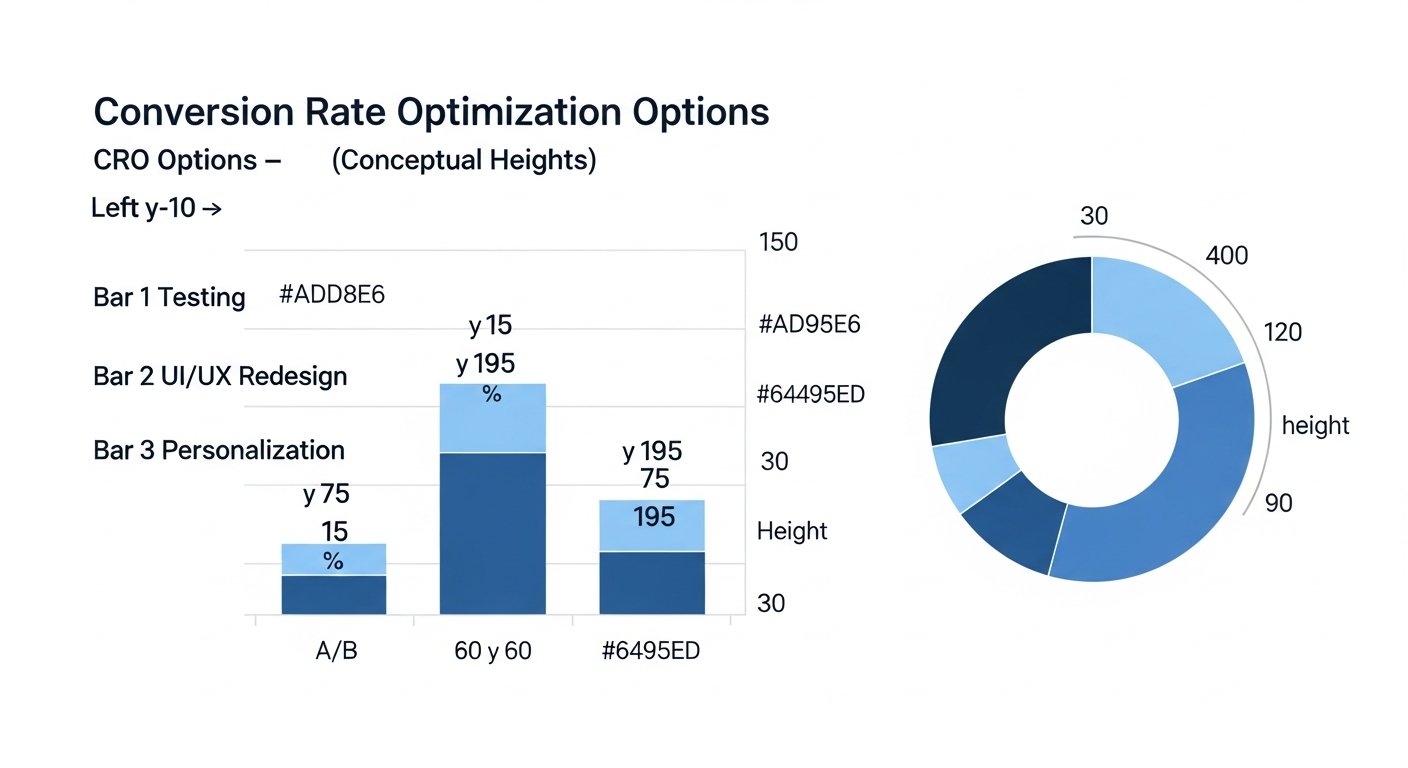
Implementing a robust CRO strategy requires a suite of tools that help you collect data, run experiments, and analyze results. For D2C brands, especially those on Shopify, many integrations are available.
1. Web Analytics Platforms
- Google Analytics (GA4): Essential for tracking website traffic, user behavior, conversions, and e-commerce-specific metrics. Provides deep insights into user flow, landing page performance, and audience demographics. It’s the backbone for quantitative data.
- Shopify Analytics: Built-in analytics provide immediate access to sales reports, customer behavior, and conversion funnels specific to your store.
2. A/B Testing & Experimentation Platforms
- Google Optimize (Transitioning): While Google Optimize is sunsetting, its principles live on. Many businesses are transitioning to alternatives.
- Optimizely: A powerful platform for A/B testing, multivariate testing, and personalization. Offers advanced features for large-scale experimentation.
- VWO (Visual Website Optimizer): Another comprehensive CRO platform offering A/B testing, heatmaps, session recordings, surveys, and personalization features in one suite.
- Unbounce: Primarily a landing page builder, Unbounce includes A/B testing capabilities for optimizing dedicated campaign landing pages.
- Shopify Apps for A/B Testing: Many apps in the Shopify App Store (e.g., Pickle, AB Tasty) integrate directly to allow easy testing of product page elements, CTAs, and themes.
3. Heatmapping & Session Recording Tools
- Hotjar: Offers heatmaps (clicks, scrolls, moves), session recordings, surveys, and feedback widgets. Excellent for understanding “why” users behave the way they do.
- Crazy Egg: Provides heatmaps, scroll maps, confetti maps (showing individual clicks), and recordings. Helps visualize user engagement.
4. User Feedback & Survey Tools
- Surveymonkey: For creating more in-depth customer surveys.
- Typeform: Creates engaging, conversational forms and surveys.
- Qualaroo: Focuses on targeted on-site surveys (Nudges) to ask specific questions based on user behavior or page context.
- Hotjar Surveys/Feedback: As mentioned, also offers survey and feedback capabilities.
5. Personalization Platforms
- Dynamic Yield: A comprehensive personalization engine that uses AI to deliver individualized experiences across web, mobile, and email channels.
- Barilliance: Focuses on real-time personalization, product recommendations, and automated email campaigns based on user behavior.
- Klaviyo (for email/SMS): While primarily an email marketing platform, Klaviyo enables highly segmented and personalized email flows based on customer data and website behavior, significantly boosting email conversion rates.
6. CRM and Customer Data Platforms (CDPs)
- Salesforce, HubSpot, Segment: While not direct CRO tools, CRMs and CDPs centralize customer data, which can then be used to inform more personalized CRO strategies and audience segmentation for testing. Shopify Flow can often connect various apps to create custom workflows based on this data.
Comparison of Key CRO Tool Types
Choosing the right mix of tools depends on your budget, team’s technical capabilities, and the specific needs of your e-commerce store. Many tools now offer integrated suites.
| Tool Category | Primary Function | Key Benefits for CRO | Example Tools (Popular Options) |
|---|---|---|---|
| Web Analytics | Quantitative data collection and reporting on site traffic, user behavior, and conversions. | Identifies “what” is happening; pinpoints conversion funnels, drop-off rates, and performance trends. | Google Analytics (GA4), Shopify Analytics |
| A/B Testing & Experimentation | Running controlled tests to compare different versions of pages or elements to determine which performs better. | Validates hypotheses with statistical significance; allows incremental, data-backed improvements to design and copy. | Optimizely, VWO, AB Tasty |
| Heatmapping & Session Recording | Visualizing user interaction (clicks, scrolls, mouse movements) and replaying individual user journeys. | Reveals “why” users behave a certain way; uncovers usability issues, missed CTAs, and user frustration. | Hotjar, Crazy Egg |
| User Feedback & Surveys | Collecting direct qualitative insights from website visitors about their experiences, pain points, and needs. | Gathers direct “voice of customer” data; helps formulate hypotheses based on actual user sentiment. | Qualaroo, Hotjar Surveys, Typeform |
| Personalization Platforms | Delivering customized content, offers, and experiences to individual users based on their behavior and characteristics. | Increases relevance for each visitor; boosts engagement and conversion rates by tailoring the experience. | Dynamic Yield, Barilliance, Nosto |
Building a CRO Culture: Team, Process, and Mindset
CRO isn’t a one-off project; it’s an ongoing commitment that requires a specific mindset and organizational structure to thrive. For D2C businesses aiming for sustained growth, embedding CRO into your operational DNA is critical.
The CRO Team Structure
While a large enterprise might have a dedicated CRO team, even smaller Shopify stores can designate roles or responsibilities:
- CRO Lead/Manager: Oversees the entire CRO program, sets strategy, prioritizes tests, and reports on results.
- Analyst: Responsible for data collection, analysis, and reporting (often a marketing analyst or data scientist).
- UX Designer/Researcher: Focuses on understanding user behavior, identifying friction points, and designing optimized experiences.
- Copywriter: Crafts compelling and persuasive copy for test variations.
- Developer: Implements the technical aspects of A/B tests and winning variations.
In smaller teams, these roles might be combined, but it’s crucial to have someone accountable for each function within the CRO cycle.
Establishing a Robust CRO Process
A defined, repeatable process ensures consistency and efficiency.
- Discovery & Research: Continuous data collection (analytics, heatmaps, surveys), competitor analysis, user interviews.
- Hypothesis Generation: Based on research, formulate clear, testable hypotheses for potential improvements.
- Prioritization: Not all tests are equal. Prioritize tests based on potential impact, ease of implementation, and required resources. Frameworks like PIE (Potential, Importance, Ease) or ICE (Impact, Confidence, Ease) can help.
- Experiment Design: Clearly define the test variations, target audience, metrics, duration, and desired statistical significance.
- Implementation & Execution: Set up the test using your chosen A/B testing tool, ensure proper tracking, and launch.
- Analysis & Reporting: Monitor the test, gather results, determine statistical significance, and interpret findings.
- Learning & Documentation: Record all results (wins and losses), extract key learnings, and update your knowledge base.
- Iteration: Use learnings to inform new hypotheses and restart the cycle.
Cultivating a CRO Mindset
More than tools and processes, CRO requires a cultural shift within your organization.
- Embrace Experimentation: Foster an environment where testing is seen as a continuous learning opportunity, not just a means to get a quick win.
- Data-Driven Decisions: Move away from “gut feelings” and opinions. Every change should be backed by data and tested.
- Customer-Centricity: Always put the customer at the heart of your optimization efforts. Understand their needs, motivations, and pain points.
- Continuous Learning: Stay updated with industry best practices, new tools, and emerging trends in user psychology.
- Patience and Persistence: Not every test will be a winner. CRO is often about incremental gains that accumulate over time.
- Share Learnings: Disseminate insights from CRO tests across marketing, product development, and customer service teams to create a more informed and cohesive business strategy.
Integrating CRO into your broader e-commerce marketing strategies ensures that every dollar spent on traffic is maximized for conversions.
Measuring ROI and Sustaining Growth with CRO
Proving the value of your CRO efforts is essential for securing resources and maintaining momentum. CRO provides a clear path to measurable ROI, driving sustainable e-commerce growth.
Calculating the ROI of Your CRO Efforts
The return on investment for CRO can be directly quantified. Here’s how:
- Identify Baseline: What was your conversion rate and revenue before your CRO initiative?
- Measure Uplift: After implementing winning tests, measure the new conversion rate and the corresponding increase in revenue.
- Calculate Incremental Revenue:
- Original Conversion Rate (CR1), New Conversion Rate (CR2)
- Original Visitors (V), New Visitors (assuming constant)
- Average Order Value (AOV)
- Incremental Conversions = (CR2 – CR1) * V
- Incremental Revenue = Incremental Conversions * AOV
Example: If your CR goes from 2% to 2.5% on 100,000 visitors, and your AOV is $50:
- Original Conversions = 2,000
- New Conversions = 2,500
- Incremental Conversions = 500
- Incremental Revenue = 500 * $50 = $25,000
- Factor in Costs: Include the cost of CRO tools, personnel time, and any external consulting fees.
- Calculate ROI:
ROI = (Incremental Revenue - CRO Costs) / CRO Costs * 100If CRO costs were $5,000 for the period:
ROI = ($25,000 - $5,000) / $5,000 * 100 = 400%
This clear calculation demonstrates the tangible financial impact of CRO, making it easier to justify further investment.
CRO’s Long-Term Impact on D2C Profitability
The benefits of CRO extend far beyond immediate revenue bumps:
- Compounding Gains: Each successful test adds to your overall conversion rate. These gains compound over time, leading to exponential growth.
- Improved Customer Lifetime Value (CLV): A better user experience and increased trust from optimized conversions can lead to higher customer satisfaction, repeat purchases, and greater CLV.
- Enhanced Brand Reputation: A website that is easy to use, trustworthy, and efficient builds a positive brand image, leading to organic growth through word-of-mouth.
- Deeper Market Insights: Continuous testing and analysis provide an ongoing stream of insights into your target audience’s preferences, informing not just your website, but also your product development and marketing messaging.
- Resilience in Competitive Markets: By consistently optimizing your conversion funnel, your D2C brand becomes more resilient to market fluctuations and aggressive competition, as you’re making the most of every visitor.
Scaling Your CRO Efforts
As your business grows, your CRO efforts should also scale:
- Expand Testing Scope: Move beyond basic elements to test entire page layouts, complex flows, and personalized experiences.
- Invest in Advanced Tools: Utilize more sophisticated A/B testing platforms, AI-driven personalization engines, and comprehensive CDPs.
- Dedicated Team: If possible, build out a dedicated CRO team with specialized roles.
- Integrate with Marketing & Product: Ensure CRO insights inform broader marketing campaigns, product development roadmaps, and even business strategy.
By consistently measuring, iterating, and scaling, CRO becomes not just a tactic, but a core engine for sustainable online store profitability and D2C growth.
Common CRO Mistakes to Avoid
While the principles of CRO are clear, many businesses stumble in their implementation. Avoiding these common pitfalls can save you time, resources, and missed opportunities.
1. Not Enough Traffic or Data
Mistake: Trying to run A/B tests on pages with very low traffic or making decisions based on insufficient data.
Why it’s a mistake: Small sample sizes lead to results that are not statistically significant. You can “win” a test by pure chance, implement the change, and see no real-world impact (or even a negative one).
Solution: Prioritize pages with higher traffic for A/B testing. For low-traffic pages, focus on qualitative research (surveys, session recordings) and best practices rather than A/B tests. Accumulate enough data over time before drawing conclusions.
2. Testing Too Many Variables at Once
Mistake: Changing multiple elements (headline, image, CTA button, paragraph text) within a single A/B test.
Why it’s a mistake: You won’t know which specific change, or combination of changes, led to the uplift (or decline). This makes it impossible to learn effectively for future tests.
Solution: Focus on testing one primary element or hypothesis per A/B test. If you
What is Conversion Rate Optimization (CRO)? Your Definitive Guide to E-commerce Profitability and D2C Growth in 2026
Affiliate disclosure: This article may contain affiliate links. Recommendations are independent and editorially driven.
In the fiercely competitive landscape of e-commerce, merely driving traffic to your online store is no longer enough. Businesses, especially D2C brands utilizing platforms like Shopify, are constantly searching for ways to convert that traffic into paying customers more efficiently. This critical pursuit leads us to a fundamental concept: Conversion Rate Optimization (CRO). But exactly what is conversion rate optimization, and why is it the silent powerhouse behind sustainable e-commerce growth and profitability?
At its core, CRO is the systematic process of increasing the percentage of website visitors who complete a desired action – a “conversion.” For an e-commerce business, this most often means making a purchase, but it can also include signing up for an email list, adding an item to a cart, filling out a form, or engaging with customer service. Unlike strategies that focus on bringing more people to your site, CRO zeroes in on making the most of the visitors you already have. It’s about refining the user experience, streamlining the sales funnel, and removing friction points to make conversion an effortless journey.
For D2C brands and Shopify store owners, understanding and implementing CRO is paramount. It represents a direct path to higher revenue without necessarily increasing marketing spend. Imagine doubling your conversion rate from 1% to 2% – that’s a 100% increase in sales from the same amount of traffic! This article will serve as your comprehensive guide to what is conversion rate optimization, diving deep into its principles, methodologies, tools, and the actionable strategies you can employ to unlock unparalleled profitability for your online store.
The Fundamental Principles: Deconstructing What is Conversion Rate Optimization
Conversion Rate Optimization isn’t just a tactic; it’s a strategic philosophy centered around understanding your customer and optimizing their journey. It’s about asking “why” a visitor didn’t convert and then systematically testing solutions to improve that outcome.
Defining Conversion: More Than Just a Sale
While a completed purchase is the ultimate conversion for most e-commerce businesses, CRO encompasses a broader spectrum of actions. These can be categorized into:
- Macro Conversions: The primary goals of your website, such as completing a purchase, requesting a quote, or subscribing to a paid service.
- Micro Conversions: Smaller actions that indicate user engagement and often precede a macro conversion. Examples include adding an item to a cart, viewing product details, signing up for a newsletter, downloading a catalog, or clicking on a specific call-to-action (CTA). Optimizing for micro conversions can significantly improve the likelihood of macro conversions downstream.
The “Why” Behind CRO: Why It Matters for E-commerce
In an environment where customer acquisition costs (CAC) are constantly rising, CRO offers a powerful counter-strategy. Its importance for e-commerce, particularly D2C and Shopify stores, cannot be overstated:
- Increased Revenue and Profitability: The most direct benefit. A higher conversion rate means more sales from the same traffic, leading to higher revenue without an equivalent increase in marketing spend. This directly impacts your bottom line.
- Lower Customer Acquisition Cost (CAC): By converting more existing traffic, you reduce the reliance on costly paid advertising to hit revenue targets. Your marketing efforts become more efficient.
- Better Understanding of Your Customers: The CRO process inherently involves deep dives into user behavior, preferences, and pain points. This insight is invaluable for product development, marketing messaging, and overall business strategy.
- Enhanced User Experience (UX): CRO efforts often lead to a more intuitive, user-friendly, and enjoyable website experience. This fosters customer loyalty and positive brand perception.
- Scalability and Sustainability: Once effective optimization strategies are identified, they can be scaled across different products, pages, or campaigns, providing a sustainable model for continuous growth.
- Competitive Advantage: Stores that convert better naturally outperform competitors who focus solely on traffic generation without optimizing the experience once visitors arrive.
The Core Pillars of CRO: Data-Driven Methodology
Effective CRO is not about guessing; it’s about structured experimentation and data-backed decisions. The methodology revolves around a continuous cycle of observation, hypothesis, experimentation, and analysis.
1. Data Collection and Analysis: The Foundation of Insight
Before you can optimize, you must understand. Data collection provides the raw material for identifying problem areas and opportunities.
- Quantitative Data (What is happening?): This involves numerical data from tools like Google Analytics, Shopify Analytics, or other web analytics platforms.
- Traffic Sources: Where do your visitors come from? Are certain sources converting better or worse?
- Bounce Rate: The percentage of visitors who leave your site after viewing only one page. High bounce rates can indicate poor landing page experience.
- Exit Rate: The percentage of visitors who leave from a specific page, even if they’ve viewed others. Important for identifying funnel leaks.
- Time on Page: How long do visitors spend on key pages?
- Conversion Funnel Analysis: Mapping the user journey from entry to conversion and identifying drop-off points.
- Device Performance: How do mobile users convert compared to desktop users?
- Page Speed: Slow loading times are notorious conversion killers.
- Qualitative Data (Why is it happening?): This delves into understanding user motivation, intent, and perceived barriers through non-numerical means.
- Heatmaps: Visual representations of where users click, move their mouse, and scroll on a page. Reveals areas of interest and neglect.
- Session Recordings: Video playback of individual user sessions, showing their exact interaction with your site. Offers invaluable context.
- User Surveys and Feedback Forms: Directly asking visitors about their experience, pain points, and suggestions.
- Usability Testing: Observing real users attempting to complete tasks on your site. Identifies hidden frustrations.
- Customer Support Logs: Analyzing common questions, complaints, or issues reported by customers can highlight significant friction points on your site.
[INLINE IMAGE 1: place after second H2 | alt=”what is conversion rate optimization concept illustration”]
2. Hypothesis Generation: Crafting Testable Theories
Once you’ve collected and analyzed your data, you’ll start to form educated guesses about why users aren’t converting and how specific changes might improve the situation. A good hypothesis should be:
- Specific: Clearly state what you will change.
- Measurable: Define the metric you expect to influence.
- Actionable: Describe the specific action you will take.
- Relevant: Based on your data analysis.
- Time-bound: Have a defined period for the test.
Example: “We believe that changing the primary CTA button color from blue to orange on product pages will increase add-to-cart clicks by 15% because orange creates higher visual contrast and urgency for our target demographic.”
3. Experimentation: A/B Testing and Beyond
This is where you put your hypotheses to the test. The goal is to isolate variables and measure the impact of changes.
- A/B Testing (Split Testing): The most common form of experimentation. You create two versions of a webpage or element (A and B), show them to different segments of your audience simultaneously, and measure which one performs better against your chosen metric.
- Multivariate Testing (MVT): More complex than A/B testing, MVT allows you to test multiple variations of multiple elements on a single page simultaneously (e.g., different headlines, images, and CTAs). It helps understand how different elements interact.
- Split URL Testing: Similar to A/B testing, but instead of altering elements on the same URL, you test two completely different URLs (e.g., a completely redesigned page vs. the original).
Proper experimentation requires careful planning, statistical significance calculation, and a commitment to letting tests run long enough to gather meaningful data.
4. Analysis and Iteration: Learning and Scaling
After an experiment concludes, you analyze the results. Did your change have the hypothesized effect? Was it statistically significant?
- Statistical Significance: Ensure your results aren’t due to random chance. Tools and calculators can help determine if your test reached significance.
- Implement Winning Variations: If a variation significantly outperforms the original, implement it permanently.
- Learn from Losing Variations: Even failed tests provide valuable insights into user behavior and what doesn’t work.
- Document Findings: Maintain a record of all tests, hypotheses, results, and learnings. This prevents re-testing the same ideas and builds an institutional knowledge base.
- Iterate: CRO is a continuous process. Every test, whether a win or a loss, generates new insights that can lead to new hypotheses and further testing.
Key Metrics and How to Calculate Your Conversion Rate
Understanding your current performance is the first step towards improving it. For CRO, this means getting a firm grasp on your conversion rate and other related metrics.
Calculating Your E-commerce Conversion Rate
The basic formula for calculating your conversion rate is straightforward:
Conversion Rate = (Number of Conversions / Number of Visitors) x 100For example, if your Shopify store receives 10,000 visitors in a month and generates 200 sales, your e-commerce conversion rate is (200 / 10,000) * 100 = 2%.
- Total Site Conversion Rate: This gives you a holistic view of your entire website’s performance.
- Page-Specific Conversion Rate: Calculate the conversion rate for specific landing pages, product pages, or category pages to identify underperforming assets.
- Campaign-Specific Conversion Rate: Evaluate the effectiveness of different marketing campaigns by seeing how traffic from each campaign converts.
- Segmented Conversion Rates: Analyze conversion rates by device (mobile vs. desktop), traffic source (organic, paid, social), new vs. returning visitors, geographic location, or demographic data. This granular view often reveals specific optimization opportunities.
Beyond Conversion Rate: Other Vital E-commerce Metrics
While the conversion rate is central, a holistic CRO strategy considers several other key performance indicators (KPIs) that impact overall profitability and customer lifetime value (CLV).
- Average Order Value (AOV): The average amount spent per customer order. Increasing AOV through upselling, cross-selling, or minimum spend for free shipping is a powerful CRO tactic.
AOV = Total Revenue / Number of Orders - Revenue Per Visitor (RPV): This metric provides a crucial link between traffic and revenue, indicating how much revenue each visitor generates on average.
RPV = Total Revenue / Total Visitors - Customer Lifetime Value (CLV): The total revenue a business can reasonably expect from a single customer account over their relationship with the business. CRO can extend CLV by improving customer satisfaction and encouraging repeat purchases.
- Cart Abandonment Rate: The percentage of users who add items to their cart but do not complete the purchase. A critical metric for checkout optimization.
- Bounce Rate: A high bounce rate on key landing pages can indicate a disconnect between what visitors expect and what they find, or poor page design.
- Engagement Metrics: Pages per session, session duration, scroll depth – these indicate how engaged users are with your content and offerings.
Identifying Conversion Leaks: A Deep Dive into Your User Journey
Before you can fix problems, you need to find them. Identifying “conversion leaks” – points in your customer journey where potential customers drop off – is crucial for effective CRO. This requires a systematic approach to understanding user behavior.
Mapping the Customer Journey
Visualize the typical path a customer takes from initial awareness to purchase and beyond. This helps pinpoint potential friction points.
- Awareness: How do customers first discover your brand (social media, search engines, ads)?
- Consideration: What pages do they visit? How do they compare products?
- Decision (Conversion): The process of adding to cart, checkout, payment.
- Retention: Post-purchase experience, email follow-ups, repeat purchases.
For each stage, identify what actions are desired and where users might be dropping off.
Leveraging Analytics for Leak Detection
Your web analytics platform (e.g., Google Analytics 4, Shopify Analytics) is your first line of defense in identifying problem areas.
- Funnel Visualization: Most analytics platforms offer a funnel report that shows the progression of users through key steps (e.g., product page > add to cart > checkout > purchase). This is an immediate visual indicator of where significant drop-offs occur.
- Behavior Flow Reports: These reports illustrate the paths users take through your website, highlighting common entry and exit points and unusual navigation patterns.
- Landing Page Performance: Analyze which landing pages have high bounce rates or low conversion rates. Is the content relevant to the traffic source? Is the offer clear?
- Device & Browser Performance: Are mobile users struggling more than desktop users? Are there compatibility issues with certain browsers?
- Demographic & Geo-location Data: Do conversion rates vary significantly by location or demographic? This could point to messaging issues or regional preferences.
[INLINE IMAGE 2: place after fourth H2 | alt=”what is conversion rate optimization comparison illustration”]
Qualitative Tools for Deeper Understanding
While quantitative data tells you “what” is happening, qualitative tools reveal “why.”
- Heatmaps and Click Maps: Visualize where users click, move their mouse, and how far they scroll. Are they missing key CTAs? Are they clicking on non-clickable elements, indicating confusion?
- Session Recordings (Replays): Watch anonymized recordings of actual user sessions. This can reveal unexpected behaviors, frustrations (e.g., repeatedly trying to click a non-functional element, getting stuck in a loop), or overlooked friction points.
- On-site Surveys and Feedback Widgets: Directly ask visitors about their experience. “What stopped you from completing your purchase today?” or “Was there anything confusing on this page?” These open-ended questions can uncover powerful insights.
- User Testing: Recruit individuals from your target audience to perform specific tasks on your website while providing real-time feedback. This uncovers usability issues that internal teams might be blind to.
- Customer Service Logs & Reviews: Analyze common questions, complaints, and feedback received through customer service channels or product reviews. These often highlight pervasive issues with product information, shipping policies, or website functionality.
By combining these quantitative and qualitative methods, you can build a comprehensive picture of your user journey and precisely locate the leaks that are hindering your conversion efforts.
Strategic CRO Tactics for E-commerce Success
Once you’ve identified your conversion leaks, it’s time to implement solutions. These tactics span various areas of your online store, from design to communication.
1. Optimize Your Website Design and User Experience (UX)
A seamless and intuitive user experience is paramount for conversion.
- Clear Navigation: Ensure visitors can easily find what they’re looking for. Use logical categories, prominent search bars, and clear menu structures.
- Mobile Responsiveness: With the majority of e-commerce traffic coming from mobile devices, your site must be perfectly optimized for smaller screens. Fast loading times, touch-friendly elements, and streamlined layouts are critical.
- Visual Hierarchy: Guide the user’s eye towards important elements (e.g., product images, price, add-to-cart button) using size, color, and placement.
- Readability: Use clear fonts, sufficient line spacing, and break up large blocks of text with headings and bullet points.
- Fast Page Load Speed: Every second counts. Optimize images, leverage caching, and minimize code to ensure your pages load instantly. A delay of even a few seconds can significantly increase bounce rates.
2. Enhance Product Pages and Persuasive Copywriting
Product pages are your virtual salespeople. They need to be compelling.
- High-Quality Imagery and Video: Showcase your products with multiple angles, zoom capabilities, lifestyle shots, and even 360-degree views or product videos. Visuals sell.
- Clear, Concise, and Benefit-Oriented Descriptions: Don’t just list features; explain the benefits to the customer. Use storytelling where appropriate. Address pain points and provide solutions.
- Social Proof (Reviews, Testimonials, UGC): Display customer reviews prominently. User-generated content (UGC) like photos or videos from real customers builds trust and authenticity.
- Pricing Clarity and Transparency: Clearly display the price, any discounts, and potential shipping costs upfront. No hidden fees.
- Stock Availability: Clearly indicate if a product is in stock or low in stock to create urgency.
- Robust FAQs on Product Pages: Proactively answer common questions about the product, sizing, materials, or usage to remove barriers to purchase.
3. Streamline the Checkout Process
The checkout is where the money is made, but it’s also a major drop-off point.
- Guest Checkout Option: Don’t force users to create an account. Offer a guest checkout option for faster conversions, then prompt for account creation post-purchase.
- Minimize Form Fields: Only ask for essential information. Each additional field is a potential barrier.
- Progress Indicators: Show customers where they are in the checkout process (e.g., “Step 1 of 3”). This manages expectations and reduces anxiety.
- Multiple Payment Options: Offer popular payment methods like credit cards, PayPal, Apple Pay, Google Pay, and buy-now-pay-later services (e.g., Afterpay, Klarna) to cater to diverse preferences.
- Trust Seals and Security Badges: Display SSL certificates, payment processor logos, and security badges to reassure customers their information is safe.
- Clear Error Messages: If a user makes an input error, provide clear, helpful feedback on how to correct it.
- Summary of Order Details: Allow customers to review their entire order before finalizing the purchase, including product details, quantity, price, and shipping.
4. Leverage Scarcity, Urgency, and Social Proof
Psychological triggers can significantly boost conversions.
- Scarcity: “Only 3 left in stock!” or “Limited edition.” This creates a fear of missing out (FOMO).
- Urgency: “Order within the next 2 hours for next-day delivery!” or “Sale ends tonight!” Encourages immediate action.
- Social Proof: “1,200+ happy customers,” “Most popular item,” “X people are currently viewing this product.” People are more likely to buy if others are buying.
5. Implement Effective Calls-to-Action (CTAs)
Your CTAs are the guiding lights for conversion.
- Clarity and Specificity: Use action-oriented language that tells users exactly what will happen: “Add to Cart,” “Shop Now,” “Download Your Free Guide.” Avoid vague CTAs like “Click Here.”
- Prominent Placement: CTAs should be easy to find and stand out visually on the page.
- Compelling Design: Use contrasting colors, appropriate sizing, and clear fonts to make your CTAs unmissable.
- Value Proposition: Sometimes, adding a small phrase like “Add to Cart (Free Shipping)” can enhance the appeal.
6. Personalization and Targeted Offers
Treating each customer uniquely can significantly boost engagement and conversions.
- Personalized Product Recommendations: Based on browsing history, past purchases, or similar customer behavior.
- Dynamic Content: Show different content to different segments of your audience (e.g., first-time visitors vs. returning customers, men vs. women).
- Geo-targeted Offers: Display special offers or shipping information relevant to the user’s location.
7. Post-Purchase Optimization and Retention
CRO doesn’t end after the first sale. Optimizing for repeat purchases is key for D2C growth.
- Thank You Page Optimization: Use this page to offer related products, gather feedback, or encourage social shares.
- Email Marketing Sequences: Post-purchase emails (order confirmation, shipping updates, thank you, request for review) are critical for building loyalty.
- Customer Support: Make it easy for customers to get help. Clear return policies and accessible support build trust and encourage repeat business.
Understanding your customer’s journey and pain points is fundamental to applying these strategies effectively.
Tools and Technologies for Effective CRO
Implementing a robust CRO strategy requires a suite of tools that help you collect data, run experiments, and analyze results. For D2C brands, especially those on Shopify, many integrations are available.
1. Web Analytics Platforms
- Google Analytics (GA4): Essential for tracking website traffic, user behavior, conversions, and e-commerce-specific metrics. Provides deep insights into user flow, landing page performance, and audience demographics. It’s the backbone for quantitative data.
- Shopify Analytics: Built-in analytics provide immediate access to sales reports, customer behavior, and conversion funnels specific to your store.
2. A/B Testing & Experimentation Platforms
- Google Optimize (Transitioning): While Google Optimize is sunsetting, its principles live on. Many businesses are transitioning to alternatives.
- Optimizely: A powerful platform for A/B testing, multivariate testing, and personalization. Offers advanced features for large-scale experimentation.
- VWO (Visual Website Optimizer): Another comprehensive CRO platform offering A/B testing, heatmaps, session recordings, surveys, and personalization features in one suite.
- Unbounce: Primarily a landing page builder, Unbounce includes A/B testing capabilities for optimizing dedicated campaign landing pages.
- Shopify Apps for A/B Testing: Many apps in the Shopify App Store (e.g., Pickle, AB Tasty) integrate directly to allow easy testing of product page elements, CTAs, and themes.
3. Heatmapping & Session Recording Tools
- Hotjar: Offers heatmaps (clicks, scrolls, moves), session recordings, surveys, and feedback widgets. Excellent for understanding “why” users behave the way they do.
- Crazy Egg: Provides heatmaps, scroll maps, confetti maps (showing individual clicks), and recordings. Helps visualize user engagement.
4. User Feedback & Survey Tools
- Surveymonkey: For creating more in-depth customer surveys.
- Typeform: Creates engaging, conversational forms and surveys.
- Qualaroo: Focuses on targeted on-site surveys (Nudges) to ask specific questions based on user behavior or page context.
- Hotjar Surveys/Feedback: As mentioned, also offers survey and feedback capabilities.
5. Personalization Platforms
- Dynamic Yield: A comprehensive personalization engine that uses AI to deliver individualized experiences across web, mobile, and email channels.
- Barilliance: Focuses on real-time personalization, product recommendations, and automated email campaigns based on user behavior.
- Klaviyo (for email/SMS): While primarily an email marketing platform, Klaviyo enables highly segmented and personalized email flows based on customer data and website behavior, significantly boosting email conversion rates.
6. CRM and Customer Data Platforms (CDPs)
- Salesforce, HubSpot, Segment: While not direct CRO tools, CRMs and CDPs centralize customer data, which can then be used to inform more personalized CRO strategies and audience segmentation for testing. Shopify Flow can often connect various apps to create custom workflows based on this data.
Comparison of Key CRO Tool Types
Choosing the right mix of tools depends on your budget, team’s technical capabilities, and the specific needs of your e-commerce store. Many tools now offer integrated suites.
| Tool Category | Primary Function | Key Benefits for CRO | Example Tools (Popular Options) |
|---|---|---|---|
| Web Analytics | Quantitative data collection and reporting on site traffic, user behavior, and conversions. | Identifies “what” is happening; pinpoints conversion funnels, drop-off rates, and performance trends. | Google Analytics (GA4), Shopify Analytics |
| A/B Testing & Experimentation | Running controlled tests to compare different versions of pages or elements to determine which performs better. | Validates hypotheses with statistical significance; allows incremental, data-backed improvements to design and copy. | Optimizely, VWO, AB Tasty |
| Heatmapping & Session Recording | Visualizing user interaction (clicks, scrolls, mouse movements) and replaying individual user journeys. | Reveals “why” users behave a certain way; uncovers usability issues, missed CTAs, and user frustration. | Hotjar, Crazy Egg |
| User Feedback & Surveys | Collecting direct qualitative insights from website visitors about their experiences, pain points, and needs. | Gathers direct “voice of customer” data; helps formulate hypotheses based on actual user sentiment. | Qualaroo, Hotjar Surveys, Typeform |
| Personalization Platforms | Delivering customized content, offers, and experiences to individual users based on their behavior and characteristics. | Increases relevance for each visitor; boosts engagement and conversion rates by tailoring the experience. | Dynamic Yield, Barilliance, Nosto |
Building a CRO Culture: Team, Process, and Mindset
CRO isn’t a one-off project; it’s an ongoing commitment that requires a specific mindset and organizational structure to thrive. For D2C businesses aiming for sustained growth, embedding CRO into your operational DNA is critical.
The CRO Team Structure
While a large enterprise might have a dedicated CRO team, even smaller Shopify stores can designate roles or responsibilities:
- CRO Lead/Manager: Oversees the entire CRO program, sets strategy, prioritizes tests, and reports on results.
- Analyst: Responsible for data collection, analysis, and reporting (often a marketing analyst or data scientist).
- UX Designer/Researcher: Focuses on understanding user behavior, identifying friction points, and designing optimized experiences.
- Copywriter: Crafts compelling and persuasive copy for test variations.
- Developer: Implements the technical aspects of A/B tests and winning variations.
In smaller teams, these roles might be combined, but it’s crucial to have someone accountable for each function within the CRO cycle.
Establishing a Robust CRO Process
A defined, repeatable process ensures consistency and efficiency.
- Discovery & Research: Continuous data collection (analytics, heatmaps, surveys), competitor analysis, user interviews.
- Hypothesis Generation: Based on research, formulate clear, testable hypotheses for potential improvements.
- Prioritization: Not all tests are equal. Prioritize tests based on potential impact, ease of implementation, and required resources. Frameworks like PIE (Potential, Importance, Ease) or ICE (Impact, Confidence, Ease) can help.
- Experiment Design: Clearly define the test variations, target audience, metrics, duration, and desired statistical significance.
- Implementation & Execution: Set up the test using your chosen A/B testing tool, ensure proper tracking, and launch.
- Analysis & Reporting: Monitor the test, gather results, determine statistical significance, and interpret findings.
- Learning & Documentation: Record all results (wins and losses), extract key learnings, and update your knowledge base.
- Iteration: Use learnings to inform new hypotheses and restart the cycle.
Cultivating a CRO Mindset
More than tools and processes, CRO requires a cultural shift within your organization.
- Embrace Experimentation: Foster an environment where testing is seen as a continuous learning opportunity, not just a means to get a quick win.
- Data-Driven Decisions: Move away from “gut feelings” and opinions. Every change should be backed by data and tested.
- Customer-Centricity: Always put the customer at the heart of your optimization efforts. Understand their needs, motivations, and pain points.
- Continuous Learning: Stay updated with industry best practices, new tools, and emerging trends in user psychology.
- Patience and Persistence: Not every test will be a winner. CRO is often about incremental gains that accumulate over time.
- Share Learnings: Disseminate insights from CRO tests across marketing, product development, and customer service teams to create a more informed and cohesive business strategy.
Integrating CRO into your broader e-commerce marketing strategies ensures that every dollar spent on traffic is maximized for conversions.
Measuring ROI and Sustaining Growth with CRO
Proving the value of your CRO efforts is essential for securing resources and maintaining momentum. CRO provides a clear path to measurable ROI, driving sustainable e-commerce growth.
Calculating the ROI of Your CRO Efforts
The return on investment for CRO can be directly quantified. Here’s how:
- Identify Baseline: What was your conversion rate and revenue before your CRO initiative?
- Measure Uplift: After implementing winning tests, measure the new conversion rate and the corresponding increase in revenue.
- Calculate Incremental Revenue:
- Original Conversion Rate (CR1), New Conversion Rate (CR2)
- Original Visitors (V), New Visitors (assuming constant)
- Average Order Value (AOV)
- Incremental Conversions = (CR2 – CR1) * V
- Incremental Revenue = Incremental Conversions * AOV
Example: If your CR goes from 2% to 2.5% on 100,000 visitors, and your AOV is $50:
- Original Conversions = 2,000
- New Conversions = 2,500
- Incremental Conversions = 500
- Incremental Revenue = 500 * $50 = $25,000
- Factor in Costs: Include the cost of CRO tools, personnel time, and any external consulting fees.
- Calculate ROI:
ROI = (Incremental Revenue - CRO Costs) / CRO Costs * 100If CRO costs were $5,000 for the period:
ROI = ($25,000 - $5,000) / $5,000 * 100 = 400%
This clear calculation demonstrates the tangible financial impact of CRO, making it easier to justify further investment.
CRO’s Long-Term Impact on D2C Profitability
The benefits of CRO extend far beyond immediate revenue bumps:
- Compounding Gains: Each successful test adds to your overall conversion rate. These gains compound over time, leading to exponential growth.
- Improved Customer Lifetime Value (CLV): A better user experience and increased trust from optimized conversions can lead to higher customer satisfaction, repeat purchases, and greater CLV.
- Enhanced Brand Reputation: A website that is easy to use, trustworthy, and efficient builds a positive brand image, leading to organic growth through word-of-mouth.
- Deeper Market Insights: Continuous testing and analysis provide an ongoing stream of insights into your target audience’s preferences, informing not just your website, but also your product development and marketing messaging.
- Resilience in Competitive Markets: By consistently optimizing your conversion funnel, your D2C brand becomes more resilient to market fluctuations and aggressive competition, as you’re making the most of every visitor.
Scaling Your CRO Efforts
As your business grows, your CRO efforts should also scale:
- Expand Testing Scope: Move beyond basic elements to test entire page layouts, complex flows, and personalized experiences.
- Invest in Advanced Tools: Utilize more sophisticated A/B testing platforms, AI-driven personalization engines, and comprehensive CDPs.
- Dedicated Team: If possible, build out a dedicated CRO team with specialized roles.
- Integrate with Marketing & Product: Ensure CRO insights inform broader marketing campaigns, product development roadmaps, and even business strategy.
By consistently measuring, iterating, and scaling, CRO becomes not just a tactic, but a core engine for sustainable online store profitability and D2C growth.
Common CRO Mistakes to Avoid
While the principles of CRO are clear, many businesses stumble in their implementation. Avoiding these common pitfalls can save you time, resources, and missed opportunities.
1. Not Enough Traffic or Data
Mistake: Trying to run A/B tests on pages with very low traffic or making decisions based on insufficient data.
Why it’s a mistake: Small sample sizes lead to results that are not statistically significant. You can “win” a test by pure chance, implement the change, and see no real-world impact (or even a negative one).
Solution: Prioritize pages with higher traffic for A/B testing. For low-traffic pages, focus on qualitative research (surveys, session recordings) and best practices rather than A/B tests. Accumulate enough data over time before drawing conclusions.
2. Testing Too Many Variables at Once
Mistake: Changing multiple elements (headline, image, CTA button, paragraph text) within a single A/B test.
Why it’s a mistake: You won’t know which specific change, or combination of changes, led to the uplift (or decline). This makes it impossible to learn effectively for future tests.
Solution: Focus on testing one primary element or hypothesis per A/B test. If you
