
The Ultimate Guide to SEO for Shopify: Dominate Search & Boost Profits in 2026
Affiliate disclosure: This article may contain affiliate links. Recommendations are independent and editorially driven.
In the fiercely competitive landscape of e-commerce, simply having a Shopify store isn’t enough to guarantee success. To truly thrive and achieve sustainable D2C growth, your store needs to be discoverable. That’s where SEO for Shopify comes into play. Search Engine Optimization (SEO) is the art and science of improving your online store’s visibility in search engine results pages (SERPs), driving qualified organic traffic, and ultimately, converting browsers into loyal customers. For Shopify merchants, mastering SEO is not just an advantage; it’s a fundamental pillar of online store profitability.
This comprehensive guide from e-comprofits will demystify the complexities of SEO for Shopify, providing actionable strategies and expert insights to help your D2C brand outrank competitors, attract high-intent buyers, and build a powerful, profitable online presence. We’ll dive deep into everything from foundational keyword research to advanced technical optimizations, content marketing, and performance analysis, all tailored specifically for the Shopify ecosystem.
Why SEO for Shopify is Non-Negotiable for D2C Success
For any direct-to-consumer (D2C) brand, organic search traffic represents one of the highest-converting and most cost-effective channels available. Unlike paid advertising, which stops delivering results the moment your budget runs out, a strong SEO strategy provides compounding returns, generating a steady stream of qualified leads over the long term. Here’s why prioritizing SEO for your Shopify store is critical:
Sustainable Organic Traffic
Organic search is consistently one of the largest drivers of website traffic globally. By ranking highly for relevant keywords, your Shopify store can capture a significant portion of this traffic without paying per click. This sustained influx of visitors forms the bedrock of consistent sales and brand growth, reducing reliance on volatile paid channels.
Higher Quality Leads & Conversion Rates
Users actively searching for products or solutions related to your niche are typically further along in their buyer journey. They have an explicit need or intent. When your Shopify store appears in these search results, you’re meeting them precisely where they are, leading to higher click-through rates (CTRs) and, more importantly, significantly higher conversion rates compared to other traffic sources.
Cost-Effectiveness & ROI
While SEO requires an initial investment of time and resources, its long-term return on investment (ROI) is often unparalleled. Once your Shopify store achieves strong rankings, the organic traffic it generates is essentially “free.” This dramatically lowers your customer acquisition cost (CAC) and boosts overall profitability, a key metric for D2C brands.
Enhanced Brand Authority & Trust
Search engines like Google prioritize authoritative, trustworthy, and high-quality websites. By implementing robust SEO practices, your Shopify store signals to both search engines and potential customers that your brand is a reputable leader in its space. High rankings foster trust, build brand credibility, and establish your D2C brand as an expert resource, driving repeat business and brand loyalty.
Competitive Advantage
Many D2C brands underestimate the power of SEO, focusing instead on social media or paid ads. By investing strategically in SEO for Shopify, you can carve out a significant competitive advantage, outranking rivals who neglect their organic visibility. This allows you to capture market share and position your brand as the go-to option for your target audience.
Mastering Keyword Research for Your Shopify Store
The foundation of any successful SEO for Shopify strategy lies in meticulous keyword research. You need to understand what your target customers are typing into search engines to find products and information related to your niche. This isn’t just about high-volume keywords; it’s about finding the right keywords – those that indicate strong purchase intent and align with your D2C brand’s offerings.
[INLINE IMAGE 1: place after second H2 | alt=”seo for shopify concept illustration”]
Understanding Keyword Types and Intent
Keywords can be broadly categorized by their intent, which is crucial for targeting:
- Informational Keywords: Users are looking for information (e.g., “how to choose running shoes,” “benefits of organic cotton”). These are excellent for blog content.
- Navigational Keywords: Users are looking for a specific website or brand (e.g., “Nike official store,” “e-comprofits blog”).
- Commercial Investigation Keywords: Users are researching products before making a purchase (e.g., “best wireless headphones 2026,” “reviews of sustainable skincare brands”). These are perfect for product comparisons, buying guides, and collection pages.
- Transactional Keywords: Users are ready to buy (e.g., “buy running shoes online,” “discount code for [brand name],” “[product name] sale”). These are the bread and butter for product pages and category pages.
Tools and Techniques for Keyword Discovery
Effective keyword research for your Shopify store involves a combination of tools and strategic thinking:
- Brainstorm Seed Keywords: Start with broad terms related to your products, industry, and target audience. Think like your customer.
- Shopify Search Bar Data: Examine your own Shopify store’s internal search data. What are customers already looking for on your site? This provides direct insight into their needs.
- Competitor Analysis: Use tools like Ahrefs, Semrush, or Moz Keyword Explorer to see what keywords your top competitors are ranking for. Identify their strengths and weaknesses.
- Google Keyword Planner: A free tool from Google that provides search volume estimates and related keyword suggestions.
- Long-Tail Keywords: These are longer, more specific keyword phrases (e.g., “organic cotton baby clothes for sensitive skin”). They typically have lower search volume but much higher conversion rates due to their specificity and clear intent. Target these for product pages and specific blog posts.
- Google Search Suggestions & “People Also Ask”: When you type a query into Google, observe the auto-suggest results and the “People Also Ask” box. These are real user queries.
- Customer Feedback & Reviews: Pay attention to the language your customers use in reviews, support tickets, and social media. This natural language often contains valuable keywords.
Mapping Keywords to Your Shopify Store Structure
Once you have a solid list of relevant keywords, you need to strategically map them to your Shopify store’s pages:
- Homepage: Target broad, high-volume brand keywords and your most important category keywords.
- Collection/Category Pages: Optimize these for mid-to-long-tail keywords related to product categories (e.g., “women’s yoga leggings,” “artisanal coffee beans”).
- Product Pages: Focus on highly specific, transactional, and long-tail keywords (e.g., “XYZ brand eco-friendly running shoes size 9,” “hand-poured soy candle lavender scent”).
- Blog Posts: Utilize informational and commercial investigation keywords to answer common customer questions, provide buying guides, and establish authority (e.g., “how to care for linen bedding,” “best vegan protein powders”).
By effectively executing keyword research, you lay a strong foundation for your entire SEO for Shopify strategy, ensuring every piece of content and every page on your store is designed to attract the right audience.
On-Page SEO for Shopify: Optimizing Product & Collection Pages
On-page SEO refers to all the optimization efforts you can make directly on your Shopify store’s pages to improve their search engine rankings. For an e-commerce store, this primarily means optimizing your product and collection pages, which are your money-makers. Shopify provides excellent built-in SEO features, but knowing how to leverage them fully is key to unlocking organic growth.
Crafting Compelling Product Page SEO
Product pages are where conversions happen. Optimizing them for search engines ensures potential buyers find them, and optimizing them for users ensures they convert. Here’s how to nail product page SEO for Shopify:
- Product Title Optimization (H1 & Meta Title):
- Your product title serves as both the page’s
<h1>and the foundation for your meta title. - Include your primary target keyword naturally, preferably at the beginning.
- Make it descriptive and enticing, highlighting key features or benefits.
- For the meta title (visible in SERPs), aim for 50-60 characters. This is often auto-generated from your product title in Shopify, but you can edit it under the “Search engine listing preview” section.
- Your product title serves as both the page’s
- Rich Product Descriptions:
- Go beyond basic feature lists. Write engaging, unique, and detailed product descriptions that answer potential customer questions.
- Naturally integrate secondary keywords and long-tail variations without keyword stuffing.
- Highlight benefits, use cases, and what makes your product unique.
- Use formatting (bullet points, bold text) to improve readability.
- Aim for at least 200-300 words for competitive products.
- Image Optimization:
- Alt Text: Crucial for accessibility and SEO. Provide descriptive alt text for every product image, including the main keyword where appropriate (e.g., “Women’s organic cotton graphic tee with mountain print”).
- File Names: Rename image files descriptively before uploading (e.g.,
womens-organic-tee-mountain-print.jpg, notIMG_001.jpg). - File Size: Compress images to reduce file size without compromising quality. Large images slow down your site, impacting user experience and rankings. Shopify automatically optimizes image sizes, but starting with optimized images is always better.
- Schema Markup (Structured Data):
- Shopify themes often include built-in schema markup for products (Product Schema), which tells search engines about your product’s price, availability, reviews, and ratings. This enables rich snippets in SERPs, making your listing stand out.
- Verify your schema is working using Google’s Rich Results Test tool.
- Customer Reviews and UGC:
- User-generated content (UGC) like customer reviews is gold for SEO. It adds unique, keyword-rich content to your pages regularly.
- Reviews build trust and social proof, directly influencing conversion rates.
- Implement a review app (like Loox, Yotpo, or Judge.me) and actively encourage customers to leave reviews.
- Internal Linking:
- Link related products, collection pages, and relevant blog posts from your product descriptions. This helps search engines discover and understand the hierarchy of your store, distributing “link juice” and improving user navigation.
Optimizing Shopify Collection Pages
Collection pages (categories) are equally vital as they often target broader, higher-volume keywords than individual products. They act as hubs, guiding users to specific product lines.
- Collection Title & Meta Title:
- Optimize your collection title (
<h1>) with your primary collection keyword (e.g., “Organic Skincare Products,” “Men’s Leather Wallets”). - Ensure the meta title for the collection page is optimized, concise, and includes the keyword.
- Optimize your collection title (
- Collection Description:
- Write a unique, keyword-rich description for each collection. Many Shopify themes allow you to place this description above the product grid.
- Aim for 150-300 words, naturally integrating your main collection keyword and related terms.
- Use this space to explain what makes your collection unique, target specific buyer personas, and provide context.
- Internal Linking Structure:
- Ensure a clear, logical navigation hierarchy from your homepage to collections, and from collections to products.
- Link between related collections where it makes sense to improve discoverability.
- URL Structure:
- Shopify generally creates clean URLs, but ensure your collection URLs are short, descriptive, and include the primary keyword (e.g.,
yourstore.com/collections/organic-skincare).
- Shopify generally creates clean URLs, but ensure your collection URLs are short, descriptive, and include the primary keyword (e.g.,
General On-Page Best Practices for Shopify
- Meta Descriptions: While not a direct ranking factor, a compelling meta description (150-160 characters) encourages clicks from SERPs. Include your keyword and a strong call to action. Shopify allows you to edit this in the “Search engine listing preview.”
- H1, H2, H3 Tags: Use these heading tags correctly to structure your content, making it scannable for users and understandable for search engines. Ensure your main keyword is in the
<h1>. - Readability: Write clear, concise, and engaging copy. Use short paragraphs, bullet points, and bold text to break up content and improve user experience.
- Mobile-First Design: Shopify themes are generally responsive, but always test your site’s appearance and functionality on various mobile devices. Google prioritizes mobile-friendly sites.
Technical SEO for Shopify: Ensuring Search Engine Discoverability
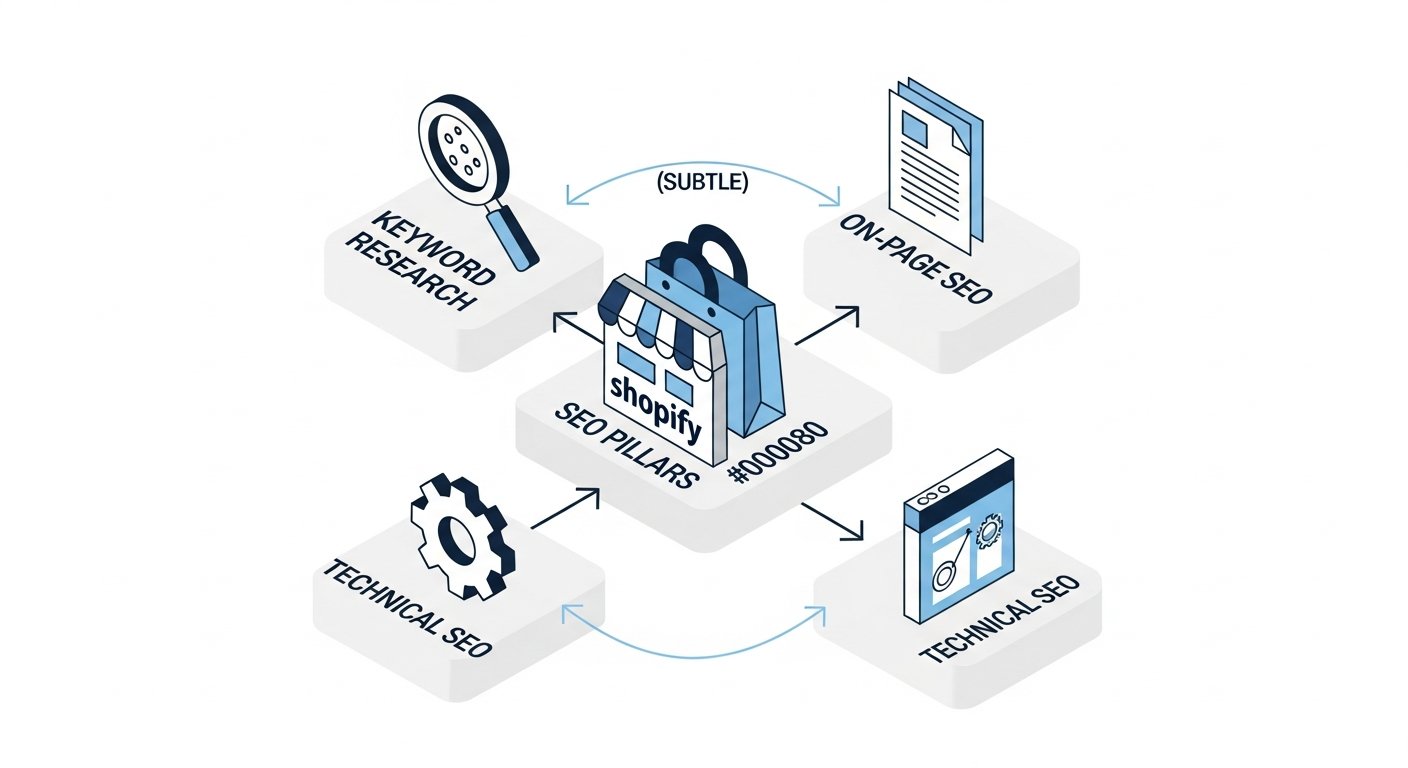
Technical SEO for Shopify involves optimizing your store’s infrastructure to help search engines crawl, index, and understand your content more effectively. While Shopify handles many technical aspects automatically, there are still crucial areas D2C merchants must address to ensure maximum visibility and a smooth user experience, both of which are critical ranking factors.
[INLINE IMAGE 2: place after fourth H2 | alt=”seo for shopify comparison illustration”]
Site Speed and Core Web Vitals
Page load speed is a critical ranking factor and directly impacts user experience. Slow sites lead to higher bounce rates and lower conversions. Google’s Core Web Vitals (CWV) — Largest Contentful Paint (LCP), First Input Delay (FID), and Cumulative Layout Shift (CLS) — are increasingly important metrics.
- Image Optimization: As mentioned, compress and optimize images. Use next-gen formats like WebP if your theme supports it or a third-party app can convert them.
- App Management: Every app you install can add code and slow down your site. Regularly audit your Shopify apps; uninstall unused ones and consider alternatives that are lightweight.
- Theme Choice: Opt for a well-coded, clean, and fast Shopify theme. Test different themes for performance before committing.
- Lazy Loading: Implement lazy loading for images and videos, so they only load when they enter the user’s viewport. Many modern Shopify themes include this.
- Minimize Code: Work with a developer to clean up unnecessary CSS and JavaScript if you’ve made extensive customizations.
- Monitor with Google PageSpeed Insights: Regularly test your Shopify store’s speed and CWV scores using Google PageSpeed Insights and Google Search Console’s Core Web Vitals report.
Mobile-Friendliness
A vast percentage of e-commerce traffic comes from mobile devices. Google uses mobile-first indexing, meaning it primarily uses the mobile version of your site for indexing and ranking. Ensure your Shopify store is perfectly optimized for mobile:
- Responsive Design: Most Shopify themes are responsive out-of-the-box, adapting to different screen sizes.
- Test Regularly: Use Google’s Mobile-Friendly Test tool and physically test your site on various mobile devices.
- Easy Navigation: Ensure menus, buttons, and product filters are easy to tap and interact with on smaller screens.
XML Sitemaps and Robots.txt
These files guide search engines on how to crawl and index your Shopify store:
- XML Sitemap: Shopify automatically generates and updates an XML sitemap (usually found at
yourstore.com/sitemap.xml). Submit this sitemap to Google Search Console to help Google discover all your pages efficiently. - Robots.txt: Shopify also manages your robots.txt file (
yourstore.com/robots.txt) to instruct search engine bots which pages to crawl or avoid. Generally, you shouldn’t need to edit this unless you have specific advanced needs (e.g., blocking internal search results pages).
Canonical Tags
Duplicate content can confuse search engines and dilute your SEO efforts. Shopify handles canonical tags (<link rel="canonical" href="/seo-for-shopify/...">) to prevent this for common e-commerce issues like products appearing in multiple collections or URL parameters. Verify that canonical tags are correctly pointing to the preferred version of your pages.
- Example: If a product is accessible via
/collections/shoes/product-aand/collections/new-arrivals/product-a, the canonical tag should point to the primary URL (e.g.,/products/product-a).
Broken Links and Redirects
Broken links (404 errors) create a poor user experience and waste crawl budget. Redirects (301 redirects) are crucial when you move pages, delete products, or change URLs.
- Regularly Audit: Use tools like Google Search Console or third-party SEO checkers to identify and fix 404 errors.
- Implement 301 Redirects: Whenever you delete a product, change a URL slug, or remove a collection, implement a 301 redirect from the old URL to the most relevant new URL. Shopify has a built-in redirects feature in the “Navigation” section.
HTTPS (SSL Certificate)
HTTPS encrypts data transferred between your store and your customers, ensuring security. Google uses HTTPS as a minor ranking signal. Shopify automatically provides a free SSL certificate for all stores. Ensure it’s active and your store loads securely.
International SEO (for Global D2C Brands)
If your Shopify store serves multiple countries or languages, consider these technical aspects:
- Hreflang Tags: Shopify uses
hreflangtags to tell search engines which language and regional version of a page to show to users. If you use Shopify Markets for international selling, these are usually handled automatically. Verify they are correctly implemented. - Country-Specific Domains/Subdomains: For advanced international targeting, consider country-specific domains (e.g., yourstore.de) or subdomains (e.g., de.yourstore.com), though Shopify Markets handles much of this within a single domain.
By keeping a close eye on these technical SEO aspects, D2C brands can ensure their Shopify store is not only user-friendly but also optimally structured for search engine discovery and ranking, forming a robust backbone for any SEO for Shopify strategy.
Off-Page SEO & Link Building for Shopify
While on-page and technical SEO focus on optimizing your Shopify store itself, off-page SEO encompasses all the activities performed outside your website to improve its search engine ranking. The most powerful off-page factor is link building – acquiring high-quality backlinks from other reputable websites. These links act as “votes of confidence,” signaling to search engines that your D2C brand is trustworthy, authoritative, and relevant.
Understanding Backlinks and Their Importance
A backlink is a link from one website to another. For SEO purposes, not all backlinks are created equal. Search engines value links based on several factors:
- Domain Authority/Page Authority: Links from highly authoritative and relevant websites carry more weight.
- Relevance: A link from a site in a similar industry or niche is more valuable than one from an unrelated site.
- Anchor Text: The clickable text of the link. Ideally, this should be descriptive and keyword-rich, but avoid overly optimized, exact-match anchor text, as it can appear spammy.
- Link Placement: In-content links (within the main body of an article) are typically more valuable than links in footers or sidebars.
- “Dofollow” vs. “Nofollow”: “Dofollow” links pass SEO value (link juice), while “nofollow” links generally do not. Focus on acquiring dofollow links, but remember that a healthy link profile includes both.
Building high-quality backlinks is a cornerstone of effective SEO for Shopify, telling Google that your store is a trusted resource.
Effective Link Building Strategies for D2C Brands
Link building requires effort and creativity, but the long-term rewards are substantial for your Shopify store’s SEO. Here are proven strategies:
- Content Marketing & Blogger Outreach:
- Create valuable, shareable content (blog posts, infographics, research reports, videos) that naturally attracts links.
- Identify influential bloggers, industry publications, and niche websites. Pitch your content to them, explaining why their audience would find it valuable and suggesting where a link to your Shopify store or specific content might fit.
- Guest Blogging:
- Write high-quality articles for other relevant blogs or industry publications. In return, you usually get an author bio with a link back to your Shopify store or a relevant product/collection page.
- Product Reviews & Collaborations:
- Send free products to influencers, bloggers, or journalists in your niche in exchange for an honest review. Many will link back to your product page.
- Collaborate with complementary D2C brands for cross-promotion and shared content, potentially earning mutual backlinks.
- Broken Link Building:
- Find broken links on authoritative websites in your niche (using tools like Ahrefs, Semrush, or Screaming Frog).
- Reach out to the website owner, inform them of the broken link, and suggest your relevant content as a replacement.
- Unlinked Brand Mentions:
- Monitor the web for mentions of your D2C brand or products that don’t include a link back to your Shopify store.
- Reach out to the website owner and politely request they turn the mention into a clickable link.
- Directory Submissions (Niche Specific):
- Submit your Shopify store to highly relevant, niche-specific directories, not general ones. Think industry associations, B Corp directories (if applicable), or local business listings.
- Local SEO (Citations):
- If your D2C brand has a physical presence, pop-up shops, or primarily serves a local market, local citations (mentions of your business name, address, and phone number — NAP) on directories like Google My Business, Yelp, etc., are crucial. While not always direct backlinks, they build local authority.
Tools for Link Building and Monitoring
Several tools can aid your link building efforts for your Shopify store:
- Ahrefs & Semrush: Industry-leading tools for backlink analysis, competitor research, content ideas, and broken link finding.
- Moz Link Explorer: Another robust tool for checking domain authority and analyzing backlink profiles.
- Google Search Console: Provides insights into who is linking to your site, though less detailed than premium tools.
- Hunter.io & VoilaNorbert: Tools for finding email addresses for outreach.
Link building is a continuous process. By consistently creating valuable content and proactively seeking out high-quality backlinks, your D2C brand can significantly enhance its authority and organic search performance, driving more traffic to your Shopify store.
Content Marketing & Blogging for Shopify SEO
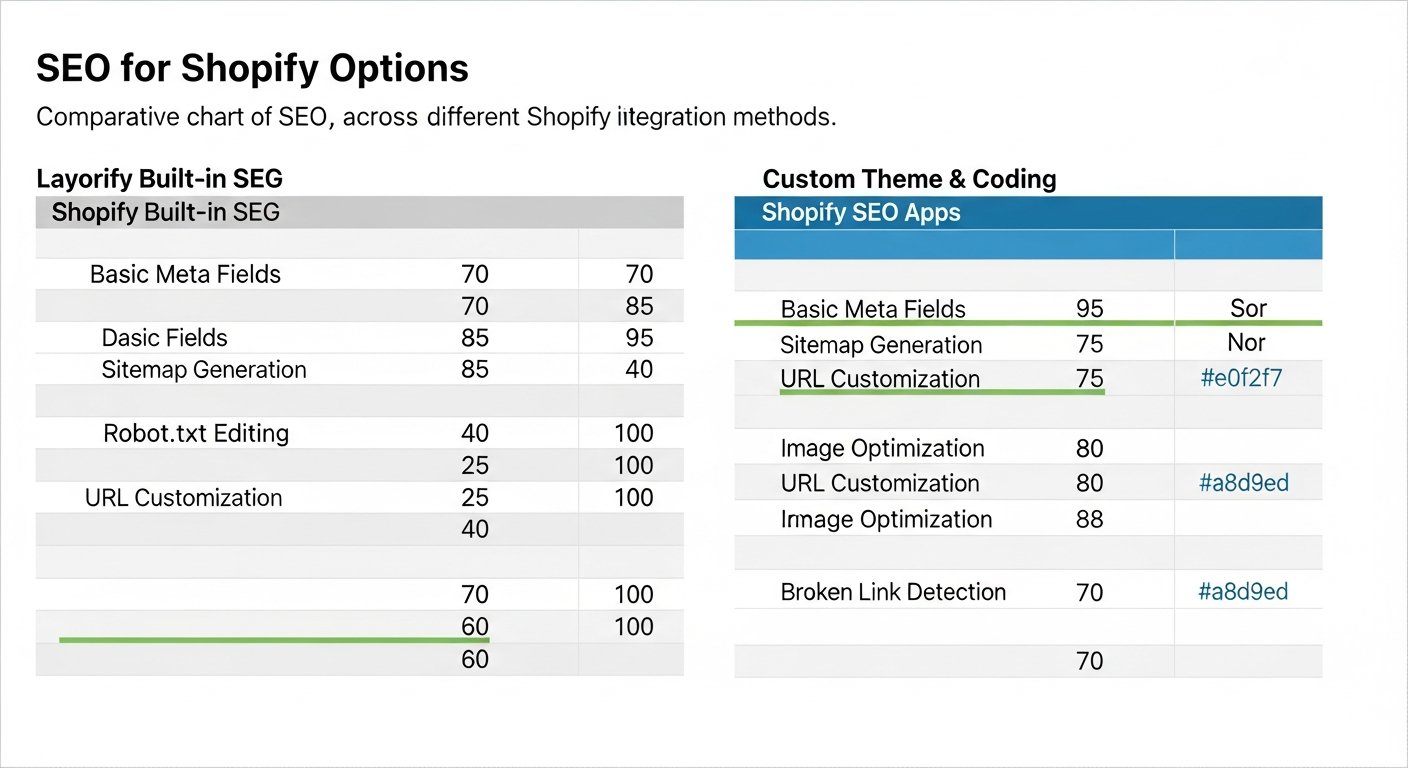
For D2C brands, content marketing is an indispensable component of a holistic SEO for Shopify strategy. A well-maintained blog on your Shopify store not only attracts informational queries but also builds brand authority, nurtures customer relationships, and provides valuable internal linking opportunities, all contributing to increased organic visibility and conversions.
The Strategic Role of a Shopify Blog
Your Shopify blog serves multiple critical functions beyond simply showcasing products:
- Attracting Top-of-Funnel Traffic: By creating content around informational keywords, you draw in users who are early in their buying journey, potentially before they even know your product exists.
- Building Brand Authority & Trust: High-quality, informative content positions your D2C brand as an expert in your niche, fostering trust and credibility with your audience.
- Supporting Product & Category Pages: Blog posts can provide detailed answers to common questions, explain product benefits, or offer buying guides that then link directly to relevant product or collection pages, driving qualified traffic deeper into your sales funnel.
- Generating Backlinks: Evergreen, valuable content is naturally more likely to earn backlinks from other websites, boosting your store’s overall domain authority.
- Engaging Your Audience: A blog provides a platform for storytelling, sharing your brand’s mission, and connecting with customers on a deeper level, transforming transactions into relationships.
- Long-Tail Keyword Targeting: Blog posts are perfect for targeting specific, long-tail keywords that individual product pages might not naturally capture.
Content Ideation & Planning for Your Shopify Blog
Don’t just write for writing’s sake. Plan your content strategically:
- Address Customer Pain Points: What problems do your products solve? Create content that directly addresses these issues.
- Answer FAQs: Turn common customer questions into blog posts. This can be identified from your customer support tickets, social media comments, or “People Also Ask” sections in Google.
- Buying Guides & Product Comparisons: Help customers make informed decisions by creating comprehensive guides (e.g., “The Ultimate Guide to Choosing Sustainable Coffee,” “Which Moisturizer is Right for Your Skin Type?”).
- “How-To” Guides & Tutorials: Show users how to use your products or achieve related goals (e.g., “How to Style Your New [Product],” “DIY Home Decor Ideas”).
- Behind-the-Scenes & Brand Story: Share your brand’s journey, values, and manufacturing processes. This resonates deeply with D2C consumers.
- Industry Trends & News: Position your brand as a thought leader by commenting on relevant industry trends.
- Competitor Content Analysis: See what content your competitors are producing that performs well and identify opportunities to create something even better.
Optimizing Blog Posts for SEO on Shopify
Every blog post should be optimized to maximize its search potential:
- Keyword Integration:
- Include your primary keyword in the blog post title, meta title, URL slug, and within the first paragraph.
- Naturally sprinkle related keywords and long-tail variations throughout the content.
- Avoid keyword stuffing; focus on natural language.
- Compelling Titles & Meta Descriptions:
- Craft headlines that grab attention and include your primary keyword (H1).
- Write a concise, enticing meta description (150-160 characters) that encourages clicks, including a CTA.
- Structured Content (H2, H3, Lists):
- Use heading tags (
<h2>,<h3>) to break up your content and improve readability. Each section should cover a distinct sub-topic. - Utilize bullet points and numbered lists to make complex information easy to digest.
- Use heading tags (
- Internal Linking:
- Crucially, link from your blog posts to relevant product pages, collection pages, and other related blog posts within your Shopify store. This boosts SEO by spreading link authority and improving user navigation.
- Use descriptive anchor text.
- External Linking:
- Link out to authoritative, credible sources to back up your claims and provide additional value to readers. Use “nofollow” for competitive links if unsure.
- Image & Video Optimization:
- Include relevant images, infographics, and videos to enhance engagement.
- Optimize image file names and alt text with descriptive keywords.
- Ensure media loads quickly.
- Call to Actions (CTAs):
- Strategically place CTAs within your blog posts that guide readers toward the next step, whether it’s exploring a product, signing up for a newsletter, or reading another related article.
By consistently publishing high-quality, SEO-optimized blog content, D2C brands can transform their Shopify store into a magnet for organic traffic, nurturing leads and solidifying their position as an industry leader.
Boost Your Shopify Store’s Conversion Rate with Proven Strategies
Local SEO for Shopify: Connecting with Nearby Customers
While many D2C brands operate primarily online, local SEO can still be a powerful asset, especially if you have a physical storefront, pop-up shops, or target customers in specific geographic regions. Even purely online brands can benefit from local signals if their products are niche or appeal to local communities. Integrating local SEO into your overall SEO for Shopify strategy can drive highly qualified, geographically targeted traffic.
The Fundamentals of Local SEO for D2C
Local SEO aims to increase visibility for local search queries (e.g., “sustainable coffee shop near me,” “artisan jewelry Brooklyn”). Key components include:
- Google My Business (GMB) Profile: This is the cornerstone of local SEO.
- Local Citations: Mentions of your business NAP (Name, Address, Phone number) across online directories.
- Local Keywords: Optimizing for keywords that include geographic modifiers.
- Customer Reviews: Positive reviews, especially on GMB and Yelp.
Optimizing Your Google My Business Profile
Your GMB profile is arguably the most important element for local search visibility. For your Shopify store, treat it like a mini-website:
- Claim and Verify Your Listing: Ensure your business is accurately represented and verified by Google.
- Complete All Information: Fill out every section comprehensively:
- Accurate NAP: Consistency across all online listings is paramount.
- Business Hours: Keep them updated.
- Categories: Choose the most relevant primary and secondary categories for your D2C brand (e.g., “Clothing Store,” “Home Goods Store”).
- Website Link: Link directly to your Shopify store.
- Description: Write a compelling, keyword-rich description of your business and what makes your D2C brand unique.
- Upload High-Quality Photos: Include exterior and interior shots (if applicable), product images, and your logo.
- Encourage & Respond to Reviews: Actively solicit reviews from happy customers. Respond promptly and professionally to all reviews, positive or negative. This significantly impacts local rankings and customer trust.
- Use GMB Posts: Regularly publish updates, offers, events, or new product announcements through GMB Posts to keep your profile active and engaging.
- Enable Messaging: Allow customers to contact you directly through GMB for convenience.
Local Citations & Directory Listings
Consistency of your NAP information across various online directories is crucial. Even if your Shopify store is purely online, local citations can still build authority.
- Key Directories: Beyond GMB, list your business on Yelp, Yellow Pages, industry-specific directories, and local chamber of commerce websites.
- NAP Consistency: Ensure your business name, address, and phone number are identical on all listings. Discrepancies can confuse search engines.
Local Keyword Optimization for Your Shopify Store
Integrate local keywords into your Shopify store’s content where appropriate:
- Product & Collection Pages: If you sell location-specific products (e.g., “San Francisco artisan chocolate,” “handmade jewelry Toronto”), include these geographic modifiers.
- Blog Posts: Create content around local events, city guides, or local partnerships that relate to your D2C brand (e.g., “Best Farmers Markets in Austin for Sustainable Goods” if you sell locally sourced products).
- About Us Page: Clearly state your brand’s location or the regions you serve.
- Service Area Pages: If you offer services or delivery to specific areas, create dedicated pages optimized for those locations.
Leveraging Local Reviews and Testimonials
Local reviews are incredibly influential. Display customer testimonials on your Shopify store and encourage customers to leave reviews on platforms like GMB, Yelp, and Facebook.
By implementing a robust local SEO strategy, D2C brands can effectively connect with potential customers in their geographic areas, driving both online and offline traffic to their Shopify store and maximizing local market penetration.
Advanced Shopify SEO Tactics & Future Trends
Once you’ve mastered the foundational and intermediate aspects of SEO for Shopify, it’s time to explore more advanced tactics and prepare your D2C brand for future search trends. Staying ahead of the curve ensures sustained growth and adaptability in an ever-evolving digital landscape.
Voice Search Optimization
With the proliferation of smart speakers and virtual assistants, voice search is becoming increasingly common. People speak differently than they type. Voice queries tend to be longer, more conversational, and often question-based.
- Focus on Long-Tail & Conversational Keywords: Optimize your content for natural language questions (e.g., “Where can I buy eco-friendly running shoes?” instead of “eco running shoes”).
- Answer Questions Directly: Structure your content (especially blog posts and FAQs) to directly answer common questions in a clear, concise manner, aiming for “position zero” (featured snippets).
- Local SEO Importance: Many voice searches have local intent (e.g., “What’s the best organic coffee near me?”). Strong local SEO supports voice search discoverability.
Leveraging AI for SEO Content Creation & Optimization
Artificial intelligence tools are rapidly changing the content landscape. While AI can’t replace human creativity and strategic oversight, it can be a powerful assistant for Shopify SEO:
- Content Ideation: Use AI to brainstorm blog topics, generate keyword ideas, and analyze competitor content gaps.
- Drafting & Outlining: AI can help generate initial drafts, outlines, and even snippets of content for product descriptions, meta descriptions, or blog sections, which you then refine and humanize.
- SEO Copywriting Assistance: AI tools can help optimize existing content by suggesting keyword variations, improving readability, and checking for common SEO errors.
- Data Analysis: AI can process vast amounts of SEO data more quickly, identifying patterns and opportunities that might be missed manually.
Caveat: Always review and edit AI-generated content for accuracy, brand voice, and originality. Google prioritizes helpful, human-centric content, regardless of how it was generated.
Video SEO for Shopify
Video content is highly engaging and increasingly preferred by consumers. Integrating videos into your Shopify store can significantly boost engagement and provide new SEO opportunities.
- Product Videos: Embed videos on product pages demonstrating usage, features, and benefits.
- How-To Guides & Tutorials: Create video versions of your blog content and embed them in relevant posts.
- YouTube Optimization: If you host videos on YouTube, optimize titles, descriptions, tags, and thumbnails with relevant keywords. Link back to your Shopify store in descriptions. YouTube is a massive search engine in itself.
- Transcripts: Provide transcripts for all videos to make them accessible and searchable. This adds valuable keyword-rich content to your pages.
Semantic SEO and Entity Optimization
Search engines are moving beyond simple keyword matching to understanding the meaning and context behind queries. Semantic SEO focuses on optimizing for topics and entities rather than just individual keywords.
- Topic Clusters: Instead of individual blog posts, create comprehensive topic clusters with a central “pillar page” and supporting cluster content linked to it. This demonstrates deep expertise in a subject area.
- Entity Recognition: Ensure your Shopify store clearly communicates what your brand “is” and what it “sells” by using consistent branding, clear product categorization, and structured data.
- Answer User Intent: Focus on truly understanding and fulfilling the intent behind search queries, not just
The Ultimate Guide to SEO for Shopify: Dominate Search & Boost Profits in 2026
Affiliate disclosure: This article may contain affiliate links. Recommendations are independent and editorially driven.
In the fiercely competitive landscape of e-commerce, simply having a Shopify store isn’t enough to guarantee success. To truly thrive and achieve sustainable D2C growth, your store needs to be discoverable. That’s where SEO for Shopify comes into play. Search Engine Optimization (SEO) is the art and science of improving your online store’s visibility in search engine results pages (SERPs), driving qualified organic traffic, and ultimately, converting browsers into loyal customers. For Shopify merchants, mastering SEO is not just an advantage; it’s a fundamental pillar of online store profitability.
This comprehensive guide from e-comprofits will demystify the complexities of SEO for Shopify, providing actionable strategies and expert insights to help your D2C brand outrank competitors, attract high-intent buyers, and build a powerful, profitable online presence. We’ll dive deep into everything from foundational keyword research to advanced technical optimizations, content marketing, and performance analysis, all tailored specifically for the Shopify ecosystem.
Why SEO for Shopify is Non-Negotiable for D2C Success
For any direct-to-consumer (D2C) brand, organic search traffic represents one of the highest-converting and most cost-effective channels available. Unlike paid advertising, which stops delivering results the moment your budget runs out, a strong SEO strategy provides compounding returns, generating a steady stream of qualified leads over the long term. Here’s why prioritizing SEO for your Shopify store is critical:
Sustainable Organic Traffic
Organic search is consistently one of the largest drivers of website traffic globally. By ranking highly for relevant keywords, your Shopify store can capture a significant portion of this traffic without paying per click. This sustained influx of visitors forms the bedrock of consistent sales and brand growth, reducing reliance on volatile paid channels.
Higher Quality Leads & Conversion Rates
Users actively searching for products or solutions related to your niche are typically further along in their buyer journey. They have an explicit need or intent. When your Shopify store appears in these search results, you’re meeting them precisely where they are, leading to higher click-through rates (CTRs) and, more importantly, significantly higher conversion rates compared to other traffic sources.
Cost-Effectiveness & ROI
While SEO requires an initial investment of time and resources, its long-term return on investment (ROI) is often unparalleled. Once your Shopify store achieves strong rankings, the organic traffic it generates is essentially “free.” This dramatically lowers your customer acquisition cost (CAC) and boosts overall profitability, a key metric for D2C brands.
Enhanced Brand Authority & Trust
Search engines like Google prioritize authoritative, trustworthy, and high-quality websites. By implementing robust SEO practices, your Shopify store signals to both search engines and potential customers that your brand is a reputable leader in its space. High rankings foster trust, build brand credibility, and establish your D2C brand as an expert resource, driving repeat business and brand loyalty.
Competitive Advantage
Many D2C brands underestimate the power of SEO, focusing instead on social media or paid ads. By investing strategically in SEO for Shopify, you can carve out a significant competitive advantage, outranking rivals who neglect their organic visibility. This allows you to capture market share and position your brand as the go-to option for your target audience.
Mastering Keyword Research for Your Shopify Store
The foundation of any successful SEO for Shopify strategy lies in meticulous keyword research. You need to understand what your target customers are typing into search engines to find products and information related to your niche. This isn’t just about high-volume keywords; it’s about finding the right keywords – those that indicate strong purchase intent and align with your D2C brand’s offerings.
[INLINE IMAGE 1: place after second H2 | alt=”seo for shopify concept illustration”]
Understanding Keyword Types and Intent
Keywords can be broadly categorized by their intent, which is crucial for targeting:
- Informational Keywords: Users are looking for information (e.g., “how to choose running shoes,” “benefits of organic cotton”). These are excellent for blog content.
- Navigational Keywords: Users are looking for a specific website or brand (e.g., “Nike official store,” “e-comprofits blog”).
- Commercial Investigation Keywords: Users are researching products before making a purchase (e.g., “best wireless headphones 2026,” “reviews of sustainable skincare brands”). These are perfect for product comparisons, buying guides, and collection pages.
- Transactional Keywords: Users are ready to buy (e.g., “buy running shoes online,” “discount code for [brand name],” “[product name] sale”). These are the bread and butter for product pages and category pages.
Tools and Techniques for Keyword Discovery
Effective keyword research for your Shopify store involves a combination of tools and strategic thinking:
- Brainstorm Seed Keywords: Start with broad terms related to your products, industry, and target audience. Think like your customer.
- Shopify Search Bar Data: Examine your own Shopify store’s internal search data. What are customers already looking for on your site? This provides direct insight into their needs.
- Competitor Analysis: Use tools like Ahrefs, Semrush, or Moz Keyword Explorer to see what keywords your top competitors are ranking for. Identify their strengths and weaknesses.
- Google Keyword Planner: A free tool from Google that provides search volume estimates and related keyword suggestions.
- Long-Tail Keywords: These are longer, more specific keyword phrases (e.g., “organic cotton baby clothes for sensitive skin”). They typically have lower search volume but much higher conversion rates due to their specificity and clear intent. Target these for product pages and specific blog posts.
- Google Search Suggestions & “People Also Ask”: When you type a query into Google, observe the auto-suggest results and the “People Also Ask” box. These are real user queries.
- Customer Feedback & Reviews: Pay attention to the language your customers use in reviews, support tickets, and social media. This natural language often contains valuable keywords.
Mapping Keywords to Your Shopify Store Structure
Once you have a solid list of relevant keywords, you need to strategically map them to your Shopify store’s pages:
- Homepage: Target broad, high-volume brand keywords and your most important category keywords.
- Collection/Category Pages: Optimize these for mid-to-long-tail keywords related to product categories (e.g., “women’s yoga leggings,” “artisanal coffee beans”).
- Product Pages: Focus on highly specific, transactional, and long-tail keywords (e.g., “XYZ brand eco-friendly running shoes size 9,” “hand-poured soy candle lavender scent”).
- Blog Posts: Utilize informational and commercial investigation keywords to answer common customer questions, provide buying guides, and establish authority (e.g., “how to care for linen bedding,” “best vegan protein powders”).
By effectively executing keyword research, you lay a strong foundation for your entire SEO for Shopify strategy, ensuring every piece of content and every page on your store is designed to attract the right audience.
On-Page SEO for Shopify: Optimizing Product & Collection Pages
On-page SEO refers to all the optimization efforts you can make directly on your Shopify store’s pages to improve their search engine rankings. For an e-commerce store, this primarily means optimizing your product and collection pages, which are your money-makers. Shopify provides excellent built-in SEO features, but knowing how to leverage them fully is key to unlocking organic growth.
Crafting Compelling Product Page SEO
Product pages are where conversions happen. Optimizing them for search engines ensures potential buyers find them, and optimizing them for users ensures they convert. Here’s how to nail product page SEO for Shopify:
- Product Title Optimization (H1 & Meta Title):
- Your product title serves as both the page’s
<h1>and the foundation for your meta title. - Include your primary target keyword naturally, preferably at the beginning.
- Make it descriptive and enticing, highlighting key features or benefits.
- For the meta title (visible in SERPs), aim for 50-60 characters. This is often auto-generated from your product title in Shopify, but you can edit it under the “Search engine listing preview” section.
- Your product title serves as both the page’s
- Rich Product Descriptions:
- Go beyond basic feature lists. Write engaging, unique, and detailed product descriptions that answer potential customer questions.
- Naturally integrate secondary keywords and long-tail variations without keyword stuffing.
- Highlight benefits, use cases, and what makes your product unique.
- Use formatting (bullet points, bold text) to improve readability.
- Aim for at least 200-300 words for competitive products.
- Image Optimization:
- Alt Text: Crucial for accessibility and SEO. Provide descriptive alt text for every product image, including the main keyword where appropriate (e.g., “Women’s organic cotton graphic tee with mountain print”).
- File Names: Rename image files descriptively before uploading (e.g.,
womens-organic-tee-mountain-print.jpg, notIMG_001.jpg). - File Size: Compress images to reduce file size without compromising quality. Large images slow down your site, impacting user experience and rankings. Shopify automatically optimizes image sizes, but starting with optimized images is always better.
- Schema Markup (Structured Data):
- Shopify themes often include built-in schema markup for products (Product Schema), which tells search engines about your product’s price, availability, reviews, and ratings. This enables rich snippets in SERPs, making your listing stand out.
- Verify your schema is working using Google’s Rich Results Test tool.
- Customer Reviews and UGC:
- User-generated content (UGC) like customer reviews is gold for SEO. It adds unique, keyword-rich content to your pages regularly.
- Reviews build trust and social proof, directly influencing conversion rates.
- Implement a review app (like Loox, Yotpo, or Judge.me) and actively encourage customers to leave reviews.
- Internal Linking:
- Link related products, collection pages, and relevant blog posts from your product descriptions. This helps search engines discover and understand the hierarchy of your store, distributing “link juice” and improving user navigation.
Optimizing Shopify Collection Pages
Collection pages (categories) are equally vital as they often target broader, higher-volume keywords than individual products. They act as hubs, guiding users to specific product lines.
- Collection Title & Meta Title:
- Optimize your collection title (
<h1>) with your primary collection keyword (e.g., “Organic Skincare Products,” “Men’s Leather Wallets”). - Ensure the meta title for the collection page is optimized, concise, and includes the keyword.
- Optimize your collection title (
- Collection Description:
- Write a unique, keyword-rich description for each collection. Many Shopify themes allow you to place this description above the product grid.
- Aim for 150-300 words, naturally integrating your main collection keyword and related terms.
- Use this space to explain what makes your collection unique, target specific buyer personas, and provide context.
- Internal Linking Structure:
- Ensure a clear, logical navigation hierarchy from your homepage to collections, and from collections to products.
- Link between related collections where it makes sense to improve discoverability.
- URL Structure:
- Shopify generally creates clean URLs, but ensure your collection URLs are short, descriptive, and include the primary keyword (e.g.,
yourstore.com/collections/organic-skincare).
- Shopify generally creates clean URLs, but ensure your collection URLs are short, descriptive, and include the primary keyword (e.g.,
General On-Page Best Practices for Shopify
- Meta Descriptions: While not a direct ranking factor, a compelling meta description (150-160 characters) encourages clicks from SERPs. Include your keyword and a strong call to action. Shopify allows you to edit this in the “Search engine listing preview.”
- H1, H2, H3 Tags: Use these heading tags correctly to structure your content, making it scannable for users and understandable for search engines. Ensure your main keyword is in the
<h1>. - Readability: Write clear, concise, and engaging copy. Use short paragraphs, bullet points, and bold text to break up content and improve user experience.
- Mobile-First Design: Shopify themes are generally responsive, but always test your site’s appearance and functionality on various mobile devices. Google prioritizes mobile-friendly sites.
Technical SEO for Shopify: Ensuring Search Engine Discoverability
Technical SEO for Shopify involves optimizing your store’s infrastructure to help search engines crawl, index, and understand your content more effectively. While Shopify handles many technical aspects automatically, there are still crucial areas D2C merchants must address to ensure maximum visibility and a smooth user experience, both of which are critical ranking factors.
[INLINE IMAGE 2: place after fourth H2 | alt=”seo for shopify comparison illustration”]
Site Speed and Core Web Vitals
Page load speed is a critical ranking factor and directly impacts user experience. Slow sites lead to higher bounce rates and lower conversions. Google’s Core Web Vitals (CWV) — Largest Contentful Paint (LCP), First Input Delay (FID), and Cumulative Layout Shift (CLS) — are increasingly important metrics.
- Image Optimization: As mentioned, compress and optimize images. Use next-gen formats like WebP if your theme supports it or a third-party app can convert them.
- App Management: Every app you install can add code and slow down your site. Regularly audit your Shopify apps; uninstall unused ones and consider alternatives that are lightweight.
- Theme Choice: Opt for a well-coded, clean, and fast Shopify theme. Test different themes for performance before committing.
- Lazy Loading: Implement lazy loading for images and videos, so they only load when they enter the user’s viewport. Many modern Shopify themes include this.
- Minimize Code: Work with a developer to clean up unnecessary CSS and JavaScript if you’ve made extensive customizations.
- Monitor with Google PageSpeed Insights: Regularly test your Shopify store’s speed and CWV scores using Google PageSpeed Insights and Google Search Console’s Core Web Vitals report.
Mobile-Friendliness
A vast percentage of e-commerce traffic comes from mobile devices. Google uses mobile-first indexing, meaning it primarily uses the mobile version of your site for indexing and ranking. Ensure your Shopify store is perfectly optimized for mobile:
- Responsive Design: Most Shopify themes are responsive out-of-the-box, adapting to different screen sizes.
- Test Regularly: Use Google’s Mobile-Friendly Test tool and physically test your site on various mobile devices.
- Easy Navigation: Ensure menus, buttons, and product filters are easy to tap and interact with on smaller screens.
XML Sitemaps and Robots.txt
These files guide search engines on how to crawl and index your Shopify store:
- XML Sitemap: Shopify automatically generates and updates an XML sitemap (usually found at
yourstore.com/sitemap.xml). Submit this sitemap to Google Search Console to help Google discover all your pages efficiently. - Robots.txt: Shopify also manages your robots.txt file (
yourstore.com/robots.txt) to instruct search engine bots which pages to crawl or avoid. Generally, you shouldn’t need to edit this unless you have specific advanced needs (e.g., blocking internal search results pages).
Canonical Tags
Duplicate content can confuse search engines and dilute your SEO efforts. Shopify handles canonical tags (
<link rel="canonical" href="/seo-for-shopify/...">) to prevent this for common e-commerce issues like products appearing in multiple collections or URL parameters. Verify that canonical tags are correctly pointing to the preferred version of your pages.- Example: If a product is accessible via
/collections/shoes/product-aand/collections/new-arrivals/product-a, the canonical tag should point to the primary URL (e.g.,/products/product-a).
Broken Links and Redirects
Broken links (404 errors) create a poor user experience and waste crawl budget. Redirects (301 redirects) are crucial when you move pages, delete products, or change URLs.
- Regularly Audit: Use tools like Google Search Console or third-party SEO checkers to identify and fix 404 errors.
- Implement 301 Redirects: Whenever you delete a product, change a URL slug, or remove a collection, implement a 301 redirect from the old URL to the most relevant new URL. Shopify has a built-in redirects feature in the “Navigation” section.
HTTPS (SSL Certificate)
HTTPS encrypts data transferred between your store and your customers, ensuring security. Google uses HTTPS as a minor ranking signal. Shopify automatically provides a free SSL certificate for all stores. Ensure it’s active and your store loads securely.
International SEO (for Global D2C Brands)
If your Shopify store serves multiple countries or languages, consider these technical aspects:
- Hreflang Tags: Shopify uses
hreflangtags to tell search engines which language and regional version of a page to show to users. If you use Shopify Markets for international selling, these are usually handled automatically. Verify they are correctly implemented. - Country-Specific Domains/Subdomains: For advanced international targeting, consider country-specific domains (e.g., yourstore.de) or subdomains (e.g., de.yourstore.com), though Shopify Markets handles much of this within a single domain.
By keeping a close eye on these technical SEO aspects, D2C brands can ensure their Shopify store is not only user-friendly but also optimally structured for search engine discovery and ranking, forming a robust backbone for any SEO for Shopify strategy.
Off-Page SEO & Link Building for Shopify
While on-page and technical SEO focus on optimizing your Shopify store itself, off-page SEO encompasses all the activities performed outside your website to improve its search engine ranking. The most powerful off-page factor is link building – acquiring high-quality backlinks from other reputable websites. These links act as “votes of confidence,” signaling to search engines that your D2C brand is trustworthy, authoritative, and relevant.
Understanding Backlinks and Their Importance
A backlink is a link from one website to another. For SEO purposes, not all backlinks are created equal. Search engines value links based on several factors:
- Domain Authority/Page Authority: Links from highly authoritative and relevant websites carry more weight.
- Relevance: A link from a site in a similar industry or niche is more valuable than one from an unrelated site.
- Anchor Text: The clickable text of the link. Ideally, this should be descriptive and keyword-rich, but avoid overly optimized, exact-match anchor text, as it can appear spammy.
- Link Placement: In-content links (within the main body of an article) are typically more valuable than links in footers or sidebars.
- “Dofollow” vs. “Nofollow”: “Dofollow” links pass SEO value (link juice), while “nofollow” links generally do not. Focus on acquiring dofollow links, but remember that a healthy link profile includes both.
Building high-quality backlinks is a cornerstone of effective SEO for Shopify, telling Google that your store is a trusted resource.
Effective Link Building Strategies for D2C Brands
Link building requires effort and creativity, but the long-term rewards are substantial for your Shopify store’s SEO. Here are proven strategies:
- Content Marketing & Blogger Outreach:
- Create valuable, shareable content (blog posts, infographics, research reports, videos) that naturally attracts links.
- Identify influential bloggers, industry publications, and niche websites. Pitch your content to them, explaining why their audience would find it valuable and suggesting where a link to your Shopify store or specific content might fit.
- Guest Blogging:
- Write high-quality articles for other relevant blogs or industry publications. In return, you usually get an author bio with a link back to your Shopify store or a relevant product/collection page.
- Product Reviews & Collaborations:
- Send free products to influencers, bloggers, or journalists in your niche in exchange for an honest review. Many will link back to your product page.
- Collaborate with complementary D2C brands for cross-promotion and shared content, potentially earning mutual backlinks.
- Broken Link Building:
- Find broken links on authoritative websites in your niche (using tools like Ahrefs, Semrush, or Screaming Frog).
- Reach out to the website owner, inform them of the broken link, and suggest your relevant content as a replacement.
- Unlinked Brand Mentions:
- Monitor the web for mentions of your D2C brand or products that don’t include a link back to your Shopify store.
- Reach out to the website owner and politely request they turn the mention into a clickable link.
- Directory Submissions (Niche Specific):
- Submit your Shopify store to highly relevant, niche-specific directories, not general ones. Think industry associations, B Corp directories (if applicable), or local business listings.
- Local SEO (Citations):
- If your D2C brand has a physical presence, pop-up shops, or primarily serves a local market, local citations (mentions of your business name, address, and phone number — NAP) on directories like Google My Business, Yelp, etc., are crucial. While not always direct backlinks, they build local authority.
Tools for Link Building and Monitoring
Several tools can aid your link building efforts for your Shopify store:
- Ahrefs & Semrush: Industry-leading tools for backlink analysis, competitor research, content ideas, and broken link finding.
- Moz Link Explorer: Another robust tool for checking domain authority and analyzing backlink profiles.
- Google Search Console: Provides insights into who is linking to your site, though less detailed than premium tools.
- Hunter.io & VoilaNorbert: Tools for finding email addresses for outreach.
Link building is a continuous process. By consistently creating valuable content and proactively seeking out high-quality backlinks, your D2C brand can significantly enhance its authority and organic search performance, driving more traffic to your Shopify store.
Content Marketing & Blogging for Shopify SEO
For D2C brands, content marketing is an indispensable component of a holistic SEO for Shopify strategy. A well-maintained blog on your Shopify store not only attracts informational queries but also builds brand authority, nurtures customer relationships, and provides valuable internal linking opportunities, all contributing to increased organic visibility and conversions.
The Strategic Role of a Shopify Blog
Your Shopify blog serves multiple critical functions beyond simply showcasing products:
- Attracting Top-of-Funnel Traffic: By creating content around informational keywords, you draw in users who are early in their buying journey, potentially before they even know your product exists.
- Building Brand Authority & Trust: High-quality, informative content positions your D2C brand as an expert in your niche, fostering trust and credibility with your audience.
- Supporting Product & Category Pages: Blog posts can provide detailed answers to common questions, explain product benefits, or offer buying guides that then link directly to relevant product or collection pages, driving qualified traffic deeper into your sales funnel.
- Generating Backlinks: Evergreen, valuable content is naturally more likely to earn backlinks from other websites, boosting your store’s overall domain authority.
- Engaging Your Audience: A blog provides a platform for storytelling, sharing your brand’s mission, and connecting with customers on a deeper level, transforming transactions into relationships.
- Long-Tail Keyword Targeting: Blog posts are perfect for targeting specific, long-tail keywords that individual product pages might not naturally capture.
Content Ideation & Planning for Your Shopify Blog
Don’t just write for writing’s sake. Plan your content strategically:
- Address Customer Pain Points: What problems do your products solve? Create content that directly addresses these issues.
- Answer FAQs: Turn common customer questions into blog posts. This can be identified from your customer support tickets, social media comments, or “People Also Ask” sections in Google.
- Buying Guides & Product Comparisons: Help customers make informed decisions by creating comprehensive guides (e.g., “The Ultimate Guide to Choosing Sustainable Coffee,” “Which Moisturizer is Right for Your Skin Type?”).
- “How-To” Guides & Tutorials: Show users how to use your products or achieve related goals (e.g., “How to Style Your New [Product],” “DIY Home Decor Ideas”).
- Behind-the-Scenes & Brand Story: Share your brand’s journey, values, and manufacturing processes. This resonates deeply with D2C consumers.
- Industry Trends & News: Position your brand as a thought leader by commenting on relevant industry trends.
- Competitor Content Analysis: See what content your competitors are producing that performs well and identify opportunities to create something even better.
Optimizing Blog Posts for SEO on Shopify
Every blog post should be optimized to maximize its search potential:
- Keyword Integration:
- Include your primary keyword in the blog post title, meta title, URL slug, and within the first paragraph.
- Naturally sprinkle related keywords and long-tail variations throughout the content.
- Avoid keyword stuffing; focus on natural language.
- Compelling Titles & Meta Descriptions:
- Craft headlines that grab attention and include your primary keyword (H1).
- Write a concise, enticing meta description (150-160 characters) that encourages clicks, including a CTA.
- Structured Content (H2, H3, Lists):
- Use heading tags (
<h2>,<h3>) to break up your content and improve readability. Each section should cover a distinct sub-topic. - Utilize bullet points and numbered lists to make complex information easy to digest.
- Use heading tags (
- Internal Linking:
- Crucially, link from your blog posts to relevant product pages, collection pages, and other related blog posts within your Shopify store. This boosts SEO by spreading link authority and improving user navigation.
- Use descriptive anchor text.
- External Linking:
- Link out to authoritative, credible sources to back up your claims and provide additional value to readers. Use “nofollow” for competitive links if unsure.
- Image & Video Optimization:
- Include relevant images, infographics, and videos to enhance engagement.
- Optimize image file names and alt text with descriptive keywords.
- Ensure media loads quickly.
- Call to Actions (CTAs):
- Strategically place CTAs within your blog posts that guide readers toward the next step, whether it’s exploring a product, signing up for a newsletter, or reading another related article.
By consistently publishing high-quality, SEO-optimized blog content, D2C brands can transform their Shopify store into a magnet for organic traffic, nurturing leads and solidifying their position as an industry leader.
Boost Your Shopify Store’s Conversion Rate with Proven Strategies
Local SEO for Shopify: Connecting with Nearby Customers
While many D2C brands operate primarily online, local SEO can still be a powerful asset, especially if you have a physical storefront, pop-up shops, or target customers in specific geographic regions. Even purely online brands can benefit from local signals if their products are niche or appeal to local communities. Integrating local SEO into your overall SEO for Shopify strategy can drive highly qualified, geographically targeted traffic.
The Fundamentals of Local SEO for D2C
Local SEO aims to increase visibility for local search queries (e.g., “sustainable coffee shop near me,” “artisan jewelry Brooklyn”). Key components include:
- Google My Business (GMB) Profile: This is the cornerstone of local SEO.
- Local Citations: Mentions of your business NAP (Name, Address, Phone number) across online directories.
- Local Keywords: Optimizing for keywords that include geographic modifiers.
- Customer Reviews: Positive reviews, especially on GMB and Yelp.
Optimizing Your Google My Business Profile
Your GMB profile is arguably the most important element for local search visibility. For your Shopify store, treat it like a mini-website:
- Claim and Verify Your Listing: Ensure your business is accurately represented and verified by Google.
- Complete All Information: Fill out every section comprehensively:
- Accurate NAP: Consistency across all online listings is paramount.
- Business Hours: Keep them updated.
- Categories: Choose the most relevant primary and secondary categories for your D2C brand (e.g., “Clothing Store,” “Home Goods Store”).
- Website Link: Link directly to your Shopify store.
- Description: Write a compelling, keyword-rich description of your business and what makes your D2C brand unique.
Local Citations & Directory Listings
Consistency of your NAP information across various online directories is crucial. Even if your Shopify store is purely online, local citations can still build authority.
- Key Directories: Beyond GMB, list your business on Yelp, Yellow Pages, industry-specific directories, and local chamber of commerce websites.
- NAP Consistency: Ensure your business name, address, and phone number are identical on all listings. Discrepancies can confuse search engines.
Local Keyword Optimization for Your Shopify Store
Integrate local keywords into your Shopify store’s content where appropriate:
- Product & Collection Pages: If you sell location-specific products (e.g., “San Francisco artisan chocolate,” “handmade jewelry Toronto”), include these geographic modifiers.
- Blog Posts: Create content around local events, city guides, or local partnerships that relate to your D2C brand (e.g., “Best Farmers Markets in Austin for Sustainable Goods” if you sell locally sourced products).
- About Us Page: Clearly state your brand’s location or the regions you serve.
- Service Area Pages: If you offer services or delivery to specific areas, create dedicated pages optimized for those locations.
Leveraging Local Reviews and Testimonials
Local reviews are incredibly influential. Display customer testimonials on your Shopify store and encourage customers to leave reviews on platforms like GMB, Yelp, and Facebook.
By implementing a robust local SEO strategy, D2C brands can effectively connect with potential customers in their geographic areas, driving both online and offline traffic to their Shopify store and maximizing local market penetration.
Advanced Shopify SEO Tactics & Future Trends
Once you’ve mastered the foundational and intermediate aspects of SEO for Shopify, it’s time to explore more advanced tactics and prepare your D2C brand for future search trends. Staying ahead of the curve ensures sustained growth and adaptability in an ever-evolving digital landscape.
Voice Search Optimization
With the proliferation of smart speakers and virtual assistants, voice search is becoming increasingly common. People speak differently than they type. Voice queries tend to be longer, more conversational, and often question-based.
- Focus on Long-Tail & Conversational Keywords: Optimize your content for natural language questions (e.g., “Where can I buy eco-friendly running shoes?” instead of “eco running shoes”).
- Answer Questions Directly: Structure your content (especially blog posts and FAQs) to directly answer common questions in a clear, concise manner, aiming for “position zero” (featured snippets).
- Local SEO Importance: Many voice searches have local intent (e.g., “What’s the best organic coffee near me?”). Strong local SEO supports voice search discoverability.
Leveraging AI for SEO Content Creation & Optimization
Artificial intelligence tools are rapidly changing the content landscape. While AI can’t replace human creativity and strategic oversight, it can be a powerful assistant for Shopify SEO:
- Content Ideation: Use AI to brainstorm blog topics, generate keyword ideas, and analyze competitor content gaps.
- Drafting & Outlining: AI can help generate initial drafts, outlines, and even snippets of content for product descriptions, meta descriptions, or blog sections, which you then refine and humanize.
- SEO Copywriting Assistance: AI tools can help optimize existing content by suggesting keyword variations, improving readability, and checking for common SEO errors.
- Data Analysis: AI can process vast amounts of SEO data more quickly, identifying patterns and opportunities that might be missed manually.
Caveat: Always review and edit AI-generated content for accuracy, brand voice, and originality. Google prioritizes helpful, human-centric content, regardless of how it was generated.
Video SEO for Shopify
Video content is highly engaging and increasingly preferred by consumers. Integrating videos into your Shopify store can significantly boost engagement and provide new SEO opportunities.
- Product Videos: Embed videos on product pages demonstrating usage, features, and benefits.
- How-To Guides & Tutorials: Create video versions of your blog content and embed them in relevant posts.
- YouTube Optimization: If you host videos on YouTube, optimize titles, descriptions, tags, and thumbnails with relevant keywords. Link back to your Shopify store in descriptions. YouTube is a massive search engine in itself.
- Transcripts: Provide transcripts for all videos to make them accessible and searchable. This adds valuable keyword-rich content to your pages.
Semantic SEO and Entity Optimization
Search engines are moving beyond simple keyword matching to understanding the meaning and context behind queries. Semantic SEO focuses on optimizing for topics and entities rather than just individual keywords.
- Topic Clusters: Instead of individual blog posts, create comprehensive topic clusters with a central “pillar page” and supporting cluster content linked to it. This demonstrates deep expertise in a subject area.
- Entity Recognition: Ensure your Shopify store clearly communicates what your brand “is” and what it “sells” by using consistent branding, clear product categorization, and structured data.
- Answer User Intent: Focus on truly understanding and fulfilling the intent behind search queries, not just
