
Ecommerce Sales Tax Compliance: A State-by-State Guide for Online Stores
Affiliate disclosure: This article may contain affiliate links. Recommendations are independent and editorially driven.
For online store owners, the dream of unlimited reach and effortless transactions often collides with the complex reality of sales tax compliance. Navigating the labyrinthine world of state-specific regulations can feel like a full-time job in itself, distracting from critical growth strategies like conversion rate optimization and digital marketing. This comprehensive guide is designed to demystify ecommerce sales tax, offering a clear, state-by-state roadmap for D2C brands to ensure compliance and avoid costly penalties.
The landscape of sales tax for online businesses has undergone a seismic shift, primarily catalyzed by the landmark Supreme Court decision in South Dakota v. Wayfair, Inc. This ruling abolished the traditional physical presence standard for sales tax nexus, ushering in the era of “economic nexus.” Suddenly, online retailers could be required to collect sales tax in states where they had no brick-and-mortar store, employees, or even inventory. For many, this has transformed sales tax from a minor accounting footnote into a major operational hurdle, directly impacting profitability and expansion plans.
Our focus today extends beyond merely defining terms; we aim to provide actionable insights into how you, as an ecommerce merchant, can build a robust sales tax strategy. We’ll explore the critical distinctions between origin-based and destination-based sales tax, demystify the Streamlined Sales and Use Tax Agreement, and provide practical advice on implementing solutions that automate this often-overwhelming process. Whether you’re a budding Shopify entrepreneur or a seasoned D2C brand, understanding these rules is paramount to sustainable success in the online marketplace.
Understanding Sales Tax Nexus: The Foundation of Your Obligation
Before you can collect a single cent of sales tax, you must first determine if you have a legal obligation to do so in a particular state. This obligation is known as “nexus,” a sufficient connection between your business and a state that empowers that state to compel you to collect and remit sales tax. Traditionally, this was straightforward, relying almost entirely on physical presence. However, the digital age and the Wayfair decision have expanded this definition significantly.
Physical Nexus: Traditional Connections
Physical nexus remains a primary trigger for sales tax obligations. If your business has a physical presence in a state, you almost certainly have sales tax nexus there. Common activities that establish physical nexus include:
- Having a physical store, office, or warehouse: Even a small corporate office or a leased self-storage unit can qualify.
- Employing staff: Even a single employee, contractor, or sales representative working in a state can create nexus.
- Storing inventory: This is particularly relevant for businesses using Fulfillment by Amazon (FBA) or other third-party logistics (3PL) providers. Wherever your inventory is stored, you likely have physical nexus.
- Temporary presence: Attending trade shows, pop-up shops, or even delivering goods using your own vehicles in a state can establish a temporary, or even permanent, physical nexus.
- Affiliates: In some states, having marketing affiliates can trigger nexus if they conduct business on your behalf.
Understanding where your physical footprint extends is the critical first step. Many ecommerce businesses mistakenly believe that because they operate solely online, they have no physical presence outside their home state. This is a dangerous assumption, especially with the widespread use of FBA and 3PLs.
Economic Nexus: The Modern Mandate
[INLINE IMAGE 1: place after second H2 | alt=”Ecommerce Sales Tax Compliance: A State-by-State Guide for Online Stores concept illustration showing a complex web of requirements for physical and economic nexus across different states”]
The concept of economic nexus fundamentally changed the sales tax landscape for ecommerce. Post-Wayfair, any state can impose sales tax collection duties on an out-of-state seller if that seller meets certain economic thresholds within the state. These thresholds are typically defined by:
- Gross sales revenue: A specific dollar amount of sales into the state (e.g., $100,000).
- Number of transactions: A specific number of separate sales transactions into the state (e.g., 200 transactions).
Most states require one or both of these thresholds to be met during the current or preceding calendar year. It’s crucial to note that these thresholds vary significantly by state. Some states have a dollar threshold only, some a transaction count only, and many have a “either/or” condition where meeting one of the two triggers nexus. Complicating matters further, some states count all sales towards the threshold, while others only count taxable sales.
The dynamic nature of these thresholds means that ecommerce businesses must continuously monitor their sales activity in every state to determine if and when they cross a reporting threshold. Failure to do so can result in back taxes, penalties, and interest.
Marketplace Facilitator Laws: Simplifying (or Complicating?) Things
Adding another layer to the compliance puzzle are marketplace facilitator laws. These laws require online marketplaces (like Amazon, eBay, Etsy, and Walmart) to collect and remit sales tax on behalf of their third-party sellers. This has significantly simplified sales tax for many sellers who primarily sell through these platforms, as the marketplace assumes the burden of collection and remittance.
- Benefits: For sellers strictly operating on platforms like Amazon FBA, this often means they don’t need to register for sales tax in states where Amazon is the facilitator, even if they have physical nexus due to FBA inventory. The marketplace collects and remits for those sales.
- Caveats: If you also sell through your own Shopify store, you are responsible for collecting and remitting sales tax on those direct sales. In states where marketplace facilitator laws are in effect, marketplace sales typically count towards your economic nexus thresholds. So, even if Amazon handles the tax for its sales, those sales might still push your direct-to-consumer store over an economic nexus threshold, obligating you to collect tax on your own website sales.
Determining Sales Tax Rates: Origin-Based vs. Destination-Based
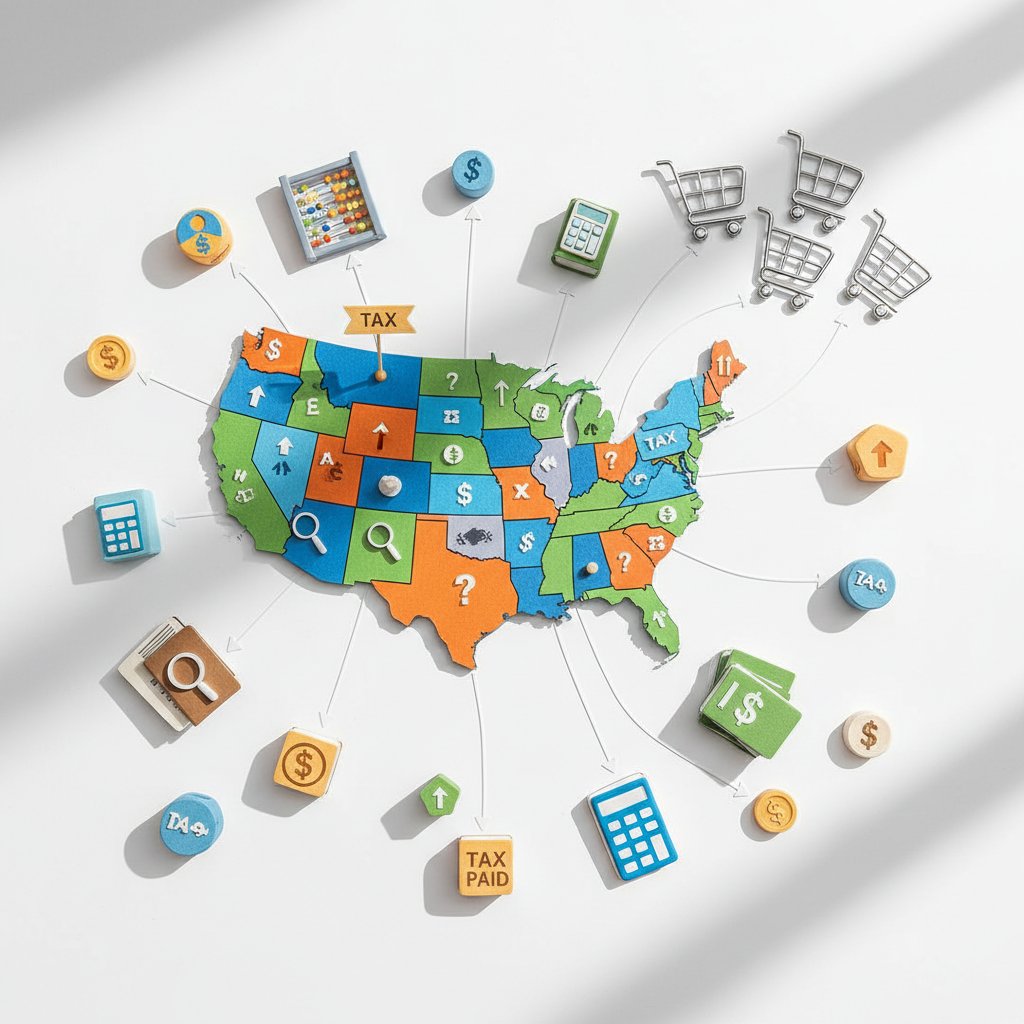
Once you’ve established nexus in a state, the next challenge is to calculate the correct sales tax rate. This is where the distinction between origin-based and destination-based sales tax becomes critical, and it often dictates the complexity of your tax calculation process.
Origin-Based Sales Tax States
In origin-based states, the sales tax rate you charge is determined by the location of your business (the origin) within that state. If your business has a physical location in an origin-based state, you would apply the sales tax rate from that specific location—including state, county, and local taxes—to all taxable sales made within that state, regardless of where the customer is located within the state. For out-of-state sellers, if you’ve established economic nexus in an origin-based state, you generally apply the state-wide sales tax rate, as you don’t have a specific “origin” within the state. However, the rules can vary, making precise understanding crucial.
Currently, the following states primarily use an origin-based sales tax system for in-state sellers:
- Arizona
- Illinois
- Mississippi
- Missouri
- New Mexico
- Ohio
- Pennsylvania
- Tennessee
- Texas
- Utah
- Virginia
It’s vital to remember that “primarily” is key here; some states may have hybrid systems or specific exceptions for certain types of goods or services. Always verify with the state’s tax authority or trusted tax advisor.
Destination-Based Sales Tax States
The vast majority of states, and arguably the more complex ones for ecommerce, use a destination-based sales tax system. In these states, the sales tax rate you charge is determined by the shipping address or the delivery location of the customer (the destination). This means that for every single order, you need to calculate the state, county, city, and special district taxes that apply to that specific address. Given the thousands of taxing jurisdictions within many destination-based states, this can lead to millions of potential tax rates.
For an ecommerce business with nexus in any of these states, accurate address lookup and real-time tax calculation are indispensable tools. Mistakes here can lead to under-collection (meaning you owe the difference) or over-collection (leading to customer dissatisfaction and potential refunds).
All states not listed under origin-based systems, and which collect sales tax, generally follow a destination-based model. This includes highly populated states like California, New York, Florida, and many more.
The Streamlined Sales and Use Tax Agreement (SST)
In an effort to simplify multi-state sales tax compliance, many states have joined the Streamlined Sales and Use Tax Agreement (SST). SST is a cooperative effort that aims to simplify sales tax collection and administration for sellers and states. Member states agree to adopt uniform definitions, simplify tax rate structures, allow for single-point registration, and provide free sales tax calculation and filing services through Certified Service Providers (CSPs).
- Benefits for Sellers: If you are required to collect sales tax in an SST member state, registering through the SST Governing Board allows you to register in multiple states simultaneously. For qualifying remote sellers, using a CSP can mean the CSP handles all tax calculations, collections, and filings, and the state may even cover the CSP fees.
- State Participation: While SST aims for uniformity, not all sales tax states are members, and even within member states, some local jurisdictions may maintain their own rules. There are currently 24 SST member states.
Resale Certificates: Avoiding Double Taxation
For D2C brands that also engage in wholesale or business-to-business (B2B) sales, understanding resale certificates is crucial. A resale certificate allows a buyer to purchase goods without paying sales tax, provided those goods are intended for resale. The buyer then collects sales tax when they sell the item to their end consumer. This prevents “double taxation” on the same product.
- Seller’s Responsibility: If you sell to another business, it’s your responsibility to obtain a valid resale certificate from them in the states where you have nexus. Failure to do so means you may be liable for the uncollected sales tax if audited.
- Compliance: Resale certificates must be properly documented and often need to be renewed. Many tax automation software solutions include features for managing these certificates.
Effectively managing these distinctions—origin vs. destination, SST participation, and resale certificates—is paramount to accurate sales tax collection and compliance, especially as your ecommerce operations scale nationally.
Ecommerce Sales Tax Compliance: State-by-State Guide (Excluding Alaska, Delaware, Montana, New Hampshire, Oregon)
This section provides a state-by-state look at economic nexus thresholds for the 45 states (plus D.C.) that impose a statewide sales tax, along with other critical considerations for ecommerce merchants. Remember, these thresholds apply to sales into the state, not necessarily where your business is located.
Always verify the most current thresholds and rules directly with each state’s department of revenue or consult with a qualified tax professional. This guide is for informational purposes and not tax advice.
[INLINE IMAGE 2: place after fourth H2 | alt=”Ecommerce Sales Tax Compliance: A State-by-State Guide for Online Stores comparison illustration showing various state flags and their respective sales tax rates and economic nexus thresholds”]
Most states define “gross sales” for economic nexus purposes as the total sales amount, regardless of whether the product sold was taxable or exempt. “Transactions” generally refer to individual sales events. The look-back period is typically the current or preceding calendar year.
| State | Economic Nexus Threshold (Gross Sales / Transactions) | Notes & Exceptions for E-commerce | |
|---|---|---|---|
| Alabama | $250,000 | Simplified Sellers Use Tax (SSUT) for remote sellers. Allows collection of a flat 8% state rate instead of local rates. Physical presence also creates nexus. | |
| Arizona | $100,000 (starting 2026) | Transaction Privilege Tax (TPT) is an excise tax on the vendor, not a sales tax on the buyer. Origin-based for in-state; destination for out-of-state. | |
| Arkansas | $100,000 or 200 transactions | SST member. Follows destination-based for remote sellers. | |
| California | $500,000 | Destination-based. One of the highest thresholds, but also a populous state. | |
| Colorado | $100,000 | Home rule state. Many local jurisdictions administer their own sales tax, adding complexity. Remote sellers typically collect state and local rates based on destination. | |
| Connecticut | $100,000 and 200 transactions | SST member. Destination-based. | |
| District of Columbia | $100,000 or 200 transactions | Single jurisdiction, destination-based. | |
| Florida | $100,000 | Destination-based. No transaction threshold. | |
| Georgia | $100,000 or 200 transactions | Destination-based. | |
| Hawaii | $100,000 or 200 transactions | General Excise Tax (GET) is unique, applied to gross receipts of businesses. Vendors pass cost to consumer. | |
| Idaho | $100,000 | SST member. Destination-based. | |
| Illinois | $100,000 or 200 transactions | Origin-based for in-state; destination for out-of-state remote retailers. Complexity due to “home rule” for some localities. Setting up tax settings in Shopify for Illinois specifically can be intricate. | |
| Indiana | $100,000 or 200 transactions | SST member. Destination-based. | |
| Iowa | $100,000 or 200 transactions | SST member. Destination-based. | |
| Kansas | $100,000 | One of the few states with only a dollar threshold. Destination-based. | |
| Kentucky | $100,000 or 200 transactions | SST member. Destination-based. | |
| Louisiana | $100,000 or 200 transactions | Complex state due to parish-level administration of sales tax. Centralized registration and reporting for remote sellers helps. | |
| Maine | $100,000 or 200 transactions | Destination-based. | |
| Maryland | $100,000 or 200 transactions | Destination-based. | |
| Massachusetts | $100,000 and 200 transactions | Unusual “and” condition (must meet BOTH). Destination-based. | |
| Michigan | $100,000 or 200 transactions | SST member. Destination-based. | |
| Minnesota | $100,000 or 200 transactions | SST member. Destination-based. | |
| Mississippi | $250,000 | Higher dollar threshold. Origin-based for in-state sellers. | |
| Missouri | $100,000 (starting 2026) | Latest state to implement economic nexus. Origin-based for in-state sellers. | |
| Nebraska | $100,000 or 200 transactions | SST member. Destination-based. | |
| Nevada | $100,000 or 200 transactions | Destination-based. | |
| New Jersey | $100,000 or 200 transactions | Destination-based. | |
| New Mexico | $100,000 (Gross Receipts) | The “Taxation and Revenue Department” assesses Gross Receipts Tax (GRT), which is unique from sales tax. Origin-based. | |
| New York | $500,000 and 100 transactions | Another state with an “and” condition for economic nexus. Destination-based. | |
| North Carolina | $100,000 or 200 transactions | SST member. Destination-based. | |
| North Dakota | $100,000 or 200 transactions | SST member. Destination-based. | |
| Ohio | $100,000 or 200 transactions | SST member. Generally origin-based for in-state; destination for remote. | |
| Oklahoma | $100,000 | SST member. Destination-based. | |
| Pennsylvania | $100,000 | Origin-based for in-state. No municipal sales taxes, simplifying things slightly. | |
| Rhode Island | $100,000 or 200 transactions | Destination-based. | |
| South Carolina | $100,000 | Destination-based. | |
| South Dakota | $100,000 or 200 transactions | The state at the heart of the Wayfair decision. SST member. Destination-based. | |
| Tennessee | $100,000 | Origin-based for in-state. Note: Tennessee has state-imposed single article caps on sales tax. | |
| Texas | $500,000 | Higher dollar threshold. Origin-based for in-state sellers if “place of business” is involved. | |
| Utah | $100,000 or 200 transactions | SST member. Generally origin-based for in-state; destination for remote. | |
| Vermont | $100,000 or 200 transactions | SST member. Destination-based. | |
| Virginia | $100,000 or 200 transactions | Origin-based for in-state; destination for remote. | |
| Washington | $100,000 | Destination-based. Business & Occupation (B&O) tax also applies to gross receipts. | |
| West Virginia | $100,000 or 200 transactions | SST member. Destination-based. | |
| Wisconsin | $100,000 | SST member. Destination-based. | |
| Wyoming | $100,000 or 200 transactions | SST member. Destination-based. |
States with No Statewide Sales Tax: Alaska, Delaware, Montana, New Hampshire, and Oregon do not have a statewide sales tax. However, be aware that Alaska has certain local sales taxes that may apply in some jurisdictions.
Advanced Sales Tax Scenarios for D2C Brands
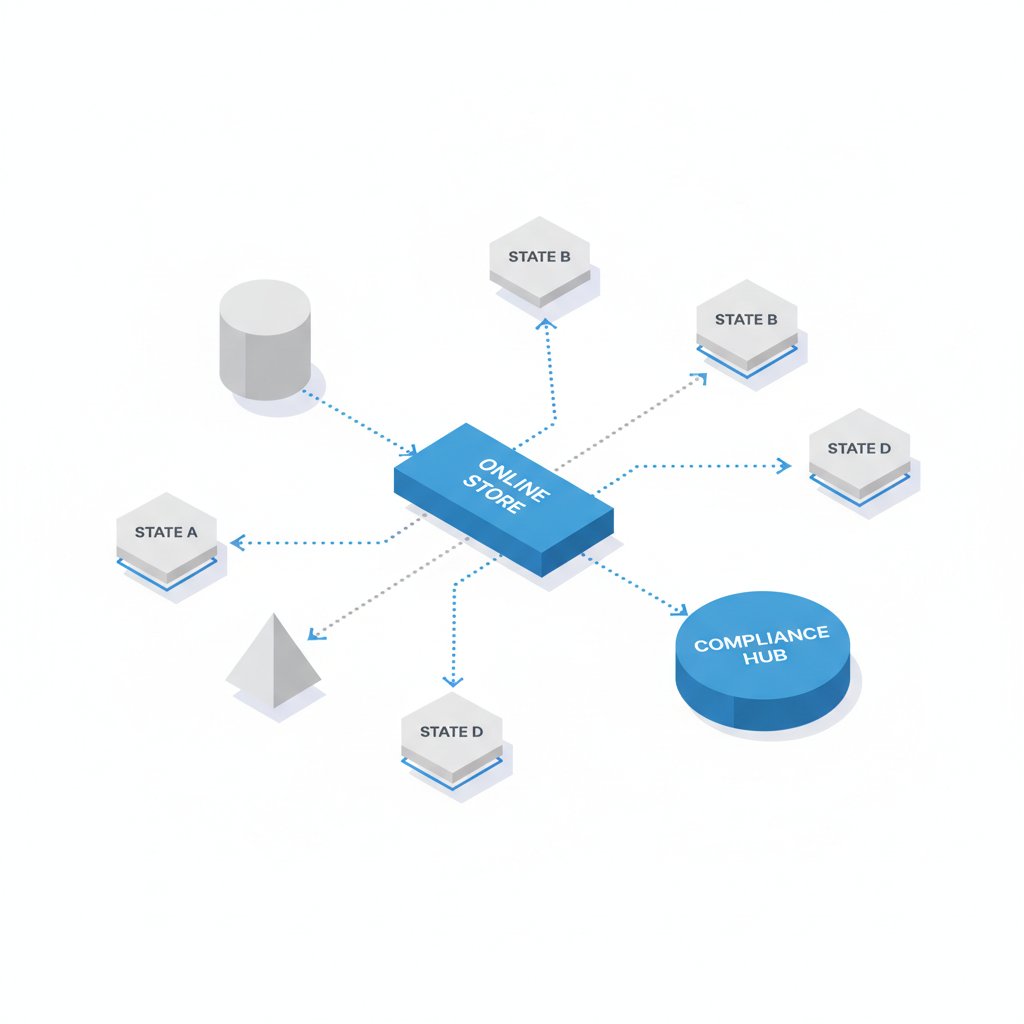
Beyond the fundamental nexus and rate determination, ecommerce merchants frequently encounter more nuanced situations that can complicate sales tax compliance. Addressing these proactively can prevent headaches down the line.
Dropshipping and Sales Tax Nexus
Dropshipping adds a unique layer of complexity to sales tax. In a dropshipping model, you (the retailer) take the order, but a third-party supplier ships the product directly to the customer. This arrangement can create different nexus implications:
- Your Nexus: As the retailer, your nexus obligations remain the same (physical and economic). If you have nexus in the customer’s state, you are generally responsible for collecting sales tax from the customer.
- Supplier’s Nexus: If your dropship supplier has nexus in your customer’s state, they might be obligated to charge you sales tax on the wholesale purchase. To avoid this, you may need to provide your supplier with a valid resale certificate, if applicable in that state.
- “Double Nexus” Trap: Be aware of scenarios where both you and your supplier could be seen as having nexus in the customer’s state, creating potential for confusion or double liability if not managed correctly.
The key is to understand not only your own nexus but also the nexus of your dropshipping partners and how that impacts the flow of sales tax through the transaction chain.
Multiple 3PL Fulfillment Centers and Inventory Nexus
Many D2C brands leverage multiple 3PLs (third-party logistics providers) to optimize shipping times and costs. While beneficial for logistics, this strategy inevitably expands your physical nexus footprint.
- Inventory Allocation: Wherever your inventory is stored – be it an FBA warehouse, a Shopify Fulfillment Network location, or a private 3PL warehouse – you likely establish physical nexus in that state. This is true even if you only have a few units in a specific location for a short period.
- Monitoring: You must continuously monitor the locations where your inventory is stored. Many 3PLs operate across numerous states, meaning your nexus profile can change frequently. Software solutions that integrate with your inventory management system can help track this dynamically.
- Impact on Economic Nexus: Physical nexus from inventory storage supersedes economic nexus in many cases, meaning you have to register and collect tax regardless of whether you meet economic thresholds in those inventory states.
Taxability of SaaS, Digital Goods, and Services
The tax treatment of non-physical products varies wildly by state and can be particularly challenging for D2C brands selling information products, software, or digital art.
- Digital Goods: These include downloadable content (e-books, music, software), streaming services, and digital subscriptions. Some states consider them taxable, others exempt, and some differentiate based on whether they are “canned” (off-the-shelf) or customized.
- Software as a Service (SaaS): The taxability of SaaS is a rapidly evolving area. Many states consider SaaS a service and thus exempt, but an increasing number are classifying it as taxable in various ways (e.g., as part of a “true object” test or based on “canned software” rules).
- Services: Most services are generally exempt from sales tax, but there are numerous exceptions (e.g., landscaping, cleaning, certain professional services). For D2C brands, this might apply to custom design services or repair services.
Consulting each state’s department of revenue guidance (or using a specialized tax professional) is essential if your product mix includes digital goods or services, as misclassifications can lead to significant audit exposure. Many best ecommerce tax software solutions have robust databases for the taxability of different product types.
Registering for Sales Tax Permits
Once you’ve determined where you have nexus, the next crucial step is to register for a sales tax permit (or seller’s permit) in each of those states. This is not optional; it’s a legal requirement. Collecting sales tax without a valid permit is illegal and can lead to severe penalties.
The Registration Process
- Identify Nexus States: Based on physical and economic nexus rules, create a definitive list of states where you are required to collect sales tax.
- Gather Information: You’ll need specific business information for each registration, including:
- Legal business name and address
- Federal Employer Identification Number (EIN)
- Business structure (sole proprietorship, LLC, corporation, etc.)
- NAICS code or business activity description
- Key personnel information (owner/officer names, SSNs)
- Anticipated first date of sales in the state
- Apply Directly or via SST:
- Directly: Most states have an online portal for sales tax registration through their Department of Revenue or equivalent body. This can be time-consuming for multiple states.
- SST: If you’re registering in multiple Streamlined Sales Tax (SST) member states, you can use the SST multi-state registration system, which simplifies the process significantly.
- Managed Service: Tax automation platforms like Avalara or TaxJar also offer services to manage state registrations on your behalf.
- Receive Permit: After your application is processed, the state will issue a sales tax permit or license number. Keep this record safely.
It’s important to register *before* you start collecting sales tax. Retroactive registration can sometimes trigger audits or penalties for previous uncollected tax.
Collecting and Remitting Sales Tax
With permits in hand, your focus shifts to the ongoing task of accurate collection and timely remittance.
Integrating Sales Tax into Your E-commerce Platform
Modern ecommerce platforms like Shopify, BigCommerce, Magento, and WooCommerce offer varying degrees of built-in sales tax functionality. However, for comprehensive compliance, especially with economic nexus and destination-based rates, integrating with a dedicated sales tax software is often the most reliable approach.
- Platform Settings: Basic settings allow you to define taxable products, tax rates for your home state, and sometimes even rates for specific locales. However, managing complex destination-based taxes for multiple nexus states manually is highly challenging and prone to error.
- Sales Tax Automation Software: Solutions like Avalara, TaxJar, and Vertex integrate directly with your ecommerce platform. They leverage sophisticated databases to:
- Determine nexus based on your sales data.
- Automatically apply the correct sales tax rate at checkout based on the customer’s shipping address.
- Track sales tax collected by state and jurisdiction.
Regular Updates: Tax rates and rules change frequently. Automation software keeps these databases updated, freeing you from manual research.
Sales Tax Remittance and Filing Frequencies
After collecting sales tax, you must remit it to the appropriate state tax authority according to a set filing schedule. Filing frequencies (monthly, quarterly, annually) are assigned by the state based on factors like your sales volume and the amount of tax collected. Higher collection volumes typically mean more frequent filing requirements.
- Due Dates: Each state has specific due dates, often the 20th or last day of the month following the filing period. Missing these deadlines can result in penalties and interest.
- Reporting: You’ll file sales tax returns, typically online, reporting your total sales, taxable sales, and the amount of sales tax collected for each jurisdiction within the state.
- Automation for Filing: Many sales tax software solutions offer automated filing services, where they prepare and submit your returns to each state on your behalf, significantly reducing administrative burden and minimizing errors.
Even if you collect zero sales tax in a reporting period for a state where you have a permit, you usually still need to file a “zero return.” Failure to file can lead to penalties, similar to failing to file an income tax return.
Choosing the Right Sales Tax Automation Solution
Given the complexity and the potential for penalties, investing in a robust sales tax automation solution is a strategic decision for almost any growing ecommerce business. These platforms integrate with your existing systems to handle nexus determination, rate calculation, collection, and filing.
Key Features to Look For:
- Nexus Monitoring: Automated tracking of your sales volume and transaction count in each state to alert you when you approach or cross economic nexus thresholds.
- Real-time Rate Calculation: Accurate, up-to-date sales tax rate lookups based on the customer’s precise shipping address, including state, county, city, and special district taxes.
- Compatibility: Seamless integration with your ecommerce platform (Shopify, BigCommerce), accounting software (QuickBooks, Xero), and potentially ERP systems.
- Product Taxability: A comprehensive database that can correctly identify and apply the taxability rules for different product types (physical goods, digital goods, services).
- Multi-channel Support: Ability to manage sales tax across various sales channels (your own website, Amazon, eBay, etc.).
- Reporting & Analytics: Detailed reports breaking down sales tax collected by state, jurisdiction, and product to aid in both filing and compliance review.
- Automated Filing: Services to prepare and submit sales tax returns to relevant state authorities on your behalf.
- Audit Support: Tools and data accessible for easy generation of audit trails and documentation.
- Resale Certificate Management: Features to store, validate, and manage tax exemption certificates from wholesale buyers.
Leading Sales Tax Software Providers:
When selecting a sales tax solution, consider your business size, transaction volume, product types, and growth trajectory. Look for a provider with a strong reputation for accuracy, reliability, and customer support.
| Provider | Primary Strengths | Best For | Pricing Model |
|---|---|---|---|
| Avalara | Comprehensive, highly accurate, global capabilities, robust integrations. | Mid-market to enterprise businesses, complex tax needs, international sales. | Subscription based on transaction volume. |
| TaxJar (Stripe Tax) | Ease of use, integration with Stripe for many users, strong for SMBs. | Small to medium businesses, Shopify/Stripe users, simpler tax needs. | Subscription based on volume, some free tiers. |
| Vertex | Deep enterprise-level functionality, high customization, robust for large corporations. | Large enterprises, highly complex tax structures, industry-specific needs. | Custom quotes, enterprise-grade pricing. |
| Anrok | Focus on SaaS and digital goods, modern UI, good for subscriptions. | SaaS businesses, digital product sellers, growing startups. | Subscription based on volume/ARR. |
| Sovos | Broad tax solutions across various taxes, regulatory reporting expertise. | Medium to large businesses with diverse tax obligations. | Custom quotes. |
Before committing, take advantage of free trials or demos to ensure the chosen solution meets your specific operational and budget requirements. A good sales tax solution isn’t just about compliance; it’s about freeing up your time to focus on ecommerce marketing strategies and business growth, secure in the knowledge that your tax obligations are handled.
Audits and Penalties: What Happens When You’re Not Compliant
Ignoring sales tax obligations can have severe consequences for your ecommerce business. State tax authorities are increasingly sophisticated in identifying non-compliant remote sellers, and audits are becoming more common.
Common Triggers for Audits
- Economic Nexus Thresholds: If your sales data (which can be obtained by states from third parties like payment processors) indicates you’ve clearly crossed economic nexus thresholds, it’s a red flag.
- Marketplace Data: Sales made through Amazon, eBay, and other marketplaces are reported to states, providing them with rich data on where out-of-state sellers are making sales.
- Industry Focus: Some states periodically focus on auditing specific industries; ecommerce is a perennial target.
- Customer Complaints: If a customer reports being incorrectly charged or not charged sales tax, it can trigger an inquiry.
- Non-filing: Failing to file a return (even a zero return) in a state where you’re registered can lead to penalties and an audit.
Potential Penalties for Non-Compliance
- Back Taxes: The most immediate consequence is being liable for all uncollected sales tax, potentially going back several years.
- Interest: States charge interest on uncollected and unpaid sales tax, which accrues from the original due date.
- Penalties: These can range from a percentage of the unpaid tax to fixed daily fines for failure to register, collect, or file. Penalties for fraud or intent to evade tax are even more severe.
- Loss of Business License: In extreme cases, a state could revoke your ability to conduct business within its borders.
- Personal Liability: In many states, business owners/officers can be held personally liable for unpaid sales tax, especially if they are deemed responsible for collecting and remitting.
- Legal Fees: Defending against an audit or legal action can result in substantial legal and accounting fees.
The cost of non-compliance almost always far outweighs the cost of setting up a proper sales tax system. Proactive compliance is an investment in your business’s long-term sustainability and peace of mind.
Best Practices for Ongoing Sales Tax Management
Establishing a compliant sales tax system is an ongoing process. Here are best practices to ensure your ecommerce business remains ahead of the curve:
- Regular Nexus Review: At least annually (or quarterly for rapidly growing businesses), review your sales data to identify potential new nexus triggers (both physical and economic). Pay close attention to sales trends in states where you are nearing thresholds.
- Stay Informed: Sales tax laws are dynamic. Subscribe to newsletters from state tax authorities, tax software providers, and industry publications to stay updated on changes.
- Product Taxability Audit: Periodically review the taxability of your products, especially if you introduce new offerings or if state interpretations of tax law change. This is crucial for digital goods and services.
- Maintain Accurate Records: Keep meticulous records of all sales, collected taxes, exemptions, and filed returns. This documentation is invaluable in case of an audit.
- Automate When Possible: Leverage technology to automate as much of the sales tax process as you can. This reduces manual errors and frees up valuable time.
- Consult Professionals: For complex scenarios, or when in doubt, seek advice from a qualified sales tax professional, CPA, or tax attorney. Their expertise can save you significant trouble and money.
- Separate Tax Funds: Consider setting aside collected sales tax in a separate bank account. This ensures funds are available when remittance is due and prevents accidental commingling with operating funds.
- File Even if Zero: If you have a sales tax permit in a state, always file a return, even if you had no taxable sales for the period. This keeps your account active and avoids “failure to file” notices.
By integrating these best practices into your operational workflow, you can transform sales tax compliance from a daunting burden into a smoothly managed aspect of your successful D2C business model.
Optimizing your overall ecommerce profitability requires a holistic approach, and robust sales tax compliance is a non-negotiable component of that strategy. It’s not just about avoiding penalties; it’s about building a scalable, resilient business that operates within the legal framework of every state you sell into.
Frequently Asked Questions
Q1: What is the economic nexus threshold?
A1: Economic nexus threshold is a limit set by individual states—usually based on gross sales revenue (e.g., $100,000) or total transaction counts (e.g., 200 transactions)—that triggers an out-of-state online retailer’s obligation to collect and remit sales tax. These thresholds vary significantly by state, and it’s crucial to track your sales into each state.
Q2: Does selling on Amazon create sales tax nexus?
A2: Yes. Storing inventory in an Amazon FBA or other 3PL warehouse creates physical nexus in those states. However, due to Marketplace Facilitator laws, Amazon generally auto-calculates, collects, and remits the sales tax on your behalf for transactions occurring on their platform. Be aware that sales made on Amazon (or other marketplaces) still count towards your economic nexus thresholds for your direct-to-consumer sales.
Q3: What’s the difference between origin-based and destination-based sales tax?
A3: In origin-based states (a minority of states), the sales tax rate is determined by the seller’s location within the state for in-state sales. For out-of-state sellers, it often defaults to a statewide rate. In destination-based states (the majority), the sales tax rate is determined by the customer’s shipping address, requiring calculation of state, county, city, and special district taxes for each order. This can lead to millions of potential tax rates per state.
Q4: What happens if I don’t collect sales tax when I’m supposed to?
A4: If you have nexus in a state and fail to collect sales tax, you can be held personally liable for the uncollected tax, along with significant penalties and interest. States can audit your business and demand back taxes covering several years. In extreme cases, it could impact your ability to do business or even lead to personal liability for owners.
Q5: How often do I need to file sales tax returns?
A5: Filing frequencies (monthly, quarterly, or annually) are assigned by each state based on the volume of sales tax you collect. Businesses that collect higher amounts of tax are typically required to file more frequently. Even if you have no sales tax to remit for a period, most states require a “zero return” filing if you hold an active sales tax permit.
Ecommerce Sales Tax Compliance: A State-by-State Guide for Online Stores
Affiliate disclosure: This article may contain affiliate links. Recommendations are independent and editorially driven.
For online store owners, the dream of unlimited reach and effortless transactions often collides with the complex reality of sales tax compliance. Navigating the labyrinthine world of state-specific regulations can feel like a full-time job in itself, distracting from critical growth strategies like conversion rate optimization and digital marketing. This comprehensive guide is designed to demystify ecommerce sales tax, offering a clear, state-by-state roadmap for D2C brands to ensure compliance and avoid costly penalties.
The landscape of sales tax for online businesses has undergone a seismic shift, primarily catalyzed by the landmark Supreme Court decision in South Dakota v. Wayfair, Inc. This ruling abolished the traditional physical presence standard for sales tax nexus, ushering in the era of “economic nexus.” Suddenly, online retailers could be required to collect sales tax in states where they had no brick-and-mortar store, employees, or even inventory. For many, this has transformed sales tax from a minor accounting footnote into a major operational hurdle, directly impacting profitability and expansion plans.
Our focus today extends beyond merely defining terms; we aim to provide actionable insights into how you, as an ecommerce merchant, can build a robust sales tax strategy. We’ll explore the critical distinctions between origin-based and destination-based sales tax, demystify the Streamlined Sales and Use Tax Agreement, and provide practical advice on implementing solutions that automate this often-overwhelming process. Whether you’re a budding Shopify entrepreneur or a seasoned D2C brand, understanding these rules is paramount to sustainable success in the online marketplace.
Understanding Sales Tax Nexus: The Foundation of Your Obligation
Before you can collect a single cent of sales tax, you must first determine if you have a legal obligation to do so in a particular state. This obligation is known as “nexus,” a sufficient connection between your business and a state that empowers that state to compel you to collect and remit sales tax. Traditionally, this was straightforward, relying almost entirely on physical presence. However, the digital age and the Wayfair decision have expanded this definition significantly.
Physical Nexus: Traditional Connections
Physical nexus remains a primary trigger for sales tax obligations. If your business has a physical presence in a state, you almost certainly have sales tax nexus there. Common activities that establish physical nexus include:
- Having a physical store, office, or warehouse: Even a small corporate office or a leased self-storage unit can qualify.
- Employing staff: Even a single employee, contractor, or sales representative working in a state can create nexus.
- Storing inventory: This is particularly relevant for businesses using Fulfillment by Amazon (FBA) or other third-party logistics (3PL) providers. Wherever your inventory is stored, you likely have physical nexus.
- Temporary presence: Attending trade shows, pop-up shops, or even delivering goods using your own vehicles in a state can establish a temporary, or even permanent, physical nexus.
- Affiliates: In some states, having marketing affiliates can trigger nexus if they conduct business on your behalf.
Understanding where your physical footprint extends is the critical first step. Many ecommerce businesses mistakenly believe that because they operate solely online, they have no physical presence outside their home state. This is a dangerous assumption, especially with the widespread use of FBA and 3PLs.
Economic Nexus: The Modern Mandate
[INLINE IMAGE 1: place after second H2 | alt=”Ecommerce Sales Tax Compliance: A State-by-State Guide for Online Stores concept illustration showing a complex web of requirements for physical and economic nexus across different states”]
The concept of economic nexus fundamentally changed the sales tax landscape for ecommerce. Post-Wayfair, any state can impose sales tax collection duties on an out-of-state seller if that seller meets certain economic thresholds within the state. These thresholds are typically defined by:
- Gross sales revenue: A specific dollar amount of sales into the state (e.g., $100,000).
- Number of transactions: A specific number of separate sales transactions into the state (e.g., 200 transactions).
Most states require one or both of these thresholds to be met during the current or preceding calendar year. It’s crucial to note that these thresholds vary significantly by state. Some states have a dollar threshold only, some a transaction count only, and many have a “either/or” condition where meeting one of the two triggers nexus. Complicating matters further, some states count all sales towards the threshold, while others only count taxable sales.
The dynamic nature of these thresholds means that ecommerce businesses must continuously monitor their sales activity in every state to determine if and when they cross a reporting threshold. Failure to do so can result in back taxes, penalties, and interest.
Marketplace Facilitator Laws: Simplifying (or Complicating?) Things
Adding another layer to the compliance puzzle are marketplace facilitator laws. These laws require online marketplaces (like Amazon, eBay, Etsy, and Walmart) to collect and remit sales tax on behalf of their third-party sellers. This has significantly simplified sales tax for many sellers who primarily sell through these platforms, as the marketplace assumes the burden of collection and remittance.
- Benefits: For sellers strictly operating on platforms like Amazon FBA, this often means they don’t need to register for sales tax in states where Amazon is the facilitator, even if they have physical nexus due to FBA inventory. The marketplace collects and remits for those sales.
- Caveats: If you also sell through your own Shopify store, you are responsible for collecting and remitting sales tax on those direct sales. In states where marketplace facilitator laws are in effect, marketplace sales typically count towards your economic nexus thresholds. So, even if Amazon handles the tax for its sales, those sales might still push your direct-to-consumer store over an economic nexus threshold, obligating you to collect tax on your own website sales.
Determining Sales Tax Rates: Origin-Based vs. Destination-Based
Once you’ve established nexus in a state, the next challenge is to calculate the correct sales tax rate. This is where the distinction between origin-based and destination-based sales tax becomes critical, and it often dictates the complexity of your tax calculation process.
Origin-Based Sales Tax States
In origin-based states, the sales tax rate you charge is determined by the location of your business (the origin) within that state. If your business has a physical location in an origin-based state, you would apply the sales tax rate from that specific location—including state, county, and local taxes—to all taxable sales made within that state, regardless of where the customer is located within the state. For out-of-state sellers, if you’ve established economic nexus in an origin-based state, you generally apply the state-wide sales tax rate, as you don’t have a specific “origin” within the state. However, the rules can vary, making precise understanding crucial.
Currently, the following states primarily use an origin-based sales tax system for in-state sellers:
- Arizona
- Illinois
- Mississippi
- Missouri
- New Mexico
- Ohio
- Pennsylvania
- Tennessee
- Texas
- Utah
- Virginia
It’s vital to remember that “primarily” is key here; some states may have hybrid systems or specific exceptions for certain types of goods or services. Always verify with the state’s tax authority or trusted tax advisor.
Destination-Based Sales Tax States
The vast majority of states, and arguably the more complex ones for ecommerce, use a destination-based sales tax system. In these states, the sales tax rate you charge is determined by the shipping address or the delivery location of the customer (the destination). This means that for every single order, you need to calculate the state, county, city, and special district taxes that apply to that specific address. Given the thousands of taxing jurisdictions within many destination-based states, this can lead to millions of potential tax rates.
For an ecommerce business with nexus in any of these states, accurate address lookup and real-time tax calculation are indispensable tools. Mistakes here can lead to under-collection (meaning you owe the difference) or over-collection (leading to customer dissatisfaction and potential refunds).
All states not listed under origin-based systems, and which collect sales tax, generally follow a destination-based model. This includes highly populated states like California, New York, Florida, and many more.
The Streamlined Sales and Use Tax Agreement (SST)
In an effort to simplify multi-state sales tax compliance, many states have joined the Streamlined Sales and Use Tax Agreement (SST). SST is a cooperative effort that aims to simplify sales tax collection and administration for sellers and states. Member states agree to adopt uniform definitions, simplify tax rate structures, allow for single-point registration, and provide free sales tax calculation and filing services through Certified Service Providers (CSPs).
- Benefits for Sellers: If you are required to collect sales tax in an SST member state, registering through the SST Governing Board allows you to register in multiple states simultaneously. For qualifying remote sellers, using a CSP can mean the CSP handles all tax calculations, collections, and filings, and the state may even cover the CSP fees.
- State Participation: While SST aims for uniformity, not all sales tax states are members, and even within member states, some local jurisdictions may maintain their own rules. There are currently 24 SST member states.
Resale Certificates: Avoiding Double Taxation
For D2C brands that also engage in wholesale or business-to-business (B2B) sales, understanding resale certificates is crucial. A resale certificate allows a buyer to purchase goods without paying sales tax, provided those goods are intended for resale. The buyer then collects sales tax when they sell the item to their end consumer. This prevents “double taxation” on the same product.
- Seller’s Responsibility: If you sell to another business, it’s your responsibility to obtain a valid resale certificate from them in the states where you have nexus. Failure to do so means you may be liable for the uncollected sales tax if audited.
- Compliance: Resale certificates must be properly documented and often need to be renewed. Many tax automation software solutions include features for managing these certificates.
Effectively managing these distinctions—origin vs. destination, SST participation, and resale certificates—is paramount to accurate sales tax collection and compliance, especially as your ecommerce operations scale nationally.
Ecommerce Sales Tax Compliance: State-by-State Guide (Excluding Alaska, Delaware, Montana, New Hampshire, Oregon)
This section provides a state-by-state look at economic nexus thresholds for the 45 states (plus D.C.) that impose a statewide sales tax, along with other critical considerations for ecommerce merchants. Remember, these thresholds apply to sales into the state, not necessarily where your business is located.
Always verify the most current thresholds and rules directly with each state’s department of revenue or consult with a qualified tax professional. This guide is for informational purposes and not tax advice.
[INLINE IMAGE 2: place after fourth H2 | alt=”Ecommerce Sales Tax Compliance: A State-by-State Guide for Online Stores comparison illustration showing various state flags and their respective sales tax rates and economic nexus thresholds”]
Most states define “gross sales” for economic nexus purposes as the total sales amount, regardless of whether the product sold was taxable or exempt. “Transactions” generally refer to individual sales events. The look-back period is typically the current or preceding calendar year.
| State | Economic Nexus Threshold (Gross Sales / Transactions) | Notes & Exceptions for E-commerce | |
|---|---|---|---|
| Alabama | $250,000 | Simplified Sellers Use Tax (SSUT) for remote sellers. Allows collection of a flat 8% state rate instead of local rates. Physical presence also creates nexus. | |
| Arizona | $100,000 (starting 2026) | Transaction Privilege Tax (TPT) is an excise tax on the vendor, not a sales tax on the buyer. Origin-based for in-state; destination for out-of-state. | |
| Arkansas | $100,000 or 200 transactions | SST member. Follows destination-based for remote sellers. | |
| California | $500,000 | Destination-based. One of the highest thresholds, but also a populous state. | |
| Colorado | $100,000 | Home rule state. Many local jurisdictions administer their own sales tax, adding complexity. Remote sellers typically collect state and local rates based on destination. | |
| Connecticut | $100,000 and 200 transactions | SST member. Destination-based. | |
| District of Columbia | $100,000 or 200 transactions | Single jurisdiction, destination-based. | |
| Florida | $100,000 | Destination-based. No transaction threshold. | |
| Georgia | $100,000 or 200 transactions | Destination-based. | |
| Hawaii | $100,000 or 200 transactions | General Excise Tax (GET) is unique, applied to gross receipts of businesses. Vendors pass cost to consumer. | |
| Idaho | $100,000 | SST member. Destination-based. | |
| Illinois | $100,000 or 200 transactions | Origin-based for in-state; destination for out-of-state remote retailers. Complexity due to “home rule” for some localities. Setting up tax settings in Shopify for Illinois specifically can be intricate. | |
| Indiana | $100,000 or 200 transactions | SST member. Destination-based. | |
| Iowa | $100,000 or 200 transactions | SST member. Destination-based. | |
| Kansas | $100,000 | One of the few states with only a dollar threshold. Destination-based. | |
| Kentucky | $100,000 or 200 transactions | SST member. Destination-based. | |
| Louisiana | $100,000 or 200 transactions | Complex state due to parish-level administration of sales tax. Centralized registration and reporting for remote sellers helps. | |
| Maine | $100,000 or 200 transactions | Destination-based. | |
| Maryland | $100,000 or 200 transactions | Destination-based. | |
| Massachusetts | $100,000 and 200 transactions | Unusual “and” condition (must meet BOTH). Destination-based. | |
| Michigan | $100,000 or 200 transactions | SST member. Destination-based. | |
| Minnesota | $100,000 or 200 transactions | SST member. Destination-based. | |
| Mississippi | $250,000 | Higher dollar threshold. Origin-based for in-state sellers. | |
| Missouri | $100,000 (starting 2026) | Latest state to implement economic nexus. Origin-based for in-state sellers. | |
| Nebraska | $100,000 or 200 transactions | SST member. Destination-based. | |
| Nevada | $100,000 or 200 transactions | Destination-based. | |
| New Jersey | $100,000 or 200 transactions | Destination-based. | |
| New Mexico | $100,000 (Gross Receipts) | The “Taxation and Revenue Department” assesses Gross Receipts Tax (GRT), which is unique from sales tax. Origin-based. | |
| New York | $500,000 and 100 transactions | Another state with an “and” condition for economic nexus. Destination-based. | |
| North Carolina | $100,000 or 200 transactions | SST member. Destination-based. | |
| North Dakota | $100,000 or 200 transactions | SST member. Destination-based. | |
| Ohio | $100,000 or 200 transactions | SST member. Generally origin-based for in-state; destination for remote. | |
| Oklahoma | $100,000 | SST member. Destination-based. | |
| Pennsylvania | $100,000 | Origin-based for in-state. No municipal sales taxes, simplifying things slightly. | |
| Rhode Island | $100,000 or 200 transactions | Destination-based. | |
| South Carolina | $100,000 | Destination-based. | |
| South Dakota | $100,000 or 200 transactions | The state at the heart of the Wayfair decision. SST member. Destination-based. | |
| Tennessee | $100,000 | Origin-based for in-state. Note: Tennessee has state-imposed single article caps on sales tax. | |
| Texas | $500,000 | Higher dollar threshold. Origin-based for in-state sellers if “place of business” is involved. | |
| Utah | $100,000 or 200 transactions | SST member. Generally origin-based for in-state; destination for remote. | |
| Vermont | $100,000 or 200 transactions | SST member. Destination-based. | |
| Virginia | $100,000 or 200 transactions | Origin-based for in-state; destination for remote. | |
| Washington | $100,000 | Destination-based. Business & Occupation (B&O) tax also applies to gross receipts. | |
| West Virginia | $100,000 or 200 transactions | SST member. Destination-based. | |
| Wisconsin | $100,000 | SST member. Destination-based. | |
| Wyoming | $100,000 or 200 transactions | SST member. Destination-based. |
States with No Statewide Sales Tax: Alaska, Delaware, Montana, New Hampshire, and Oregon do not have a statewide sales tax. However, be aware that Alaska has certain local sales taxes that may apply in some jurisdictions.
Advanced Sales Tax Scenarios for D2C Brands
Beyond the fundamental nexus and rate determination, ecommerce merchants frequently encounter more nuanced situations that can complicate sales tax compliance. Addressing these proactively can prevent headaches down the line.
Dropshipping and Sales Tax Nexus
Dropshipping adds a unique layer of complexity to sales tax. In a dropshipping model, you (the retailer) take the order, but a third-party supplier ships the product directly to the customer. This arrangement can create different nexus implications:
- Your Nexus: As the retailer, your nexus obligations remain the same (physical and economic). If you have nexus in the customer’s state, you are generally responsible for collecting sales tax from the customer.
- Supplier’s Nexus: If your dropship supplier has nexus in your customer’s state, they might be obligated to charge you sales tax on the wholesale purchase. To avoid this, you may need to provide your supplier with a valid resale certificate, if applicable in that state.
- “Double Nexus” Trap: Be aware of scenarios where both you and your supplier could be seen as having nexus in the customer’s state, creating potential for confusion or double liability if not managed correctly.
The key is to understand not only your own nexus but also the nexus of your dropshipping partners and how that impacts the flow of sales tax through the transaction chain.
Multiple 3PL Fulfillment Centers and Inventory Nexus
Many D2C brands leverage multiple 3PLs (third-party logistics providers) to optimize shipping times and costs. While beneficial for logistics, this strategy inevitably expands your physical nexus footprint.
- Inventory Allocation: Wherever your inventory is stored – be it an FBA warehouse, a Shopify Fulfillment Network location, or a private 3PL warehouse – you likely establish physical nexus in that state. This is true even if you only have a few units in a specific location for a short period.
- Monitoring: You must continuously monitor the locations where your inventory is stored. Many 3PLs operate across numerous states, meaning your nexus profile can change frequently. Software solutions that integrate with your inventory management system can help track this dynamically.
- Impact on Economic Nexus: Physical nexus from inventory storage supersedes economic nexus in many cases, meaning you have to register and collect tax regardless of whether you meet economic thresholds in those inventory states.
Taxability of SaaS, Digital Goods, and Services
The tax treatment of non-physical products varies wildly by state and can be particularly challenging for D2C brands selling information products, software, or digital art.
- Digital Goods: These include downloadable content (e-books, music, software), streaming services, and digital subscriptions. Some states consider them taxable, others exempt, and some differentiate based on whether they are “canned” (off-the-shelf) or customized.
- Software as a Service (SaaS): The taxability of SaaS is a rapidly evolving area. Many states consider SaaS a service and thus exempt, but an increasing number are classifying it as taxable in various ways (e.g., as part of a “true object” test or based on “canned software” rules).
- Services: Most services are generally exempt from sales tax, but there are numerous exceptions (e.g., landscaping, cleaning, certain professional services). For D2C brands, this might apply to custom design services or repair services.
Consulting each state’s department of revenue guidance (or using a specialized tax professional) is essential if your product mix includes digital goods or services, as misclassifications can lead to significant audit exposure. Many best ecommerce tax software solutions have robust databases for the taxability of different product types.
Registering for Sales Tax Permits
Once you’ve determined where you have nexus, the next crucial step is to register for a sales tax permit (or seller’s permit) in each of those states. This is not optional; it’s a legal requirement. Collecting sales tax without a valid permit is illegal and can lead to severe penalties.
The Registration Process
- Identify Nexus States: Based on physical and economic nexus rules, create a definitive list of states where you are required to collect sales tax.
- Gather Information: You’ll need specific business information for each registration, including:
- Legal business name and address
- Federal Employer Identification Number (EIN)
- Business structure (sole proprietorship, LLC, corporation, etc.)
- NAICS code or business activity description
- Key personnel information (owner/officer names, SSNs)
- Anticipated first date of sales in the state
- Apply Directly or via SST:
- Directly: Most states have an online portal for sales tax registration through their Department of Revenue or equivalent body. This can be time-consuming for multiple states.
- SST: If you’re registering in multiple Streamlined Sales Tax (SST) member states, you can use the SST multi-state registration system, which simplifies the process significantly.
- Managed Service: Tax automation platforms like Avalara or TaxJar also offer services to manage state registrations on your behalf.
- Receive Permit: After your application is processed, the state will issue a sales tax permit or license number. Keep this record safely.
It’s important to register *before* you start collecting sales tax. Retroactive registration can sometimes trigger audits or penalties for previous uncollected tax.
Collecting and Remitting Sales Tax
With permits in hand, your focus shifts to the ongoing task of accurate collection and timely remittance.
Integrating Sales Tax into Your E-commerce Platform
Modern ecommerce platforms like Shopify, BigCommerce, Magento, and WooCommerce offer varying degrees of built-in sales tax functionality. However, for comprehensive compliance, especially with economic nexus and destination-based rates, integrating with a dedicated sales tax software is often the most reliable approach.
- Platform Settings: Basic settings allow you to define taxable products, tax rates for your home state, and sometimes even rates for specific locales. However, managing complex destination-based taxes for multiple nexus states manually is highly challenging and prone to error.
- Sales Tax Automation Software: Solutions like Avalara, TaxJar, and Vertex integrate directly with your ecommerce platform. They leverage sophisticated databases to:
- Determine nexus based on your sales data.
- Automatically apply the correct sales tax rate at checkout based on the customer’s shipping address.
- Track sales tax collected by state and jurisdiction.
Regular Updates: Tax rates and rules change frequently. Automation software keeps these databases updated, freeing you from manual research.
Sales Tax Remittance and Filing Frequencies
After collecting sales tax, you must remit it to the appropriate state tax authority according to a set filing schedule. Filing frequencies (monthly, quarterly, annually) are assigned by the state based on factors like your sales volume and the amount of tax collected. Higher collection volumes typically mean more frequent filing requirements.
- Due Dates: Each state has specific due dates, often the 20th or last day of the month following the filing period. Missing these deadlines can result in penalties and interest.
- Reporting: You’ll file sales tax returns, typically online, reporting your total sales, taxable sales, and the amount of sales tax collected for each jurisdiction within the state.
- Automation for Filing: Many sales tax software solutions offer automated filing services, where they prepare and submit your returns to each state on your behalf, significantly reducing administrative burden and minimizing errors.
Even if you collect zero sales tax in a reporting period for a state where you have a permit, you usually still need to file a “zero return.” Failure to file can lead to penalties, similar to failing to file an income tax return.
Choosing the Right Sales Tax Automation Solution
Given the complexity and the potential for penalties, investing in a robust sales tax automation solution is a strategic decision for almost any growing ecommerce business. These platforms integrate with your existing systems to handle nexus determination, rate calculation, collection, and filing.
Key Features to Look For:
- Nexus Monitoring: Automated tracking of your sales volume and transaction count in each state to alert you when you approach or cross economic nexus thresholds.
- Real-time Rate Calculation: Accurate, up-to-date sales tax rate lookups based on the customer’s precise shipping address, including state, county, city, and special district taxes.
- Compatibility: Seamless integration with your ecommerce platform (Shopify, BigCommerce), accounting software (QuickBooks, Xero), and potentially ERP systems.
- Product Taxability: A comprehensive database that can correctly identify and apply the taxability rules for different product types (physical goods, digital goods, services).
- Multi-channel Support: Ability to manage sales tax across various sales channels (your own website, Amazon, eBay, etc.).
- Reporting & Analytics: Detailed reports breaking down sales tax collected by state, jurisdiction, and product to aid in both filing and compliance review.
- Automated Filing: Services to prepare and submit sales tax returns to relevant state authorities on your behalf.
- Audit Support: Tools and data accessible for easy generation of audit trails and documentation.
- Resale Certificate Management: Features to store, validate, and manage tax exemption certificates from wholesale buyers.
Leading Sales Tax Software Providers:
When selecting a sales tax solution, consider your business size, transaction volume, product types, and growth trajectory. Look for a provider with a strong reputation for accuracy, reliability, and customer support.
| Provider | Primary Strengths | Best For | Pricing Model |
|---|---|---|---|
| Avalara | Comprehensive, highly accurate, global capabilities, robust integrations. | Mid-market to enterprise businesses, complex tax needs, international sales. | Subscription based on transaction volume. |
| TaxJar (Stripe Tax) | Ease of use, integration with Stripe for many users, strong for SMBs. | Small to medium businesses, Shopify/Stripe users, simpler tax needs. | Subscription based on volume, some free tiers. |
| Vertex | Deep enterprise-level functionality, high customization, robust for large corporations. | Large enterprises, highly complex tax structures, industry-specific needs. | Custom quotes, enterprise-grade pricing. |
| Anrok | Focus on SaaS and digital goods, modern UI, good for subscriptions. | SaaS businesses, digital product sellers, growing startups. | Subscription based on volume/ARR. |
| Sovos | Broad tax solutions across various taxes, regulatory reporting expertise. | Medium to large businesses with diverse tax obligations. | Custom quotes. |
Before committing, take advantage of free trials or demos to ensure the chosen solution meets your specific operational and budget requirements. A good sales tax solution isn’t just about compliance; it’s about freeing up your time to focus on ecommerce marketing strategies and business growth, secure in the knowledge that your tax obligations are handled.
Audits and Penalties: What Happens When You’re Not Compliant
Ignoring sales tax obligations can have severe consequences for your ecommerce business. State tax authorities are increasingly sophisticated in identifying non-compliant remote sellers, and audits are becoming more common.
Common Triggers for Audits
- Economic Nexus Thresholds: If your sales data (which can be obtained by states from third parties like payment processors) indicates you’ve clearly crossed economic nexus thresholds, it’s a red flag.
- Marketplace Data: Sales made through Amazon, eBay, and other marketplaces are reported to states, providing them with rich data on where out-of-state sellers are making sales.
- Industry Focus: Some states periodically focus on auditing specific industries; ecommerce is a perennial target.
- Customer Complaints: If a customer reports being incorrectly charged or not charged sales tax, it can trigger an inquiry.
- Non-filing: Failing to file a return (even a zero return) in a state where you’re registered can lead to penalties and an audit.
Potential Penalties for Non-Compliance
- Back Taxes: The most immediate consequence is being liable for all uncollected sales tax, potentially going back several years.
- Interest: States charge interest on uncollected and unpaid sales tax, which accrues from the original due date.
- Penalties: These can range from a percentage of the unpaid tax to fixed daily fines for failure to register, collect, or file. Penalties for fraud or intent to evade tax are even more severe.
- Loss of Business License: In extreme cases, a state could revoke your ability to conduct business within its borders.
- Personal Liability: In many states, business owners/officers can be held personally liable for unpaid sales tax, especially if they are deemed responsible for collecting and remitting.
- Legal Fees: Defending against an audit or legal action can result in substantial legal and accounting fees.
The cost of non-compliance almost always far outweighs the cost of setting up a proper sales tax system. Proactive compliance is an investment in your business’s long-term sustainability and peace of mind.
Best Practices for Ongoing Sales Tax Management
Establishing a compliant sales tax system is an ongoing process. Here are best practices to ensure your ecommerce business remains ahead of the curve:
- Regular Nexus Review: At least annually (or quarterly for rapidly growing businesses), review your sales data to identify potential new nexus triggers (both physical and economic). Pay close attention to sales trends in states where you are nearing thresholds.
- Stay Informed: Sales tax laws are dynamic. Subscribe to newsletters from state tax authorities, tax software providers, and industry publications to stay updated on changes.
- Product Taxability Audit: Periodically review the taxability of your products, especially if you introduce new offerings or if state interpretations of tax law change. This is crucial for digital goods and services.
- Maintain Accurate Records: Keep meticulous records of all sales, collected taxes, exemptions, and filed returns. This documentation is invaluable in case of an audit.
- Automate When Possible: Leverage technology to automate as much of the sales tax process as you can. This reduces manual errors and frees up valuable time.
- Consult Professionals: For complex scenarios, or when in doubt, seek advice from a qualified sales tax professional, CPA, or tax attorney. Their expertise can save you significant trouble and money.
- Separate Tax Funds: Consider setting aside collected sales tax in a separate bank account. This ensures funds are available when remittance is due and prevents accidental commingling with operating funds.
- File Even if Zero: If you have a sales tax permit in a state, always file a return, even if you had no taxable sales for the period. This keeps your account active and avoids “failure to file” notices.
By integrating these best practices into your operational workflow, you can transform sales tax compliance from a daunting burden into a smoothly managed aspect of your successful D2C business model.
Optimizing your overall ecommerce profitability requires a holistic approach, and robust sales tax compliance is a non-negotiable component of that strategy. It’s not just about avoiding penalties; it’s about building a scalable, resilient business that operates within the legal framework of every state you sell into.
Frequently Asked Questions
Q1: What is the economic nexus threshold?
A1: Economic nexus threshold is a limit set by individual states—usually based on gross sales revenue (e.g., $100,000) or total transaction counts (e.g., 200 transactions)—that triggers an out-of-state online retailer’s obligation to collect and remit sales tax. These thresholds vary significantly by state, and it’s crucial to track your sales into each state.
Q2: Does selling on Amazon create sales tax nexus?
A2: Yes. Storing inventory in an Amazon FBA or other 3PL warehouse creates physical nexus in those states. However, due to Marketplace Facilitator laws, Amazon generally auto-calculates, collects, and remits the sales tax on your behalf for transactions occurring on their platform. Be aware that sales made on Amazon (or other marketplaces) still count towards your economic nexus thresholds for your direct-to-consumer sales.
Q3: What’s the difference between origin-based and destination-based sales tax?
A3: In origin-based states (a minority of states), the sales tax rate is determined by the seller’s location within the state for in-state sales. For out-of-state sellers, it often defaults to a statewide rate. In destination-based states (the majority), the sales tax rate is determined by the customer’s shipping address, requiring calculation of state, county, city, and special district taxes for each order. This can lead to millions of potential tax rates per state.
Q4: What happens if I don’t collect sales tax when I’m supposed to?
A4: If you have nexus in a state and fail to collect sales tax, you can be held personally liable for the uncollected tax, along with significant penalties and interest. States can audit your business and demand back taxes covering several years. In extreme cases, it could impact your ability to do business or even lead to personal liability for owners.
Q5: How often do I need to file sales tax returns?
A5: Filing frequencies (monthly, quarterly, or annually) are assigned by each state based on the volume of sales tax you collect. Businesses that collect higher amounts of tax are typically required to file more frequently. Even if you have no sales tax to remit for a period, most states require a “zero return” filing if you hold an active sales tax permit.
